Chioggia: Venice's Quieter Lagoon Neighbor Worth the Journey
Chioggia is an ancient fishing town at the southern entrance of the Venetian Lagoon, built on a cluster of small islands linked by bridges and crossed by canals. Unlike Venice, it functions as a living, working community, and that distinction shapes everything about a visit.
Quick Facts
- Location
- Southern Venetian Lagoon, ~25 km south of Venice by sea, ~50 km by road. Metropolitan City of Venice, Veneto, Italy.
- Getting There
- By bus from Venice (Piazzale Roma or Mestre); by boat via lagoon operators (seasonal). Also reachable by car via SR11/SS309. No rail connection.
- Time Needed
- Half day (3–4 hours) for the historic center and market; a full day if you add Sottomarina beach or a long lunch.
- Cost
- Free to enter. Individual sites (churches, museums) charge their own fees. Budget for food and transport.
- Best for
- Travelers seeking an authentic lagoon town experience away from Venice's crowds.
- Official website
- http://www.chioggia.org
What Chioggia Actually Is
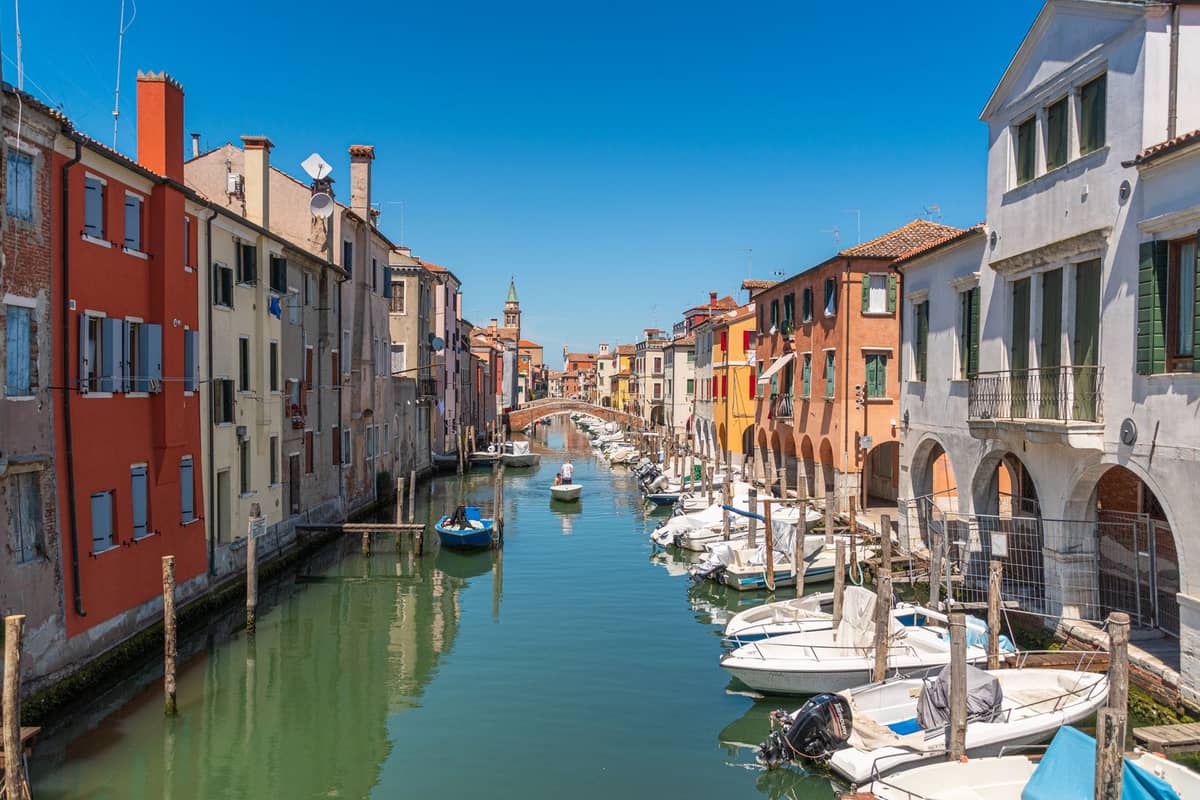
Chioggia is not a theme park version of Venice. It is a municipality of roughly 50,000 people built across several small islands at the southernmost point of the Venetian Lagoon, connected to the mainland and to the beach resort of Sottomarina by road causeways. People drive here. Delivery trucks cross the bridges. Fishing boats moor along the canals in serious, functional rows. The town has been occupied since Roman times, when it was known as Clodia, and it has spent most of its history as a working port rather than a tourist destination.
That background matters because it sets the tone of a visit. The canal layout, the narrow calli (lanes), the Gothic and Baroque churches along the main street, the morning fish market: all of it exists for the town's residents first, and for visitors second. That ordering is precisely what makes Chioggia interesting.
ℹ️ Good to know
Chioggia is often called 'Little Venice' in tourist materials. It shares the basic structure of islands, canals, and bridges, but the resemblance fades quickly once you're inside. The architecture is lower, the pace is slower, and the commercial activity is predominantly local rather than tourist-driven.
The Heart of the Town: Corso del Popolo and the Canals
The main thoroughfare, Corso del Popolo, runs the length of the principal island as a broad pedestrian street lined with churches, cafes, and small shops. It is one of the more unusual main streets in the Veneto: wide enough to feel like a piazza in places, yet hemmed in by buildings on either side, it channels the town's foot traffic in a single spine. The churches alone justify a slow walk: the Cathedral of Santa Maria Assunta (Duomo di Chioggia) anchors one end, and several other significant religious buildings punctuate the length of the corso.
Parallel to the corso, the Canale della Vena runs through the heart of the historic center. This is where the atmosphere concentrates. Fishing boats, often painted in faded blues and reds, tie up along the embankment in the mornings. The smell of brine and diesel is strong here, and the sound of nets being sorted or engines idling carries across the water. By afternoon, the boats have generally cleared out and the canal takes on a quieter character, the light from the lagoon bouncing off low facades. In the evening, locals use the embankment as a passeggiata route.
Tickets & tours
Hand-picked options from our booking partner. Prices are indicative; availability and final rates are confirmed when you complete your booking.
Pellestrina and the Venetian Lagoon Boat Tour from Chioggia
From 65 €Instant confirmationFree cancellationVenetian Lagoon golden hour boat tour from Chioggia
From 57 €Instant confirmationFree cancellationTraditional Boat Cruise in Chioggia
From 57 €Instant confirmationFree cancellationSustainable Aquaculture Boat Tour in Chioggia's Lagoon
From 57 €Instant confirmationFree cancellation
The Fish Market: The Best Reason to Arrive Early
Chioggia is one of the most important fishing ports in the northern Adriatic, and the morning fish market reflects that status directly. The covered market structure near the canal hosts vendors selling the morning's catch: clams, mantis shrimp, cuttlefish, sea bass, sole, eels, and species you may not find named in English. The stalls are operational in the early morning hours, and the activity peaks before 9 a.m. on weekdays.
This is not a market staged for visitors. The buyers are local restaurateurs, home cooks, and traders. The floor is wet. The vendors speak quickly in Venetian dialect. If you arrive expecting a photogenic artisan market with labels in multiple languages, you will be surprised. If you arrive expecting to see a functional Italian fishing port doing its actual job, you will be very satisfied.
💡 Local tip
Aim to arrive by 8 a.m. on a weekday if you want to see the fish market at full activity. Saturday mornings are also busy, but by late morning on any day the energy has significantly dropped. The market area is also the best place to find a proper fritto misto lunch at local prices.
The fishing culture here connects directly to the broader culinary identity of the lagoon. Chioggia's seafood feeds restaurants across the Veneto and beyond. If you want to understand where the cichetti in Venice's bacari actually comes from, reading our cicchetti guide for Venice alongside a visit to Chioggia makes the supply chain vivid in a way no food tour can replicate.
Architecture and History Along the Corso
Chioggia's built environment is modest compared to Venice's palazzo-lined canals, but it has genuine historical depth. The town was largely rebuilt after the War of Chioggia (1378–1381), a decisive naval conflict in which Genoese forces occupied the town before being expelled by Venice.
The Duomo di Chioggia, dedicated to the Assumption of Mary, was redesigned by Baldassare Longhena in the 17th century, the same architect responsible for the Basilica di Santa Maria della Salute in Venice. The interior holds several notable paintings and altarpieces. Opening hours and any admission fees should be confirmed directly with the church before visiting, as they vary seasonally.
For visitors already acquainted with Longhena's work in Venice, seeing a second example of his style in a much less frequented context is genuinely interesting. The Basilica di Santa Maria della Salute makes a natural point of comparison: the grandeur of that commission versus the provincial scale of Chioggia's Duomo tells you something about the hierarchy of power in the Venetian Republic.
Practical Walkthrough: Getting There and Moving Around
From Venice, the most practical route is by bus. Services depart from Piazzale Roma and from Mestre railway station, and the journey takes roughly one to one and a half hours depending on the route and time of day. Tickets are purchased from ACTV or regional bus operators; verify current timetables and fares before travel as schedules change seasonally. Boat services via the lagoon also exist, and these offer a more scenic approach but require advance checking of schedules and availability.
Unlike Venice, Chioggia is accessible by private car. Road connections via SR11 and SS309 make it a straightforward drive from the mainland. Parking is available near the causeways and at the town's periphery. This accessibility also means Chioggia is manageable for visitors with mobility considerations: while the historic center still has bridges and uneven pavements, the absence of Venice's exclusively pedestrian-and-vaporetto constraint means more practical options exist for those who need them.
Chioggia sits within the broader network of the Venetian Lagoon, which includes other worthwhile island destinations. If you are planning a day devoted to the outer lagoon, our Venice lagoon islands guide helps map out how Chioggia fits alongside Pellestrina, Murano, Burano, and Torcello in a longer itinerary.
⚠️ What to skip
Chioggia is a real town, not a pedestrianized tourist zone. Buses and cars cross its causeways regularly. Keep this in mind if you are traveling with young children or are accustomed to the entirely traffic-free environment of Venice's historic center.
Time of Day: How the Experience Changes
Early morning is the best time to visit, by some margin. The fish market is active, the light on the canals is clear and low, and the town belongs entirely to its residents. The calle near the market smells of sea and salt; the cafes are serving espresso to fishermen and market workers rather than tourists. There is an unhurried, purposeful atmosphere at this hour that is rare in most of the lagoon region.
By midday, the market has wound down and the corso fills with lunch-hour foot traffic. Restaurants near the canal do solid business with seafood menus. The afternoon is quiet in the way that Italian provincial towns are typically quiet between 1 and 4 p.m. If you have lingered through lunch, this is a good time to walk the smaller side streets and canals away from the main corso, where the town's residential character is most apparent: laundry on lines, cats on windowsills, neighbors talking across narrow calli.
The evening passeggiata along the Canale della Vena and the Corso del Popolo is genuinely pleasant, particularly in spring and autumn. The tourist coach traffic has cleared by late afternoon, and the town operates on its own social rhythms. This is not a nightlife destination; bars and restaurants serve dinner at Italian hours (from around 7:30 p.m.) and things are quiet by late evening.
Sottomarina: The Beach Option
Directly adjacent to Chioggia, connected by a short bridge, is Sottomarina, a beach resort on the Adriatic coast. The beach is long, sandy, and heavily organized with the characteristic Italian lido system of rented umbrellas and sun loungers. In summer, Sottomarina is a busy domestic holiday destination with an atmosphere quite different from Chioggia's historic center. For visitors combining a morning in Chioggia with an afternoon at the beach, the logistics are straightforward: the two areas are within easy walking or cycling distance.
If comparing lagoon beach options, note that the Lido beach near Venice is more convenient from the historic center and has its own distinct character, but Sottomarina is quieter and less expensive in high season.
Is Chioggia Worth Your Time?
If you are visiting Venice for two or three days and have not yet seen the main sites in the historic center, Chioggia is not where to spend your limited time. The journey takes a meaningful chunk of a day, and the town does not have the concentrated density of world-class art and architecture that Venice offers. This is an honest limitation worth stating.
But if you are spending four or more days in the region, or if you have already covered Venice's main sights and are specifically looking for a different register, Chioggia delivers something genuinely distinct. It is the lagoon without performance. Consider pairing it with a broader exploration of day trips from Venice that take you into the Veneto rather than deeper into the tourist circuit.
Visitors who find Venice overwhelming, overpriced, or theatrically self-conscious often respond very well to Chioggia. The architecture is related, the setting is lagoon-adjacent, but the social atmosphere is that of a functioning Italian town. That is not a consolation prize. For the right traveler, it is precisely what they were looking for.
Insider Tips
- The bus journey from Venice passes through the causeway along the lagoon's edge near Pellestrina, offering lagoon views that many visitors never see. Sit on the left side heading south for the best water views.
- Chioggia's fish market is best on weekday mornings. If you visit on a Sunday, expect the market to be closed or very reduced, and many shops along the corso to be shut until late morning.
- The side canals west of Corso del Popolo (away from the Canale della Vena) are the least photographed parts of town and have the most domestic character. A 15-minute walk through these streets is worth doing before or after the market.
- Lunch prices in Chioggia run significantly lower than in Venice for equivalent quality of seafood. A fritto misto or grilled branzino at a canal-side trattoria will cost a fraction of what the same dish costs near the Rialto.
- If you are traveling by car, parking near the access bridge on the Sottomarina side gives easy access to both the beach and the historic center without navigating Chioggia's internal road system.
Who Is Chioggia For?
- Return visitors to Venice looking for a day with a different pace and atmosphere
- Food-focused travelers interested in where the lagoon's seafood actually originates
- Photographers seeking canal and fishing boat imagery without tourist crowds
- Families or travelers with limited mobility who want a canal-town experience accessible by road
- Travelers combining a cultural morning visit with an afternoon at the Adriatic beach in Sottomarina
Nearby Attractions
Combine your visit with:
- Burano Island
Eight to nine kilometers north of Venice, Burano Island is a compact, flat island of roughly 21 hectares where fishermen's houses are painted in saturated reds, yellows, and blues. It has a legitimate history in lace-making stretching back to the 16th century, and the 40-minute vaporetto ride across the lagoon is part of the experience.
- Chiesa del Redentore
Built in 1577 as a vow to God after a devastating plague, the Chiesa del Santissimo Redentore is Andrea Palladio's finest church in Venice. Standing on the island of Giudecca across the canal from Dorsoduro, it rewards visitors with serene interiors, important Renaissance paintings, and one of the most dramatic facades in Italian architecture.
- Giudecca Island
Giudecca Island sits just minutes from the heart of Venice yet feels like a different city entirely. Flat, walkable, and free to explore, it rewards visitors with Palladian architecture, waterfront promenades, and a glimpse of how Venetians actually live.
- Lace Museum Burano (Museo del Merletto)
The Museo del Merletto on Burano island preserves one of Venice's most painstaking craft traditions: needle lace so fine it was once compared to frozen breath. Housed in the former Burano Lace School, this small but authoritative museum rewards patient visitors with extraordinary historical pieces and, sometimes, live demonstrations by the last practitioners of the craft.