Torcello Island: Venice's Oldest Settlement and Its Extraordinary Cathedral
Torcello Island is the oldest continuously inhabited part of the Venetian Lagoon, with evidence of settlement from the 1st and 2nd centuries AD and a major early medieval development in the 5th and 6th centuries. Today fewer than 15 people live here, leaving visitors free to explore a 7th‑century‑founded cathedral, Byzantine mosaics of exceptional quality, and a landscape of salt marshes and silence that the main city can rarely offer.
Quick Facts
- Location
- Venetian Lagoon, Municipality of Venice, Veneto, Italy
- Getting There
- ACTV Line 12 from Fondamente Nove directly to Torcello, or to Burano then Line 9 shuttle to Torcello.
- Time Needed
- 2.5 to 4 hours including transit
- Cost
- Combined ticket (Basilica + Bell Tower + Museum): €9 full, €6 reduced; children under 6 free. Vaporetto fare additional.
- Best for
- History enthusiasts, Byzantine art, travellers seeking quiet and open lagoon scenery
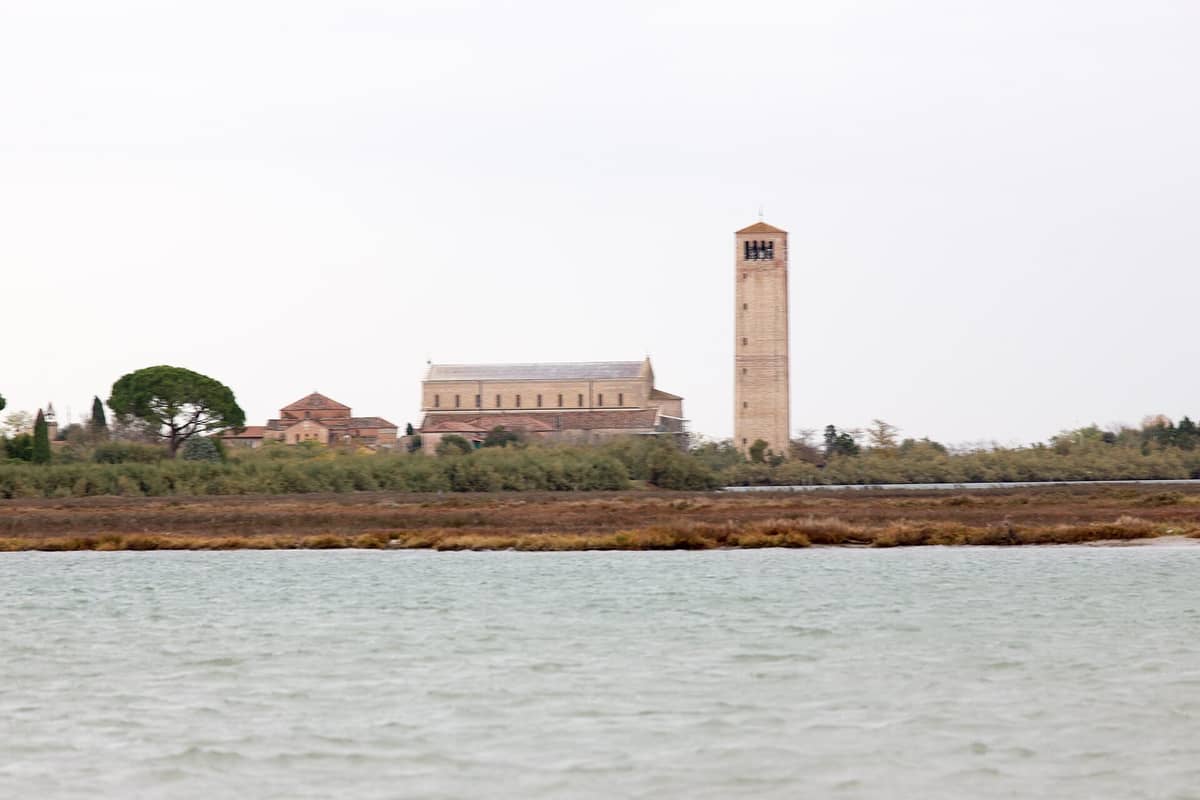
What Torcello Actually Is
Torcello Island is a small landmass of roughly 0.45 square kilometres in the northern Venetian Lagoon, and it is almost certainly the most historically significant place in the entire lagoon that most visitors leave off their itinerary. While Burano draws crowds for its painted houses and Murano for its glass furnaces, Torcello offers something harder to replicate: the raw origin point of Venetian civilisation, preserved in a landscape that has changed remarkably little over the centuries.
The island saw significant settlement in the 5th and 6th centuries by inhabitants fleeing barbarian incursions on the mainland, making its early medieval community older than Venice itself. At its medieval peak, Torcello housed an estimated 10,000 to 20,000 people. Today the permanent population hovers around 10 to 12 residents. That near-total depopulation, caused by silting of its channels and the rise of malarial swamps over centuries, is also what preserved it: there was no incentive to demolish and rebuild, so what remains is genuinely old.
ℹ️ Good to know
Torcello is reachable only by water. From Fondamente Nove in Venice, take ACTV vaporetto Line 12 toward the northern lagoon; some boats continue directly to Torcello, or you can ride to Burano and transfer to Line 9 for the short crossing to Torcello. The combined journey takes around 45 to 55 minutes each way. Verify current timetables with ACTV before travelling, as schedules vary seasonally.
The Cathedral of Santa Maria Assunta: Why It Matters
The Cathedral of Santa Maria Assunta is the reason most people make the trip, and it justifies the journey entirely. Founded in 639 AD and substantially rebuilt in the 11th century, it is one of the oldest churches in the Venetian Lagoon and contains Byzantine mosaics from the 11th and 12th centuries that rank among the finest surviving examples of the form in Italy. The cathedral is open daily from 10:00 to 17:30 (hours may vary slightly seasonally; check locally), with last admission normally around 17:00. Admission is €5 for the Basilica alone, or €9 for the combined ticket covering the cathedral, bell tower, and archaeological museum, with audio guides available.
The interior confronts you immediately. The west wall is dominated by a Last Judgment mosaic of immense scale: figures arranged in registers from top to bottom, rendered in gold tessera and deep blues, depicting the resurrection of the dead, the weighing of souls, and the torments of hell with an unflinching specificity that medieval congregations would have understood as literal warning. The apse, by contrast, holds the Madonna and Child in a composition of extraordinary restraint: a single standing figure against a pure gold background, dating to the 12th century, isolated and commanding.
The quality of light inside the cathedral shifts substantially by time of day. Morning light entering from the south-facing windows strikes the gold mosaics directly, making the tessera refract rather than simply reflect, giving the gold a depth that photographs rarely capture. By midday the interior is brighter but flatter. Arriving at opening, around 10:30, gives you the best combination of light quality and minimal crowds before the day-trip boats from Burano begin arriving.
The church floor, laid with 11th-century marble intarsia patterns, is visibly uneven from centuries of minor subsidence, a physical reminder of the soft lagoon substrate beneath. The stone columns separating the nave from the aisles have the slightly tapering proportions typical of Byzantine construction, and the ambiance is austere rather than ornate, which amplifies the impact of the mosaics when they appear. For more of Venice's extraordinary church interiors, see the guide to the best churches in Venice.
Tickets & tours
Hand-picked options from our booking partner. Prices are indicative; availability and final rates are confirmed when you complete your booking.
Murano, Burano and Torcello day tour from Punta Sabbioni
From 30 €Instant confirmationFree cancellationMurano, Burano and Torcello 1-day tour
From 30 €Instant confirmationFree cancellationMurano, Burano and Torcello 1-day tour
From 35 €Instant confirmationFree cancellationMurano, Burano and Torcello, the Venetian lagoon on a traditional boat
From 66 €Instant confirmationFree cancellation
The Bell Tower and What You See From the Top
The detached bell tower stands beside the cathedral and can be climbed for €5 (included in the combined ticket). It is open daily from 10:30 to 16:30, with last admission at 16:00. The climb involves a rather narrow and steep internal staircase rather than a conventional wide stairway, which makes it unsuitable for visitors with vertigo or limited mobility, and inappropriate for young children travelling alone.
The view from the top is genuinely different from any other vantage point in the lagoon. Venice's skyline appears as a low smudge to the south, with the campanile of San Marco just visible on clear days. But what dominates is the lagoon itself: a vast shallow basin of grey-green water broken by salt marshes, mudflats, and reed beds, with Burano's coloured houses the only sharp note of colour in the middle distance. On mornings with low mist, which is common in autumn and winter, the effect is extraordinary: the island appears suspended between water and sky with no clear horizon. This is the view that communicates, more than any history book, why early medieval settlers chose this particular geography.
Santa Fosca and the Archaeology of the Campo
Adjacent to the cathedral stands the Church of Santa Fosca, built between the 11th and 12th centuries. It is architecturally distinct: a Greek-cross plan with an external portico of arched colonnades, and an interior that is almost entirely undecorated. After the sensory density of the mosaics next door, Santa Fosca's plain brick walls and dim light produce a contemplative atmosphere that many visitors find more affecting. The church is typically open to visitors alongside the cathedral complex.
In the small campo between the two churches sits a stone throne known as the Throne of Attila. Historical evidence does not support the legend that Attila the Hun actually sat in it; it was more likely used by local administrators or bishops for outdoor ceremonies in the early medieval period. It remains there, weathered and unguarded, and visitors routinely sit on it for photographs, which gives the ancient campo a pleasantly unselfconscious atmosphere.
The Torcello Museum (Museo Provinciale di Torcello), housed in two adjacent palaces (Palazzo del Consiglio and Palazzo dell'Archivio) beside the campo, holds archaeological finds from the island including Roman-era fragments, medieval ceramics, and sculptural pieces removed from the cathedral for preservation. From 1 March to 31 October it is open Tuesday through Sunday, 10:30 to 17:30 (last admission 17:00). From 1 November to 28 February hours shift to 10:00 to 17:00 (last admission 16:30). The museum is modest in scale and can be covered in 30 to 45 minutes, but the Roman material in particular reveals that the island's habitation predates even its medieval Christian founding.
The Walk from the Vaporetto Stop
When the vaporetto docks at Torcello, there is a single path: a canal-side walkway called the Fondamenta dei Borgognoni that runs alongside a narrow canal from the landing stage to the cathedral complex, a walk of roughly 10 to 15 minutes. The path is unpaved in sections and passes across several low stone bridges, including the Ponte del Diavolo, a medieval bridge notable for having no handrails. The absence of barriers is unusual enough that it surprises most visitors on first crossing.
On either side of the canal: flat fields of grass and sedge, overgrown plots that were once gardens, and the occasional building with its shutters closed permanently. The silence on this path is one of the island's most consistent qualities. Sounds travel differently across flat water and low vegetation, and the absence of motorised transport beyond the vaporetto means that birdsong and the lapping of canal water against stone form the audio landscape. In spring the path edges are thick with wildflowers, and in winter the salt marsh takes on grey-green and rust tones that feel entirely removed from the Venice of tourist photography.
💡 Local tip
Wear flat shoes with some grip. The path surfaces vary between flagstone, compacted earth, and worn brick, and the low bridges have no railings. After rain, some sections can be slippery. This is not a place for wheeled luggage or heels.
Torcello is most rewarding when combined with a stop on Burano, which is only a short vaporetto ride away on Line 9 between Burano and Torcello. The two islands offer a useful contrast: Burano's tightly-packed, vibrantly painted houses and its tradition of lace-making versus Torcello's near-empty landscape. For a full account of that island, see the Burano Island guide. If you are planning a full day across the lagoon's northern islands, the Venice lagoon islands guide covers logical sequences and transit timing.
When to Visit and What Affects the Experience
Torcello sees a fraction of the visitor numbers that main Venice attractions absorb, but it is not entirely quiet in high season. Tour groups from Burano occasionally arrive in clusters between late morning and early afternoon, filling the campo briefly before dispersing or moving on. The most genuinely peaceful windows are early on weekday mornings (opening time, around 10:30) or in the hour before closing. Late afternoon light in spring and autumn is particularly fine for both the mosaics and the bell tower view.
Autumn and winter bring atmospheric fog conditions that suit Torcello's character well, but visitors should be aware that acqua alta events can affect lagoon transport. The low-lying paths and campo can also take on standing water during significant tidal peaks. Check acqua alta forecasts before travelling in November through February, and allow flexibility in your return schedule if conditions are unsettled.
Summer visits are possible but the exposed path from the vaporetto stop to the cathedral offers no shade. Carry water and wear sun protection if visiting between June and August. For a full breakdown of what each season offers across Venice, the best time to visit Venice guide covers the trade-offs in detail.
Photography Considerations
The cathedral interior is one of the more challenging photography environments in the lagoon. The contrast range between the dark stone floor and the brilliantly lit gold mosaics is extreme. For the west wall Last Judgment mosaic, a wide-angle lens and exposure bracketing produce the best results, as the mosaic spans the entire wall from floor to upper arch. Flash photography is typically not permitted. The best natural light for the apse Madonna falls in the late morning when south-facing windows are fully illuminated.
The canal path and the view from the bell tower reward a longer visit with time spent waiting for light. The flat lagoon topography means that passing clouds create rapid shifts in tone on the water surface. Overcast conditions, which many visitors consider unfavourable, actually reduce the harsh reflections off the water and produce even, soft light across the reed beds and salt marshes that can be more interesting photographically than direct sun.
Worth It?
The journey to Torcello takes close to an hour each way from central Venice, and the island's attractions are limited in number. If your primary interest is shopping, nightlife, or hitting multiple major museum collections in a single day, Torcello is not the right use of your limited time. The island has one restaurant of note (Locanda Cipriani, which is long-established and expensive) and a handful of small stalls near the campo, but there is essentially no retail, no entertainment, and no secondary attractions beyond the cathedral complex and the walk.
For travellers with a genuine interest in early medieval history, Byzantine art, ecclesiastical architecture, or simply in what the lagoon looked like before Venice became Venice, Torcello delivers at a level that few places can match. It also functions as an effective counterweight to the main city: after the density of Piazza San Marco and the compressed streets of the sestieri, the open sky and near-silence of Torcello recalibrate your relationship with the lagoon entirely.
⚠️ What to skip
Torcello has almost no facilities beyond the museum and cathedral. There is no pharmacy, no ATM, and limited food options. Bring water, cash, and a charged phone. The last vaporetto back to Burano runs in the early evening; check the current ACTV schedule before your visit so you do not miss the final departure.
Insider Tips
- Arrive at 10:30 when the cathedral opens. The first 45 minutes before tour groups transfer from Burano are often the quietest the campo will be all day, and the morning light on the apse mosaic is at its best.
- Buy the combined ticket (€9) rather than individual entry. Any audio guide available is genuinely useful for the cathedral mosaics, providing iconographic context that the bare interior plaques do not offer.
- The Ponte del Diavolo, the 15th-century bridge without handrails on the canal path, is worth pausing at rather than just crossing. Looking upstream from the bridge gives an unobstructed view of the lagoon reed beds that is one of the most photographed but least crowded views on the island.
- If you plan to have lunch at Locanda Cipriani, reserve well in advance, especially in spring and summer. It occupies a shaded garden beside the campo and is one of the very few restaurant experiences in the entire lagoon that cannot be replicated elsewhere; the prices reflect this.
- On the return journey, rather than going directly back to Venice, consider spending an hour on Burano before catching the Line 12 back to Fondamente Nove. The two islands together make a coherent half-day that uses the transit time efficiently.
Who Is Torcello Island For?
- Travellers interested in early medieval history and the pre-Venetian lagoon settlements
- Byzantine art and religious mosaic enthusiasts
- Photographers looking for open lagoon landscapes and minimal crowds
- Those wanting a genuine contrast to the crowds and density of central Venice
- Visitors on longer stays of three days or more who have already covered the main city attractions
Nearby Attractions
Combine your visit with:
- Burano Island
Eight to nine kilometers north of Venice, Burano Island is a compact, flat island of roughly 21 hectares where fishermen's houses are painted in saturated reds, yellows, and blues. It has a legitimate history in lace-making stretching back to the 16th century, and the 40-minute vaporetto ride across the lagoon is part of the experience.
- Chiesa del Redentore
Built in 1577 as a vow to God after a devastating plague, the Chiesa del Santissimo Redentore is Andrea Palladio's finest church in Venice. Standing on the island of Giudecca across the canal from Dorsoduro, it rewards visitors with serene interiors, important Renaissance paintings, and one of the most dramatic facades in Italian architecture.
- Chioggia
Chioggia is an ancient fishing town at the southern entrance of the Venetian Lagoon, built on a cluster of small islands linked by bridges and crossed by canals. Unlike Venice, it functions as a living, working community, and that distinction shapes everything about a visit.
- Giudecca Island
Giudecca Island sits just minutes from the heart of Venice yet feels like a different city entirely. Flat, walkable, and free to explore, it rewards visitors with Palladian architecture, waterfront promenades, and a glimpse of how Venetians actually live.