Venice in Summer: The Complete Guide to Visiting in Peak Season
Summer brings Venice to its most intense: scorching heat, record crowds, and prices to match. This guide cuts through the noise with practical strategies for timing, booking, staying cool, and finding breathing room in Italy's most visited city.
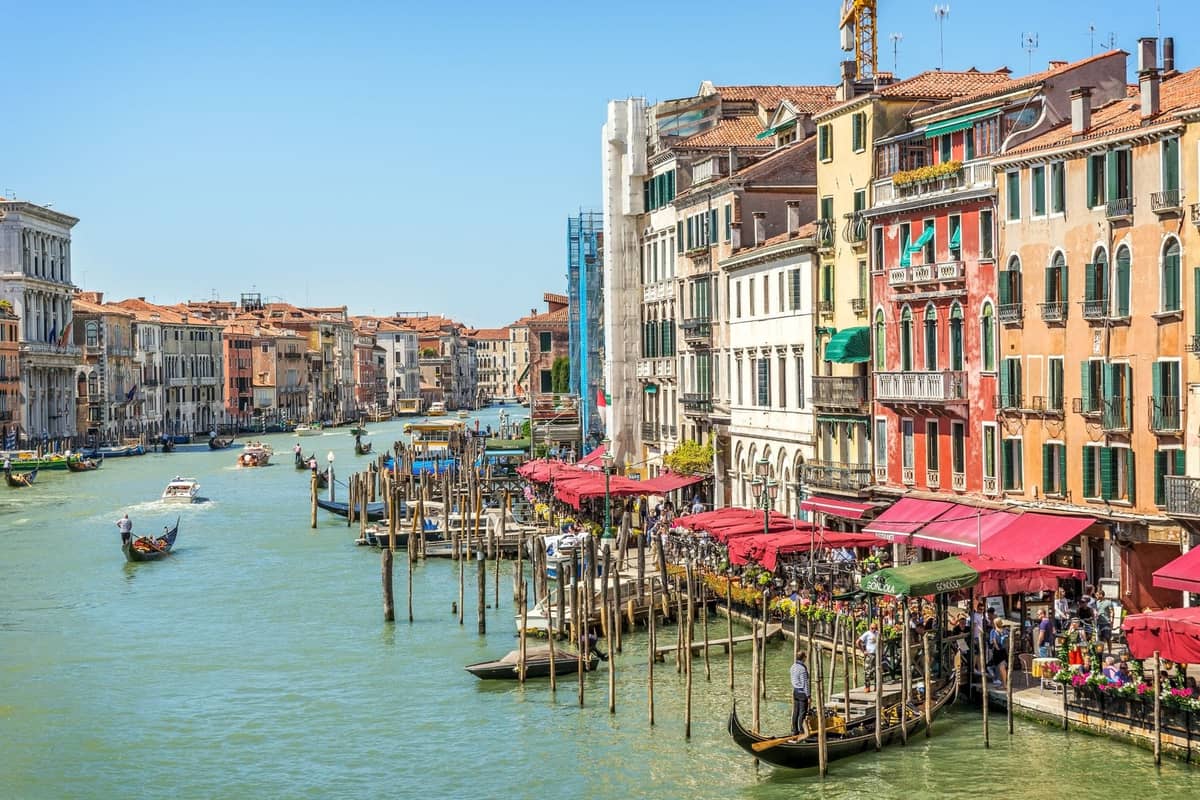
Plan and book this trip
Tools from our partner Travelpayouts help you compare flights and hotels. If you book through them, we may earn a commission at no extra cost to you.
Flights
Hotels map
TL;DR
- Summer (June–August) is Venice's most crowded and expensive season, with July and August seeing the heaviest day-tripper traffic.
- Temperatures regularly hit 28–33°C, making early mornings (before 9:00 AM) the best time for sightseeing at major sights like Piazza San Marco.
- Book accommodation and timed entry tickets for top attractions at least 4–6 weeks ahead — popular slots sell out fast.
- Escape the midday heat by retreating to museums, churches, or the lagoon islands of Murano and Torcello.
- Spring and autumn are objectively less stressful; visit our best time to visit Venice guide if your dates are flexible.
What Summer in Venice Actually Feels Like
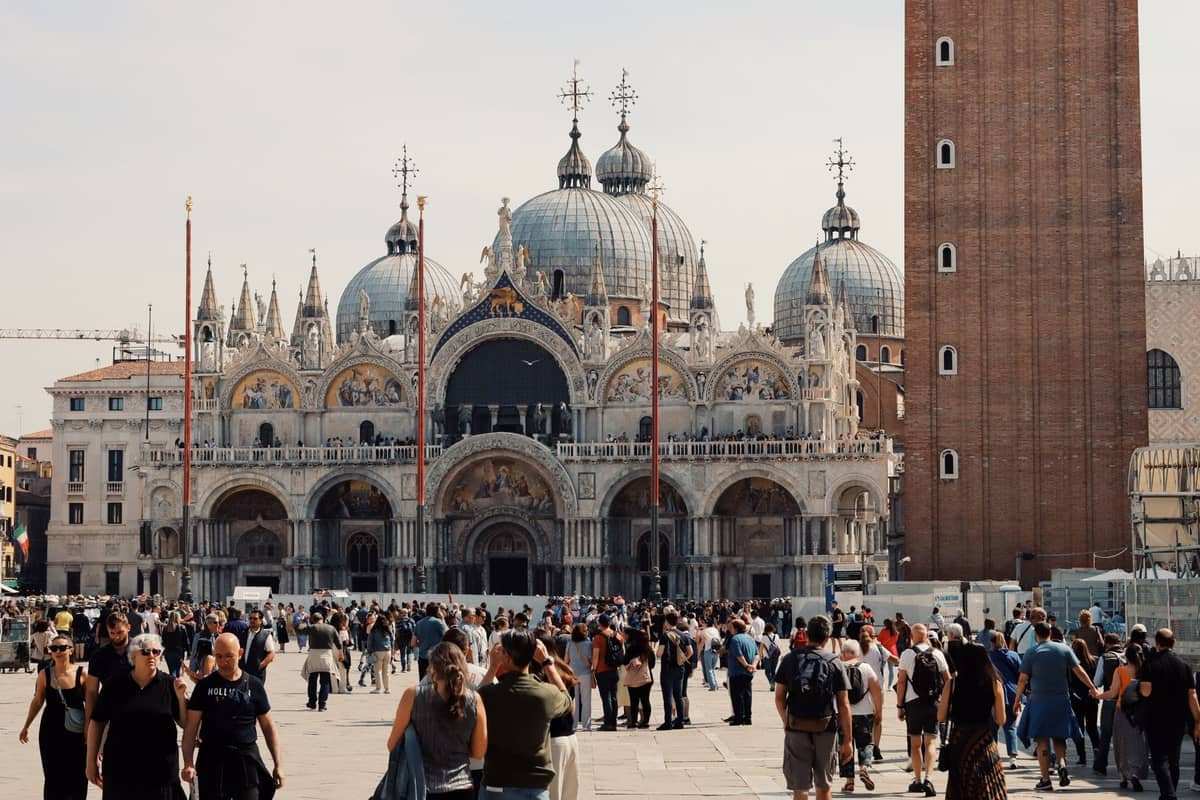
Venice in summer is not a relaxed city break. It is Italy's single most visited urban destination operating at maximum capacity. In July and August, the narrow calli (alleyways) around the Rialto and San Marco feel less like streets and more like queues. The combination of heat, humidity from the lagoon, and sheer volume of people makes midday sightseeing between roughly 10:00 AM and 4:00 PM genuinely draining.
Temperatures in June, July, and August regularly reach 28–33°C, and the humidity amplifies the effect. The stone surfaces of bridges and campos absorb and radiate heat throughout the day. There is very little shade on the main tourist routes. Afternoon thunderstorms are possible, particularly in July and August, and while they bring brief relief, they also bring slippery bridges and sudden queues under every archway.
That said, summer has real advantages: long daylight hours (sunset after 8:30 PM in June and July), a full calendar of cultural events, and the city at its most photogenic in warm golden light. The key is managing the conditions rather than being ambushed by them.
ℹ️ Good to know
Venice's municipality (Comune di Venezia) has tested a day-visitor Access Fee on selected peak days, with further implementation subject to ongoing decisions. Day-trippers arriving on designated high-pressure dates pay a fee to enter the historic island city during set hours (approximately 8:30–16:00). Overnight guests are exempt. Check the official portal (cda.ve.it) for current dates and pricing before your trip, as these details are updated regularly.
Crowd Patterns: When and Where Venice Gets Overwhelmed
Not all of June, July, and August are equally intense. June, especially the first two weeks, is noticeably calmer than the peak that arrives in mid-July and runs through mid-August. The worst congestion typically falls between the second week of July and 15 August (Ferragosto, Italy's national holiday), when Italian domestic tourism peaks simultaneously with international arrivals.
Geographically, the crowds are concentrated on a narrow corridor: the area around Rialto Bridge, through San Marco, and along the Riva degli Schiavoni waterfront. Venture into Cannaregio or Castello beyond the Arsenale and the density drops dramatically within five minutes of walking.
- Worst time of day 10:00 AM to 4:00 PM, when cruise ship passengers and day-trippers overlap with those arriving by train.
- Worst weeks Mid-July to 15 August. The days surrounding Ferragosto are particularly intense, and some local shops and restaurants close for the holiday period.
- Best time of day Before 9:00 AM and after 6:00 PM. Early morning offers near-empty calli and soft light. Evenings are cooler and the day-tripper crowds have largely departed.
- Quietest districts in summer Dorsoduro (west of the Accademia), northern Cannaregio, and eastern Castello near Sant'Elena.
Practical Strategies for Surviving the Heat
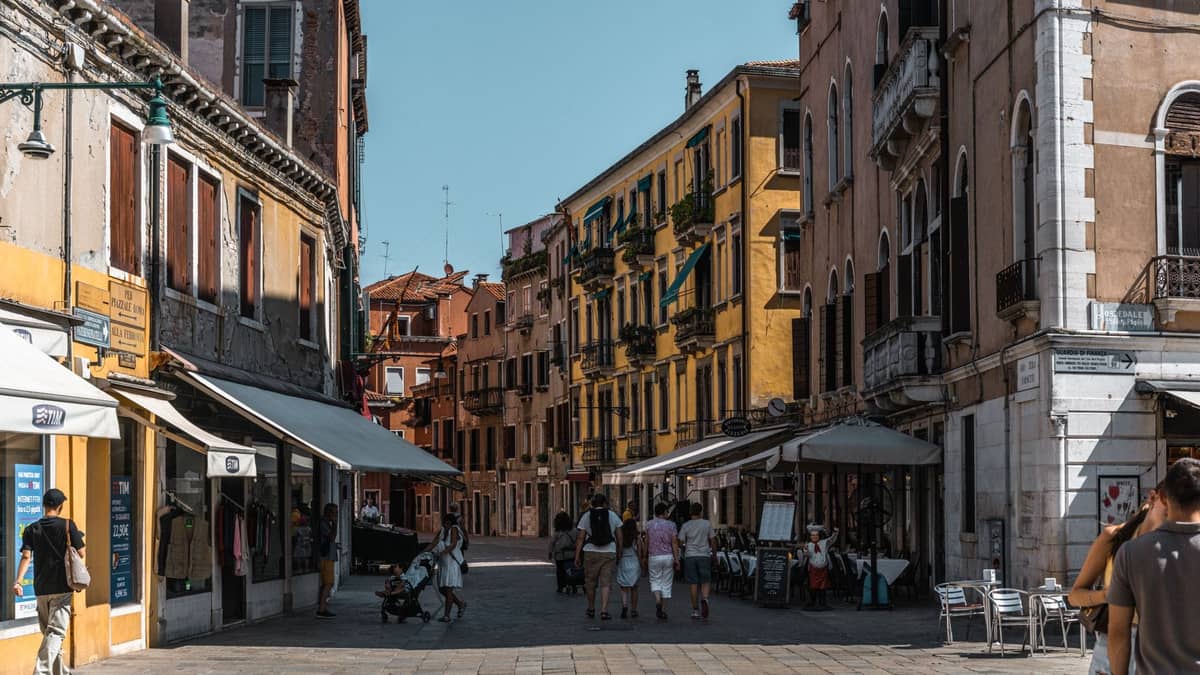
Heat management is not optional in a Venetian summer. The city has no real green spaces to retreat to, very few air-conditioned public areas, and a street layout that blocks wind. Preparation makes the difference between an exhausting trudge and an enjoyable trip.
- Carry a reusable water bottle: Venice has a network of public drinking fountains called fontanelle, marked on the city map available from tourist offices. The water is safe to drink.
- Start major outdoor sightseeing by 8:00–8:30 AM, before heat and crowds build.
- Schedule indoor visits — museums, churches, palaces — for 11:00 AM to 3:00 PM, the hottest part of the day.
- Wear light, loose-fitting clothing and comfortable, closed footwear. The cobblestones and bridge steps are unforgiving after a few hours.
- Note that churches require covered shoulders and knees for entry — bring a scarf or light layer.
- Seek shade in quieter campos: Campo Santa Margherita in Dorsoduro and Campo dei Mori in Cannaregio are good examples.
- Avoid the glass-and-stone corridors around San Marco between noon and 3:00 PM — the heat radiating off the surfaces is considerable.
💡 Local tip
The Zattere promenade along the southern edge of Dorsoduro faces south across the Giudecca Canal and catches a reliable sea breeze in summer afternoons. It is a much better place to sit with a gelato than the crowded streets around San Marco, and the views across to Giudecca Island are excellent.
Indoor relief options are genuinely good in Venice. The Peggy Guggenheim Collection in Dorsoduro, the Gallerie dell'Accademia, and the Scuola Grande di San Rocco are all air-conditioned or naturally cool, and substantive enough to occupy two to three hours comfortably.
Booking: What to Arrange Before You Arrive
In summer, treating Venice as a spontaneous destination is a costly mistake. Accommodation prices peak sharply from late June through August, and many desirable options within the historic centre sell out months in advance. Book accommodation at least 8–12 weeks ahead for July and August stays. Budget-friendly options in the sestieri closer to Santa Croce and Cannaregio are often better value than the San Marco area without sacrificing walkability.
Timed-entry tickets for the major attractions are essential and not just recommended. St Mark's Basilica requires timed paid admission (about €10 for standard online tickets; check basilicasanmarco.it); pre-booking is essential in peak season. The Doge's Palace queues can stretch 45–90 minutes in July — booking online in advance is straightforward and avoids this entirely.
Gondola rides should also be factored into expectations. The regulated fare is €90 for 30 minutes during daytime and €110 for 35 minutes after 19:00 (maximum 5 passengers). These are official fixed prices, though they are subject to periodic adjustment — confirm on the official Venice tourism portal before budgeting. Splitting the cost between a group of four or five people makes it reasonable; for two people, it is expensive. Negotiate the route and duration clearly before boarding to avoid disputes.
⚠️ What to skip
Be cautious with restaurants in the immediate vicinity of Piazza San Marco and Rialto Bridge. Covered charges (coperto) and service charges are standard, but some tourist-trap establishments in these zones quote prices that are significantly higher than comparable places two streets away. Always check the menu posted outside before sitting down, and look for places where you see Italian being spoken at nearby tables.
Getting Off the Main Routes: Where to Go Instead
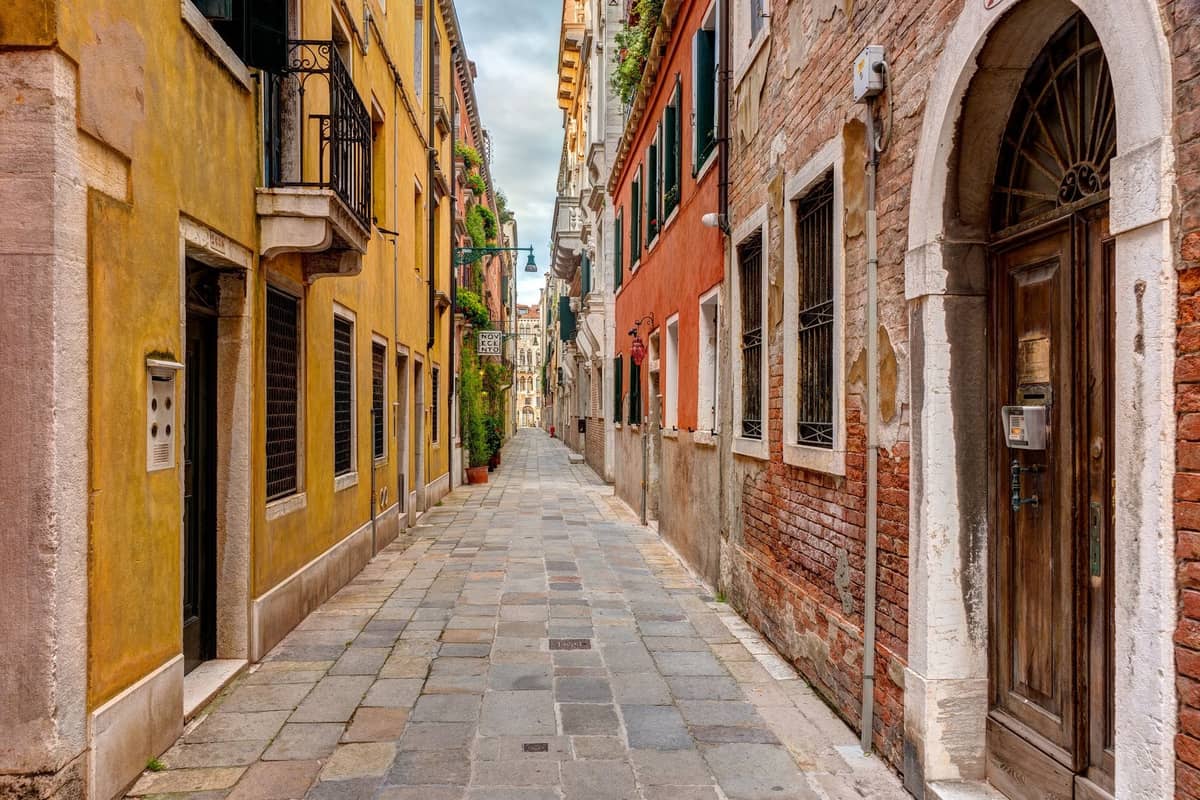
The single most effective thing you can do in a Venetian summer is redirect your itinerary away from the main tourist corridor. The lagoon islands are the obvious choice. Torcello Island is Venice's oldest settlement and sees a fraction of the visitors that go to Murano or Burano. The Torcello Cathedral contains some of the finest Byzantine mosaics in Europe, and the island has an eerie, half-abandoned atmosphere that is genuinely memorable.
Within the city itself, Dorsoduro and the western part of San Polo beyond the Frari church offer a much better experience than the Rialto-San Marco axis. The Campo Santa Margherita is large enough to breathe in and has a working-neighborhood feel, with several good bars for an aperitivo in the evening.
Summer is also when Lido di Venezia comes into its own. The beach on the Adriatic side is genuinely good for a day of swimming, and it provides a completely different pace from the historic city. The vaporetto journey from San Marco takes around 15 minutes. Late August also brings the Venice Film Festival (Venice International Film Festival), held at the Lido from late August to early September, which adds a cosmopolitan energy to that end of the summer.
Eating and Drinking Well in Summer
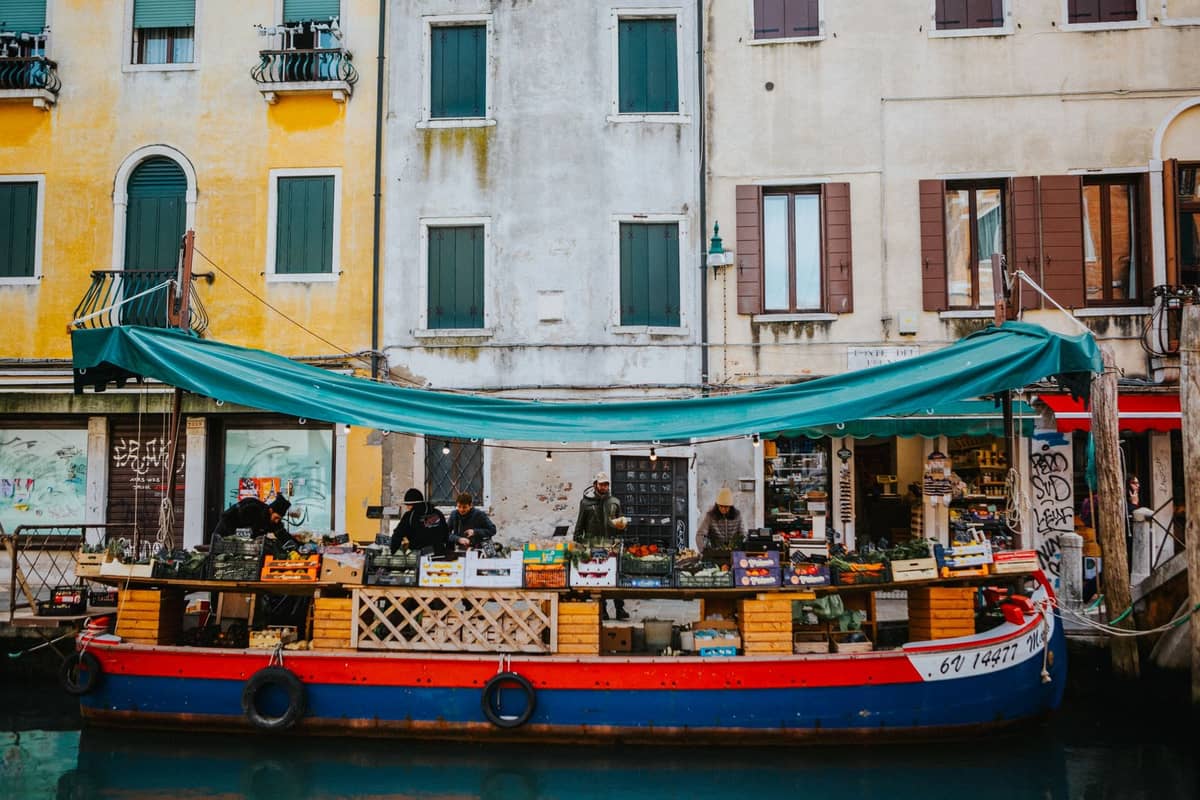
Venice's food scene rewards those who look past the obvious. The Rialto Market is at its most colourful in early summer, when the seasonal vegetable stalls are stocked with artichokes, zucchini flowers, and peaches. The fish market here is one of the best in Italy. Arrive before 9:00 AM to see it at full operation — it closes by lunchtime and is shut entirely on Sundays and Mondays.
For eating well without overspending, the cicchetti culture is the solution. These small Venetian bar snacks, eaten standing at a counter with a small glass of wine (an ombra), are the local equivalent of tapas and cost a fraction of a sit-down meal. The best bacari (traditional wine bars) are concentrated in Cannaregio and San Polo. This is how many Venetians eat lunch — standing at the bar, three or four cicchetti and a drink, done in 20 minutes.
FAQ
Is Venice worth visiting in summer despite the crowds?
It depends on your tolerance for heat and crowding. Summer offers long days, a full events calendar, and the Lido beaches, but the main tourist areas are genuinely overwhelming in July and August. If you plan strategically — early mornings, alternative districts, lagoon islands — the experience is rewarding. If you prefer a relaxed pace, spring (April–May) or early October are significantly easier.
What is the Venice Access Fee and does it apply in summer?
The Venice day-visitor Access Fee applies on selected high-demand days and is paid by day-trippers (non-overnight visitors) arriving in the historic island city during set hours (approximately 8:30–16:00). Guests staying overnight in registered accommodation are exempt. The system formally launched in 2026 and the list of applicable dates is published on the official portal (cda.ve.it). Always check the current fee schedule before your trip, as dates and pricing are subject to change.
How hot does Venice get in summer?
Temperatures in June, July, and August regularly reach 28–33°C, and the high humidity from the lagoon makes it feel hotter than the thermometer suggests. Afternoon thunderstorms are possible, particularly in July and August. Early mornings and evenings are considerably cooler and more comfortable for walking.
What are the quietest areas of Venice in summer?
Northern Cannaregio (beyond the Jewish Ghetto toward Madonna dell'Orto), eastern Castello near the Arsenale and Sant'Elena, and the western end of Dorsoduro are consistently quieter than the San Marco to Rialto corridor. The lagoon islands of Torcello and Sant'Erasmo also see far fewer visitors than Murano or Burano.
Should I book Venice attractions in advance for summer?
Yes, for the major paid attractions. The Doge's Palace, the Gallerie dell'Accademia, and the Peggy Guggenheim Collection all benefit from pre-booked timed entry in summer. St Mark's Basilica requires timed paid admission (about €10 for standard online tickets; check basilicasanmarco.it). For gondola rides, no pre-booking is usually required but it is worth confirming pricing at the official gondola stands (stazi) rather than with touts.