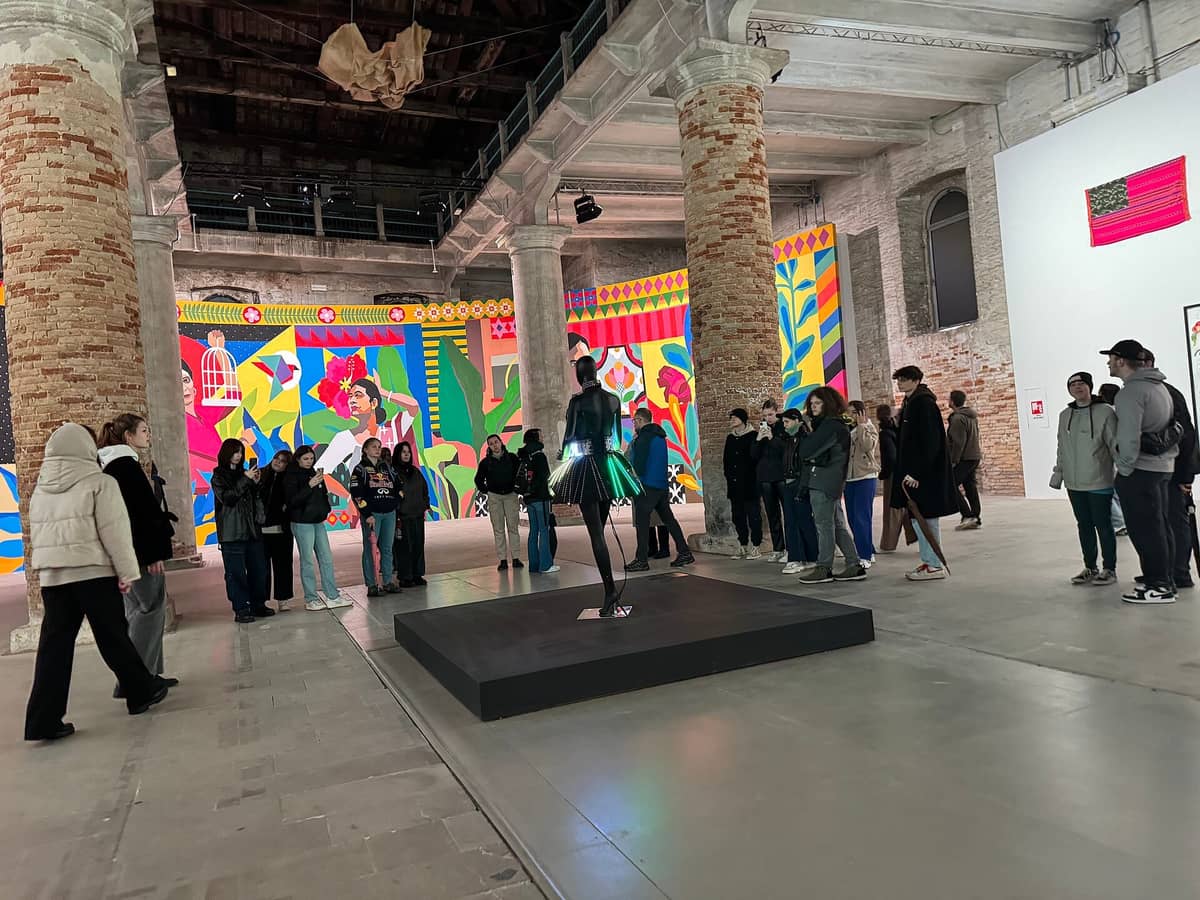
Castello is Venice's largest and easternmost sestiere, stretching from the tourist-heavy Riva degli Schiavoni all the way out to the quiet residential tip of Sant'Elena. It holds the Arsenale, the city's great naval complex, the Gothic basilica of Santi Giovanni e Paolo, and the Giardini della Biennale, all within a neighborhood that still functions as a genuinely lived-in part of the city.
Castello is Venice's largest sestiere, and the further east you walk into it, the more it starts to feel like a real city rather than a stage set. It is where the naval power of the Serenissima was built, where Venetians still shop at neighbourhood markets, and where the streets thin out until the lagoon appears at the end of every alley.
Orientation
Castello occupies the entire eastern half of Venice's historic island centre, and it is by a significant margin the largest of the six sestieri. Its western edge runs roughly along the axis of Piazza San Marco and the Riva degli Schiavoni waterfront, where it borders the sestiere of San Marco. Moving north from there, it shares a loose boundary with Cannaregio near the area of Santi Giovanni e Paolo. To the south and east, Castello is defined almost entirely by the waters of the Venice Lagoon.
The sestiere can be broadly divided into three zones by character. The western strip along the Riva degli Schiavoni is tourist-facing, with grand hotels, souvenir stalls, and a constant stream of cruise and day-trip visitors. Move a few hundred metres inland and you enter the middle zone: the civic and religious heart of Castello, centred on Campo Santi Giovanni e Paolo and the streets around the Arsenale. Then, crossing the bridge over the Rio dell'Arsenale and continuing east past Via Garibaldi, the neighbourhood changes register entirely. This is the residential eastern zone, through the Giardini and all the way out to the island of Sant'Elena, where the lagoon is visible from almost every corner and the tourist infrastructure drops away almost completely.
Castello does not touch Grand CanalGrand Canal, which sets it apart from most of the other sestieri. This is both a practical and atmospheric distinction: the neighbourhood has its own quieter waterways, and its orientation is toward the open lagoon and the southern shore rather than the city's central artery.
Character & Atmosphere
Early mornings in Castello belong to the people who live here. Along Via Garibaldi, one of the widest street-level corridors in Venice, a small daily market sets up with produce, fish, and bread. Elderly residents pull shopping carts over the bridge at the canal crossing. Delivery workers navigate the calli with hand trucks. The light at this hour is low and silvery, reflected off the canal water, and the smell is of coffee from the bars on the street and salt air drifting in from the lagoon.
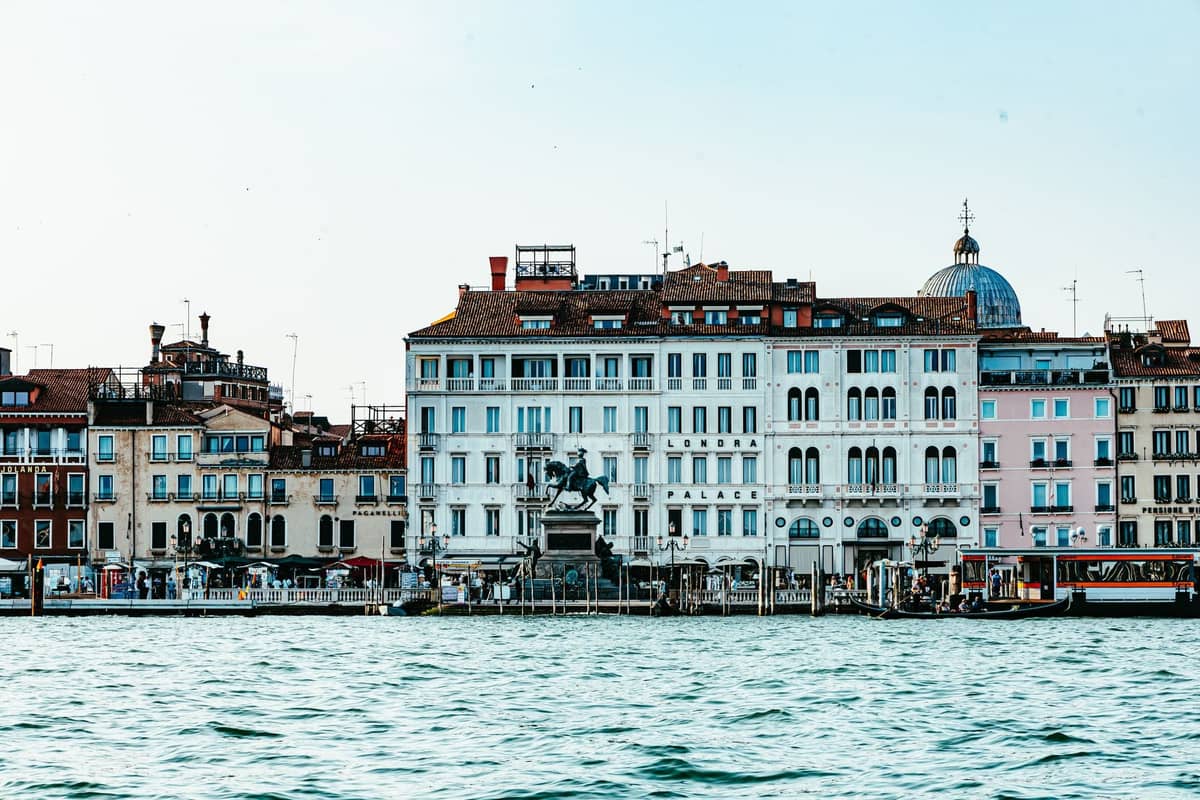
By mid-morning, the western end of Castello near the Riva degli Schiavoni is already crowded. This waterfront promenade, running along the southern shore from the San Marco basin toward the Arsenale, is one of the most trafficked stretches in the city. Cruise passengers, day-trippers from the mainland, and guided tour groups fill the wide fondamenta. The noise level here is high, the price of a coffee at a waterfront café reflects the location, and the atmosphere is closer to San Marco than to the quieter Castello to the east.
Step a few minutes north from the Riva into the calli around Campo Santa Maria Formosa, or west toward the Arsenale walls, and the character shifts. Afternoon light falls in long diagonals between the narrow buildings. In Campo Santi Giovanni e Paolo, locals sit at the edge of the square while pigeons patrol around the equestrian statue of Bartolomeo Colleoni. The campo is large enough to feel genuinely open, something that is rare in Venice, and its proportions make it one of the best places in the city to simply sit and watch the rhythm of the day.
After dark, the eastern parts of Castello are among the quietest corners of the historic city. Via Garibaldi retains some life in the evenings, with a handful of bars and restaurants doing local trade. Further east, through the Giardini and Sant'Elena, streets that were empty by ten at night. This is not a neighbourhood for late-night bar hopping. The reward is something else: the sound of water against the fondamenta, almost no artificial light pollution to speak of, and the occasional vaporetto passing in the dark across the Bacino.
💡 Local tip
If you want to experience Castello's residential character, walk east of Via Garibaldi on any weekday morning. The further you go from the Riva degli Schiavoni, the more the neighbourhood belongs to the people who actually live in it.
What to See & Do
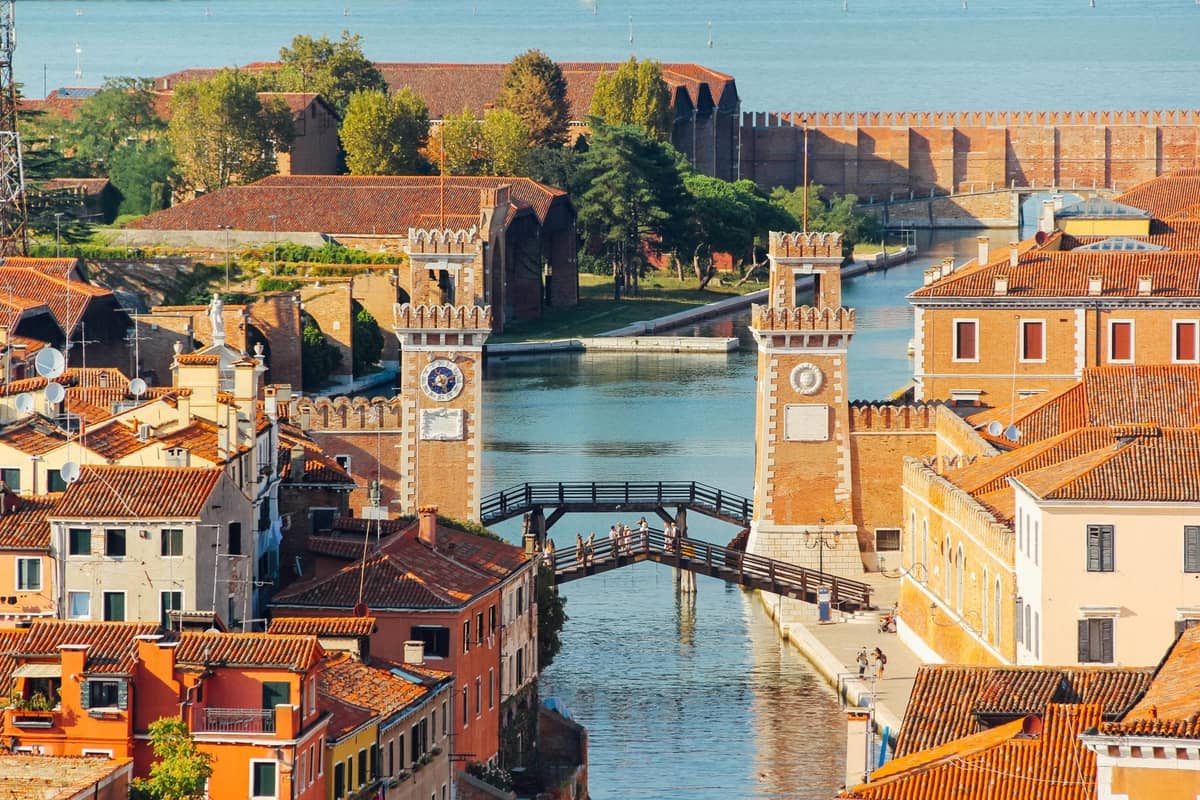
The Arsenale di Venezia is the single most historically significant site in Castello, and one of the most significant in the entire city. This vast complex of dockyards, warehouses, and fortified walls was the industrial engine of the Venetian Republic for centuries: at its peak, it could produce a fully equipped warship in a single day. The outer walls and towers are visible from the water and from the surrounding streets, but access to the interior is limited to special events, most notably during the Venice Biennale. The area around the Arsenale's land entrance on the Fondamenta dell'Arsenale is worth a slow walk regardless of whether you can get inside. Explore the full history at the Arsenale di Venezia page.
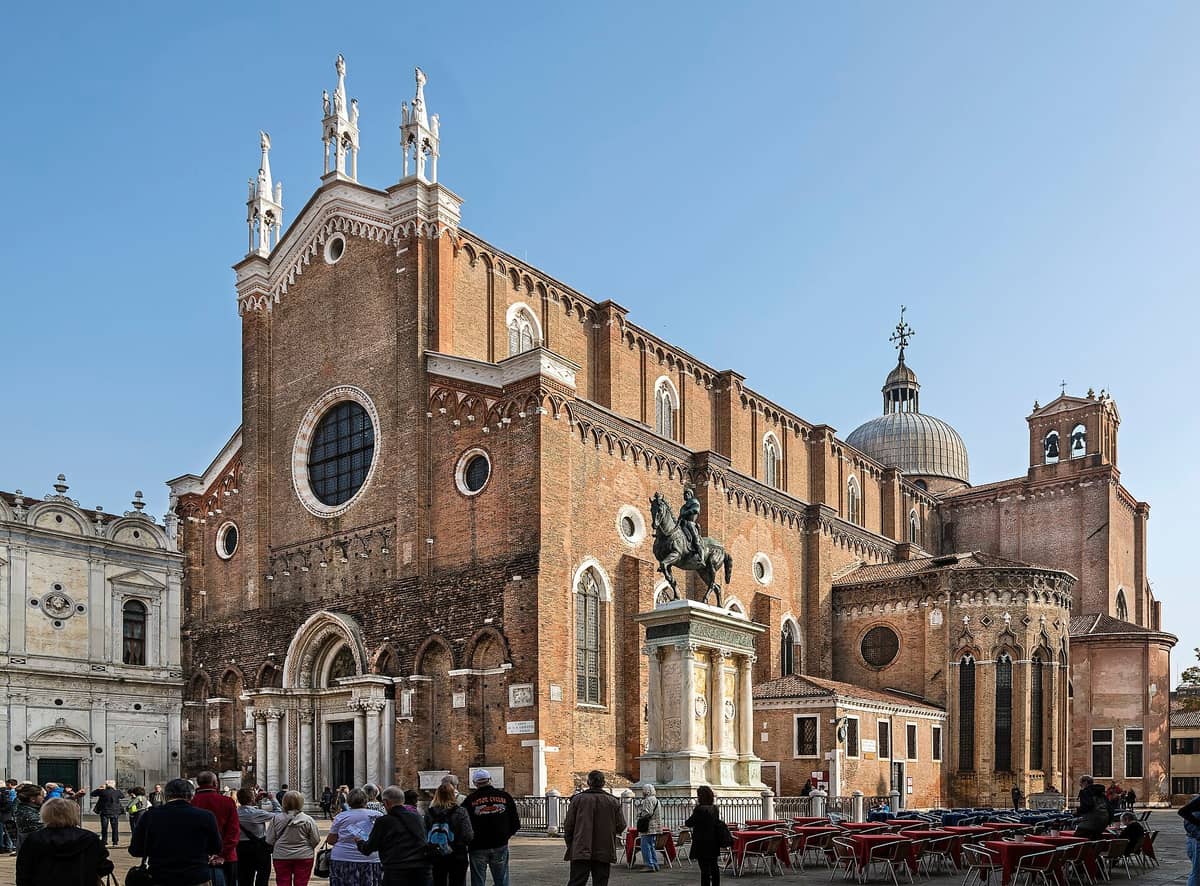
The Basilica dei Santi Giovanni e Paolo, known locally as San Zanipolo, is the largest church in Venice after the Frari and one of the finest examples of Venetian Gothic architecture in the city. It serves as something of a pantheon for the doges of Venice: the walls and floors are covered with elaborate funerary monuments to the leaders of the Republic. The campo in front of it, with Verrocchio's equestrian Colleoni statue at its centre, is one of the most satisfying public spaces in Castello.
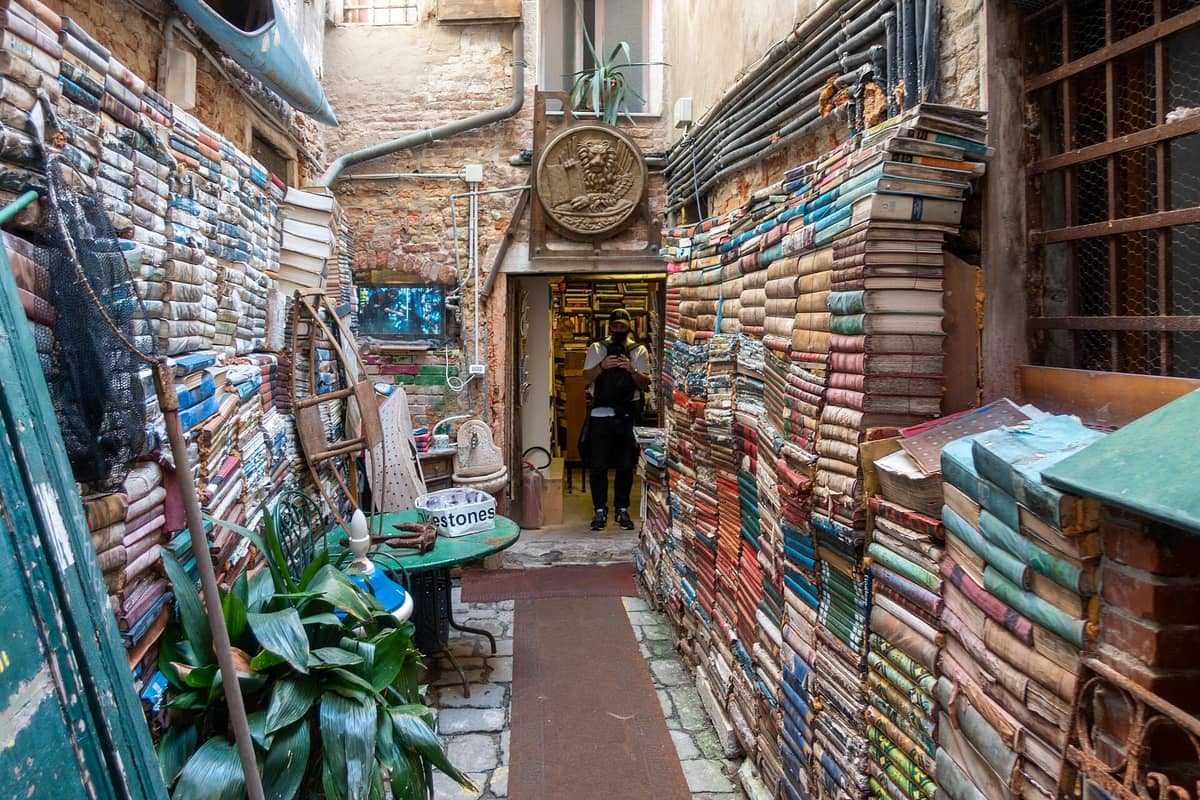
Acqua Alta BookshopAcqua Alta bookshop on Calle Longa Santa Maria Formosa has become genuinely famous, and it is genuinely worth a visit even accounting for the crowds it now attracts. Books are stacked in gondolas, bathtubs, and boats inside a canal-side building, and a staircase built from books leads to a rooftop view of the surrounding calli. It is theatrical, yes, but it is also a real working bookshop with a wide and eccentric selection.
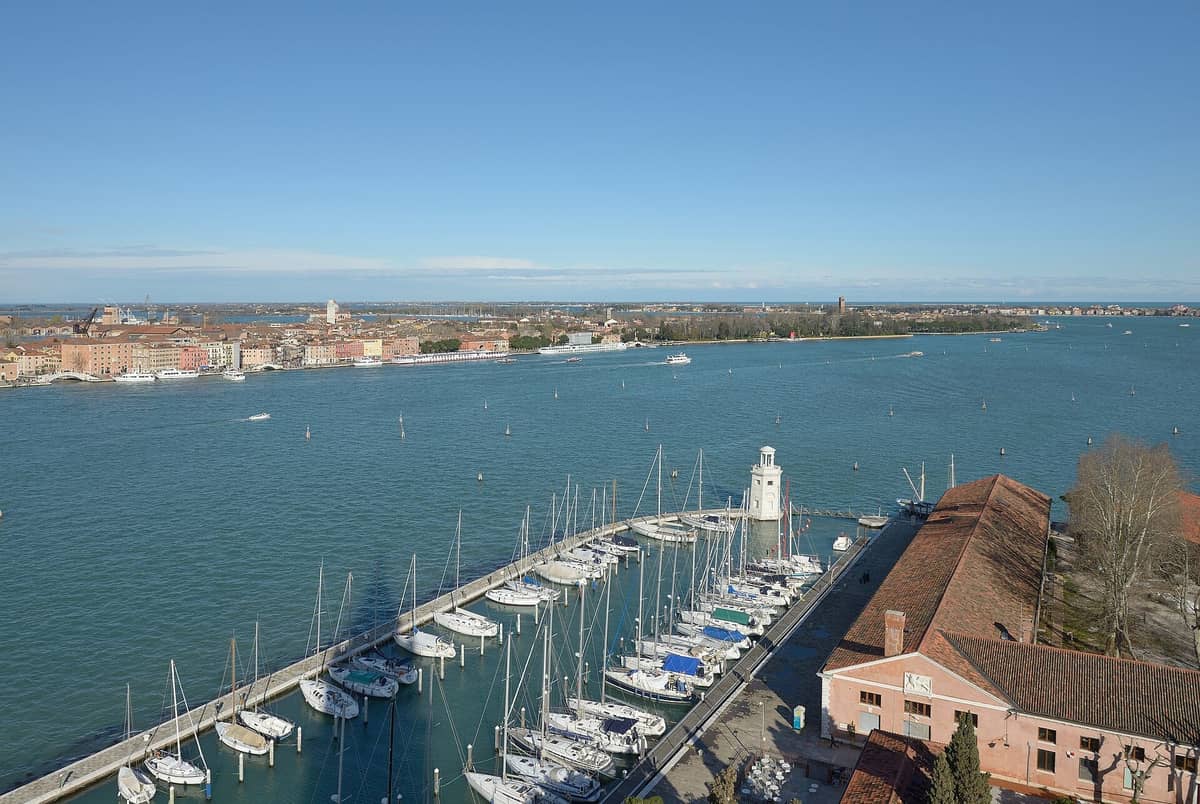
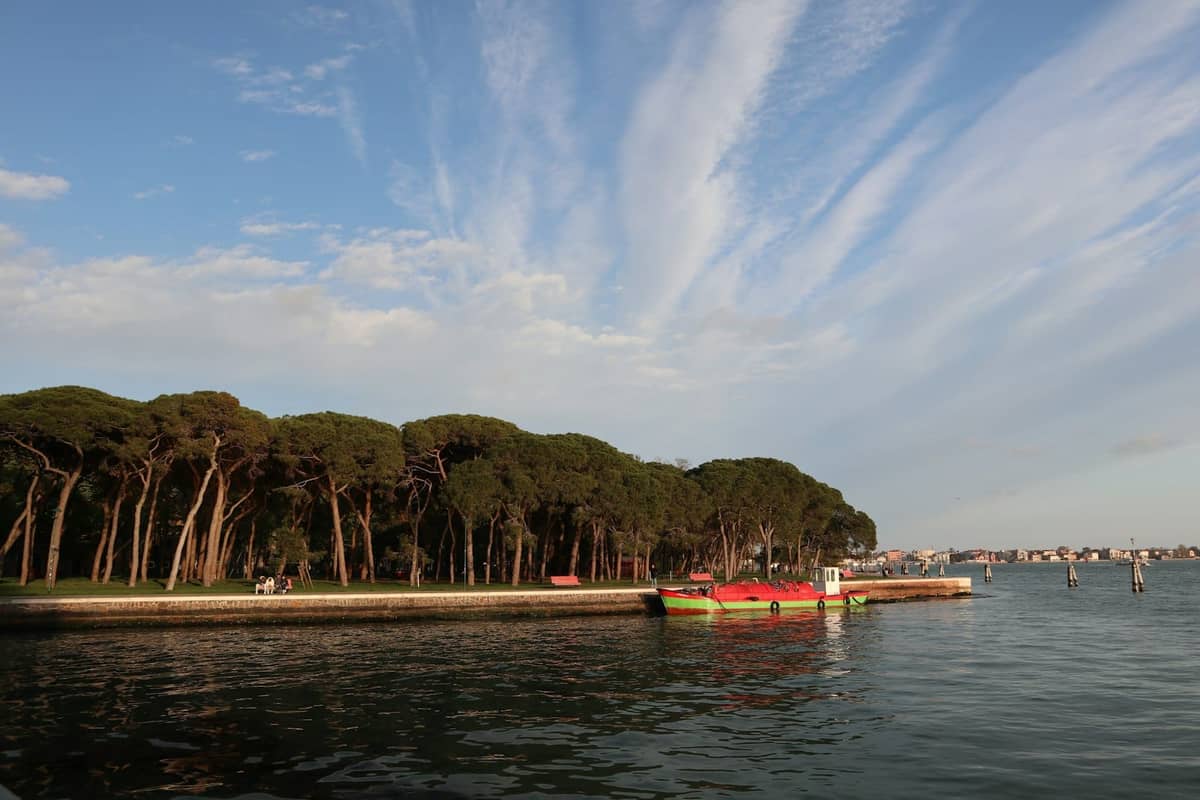
The Giardini della BiennaleGiardini della Biennale are the main public gardens of Venice and the central site of the world's most prestigious contemporary art exhibitionSan Giorgio Maggiore Outside Biennale years, the gardens are open freely and serve primarily as a neighbourhood park: a place for residents to walk dogs, read on benches, and sit near the lagoon edge. During the Biennale, the permanent national pavilions open and the gardens become a destination for the international art world. Either way, the walk through the Giardini to the southern waterfront offers some of the finest unobstructed views across the lagoon toward San Giorgio Maggiore.
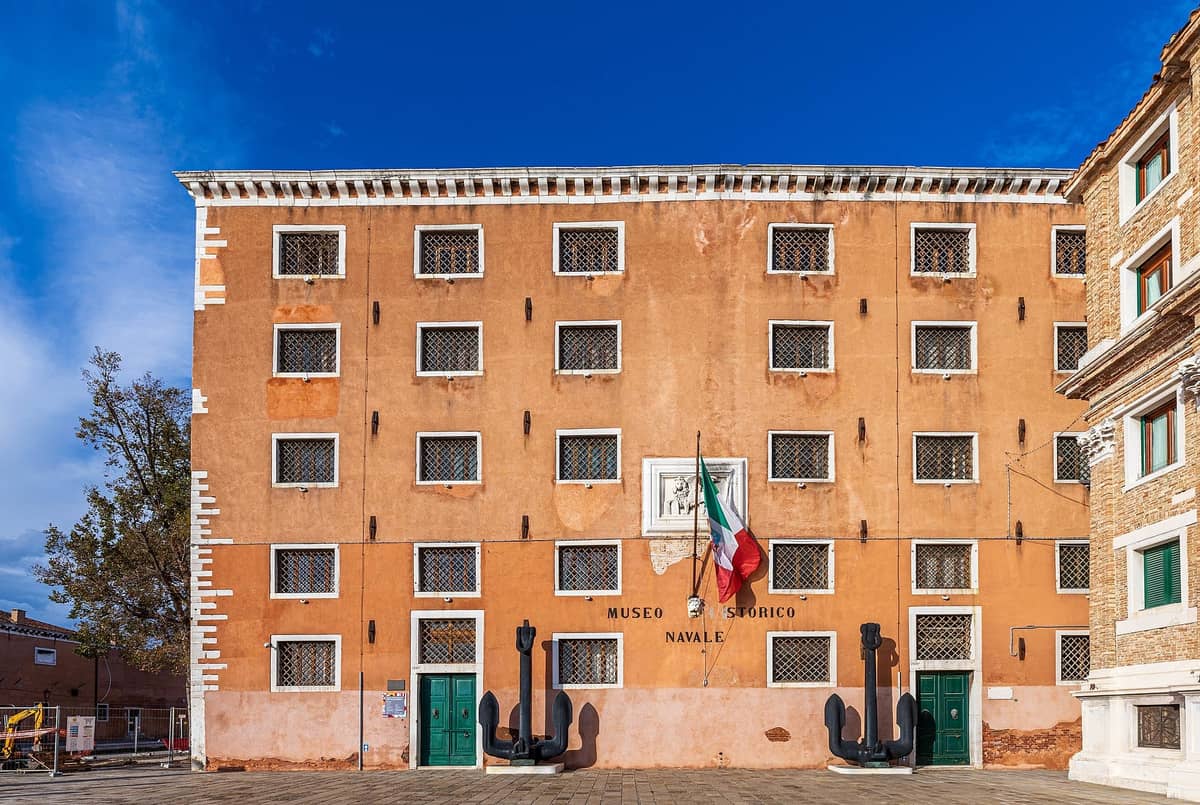
Museo Storico NavaleMuseo Storico Navale sits near the Arsenale entrance and is one of the more under-visited museums in the city. It holds an extensive collection of ship models, navigational instruments, and naval artefacts from the Venetian Republic through to the modern Italian Navy. For anyone interested in maritime history, it is a logical companion to the Arsenale itself.
Riva degli SchiavoniRiva degli Schiavoni is the wide promenade running along the southern waterfront of Castello from the San Marco basin. It is best walked early in the morning before the crowds arrive, when the light off the lagoon is at its most atmospheric and the views toward the Bacino di San Marco, San Giorgio, and the Giudecca are completely clear.
Arsenale di Venezia: the walled naval complex, visible from outside and accessible during the Biennale
Basilica dei Santi Giovanni e Paolo (San Zanipolo): Gothic church and ducal mausoleum
Campo Santa Maria Formosa: a lively residential campo with a Renaissance church
Acqua Alta bookshop: eccentric and photogenic canal-side bookstore on Calle Longa Santa Maria Formosa
Giardini della Biennale: public gardens and the main Venice Biennale exhibition site
Museo Storico Navale: maritime history museum near the Arsenale entrance
Riva degli Schiavoni: southern waterfront promenade best at dawn
Sant'Elena: the quiet residential island at the far eastern tip of the sestiere
ℹ️ Good to know
Art and Architecture alternate on the Biennale calendar (check dates for your year); for 2026 the Art Biennale runs roughly May–November, with events spread across the Giardini, the Arsenale, and other venues throughout the city. If your visit overlaps with the Biennale, Castello becomes one of the most internationally active neighbourhoods in Italy. Check the official Biennale calendar before you travel.
Eating & Drinking
The eating and drinking situation in Castello reflects its geography. Along the Riva degli Schiavoni and in the streets immediately behind it, restaurants are generally priced for tourists and do not represent good value. The closer you are to the San Marco waterfront, the more likely you are to pay a premium for mediocre food in a prime location. This is not unique to Castello, but it is worth knowing before you sit down anywhere with a view of the water.
The better eating in Castello happens further east. Via Garibaldi and the streets around it have a cluster of bars and osterie that serve a genuinely local clientele. This is a good area to find cicchetti, the small snacks of the Venetian bar tradition, served with a glass of wine or a spritz at the counter. For a proper introduction to how Venetians eat and drink between meals, the cicchetti guide to Venice explains the etiquette and the best options across the city.
Campo Santi Giovanni e Paolo and the surrounding calli have a range of options at different price points, including a few places that are clearly oriented toward visitors and a few that are not. The distinction is usually clear from the presence or absence of multilingual menus in the window and whether the clientele inside are tourists or not. A good rule in this neighbourhood, as in most of Venice, is to keep walking until you find somewhere that does not have a greeter at the door calling out the daily specials.
The morning bar culture is strong throughout Castello. Locals stop for a coffee standing at the counter, usually an espresso or a macchiato, and the bar staff know regulars by order. These bars rarely advertise, rarely appear in travel guides, and are often the best way to start the day in the neighbourhood. For a broader overview of what to eat across the city, the guide to what to eat in Venice covers the key dishes and where to find them.
Getting There & Around
Castello has no car access, as with the rest of historic Venice, and no metro. Navigation is entirely on foot or by water. The sestiere is served by several vaporetto lines operated by ACTV, the city's water-bus network. Line 1, which runs the full length of the Grand Canal before continuing along the southern waterfront, stops at San Zaccaria, which is the main entry point into western Castello from San Marco. Lines 4.1 and 4.2 run a circular route around the perimeter of the historic island and stop at the Arsenale and Giardini stops, which serve the middle and eastern parts of the neighbourhood.
From the Ferrovia (Santa Lucia train station) at the western edge of the city, reaching Castello means either taking a vaporetto around the perimeter or along the Grand Canal, or walking: the full walk from the station to the Arsenale takes approximately 40 to 50 minutes on foot depending on route and pace, crossing through San Polo and San Marco or through Cannaregio. From Piazzale Roma, where buses from the mainland and the airport terminate, the walk to western Castello via San Marco takes around 35 to 40 minutes.
If you are arriving from Marco Polo Airport, the Alilaguna water-bus service has a route that stops at San Zaccaria, directly on the Castello waterfront. This is a slower but more direct option than the bus to Piazzale Roma followed by a walk. For full transit options from the airport and around the city, see the guide to getting around Venice.
Within Castello itself, walking is the only practical option. The neighbourhood is large and the distances from the Riva degli Schiavoni to Sant'Elena are more significant than the map suggests: the walk from the Ponte della Paglia near San Marco to the tip of Sant'Elena takes around 30 minutes at a steady pace. The streets are generally easy to navigate in the western sections and become quieter, less signposted, and occasionally confusing in the eastern residential zones.
⚠️ What to skip
Acqua alta, the seasonal high-water flooding that affects Venice, can temporarily flood sections of the Riva degli Schiavoni and low-lying streets in western Castello. Raised walkways (passerelle) are deployed by the municipality during significant events. The MOSE barrier system is now operational and is activated during major tidal peaks. Check the official Venice tide forecast app or the Comune di Venezia website for alerts before any visit in autumn or winter.
Where to Stay
Castello offers a wider range of accommodation options than almost any other sestiere, partly because of its size and partly because of the contrast between its tourist-facing western edge and its residential eastern zones. For a full overview of the trade-offs involved in choosing where to stay in Venice, the guide to where to stay in Venice covers all six sestieri in detail.
The western strip along the Riva degli Schiavoni is home to some of Venice's grandest and most famous hotels. These are large, historic properties in exceptional waterfront positions, priced accordingly. Staying here puts you immediately adjacent to San Marco and the main vaporetto connections, but you are also in the most crowded and noisy part of the neighbourhood. The morning noise from the promenade starts early.
For travellers who want to stay within easy reach of the main sights but in a quieter setting, the area around Campo Santi Giovanni e Paolo or the streets between the Arsenale and Via Garibaldi offers smaller hotels, B&Bs, and apartment rentals at prices that reflect the slightly lower demand. This zone balances access to the wider city with something closer to a residential neighbourhood feel.
The far eastern sections, through the Giardini and into Sant'Elena, are the quietest accommodation areas in historic Venice. Options are limited, but for travellers who want to be on the island and away from the crowds at night, this corner of the city is difficult to beat. The tradeoff is that everything in the city, including the nearest vaporetto stop with frequent connections, is a meaningful walk away.
Is Castello Right for You?
Castello is a neighbourhood for travellers who want more than the concentrated core of Venetian tourism. It holds genuinely world-class sights, including the Arsenale and the Biennale venues, a serious Gothic church in San Zanipolo, and the atmospheric Riva degli Schiavoni waterfront, while also containing miles of canal-side streets and residential squares that see almost no foreign visitors on a typical day. If your itinerary is built around the main things to do in Venice, Castello will almost certainly feature, but it also rewards time spent simply walking east and seeing what the city looks like when it is not performing for tourists.
The neighbourhood is not a good fit for travellers whose priority is the Grand Canal, the Rialto, or DorsoduroDorsoduro. Castello is geographically distant from those areas, and getting back and forth involves either a long walk or a vaporetto connection. For a two- or three-day visit focused on the greatest hits, Castello works well as a day trip from a base in San Marco or San Polo rather than as a home base.
TL;DR
Castello is Venice's largest sestiere, stretching from the Riva degli Schiavoni to the quiet island of Sant'Elena.
Best for travellers who want to experience a less tourist-oriented side of Venice alongside major sights like the Arsenale, Santi Giovanni e Paolo, and the Giardini della Biennale.
The western edge near San Marco is crowded and expensive; the eastern residential zones are among the quietest and most genuinely local parts of the city.
Served by vaporetto lines 1, 4.1, and 4.2, with the San Zaccaria stop as the main western entry point; internal navigation is entirely on foot.
Not ideal for travellers whose main focus is the Grand Canal corridor or the museum clusters of Dorsoduro and San Polo, as distances are significant.
Two days in Venice is enough to cover the iconic highlights and still find quieter corners the crowds miss. This guide gives you a realistic, hour-by-hour framework for both days, practical transport advice, booking warnings, and honest takes on what is worth your time.
Three days is enough time to cover Venice's iconic landmarks, explore its quieter sestieri, and take at least one lagoon island trip. This itinerary is structured around the city's geography, vaporetto routes, and crowd patterns so you spend less time backtracking and more time actually seeing the city.
Acqua alta is Venice's famous tidal flooding, and it's far less dramatic than most visitors expect. This guide explains exactly what causes it, when it happens, how much of the city it actually affects, and what gear and forecasting tools will keep your trip on track.
Venice has well over 130 church buildings, and its greatest ones hold masterpieces by Titian, Tintoretto, Bellini, and Palladio that rival any museum. This guide covers the 13 best churches in Venice, from the unmissable to the quietly extraordinary.
Venice packs more world-class art and history into one city than almost anywhere else on earth. This guide covers the best museums in Venice, from Gothic palaces full of Tintoretto to intimate scuole with Carpaccio cycles, across every district and budget.
Venice looks different in every season, and the right time to visit depends entirely on what you're after. This guide breaks down weather, crowds, hotel prices, and major events month by month, so you can choose the visit that actually suits you.
Venice rewards those who know where to look. This guide covers the city's finest viewpoints, from soaring bell towers and climbable domes to iconic canal bridges and waterfront promenades, with practical tips on booking, timing, and what you'll actually see from each spot.
Cicchetti are Venice's answer to tapas, and the bacari that serve them are the city's most authentic social spaces. This guide covers what to order, where to go across every sestiere, what things cost, and how to plan a bacaro crawl that skips the tourist traps.
Venice rewards lingering, but its surroundings reward exploration. Whether you board a vaporetto for a lagoon island or a train toward the Veneto hills, a day away from the sestieri reveals a completely different side of this corner of northeastern Italy.
Venice doesn't have to drain your wallet. From sweeping Grand Canal viewpoints to Gothic churches packed with Tintorettos, many of the city's greatest experiences are completely free. This guide covers the best no-cost attractions, walks, markets, and island escapes across the lagoon.
Venice operates on a completely different logic from any other city. There are no cars, no taxis, no metro. Getting around means walking across 438 bridges and navigating canals by water bus, private boat, or gondola ferry. This guide explains every option clearly, with real costs and practical advice.
Gondola rides in Venice are regulated by the city, with fixed fares per boat — not per person. This guide breaks down current prices, the best stations to board, what routes actually cover, and the myths that cost tourists money.
Venice rewards the curious traveler who wanders past the obvious landmarks. This guide collects the city's most rewarding under-the-radar sights, from a Carpaccio cycle hidden in Castello to a working gondola boatyard in Dorsoduro and a ghost island in the northern lagoon.
Venice is one of the most debated destinations in travel. Built on 118 islands, UNESCO-listed, and unlike anywhere else on earth, it also attracts millions of visitors a year and charges a day-tripper access fee. This guide cuts through the hype to tell you exactly what Venice delivers, what it does not, and how to make a visit that is genuinely worth the effort.
Venice rewards those who spend well. This guide covers where to stay, how to move, what to eat, and which experiences justify the premium price tag — along with honest warnings about where the luxury label is oversold.
Venice is the city most couples imagine before they arrive, and one of the few that actually delivers. This guide covers the best romantic experiences, the ideal seasons, practical logistics, and honest advice on what lives up to the hype, and what does not.
Venice is unlike any other city in the world, built on 118 islands linked by 438 bridges in a lagoon recognized as a UNESCO World Heritage site. This guide covers the essential things to do in Venice, from the iconic to the overlooked, with practical details on transport, costs, and timing to help you make the most of every hour.
The Venice Biennale is one of the world's most significant contemporary art events, spreading across two major venues and dozens of city locations. This guide covers the 2026 Art Biennale dates, ticket options, what to expect at each venue, and the practical details that make the difference between a rushed visit and a memorable one.
Venice Carnival (Carnevale di Venezia) runs for roughly two weeks before Lent, drawing around 3 million visitors for elaborate costumes, masquerade balls, and free public events. This guide covers the 2026 dates, practical logistics, what things actually cost, and how to get the most from the experience without being overwhelmed.
The Venice International Film Festival is the world's oldest film festival and, crucially, it's open to the public. This guide covers everything from buying tickets and reaching the Lido to navigating the festival grounds and setting realistic expectations about red carpets and celebrity sightings.
Summer brings Venice to its most intense: scorching heat, record crowds, and prices to match. This guide cuts through the noise with practical strategies for timing, booking, staying cool, and finding breathing room in Italy's most visited city.
Winter is one of the most rewarding times to visit Venice. Crowds thin out, prices drop significantly, and the city takes on a moody, atmospheric quality that summer visitors never see. This guide covers weather, acqua alta, Carnival, costs, and everything else you need to plan a winter trip.
The Venetian Lagoon holds far more than Venice itself. This guide covers every island worth visiting, from Murano's glass furnaces and Burano's painted houses to ancient Torcello, the Lido's beaches, and the quiet agricultural island of Sant'Erasmo.
Venice has a reputation for draining wallets fast, but the reality is more nuanced. With the right timing, a few local habits, and some strategic planning, you can experience one of the world's great cities for far less than you'd expect. This guide breaks down exactly where the money goes and how to keep it in your pocket.
Venice rewards shoppers who know where to look. This guide covers the city's best authentic buys, from Murano glass and Carnevale masks to artisan paper goods and gourmet specialties, along with the neighborhoods and markets where locals and savvy visitors actually spend their money.
Venice is one of the world's most walkable cities, built on 120 islands connected by around 430 bridges with no cars in sight. This guide covers the best self-guided walking routes by district, the ideal times to walk, what to skip, and how to explore beyond St. Mark's Square.
Venice with kids is more manageable than most parents expect. This guide covers everything families need: getting around by vaporetto, the best kid-friendly attractions, seasonal timing, safety on the canals, and how to keep the trip fun without exhausting everyone.
Venetian cuisine is one of Italy's most distinctive regional traditions, built on lagoon seafood, rice, polenta, and centuries of spice trade. This guide covers the essential dishes, where to find them, what to pay, and how to eat like a local rather than a tourist.
Venice's six historic districts each offer a completely different experience. This guide breaks down exactly where to stay in Venice based on your budget, travel style, and priorities — with honest trade-offs, realistic price ranges, and practical booking advice.