San Giorgio Maggiore Island: Palladio's Masterpiece Across the Water
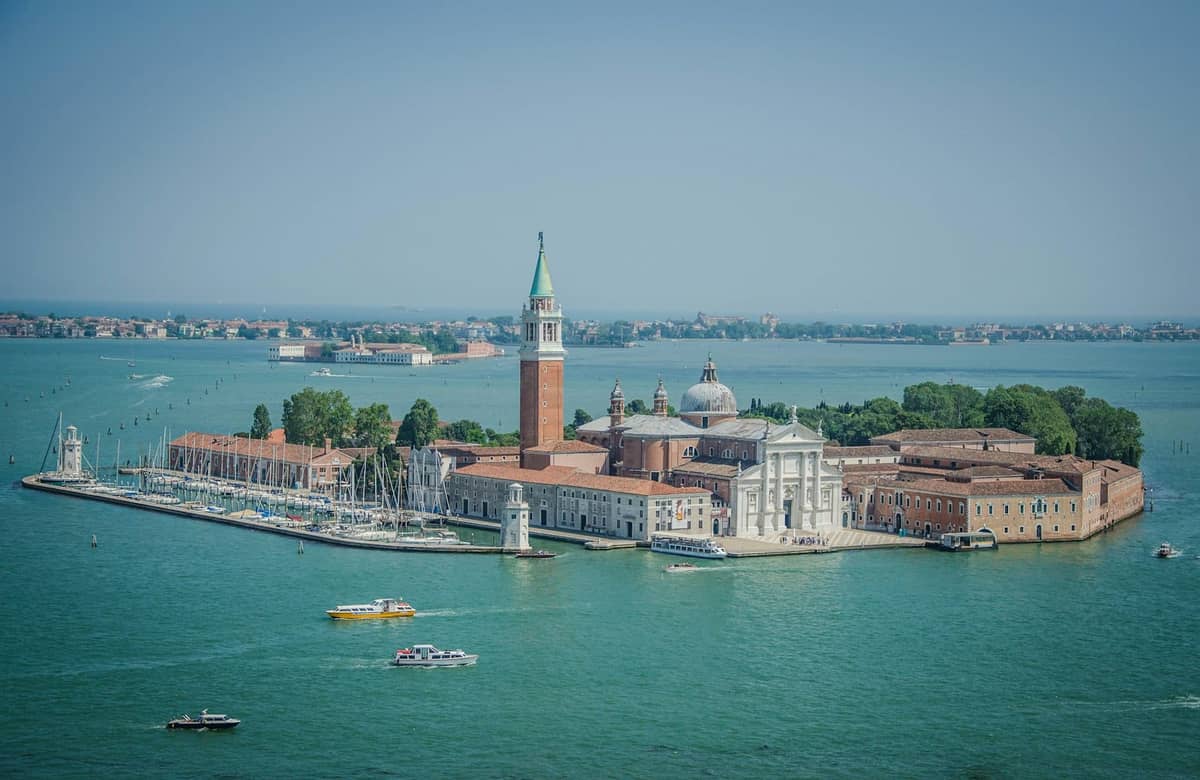
San Giorgio Maggiore Island sits just a few minutes by vaporetto from the San Marco waterfront, yet it feels like a different Venice entirely. The island holds one of Andrea Palladio's most celebrated churches, a working Benedictine monastery, and a bell tower that delivers arguably the best panoramic view in the city for a small admission fee. Entry to the basilica is free, and the island draws a fraction of the crowds that choke Piazza San Marco.
Quick Facts
- Location
- Isola di San Giorgio Maggiore, 30124 Venezia, Italy
- Getting There
- Vaporetto Line 2 from San Zaccaria to S. Giorgio stop (about 3 minutes)
- Time Needed
- 1.5 to 2.5 hours
- Cost
- Basilica: free. Campanile: approx. €6–€8 (verify before visiting)
- Best for
- Architecture lovers, panorama seekers, travellers wanting to escape San Marco crowds
- Official website
- www.abbaziasangiorgio.it
Why San Giorgio Maggiore Deserves More Than a Glance From the Waterfront
Most visitors to Venice spend a long moment staring at San Giorgio Maggiore Island from the Riva degli Schiavoni or the Piazzetta di San Marco. The island's white marble facade glows across the water, and the tall campanile punctuates the lagoon skyline in almost every postcard photo of the city. That view is, without question, one of Venice's defining images. But far fewer visitors actually board the vaporetto and go there.
That decision is a mistake. The island rewards the short crossing with a church of extraordinary architectural purity, a bell tower offering a panorama that competes seriously with the one from St. Mark's Campanile, and a calm that the main city rarely provides. The crossing itself takes only a few minutes from San Zaccaria, and a single vaporetto ticket covers the trip.
💡 Local tip
Buy a 24-hour or multi-day ACTV vaporetto pass if you plan to visit the lagoon islands. Line 2 from San Zaccaria to the S. Giorgio stop runs frequently and the crossing takes about 3 minutes. The stop drops you directly in front of the basilica entrance.
The Architecture: Andrea Palladio's White Marble Statement
The church of San Giorgio Maggiore is one of the most discussed buildings in Western architectural history. Andrea Palladio designed it, construction began in 1566, and the building was completed in 1610, several decades after Palladio's death in 1580. The facade solved a problem that had stumped Renaissance architects for over a century: how to apply classical temple proportions to a Christian basilica with a wide central nave and lower side aisles. Palladio's answer was to layer two interlocking temple fronts of different scales, one tall and narrow for the nave, one wide and lower for the aisles, unified by giant half-columns. The result looks simple from the water. Up close, it is remarkably sophisticated.
Step inside and the interior continues that logic. The nave is long and barrel-vaulted, flooded with natural light from high windows and from the lantern above the crossing. The white walls and grey stone columns create a cool, almost austere palette that makes the two large Tintoretto paintings in the chancel, the Fall of Manna and the Last Supper (completed around 1592 to 1594), stand out with particular force. The Last Supper, placed on the left wall of the chancel, is among the most dramatic Tintorettos in Venice, its diagonal composition cutting across the canvas with unusual energy. Dress modestly when entering, as this is an active religious building.
For context on Venice's broader wealth of ecclesiastical architecture, the guide to the best churches in Venice places San Giorgio Maggiore alongside the Frari and the Salute as essential stops for anyone serious about the city's artistic heritage.
Tickets & tours
Hand-picked options from our booking partner. Prices are indicative; availability and final rates are confirmed when you complete your booking.
Giorgio Cini, Borges Labyrinth and Vatican chapels tour with audio guide
From 28 €Instant confirmationFree cancellationWood of the Foundation and the Vatican chapels tour with audio guide
From 15 €Instant confirmationFree cancellationGiorgio Cini Foundation and Wood with the Vatican chapels tour with audio guide
From 22 €Instant confirmationFree cancellationBorges Labyrinth tour with audio guide
From 15 €Instant confirmation
The Campanile: The View That Rivals St. Mark's
The bell tower of San Giorgio Maggiore is reached by elevator, making it accessible to most visitors. The tower is lower than the Campanile of St. Mark's, which actually works in its favour: from here, the Piazza San Marco itself enters the frame, along with the Doge's Palace, the mouth of the Grand Canal, the Giudecca Canal, the distant lagoon, and the Alps on clear winter days. It is one of those views where you keep turning, finding something new in every direction.
The light changes significantly by time of day. In the morning, the sun is behind you as you face the San Marco waterfront, which means the city is lit and shadow-free, ideal for photography. By late afternoon, the sun swings around toward the west, and the Grand Canal basin picks up a warm, low-angle glow. Both are worth experiencing if your schedule allows two visits, but if you can only go once, mid-morning tends to offer the clearest air and fewest people on the tower platform.
ℹ️ Good to know
Campanile admission is approximately €6 to €8 for a single ticket (prices vary by source; verify before visiting). The basilica entry is free. Opening hours for the basilica complex are approximately Monday to Saturday 9:30 to 18:30 and Sunday 14:00 to 18:30, though these can vary seasonally. Always confirm current hours via the official abbey website or on arrival.
A Thousand Years of Benedictine Presence
The island's history predates Palladio by many centuries. Around 982, Doge Tribuno Memmo donated the island to a Benedictine monk named Giovanni Morosini, and a monastery was established. That monastic community shaped the island's character across the medieval period. The current monastery buildings, which wrap around the island behind the church, were largely constructed or rebuilt during the sixteenth and seventeenth centuries, but the continuity of Benedictine occupation gives the site a depth that purely civic or artistic monuments often lack.
Today the monastery is an active cultural centre. The Giorgio Cini Foundation, established in 1951 by industrialist Vittorio Cini in memory of his son Giorgio, occupies most of the monastic complex. The foundation runs conferences, restoration programmes, and temporary exhibitions, many of which are open to the public. The cloisters, the library, and the refectory (with its own large Paolo Veronese painting, the Wedding at Cana, now replaced by a copy after the original was taken to France in 1797) can sometimes be visited on guided tours. Check the Cini Foundation's website for current access and schedules, as these vary.
How the Island Changes Through the Day
San Giorgio Maggiore is at its quietest first thing in the morning. The 9:30 opening of the basilica coincides with the time when most tourists in Venice are still queuing at St. Mark's or eating breakfast on the other side of the water. Early visitors find the church largely empty, the light soft through the high windows, and the Tintorettos unobstructed by crowds. The smell inside is the particular combination of old stone, candle wax, and the faint salt air that drifts in from the open water nearby.
By mid-morning, small tour groups arrive, though the island never approaches the density of the main San Marco district. The waterfront facing back toward the city becomes more animated as vaporettos pass and day-trip boats circle the basin. Midday is usually the least rewarding time for photographs from the tower, as the light is directly overhead and flat. Late afternoon brings the best golden-hour conditions from the western side of the tower.
Sunday afternoon deserves a specific note: the basilica opens later (around 14:00) on Sundays, and morning visitors will find the church closed. Plan accordingly if your schedule is tight.
⚠️ What to skip
Sunday morning visits are not possible as the basilica does not open until approximately 14:00 on Sundays. If you are visiting on a Sunday, plan other activities for the morning and cross to the island after lunch.
Getting There and Getting Around the Island
Vaporetto Line 2 from San Zaccaria (just east of the Piazzetta di San Marco) is the direct connection. The San Giorgio stop is the first stop on the line, and the journey takes roughly three to five minutes across the Bacino di San Marco. A single ACTV vaporetto ticket covers the trip. If you are already using a travel pass for getting around Venice, no additional cost applies. For more detail on navigating the canal network, the guide to getting around Venice covers vaporetto routes, passes, and ticketing clearly.
Once on the island, the layout is straightforward. The vaporetto stop drops you at the western quayside directly facing the church facade. The main entrance to the basilica is a short walk straight ahead. To the right as you face the church, a path runs along the water toward the foundations of the monastery complex. The island is small enough to walk its accessible perimeter in under twenty minutes. Note that the working monastic areas and much of the Cini Foundation complex are not freely accessible without a tour or specific event admission.
San Giorgio Maggiore pairs naturally with a visit to the Giudecca Island, reachable on the same vaporetto line, or with a walk along the Zattere promenade on the Dorsoduro waterfront after you return to the main island.
Photography Notes and Practical Details
The view back toward San Marco from the island's western quayside is one of the most photographed in Venice, and with good reason. A wide-angle lens or a phone camera set to its widest mode captures the full sweep from the Doge's Palace on the left to the Punta della Dogana on the right, with the open lagoon in between. Morning light hits the city facade from the east, making this a particularly strong shot in the first hour or two after opening.
Inside the basilica, photography is generally permitted in the nave but restrictions may apply in specific areas such as the chancel or choir. Use ambient light rather than flash, both out of respect and because the low, raking light from the windows actually produces more interesting results than flash fill. On the bell tower platform, the open railings allow unobstructed shots in all directions, though wind can be strong. A polarising filter, if you shoot with a camera that accepts one, cuts the lagoon glare considerably.
Winter visits deserve special mention for photographers. When the air is clear, the view from the campanile extends to the Dolomites on the northern horizon. Acqua alta events are less likely to affect San Giorgio Maggiore directly than the low-lying San Marco area, though heavy fog in winter can reduce visibility significantly from the tower.
For a comprehensive picture of where San Giorgio Maggiore fits among Venice's best elevated viewpoints, the best views in Venice guide compares the campanile here with other options across the city.
Is San Giorgio Maggiore Overhyped, Underhyped, or Exactly Right?
Underhyped, without question. The island appears in every panoramic photograph of Venice and on countless itineraries as a visual backdrop, yet the visitor numbers crossing by vaporetto remain modest compared to the main sestieri. That imbalance works entirely in the visitor's favour: you get one of Palladio's finest buildings, two significant Tintorettos, a panoramic tower, a lagoon waterfront, and a working monastic atmosphere, all without the queuing and crowding of the main city. The basilica is free to enter.
Who should consider skipping it: travellers with only four or five hours in Venice who have not yet seen the Doge's Palace, the Accademia, or St. Mark's Basilica might prioritise those first. The island's appeal is primarily architectural and contemplative rather than spectacular in the way of the Basilica di San Marco's gilded mosaics. If Renaissance church architecture leaves you cold, the tower view is still worth the crossing on its own merits, but the island will not convert anyone who is fundamentally indifferent to ecclesiastical spaces.
Insider Tips
- Board Line 2 at San Zaccaria rather than at San Marco Giardinetti to avoid the longer queue that forms at the main San Marco stop, especially in summer.
- The view from the campanile toward the west at sunset is exceptional, but check closing times carefully as the basilica complex closes in the early evening and the last elevator run may be earlier than the posted site hours suggest.
- The Cini Foundation occasionally opens its cloisters and library spaces for public tours, including the double cloister attributed to Palladio himself. Check the foundation's website before your visit for scheduled access.
- Sitting on the stone steps of the church facade facing the lagoon in early morning, with a coffee from the small bar near the vaporetto stop, is one of the quieter pleasures the island offers. That stretch of waterfront is largely free of tourist infrastructure.
- If you visit during the Venice Biennale, the Cini Foundation and surrounding island grounds are frequently used for major exhibitions, meaning the island takes on an entirely different character. Check Biennale listings for what might be accessible during your dates.
Who Is San Giorgio Maggiore Island For?
- Architecture enthusiasts who want to stand inside one of Palladio's most complete surviving buildings rather than just read about it
- Photographers seeking the best elevated view of the San Marco basin without the queues of the main Campanile
- Travellers wanting a quieter, less crowded counterpoint to the intensity of Piazza San Marco
- Visitors interested in the intersection of monastic history, Renaissance art, and contemporary cultural programming through the Cini Foundation
- Anyone who wants to understand Venice's lagoon geography by looking at it from the water rather than from inside it
Nearby Attractions
Combine your visit with:
- Burano Island
Eight to nine kilometers north of Venice, Burano Island is a compact, flat island of roughly 21 hectares where fishermen's houses are painted in saturated reds, yellows, and blues. It has a legitimate history in lace-making stretching back to the 16th century, and the 40-minute vaporetto ride across the lagoon is part of the experience.
- Chiesa del Redentore
Built in 1577 as a vow to God after a devastating plague, the Chiesa del Santissimo Redentore is Andrea Palladio's finest church in Venice. Standing on the island of Giudecca across the canal from Dorsoduro, it rewards visitors with serene interiors, important Renaissance paintings, and one of the most dramatic facades in Italian architecture.
- Chioggia
Chioggia is an ancient fishing town at the southern entrance of the Venetian Lagoon, built on a cluster of small islands linked by bridges and crossed by canals. Unlike Venice, it functions as a living, working community, and that distinction shapes everything about a visit.
- Giudecca Island
Giudecca Island sits just minutes from the heart of Venice yet feels like a different city entirely. Flat, walkable, and free to explore, it rewards visitors with Palladian architecture, waterfront promenades, and a glimpse of how Venetians actually live.