Venice Film Festival Guide: How to Attend & What to Expect
The Venice International Film Festival is the world's oldest film festival and, crucially, it's open to the public. This guide covers everything from buying tickets and reaching the Lido to navigating the festival grounds and setting realistic expectations about red carpets and celebrity sightings.
Plan and book this trip
Tools from our partner Travelpayouts help you compare flights and hotels. If you book through them, we may earn a commission at no extra cost to you.
Flights
Hotels map
TL;DR
- The 83rd edition of the Venice International Film Festival runs 2–12 September 2026 on Lido di Venezia, organized by La Biennale di Venezia.
- Most screenings are open to the public; industry accreditation is not required. Tickets go on sale around mid-August via labiennale.org.
- Single screening tickets range roughly €12–€50; discounts apply for under-26s, seniors, and Biennale Card holders. Check the Venice Film Festival venue page for location details.
- Reach the Lido by vaporetto lines 1, 5.1, 5.2, or 6 to Lido S. Maria Elisabetta, then a 10-minute walk to Palazzo del Cinema.
- A film ticket does not grant red carpet access. You can watch celebrity arrivals from designated public areas, but not from the carpet itself.
What Is the Venice Film Festival and Why Does It Matter?
The Venice International Film Festival, officially Mostra Internazionale d'Arte Cinematografica della Biennale di Venezia, is the oldest film festival in the world. It was founded in 1932 as part of the Venice Biennale and has run almost continuously since, awarding its top prize, the Golden Lion (Leone d'Oro), to films that frequently go on to win Academy Awards and other major prizes. The 2026 edition is the 83rd festival and runs from 2 to 12 September.
In the film industry calendar, Venice opens the autumn awards season, arriving just before Toronto and Telluride. Films that premiere here often carry serious Oscar momentum, which means the press corps, studio executives, and talent that descend on the Lido every September represent genuinely high-stakes cinema culture. For visitors, this creates a rare window to watch world-premiere films in a spectacular setting, often days or weeks before they reach cinemas anywhere else.
Despite its prestige, Venice is not exclusively an industry event. A significant share of screenings is open to anyone willing to buy a ticket, which separates it from more invitation-heavy festivals. If you are already planning a visit to Venice in early September, the festival is worth building your trip around. For context on the broader September experience, see our guide on the best time to visit Venice.
Tickets: What to Buy, Where, and When
All tickets are sold exclusively online through the official Biennale cinema ticketing platform at labiennale.org. There is no reliable physical box office for advance sales. Tickets for the general public typically go on sale in mid-August, around two to three weeks before the festival opens. High-profile screenings in Sala Grande, the main competition venue, can sell out within hours of going live, sometimes within minutes for the most anticipated films.
- Single screening tickets Approximately €12–€50 depending on venue and time of day. Sala Grande evening galas and competition screenings sit at the upper end. Daytime screenings in smaller venues are cheaper.
- Discounts Reduced rates are available for under-26s, seniors, and holders of the Biennale Card. Check labiennale.org for current discount categories when tickets go on sale in August.
- Biennale Card An annual pass for regular Biennale attendees that covers multiple events across the Biennale's year-round program. Worth considering if you plan to attend multiple screenings or also visit the Venice Biennale art exhibition.
- Industry accreditation Not required for public screenings. Industry badges grant priority access and entry to press/industry-only screenings, but regular visitors do not need them.
💡 Local tip
Set a reminder for mid-August and check labiennale.org regularly. The site announces the official on-sale date a few days in advance. For the most in-demand screenings, be ready to purchase the moment the booking window opens.
Prices and discount categories listed here are based on recent editions and may change for 2026. Always confirm current pricing directly at labiennale.org before booking. Third-party resale tickets exist but are not officially supported, and there is no guarantee they are valid.
Getting to the Lido: Vaporetto Routes and Logistics
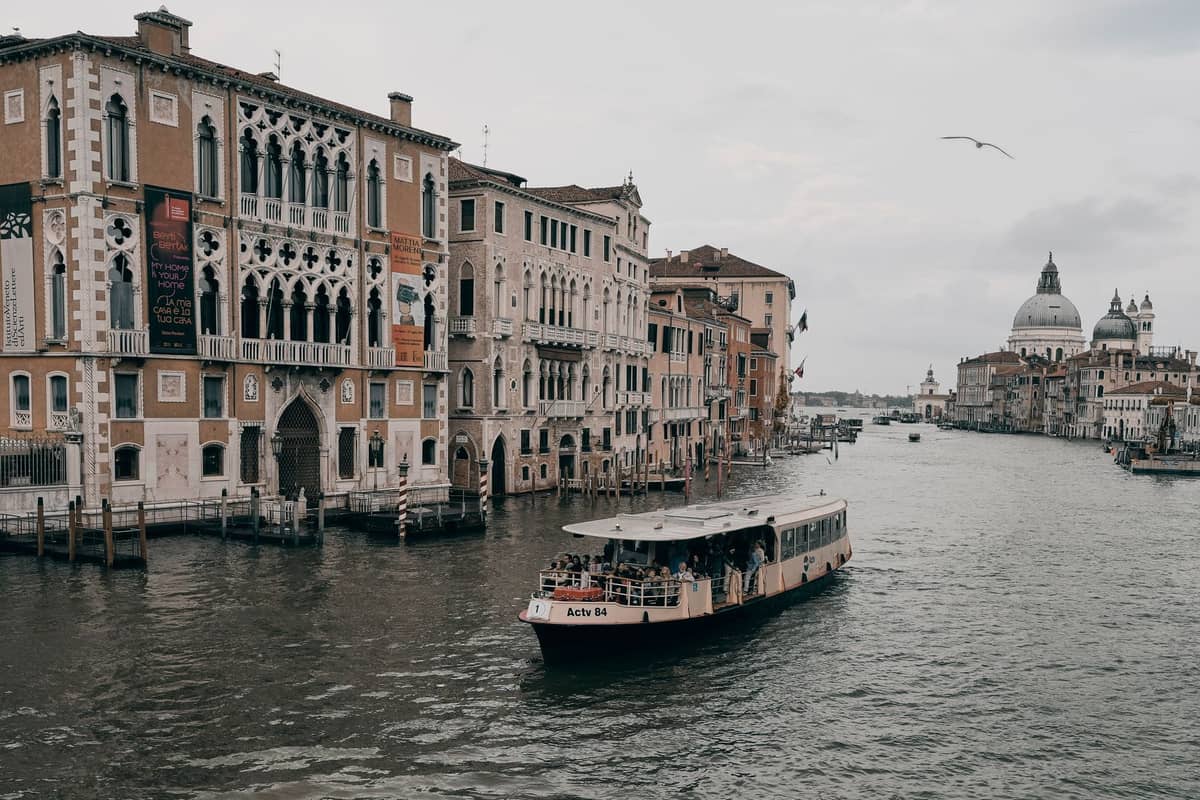
The festival takes place on Lido di Venezia, a narrow barrier island that separates the Venetian Lagoon from the Adriatic Sea. It is connected to the historic city by regular vaporetto (water bus) services operated by ACTV. The journey from central Venice takes roughly 15–25 minutes depending on your starting point and which line you take.
- Line 1 The classic Grand Canal route, stopping at all major points including San Marco and Rialto before reaching the Lido. Slower but scenic.
- Lines 5.1 and 5.2 Circular routes that bypass the Grand Canal and are generally faster from points like Piazzale Roma, Ferrovia (Santa Lucia train station), or Fondamente Nove.
- Line 6 A direct seasonal service linking the Lido to the main island. Faster crossings but fewer stops. Check ACTV for current schedules during festival dates.
All these lines terminate at Lido S. Maria Elisabetta, the main vaporetto stop on the island. From there, Palazzo del Cinema is about a 10-minute walk south along the waterfront promenade (Gran Viale Santa Maria Elisabetta and then via Lungomare Marconi), or a short ride on local bus lines A or B. During festival days, the walk fills with festival-goers, film crews, and the occasional recognizable face, which is part of the atmosphere.
⚠️ What to skip
Vaporettos get very crowded during festival evenings, particularly around major premiere times (typically 19:00–21:00). Allow at least 45–60 minutes of travel time from central Venice to be safe, and buy a multi-day ACTV travel pass rather than paying per ride. Verify current vaporetto fares with ACTV before your trip.
Note that Venice's day-visitor access fee (Contributo di Accesso) does not apply to lagoon islands such as the Lido, and September 2026 is not currently listed as a fee-charging period. For full details on navigating Venice's water transport network, our guide to getting around Venice covers vaporetto passes, routes, and practical advice.
Navigating the Festival Grounds: What Requires a Ticket and What Doesn't
The outdoor festival area around Palazzo del Cinema on Lungomare Marconi is freely accessible after passing through a standard security check. You do not need a ticket to walk the grounds, browse the outdoor program areas, visit the festival market, or watch activity outside the screening venues. This is worth knowing: the festival has a real atmosphere that you can experience without spending anything on tickets.
Screening venues, however, require a valid ticket for entry. The main venues include Sala Grande (the primary competition cinema inside Palazzo del Cinema), Sala Darsena, PalaBiennale, and several smaller satellite venues. Each venue has its own capacity and programming mix; Sala Grande hosts the main competition premieres and is the hardest ticket to get. PalaBiennale is a larger temporary structure used for public screenings and is generally easier to book.
✨ Pro tip
If major competition films are sold out, look at the Orizzonti (Horizons) sidebar section and the Venice Days (Giornate degli Autori) program, which runs concurrently. These sections showcase strong films and are often significantly easier to book. Some of the most memorable Venice discoveries come from these programs rather than the main competition.
Red Carpets and Celebrity Sightings: Setting Realistic Expectations
The Venice red carpet is one of the most photographed in the world, and it is understandable to want to see it in person. The honest reality: a film ticket, even for a Sala Grande gala premiere, does not grant you red carpet access. The carpet is reserved for credentialed press, accredited industry, and talent. Ticket-holding members of the public enter Sala Grande through a separate entrance and are seated separately.
That said, you can watch celebrity arrivals from designated public viewing areas along the barriers near the carpet. These spots are free and require no ticket, just patience and an early arrival. For major premieres, good positions fill up two to three hours before the event. Bring water and sunscreen in early September, when temperatures on the Lido can still reach 25–28°C.
Celebrity sightings outside formal events are genuinely common on the Lido during festival week. The island is small and there are only so many restaurants, beaches, and waterfront cafes. A coffee at Hotel Excelsior or lunch at one of the Lungomare trattorias puts you in the same spaces as a significant portion of the festival's guests. This is not a guarantee, but it is a real part of the Lido's character during the festival.
Planning Your Visit: Timing, Accommodation, and Practical Tips
Accommodation on the Lido fills rapidly once festival dates are confirmed, and prices spike substantially. If you want to stay on the island itself, book as early as possible, ideally within days of the official dates being announced. Staying in Venice proper is a very workable alternative given the short vaporetto journey, but factor in the travel time for evening screenings. For help choosing where to base yourself, the where to stay in Venice guide covers the main neighborhoods and their tradeoffs.
Early September is still high summer in Venice, with the lagoon crowds only beginning to thin. The festival runs concurrently with peak tourism in the historic center. If you plan to combine festival screenings with sightseeing in San Marco or the Grand Canal, aim for mornings before heading to the Lido for afternoon and evening screenings. Our 3-day Venice itinerary can help you structure the balance.
- Book accommodation months in advance, especially on the Lido. Prices during festival week are 30–50% higher than surrounding weeks.
- Check the official program announcement, usually released 4–6 weeks before the festival, to identify must-see screenings before tickets go live.
- Bring a portable charger. Long queues outside venues before screenings are common, and you will want your phone for tickets (often presented as QR codes).
- Dress code for evening galas is typically formal or smart-casual. Jeans are generally fine for daytime screenings.
- The festival grounds have food and drink concessions, but prices are high. The residential streets of the Lido have good local bars and sandwich shops within a 5-minute walk.
- Acqua alta flooding is rare in September but not impossible. It is worth knowing the basics before any Venice trip.
ℹ️ Good to know
Venice's day-visitor access fee (Contributo di Accesso), which applies on selected high-attendance days starting from 2026, is not charged on Lido di Venezia and is not currently scheduled for September. Always confirm the current list of fee dates at cda.ve.it before your trip.
If you have extra days around the festival, the lagoon islands and quieter sestieri reward exploration. The Venice lagoon islands guide covers Murano, Burano, and Torcello, all of which make excellent half-day excursions. The Lido itself has a decent stretch of beach at Lido beach that is worth a morning visit before screenings begin.
FAQ
Do I need industry accreditation to attend the Venice Film Festival?
No. A significant portion of screenings are open to the general public with no industry credentials required. You simply purchase tickets through the official Biennale ticketing platform at labiennale.org. Industry badges give priority access and entry to press-only screenings, but regular visitors do not need them for public shows.
When do Venice Film Festival tickets go on sale to the public?
Tickets for the general public typically go on sale in mid-August, around two to three weeks before the festival opens. The exact date is announced on labiennale.org. High-demand screenings in Sala Grande can sell out very quickly, so monitor the site closely and be ready to buy as soon as the window opens.
How do I get from Venice to the Venice Film Festival venue on the Lido?
Take a vaporetto from central Venice to Lido S. Maria Elisabetta. Lines 1, 5.1, 5.2, and 6 all serve this stop. The journey takes roughly 15–25 minutes depending on your starting point. From Lido S. Maria Elisabetta, Palazzo del Cinema is about a 10-minute walk or a short ride on local bus lines A or B.
Can I watch the Venice Film Festival red carpet as a member of the public?
Yes, but from designated public viewing areas, not from the carpet itself. A film ticket does not grant red carpet access. To get a good viewing spot at a major premiere, arrive at least two to three hours early. The area is free to access after passing through a security check.
Is the Venice Film Festival worth attending if I am not a film industry professional?
Yes, for the right kind of visitor. You can watch world-premiere films before they reach any cinema, experience a genuinely world-class cultural event, and spend time on the Lido in early September when the weather is still excellent. The main limitation is that premium screenings sell out fast and staying on the Lido during festival week is expensive. If you go in with realistic expectations about red carpet access and plan your ticket purchases carefully, it is a rewarding trip.