Where to Stay in Venice: The Complete Neighborhood Guide
Venice's six historic districts each offer a completely different experience. This guide breaks down exactly where to stay in Venice based on your budget, travel style, and priorities — with honest trade-offs, realistic price ranges, and practical booking advice.
Plan and book this trip
Tools from our partner Travelpayouts help you compare flights and hotels. If you book through them, we may earn a commission at no extra cost to you.
Flights
Hotels map
TL;DR
- Venice's historic center is split into six sestieri: San Marco, Cannaregio, Castello, Dorsoduro, San Polo, and Santa Croce — each with a distinct character and price point.
- San Marco is the most central but also the most crowded and expensive; first-timers often do better in Dorsoduro or Cannaregio.
- Staying on the mainland in Mestre saves 40–50% on accommodation costs, with a 10-minute train ride to the historic center via Venice's public transport.
- Book 4–6 months ahead for spring and autumn visits; 6–8 months ahead for July, August, and Carnival season.
- Historic rooms in converted palazzi are often 150–250 sq ft — smaller than most modern hotels. Factor this into your expectations.
How to Think About Where to Stay in Venice
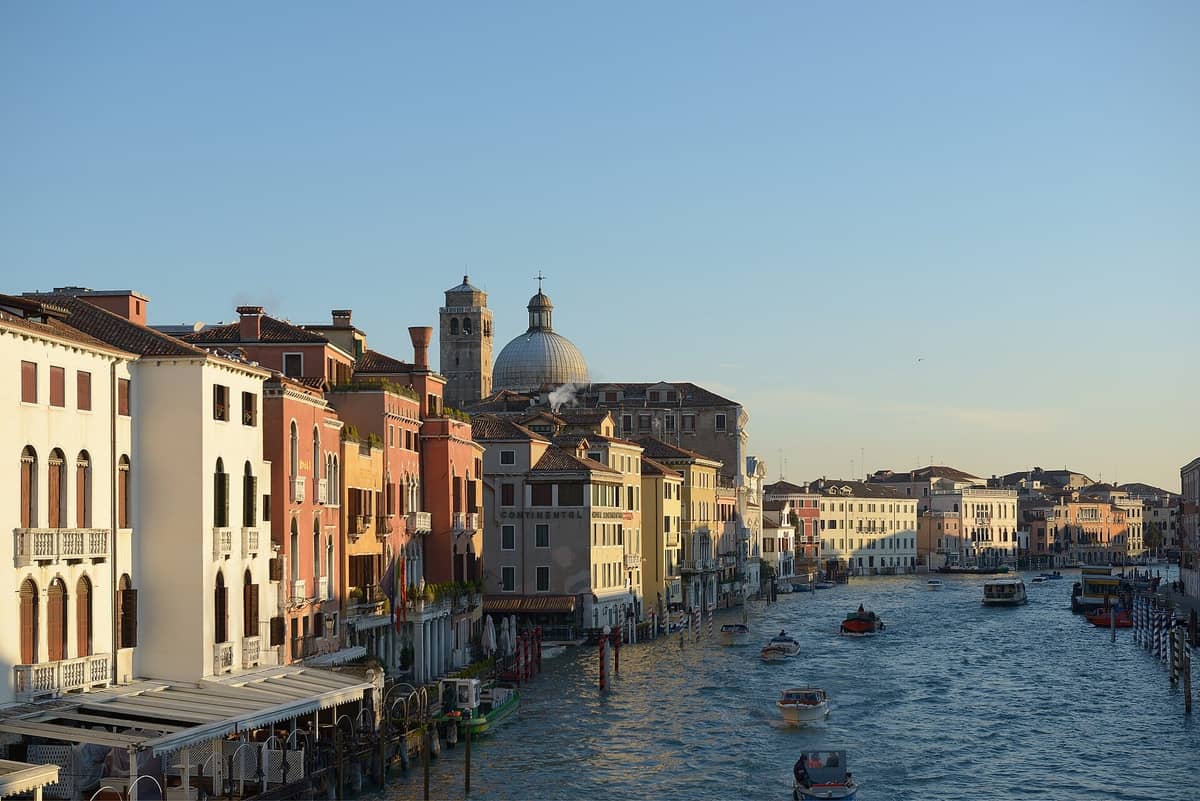
Choosing where to stay in Venice is not simply a matter of picking a neighborhood — it is a decision that shapes every hour of your visit. There are no cars, no metro lines, and no ride-hailing apps within the historic island city. Every journey happens on foot across narrow bridges or on the vaporetto water bus network. That means your hotel's location directly determines how much time you spend walking with bags, how quickly you reach key sights, and how likely you are to actually hear silence after 9pm.
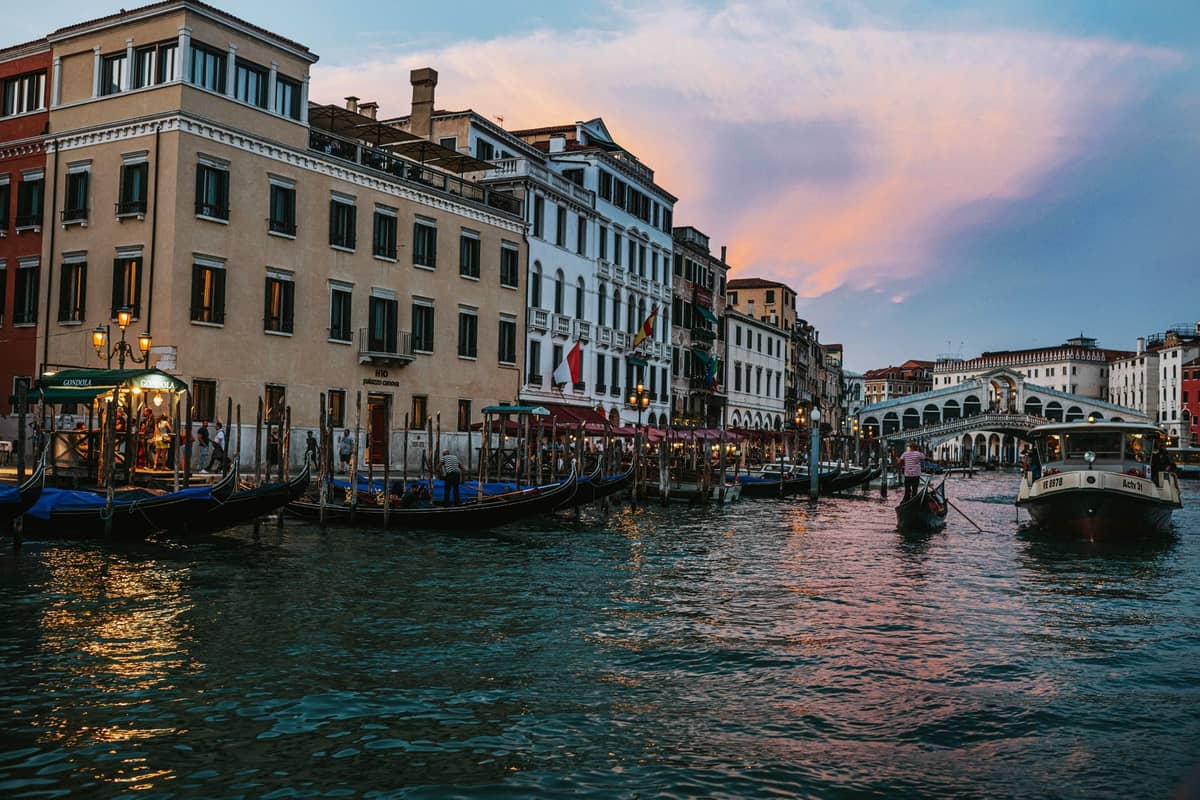
Venice's historic center is built on 118 small islands connected by 438 bridges, all organized into six ancient districts called sestieri. Beyond the island city, visitors also stay on the Lido barrier island, on Giudecca, and on the mainland in Mestre. Each option involves a real trade-off between cost, convenience, atmosphere, and peace.
⚠️ What to skip
Venice's historic buildings were not designed for modern luggage. Many hotels occupy converted palazzi with steep internal staircases and no elevator. Before booking, confirm whether your property has lift access — especially if you're staying above the second floor or traveling with heavy bags.
The Six Sestieri: Honest Assessments
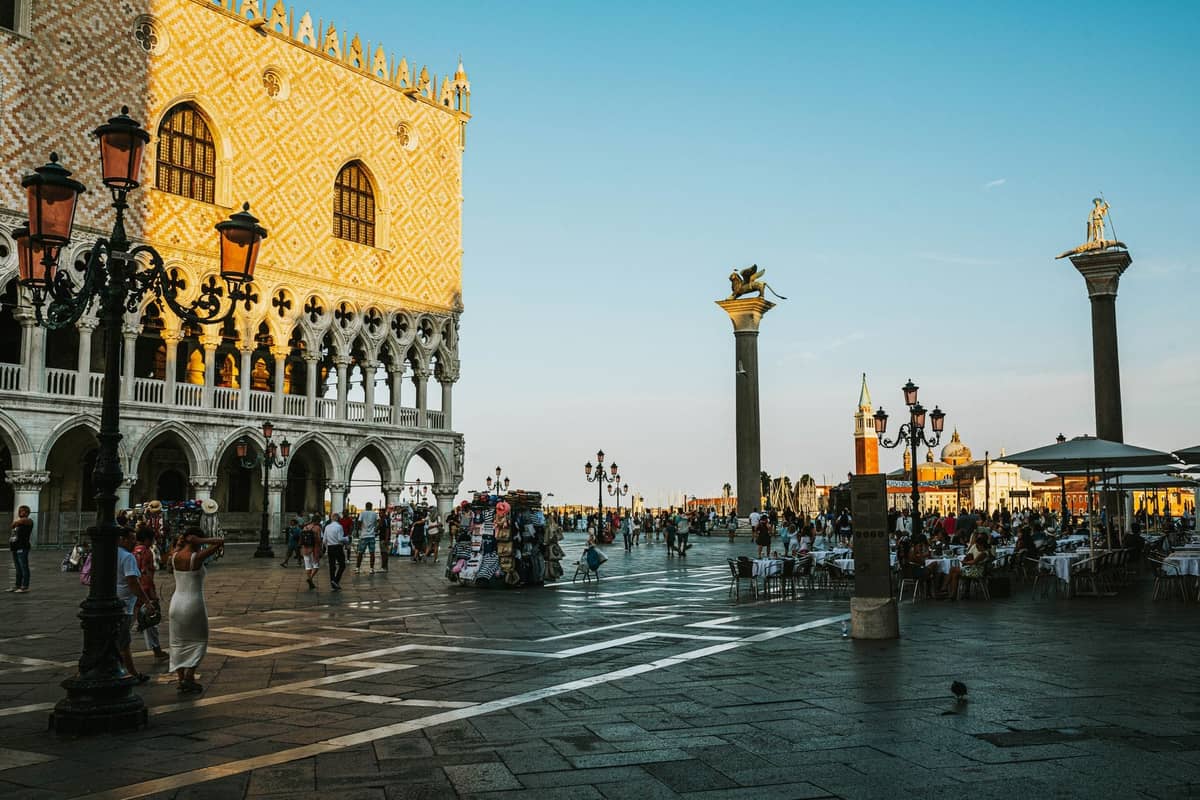
San Marco is the geographic and touristic center of Venice. Staying here puts you within walking distance of Piazza San Marco, the Doge's Palace, and the Rialto Bridge. For first-time visitors with limited time, that proximity has genuine value. The problem: San Marco is the most expensive sestiere by far, it fills with day-trippers from around 9am, and many of the streets nearest the piazza are effectively outdoor shopping malls by noon. Hotels here typically charge a significant premium over the same room elsewhere. If you are planning to spend significant time in museums, churches, and quieter canals, you may find better value — and more sleep — elsewhere.
Dorsoduro is consistently the best all-around neighborhood for visitors who want to feel like they are actually in Venice rather than inside a tourist attraction. The southern district contains the Peggy Guggenheim Collection, the Accademia galleries, the Zattere waterfront promenade, and Campo Santa Margherita — one of the few large squares in Venice where locals actually outnumber tourists in the evenings. Prices are moderate rather than low, and the walk to San Marco or Rialto is under 20 minutes.
Cannaregio offers the most local feel of any central sestiere. This northern district is home to the historic Jewish Ghetto, the Santa Lucia train station, and long stretches of residential canal that see relatively few tourists. Accommodation here runs roughly 15–25% cheaper than equivalent properties in San Marco. The trade-off is distance: getting to Dorsoduro or the Rialto from northern Cannaregio requires a 25–35 minute walk or a vaporetto connection. For repeat visitors or anyone planning a stay of four nights or more, this is often the smartest choice.
Castello is Venice's largest sestiere, stretching east from San Marco toward the Arsenale and beyond. The western end, near Riva degli Schiavoni, is packed with large hotels and remains quite busy. Further east, around Via Garibaldi and the Giardini della Biennale, the neighborhood becomes noticeably quieter and more authentically residential. If you want to be close to the action but not inside it, the eastern portion of Castello is worth exploring.
- San Polo Compact, central, and very practical. Within a five-minute walk of the Rialto Bridge and the Rialto Market. Strong for food-focused visitors. Limited in accommodation options compared to larger sestieri.
- Santa Croce The western gateway to Venice, immediately next to Piazzale Roma (where buses and taxis from the mainland arrive). Useful for early arrivals and late departures. Less atmospheric than other sestieri for a multi-night base.
- Cannaregio Best value inside the historic center. Near the train station, good transport links, and genuinely local streets. Slightly farther from southern sights like Dorsoduro museums.
- Dorsoduro Recommended for most visitors. Excellent museum access, quieter evenings, and a more realistic sense of Venetian daily life. Mid-range to upper-mid pricing.
- San Marco Maximum convenience for sightseeing, maximum noise and crowds. Worth paying the premium only if you specifically need to be steps from the piazza.
- Castello (east) Peaceful, local, and underrated. Strong choice for a longer stay or a second visit to Venice.
Staying Outside the Historic Center: Lido, Giudecca, and Mestre
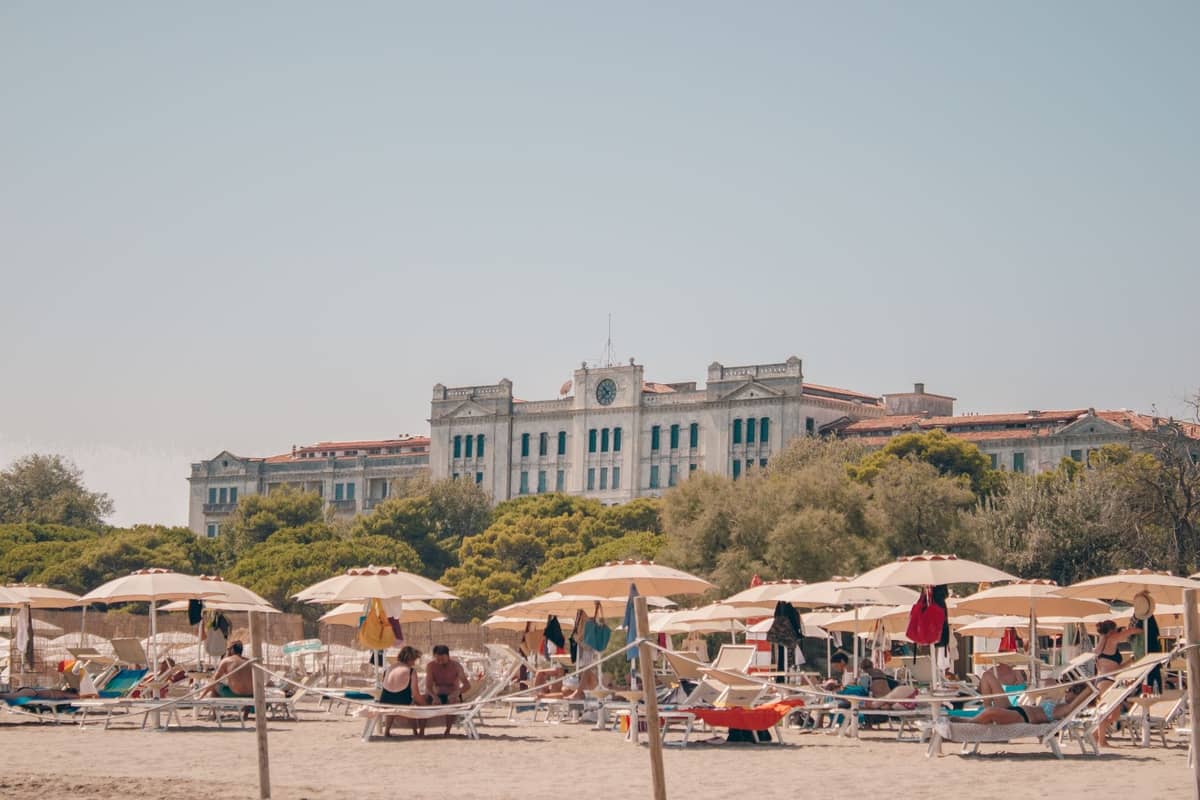
The Lido di Venezia is a barrier island facing the Adriatic, connected to the historic center by vaporetto in about 25 minutes. In summer, staying here makes sense if you want beach access alongside cultural sightseeing — the Lido has actual sandy beaches, something the island city entirely lacks. It is also the venue for the Venice Film Festival in late August and early September, when the island gets particularly busy. Outside summer, the Lido is quiet to the point of feeling deserted, and commuting back and forth loses its appeal quickly.
Giudecca is the long island directly south of Dorsoduro, separated by the Giudecca Canal. It has a handful of high-end hotels with exceptional Grand Canal views, and its residential streets are far quieter than anywhere in the historic center. The vaporetto connection is frequent and fast (5–10 minutes to Zattere). For luxury travelers who value privacy and calm over maximum proximity, Giudecca deserves serious consideration.
Mestre is the mainland component of the municipality of Venice — a modern Italian city that most visitors overlook entirely. Accommodation here runs 40–50% cheaper than equivalent properties in the historic center, the hotels are larger and more likely to have modern amenities like parking and elevators, and the train to Venezia Santa Lucia station takes about 10 minutes. If your primary goal is to visit Venice rather than to live inside it, Mestre is a rational choice. It is not the same experience as waking up beside a canal, and it should not be presented as equivalent — but for budget-conscious travelers or anyone visiting Venice as part of a longer Italy itinerary, it is worth considering.
💡 Local tip
If you are staying in Mestre, use the Venezia Santa Lucia vaporetto stop rather than driving or taking a bus into the city. The train journey is short and cheap, and it deposits you at the western edge of Cannaregio, from where you can walk or take a vaporetto onward.
Price Ranges: What to Budget for Venice Accommodation
Venice is among the more expensive cities in Italy for accommodation, and prices spike sharply during peak season. The ranges below reflect typical nightly rates per room. Always verify current pricing when booking, as rates fluctuate significantly by season and availability.
- Hostel dorm beds Around €30–50 per night. Private hostel rooms typically €80–120. Venice has a limited hostel stock compared to other major European cities.
- Mestre / mainland hotels Budget to mid-range options around €80–150 per room. Significantly better value than equivalent historic-center properties.
- Mid-range historic center Expect €150–280 per room per night for a comfortable two- or three-star property in Cannaregio, Dorsoduro, or Castello.
- Upper mid-range and boutique €280–400 for well-positioned four-star hotels or boutique properties in San Marco and San Polo.
- Luxury and Grand Canal €350–600+ per night, with some flagship properties on the Grand Canal exceeding €1,000 per night in high season.
Note that Venice charges a tourist tax on overnight stays, collected at the accommodation level. Rates vary by property category. Day visitors are subject to a separate Venice Access Fee on selected peak-demand days (from April 2026 onward), but overnight guests registered at a Venice accommodation are exempt from the day-visitor fee. Always confirm current tax rates and exemptions directly with your accommodation.
✨ Pro tip
Room sizes in Venice's historic center are often smaller than you expect — typically 150–250 sq ft in converted palazzi. If space matters to you, filter specifically for 'superior' or 'deluxe' room categories, or look at newer properties in Mestre and the Lido where modern construction standards apply.
When to Book and What to Expect Seasonally
Venice operates on a nearly year-round tourism calendar, with no true low season. The practical booking windows are: 4–6 months ahead for April through June and September through October; 6–8 months ahead for July, August, and Carnival (which runs from late January into early February). Carnival in particular causes a city-wide accommodation squeeze — prices double or triple in the week leading up to it, and many properties require minimum stays of three to five nights.
Summer (June through August) brings the highest visitor numbers and the highest prices. The city is hot and humid, with temperatures regularly above 28–30°C, and the main tourist corridors become very congested by mid-morning. If you are visiting in summer, read our guide to Venice in summer before finalizing your accommodation — staying in Dorsoduro or Castello rather than San Marco gives you meaningfully quieter streets for the same overall access to sights.
Autumn (October through November) brings cooler temperatures and the highest risk of acqua alta flooding events. Venice's MOSE barrier system is activated during sustained high tides, and it has reduced street flooding significantly since coming into full operation. That said, occasional flooding does still occur, particularly in lower-lying areas near San Marco and along the Riva degli Schiavoni. Our acqua alta guide explains what to expect and how accommodation location affects your exposure to flooding.
Winter (December through February) outside of Carnival is Venice at its quietest and most photogenic. Prices drop, crowds thin dramatically, and the fog-wrapped canals are something else entirely. If you can be flexible on dates, a winter visit combined with accommodation in Cannaregio or Dorsoduro offers the most authentic version of Venice at the best value. Book during November and early December for the best room selection.
Practical Checks Before You Book
Venice has specific regulations around short-term rentals. All tourist apartments must be registered with the City of Venice, and compliant rentals will collect your ID at check-in and add the city tourist tax to your bill. If a property asks for neither, treat it as a red flag. The city maintains an official registry of authorized accommodations that you can search by address to verify legitimacy before transferring any payment.
- Confirm whether your hotel has an elevator if you are staying above the ground floor — many historic properties do not.
- Ask about luggage storage and check-in logistics. Many smaller hotels in the historic center have no lobby, and some require you to meet a key-holder at a specific time.
- Check the property's vaporetto stop proximity. A hotel listed as 'near the Rialto' could still be a 10-minute walk from any water bus stop.
- Verify the property is a registered accommodation (not an unlicensed rental) before paying deposits.
- If you need accessible rooms, contact properties directly — Venice's bridge-heavy terrain makes accessibility very property-specific, and online descriptions are often unreliable.
ℹ️ Good to know
Overnight guests registered at a Venice accommodation are exempt from the Venice day-visitor Access Fee, which applies on selected peak days. Keep your accommodation confirmation on hand as proof of stay — this exemption is applied at the access points on fee days.
FAQ
What is the best area to stay in Venice for first-time visitors?
Dorsoduro is the best all-around choice for first-timers. It sits within walking distance of the main sights, offers a more realistic slice of Venetian daily life than San Marco, and comes at a more reasonable price. San Marco is the most central option but significantly more expensive and noisier. Cannaregio is the best value inside the historic center and works well for visitors with a flexible itinerary.
Is it worth staying in Mestre instead of Venice's historic center?
Staying in Mestre saves roughly 40–50% on accommodation compared to similar properties in the historic center, and the train ride to Venezia Santa Lucia station is about 10 minutes. It is a practical choice for budget travelers, families with lots of luggage, or anyone visiting Venice as a day trip from a wider Italy itinerary. However, it is a fundamentally different experience — you will not wake up beside a canal or walk out your door into the city's historic streets.
How far in advance should I book accommodation in Venice?
For visits between April and October, book 4–6 months in advance. For July, August, and Carnival (typically February), aim for 6–8 months ahead. Last-minute availability in Venice is rare and expensive, especially in the historic center.
Does staying in Venice overnight exempt me from the tourist access fee?
Yes. Overnight guests registered at an authorized Venice accommodation are exempt from the day-visitor Access Fee that applies on selected peak days. You should carry your accommodation confirmation as proof of stay when moving around the city on fee days.
Are Venice hotel rooms small?
Many are, yes. Rooms in converted historic palazzi typically run 150–250 sq ft — smaller than modern hotel standards elsewhere. If space is a priority, look for 'superior' or 'deluxe' room categories, choose newer properties in Mestre or the Lido, or specifically filter for properties that describe larger rooms in their listings.