Lido di Venezia: Venice's Beach Island, Film Festival Venue, and Lagoon Escape
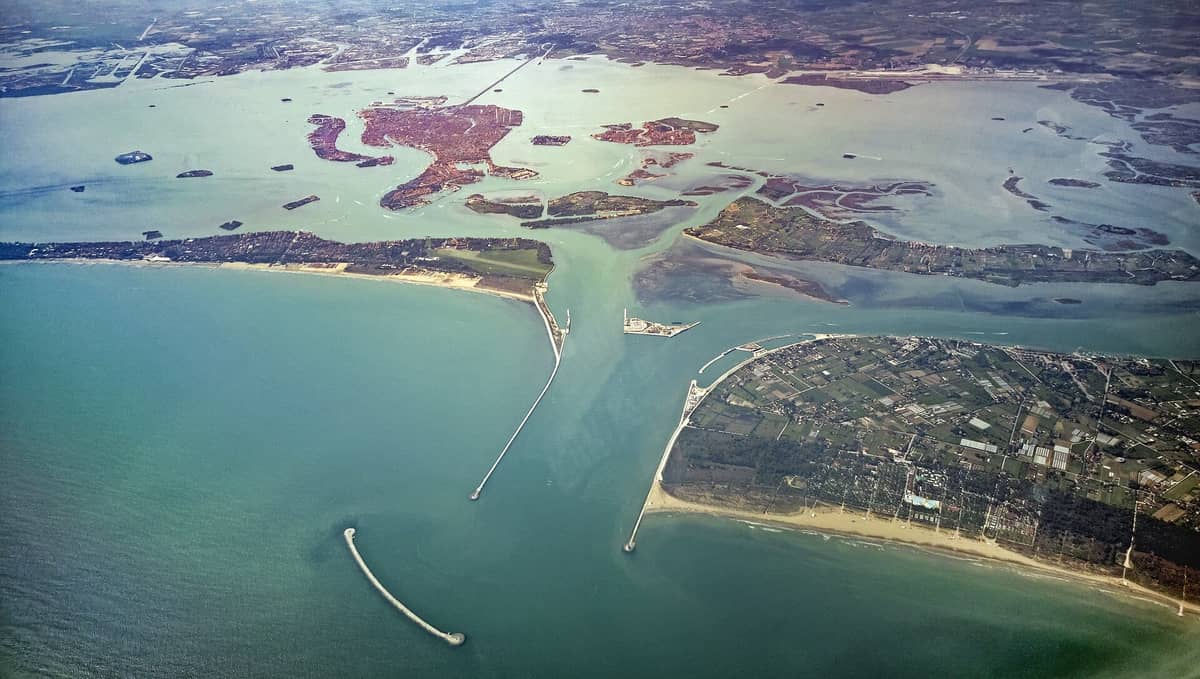
Lido di Venezia is the long, narrow barrier island that separates the Venetian Lagoon from the Adriatic Sea. Unlike the canal-laced historic centre, the Lido has actual streets, cycling paths, sandy beaches, and a quieter residential rhythm. It is also the permanent home of the Venice International Film Festival.
Quick Facts
- Location
- Barrier island between the Venetian Lagoon and the Adriatic Sea, Comune di Venezia, Veneto, Italy
- Getting There
- ACTV vaporetto lines to Lido S.M.E. (Santa Maria Elisabetta) from Venice and other lagoon points; vehicle ferries also available from Tronchetto on the mainland
- Time Needed
- Half day for a beach visit; full day to explore the island properly
- Cost
- Island access is free; standard ACTV vaporetto fare applies; private beach clubs charge seasonal fees
- Best for
- Beach days, cycling, architectural walks, escaping canal-city crowds
What Lido di Venezia Actually Is
Lido di Venezia is a thin sliver of land roughly 11 to 12 kilometres long and rarely more than one to around one and a half kilometres wide. It sits between the Venetian Lagoon on one side and the Adriatic Sea on the other, functioning as a natural breakwater that has protected Venice from open-water storms for centuries. The northern end is anchored by the San Nicolò inlet; the southern end fades toward the Malamocco passage. It is administratively part of the Comune di Venezia but feels nothing like the historic centre.
The most immediate difference a visitor notices stepping off the vaporetto at Santa Maria Elisabetta is the presence of roads. Cars pass. Buses run. People ride bicycles on flat, tree-lined streets. After days of navigating bridges and alleys in the sestieri, this feels almost disorienting. The Lido is effectively a small Italian town that happens to be surrounded by water, and that ordinariness is precisely its appeal for many visitors.
ℹ️ Good to know
The Lido has no road bridge to the mainland. Access is exclusively by ACTV vaporetto (passenger water bus) or vehicle ferry (motozattera) from Tronchetto. Standard ACTV travel passes valid in Venice are also valid for the crossing, so no separate ticket is needed if you already have a multi-day transport pass. Verify current fares and pass options at veneziaunica.it before visiting.
The Beaches: What to Expect on the Adriatic Side
Cross the island from the vaporetto landing and within a ten-minute walk you reach the Adriatic shoreline. The beach runs almost the entire length of the island and is split between a stretch of free public beach (spiaggia libera) and a longer section of private beach clubs (stabilimenti balneari) that rent out cabins, sunbeds, and umbrellas on a daily or seasonal basis.
The free public beach is concentrated near the Gran Viale Santa Maria Elisabetta end, meaning it gets crowded on summer weekends. The sand is fine and pale, the water is shallow and warm by July and August, and the Adriatic horizon is wide and flat. The private clubs offer considerably more space, shade structures, and services but at a cost that varies by operator and season. Verify current pricing directly with the establishments, as fees change annually.
Mornings before ten are genuinely calm here, especially on weekdays. The smell of sunscreen and salt air arrives with the first beach-goers around nine. By noon in summer the free section is packed, and the noise level rises accordingly. If a quieter experience matters to you, either arrive early, rent a spot at a beach club with more regulated capacity, or visit in shoulder season when September light still allows pleasant swimming but the July crowds have thinned considerably.
💡 Local tip
Cycling is one of the most practical ways to move around the Lido. Several bike rental shops operate near the Santa Maria Elisabetta vaporetto stop. Renting for a few hours lets you cover the full length of the seafront promenade and reach the quieter southern sections of the beach that most day visitors never reach on foot.
Tickets & tours
Hand-picked options from our booking partner. Prices are indicative; availability and final rates are confirmed when you complete your booking.
Doge's Palace skip-the-line tour
From 67 €Instant confirmationFree cancellationVenice Legends, Anecdotes and Ghost Stories Tour
From 35 €Instant confirmationFree cancellationGhosts and legends tour of Venice
From 29 €Instant confirmationFree cancellationSkip-the-line guided tour of Doge's Palace and Saint Mark's Basilica
From 106 €Instant confirmationFree cancellation
Liberty Architecture and the Grand Hotels
The Lido's development as a seaside resort began in the early 19th century, with the modern settlement growing up around the preexisting nuclei of San Nicolò and Santa Maria Elisabetta. By the late 19th and early 20th centuries, the island had become one of Europe's most fashionable beach destinations, drawing aristocracy, artists, and writers. The architecture left behind from that era is one of the island's most compelling features and one that most beach-focused visitors completely ignore.
Walking the streets parallel to the seafront, you encounter Villa Maria Luisa, the Hungaria Palace Hotel, and the Hotel Des Bains in various states of preservation and repurposing. The Hotel Des Bains, which Thomas Mann used as the setting for Death in Venice, has since been converted into private residences, but its Venetian Liberty facade remains intact and visible from the street. These buildings carry a specific atmosphere: faded grandeur that is more genuine and less manicured than the restored palaces along the Grand Canal.
Gran Viale Santa Maria Elisabetta, the main street running from the vaporetto stop to the beach, is lined with cafes, gelaterias, and small shops. In late morning it has the unhurried pace of a real residential town rather than a tourist corridor. Locals do their shopping here. Office workers pass on bicycles. The contrast with Piazza San Marco's concentrated tourist pressure is stark.
If Liberty-era architecture interests you, consider pairing a Lido visit with a look at the architectural legacy documented in the Venice walking tour guides that cover lesser-visited parts of the city's urban landscape.
The Venice Film Festival: The Lido's Most Famous Event
The Venice International Film Festival has been held on the Lido since its first edition in 1932, making it widely regarded as the oldest film festival in the world. It takes place in late August and early September at the Palazzo del Cinema on the Lungomare Marconi, a Rationalist building constructed in 1937. During the festival, the island's atmosphere changes completely: film crews, journalists, and celebrities fill the hotels, red carpets appear on the waterfront, and the main boulevard turns into a slow, crowded parade of people who may or may not be recognisable depending on your knowledge of world cinema.
Outside festival season, the Palazzo del Cinema and the adjacent Palazzo del Casinò function primarily as event venues, and both can be viewed from the Lungomare even when no events are running. For most visitors, the buildings and the promenade itself are the accessible part of the festival's legacy. Getting into screenings during the festival requires accreditation or public ticket purchases, which open on the official Biennale website in advance.
For more on the festival as an event worth planning a trip around, the Venice Film Festival guide covers accreditation, public screenings, and what the island looks like during those ten days.
How the Lido Changes Through the Day and the Seasons
Early morning on the Lido is its best version. By seven in the morning in summer, the seafront promenade is being walked by residents with dogs. The beach is empty except for the beach club staff setting out chairs. The light across the Adriatic at that hour is wide and clean, and the absence of crowds makes the island feel like a different place entirely from what it becomes by noon.
The island is distinctly seasonal. Private beach clubs open from roughly late spring through early autumn, typically closing by late September or early October. Outside that period, the seafront becomes quiet to the point of desertion: hotels shut, cafes reduce their hours, and the long beach promenade is walked mainly by locals. Winter visits reveal a different and genuinely interesting Lido: the Liberty villas look more dramatic in grey light, the beach is deserted, and the ferry crossing has the quality of a local commute rather than a tourist outing.
If you are planning a visit during the colder months, the guide to Venice in winter gives broader context for what the lagoon city is like between November and March, including acqua alta season.
⚠️ What to skip
During the Venice Film Festival (late August to early September), hotel prices on the Lido spike significantly, vaporetti to and from the island can be unusually crowded, and restaurant availability without reservations becomes difficult. If you simply want a beach day and the festival overlaps with your visit, consider an early-morning arrival and a midday return to Venice.
Getting There, Getting Around, and Practical Notes
The ACTV vaporetto network runs regular services to the Lido from multiple points in the historic centre. The main landing is Santa Maria Elisabetta, which puts you at the head of Gran Viale and within easy walking distance of the beach and rental services. Travel time from the San Marco area is roughly 20 to 30 minutes on direct lines. Vehicle ferries also run for those bringing cars from the mainland, though most visitors on a day trip have no need for them.
Once on the island, ACTV buses run along the length of the Lido between San Nicolò in the north and Alberoni in the south, giving you access to the quieter southern stretches without cycling or walking the full distance. Taxis on the island are standard road taxis, not water taxis, which is again a practical distinction that reinforces how different the Lido feels from the rest of the lagoon.
The Lido is notably more accessible for visitors with mobility considerations than central Venice. Flat ground, functioning roads, and bus services replace the constant bridges and uneven calli of the historic centre. Many ACTV piers include step-free boarding features on key routes, though it is worth checking current accessibility details directly with ACTV before travelling.
For a full picture of how to move around the lagoon city and its islands, the guide to getting around Venice covers vaporetto passes, routes, and timing in detail.
Who Should Skip the Lido
The Lido is not a destination for visitors whose primary interest is Venetian art, history, or architecture in any concentrated form. The island has its Liberty-era buildings and some historical layers, but nothing that competes with the Gallerie dell'Accademia, the Scuola Grande di San Rocco, or the Basilica dei Frari. If your time in Venice is limited to two or three days and you have not yet seen the core artistic monuments, the Lido should probably come after those, not before.
Visitors who arrive expecting a Caribbean-style resort beach will also need to recalibrate. The public beach section can be crowded and noisy in peak summer, the facilities on the free stretch are basic, and the water is the northern Adriatic rather than the Mediterranean south. It is a genuine, functional Italian seaside resort, not a curated luxury destination.
If you are weighing up how the Lido fits into a broader itinerary alongside other lagoon islands, the Venice lagoon islands guide compares the Lido, Murano, Burano, and Torcello as day-trip options.
Insider Tips
- Rent a bicycle from one of the shops near the Santa Maria Elisabetta vaporetto stop and ride south along the seafront. The beach becomes progressively quieter the further south you go, and by the time you approach Malamocco the crowds are largely gone.
- The free public beach (spiaggia libera) is at its most pleasant before 10am on weekdays in July and August. After midday it becomes genuinely crowded and finding a comfortable spot requires patience.
- The Hotel Des Bains, Thomas Mann's setting for Death in Venice, is now private residences, but the exterior on Lungomare Marconi can be seen from the street. Walk the full Lungomare in the early morning for the clearest view of this and other Liberty-era facades without crowds.
- If you are visiting during the Venice Film Festival, public tickets for a selection of screenings are sold through the official La Biennale website. Check the programme in advance; some public screenings are priced accessibly and offer a legitimate way to experience the festival atmosphere without industry accreditation.
- For a quieter version of the Lido experience, visit in late September or early October. The private beach clubs are closing but the weather is often still warm enough to sit on the public beach, the island returns to local rhythms, and the light in that season is particularly good for photography along the Lungomare.
Who Is Lido di Venezia For?
- Visitors needing a break from the canal-city crowds who want to sit on a real beach within an hour of the historic centre
- Cyclists who want flat terrain and a seafront promenade to explore at their own pace
- Film enthusiasts visiting during or around the Venice International Film Festival in late August and early September
- Travellers interested in early 20th-century Italian resort architecture and the Liberty style
- Visitors with mobility limitations who find central Venice's bridges and uneven surfaces difficult, as the Lido's roads and flat terrain are considerably easier to navigate
Nearby Attractions
Combine your visit with:
- Burano Island
Eight to nine kilometers north of Venice, Burano Island is a compact, flat island of roughly 21 hectares where fishermen's houses are painted in saturated reds, yellows, and blues. It has a legitimate history in lace-making stretching back to the 16th century, and the 40-minute vaporetto ride across the lagoon is part of the experience.
- Chiesa del Redentore
Built in 1577 as a vow to God after a devastating plague, the Chiesa del Santissimo Redentore is Andrea Palladio's finest church in Venice. Standing on the island of Giudecca across the canal from Dorsoduro, it rewards visitors with serene interiors, important Renaissance paintings, and one of the most dramatic facades in Italian architecture.
- Chioggia
Chioggia is an ancient fishing town at the southern entrance of the Venetian Lagoon, built on a cluster of small islands linked by bridges and crossed by canals. Unlike Venice, it functions as a living, working community, and that distinction shapes everything about a visit.
- Giudecca Island
Giudecca Island sits just minutes from the heart of Venice yet feels like a different city entirely. Flat, walkable, and free to explore, it rewards visitors with Palladian architecture, waterfront promenades, and a glimpse of how Venetians actually live.