Self-Guided Walking Tours of Venice: Routes, Tips & Everything You Need
Venice is one of the world's most walkable cities, built on 120 islands connected by around 430 bridges with no cars in sight. This guide covers the best self-guided walking routes by district, the ideal times to walk, what to skip, and how to explore beyond St. Mark's Square.
Plan and book this trip
Tools from our partner Travelpayouts help you compare flights and hotels. If you book through them, we may earn a commission at no extra cost to you.
Flights
Hotels map
TL;DR
- Venice's historic center is roughly 4 km end-to-end and takes about 1 hour of pure walking, but budget 2-4 hours per route with stops.
- The classic route from Santa Lucia station to St. Mark's Square via the Rialto Bridge covers the main landmarks and takes 2-3 hours at a relaxed pace.
- Start before 9:00 or after 17:00 to avoid the worst crowds, especially around Piazza San Marco and the Rialto Bridge.
- App-based audio tours cost around €8-15; guided group walks run €25-45 per person. Free tip-based tours are a solid option if you book ahead.
- The best self-guided walks go beyond San Marco into Cannaregio and Dorsoduro where the city feels far less like a theme park.
Why Venice Is Perfect for Self-Guided Walking
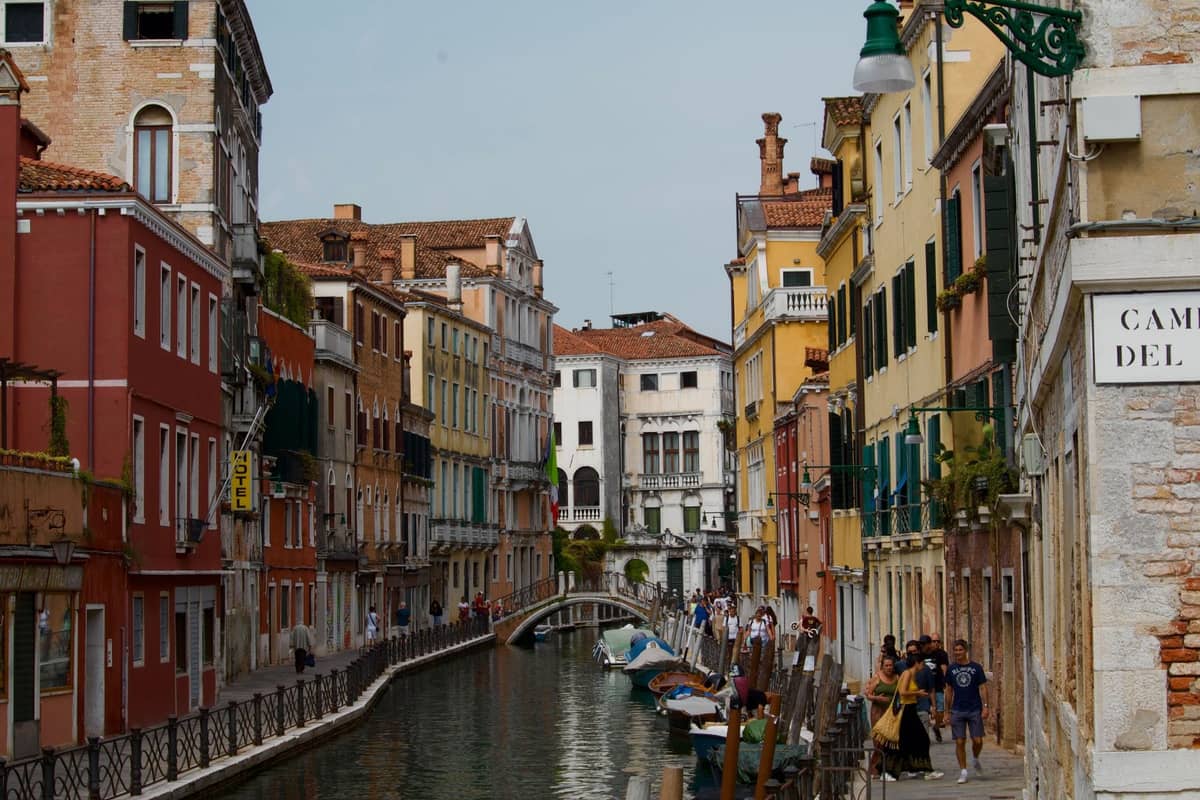
Venice has no cars, no motorbikes, and no buses within the historic island center. Every journey between points happens on foot or by water. That single fact makes self-guided walking tours of Venice not just possible but genuinely the best way to experience the city. You move at your own pace, duck into churches as the mood takes you, and stop for a coffee without a group waiting impatiently behind you.
The historic center is compact enough that nothing feels truly out of reach. The six districts, called sestieri, are San Marco, Cannaregio, Castello, Dorsoduro, San Polo, and Santa Croce. Each has its own character. A walk from San Polo to Castello covers Venice's full east-west span in under an hour of purposeful walking. In practice, you will cover far less ground because the city rewards slow movement: a half-hidden campo, a Gothic doorway, a canal view at an unexpected angle.
ℹ️ Good to know
Venice introduced an access fee for day visitors on selected high-attendance dates starting 25 April 2024, charged between 08:30 and 16:00. Overnight guests and residents are exempt. Check the official portal (cda.ve.it) for current dates and fees before your trip, as the schedule changes seasonally.
The Classic Route: Santa Lucia Station to St. Mark's Square
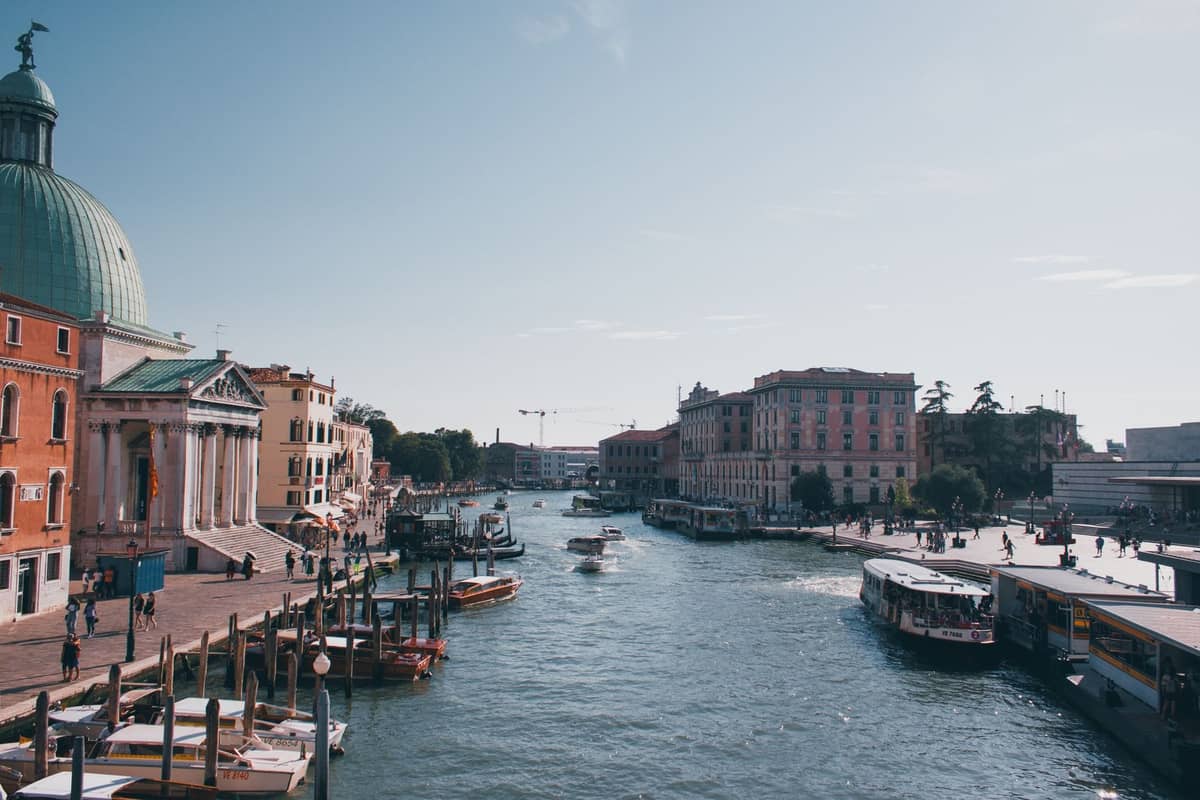
This is the route most first-time visitors end up walking, intentionally or not. It follows the main pedestrian spine of the city from the train station at the northwest end to Piazza San Marco at the southeast. Total distance is around 3.5 km. Budget 2-3 hours if you stop at the Rialto market and take a brief detour or two.
- Venezia Santa Lucia Station to the Lista di Spagna Cross the Scalzi Bridge immediately outside the station for your first Grand Canal view. The Lista di Spagna is the wide street leading east through Cannaregio, busy but useful for orientation.
- Through San Polo toward the Rialto Follow the yellow signs marked 'Per Rialto' through San Polo's narrow calli. The Rialto Market (open mornings, closed Sundays) is worth 20 minutes and a strong coffee at one of the bars facing the fish stalls.
- Rialto Bridge to San Marco Cross the Rialto Bridge and continue southeast following 'Per San Marco' signs. The route passes through the Mercerie, Venice's main shopping street since the medieval period, before opening into Piazza San Marco.
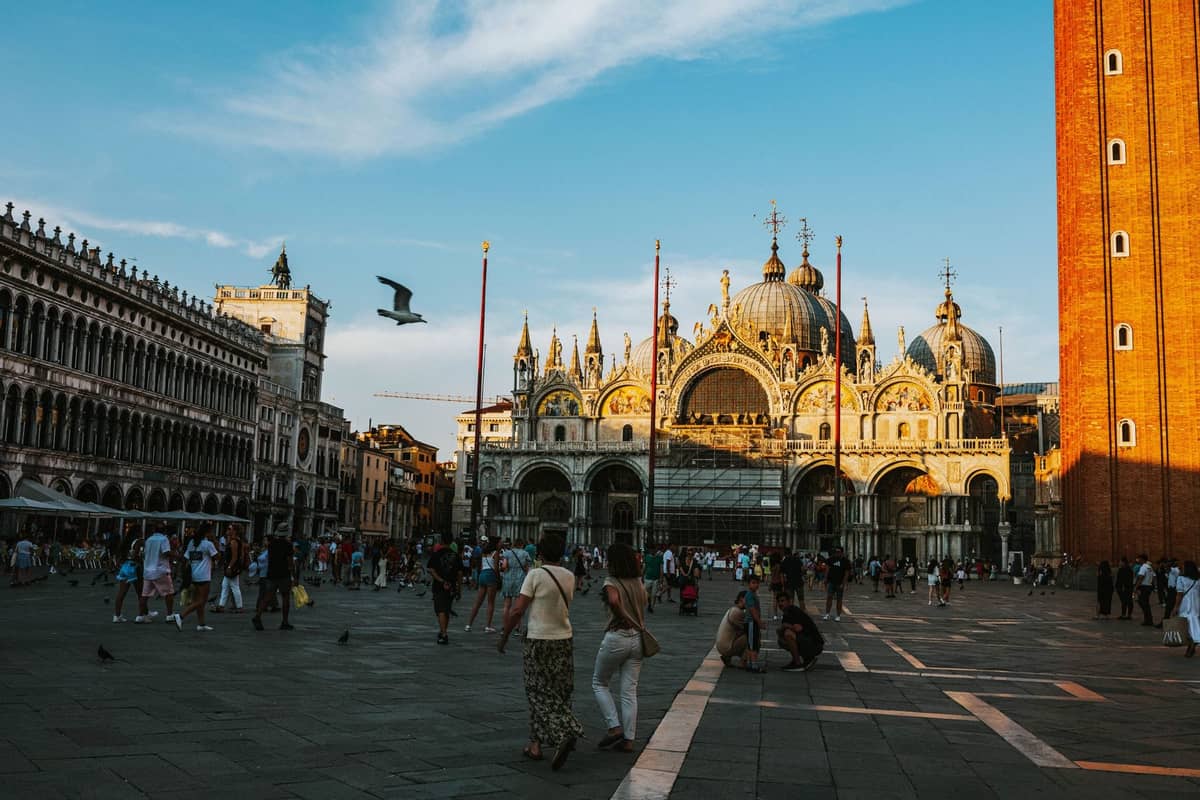
- Piazza San Marco and the waterfront Enter the square from the west for the most dramatic first view of the Basilica. After the square, walk east along the Riva degli Schiavoni waterfront toward Castello for canal views without the crowds.
⚠️ What to skip
The 'Per San Marco' and 'Per Rialto' yellow signs are useful but follow the most touristed paths. On peak summer days (July-August), these routes become genuinely uncomfortable between 10:00 and 17:00. Consider doing this walk in reverse, starting at San Marco early and finishing at the station, to move against the flow of arriving day-trippers.
Beyond San Marco: The Routes That Show Venice's Other Side
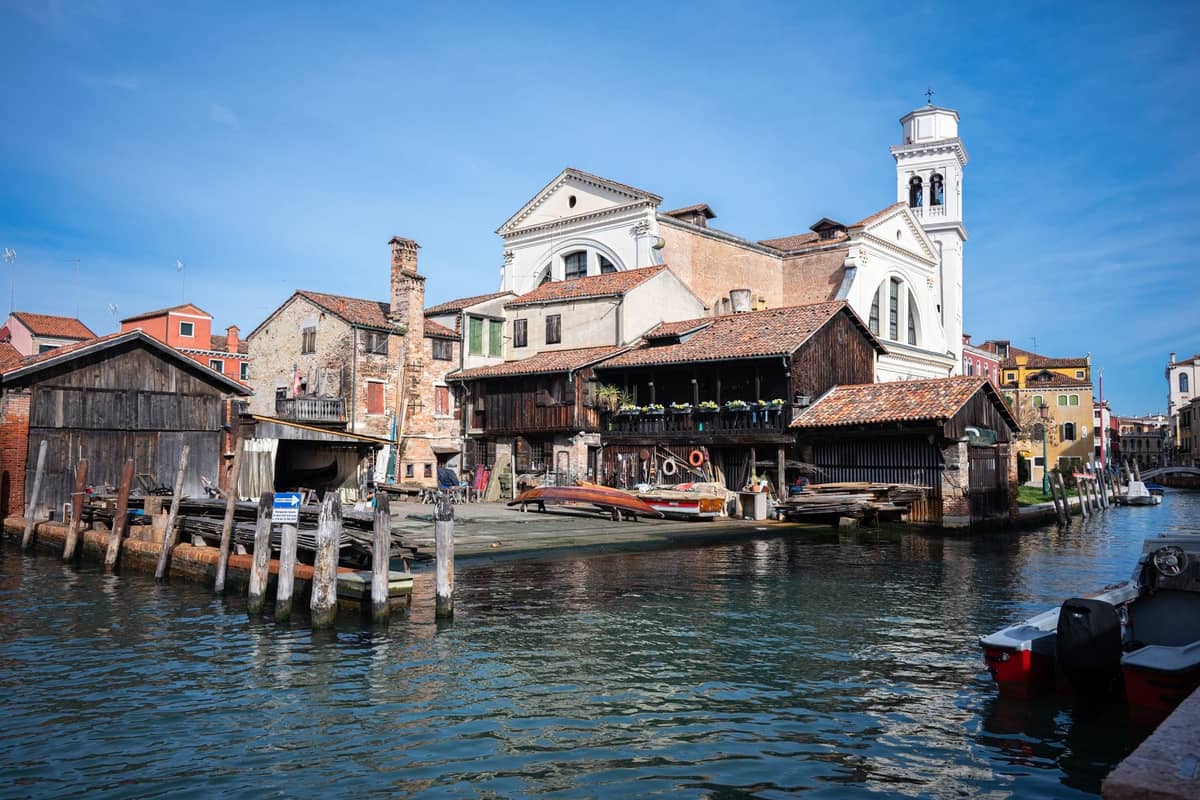
The classic route is worth doing once, but the city reveals its real character when you leave the main pedestrian arteries. These walks take more navigation but far less tolerance for elbow-to-elbow crowds.
Cannaregio, in the north of the city, is the least touristy of the central sestieri and the most immediately livable. The Jewish Ghetto, established in 1516 and the oldest in Europe, is a 20-minute walk from the station through quiet residential streets. The campo at its center, Campo del Ghetto Nuovo, is one of the most historically significant open spaces in Italy. Continue east toward the Fondamente Nuove for views across the northern lagoon toward the cemetery island of San Michele.
Dorsoduro, across the Accademia Bridge from San Marco, is another rewarding area for independent walking. The route from the Accademia Bridge west to the Zattere promenade passes the Peggy Guggenheim Collection and the Basilica di Santa Maria della Salute before reaching the long south-facing waterfront where the city feels genuinely relaxed. The Zattere is where Venetians walk on winter afternoons; it faces the Giudecca canal and gets afternoon sun year-round.
For a longer full-day walk that stitches districts together, the 3-day Venice itinerary approach works well even as a single ambitious day: start in Cannaregio in the morning, cross to San Polo for the Rialto market, cut south through Dorsoduro for the afternoon, and end at the waterfront at sunset.
Timing, Crowds, and the Best Hours to Walk
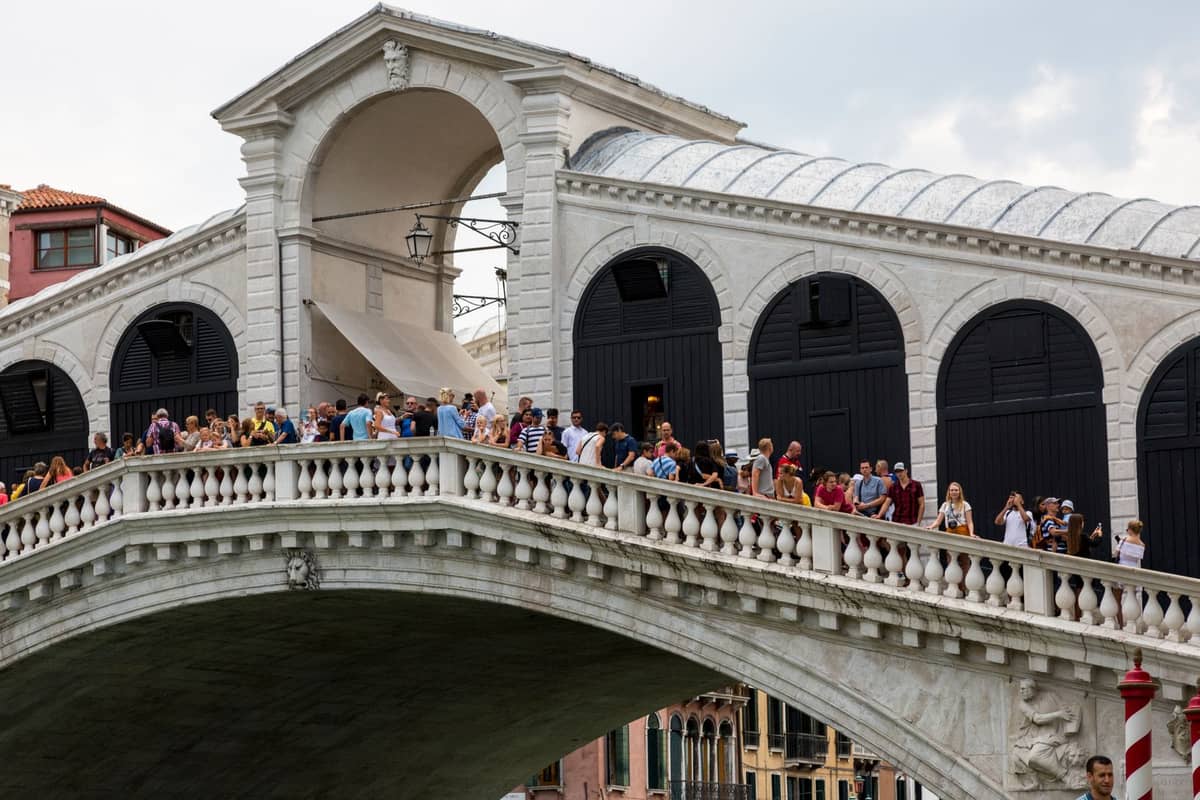
The single biggest variable in any Venice walking experience is not the route but the time of day. The city receives millions of visitors per year concentrated into the main sights, and the difference between 8:00 and 11:00 at the Rialto Bridge is the difference between a pleasant morning and a slow-moving queue.
- 7:00-9:00: The best window for Piazza San Marco, the Rialto, and any narrow route through San Marco or San Polo. Light is good for photography, canal reflections are at their clearest, and the streets belong to locals heading to work.
- 9:00-12:00: Crowds build steadily. Fine for Cannaregio and Dorsoduro, which attract fewer day-trippers. Avoid the Rialto Bridge itself after 10:00 in summer.
- 12:00-15:00: Peak crowd period throughout summer. Best used for a long lunch, museum visits (Gallerie dell'Accademia, Palazzo Ducale), or a break in a campo with an aperitivo.
- 17:00-19:00: Day-trippers start heading back to the station or cruise ships. The light turns golden, the streets quiet noticeably, and the walk along the Grand Canal from Ca' Rezzonico toward San Toma becomes one of the best experiences in the city.
- After 20:00: Venice at night is dramatically different from the daytime version. The main squares empty, restaurants fill, and narrow calli feel intimate rather than claustrophobic.
💡 Local tip
Autumn and winter bring acqua alta (high water) events, where tidal peaks flood low-lying areas. The MOSE barrier system is activated during sustained high tides, but minor flooding still occurs. Rubber boots (stivali) can be rented or bought cheaply near the train station. Walking Venice in November or February, despite the occasional damp feet, offers a completely different atmosphere and virtually no queues. See the acqua alta guide for practical preparation.
Self-Guided Audio Tours vs. Free Tours vs. Guided Walks: What to Choose
There is no single right answer here. The choice depends on your travel style, budget, and how much context you want while walking.
App-based audio tours cost around €8-15 for a full route and work well if you want structured narrative without the pace constraints of a group. They cover the main landmarks with historical commentary and pause-as-you-go flexibility. The quality varies considerably between operators, so check reviews before purchasing. Platforms like Rick Steves Audio Europe offer free audio content for some Venice walks, which is worth downloading before you travel.
Free walking tours operate on a tip basis, with typical gratuities of €10-20 per person. GuruWalk is the main aggregator in Venice, with tours commonly starting between 09:30 and 15:00 from meeting points including Campo Sant'Agnese, Campo San Geremia, and Campo de la Fava. Booking is required in advance. Quality depends entirely on the individual guide, so read recent reviews carefully. These tours run 2-3 hours and cover the central route; they are not suitable for anyone wanting to go deep into specific districts or themes.
Paid group guided walks typically cost €25-45 per person for 2-3 hours. Private guided walks typically start around €150–200 per group for 2–3 hours rather than per person, and under Venice's official tourism regulations, tour groups are limited to a maximum of 25 people, with licensed guides required to display identification badges. This limit is worth checking when booking through aggregators like GetYourGuide or Viator, as 'small group' claims vary. Context Travel and Venice Urban Adventures run smaller, more thematic tours that go beyond landmark-to-landmark coverage and are worth the price premium for travelers with specific interests.
- App-based audio tours (€8-15) Best for independent travelers who want context without group constraints. Download before arrival to avoid data roaming costs.
- Free tip-based tours (€10-20 suggested) Good for first-timers who want an overview of the main route. Book in advance via GuruWalk. Expect groups of 15-25 people.
- Paid group guided walks (€25-45) Worth it for themed walks (Jewish history, art, food) where a knowledgeable guide adds genuine depth. Check group size limits.
- Private guided walks (€60-75+ per person) Best for travelers with specific interests or limited time. You set the pace and focus. Operators like Context Travel specialize in these.
- Fully self-guided with a good map (free) Completely viable and often the most enjoyable option. Pick up a free map at the tourist office near Santa Lucia station or the office in Piazza San Marco (open daily approximately 8:00-18:00).
✨ Pro tip
Venice's street numbering system is notoriously confusing: each sestiere has its own independent numbering sequence reaching into the thousands, not tied to street names. For navigation, use a combination of yellow directional signs, a downloaded offline map (Google Maps or Maps.me work reliably), and the city's network of campo names as landmarks. Getting briefly lost is not a problem; the city is surrounded by water and you will always re-orient within a few minutes.
Practical Logistics for Walking Venice
Footwear is the most important practical consideration. Venice's streets are stone, often uneven, frequently wet, and involve stairs at every bridge crossing. The city has just over 400 bridges, and most walking routes cross 20-30 of them. Comfortable, waterproof walking shoes are not optional. For more on planning the full visit, the guide to getting around Venice covers transport options including vaporetto routes that can supplement walking on longer days.
Churches, including St. Mark's Basilica and the Basilica dei Frari, require covered shoulders and knees for entry. This is enforced, not merely suggested. Carry a scarf or light layer if your walking outfit exposes shoulders. Some churches charge small entry fees (typically €2-5); others are free. The guide to Venice's best churches has specifics on what to see and what to skip.
Water is available from free public drinking fountains (fontanelle) throughout the city. These are marked on most city maps and are a reliable alternative to buying bottled water at tourist markup prices, which can reach €4-5 at cafes near San Marco. Tap water in Venice is supplied through Italy's regulated urban water system and meets European potability standards.
If you want to combine walking with a stop at a local bar for cicchetti (Venetian small plates), the cicchetti guide maps the best bacari (wine bars) by district. San Polo and Cannaregio have the highest concentration of non-tourist-facing options. A cicchetti stop costs €1-2 per piece; a glass of house wine (ombra) is typically €1-2 at the bar, rising to €5-8 if you sit down at a tourist-facing establishment.
FAQ
How long does it take to walk across Venice?
Walking the full length of the historic center from Santa Lucia station to the eastern edge of Castello takes roughly 1 hour of non-stop walking, covering around 4 km. In practice, allow 2-3 hours if you make any stops. A full day of exploring multiple districts comfortably covers 8-12 km on foot.
Do you need a guide to walk around Venice, or can you do it yourself?
Venice is completely manageable without a guide. The main routes are well-signed with yellow directional markers, and a downloaded offline map is sufficient for navigation. A guide adds value for specific themes (art history, Jewish heritage, architecture) or if you want to avoid spending any time figuring out where to go. For a first visit focused on the main sights, a self-guided walk works well for most travelers.
What is the best time of day to walk Venice to avoid crowds?
Early morning, between 7:00 and 9:00, is by far the best window for the main sights including Piazza San Marco and the Rialto Bridge. Evenings from 17:00 onward are the next best option as day-trippers leave. Midday in summer (June-August) is the most congested period and best avoided for the central routes.
Are there free self-guided walking tour resources for Venice?
Yes. Tourist offices at Santa Lucia station and in Piazza San Marco provide free printed maps with suggested routes. Rick Steves Audio Europe offers free downloadable audio tours for Venice walks. Several websites publish free route PDFs. For tip-based guided tours, GuruWalk is the main platform, with starting prices at €0 plus a suggested gratuity of €10-20.
Is Venice safe to walk around at night?
Venice is considered very safe for walking at night. The absence of vehicle traffic eliminates one of the main urban hazards, and violent crime is rare. The main practical consideration is navigation: many smaller calli are poorly lit and easy to miss at night. Keep your offline map accessible. The main areas around San Marco and Rialto stay busy until late; quieter residential areas in Cannaregio and Castello are calm but not threatening.