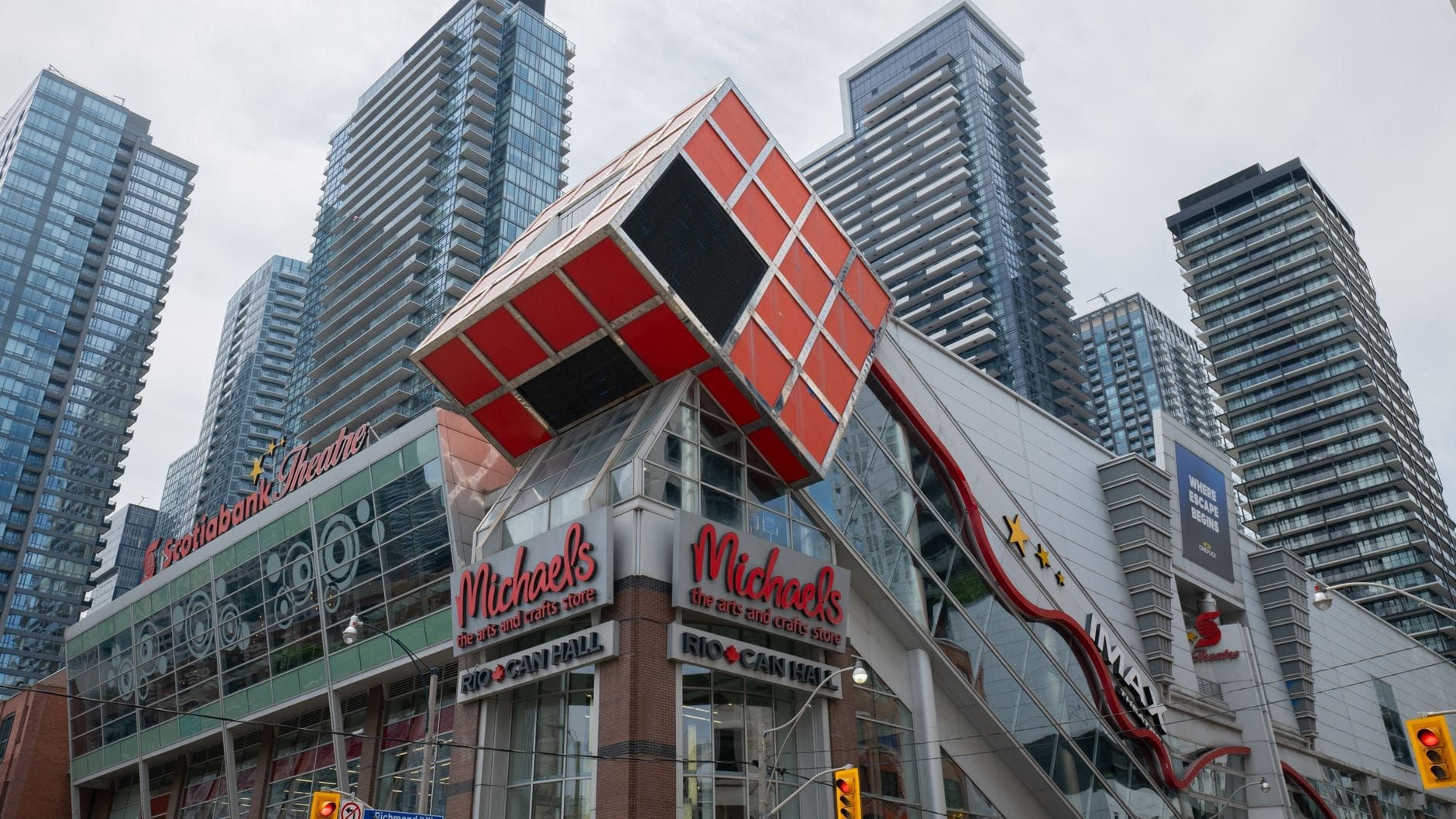
Toronto's Entertainment District packs the city's biggest landmarks, best live theatres, and most concentrated nightlife into a compact stretch of King Street West. From Ripley's Aquarium to the Royal Alexandra Theatre, this is where Toronto puts on a show.
The Entertainment District is Toronto's most concentrated patch of big-ticket attractions, performing arts venues, and after-dark energy, all anchored along King Street West between University Avenue and Spadina Avenue. It is where the CN Tower casts its shadow over Rogers Centre, where century-old theatres sit a block from rooftop bars, and where the city's loudest nights unfold. No other neighborhood in Toronto delivers this much in such a small area, though that density comes with trade-offs worth knowing before you book.
Orientation
The Entertainment District occupies the southwestern corner of downtown Toronto, roughly bounded by University Avenue to the east, Spadina Avenue to the west, Queen Street West to the north, and the rail corridor and lakefront approach to the south. King Street West is the main artery, and almost everything worth knowing about this neighborhood is within a five-minute walk of it.
To the south, the district bleeds into the waterfront precinct around Rogers Centre and the base of the CN Tower, where Bremner Boulevard curves toward Harbourfront Centre. To the east, Bay Street and the Financial District take over almost immediately at University Avenue. To the north, the strip transitions into the King West condo corridor and, further up, the creative stretch of Queen Street West. To the west, Spadina Avenue marks the informal boundary, beyond which you enter the warehouse-and-gallery fringes that eventually connect to Ossington Avenue and the west end proper.
The geography is flat and walkable. The blocks are long but straight, and the street grid makes navigation intuitive. Union Station, just a few blocks east on Front Street, serves as the de facto front door to the entire area for visitors arriving by regional rail or the UP Express from Pearson Airport.
ℹ️ Good to know
The Entertainment District is sometimes called 'King West' informally, particularly when locals are referring to its condo and restaurant corridor rather than its landmark attractions. Both terms refer to broadly the same geography.
Character and Atmosphere
This neighborhood operates on a split personality, and the time of day determines which version you get. On a weekday morning, King Street West is a stream of office workers, hotel guests picking up coffee, and construction crews. The towers of glass that line the street feel corporate and purposeful. The CN Tower is best photographed from the lakeshore approach in this early light, when the mist off Lake Ontario sometimes softens the skyline into something almost cinematic.
By midday, the streets fill with lunch crowds from the surrounding office towers and from tourists working through their attraction checklists. The area around Ripley's Aquarium and the CN Tower gets genuinely crowded on weekends and through the summer months. The lineup culture here is real: expect queues for major attractions if you arrive without advance tickets, particularly during July and August.
Late afternoon is when the neighborhood starts shifting toward its night identity. The restaurants along King Street West open their patios, the theatre-crowd dinner rush begins around 5:30 pm, and the streets between Blue Jays Way and John Street take on a different energy entirely. On a Blue Jays game night or a concert evening at Scotiabank Arena, the sidewalks overflow and taxis and rideshares clog every intersection. It is electric and chaotic in roughly equal measure.
After midnight, the character changes again. The theatre crowd has gone home. What remains is concentrated around the clubs and late bars that have made the Entertainment District both famous and occasionally contentious with residents. The city has made efforts over the years to diversify the area's identity beyond nightclubs, and the condo development of the 2010s brought a resident population that pushed back against noise and disorder. The result is a neighborhood that still has genuine nightlife energy but is less purely a club district than it was a decade ago.
⚠️ What to skip
On Blue Jays home game nights and major concert evenings at Scotiabank Arena, the streets immediately around Rogers Centre and the arena become extremely congested after events end. Plan an extra 30-45 minutes to leave the area or arrange rideshare pickup a few blocks north on Adelaide or Richmond Street.
What to See and Do
The CN Tower is the inescapable centerpiece of the district and one of the most recognized structures in North America. At 553.3 metres, it held the title of world's tallest free-standing structure for over three decades. The observation deck and glass floor are the main draws, and the revolving restaurant offers a practical way to dine with a panoramic view. Book tickets online in advance, especially in summer, to avoid the longest wait times.
Immediately adjacent to the CN Tower, Ripley's Aquarium of Canada is one of Toronto's most visited indoor attractions. The moving walkway through the Dangerous Lagoon tunnel, with sharks and rays passing overhead, is genuinely impressive, and the jellyfish gallery is a highlight for most ages. It is a full half-day commitment if you move through at a reasonable pace.
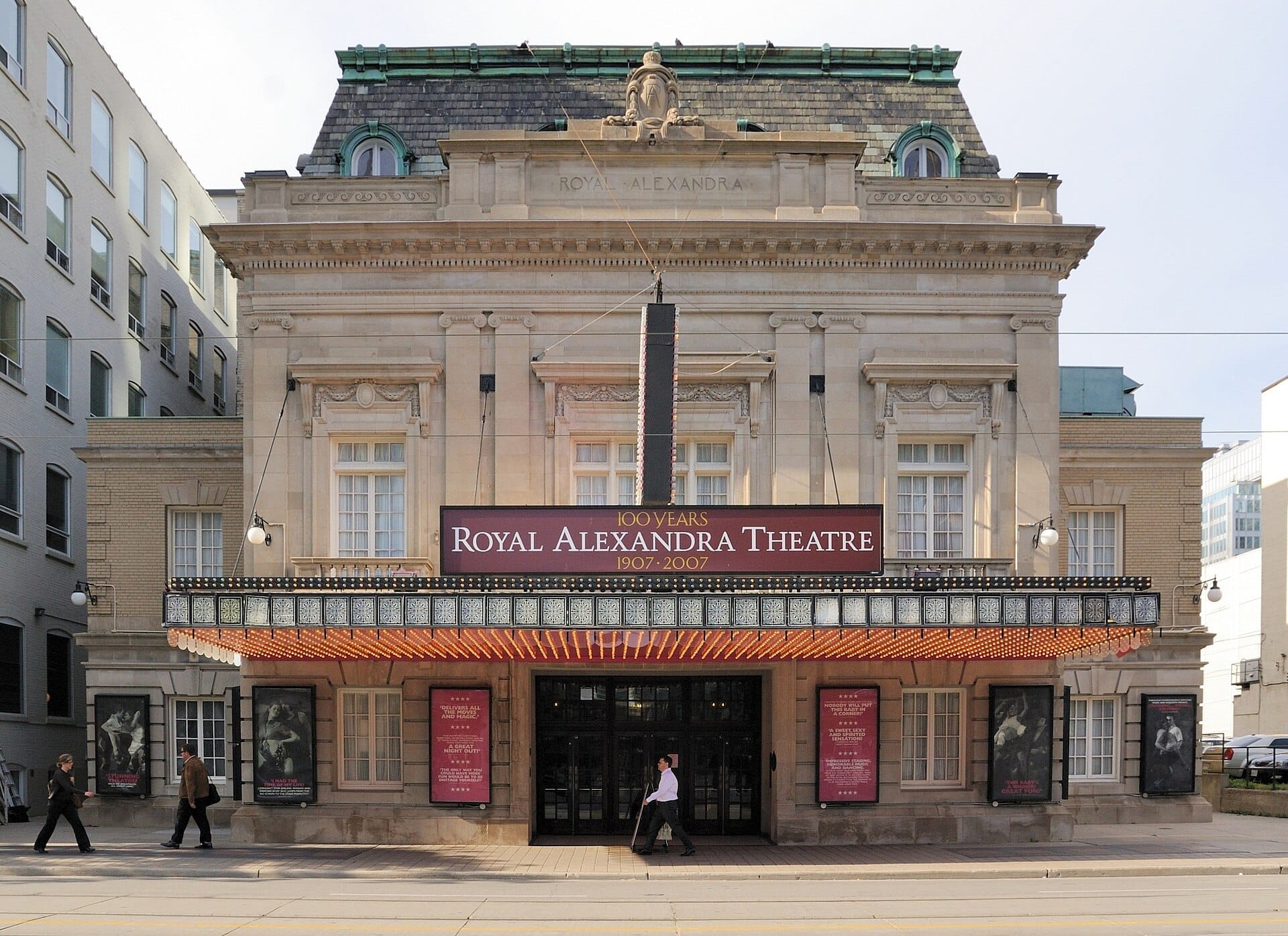
The Royal Alexandra Theatre on King Street West is one of Canada's oldest continuously operating theatres, built in 1907. The Princess of Wales Theatre, a few doors west, was purpose-built in the 1990s for large-scale productions. Together, they make this one of the most concentrated live theatre corridors in Canada. Check the Mirvish Productions schedule well in advance if you want tickets to major productions.
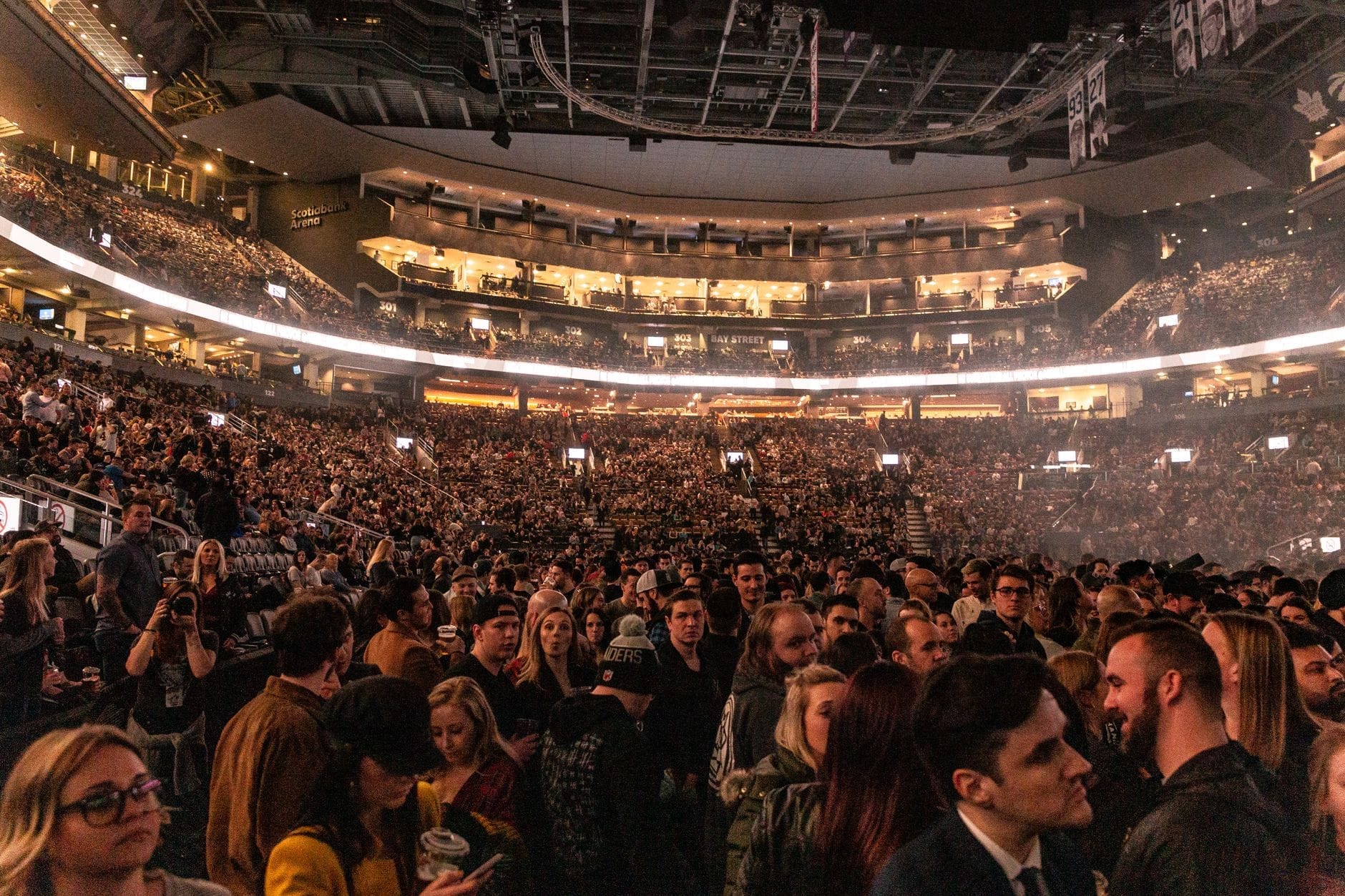
Sports fans are well served by Rogers Centre, home of the Toronto Blue Jays, and Scotiabank Arena just east on Bay Street, where the Maple Leafs and Raptors play. Attending a game at either venue is one of the more reliable ways to experience the neighborhood at its most energized.
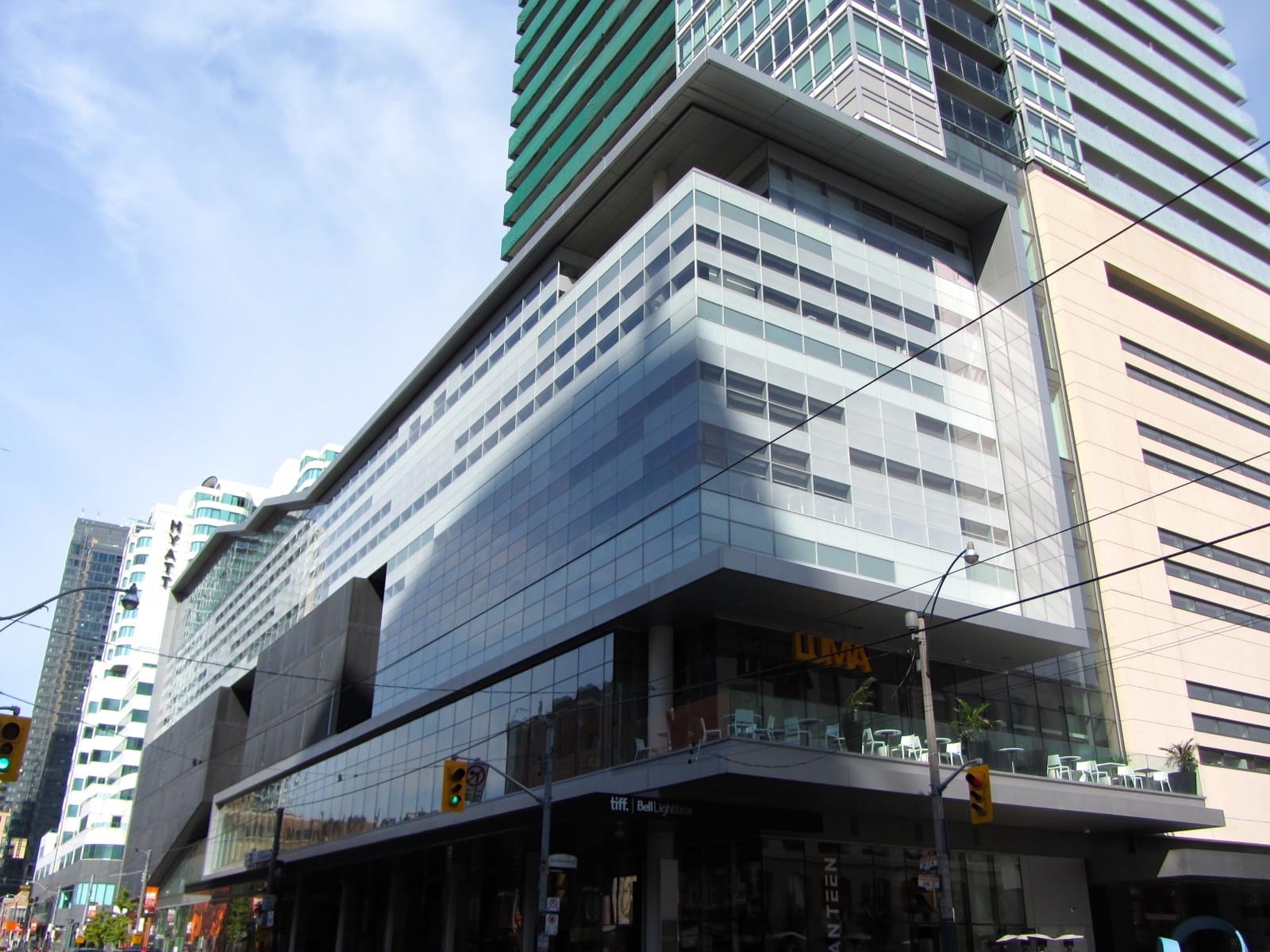
For film culture, the TIFF Bell Lightbox on King Street West is the year-round home of the Toronto International Film Festival organization. It screens repertory and contemporary cinema in state-of-the-art theatres and houses a film reference library and gallery exhibitions. During the September film festival itself, the surrounding blocks become the epicenter of one of the world's major cultural events.
CN Tower: observation deck, glass floor, and revolving restaurant
Ripley's Aquarium of Canada: shark tunnel, jellyfish gallery, touch tanks
Royal Alexandra Theatre and Princess of Wales Theatre: live stage productions
Rogers Centre: Toronto Blue Jays MLB games
Scotiabank Arena: Maple Leafs (NHL) and Raptors (NBA) home games
TIFF Bell Lightbox: repertory cinema and gallery programming
Toronto Music Garden: free outdoor public space on the waterfront
The Bentway: urban park and event space under the Gardiner Expressway
Eating and Drinking
The Entertainment District's food scene is built for convenience and volume rather than destination dining. That is not a criticism so much as a description: the restaurants here are designed to handle pre-theatre rushes, post-game crowds, and hotel guests who want reliable, broadly appealing food within walking distance of their accommodation. You will find everything from upscale steakhouses to chain-heavy sports bars, with a growing number of mid-range independent restaurants filling the gaps.
King Street West between John Street and Spadina Avenue has the highest concentration of dining options. The stretch includes Japanese, Korean, Italian, and contemporary Canadian restaurants alongside several well-regarded cocktail bars. Prices trend toward the higher end of Toronto's range given the tourist-facing location, though lunch specials at many spots bring costs down considerably.
Pre-theatre dining is a ritual here. If you are attending a show at one of the King Street theatres, booking a table for 5:30 or 6:00 pm is advisable. Most restaurants in the immediate theatre block are accustomed to the rhythm and will accommodate a quick turnaround. Post-game eating is less refined: the streets near Rogers Centre fill with hot dog carts and fast food options that serve their purpose efficiently.
For late-night food, the options thin out considerably after midnight. The neighborhood has fewer all-night diners than you might expect given its nightlife density. Your best strategy for post-club eating is heading a few blocks north into the Queen West corridor or east toward the Financial District, where a small number of late-night spots operate.
💡 Local tip
If you want a better value meal before a show or game, walk two or three blocks north to Adelaide Street or Richmond Street West. The restaurant quality is comparable, the prices are often lower, and you avoid the heaviest tourist foot traffic.
Getting There and Around
The two most useful TTC subway stations for the Entertainment District are St. Andrew Station at King Street and University Avenue, and Union Station at Front Street and Bay Street. Both are on Line 1 (Yonge-University). From Union Station you can also access GO Transit regional rail lines and the UP Express, which runs directly to Toronto Pearson International Airport in about 25 minutes. The full transit picture for the city is covered in the getting around Toronto guide.
King Street West is also served by the 504 King streetcar, which runs along King Street from Broadview Avenue in the east, through the Entertainment District, to Dundas West Station and then south to Roncesvalles Avenue in the west. This is frequently the most practical surface transit option for moving east or west along King without descending to the subway. The streetcar runs frequently during peak hours but can be slow during events when the street fills with pedestrians and vehicles.
Walking within the Entertainment District itself is entirely practical. The distance from Union Station to the CN Tower is roughly a 10-minute walk south and west along Front Street and then Bremner Boulevard. The TIFF Bell Lightbox on King Street is about a 12-minute walk from Union Station. From St. Andrew Station, most major destinations are within a five-minute walk.
Cycling is possible using the Bike Share Toronto network, which has several docking stations throughout the district. For drivers, parking is available in several commercial garages off King Street West, though rates are high by Toronto standards and spaces near Rogers Centre fill quickly on event days. The PATH underground network connects Union Station northward through the Financial District and can be used to reach parts of the district in poor weather, though it does not extend to the western reaches near Spadina.
Where to Stay
The Entertainment District has a high concentration of full-service hotels, many of them positioned for business travelers and tourists attending events. International chains dominate: there are several large properties along King Street West and on the streets connecting to the waterfront. Room rates here tend to be among the highest in the city, particularly on event weekends.
The advantage of staying here is obvious: you can walk to the CN Tower, Rogers Centre, Scotiabank Arena, and the major theatres without needing transit. Union Station is within a 10-minute walk from most hotels in the district, which makes day trips and airport connections straightforward.
The drawback is noise. The area around the main club strip gets genuinely loud on Thursday, Friday, and Saturday nights, and event nights add another layer of crowd noise. If you are a light sleeper, check that your hotel room faces away from King Street West, or consider staying one neighborhood over. The full Toronto accommodation guide covers the trade-offs between the Entertainment District and quieter options like Yorkville or the St. Lawrence Market area.
For travelers whose primary goal is the performing arts or sports events, staying in the district is hard to beat for sheer convenience. For travelers who want a more residential, lower-key Toronto experience, the nearby Annex, Leslieville, or Queen West neighborhoods offer a better sense of the city's day-to-day character.
Honest Assessment: Who This Neighborhood Is For
The Entertainment District earns its name. Nowhere else in Toronto puts so many high-profile experiences within such a tight radius. But it is unambiguously a tourist-facing neighborhood, and it does not try to pretend otherwise. The pricing reflects that, the crowd composition reflects that, and the late-night character reflects that.
If your Toronto trip is built around sports, theatre, the CN Tower, or the film festival, this is the logical base. If you are looking for the Toronto that locals actually inhabit day to day, you will want to supplement your time here with visits to neighborhoods like Kensington Market, The Annex, or Leslieville to get a more rounded picture of the city.
For first-time visitors with limited time, the Entertainment District and the waterfront it borders cover a significant portion of the standard Toronto itinerary. A 3-day Toronto itinerary would likely use this neighborhood as its anchor, with excursions outward from there.
TL;DR
Best for: first-time visitors, sports fans, theatre-goers, and anyone attending events at Rogers Centre, Scotiabank Arena, or the King Street theatres.
Key attractions: CN Tower, Ripley's Aquarium, Rogers Centre, Scotiabank Arena, TIFF Bell Lightbox, Royal Alexandra and Princess of Wales theatres.
Transit: St. Andrew and Union subway stations (Line 1); 504 King streetcar; Union Station for GO Transit and UP Express to Pearson Airport.
Honest drawback: high prices, loud on event nights, and limited local-neighborhood character. Not the best choice if you want a quieter or more residential Toronto experience.
Recommended time: half a day for the major attractions; one to two nights if you are here for events. Easily combined with a waterfront walk south toward Harbourfront or a trip east to the Distillery District.
Three days is enough time to cover the best of Toronto's downtown core, historic districts, waterfront, and cultural institutions — if you plan smartly. This itinerary is built around the TTC subway and streetcar network, so you never need a rental car. Expect a mix of landmark sights, neighbourhood wandering, and genuine local texture.
Toronto punches well above its weight for museum culture. Whether you're drawn to ancient civilisations, contemporary art, or the history of hockey, this guide covers the best museums in Toronto across every interest and budget.
Toronto has over 1,500 parks and more than 8,000 hectares of green space, from sweeping urban forests and lakefront trails to formal gardens and island beaches. This guide covers the best of them, organised by type and neighbourhood, so you can find exactly the kind of outdoor escape you're looking for.
Toronto has four genuinely distinct seasons, and the best time to visit depends entirely on what you want from the trip. This guide breaks down weather, crowds, pricing, and events month by month so you can make an informed decision.
Toronto's skyline is one of the most dramatic in North America, dominated by the CN Tower and framed by Lake Ontario. This guide covers the best vantage points in the city, from high-rise observation decks and waterfront parks to island ferry crossings and hilltop lookouts.
Toronto sits at the centre of one of Canada's richest regions for day-tripping. Within two hours in any direction you'll find roaring waterfalls, wine country, historic theatre towns, wilderness beaches, and mountain resorts. This guide covers the top day trips from Toronto, with practical details on how to get there and what to do once you arrive.
Toronto is a surprisingly generous city for budget travellers. From free museum evenings and sprawling parks to street art laneways and historic neighbourhoods, here are the best free things to do in Toronto across every season.
Toronto's transit network spans the TTC subway, streetcars, GO Transit regional rail, the UP Express airport link, ferries, and bike share. This guide breaks down every option with fares, routes, timings, and practical advice on what actually works for visitors.
Toronto is one of the safest major cities in North America, but that doesn't mean risk-free. This guide breaks down real crime patterns, which areas to be aware of, seasonal hazards, and the practical precautions that actually make a difference for visitors.
Toronto sits on the northwestern shore of Lake Ontario, the easternmost and smallest of the Great Lakes by surface area. From the Toronto Islands and the Martin Goodman Trail to the towering Scarborough Bluffs, this guide covers every major way to experience the lake — with seasonal advice, transit details, and honest assessments of what's worth your time.
Toronto is Canada's largest city and one of North America's most genuinely diverse destinations. This guide covers the best things to do in Toronto across every budget, season, and interest — with honest assessments, current prices, and practical logistics.
Five days in Toronto is enough time to cover the iconic landmarks, dig into the city's diverse neighbourhoods, and still squeeze in a day trip to Niagara Falls. This itinerary is structured for efficiency without sacrificing depth, whether you're arriving at Pearson Airport or Billy Bishop.
Everything you need to navigate Toronto Pearson International Airport (YYZ), from terminal layouts and airside connections to the fastest and cheapest ways into downtown Toronto. Covers the UP Express, taxis, ride-hailing, public transit, and key practical details for first-timers and connecting passengers.
Toronto's skyline tells a 200-year story in brick, glass, and concrete. This guide covers the city's most architecturally significant buildings across every era, from Victorian flatirons and Beaux-Arts civic halls to Gehry-designed galleries and record-breaking towers, with practical visiting tips for each.
Toronto Caribbean Carnival, still widely known as Caribana, draws over a million visitors to the city each summer for more than a week of soca music, steelpan competitions, costumed masquerade, and street food. This guide covers everything: dates, the Grand Parade route, ticket prices, what to skip, and how to plan your visit like someone who has been before.
Toronto's sakura season is spectacular but brutally short. This guide covers the exact bloom window, the best viewing locations beyond High Park, how to get there without a car, and what the City's official trackers actually tell you in real time.
Toronto's food scene is one of North America's most diverse, shaped by over 200 ethnic communities and anchored by legendary markets, neighbourhood food districts, and a Michelin Guide earned in 2022. This guide breaks down what to eat, where to eat it, and how to navigate the city's culinary landscape like a local.
Toronto's food market scene ranges from a historic 200-year-old market hall to shipping-container villages and neighbourhood farmers' markets. This guide covers the best places to browse, graze, and stock up across the city.
Toronto delivers a surprising range of romantic experiences, from skyline dining and waterfront ferry rides to candlelit heritage districts and world-class performing arts. This guide breaks down the best date ideas by season, budget, and vibe, with honest assessments of what's worth the effort.
Summer turns Toronto into one of North America's most active outdoor cities. From June jazz on Bloor Street to Caribbean Carnival floats and lakefront beaches with lifeguards on duty until Labour Day, this guide covers every major event, the best swimming spots, and the practical logistics to make the most of the season.
Toronto winters are cold, but the city leans into the season rather than shutting down. From free outdoor skating rinks under the Gardiner Expressway to the glittering Distillery District Christmas Market, this guide covers every practical detail you need to enjoy Toronto from late November through March.
The Toronto International Film Festival is one of the world's most accessible and influential film events, open to the public every September. This guide covers dates, ticket prices, venues, logistics, and how to get the most out of your visit.
The Toronto Islands are a chain of 15 car-free islands just a short ferry ride from downtown, offering beaches, cycling trails, skyline views, and a rare slice of calm in the middle of a major city. This guide covers ferry logistics, the best spots on each island, seasonal realities, and the common mistakes first-time visitors make.
Toronto's upscale travel scene goes well beyond five-star hotels. This guide covers the best luxury hotels in downtown Toronto and Yorkville, premium dining, exclusive experiences, and practical logistics for high-end visitors to Canada's largest city.
Toronto is one of the most diverse cities in the world, with roughly half its population born outside Canada. This guide covers the key ethnic districts, what makes each distinct, how to get there, and what to prioritize on a visit.
Niagara Falls sits about 136 km from downtown Toronto, making it the most popular day trip from the city. This guide covers every transport option, realistic costs, seasonal timing advice, and practical tips on what is worth your time once you arrive.
Toronto nightlife runs deeper than most visitors expect. From the dense bar corridor along King West to indie live music rooms on Queen West and all-night clubs in the Entertainment District, this guide breaks down where to go, what to spend, and how to plan your night like a local.
Nuit Blanche Toronto is a free, city-run all-night contemporary art festival that transforms public spaces across Toronto from dusk to dawn each October. This guide covers the event's history, logistics, what to expect on the night, and how to make the most of 12 hours of outdoor art.
Toronto is Canada's largest city and one of North America's most expensive destinations — but with the right approach, you can experience it without draining your wallet. This guide covers free attractions, affordable transit, budget eats, and the smartest times to visit to keep costs low.
Toronto's PATH is the world's largest underground pedestrian network, stretching more than 30 km through the heart of downtown. This guide covers how to navigate it without getting lost, which routes to use, when it's open, and what to realistically expect from the experience.
Toronto's ravine system is one of the largest urban greenspace networks in North America, threading through neighbourhoods most visitors never see. This guide covers the best trails, how to reach them by transit, what conditions to expect by season, and how to string routes together for a full day outdoors.
Toronto's shopping scene spans luxury boutiques in Yorkville, 230-plus retailers at the Eaton Centre, historic indoor markets, and independent street strips that reward slow browsing. This guide breaks down every major option by category, with transit directions, honest assessments, and seasonal tips.
Toronto is one of North America's most practical cities for solo travel, with an extensive transit network, walkable districts, and a concentration of world-class attractions in the downtown core. This guide covers everything from airport arrivals and neighbourhood logistics to safety realities and the best solo-friendly experiences across Canada's largest city.
Toronto rewards walkers. From the Victorian laneways of the Distillery District to the lakefront trail and Kensington Market's chaotic grid, the city's best stories are told on foot. This guide covers the top guided walking tours, free tip-based options, City-published self-guided routes, and the neighbourhoods worth exploring on your own schedule.
Toronto's waterfront runs approximately 37 kilometres along Lake Ontario, from Etobicoke in the west to the Rouge River in the east. This guide covers the best things to do, how to get around, seasonal conditions, and which parts of the lakeshore are actually worth your time.
From shark tunnels at Ripley's Aquarium to free ferry rides and dinosaur bones at the ROM, Toronto delivers serious options for families with children of all ages. This guide covers the top attractions, practical logistics, honest pricing, and seasonal advice to help you plan a trip that actually works.
Toronto has dozens of distinct neighbourhoods, and choosing the right one to stay in makes a real difference to your trip. This guide breaks down the best areas by location, price range, transit access, and atmosphere — so you can book with confidence.