Ripley's Aquarium of Canada: What to Expect Before You Visit
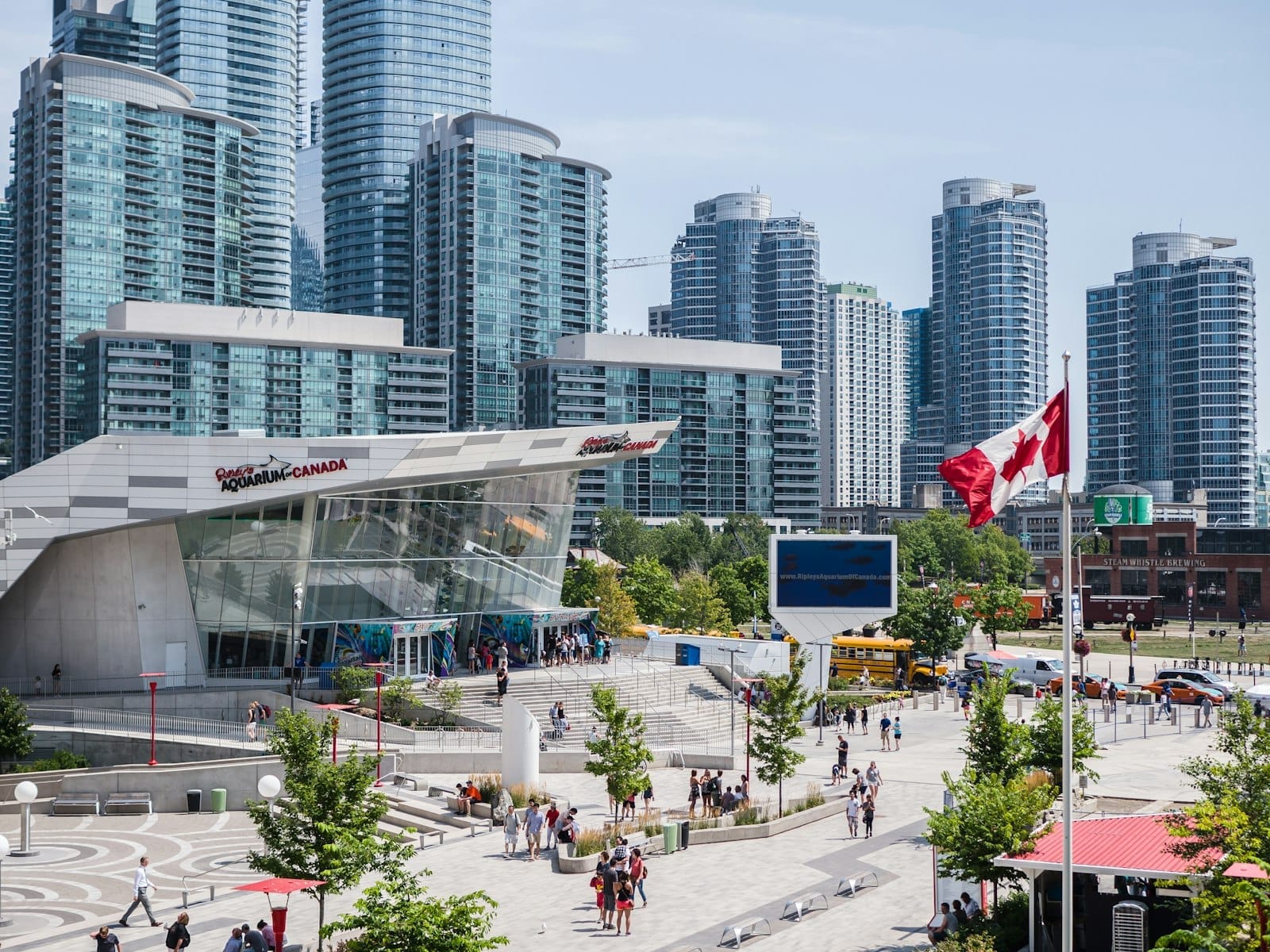
Opened in 2013 at the foot of the CN Tower in downtown Toronto, Ripley's Aquarium of Canada holds over 20,000 aquatic animals across 50 live exhibits and 5.7 million litres of water. It draws families, couples, and ocean enthusiasts year-round, with a moving walkway tunnel through a shark-filled tank as its centerpiece experience.
Quick Facts
- Location
- 288 Bremner Blvd, downtown Toronto — at the base of the CN Tower
- Getting There
- Union Station (TTC/GO Transit), approx. 7-min walk via SkyWalk; St. Andrew Station also nearby
- Time Needed
- 2 to 3.5 hours for a thorough visit
- Cost
- Paid admission; timed tickets recommended in advance. Check ripleys.com for current CAD pricing.
- Best for
- Families with children, rainy-day visits, couples, ocean and marine life enthusiasts
- Official website
- www.ripleys.com/attractions/ripleys-aquarium-of-canada
What Ripley's Aquarium of Canada Actually Is
Ripley's Aquarium of Canada opened in October 2013 as one of Canada's largest public aquariums, and it anchors the entertainment cluster around the CN Tower in downtown Toronto. The building holds 5.7 million litres of water distributed across roughly 50 live exhibits, housing more than 16,000 aquatic animals from over 450 species. The range runs from sand tiger sharks and green sea turtles to moon jellyfish, horseshoe crabs, and freshwater species from the Great Lakes region.
The facility was designed from the outset as a public attraction rather than a research institution, so the emphasis throughout is on visual spectacle and hands-on interaction rather than scientific curation. That's neither a criticism nor a compliment — it simply shapes what kind of experience you should expect. If you're looking for the interpretive depth of a natural history museum, this isn't that. If you want an immersive, well-maintained space where kids and adults alike can spend two to three hours genuinely engaged with marine life, it delivers.
💡 Local tip
Book timed tickets online before you arrive. Walk-up queues at the entrance can stretch to 45 minutes or more on weekends and school holidays. Purchasing in advance also tends to be more cost-effective.
The Dangerous Lagoon: The Experience Everyone Comes For
The centerpiece of the aquarium is the Dangerous Lagoon, a more than 310-foot (about 96-metre) moving walkway tunnel that passes underneath a 2.9-million-litre tank. Overhead and on both sides, sand tiger sharks, sawfish, green sea turtles, and schools of stingrays move through the water with a slowness that feels almost staged. The light inside the tunnel shifts between blue-green tones depending on the angle and depth of the water above you, and the ambient sound is a low, muffled silence broken only by the sounds of other visitors and the faint hum of filtration systems.
The tunnel's moving walkway carries you through in about two minutes if you stay on it, but you can step off to either side and stand as long as you like in the stationary sections. Most people do. Shark feeding events take place at scheduled times, and the tank's surface becomes noticeably more active during those windows. Check the daily schedule posted at the entrance or on the aquarium's website to time your walk-through accordingly.
Photography here is genuinely rewarding. The combination of dramatic natural lighting and slow-moving subjects means even a smartphone camera can produce strong images, provided you're patient. The main challenges are reflections from the tunnel glass and motion blur from faster fish. Shooting in burst mode and waiting for sharks to pass directly overhead — rather than at an angle — produces the clearest results.
Tickets & tours
Live prices and dates from our booking partner. If you book, we may earn a commission at no extra cost to you.
Other Exhibits Worth Your Time
Beyond the Dangerous Lagoon, the aquarium is organized into gallery zones that range from tropical reef environments to Planet Jellies, a dedicated jellyfish exhibit featuring moon jellies and other species illuminated against dark backgrounds. Planet Jellies tends to be quieter than the shark tunnel and draws a different kind of attention — slower, more contemplative. The bioluminescent lighting setup is well-executed and worth spending time in even if jellyfish aren't your particular interest.
The Discovery Centre houses the aquarium's primary touch pools, where visitors can handle horseshoe crabs and other hardy invertebrates under staff supervision. This is the area where the noise level rises sharply, particularly during school group visits. If you're sensitive to crowded, loud spaces, this section is best tackled either first thing in the morning before groups arrive, or late in the afternoon as they leave.
The Rainbow Reef gallery presents a dense Indo-Pacific coral reef environment with surgeonfish, clownfish, tangs, and other reef species. It's visually saturated and loud with colour. The Canadian Waters section, by contrast, showcases species from the Great Lakes and St. Lawrence River — including freshwater fish that most visitors from outside Canada won't recognize — and tends to receive less attention than the tropical tanks despite being ecologically significant to the region.
How the Experience Shifts by Time of Day
Ripley's is open daily, generally from 9:00 a.m. to 9:00 p.m., though hours can extend later during peak seasons. Hours are subject to change, so confirm on the official site before visiting. The aquarium is an indoor facility, meaning weather has no direct bearing on the experience inside — but it significantly affects external demand. On rainy days, expect crowds comparable to peak summer weekends, as the aquarium draws visitors looking for covered activities.
The quietest windows are weekday mornings between 9:00 a.m. and 11:00 a.m., and weekday evenings after 6:00 p.m. The evening hours offer a noticeably different atmosphere: the lighting throughout the exhibits takes on more depth as the exterior daylight no longer competes with tank illumination, and the crowds thin to a fraction of midday levels. The Dangerous Lagoon tunnel in particular feels more atmospheric after dark.
⚠️ What to skip
School groups visit heavily between 10:00 a.m. and 2:00 p.m. on weekdays, particularly from September through June. If you have flexibility, plan around those hours or arrive at opening.
Weekend afternoons from roughly noon to 4:00 p.m. are the peak crowd window. The walkways around the Dangerous Lagoon can become congested enough that standing still in the stationary sections requires patience and some assertiveness. If you're visiting with young children who need clear sightlines to tanks, this is when the experience becomes most frustrating.
Getting There and Practical Logistics
The aquarium sits at 288 Bremner Boulevard, immediately adjacent to the CN Tower in downtown Toronto. The most straightforward way to arrive by transit is via Union Station, which is served by TTC subway Line 1, all GO Transit rail corridors, and the UP Express airport link from Toronto Pearson International Airport. From Union, the aquarium is a roughly 7-minute walk through the SkyWalk pedestrian corridor — a covered path that keeps you dry in bad weather. St. Andrew Station (Line 1) offers an alternative approach from the north, at roughly a 10-minute walk on foot.
By car, the Gardiner Expressway provides the most direct access; exit at York Street and follow Bremner Boulevard west. There is no general on-site parking at the aquarium itself, but several commercial parking garages operate in the immediate area. Validated parking may be available with admission — check directly with the aquarium for current arrangements. Driving here on a weekend can be slow; transit is the more predictable option.
The building is fully wheelchair accessible, with elevators between levels and ramps throughout the exhibit spaces. Strollers are permitted inside. The Dangerous Lagoon tunnel's moving walkway can be bypassed entirely by using the stationary section, which is useful for visitors with mobility considerations or anyone who simply wants to linger.
The aquarium is a short walk from several other major downtown attractions, making it easy to combine visits. The CN Tower is literally next door, and Rogers Centre is within a few minutes' walk. If you're building a fuller day around the waterfront, the Harbourfront Centre is accessible on foot heading south along the lake.
Honest Assessment: Strengths and Limitations
The aquarium is well-maintained, well-designed, and genuinely impressive in scale. The Dangerous Lagoon is one of the more memorable single experiences available indoors in Toronto, and the overall facility is substantially larger and more varied than many visitors expect. For families with children, it works extremely well — there's enough density of interactive elements to hold attention for a full afternoon.
The limitations are worth stating plainly. Ticket prices are high relative to comparable attractions in other cities, and the experience can feel expensive for adults visiting without children. The interpretive content — signage explaining species behavior, conservation status, ecological context — is present but not deep, which may leave visitors with a scientific interest wanting more. The facility also generates significant revenue from add-ons: paid dive experiences, behind-the-scenes tours, and event packages. These are optional and can be ignored, but the commercial orientation is noticeable throughout.
Visitors on a tight budget should weigh this against free or lower-cost alternatives. Toronto has several strong options for nature and outdoor exploration that cost nothing — the free things to do in Toronto guide covers a range of them, and outdoor destinations like Tommy Thompson Park offer genuine wildlife encounters at no cost.
ℹ️ Good to know
The aquarium offers special programming including after-hours adult events, yoga sessions in the tunnel, and sleepover packages for families. These sell out quickly and require advance registration through the official site.
Insider Tips
- The evening hours after 6:00 p.m. on weekdays are the sweet spot: crowds are thin, the tunnel lighting is at its most atmospheric, and you can spend as long as you want at each exhibit without navigating around school groups.
- The daily schedule lists shark feeding and stingray feeding times. The Dangerous Lagoon tunnel is worth timing around the shark feed — the tank activity increases noticeably and the viewing experience is more dramatic.
- Bring a portable phone charger. The aquarium's dark interiors and the temptation to photograph everything will drain a phone battery faster than you expect over a 2-3 hour visit.
- The Canadian Waters gallery is consistently uncrowded and underappreciated. It showcases species from the Great Lakes ecosystem that are ecologically significant to the region, including species many international visitors have never encountered.
- If you're visiting with very young children, head to the Discovery Centre touch pools first, before the crowds build. Staff are present to supervise, and the horseshoe crab interaction is one of the more tactile and memorable parts of the visit.
Who Is Ripley's Aquarium of Canada For?
- Families with children aged 4 to 14 looking for a high-engagement indoor day
- Rainy or cold days when outdoor Toronto attractions aren't practical
- Couples or adults who want a quieter, atmospheric experience — visit on a weekday evening
- Marine life and ocean enthusiasts who want an immersive tank environment without traveling to a coastal city
- Visitors combining multiple CN Tower-area attractions into a single downtown day
Nearby Attractions
Other things to see while in Downtown Toronto:
- Allan Gardens Conservatory
Allan Gardens Conservatory is a free, year-round botanical conservatory at 160 Gerrard Street East in downtown Toronto. Housed in six glass display houses anchored by a 1910 Edwardian Palm House, it holds about 1,500 m² of tropical palms, cacti, orchids, and seasonal blooms. One of the oldest parks in Toronto, it remains one of the city's most underrated green spaces.
- Art Gallery of Ontario
The Art Gallery of Ontario is one of North America's largest art museums, housing over 90,000 works inside a landmark Frank Gehry-renovated building in downtown Toronto. From Indigenous Canadian art to European masters and contemporary photography, the AGO rewards focused visitors and casual explorers alike.
- Brookfield Place (Allen Lambert Galleria)
The Allen Lambert Galleria inside Brookfield Place is a free, publicly accessible arcade designed by architect Santiago Calatrava between 1987 and 1992. Its arching steel-and-glass canopy, rising between two of downtown Toronto's tallest towers, is one of the most impressive interior spaces in Canada.
- Campbell House Museum
Built in 1822 for Upper Canada's Chief Justice, Campbell House Museum is the oldest surviving residence from the original Town of York. Moved to its current downtown corner in 1972 and opened as a museum in 1974, it offers an intimate, unhurried window into early colonial Toronto — a sharp contrast to the glass towers surrounding it.
Planning a trip? Discover personalized activities with the Nomado app.