Tommy Thompson Park: Toronto's Accidental Urban Wilderness
Tommy Thompson Park, built on a man-made peninsula jutting about 5 kilometres into Lake Ontario, is one of Toronto's most surprising natural spaces. What began as a harbour construction project in 1959 has become a globally significant bird habitat and a car-free escape with unobstructed skyline views. Entry is free, but the access rules are unlike any other park in the city.
Quick Facts
- Location
- South end of Leslie Street, Toronto waterfront, Ontario, Canada
- Getting There
- TTC Bus 83 (Jones) to Leslie & Commissioners, then a 15-min walk south to the park entrance
- Time Needed
- 2–4 hours for a relaxed walk to the lighthouse tip and back; a full loop takes longer by bike
- Cost
- Free admission
- Best for
- Birdwatchers, cyclists, photographers, anyone wanting quiet and skyline views without crowds
- Official website
- tommythompsonpark.ca
What Tommy Thompson Park Actually Is
Tommy Thompson Park sits on the Leslie Street Spit, a man-made peninsula that the Toronto Harbour Commission began filling in 1959 using millions of cubic metres of concrete rubble, dredged sand, and construction fill. The original intention was practical: create a breakwater and protect a planned outer harbour from rough Lake Ontario waves. What happened instead was ecology. Over decades, cottonwood trees, willows, and native shrubs colonised the fill. Shorebirds arrived. Then colonial waterbirds. Then migratory songbirds in numbers that astonished ornithologists. Today the park covers about 500 hectares and extends about 5 kilometres into Lake Ontario, making it one of the largest urban nature reserves on the Great Lakes.
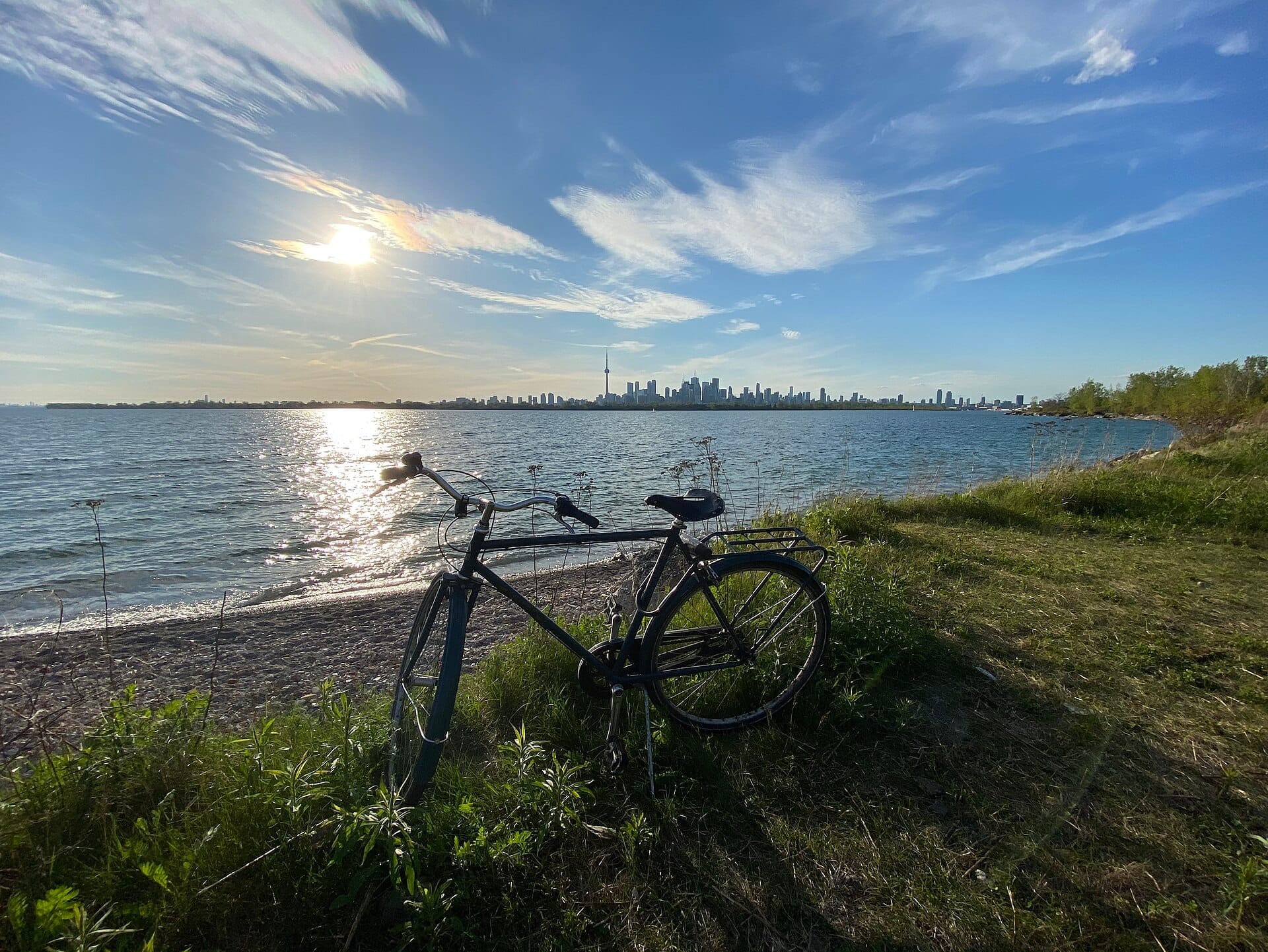
The park was officially named Tommy Thompson Park in the mid-1970s, honouring Tommy Thompson, Toronto's first Commissioner of Parks. Management sits with the Toronto and Region Conservation Authority (TRCA), which runs it as an intentional urban wilderness rather than a manicured green space. There are no concession stands, no playgrounds, and very few benches. What there is: gravel paths, scrubby forest, open cobble beaches, reed-rimmed ponds, and some of the widest, clearest views of the Toronto skyline you will find anywhere.
⚠️ What to skip
Access hours are strict and unlike any other Toronto park. On weekdays, the park is closed to the public until 4:30 p.m. because heavy construction trucks use the road during the day. Public access on weekends and statutory holidays runs from 5:30 a.m. to 9:00 p.m., except on Christmas Day, Boxing Day, and New Year’s Day when the park is closed. Check the official website before visiting, as temporary closures for dredging and construction operations can affect specific sections of the park.
The Experience: Walking Into the Spit
The entrance at the south end of Leslie Street is intentionally low-key: a gate, a map board, and then a straight gravel road heading south into open sky. Within a few minutes of walking, the city noise drops noticeably. Trucks are absent on weekends. What fills the soundscape instead is wind off the lake, the occasional creak of cottonwood branches, and bird calls at a volume and variety that will catch even casual visitors off guard.
The main trail follows the spine of the spit south, with side paths branching toward the eastern and western shorelines. The western shore faces the main harbour and downtown; the eastern shore faces open lake. The textures shift constantly: packed gravel gives way to exposed rubble beaches where chunks of old concrete foundations still carry fragments of tile and brick. The shoreline smells of lake water and waterlogged wood, which is oddly pleasant and immediately distinctive.
The lighthouse at the southern tip is the de facto destination for most walkers. The round trip from the entrance is roughly 10–11 kilometres on foot, which takes two to three hours at a comfortable pace. Cyclists cover it faster, though the surface is gravel and unpaved in many sections, so wide tyres or hybrid bikes handle the conditions better than road bikes. There are no toilet facilities at the tip, so plan accordingly; limited facilities exist near the entrance area.
Tickets & tours
Live prices and dates from our booking partner. If you book, we may earn a commission at no extra cost to you.
Toronto Old Town: Dark Side Exploration Game and Tour
From 12 €Instant confirmationFree cancellationLEGOLAND Discovery Centre Toronto tickets
From 16 €Instant confirmationFree cancellationToronto 'Little Canada' entrance tickets
From 27 €Instant confirmationFree cancellationNiagara Falls evening tour with boat, dinner and Illumination Tower
From 77 €Instant confirmationFree cancellation
Birds: The Reason Serious Visitors Come
Tommy Thompson Park is an Important Bird Area (IBA), and the designation is not honorary. The spit hosts one of the largest nesting colonies of ring-billed gulls in the world, plus substantial breeding populations of double-crested cormorants, black-crowned night herons, and great egrets. During spring and fall migration, the list of recorded species exceeds 300. On a good May morning, the air around the cormorant colony carries a dense, ammonia-edged smell from nesting activity. It is distinctive, slightly overwhelming, and completely authentic.
Spring migration peaks from late April through late May. Fall migration runs August through October. Both periods draw dedicated birders from across the region, and the spit's position jutting into Lake Ontario concentrates birds that would otherwise disperse across a wider landscape. Early mornings on spring weekends see a steady stream of people with binoculars and long lenses entering at opening time. If you visit in winter, the lake's relative warmth keeps some sections open water, attracting diving ducks and occasionally uncommon lakebirds.
💡 Local tip
For the best birdwatching, arrive at the 5:30 a.m. opening on a weekend morning in May or September. Bring binoculars: distances across the ponds and along the shoreline make them worthwhile even for casual observers. A basic field guide app on your phone is enough for identification help.
Skyline Views and Photography
The western shoreline of the spit delivers one of the cleanest, most unobstructed views of the Toronto skyline available from ground level. The CN Tower, the downtown cluster, and the waterfront buildings frame the view from across the open harbour, with nothing between you and the water except cobble beach and the occasional cormorant drying its wings on a rock. Early morning light hits the towers from the east, making the hours just after sunrise particularly good for photography. Golden-hour light in the late afternoon reaches the skyline from the west and warms the entire scene.
The lighthouse at the tip provides a foreground anchor for wide shots. On calm days, the water surface is glassy enough for reflections. A tripod is worth bringing for long exposures at twilight, when the city lights begin to show. Keep in mind the park closes at 9:00 p.m., so full night photography is not possible.
For comparison with other vantage points, the western spit shoreline offers a very different perspective than elevated views from the CN Tower or the rooftop terraces in Yorkville. Here you are at water level, with the city sitting above the lake horizon. It reads as a landscape photograph rather than a map.
How the Experience Changes Through the Day and Year
On a weekend morning in early summer, the park entrance sees cyclists queuing before the 5:30 a.m. opening: a mix of committed birdwatchers, training cyclists doing long flat loops, and photographers chasing light. By mid-morning, families with dogs arrive, and the main trail gets its fullest traffic. By early afternoon on a hot July day, the lake breeze is the park's main virtue: the spit sits exposed on all sides, and the temperature runs a few degrees cooler than the city grid, though this also means wind can be significant.
Autumn brings the most consistently pleasant conditions: stable cool air, lower humidity than summer, migratory birds, and wildflower seed heads in the scrubby meadow sections. Winter access is possible on weekends but requires preparation. The trails are not maintained for snow, and wind across the open spit can be cutting. The reward is near-total solitude, open water birds, and an austere beauty that the summer version of the park cannot offer.
If you are planning a broader exploration of Toronto's waterfront, the spit fits naturally into a day that starts at the Harbourfront Centre and follows the lakeshore east. The Toronto waterfront guide covers the connections between these areas in detail.
Getting There and What to Bring
The park entrance sits at the south end of Leslie Street, accessible by bike from the waterfront trail or by TTC bus. There is no subway station within easy walking distance; the closest option involves taking the TTC to the Leslie Street area and walking south, or cycling from the city core along the Martin Goodman Trail, which connects directly to the spit entrance. Driving is possible, with limited parking near the entrance, but cycling is the more practical approach from downtown given the flat terrain and the ability to cover the full spit length efficiently.
The Martin Goodman Trail runs along the waterfront and connects the spit entrance to the rest of the lakefront trail network, making a continuous cycling or walking route from Humber Bay in the west to the spit entrance on the east side of downtown.
Wear comfortable walking or cycling shoes; the gravel roads and rubble shoreline sections are uneven. Sun protection matters enormously here: the spit is almost entirely exposed, with minimal shade outside the wooded central sections. Bring water, particularly in summer, as there are no food or beverage vendors inside the park. Insect repellent is worth carrying in late spring and summer near the pond areas. Dogs and other pets are not permitted in the park.
ℹ️ Good to know
Accessibility note: The main gravel road running the length of the spit is relatively flat and usable by many cyclists and those with good mobility, but it is not paved. Side paths to the shorelines are rougher. There are no paved accessible paths throughout the full length of the park. Check the TRCA website for current conditions.
Who Should Reconsider This Visit
Tommy Thompson Park is not a conventional urban park. There is no cafe at the end of the walk, no interpretive centre open on a casual drop-in basis, and no shelter if weather turns. Visitors expecting manicured lawns, family facilities, or a short stroll with guaranteed payoff may find the distance and the raw character of the landscape underwhelming, particularly in poor weather when the lake wind is cold and the scenery is grey. It is also entirely the wrong choice for weekday morning visitors, who will find the gate closed until 4:30 p.m.
Families with very young children looking for a structured outdoor outing may find the distances and limited facilities challenging. For a greener, more accessible Toronto park experience, High Park offers far more in the way of playgrounds, picnic areas, and covered shelter.
Insider Tips
- The western shoreline trail, not the main central road, gives you the closest waterfront access and the clearest skyline views. Take the first well-worn path you see branching right after the entrance and follow the water's edge south rather than staying on the main gravel road.
- If you visit during the cormorant and heron nesting season (roughly April–July), bring a light jacket even in warm weather. The breeze off the lake near the colonies is often constant and the air temperature at water level can be lower than it feels on shore.
- The park is far quieter on early weekday evenings (from 4:00 p.m. onward) than on weekend mornings. Weekday evenings in late summer offer low-angle golden light, fewer people, and active shorebirds along the eastern beach as the lake settles.
- Rent a bike rather than walking the full spit if you want to reach the lighthouse and have time to explore the side trails. A hybrid or city bike handles the gravel comfortably. The ride south to the tip takes about 20–30 minutes; walking takes about 70–80 minutes one-way.
- Check the TRCA and Tommy Thompson Park website or social media the day before visiting in spring or fall. Temporary bridge closures and dredging operations can cut off sections without much advance public notice beyond the park's own channels.
Who Is Tommy Thompson Park (Leslie Street Spit) For?
- Birdwatchers and nature photographers, especially during spring and fall migration
- Cyclists looking for a flat, car-free route with spectacular lake and skyline views
- Photographers seeking unobstructed water-level skyline compositions at golden hour
- Anyone wanting genuine urban wilderness and quiet within cycling distance of downtown Toronto
- Visitors interested in ecological history and how a construction project accidentally created a major wildlife habitat
Nearby Attractions
Other things to see while in Toronto Waterfront:
- BMO Field
BMO Field at Exhibition Place is Toronto's premier outdoor soccer stadium, home to Toronto FC and the Toronto Argonauts. Originally built in 2007 and expanded since, it will serve as a FIFA World Cup 2026 venue. Here is everything a first-time visitor needs to know before heading to a match or event.
- Budweiser Stage
Formerly known as Budweiser Stage, the RBC Amphitheatre is a major outdoor concert venue on the Lake Ontario waterfront at Ontario Place. With a capacity of around 16,000, it draws major international acts from May through October each year. Here is everything you need to know before attending a show.
- Exhibition Place
A 192-acre event and heritage campus on Toronto's western waterfront, Exhibition Place has anchored the city's civic and cultural life since 1879. Home to the Canadian National Exhibition, major concerts, trade shows, and several sports venues, the grounds offer free outdoor access year-round with a remarkable collection of early 20th-century buildings.
- Harbourfront Centre
Harbourfront Centre is a 10-acre arts and cultural campus on Toronto's waterfront, open year-round with free public access to outdoor spaces, plus ticketed performances, exhibitions, and events. It sits about a 15-minute walk from Union Station and offers a direct view across Lake Ontario.
Planning a trip? Discover personalized activities with the Nomado app.