RBC Amphitheatre: Toronto's Waterfront Concert Venue
Formerly known as Budweiser Stage, the RBC Amphitheatre is a major outdoor concert venue on the Lake Ontario waterfront at Ontario Place. With a capacity of around 16,000, it draws major international acts from May through October each year. Here is everything you need to know before attending a show.
Quick Facts
- Location
- 909 Lake Shore Blvd W, Toronto, ON M6K 3L3 (Ontario Place, waterfront)
- Getting There
- TTC streetcar (509/511) to Exhibition, then walk; or GO Train to Exhibition Station on event nights
- Time Needed
- 3–4 hours per show, including pre-show arrival and post-show exit
- Cost
- Ticketed events only (prices in CAD vary by artist and seating area; check the official RBC Amphitheatre site)
- Best for
- Live music fans, summer evening outings, large-scale concerts under open sky
- Official website
- www.rbcamphitheatre.com
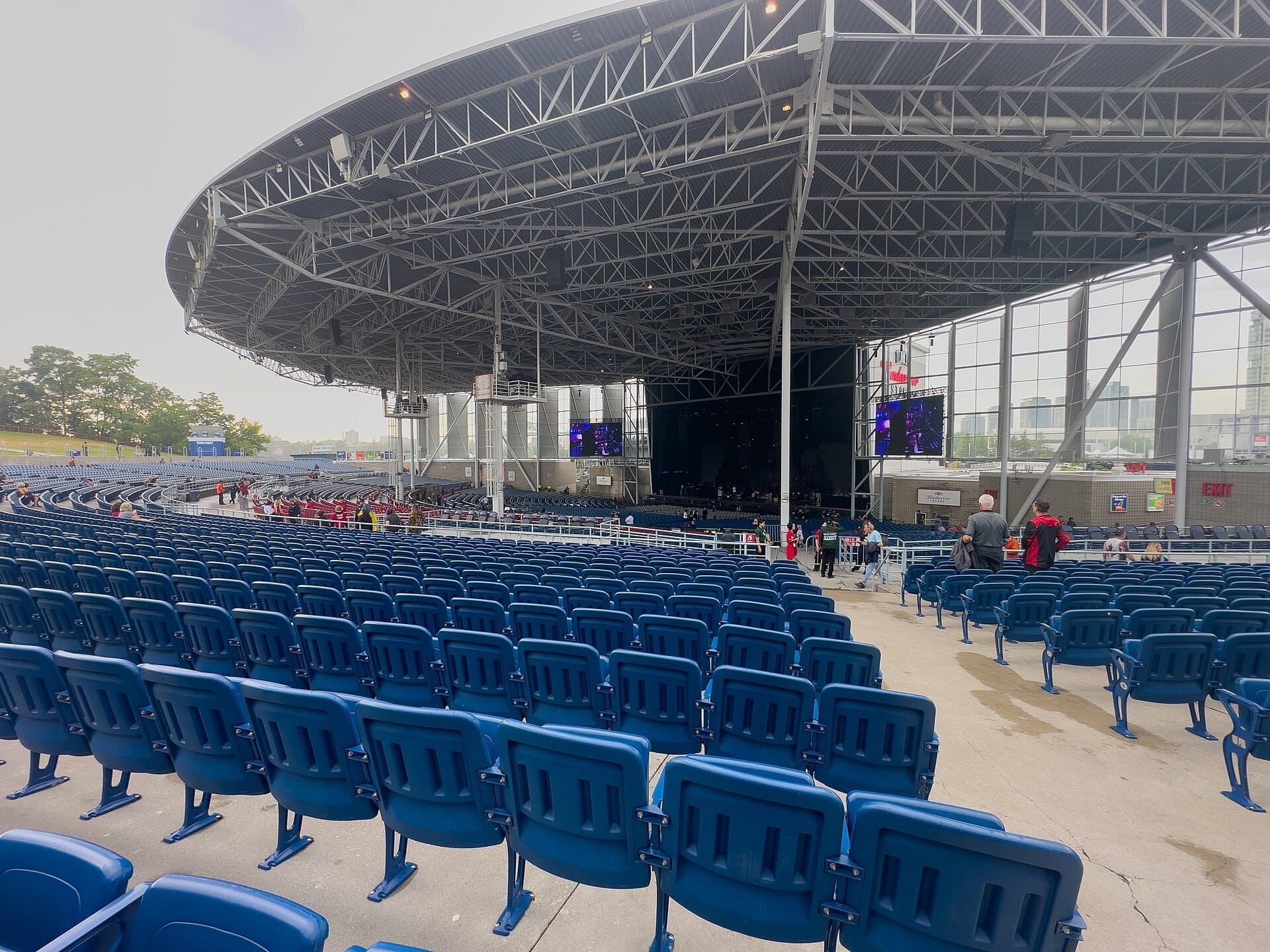
What Is the RBC Amphitheatre?
The RBC Amphitheatre, long known to Torontonians as Budweiser Stage, is the city's flagship outdoor concert venue. Opened in 1995 as the Molson Amphitheatre on the grounds of Ontario Place, the facility has operated under three different naming sponsors over three decades. The most recent rename came in late 2023, when it became the RBC Amphitheatre under a new sponsorship agreement. For many regulars, the old names still roll off the tongue more easily than the new one, so expect to hear all three used interchangeably in conversation.
The venue holds approximately 16,000 people across covered reserved seating and a large open lawn area. That split matters when you buy tickets: covered seats closer to the stage offer better sightlines and protection from sudden summer rain, while the lawn is cheaper, more relaxed in atmosphere, and typically where the most energetic crowds gather. Neither option is objectively better; it depends entirely on what kind of show experience you want.
ℹ️ Good to know
Name note: As of the 2024 concert season, the official name is RBC Amphitheatre. You may still see 'Budweiser Stage' on older tickets, signs, or ride-hailing drop-off labels. The address remains 909 Lake Shore Blvd W.
The Setting: Lake Ontario at Your Back
The location is one of the venue's strongest selling points and something that photographs cannot fully communicate. The amphitheatre sits on the Ontario Place grounds, which jut into Lake Ontario on the western edge of Toronto's waterfront. On a clear evening, the lake stretches out behind the stage, and the skyline of downtown Toronto glows to the east. As the sun sets during an early-evening show, the light off the water turns amber, and the CN Tower catches the last of it.
Arriving early, roughly 60 to 90 minutes before doors open, rewards you with that scenery before the crowd fills in. The walk from the streetcar stop along Lake Shore Boulevard West also passes through the broader Ontario Place grounds and gives you a sense of the scale of the waterfront precinct. On show nights the path gets congested quickly, so the early arrival is practical as well as pleasant.
Acoustically, the open-air design means sound carries differently depending on where you are seated. Lawn attendees at the back will notice more ambient sound bleed from the lake breeze on windy nights. The covered pavilion seats benefit from the canopy's natural reinforcement. Neither is a dealbreaker for a well-engineered show, but it is worth knowing if you are particular about audio fidelity.
Tickets & tours
Live prices and dates from our booking partner. If you book, we may earn a commission at no extra cost to you.
Toronto Old Town: Dark Side Exploration Game and Tour
From 12 €Instant confirmationFree cancellationLEGOLAND Discovery Centre Toronto tickets
From 16 €Instant confirmationFree cancellationToronto 'Little Canada' entrance tickets
From 27 €Instant confirmationFree cancellationNiagara Falls evening tour with boat, dinner and Illumination Tower
From 77 €Instant confirmationFree cancellation
Getting There: Transit Is Genuinely the Better Option
Driving to a sold-out show at RBC Amphitheatre is one of the more avoidable frustrations in Toronto's concert calendar. Parking around Ontario Place is limited and expensive on event nights, and the post-show exit on Lake Shore Boulevard West can take well over an hour by car. Public transit is not just a suggestion here; it is the logical choice.
The most direct TTC route is the 509 Harbourfront or 511 Bathurst streetcar, which run along the waterfront and stop at Exhibition Loop/Exhibition Place, a short walk from the amphitheatre entrance. On major event nights, GO Transit often runs additional trains to Exhibition GO Station, which is adjacent to Exhibition Place. Check the GO Transit schedule before your show, as this option can cut travel time significantly from the suburbs. For a broader overview of getting around the city, the getting around Toronto guide covers all transit modes in detail.
💡 Local tip
Ride-hailing tip: If using Uber or Lyft post-show, walk at least two blocks north of the venue before requesting a pickup. Drop-off and pick-up congestion immediately outside the gates adds 20–30 minutes to wait times after major shows.
The Concert Experience: Before, During, and After
Gates typically open 60–90 minutes before the advertised show start, depending on the event. The concourse has multiple food and drink vendors, and lines at the bars get long in the 30 minutes before the opening act. If you want a drink before the music starts, move early. The smell of grilled food mixes with lake air in a way that is distinctly summer-in-Toronto; it is part of the atmosphere even if the food itself is standard arena fare.
Bag policy is enforced at the gates. The venue follows a clear bag policy for most events, meaning small clear plastic bags or clutch bags under a certain size are permitted while large opaque bags are not. This changes occasionally for specific events, so check the show listing on the official website before you arrive. Security lines move faster when the crowd is not fumbling at the gate.
Lawn tickets mean you are responsible for your own sightlines. Shorter attendees on a packed lawn night will have limited views unless they arrive early enough to position themselves well. A blanket or portable folding chair is allowed on the lawn for most events; confirm per show. Covered seats have assigned rows, and the sound and sight quality improves noticeably as you move toward the front sections.
⚠️ What to skip
Weather: Summer thunderstorms in Toronto can arrive quickly. The venue will delay or pause shows during lightning, and the lawn offers no shelter. Bring a lightweight rain jacket for evening shows, especially in June and July when afternoon storms are more common.
History and What Is Coming Next
The venue's origins trace back to the original Ontario Place Forum, an outdoor performance space that was part of the Ontario Place entertainment complex opened in 1971. When the current amphitheatre was built in 1995, originally under the Molson Amphitheatre name, it replaced that earlier facility with a purpose-built concert venue capable of hosting major touring acts. Over the following three decades it became the default summer destination for large shows in the city, hosting artists from across rock, pop, hip-hop, country, and electronic music.
The venue is expected to close for substantial renovations for the 2028 season, with a planned reopening in summer 2029. The project will add an enclosed indoor space and other upgrades, making year-round programming possible once full-year capabilities are complete. Full year‑round capabilities are expected to be complete by summer 2030. If you are planning a visit in the 2027 to 2029 window, verify current status before booking. For context on the broader waterfront area undergoing transformation, the Toronto waterfront guide covers what is happening along the lakeshore.
Practical Details and Accessibility
The venue operates as a Live Nation–managed facility. For accessibility needs including wheelchair-accessible seating, companion seating, and related services, contact the venue directly at accessibilitycoordinator@livenation.com or by phone at +1 416-260-5600. Accessible tickets can also be purchased through official ticketing channels at the time of booking. The main pathways through the venue are paved and accessible, though the lawn area itself is grass and uneven in spots.
All ticket pricing is event-specific and denominated in Canadian dollars. There is no walk-in admission to the amphitheatre itself; you cannot enter the venue as a general tourist on non-show days. The venue grounds form part of Ontario Place, which has its own separate entry and programming, but the amphitheatre itself is only accessible on ticketed show nights.
For visitors building a full day around a show, the surrounding waterfront has good options for pre-concert hours. The Harbourfront Centre is a short walk east along the lake and often has its own programming in the evenings. The Martin Goodman Trail runs along the waterfront and is a pleasant way to approach the venue on foot from the east if you are coming from downtown.
Who Should Think Twice
If large crowds in an outdoor setting are not your preference, this venue will not change your mind. On a sold-out night, 16,000 people moving through a single access corridor on Lake Shore Boulevard West creates real congestion. Visitors with mobility limitations should review accessibility options carefully and consider arriving early, as the distance from transit stops requires walking several hundred metres on an uneven mixed-surface path. Those hoping to explore the venue casually without a ticket will also find there is nothing to see; the gates are closed on non-show days.
Travellers primarily interested in Toronto's music scene at a smaller, more intimate scale would be better served by the city's indoor venues. For performing arts in a very different register, the recently restored Massey Hall offers world-class acoustics and a capacity under 3,000.
Insider Tips
- The north-side gates of the venue sometimes have shorter security lines than the main entrance. Worth the slightly longer walk from the streetcar stop.
- The lawn fills from the centre outward. If you arrive 30 minutes after doors open and want a decent position, head toward the sides rather than the back-centre, where latecomers cluster.
- For shows that end after midnight, the 509 streetcar gets extremely crowded. Consider walking northeast along the Martin Goodman Trail toward Bathurst Station (about 25 minutes) to avoid the post-show crush, or wait 30 to 40 minutes inside the grounds before leaving.
- Covered pavilion sections in the middle tiers, roughly rows H to P in the centre, offer the best balance of sightlines and audio quality without the premium pricing of the front sections.
- The venue’s re-entry policy can vary on a show-by-show basis. Confirm the re-entry policy for your specific event when you arrive, as some shows do not allow it.
Who Is Budweiser Stage For?
- Summer concert-goers who want major international acts in an outdoor setting
- Visitors building a full evening around the Toronto waterfront
- Groups of friends who prefer the casual lawn atmosphere over assigned seating
- Music fans attending the Toronto leg of large North American tours
- Anyone who wants a quintessential warm-weather Toronto evening with the lake as a backdrop
Nearby Attractions
Other things to see while in Toronto Waterfront:
- BMO Field
BMO Field at Exhibition Place is Toronto's premier outdoor soccer stadium, home to Toronto FC and the Toronto Argonauts. Originally built in 2007 and expanded since, it will serve as a FIFA World Cup 2026 venue. Here is everything a first-time visitor needs to know before heading to a match or event.
- Exhibition Place
A 192-acre event and heritage campus on Toronto's western waterfront, Exhibition Place has anchored the city's civic and cultural life since 1879. Home to the Canadian National Exhibition, major concerts, trade shows, and several sports venues, the grounds offer free outdoor access year-round with a remarkable collection of early 20th-century buildings.
- Harbourfront Centre
Harbourfront Centre is a 10-acre arts and cultural campus on Toronto's waterfront, open year-round with free public access to outdoor spaces, plus ticketed performances, exhibitions, and events. It sits about a 15-minute walk from Union Station and offers a direct view across Lake Ontario.
- Humber Bay Arch Bridge
The Humber Bay Arch Bridge spans the mouth of the Humber River along Toronto's Lake Ontario waterfront, connecting the Martin Goodman Trail across a graceful double-ribbed steel arch. Free to access at any hour, it offers some of the city's most dramatic skyline views and carries quiet but significant cultural meaning in its design.
Planning a trip? Discover personalized activities with the Nomado app.