BMO Field: Toronto's Soccer Stadium
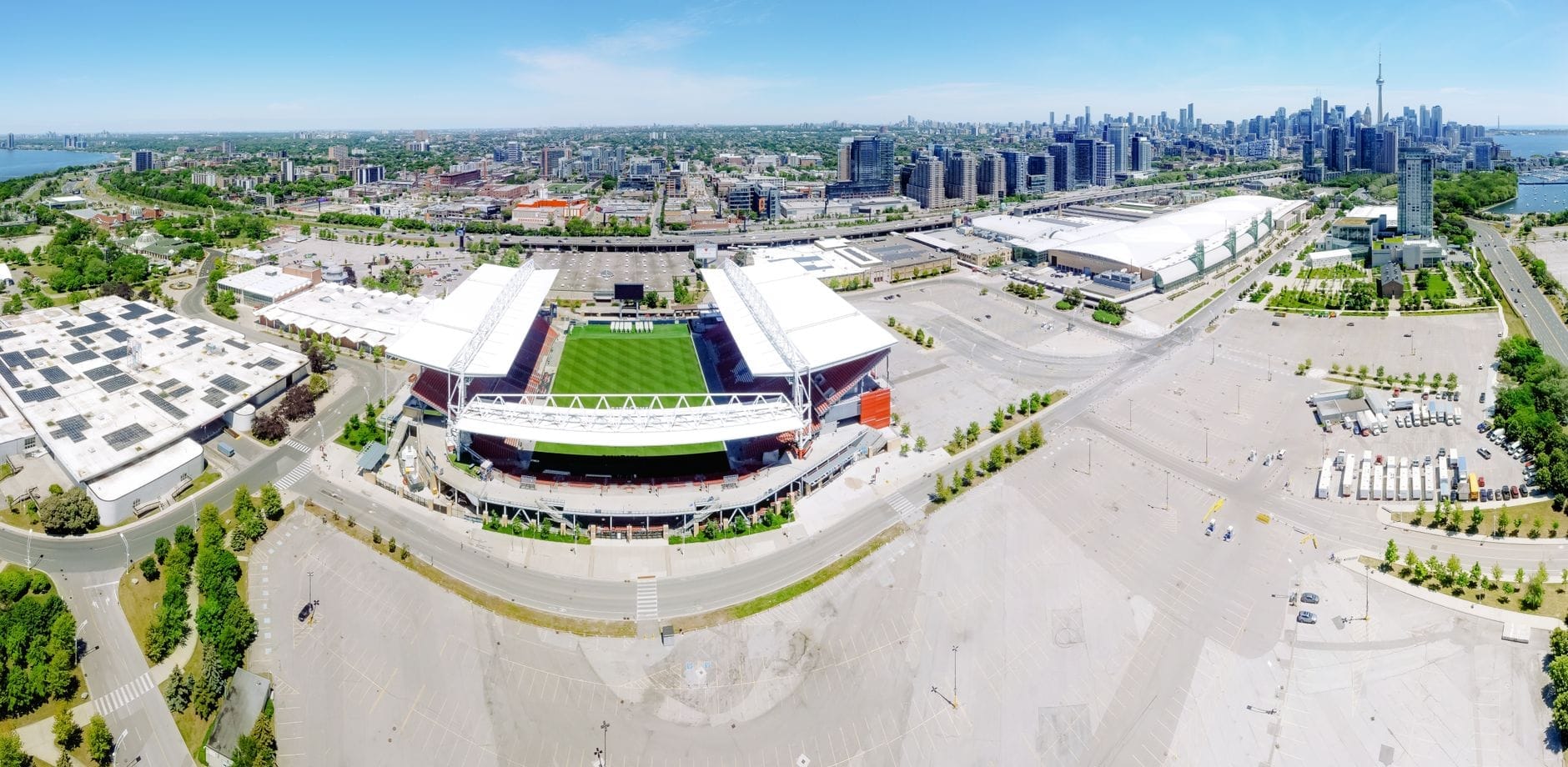
BMO Field at Exhibition Place is Toronto's premier outdoor soccer stadium, home to Toronto FC and the Toronto Argonauts. Originally built in 2007 and expanded since, it will serve as a FIFA World Cup 2026 venue. Here is everything a first-time visitor needs to know before heading to a match or event.
Quick Facts
- Location
- 170 Princes Boulevard, Exhibition Place, Toronto, ON M6K 3C3
- Getting There
- Exhibition Station (Line 2), then 509 Harbourfront or 511 Bathurst streetcar to Exhibition Loop
- Time Needed
- 3–4 hours for a match; 1–2 hours for a concert or event
- Cost
- Varies by event and seat category; check the official site for current pricing in CAD
- Best for
- Soccer and CFL football fans, sports tourists, large-scale concerts
- Official website
- www.bmofield.com
What BMO Field Actually Is
BMO Field is Canada's dedicated national soccer stadium, built specifically for the sport at a time when no such purpose-built facility existed in the country. Located within the grounds of Exhibition Place on Toronto's western waterfront, it opened on 28 April 2007 with Toronto FC's inaugural MLS match against the Kansas City Wizards. The construction cost C$62.9 million, funded through a partnership between three levels of government and Maple Leaf Sports and Entertainment (MLSE).
Over the years the venue has grown considerably. A major expansion between 2014 and 2016 added covered seating areas, a roof structure, and premium facilities that transformed it from a relatively modest soccer bowl into a legitimate international venue. For the 2026 FIFA World Cup, temporary structures bring the seating capacity up to approximately 45,736, and the stadium will operate under the tournament name 'Toronto Stadium' for official FIFA purposes.
Beyond soccer, BMO Field serves as home to the Toronto Argonauts of the Canadian Football League (CFL), and the venue regularly hosts major concerts and events. The Argonauts moved here in 2016 after decades at Rogers Centre, reflecting a broader shift in Toronto's sports landscape toward multi-use outdoor venues.
Getting to BMO Field
The most reliable way to reach the stadium on match days is public transit. Take TTC Line 2 (Bloor-Danforth) to Exhibition Station, then board the 509 Harbourfront or 511 Bathurst streetcar to Exhibition Loop, which puts you a short walk from the stadium gates. The full journey from downtown takes roughly 15 to 25 minutes. For a broader overview of moving around the city, see the getting around Toronto guide.
If you are driving, the most direct route from downtown is south on Bay Street to Lake Shore Boulevard West, then west to Ontario Drive, turning right onto Princes Boulevard into Exhibition Place. Parking is available on-site at Exhibition Place, though lots fill quickly on busy match days. Arriving by car at least 60 minutes before kickoff is advisable on sold-out nights.
💡 Local tip
On Toronto FC and Argonauts match nights, the 509 Harbourfront and 511 Bathurst streetcars see heavy use. If you are coming from Union Station area, the 509 streetcar westbound drops you near Exhibition Place as well. Tap your Presto card or pay the standard TTC fare. Check the TTC trip planner at ttc.ca before you leave.
The stadium sits on Lake Ontario waterfrontToronto waterfront, which means the walk from the streetcar stop passes through a flat, open precinct. In summer this can be pleasant; in November for a late-season CFL game, the wind off Lake Ontario can be sharp.
Tickets & tours
Live prices and dates from our booking partner. If you book, we may earn a commission at no extra cost to you.
Toronto Old Town: Dark Side Exploration Game and Tour
From 12 €Instant confirmationFree cancellationLEGOLAND Discovery Centre Toronto tickets
From 16 €Instant confirmationFree cancellationToronto 'Little Canada' entrance tickets
From 27 €Instant confirmationFree cancellationNiagara Falls evening tour with boat, dinner and Illumination Tower
From 77 €Instant confirmationFree cancellation
The Match-Day Experience: What to Expect
Gates typically open roughly 90 minutes before kickoff for Toronto FC matches. Arriving at gate-open time gives you the best chance to explore the concourses without queues, find your seats, and take in the pre-match atmosphere as the stadium fills. The lower bowl fills first and fastest; upper sections tend to have more space early on.
Toronto FC supporters are organized through a section known as the South End, where standing, chanting, and tifo displays are coordinated by supporter groups. The atmosphere there is notably different from the seated main stands, louder and more continuous throughout the match. If you are attending with children or looking for a quieter experience, the east and west sideline seats are more manageable.
For CFL games, the field configuration changes to accommodate Canadian football dimensions. The energy at Argonauts matches is different from soccer, with more stop-start play and longer overall event duration. The stadium's roof, added during the 2014 to 2016 expansion, provides partial cover for most seated areas, which matters significantly during autumn CFL games when rain is common.
⚠️ What to skip
BMO Field is an event-only venue. There are no public touring hours, no walk-up ticket windows for casual visitors, and no general access outside scheduled events. If you want to see the pitch, you need a match or event ticket.
The Stadium's Place in Toronto Sports History
When BMO Field opened in 2007, it was the first soccer-specific stadium in Canada. Toronto FC was the first MLS expansion team to play in such a facility, and the stadium's construction signaled a serious long-term investment in professional soccer in Canada. At the time, Major League Soccer was still building its footprint in Canadian markets, and BMO Field gave Toronto FC a home designed around the sport rather than retrofitted from baseball or football configurations.
The significance expanded further when the Canadian national soccer teams, both men's and women's, began using BMO Field for home international matches. The Canadian Women's National Team, which won gold at the 2020 Tokyo Olympics, has played major qualifiers and friendlies here. The men's team used BMO Field during their historic qualification for the 2022 FIFA World Cup, the first such qualification in 36 years. Attending an international on this ground carries a different weight than a regular league match.
The FIFA World Cup 2026, co-hosted by Canada, the United States, and Mexico, will bring group stage and potentially round-of-16 matches to Toronto. The stadium's temporary expansion to around 45,736 seats and its FIFA tournament designation as Toronto Stadium represent the largest international sporting event the venue has hosted. For context on the broader Toronto waterfront precinct that surrounds it, the area around Exhibition Place also connects to the wider lakefront.
Architecture and Atmosphere
The stadium's design is functional rather than iconic. The seating bowl wraps tightly around the pitch, which is one of the genuine strengths of the venue: sight lines are close and clear throughout. Even from the upper tiers, the distance to the touchline is shorter than in many North American multi-purpose facilities. The roof structure, added during the major expansion, gives the stadium a more enclosed feel despite it remaining open-air.
The exterior sits within the broader Exhibition Place grounds, a historic fairground complex established in 1879. The surrounding buildings include the Enercare Centre (a large convention facility) and various heritage structures from the CNE era. On non-match days, this area is worth a walk purely for its architectural mix of industrial heritage and modern additions.
Photography inside the stadium is generally permitted for personal use during events, though professional camera equipment and long lenses are typically restricted. The best natural light for exterior shots comes in the late afternoon, when the low sun from the southwest catches the stadium facade. The waterfront location also means that clear evenings produce excellent views back toward the CN Tower and downtown skyline from the surrounding grounds. For more on Toronto's photogenic angles, see the guide to the best views in Toronto.
Practical Visitor Information
Ticket prices vary considerably depending on the event, the opponent, and the seat category. Toronto FC season tickets and single-match tickets are sold through the official BMO Field site and the Toronto FC ticketing platform. Argonauts tickets are sold through a separate CFL ticketing system but are also linked from the BMO Field site. There is no single standard admission price; check the specific event page for current pricing in Canadian dollars.
Accessibility services are available at BMO Field. The venue provides accessible seating, and guests needing assistance can contact Fan Assist by text at 647-933-5354. The Argonauts stadium guide provides specific instructions for these services. Visitors with mobility requirements should review the accessibility section of the official BMO Field website before purchasing tickets to confirm suitable seating options.
BMO Field is part of the larger Exhibition Place grounds, which also connects to the Exhibition Place complex. On match days you will encounter food vendors both inside the stadium and in the surrounding precinct outside the gates. Lines at concessions inside the stadium are longest immediately before kickoff; if you want to eat without queueing for 20 minutes, arrive early or wait until after the match kicks off.
ℹ️ Good to know
Dress for the season and the sport. Summer Toronto FC matches can be warm with direct sun on west-facing seats in the late afternoon. Late-season Argonauts games in October or November call for layers, as the Lake Ontario waterfront location adds wind chill. The stadium roof provides partial but not complete weather protection.
Who Should Skip This Attraction
BMO Field is not a tourist attraction in the traditional sense. If you have no interest in attending a scheduled match or event, there is nothing to see here on a regular day: the gates are closed, no tours are offered, and the grounds outside are just a parking and event precinct. Travelers looking for a cultural or historical experience will find far more to engage with nearby.
If live sport is on your agenda but you are not sure which event to attend, Toronto in summer offers Toronto FC matches at BMO Field alongside Blue Jays baseball at Rogers Centre. Families with younger children may find a Toronto FC match easier to manage logistically than a CFL game, given shorter overall duration. For a broader picture of what to do around the waterfront area, the Toronto waterfront guide covers the wider precinct in detail.
Insider Tips
- For Toronto FC matches, the supporter groups in the South End produce tifo displays (large coordinated banner art) in the minutes before kickoff. Arrive by gate-open time to watch these unfold from the concourse level; once the section is packed you will not see the setup process.
- The 509 Harbourfront streetcar from Union Station area is often less crowded post-match than the 511 Bathurst. Walking east along Lake Shore after a game and catching the 509 at a stop away from the main crowd can save significant waiting time.
- If you are attending an international match featuring the Canadian national teams, tickets sell quickly and category prices vary sharply. The east end seats at lower tiers offer some of the best value price-to-sightline ratios in the bowl.
- Exhibition Place has free outdoor areas around the venue that are accessible without a ticket. The grounds between the Enercare Centre and BMO Field offer a view of the stadium exterior and, on event days, street food vendors and pre-match atmosphere that you can experience without paying for entry.
- For FIFA World Cup 2026 matches, note that the venue operates under the name Toronto Stadium for official tournament purposes. When searching for tickets or official information related to the World Cup, use that name to avoid confusion with regular BMO Field events.
Who Is BMO Field For?
- Soccer fans wanting to see Toronto FC or Canadian national team matches in a purpose-built stadium
- CFL football fans attending Toronto Argonauts home games
- Sports tourists visiting Toronto during the FIFA World Cup 2026
- Concert-goers attending large-scale outdoor live events at the venue
- Travelers who want to experience Canadian professional sports culture in a modern outdoor setting
Nearby Attractions
Other things to see while in Toronto Waterfront:
- Budweiser Stage
Formerly known as Budweiser Stage, the RBC Amphitheatre is a major outdoor concert venue on the Lake Ontario waterfront at Ontario Place. With a capacity of around 16,000, it draws major international acts from May through October each year. Here is everything you need to know before attending a show.
- Exhibition Place
A 192-acre event and heritage campus on Toronto's western waterfront, Exhibition Place has anchored the city's civic and cultural life since 1879. Home to the Canadian National Exhibition, major concerts, trade shows, and several sports venues, the grounds offer free outdoor access year-round with a remarkable collection of early 20th-century buildings.
- Harbourfront Centre
Harbourfront Centre is a 10-acre arts and cultural campus on Toronto's waterfront, open year-round with free public access to outdoor spaces, plus ticketed performances, exhibitions, and events. It sits about a 15-minute walk from Union Station and offers a direct view across Lake Ontario.
- Humber Bay Arch Bridge
The Humber Bay Arch Bridge spans the mouth of the Humber River along Toronto's Lake Ontario waterfront, connecting the Martin Goodman Trail across a graceful double-ribbed steel arch. Free to access at any hour, it offers some of the city's most dramatic skyline views and carries quiet but significant cultural meaning in its design.
Planning a trip? Discover personalized activities with the Nomado app.