Harbourfront Centre: Toronto's Lakefront Cultural Campus
Harbourfront Centre is a 10-acre arts and cultural campus on Toronto's waterfront, open year-round with free public access to outdoor spaces, plus ticketed performances, exhibitions, and events. It sits about a 15-minute walk from Union Station and offers a direct view across Lake Ontario.
Quick Facts
- Location
- 235 Queens Quay West, Toronto, ON M5J 2G8
- Getting There
- Walk 15 min south from Union Station via York Street; TTC 509 Harbourfront and 510 Spadina streetcar routes also serve Queens Quay
- Time Needed
- 1–3 hours for a casual visit; a full afternoon if attending a ticketed event
- Cost
- Outdoor campus is free; ticketed events and performances vary by program (prices listed per event in CAD)
- Best for
- Waterfront walks, live arts, families, photography, and summer festivals
- Official website
- harbourfrontcentre.com
What Harbourfront Centre Actually Is
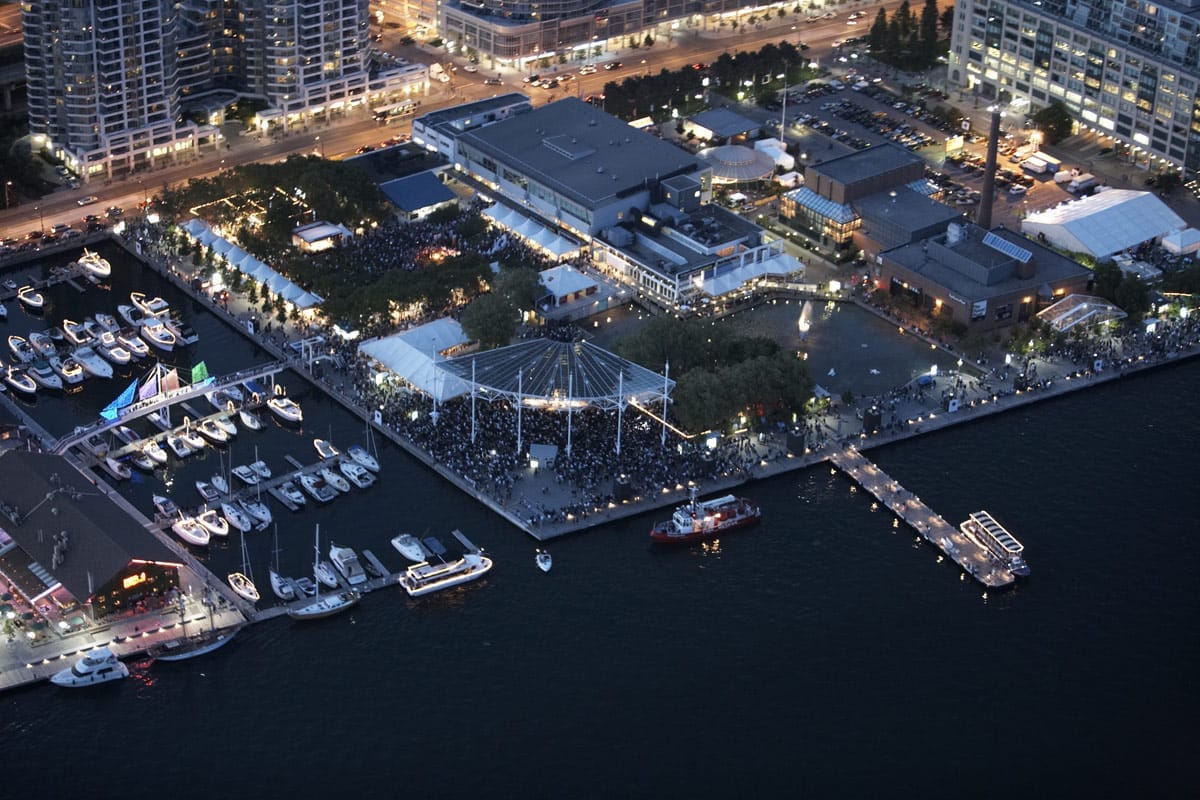
Harbourfront Centre is a non-profit, charitable cultural campus occupying a 10-acre campus along the northern shore of Lake Ontario, at 235 Queens Quay West. It is not a single building or a ticketed attraction in the traditional sense. It is a publicly accessible lakefront precinct with multiple indoor venues, outdoor performance spaces, galleries, and a working craft studio, all woven together by waterfront promenades and open plazas.
The campus traces its origins to 1972, when the Government of Canada established the Harbourfront Corporation as a Crown corporation to redevelop what had been a declining industrial waterfront. It opened in 1974, and by 1991 had transitioned into the non-profit charitable structure that still operates it today. What visitors encounter now is the result of five decades of incremental investment: a place that functions as a genuine neighborhood amenity as much as a tourist destination.
For context on how the waterfront has evolved around the centre, the Toronto waterfront guide covers the broader lakefront corridor from the Humber River to the Leslie Street Spit.
The Outdoor Campus: What You See and Feel
Arriving from Union Station on foot, you walk south on York Street through the canyons of the financial district and then cross the Gardiner Expressway overpass, which briefly creates an industrial, echoey underpass. The moment you reach Queens Quay West, the scale changes abruptly. Lake Ontario opens in front of you, and the waterfront promenade stretches east and west. On a clear day, the water extends to the horizon with no visible opposite shore.
The outdoor spaces include a large plaza facing the lake, a skating rink that operates in winter, and the open-air Concert Stage, which holds approximately 2,000 people in its seating capacity. In summer, the stage hosts everything from free family programming on weekend afternoons to ticketed world music concerts after dark. The smell of lake water is constant and more pronounced after rain. On warm evenings, food vendors set up along the promenade and the benches fill with a genuine cross-section of the city.
💡 Local tip
The waterfront promenade directly in front of Harbourfront Centre connects seamlessly with the Martin Goodman Trail, which runs east toward Sugar Beach and west past the Humber Bay Arch Bridge. A visit to the Centre pairs naturally with a lakefront walk.
Winter changes the character of the campus considerably. The outdoor rink draws locals on weekday mornings and families on weekend afternoons. The waterfront is quieter, colder, and windier than the city blocks to the north, so dress accordingly from November through March. That said, the winter light over the lake on clear days can be exceptional for photography.
Tickets & tours
Live prices and dates from our booking partner. If you book, we may earn a commission at no extra cost to you.
LEGOLAND Discovery Centre Toronto tickets
From 16 €Instant confirmationFree cancellationToronto Old Town: Dark Side Exploration Game and Tour
From 12 €Instant confirmationFree cancellationToronto 'Little Canada' entrance tickets
From 27 €Instant confirmationFree cancellationNiagara Falls evening tour with boat, dinner and Illumination Tower
From 77 €Instant confirmationFree cancellation
Indoor Venues and Cultural Programming
The campus contains several distinct indoor venues. The Fleck Dance Theatre and the formerly named Enwave Theatre (now often referred to by sponsored names) host theatre, dance, and literary performances. The York Quay Centre holds gallery spaces, a ceramics studio, and a textile studio that are open to the public on most days. Checking what is currently on before visiting is genuinely worthwhile; the programming can be the difference between a pleasant walk and an absorbing afternoon.
Harbourfront Centre is particularly well regarded for its international literary programming, including the Toronto International Festival of Authors (formerly IFOA), held each autumn, which has brought some of the world's most prominent writers to the campus for decades. The craft studios operate year-round and occasionally host workshops open to the public, though advance registration is typically required.
Harbourfront Centre is also one of the key venues during events that animate the wider waterfront and downtown area. The Toronto waterfront comes alive during summer, when the campus hosts outdoor concerts several nights per week.
How the Experience Changes Through the Day
Mornings at Harbourfront are quieter than almost anywhere else downtown. Joggers and cyclists move along the promenade, and the lake is often glassy before afternoon wind picks up. If you arrive before 10:00 AM, you will largely have the waterfront to yourself. This is the best time for photography: low-angle light from the east, minimal foot traffic, and the CN Tower reflected in calmer water.
Midday and early afternoon see school groups, tour boats loading at nearby docks, and a steady flow of office workers on lunch breaks during spring and summer. The promenade becomes busy but not uncomfortable. Afternoon is when the craft studios and galleries are typically most active, and it is the right time to explore the indoor spaces.
Evenings are when the campus is at its most lively during the warmer months. If there is a concert or festival event, the outdoor plaza fills with a crowd that skews young but is genuinely diverse in age and background. The combination of music, lake air, and the lit skyline behind you creates an atmosphere that is specific to this location and difficult to replicate elsewhere in the city.
ℹ️ Good to know
Event schedules are seasonal and can change with little notice. Check harbourfrontcentre.com before your visit to confirm what is running on a given day, especially if you are planning around a specific performance or exhibition.
Getting There and Getting Around
Union Station is the most practical transit hub. The walk south takes about 15 minutes at a comfortable pace and is straightforward: York Street runs directly to Queens Quay West. TTC streetcar routes along Queens Quay provide another option, and the route runs east-west along the waterfront. Cyclists can arrive via the Martin Goodman Trail, which passes directly in front of the campus.
If you are arriving by car, underground parking is available on-site at 235 Queens Quay West, with additional above-ground parking one block west at Rees Street and Queens Quay West. Parking costs and availability vary by season and event schedule. For broader transit planning in the city, the getting around Toronto guide covers TTC routes, GO Transit, and walking options in detail.
The campus itself is largely flat and navigable on foot, with paved surfaces throughout the outdoor areas. Accessibility varies by indoor venue; detailed information for specific venues is available through the official website and the Harbourfront Centre box office.
Photography and Practical Notes
Harbourfront Centre is one of the better locations in Toronto for skyline photography, particularly from the waterfront promenade looking north. You have the CN Tower and the downtown cluster in clear view, with the lake in the foreground. The best light is in the morning facing southeast, or at golden hour and blue hour facing west toward the Humber Bay Arch Bridge.
For visitors focused on Toronto's skyline and viewpoints more broadly, the best views in Toronto guide lists vantage points across the city, including rooftops, parks, and elevated observation decks.
Bring a layer regardless of season; the lakefront is consistently windier than the streets a few blocks north, and the temperature difference in winter can be noticeable. In summer, sunscreen is useful because shade on the open promenade is limited. The nearest grocery and convenience options are a short walk north on York Street or west along Queens Quay.
⚠️ What to skip
In winter, wind off Lake Ontario can make the exposed waterfront significantly colder than the city's forecast temperature suggests. A windproof outer layer is more useful here than at most other Toronto attractions.
Honest Assessment: Worth Your Time?
As a free outdoor space, Harbourfront Centre is consistently worth a visit on any Toronto trip, particularly in good weather. The lakefront setting is genuine and well-maintained, the programming adds depth if you time it right, and the connection to the wider waterfront trail makes it a natural part of a longer walk.
It is not a substitute for a focused cultural itinerary. If you have limited time and are choosing between Harbourfront Centre and the Art Gallery of Ontario or the Royal Ontario Museum, the museums offer more concentrated depth per hour. But as a complement to time in the city, especially on a warm afternoon or evening, the campus delivers something the indoor institutions cannot: open water, moving air, and a sense of the city's geography.
Visitors who want to extend their time on the water can combine a Harbourfront Centre visit with a trip to the Toronto Islands, accessed by ferry from nearby Jack Layton Ferry Terminal. The Toronto Islands guide covers ferry schedules, what to expect on each island, and the best beaches.
Who should skip it: travelers with only one or two days in Toronto who are prioritizing indoor cultural experiences will find the campus underwhelming if there is no event on. It is also less compelling in cold, grey weather if you are not planning to skate. The outdoor spaces are minimally interesting when empty and overcast.
Insider Tips
- Check the Harbourfront Centre event calendar before you go, not after. The outdoor Concert Stage hosts free family events most summer weekends, but the schedule is not well-publicized beyond the official site. A ticketed evening show adds a completely different dimension to the visit.
- The waterfront promenade just east of the main campus, past the ferry terminal and toward Sugar Beach, is significantly quieter than the plaza area and offers unobstructed lake views without the event crowds.
- The craft studios in the York Quay Centre are open to the public for browsing during regular hours and display work by artists in residence. They are easy to miss because they are inside the building, but worth a 15-minute look even without a workshop booking.
- For skating in winter, arrive on a weekday morning. Weekend afternoons draw local families and the rink surface deteriorates quickly. Skate rentals are typically available on-site during the operating season.
- The light over the lake is strongest and most photogenic in the 30 minutes before and after sunset. Position yourself facing southwest along the promenade for the best combination of water, sky, and the Humber Bay Arch Bridge in the distance.
Who Is Harbourfront Centre For?
- Visitors who want a genuine feel for Toronto's relationship with Lake Ontario without a ferry crossing
- Families looking for free outdoor space with structured programming on summer weekends
- Photographers targeting skyline shots with foreground water, especially at golden hour
- Travelers who enjoy pairing a cultural visit with a longer waterfront walk east or west along the Martin Goodman Trail
- Anyone attending a specific festival or performance, particularly during the summer concert season or the autumn International Festival of Authors
Nearby Attractions
Other things to see while in Toronto Waterfront:
- BMO Field
BMO Field at Exhibition Place is Toronto's premier outdoor soccer stadium, home to Toronto FC and the Toronto Argonauts. Originally built in 2007 and expanded since, it will serve as a FIFA World Cup 2026 venue. Here is everything a first-time visitor needs to know before heading to a match or event.
- Budweiser Stage
Formerly known as Budweiser Stage, the RBC Amphitheatre is a major outdoor concert venue on the Lake Ontario waterfront at Ontario Place. With a capacity of around 16,000, it draws major international acts from May through October each year. Here is everything you need to know before attending a show.
- Exhibition Place
A 192-acre event and heritage campus on Toronto's western waterfront, Exhibition Place has anchored the city's civic and cultural life since 1879. Home to the Canadian National Exhibition, major concerts, trade shows, and several sports venues, the grounds offer free outdoor access year-round with a remarkable collection of early 20th-century buildings.
- Humber Bay Arch Bridge
The Humber Bay Arch Bridge spans the mouth of the Humber River along Toronto's Lake Ontario waterfront, connecting the Martin Goodman Trail across a graceful double-ribbed steel arch. Free to access at any hour, it offers some of the city's most dramatic skyline views and carries quiet but significant cultural meaning in its design.
Planning a trip? Discover personalized activities with the Nomado app.