High Park: Toronto's Largest Urban Park, Explained
High Park is a 161-hectare public park in west Toronto offering free admission year-round. From cherry blossoms in spring to cross-country skiing in winter, it rewards visitors in every season with forests, ponds, gardens, sports facilities, and one of the city's best stretches of natural trail.
Quick Facts
- Location
- 1873 Bloor Street West, High Park neighbourhood, Toronto, Ontario
- Getting There
- High Park station (TTC Line 2 subway); seasonal Bus 203 High Park; Streetcar 506 Carlton to High Park Loop
- Time Needed
- 2–4 hours for a thorough visit; half a day if you plan to hike, picnic, and visit the zoo
- Cost
- Free admission (CAD $0) year-round
- Best for
- Families, nature walkers, photographers, cherry blossom seekers, off-leash dog owners
What High Park Actually Is
High Park is Toronto's largest urban park, covering 161 hectares (about 400 acres) in the city's west end. It has been open to the public since 1876. The land was donated to the city by John George Howard, an architect and engineer who lived on the property and stipulated that it remain free to the public. That condition still holds today.
What makes High Park unusual for a city this size is its ecological variety. The southern and central sections contain some of Toronto's last remaining black oak savanna, a rare habitat type that historically covered much of the Great Lakes region. Restoration work has been ongoing for decades, and in late spring you can see controlled burns used to manage invasive species and encourage native plants. The northern end transitions into more manicured gardens, sports fields, and facilities.
Sitting within the High Park neighbourhood, the park functions as the literal green core of a dense residential area. Bloor Street West runs along its northern edge, and the park boundary is walkable from the subway station in a few minutes. It is not a remote destination. It is a park that Torontonians use on weekday lunch breaks, weekend mornings, and everything in between.
💡 Local tip
Cars are restricted on weekends and holidays — the park's internal roads become pedestrian and cyclist space. This is when the park feels most open and relaxed. On weekdays, vehicle access is permitted at certain entrances, which changes the character slightly.
How the Park Changes Through the Day
Arrive before 8 a.m. on a weekday and you will share the trails mostly with dog walkers and serious runners. The off-leash area near the Deer Pen Road entrance draws regulars who know each other by name and by dog. The light through the oak canopy at this hour has a particular quality, especially in autumn when the leaves have turned but not yet fallen.
By mid-morning, families with strollers arrive, and the area around Grenadier Pond fills with people feeding ducks and watching for herons. The pond is home to a notable variety of bird life year-round. In winter, when it freezes, it becomes an informal skating surface used by locals, though this is not an officially maintained rink. The Hillside Gardens near the Dream Site amphitheatre fill up by late morning on summer weekends.
Afternoons bring the largest crowds, particularly on summer Saturdays. Picnic spots around the central lawn become claimed territory by early afternoon. The playground areas near the Greenhouse and the Zoo are at peak use between noon and 3 p.m. If you want a quieter experience, late afternoon on a weekday, or after 4 p.m. on weekends when some families leave, is noticeably calmer.
Tickets & tours
Live prices and dates from our booking partner. If you book, we may earn a commission at no extra cost to you.
Downtown Toronto Highlight Walking Tour with Optional Harbour Cruise
From 24 €Instant confirmationFree cancellationNiagara Falls highlights tour with optional boat trip
From 59 €Instant confirmationFree cancellationToronto Old Town: Dark Side Exploration Game and Tour
From 12 €Instant confirmationFree cancellationLEGOLAND Discovery Centre Toronto tickets
From 16 €Instant confirmationFree cancellation
Cherry Blossoms: What the Hype Gets Right and Wrong
Each spring, approximately 1,500 Japanese cherry trees bloom along the paths near the Hillside Gardens. The bloom typically peaks in late April to early May, depending on the year's temperatures. During peak bloom, High Park receives an extraordinary number of visitors, and the city has at times restricted vehicle access entirely during this period to manage the crowds.
The blossoms are genuinely spectacular on a clear day. The trees line both sides of the path, and at full bloom the effect is a pale pink canopy. If you are planning a spring visit, the Toronto cherry blossom guide has specific timing advice and crowd management tips. The honest caveat: bloom windows are short, often only five to seven days at peak, and a sudden warm spell or late frost can shift or shorten them unpredictably.
If you visit during peak bloom on a weekend, arrive before 9 a.m. or after 5 p.m. to avoid the densest crowds. The area around the trees is a narrow path, and at midday on a sunny Saturday it can feel more like a slow-moving queue than a park walk. That said, the atmosphere is genuinely celebratory, with families picnicking on nearby grass and an unusual sense of shared seasonal occasion.
⚠️ What to skip
During cherry blossom season, car access to High Park is typically restricted. Check the City of Toronto's website before driving. The subway (High Park station on Line 2) is the most reliable way to arrive.
What to See Inside the Park
Grenadier Pond
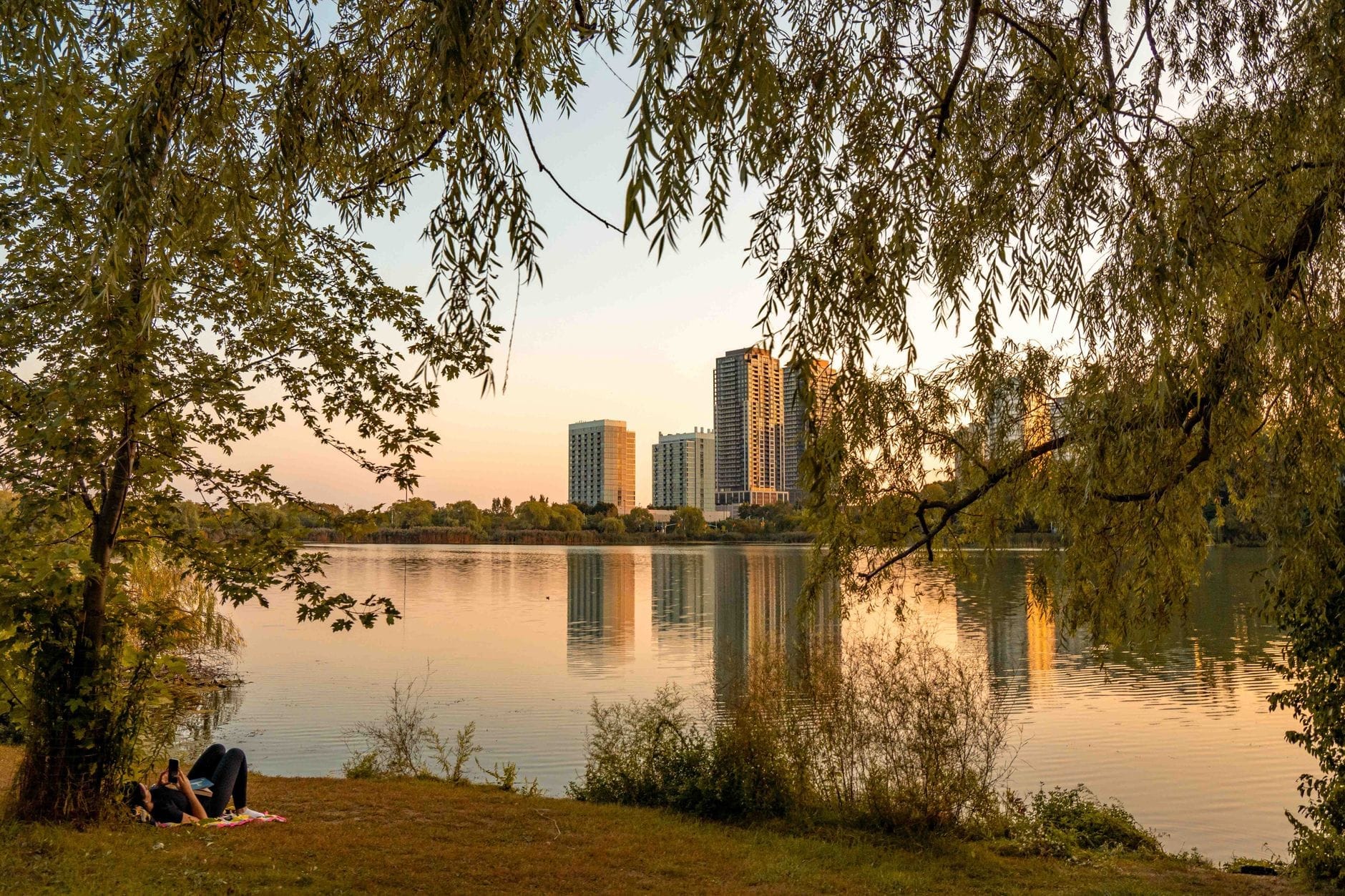
The large body of water in the park's southern section is Grenadier Pond, which covers about 13 hectares. It connects to a stormwater management system and attracts migratory birds in spring and fall. The boardwalk along the eastern edge of the pond is one of the park's best walking stretches, with views across the water toward the escarpment. In summer, the pond supports a population of turtles and frogs visible from the banks. Fishing is permitted with a valid Ontario licence.
High Park Zoo
High Park has a free zoo, which is a municipally-operated free zoo in Canada. The animals are not exotic megafauna, but the collection is legitimate: bison, peacocks, llamas, capybara, Highland cattle, and wallabies, among others. The zoo is compact, designed more for close observation of a smaller number of species than for broad taxonomic coverage. Children respond to it well, in part because many animals can be approached closely. Opening periods follow seasonal schedules, so check ahead in winter.
Black Oak Savanna and Trails
The southern portion of the park, particularly around Colborne Lodge Drive and the upper escarpment, contains the black oak savanna remnant that ecologists consider ecologically significant. The understory is deliberately kept sparse through restoration burns, and in summer the dry, sandy soil and open oak canopy create a landscape that looks nothing like the rest of the park. The Woodland Trail and the West Ravine Trail are the most direct routes through this area. Trail surfaces are unpaved and uneven in places; sturdy shoes are advisable.
Colborne Lodge
Near the park's southern end stands Colborne Lodge, the 1836 Regency cottage that was home to John George Howard and his wife Jemima. The building is operated as a museum by the City of Toronto and is generally open to the public during limited hours. It provides direct historical context for the park's creation. More information is available at the Colborne Lodge attraction page.
Hillside Gardens and the Dream Site
The formal garden area near the centre of the park includes the Hillside Gardens, a structured planting around a central lawn used for outdoor performances. The Dream Site amphitheatre has been the venue for Shakespeare in the Park, a beloved summer tradition run by Canadian Stage, where professional productions of Shakespeare plays are performed outdoors on a ticketed basis. The setting in the park during summer evenings is worth the visit on its own terms.
Practical Information for Visiting High Park
High Park is free to enter and open year-round. There is no gate and no ticket booth. The park's internal road network is closed to private vehicles on weekends, holidays, and during special events. On weekdays, vehicle access is available at several entrances. Wheel-Trans service for TTC accessibility users operates inside the park on both weekdays and weekends.
The easiest way to reach the park by transit is the High Park subway station on TTC Line 2, which deposits you directly at the Bloor Street West entrance on the park's northeastern corner. The seasonal Bus 203 circulates within the park. For those approaching from the east, Streetcar 506 Carlton terminates at High Park Loop. For broader transit context across the city, the getting around Toronto guide covers TTC options in detail.
The park's terrain varies considerably. Paths near the zoo, the gardens, and the pond are paved and accessible by wheelchair and stroller. The ravine trails in the southern section are natural surface, uneven, and not suitable for mobility aids. Restroom facilities are located near the main parking area, near the Zoo, and at Grenadier Restaurant. The restaurant (operated by a private concessionaire) is a full-service option in the warmer months; a snack bar near the splash pad serves lighter items.
ℹ️ Good to know
Photography tip: The western shore of Grenadier Pond offers good light in the late afternoon, with the water reflecting the escarpment. For cherry blossoms, overcast mornings provide even light without harsh shadows through the canopy.
High Park in Different Seasons
Spring, especially late April and May, is objectively one of the park's most dramatic seasons because of the cherry blossoms and the return of bird migrants to Grenadier Pond. Summer brings the full canopy, outdoor theatre, splash pads, and long evenings on the lawn. Autumn is quieter but the oak and maple colours in October can be striking. For guidance on seasonal Toronto visits, the best time to visit Toronto guide covers what to expect month by month.
Winter at High Park is genuinely worthwhile if you dress appropriately. Grenadier Pond freezes in cold years, the bare trees open up views normally blocked by foliage, and the trails are far less busy. The black oak savanna has a distinctive look under snow. Cross-country skiing and snowshoeing are possible on informal routes when conditions allow, though the park does not maintain groomed ski trails. Toronto winters can range from near-zero to well below minus fifteen Celsius, so layering is essential.
High Park is also one of the parks featured in broader Toronto green space itineraries. If you are exploring the city's park system more widely, the best parks in Toronto guide places it in context alongside other major green spaces.
Who Should Skip High Park
If your visit to Toronto is short and focused on urban landmarks, skyline views, or cultural institutions, High Park may not be the best use of limited hours. It requires a subway ride to the west end, and its appeal is primarily natural and recreational rather than architectural or historical. Travelers who are not drawn to outdoor walking, parks, or nature will find little here that a city garden closer to the downtown core cannot provide.
The park is also not a destination for nightlife or evening dining in any meaningful sense. After dark, the paths are unlit in most sections and the facilities close. It is not a venue for those looking for Toronto's food or arts scene, which is concentrated in other neighbourhoods.
Insider Tips
- The best spot in the park that most visitors miss is the top of the escarpment on the western side, along Deer Pen Road. From there, you can look out over Grenadier Pond with a clear sightline that does not appear on any map or signpost.
- The seasonal Bus 203 High Park serves the park and connects with High Park station on Line 2. It is an underused way to cover the park's full length without walking the entire distance — useful if you have children or limited mobility but want to see both ends.
- Shakespeare in the Park at the Dream Site runs a limited number of free 'pay what you can' performances each season. These fill up, so arriving early is recommended. Check Canadian Stage's website for dates.
- The black oak savanna section looks unremarkable to the untrained eye but is ecologically rare. In June, the sandy, open floor under the oaks is one of the few places in Toronto where you will hear nothing but birds and wind — worth seeking out for that reason alone.
- Grenadier Restaurant's patio, operated seasonally, fills quickly on summer weekends. If you want to eat there on a Saturday afternoon, arrive before noon or plan on waiting.
Who Is High Park For?
- Families with young children: the free zoo, splash pad, and broad lawns cover several hours without spending money
- Cherry blossom photographers and spring visitors: the Hillside Gardens bloom is one of the best in Canada
- Birdwatchers: Grenadier Pond hosts migratory species in spring and fall, and year-round resident waterfowl
- Urban hikers and trail runners: the ravine trails in the southern section offer genuine natural terrain within the city
- Off-leash dog owners: the designated off-leash area is large, well-maintained, and popular year-round
Nearby Attractions
Other things to see while in High Park & Roncesvalles:
- Colborne Lodge
Built in 1837 and set deep inside High Park, Colborne Lodge is Toronto's most quietly compelling historic house museum. Once home to surveyor John Howard and his artist wife Jemima, it tells the story of the couple who shaped one of North America's great urban parks — and admission is by paid ticket, with modest fees set by the City of Toronto.
- Roncesvalles Village
Roncesvalles Village, known locally as Roncy, is a roughly 1.7-kilometre stretch of independent businesses, cafés, Polish bakeries, and community life in west Toronto. It charges no admission, rewards slow exploration, and offers one of the city's most authentic neighbourhood experiences.
Planning a trip? Discover personalized activities with the Nomado app.