Colborne Lodge: High Park's Historic Heart, A City-Run Historic House Museum
Built in 1837 and set deep inside High Park, Colborne Lodge is Toronto's most quietly compelling historic house museum. Once home to surveyor John Howard and his artist wife Jemima, it tells the story of the couple who shaped one of North America's great urban parks — and admission is by paid ticket, with modest fees set by the City of Toronto.
Quick Facts
- Location
- 11 Colborne Lodge Dr., High Park, Toronto, ON
- Getting There
- TTC Line 2 to High Park Station, or 501 streetcar to The Queensway at Colborne Lodge Dr.; a seasonal 203 High Park bus route may also serve the area when operating
- Time Needed
- 45–90 minutes for the house; pair with a park walk for a half-day
- Cost
- Paid general admission (set by the City of Toronto); some special events may carry separate or additional fees
- Best for
- History enthusiasts, architecture lovers, families, and anyone already visiting High Park
What Is Colborne Lodge?
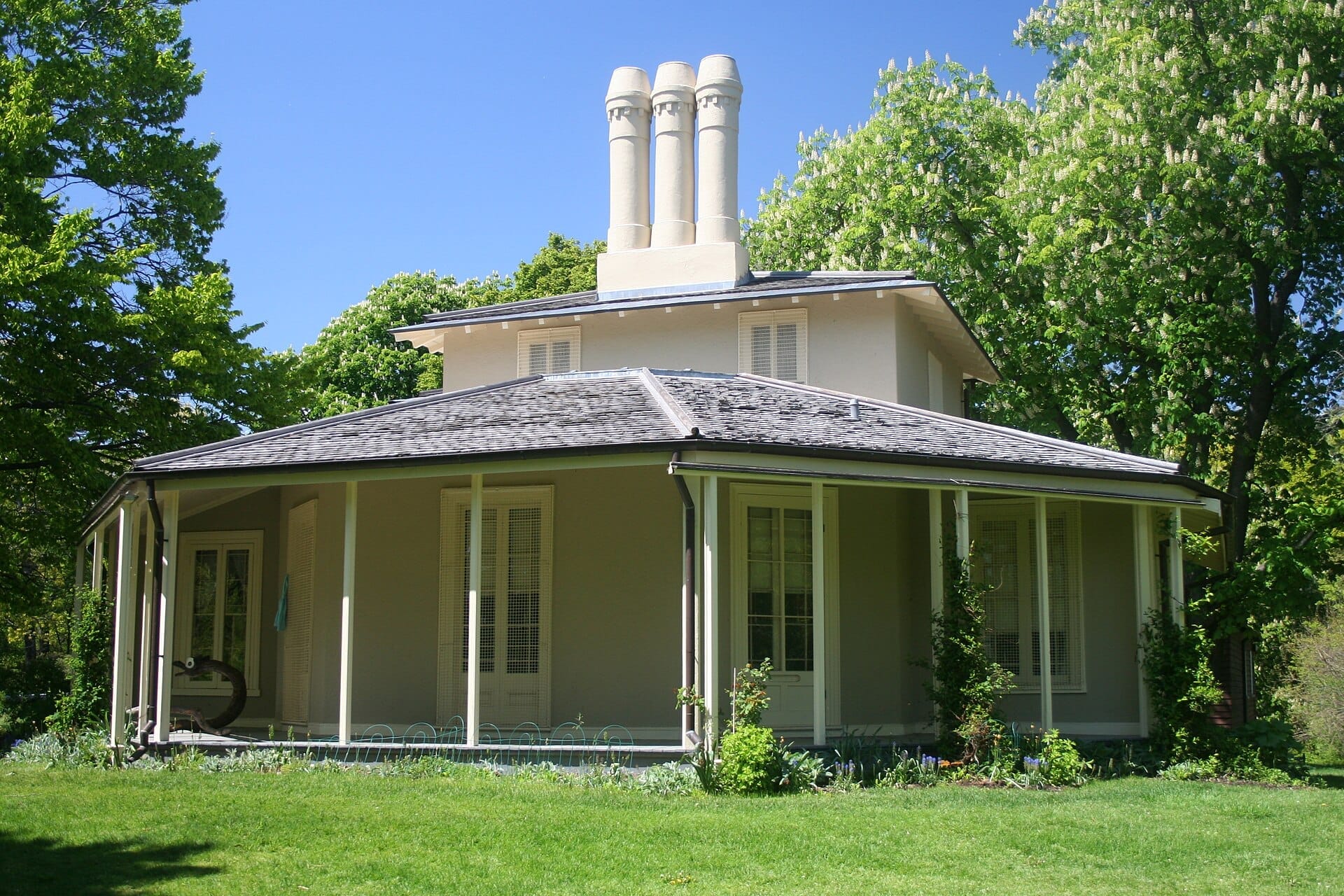
Colborne Lodge is a historic house museum operated by the City of Toronto, sitting near the southern end of High Park at 11 Colborne Lodge Drive. Built in 1837, the Regency-style cottage was the lifelong home of John George Howard, a surveyor, architect, and engineer who served as Toronto's City Surveyor, and his wife Jemima, a skilled watercolourist whose paintings remain some of the earliest visual records of early colonial Toronto. In the 1870s, the Howards donated the house and surrounding land to the city, a series of gifts and agreements that created High Park. Without that gift, one of the largest urban green spaces in Ontario would not exist.
That origin story alone makes Colborne Lodge worth understanding. It is not a grand mansion. The building is modest in scale, which actually works in its favour: the rooms feel genuinely lived-in rather than staged, and the collections, including original furniture, Jemima's artworks, and personal artefacts, give a grounded sense of domestic life in mid-19th-century Upper Canada.
ℹ️ Good to know
Colborne Lodge is generally open to visitors on a seasonal schedule set by the City of Toronto, typically around late morning to late afternoon, and general admission is paid. Verify hours directly with the City of Toronto before visiting, as seasonal programs and special events can affect schedules.
The Architecture and Setting
The lodge itself is a single-storey Regency cottage with a broad veranda, wide overhanging eaves, and a low-pitched roof. The style was fashionable in Britain and its colonies during the 1830s and reflects Howard's professional training. It is a working example of picturesque domestic architecture, the kind designed to sit harmoniously within a landscape rather than dominate it. The building was innovative for its era: Howard incorporated a flush toilet and running water, and the structure included a dedicated art studio for Jemima, an unusual feature in a private home of that period.
The Coach House, a secondary structure on the property, has an accessible entrance and forms part of the museum visit. The grounds immediately around the lodge are quieter and more enclosed than the open meadows further into the park, with mature trees providing shade in summer and a particularly photogenic layer of colour during October.
For visitors interested in Toronto's broader architectural heritage, Colborne Lodge pairs naturally with a look at the Spadina Museum and the city's other historic house museums. The Toronto architecture guide provides useful context for understanding how the city's built environment evolved from these early colonial structures onward.
Tickets & tours
Live prices and dates from our booking partner. If you book, we may earn a commission at no extra cost to you.
Toronto Old Town: Dark Side Exploration Game and Tour
From 12 €Instant confirmationFree cancellationLEGOLAND Discovery Centre Toronto tickets
From 16 €Instant confirmationFree cancellationToronto 'Little Canada' entrance tickets
From 27 €Instant confirmationFree cancellationNiagara Falls evening tour with boat, dinner and Illumination Tower
From 77 €Instant confirmationFree cancellation
Inside the House: What You Actually See
The interior tour covers the main floor of the historic house, which is accessible. Upstairs rooms are not part of the regular tour. The rooms are furnished to reflect the mid-to-late 19th century period of the Howards' occupancy, with original and period-appropriate pieces. The kitchen in particular is worth time: the hearth and equipment illustrate how fundamentally domestic labour changed over the Victorian period, and guides are able to explain specific artefacts in detail.
Jemima Howard's paintings are the most distinctive element of the collection. Her watercolours document early Toronto streetscapes, buildings, and landscapes that no longer exist. They function simultaneously as historical records and as evidence of a serious artistic practice that received little institutional recognition during her lifetime. Standing in the studio space where she worked gives those images a more immediate quality than seeing them in a gallery context.
Guided tours are the recommended way to get the most from the visit. Staff and docents can explain the provenance of specific objects and connect individual rooms to larger themes in Upper Canadian history. If you arrive without a scheduled tour, check at the entrance for available tour times.
💡 Local tip
Ask specifically about Jemima Howard's artwork on your visit. The paintings are the collection's most historically significant element and deserve more attention than casual visitors often give them.
How the Experience Changes by Time of Day and Season
Colborne Lodge receives far fewer visitors than other Toronto attractions, which means there is rarely a wait to enter. Weekend mornings between opening and noon are the quietest window: families with children tend to arrive after lunch, and the museum has a noticeably different feel when you can take your time in each room without another group moving through behind you.
Autumn is the single best season to visit. High Park's tree cover reaches peak colour in mid-to-late October, and the walk from High Park Station to Colborne Lodge through the southern end of the park becomes genuinely spectacular. The lodge itself hosts seasonal programming, including period-costumed events during Halloween and Christmas periods, which attract larger crowds but also create a more theatrical atmosphere.
Summer visits are comfortable given the thick shade of surrounding trees, but High Park as a whole is significantly busier on weekends from June through August. Note that High Park is closed to most vehicular traffic on Saturdays and Sundays, so plan accordingly if you are not arriving by transit or on foot.
High Park is one of Toronto's most rewarding outdoor destinations in any season. The best parks in Toronto guide covers it alongside other major green spaces worth combining into a longer day.
Getting There
The most direct transit option is TTC Line 2 (Bloor-Danforth) to High Park Station, followed by a roughly 10-to-15-minute walk south through the park to the lodge. The walk itself is a pleasant introduction to the park's landscape. Alternatively, the 501 Queen streetcar stops at Queensway at Colborne Lodge Drive, placing you at the southern park entrance close to the lodge. A seasonal 203 High Park bus route may operate within the park, so check current TTC schedules to see if it serves Colborne Lodge Drive at Centre Road during your visit.
If you are driving, keep in mind that weekend road closures within High Park apply on Saturdays and Sundays. Parking is available on surrounding streets, but the area is popular and spaces fill up quickly on warm weekend days. Cycling is a practical alternative, with bike parking available near the lodge entrance.
Accessibility and Practical Notes
The main floor of the historic house is accessible, and there is an accessible entrance to the Coach House and partial accessibility at the house. The upper floor is not part of the accessible route. The grounds immediately surrounding the lodge include gravel and grass paths that may be uneven in places, so visitors using mobility aids should account for variable terrain between the park paths and the building entrance.
Photography inside the house is generally permitted for personal use; confirm with staff at the entrance if you are planning detailed interior shots. The exterior and grounds photograph well throughout the day, with the north-facing veranda receiving softer light in the afternoon.
The site charges a modest admission fee, which still makes it a relatively affordable cultural experience in the city. Visitors on tight budgets who want meaningful historical depth alongside outdoor time will find this combination, Colborne Lodge plus a walk through High Park, hard to beat.
For a broader picture of free and low-cost experiences in Toronto, the free things to do in Toronto guide lists options across museums, parks, and neighbourhoods.
Who Should Skip Colborne Lodge
Visitors with very limited time and a list of marquee Toronto attractions to cover will likely find Colborne Lodge underwhelming relative to the travel time. It is not a blockbuster museum with a sweeping collection, and the building itself is small. If your Toronto visit runs to two days or fewer and you have not yet seen the Royal Ontario Museum, the Art Gallery of Ontario, or the waterfront, those should take priority.
Travellers who are primarily interested in contemporary culture, nightlife, or food-focused exploration will find little to engage them here. The lodge is specifically for people who have a genuine interest in 19th-century domestic history, early Canadian art, or the origins of urban green space in Ontario.
If your visit to Toronto is time-limited, the 3 days in Toronto itinerary can help you prioritise what to see and where Colborne Lodge fits into a longer park-focused half-day.
Insider Tips
- Visit on a weekday morning if the seasonal programming schedule allows. The house is noticeably quieter, and staff have more time to engage with individual visitors and go beyond the standard tour script.
- Combine the lodge with a walk to Grenadier Pond, a short distance north through the park. The combination of historic house, mature forest, and lakeside landscape captures High Park's full character in a single outing.
- Check the City of Toronto's events calendar before your visit. Seasonal programs, including Victorian-era demonstrations and costumed events around holidays, significantly deepen the experience and are still free or low-cost.
- The exterior veranda is one of the best spots in the park for quiet autumn photography. Come in mid-to-late October when the surrounding oaks and maples are at peak colour and the crowds thin out after the weekend cherry blossom season ends.
- High Park Station to the lodge is a legitimate 10-to-15-minute walk on a good path, but the park's terrain is hilly in places. Wear comfortable footwear, especially if you plan to explore beyond the lodge grounds.
Who Is Colborne Lodge For?
- History and heritage travellers interested in 19th-century Upper Canada and early Toronto
- Architecture enthusiasts curious about Regency-style colonial domestic design
- Families looking for a free, educational stop within a larger park visit
- Visitors combining a Colborne Lodge tour with a full High Park walk
- Travellers who want to understand how High Park came to exist and who donated it
Nearby Attractions
Other things to see while in High Park & Roncesvalles:
- High Park
High Park is a 161-hectare public park in west Toronto offering free admission year-round. From cherry blossoms in spring to cross-country skiing in winter, it rewards visitors in every season with forests, ponds, gardens, sports facilities, and one of the city's best stretches of natural trail.
- Roncesvalles Village
Roncesvalles Village, known locally as Roncy, is a roughly 1.7-kilometre stretch of independent businesses, cafés, Polish bakeries, and community life in west Toronto. It charges no admission, rewards slow exploration, and offers one of the city's most authentic neighbourhood experiences.
Planning a trip? Discover personalized activities with the Nomado app.