Spadina Museum: Inside Toronto's Most Intimate Historic Mansion
Spadina Museum, also known as Spadina House, is a 55-room National Historic Site on Spadina Road in Toronto's Annex neighbourhood. Built in 1866 and redesigned over generations, it preserves the domestic life of one of the city's most prominent families across nearly a century of change. Admission to the house is free, guided tours run Wednesday through Sunday, and the gardens are open daily from 11 a.m. to 5 p.m.
Quick Facts
- Location
- 285 Spadina Road, The Annex, Toronto, ON (at the top of the Baldwin Steps, next to Casa Loma)
- Getting There
- Dupont Station (Line 1 Yonge–University), then walk north to the Baldwin Steps at Spadina Road and Davenport Road
- Time Needed
- 1.5 to 2 hours for a guided tour plus a walk through the gardens
- Cost
- General admission is free; some special exhibitions, events and group visits may carry a separate charge
- Best for
- History lovers, architecture fans, photography, leisurely afternoon walks
What Spadina Museum Actually Is
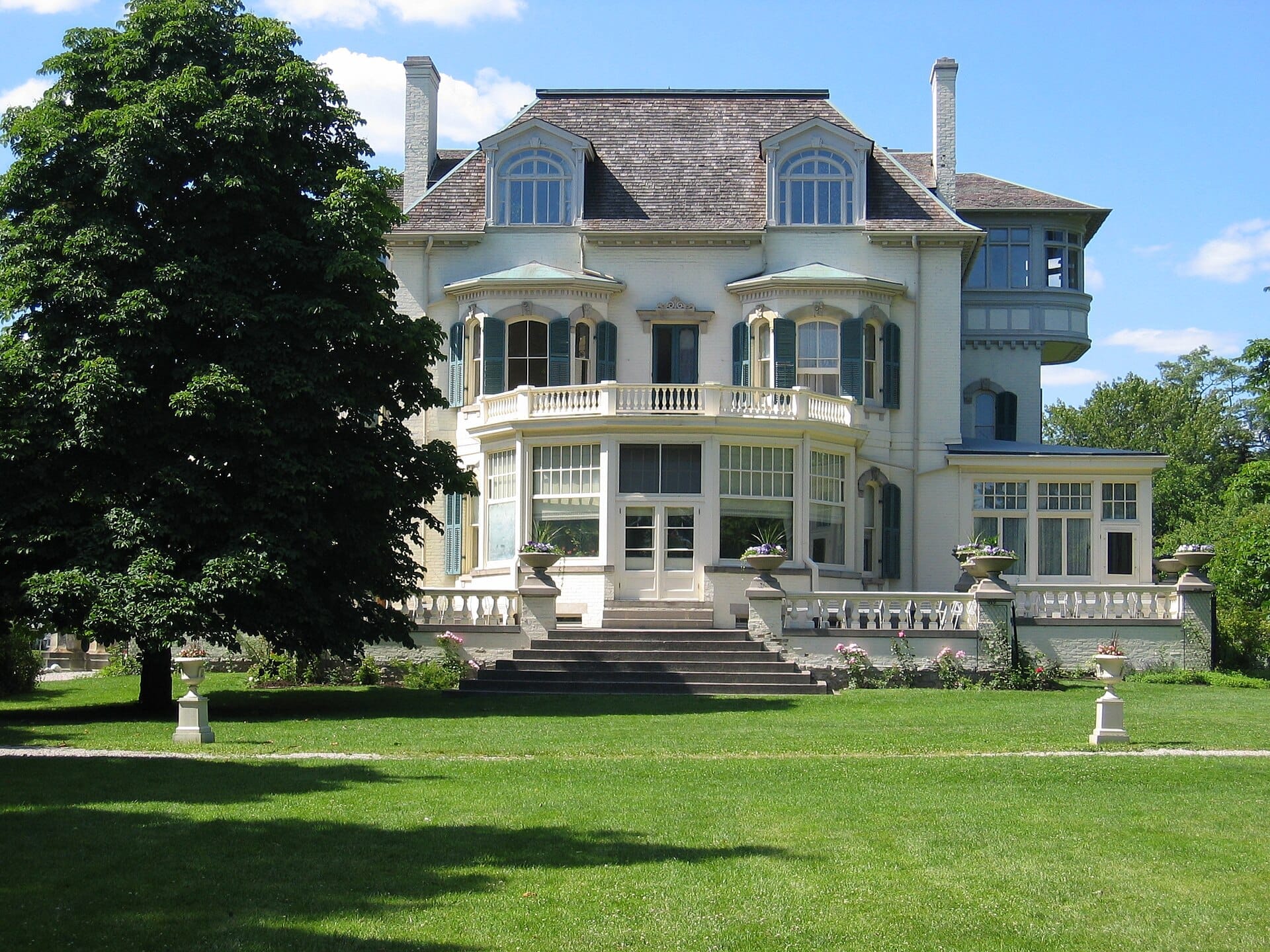
Spadina Museum is a 55-room Victorian and Edwardian mansion at 285 Spadina Road that has been preserved not as a recreation of a single period, but as a layered record of how one wealthy Toronto family actually lived from the late 19th century through to the mid-20th century. The house was originally constructed in 1866, then substantially enlarged and remodelled over the following decades, and it was designated a National Historic Site of Canada in 2019. It sits on a 5.7-acre property that includes formal gardens, a ravine edge, and sweeping views toward the city below.
The museum is operated by the City of Toronto. Unlike many heritage houses that strip interiors down to bare bones, Spadina retains an extraordinary density of original furnishings, textiles, wallpapers, and personal objects. Walking through it feels less like a museum and more like entering a home where the family has simply stepped out for the afternoon. That quality of preserved ordinariness, accumulated across generations of real use, is what makes it unusual among Toronto's cultural institutions.
ℹ️ Good to know
The house is open for guided tours only, Wednesday to Sunday, 11 a.m. to 5 p.m., with free guided tours offered on a set schedule in the afternoons. The gardens and grounds are open daily from 11 a.m. to 5 p.m. Admission is free, though some special events and group visits may require separate tickets or fees.
Arriving: The Baldwin Steps and First Impressions
The approach to Spadina Museum is half the experience. From Dupont subway station, the walk north brings you to the foot of the Baldwin Steps at Spadina Road and Davenport Road: a long outdoor staircase that climbs the old Lake Iroquois shoreline escarpment, a geological ridge that once marked the edge of a prehistoric lake much larger than today's Lake Ontario. By the time you reach the top, you are already above much of the surrounding neighbourhood, and the museum's property opens in front of you with Casa Loma's towers visible just to the west.
On weekday mornings the grounds are quiet enough to hear birds in the ravine trees below. Weekend afternoons bring a steadier flow of visitors, families with children, and couples using the gardens for photography. The front lawns are well maintained and formal in character, with the house itself presenting an imposing but not severe facade: red brick, layered porches, and the kind of architectural confidence that comes from money spent over decades rather than in a single act of construction.
If you are combining Spadina Museum with nearby attractions, the walk from Casa Loma takes under five minutes. The two properties are adjacent, and many visitors spend a half-day moving between them. The broader Annex neighbourhood stretches south from here toward Bloor Street, with cafes and bookshops worth exploring after your visit.
Tickets & tours
Live prices and dates from our booking partner. If you book, we may earn a commission at no extra cost to you.
Toronto Old Town: Dark Side Exploration Game and Tour
From 12 €Instant confirmationFree cancellationLEGOLAND Discovery Centre Toronto tickets
From 16 €Instant confirmationFree cancellationToronto 'Little Canada' entrance tickets
From 27 €Instant confirmationFree cancellationNiagara Falls evening tour with boat, dinner and Illumination Tower
From 77 €Instant confirmationFree cancellation
Inside the House: What the Guided Tour Covers
The guided tour is the only way to enter the house, and that structure is a genuine asset rather than a restriction. The guides move small groups through rooms that progress through different eras of family occupation, explaining not just what you are looking at but why particular choices, a specific wallpaper pattern, a set of kitchen appliances, a particular arrangement of the drawing room, reflect the social aspirations and daily habits of the people who lived there.
The interiors span a wide tonal range. The formal reception rooms on the ground floor feature heavy drapery, ornate plasterwork ceilings, and the kind of furniture that was meant to impress. Move further into the house and the scale drops: the upstairs bedrooms are more personal and less theatrical, and the kitchen and service areas at the rear give a concrete sense of how much unseen domestic labour the house depended on. The layers of the building's construction history are visible in places where room proportions and finishes shift across what were originally separate sections.
The density of original objects is genuinely striking. Textiles, curtains, upholstery, and carpets are preserved in a condition rare for domestic interiors of this age. In some rooms the light filtering through period window treatments creates an amber quality that reinforces the sense of time stopped. Photography is generally permitted in the house; low-light conditions in curtained rooms mean a steady hand or a phone with a capable low-light mode matters more than any special equipment.
💡 Local tip
Tour groups are kept small, so tours can fill up on weekend afternoons. Arriving when the museum opens at 11 a.m. on a weekday gives you both the quietest conditions and the best natural light in the east-facing rooms.
The Gardens: Worth More Time Than Most Visitors Give Them
The gardens at Spadina Museum are open daily and are one of the more overlooked spaces in this part of the city. The formal garden beds near the house follow a structured Victorian layout, with seasonal plantings that change across the year. Spring brings tulips and early perennials in April and May; summer fills the beds with roses and dense colour; autumn thins the planting back to reveal the bones of the hedges and the long sightlines toward the city.
At the rear of the property, the grounds slope toward the escarpment edge and the ravine below. This transition from manicured formal garden to rougher naturalistic planting happens quickly and creates a noticeable shift in atmosphere. The city noise drops, and the view south across the Toronto skyline from the upper garden terraces is significant enough that photographers specifically seek it out on clear days.
For visitors interested in Toronto's parks and green spaces more broadly, the ravine system that begins at the base of the Spadina escarpment connects to a wider network described in detail in the Toronto ravines hiking guide.
Historical Context: Why This Site Matters
The original 1866 construction was a substantial Victorian residence, but the house's character today reflects continuous occupation and modification into the 1960s and 1970s. That span, covering the Victorian era, the Edwardian period, the social disruptions of two world wars, and the post-war decades, is precisely what makes the site historically legible as a document of upper-middle-class Toronto life rather than a frozen snapshot of a single moment.
Its designation as a National Historic Site of Canada in 2019 recognises the property's significance not just architecturally but as evidence of how domestic space, wealth, and social practice evolved in urban Canada. The 5.7-acre site represents a scale of private land ownership within walking distance of the city centre that was already rare by the early 20th century and is now essentially impossible.
The museum sits within a broader constellation of Toronto heritage sites. The Toronto architecture guide covers the range of historic building types across the city, from Victorian residential to early modernist institutional structures, and provides useful context for understanding where Spadina fits in Toronto's built heritage.
Practical Details and Getting There
The most direct route is Line 1 of the TTC subway to Dupont station, followed by a walk north along Spadina Road to the Baldwin Steps at Davenport Road. The steps themselves are a short but steep climb; the ascent takes a few minutes for most visitors and involves roughly 110 steps with only a small landing partway up. At the top, the museum entrance and garden gate are directly ahead.
The site is partially accessible. The gardens are navigable for most visitors, but the house's multi-level interior and staircase layout present genuine limitations for wheelchair users or visitors with significant mobility restrictions. The City of Toronto advises contacting the museum directly if accessible parking is required. There is no public parking available at Spadina Museum; paid parking is available next door at Casa Loma in a shared parking lot, and visitors requiring accessible parking are advised to contact the museum.
Weather affects the visit in predictable ways. In summer the gardens are at their visual peak but the house interiors can feel warm on hot afternoons given the period window configurations. In winter the gardens are stripped back and the guided house tours become the main draw; the interior heating makes it a comfortable refuge on cold days. Rain does not prevent a visit since the house tour is entirely sheltered, though the gardens lose much of their appeal. Autumn, particularly September and October when the ravine trees turn, is an underappreciated time to visit.
⚠️ What to skip
The house tour is guided only and cannot be taken independently. If you arrive close to the last tour of the day, confirm with staff that a tour is still available before settling in for a long garden walk first.
Who Should Reconsider This Visit
Spadina Museum rewards visitors who find genuine interest in domestic history, period interiors, or the social history of Canadian cities. Visitors looking primarily for interactive experiences, children's programming, or the scale and spectacle of a major civic museum are likely to find it underwhelming. The house is not large by the standards of grand European country houses, and the guided format means you move at the group's pace rather than your own. Visitors with significant mobility limitations should contact the museum before visiting, as the house's staircase layout restricts access to portions of the building.
Insider Tips
- The sightline from the upper garden terrace south toward the Toronto skyline is one of the better elevated city views in the inner neighbourhoods. It photographs well in late afternoon when the light comes from the west and catches the downtown towers cleanly.
- Weekday morning tours at 11 a.m. typically have smaller groups than weekend afternoon slots. A smaller group means more time to ask the guide questions in individual rooms, which is where the most interesting details about specific objects tend to emerge.
- The Baldwin Steps at the base of the property are worth descending after your visit rather than retracing your route up Spadina Road. The steps deposit you at Davenport Road, from which it is a short walk east or west to several good independent cafes on Dupont Street.
- Check the City of Toronto museum events calendar before visiting. Spadina occasionally hosts seasonal events, including Christmas programming in December, when the house is decorated in period style and the character of the visit changes substantially from a standard guided tour.
- If you are visiting the Annex more broadly, the walk south from Spadina Museum down to Bloor Street passes through residential blocks with some of the best-preserved late Victorian and Edwardian streetscapes in Toronto, with bay-and-gable houses in particular concentration along several side streets.
Who Is Spadina Museum For?
- History and heritage visitors interested in Canadian domestic life across the Victorian and Edwardian eras
- Architecture enthusiasts studying residential design and interior preservation
- Photographers looking for formal garden compositions and elevated city views
- Couples or solo visitors wanting a quieter, unhurried afternoon away from the downtown core
- Travellers combining Spadina Museum with Casa Loma and the broader Annex neighbourhood on a half-day walk
Nearby Attractions
Other things to see while in The Annex:
- Casa Loma
Casa Loma is a 98-room Gothic Revival mansion perched 140 metres above Lake Ontario in Toronto's midtown area. Built between 1911 and 1914 for financier Sir Henry Pellatt, it remains one of Canada's most architecturally ambitious private residences and a landmark worth understanding before you walk through its gates.
- Koreatown
Stretching along Bloor Street West between Bathurst and Christie subway stations, Toronto's Koreatown is a compact but densely packed commercial corridor rooted in a Korean immigrant community that began settling here in the 1970s. Today it draws visitors for Korean BBQ, late-night karaoke, Korean bakeries, and grocery stores stocked with ingredients you won't find elsewhere in the city.
- Little Italy
Little Italy is a lively stretch of College Street between Bathurst and Shaw where Italian-Canadian history, independent cafés, and a strong restaurant culture come together. Access is free, the street is walkable at any hour, and the neighbourhood rewards those who slow down.
- Ontario Legislative Building
The Ontario Legislative Building is the seat of Ontario's provincial parliament, a Richardsonian Romanesque sandstone landmark officially opened on April 4, 1893 at the centre of Queen's Park. Admission and guided tours are free, making it one of Toronto's most accessible and architecturally significant public buildings.
Planning a trip? Discover personalized activities with the Nomado app.