Casa Loma: Inside Toronto's Gothic Revival Castle
Casa Loma is a 98-room Gothic Revival mansion perched 140 metres above Lake Ontario in Toronto's midtown area. Built between 1911 and 1914 for financier Sir Henry Pellatt, it remains one of Canada's most architecturally ambitious private residences and a landmark worth understanding before you walk through its gates.
Quick Facts
- Location
- 1 Austin Terrace, Toronto, ON (near Spadina Road and Davenport Road in midtown)
- Getting There
- Dupont Station (TTC Line 1), approx. 6-min walk
- Time Needed
- 2 to 3 hours for the full tour including gardens
- Cost
- Adults $50 CAD, Seniors (65+) $45, Youth (14–17) $45, Children (4–13) $30, Under 4 free
- Best for
- History enthusiasts, architecture fans, families, film location spotters
- Official website
- casaloma.ca
What Casa Loma Actually Is
Casa Loma, which translates from Spanish as 'Hill House', is a 98-room Gothic Revival castle-style mansion owned by the City of Toronto and operated as a historic house museum by Liberty Entertainment Group. It sits at roughly 140 metres above sea level on the escarpment (Davenport Hill) that separates the neighbourhood above from Davenport Road below, giving it commanding sightlines over the city and, on clear days, across Lake Ontario.
Construction ran from 1911 to 1914, commissioned by Sir Henry Pellatt, a Toronto financier who made his fortune in electric utilities, including major investments in hydroelectric power and Toronto’s early electrification. The scale he attempted was extraordinary even by the standards of Edwardian-era wealth: the property features two towers, servants' quarters, a carriage house, an approximately 244-metre (800-foot) tunnel connecting the main building to the stables, and formal gardens covering much of the escarpment slope. Pellatt lost the house in 1923, unable to pay the property taxes, and it passed through several hands before becoming a public attraction.
It is worth being honest about expectations here. Casa Loma is genuinely impressive from the exterior and has real architectural and historical depth. But parts of the interior are sparsely furnished, and some rooms feel more like empty period shells than fully realised living spaces. Visitors who do a little background reading before arriving will get considerably more out of it than those who walk in cold. For a broader sense of Toronto's architectural character, the Toronto architecture guide provides useful context on how this building fits into the city's built history.
Arriving and First Impressions
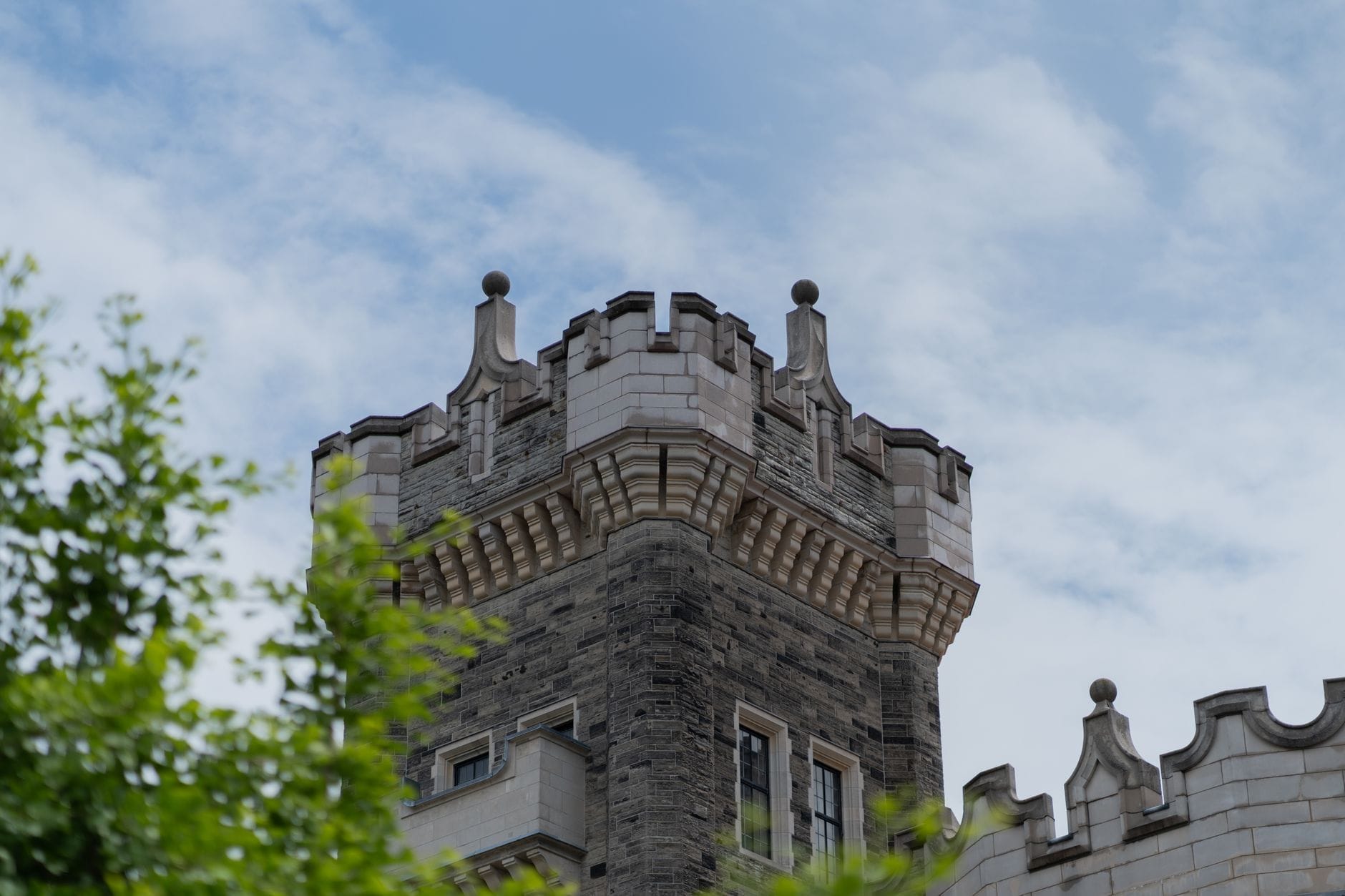
The approach on foot from Dupont Station takes you up a residential hill past Victorian and Edwardian homes. The castle does not come into full view until you reach the entrance gates on Austin Terrace, at which point the scale registers quickly. The stone facade, battlements, and twin towers are built from Credit Valley sandstone and Ohio limestone. On a grey November morning the walls read a deep charcoal; on a bright summer day the same stone becomes almost warm, shifting toward honey and slate depending on where the light hits.
Tickets are date- and time-specific and are strongly recommended to be booked online in advance. The admission desk is just inside the main entrance. From there, the self-guided tour begins with a printed audio guide option. The main floor includes the Great Hall, with its 18-metre ceiling and oak-panelled walls, and the Conservatory, a glass-and-iron structure anchored by a central fountain with hand-painted glass tiles along the dome.
💡 Local tip
Book tickets online before you arrive. Walk-in availability is not guaranteed, especially on weekends between May and October. The site is open daily 9:30 a.m. to 5:00 p.m., with last admission typically 30 minutes before closing; check current hours before your visit.
Tickets & tours
Live prices and dates from our booking partner. If you book, we may earn a commission at no extra cost to you.
Toronto Old Town: Dark Side Exploration Game and Tour
From 12 €Instant confirmationFree cancellationLEGOLAND Discovery Centre Toronto tickets
From 16 €Instant confirmationFree cancellationToronto 'Little Canada' entrance tickets
From 27 €Instant confirmationFree cancellationNiagara Falls evening tour with boat, dinner and Illumination Tower
From 77 €Instant confirmationFree cancellation
Moving Through the Rooms
The interior tour covers multiple floors and requires a fair amount of stair climbing. The Oak Room, designed for formal dining, features hand-carved panelling that took craftspeople three years to complete. Pellatt's Suite and Lady Pellatt's Suite are on the upper floors, and their contrast tells you something about Edwardian domestic life: his rooms are heavy with dark wood and leather, hers are lighter, with sitting areas and a connecting bathroom tiled in white and pale green.
The Scottish Tower, accessible via a spiral staircase of roughly 100 steps, delivers the most rewarding view in the building. On clear days you can orient yourself to Lake Ontario to the south, the CN Tower to the southwest, and the curve of the city's grid stretching east and west. The tower closes earlier on select days, so check the schedule on the official website before planning your route around it.
The tunnel is one of the most memorable parts of the visit. It runs 244 metres underground from the main building to the carriage house and stables, lit with a warm amber glow from period-style lanterns. In summer the cool air is a relief. The stable complex at the end is well-preserved, with hand-painted decorative tiles still intact along the horse stalls, and the carriage house above it displays vintage vehicles from the Pellatt era.
ℹ️ Good to know
Strollers are not recommended inside Casa Loma due to the number of staircases. Elevators are available for some sections but cannot serve all floors. Some areas may also present challenges for visitors with limited mobility due to the historic building structure.
The Gardens and Exterior
The formal gardens on the south side of the property are included in admission and are worth the extra 20 minutes. The lower gardens are terraced down the escarpment face and planted with seasonal flowers. In late spring the beds run to tulips and ornamental alliums; by midsummer they shift to roses and dahlias. In autumn, the city below the escarpment edge forms a dense canopy of red and gold, making the terrace one of the better elevated viewpoints in the city during the third week of October.
Note that the lower gardens and the terrace have separate closing times. The terrace often closes before the main building on event days, and the lower gardens may be seasonally closed. Check the official plan-your-visit page before arriving if the gardens are a priority for you.
If outdoor green space is a significant part of your itinerary, Casa Loma's gardens pair well with a visit to nearby Spadina Museum, which also sits on the escarpment a short distance west and includes its own formal garden. The combination makes for a coherent half-day itinerary through the neighbourhood's Edwardian heritage layer.
Best Time to Visit and Weather Considerations
Peak crowds arrive on weekends between late June and early September, particularly in the late morning. Arriving at opening time, 9:30 a.m., gives you roughly 90 minutes before tour groups and families with children begin filling the Great Hall and the main staircase. Weekday mornings in May, June, and September offer a noticeably quieter experience.
Winter visits have their own character. The castle is open year-round, and the stone interiors are cool even in summer, so the temperature contrast between inside and outside is less dramatic in winter than you might expect. The annual Christmas at the Castle / holiday lights events held on the grounds transform the castle into a different kind of spectacle from late November through early January, with illuminated trees, market stalls, and seasonal events. Ticket availability for this period sells out early.
Toronto's climate means rain is possible at any time of year. The interior is entirely sheltered, but the tunnel exit to the carriage house involves a short outdoor segment, and the gardens require dry weather to be enjoyable. For a broader look at when to plan your trip, the best time to visit Toronto guide covers seasonal conditions across the city.
Photography Inside Casa Loma
The Great Hall photographs well in the first hour after opening, when the high windows on the east side catch direct morning light and the room is not yet crowded. The Conservatory dome is best shot from floor level looking straight up, using the fountain tiles as a foreground element. The tunnel is dim and requires either a phone with a strong night mode or a camera that handles high ISO well. The tower views photograph best on days with low haze, which in Toronto typically means mornings following a rain front in spring or autumn.
Casa Loma appears in several film and television productions, including a recurring role in the television series Murdoch Mysteries. Guests who are familiar with those productions often find the real-world spaces smaller or different in proportion than they appear on screen, which is worth calibrating expectations around.
Getting There and Practical Logistics
The most straightforward route is the TTC Line 1 subway to Dupont Station, followed by a six-minute walk north and uphill through a residential street. The walk includes a moderate incline. Alternatively, the TTC 127 Davenport bus stops closer to the base of the escarpment. On-site paid parking is available but limited. For visitors already in the Annex neighbourhood, Casa Loma is walkable from Bloor Street in about 15 minutes heading north on Spadina Road.
The on-site cafe and gift shop are located near the main entrance. The cafe offers light meals and beverages, though the selection is limited. If you plan to eat before or after, the Annex and the stretch of Dupont Street below the escarpment have a range of independent cafes and restaurants within a short walk.
⚠️ What to skip
Casa Loma hosts separately ticketed special events, including evening galas, escape room experiences, and the annual Christmas market. Standard admission tickets are not valid for these events. Verify which experience you are booking when purchasing online.
Who Will Get the Most Out of Casa Loma
Visitors who enjoy architectural history, Edwardian social history, or civic heritage will find the most substance here. Families with children ages 6 and up generally respond well to the tunnel, the towers, and the stables. The escape room product available on-site (separately ticketed) is popular with groups looking for an active experience within the building. Film and television enthusiasts familiar with Toronto's screen history have an additional layer of recognition throughout the space. For visitors building a broader Toronto itinerary, the Toronto attractions guide situates Casa Loma among the city's other major draws.
Visitors who primarily want outdoor experiences, modern art, or are sensitive to value-for-money assessments should consider the admission price carefully. At $50 CAD for adults, it is one of Toronto's more expensive single-attraction tickets. The experience is substantive, but it is not a full-day destination on its own for most adults without a special event component.
Insider Tips
- Start with the tunnel and carriage house immediately after picking up your audio guide. Most visitors head upstairs first, so the tunnel is quietest in the first 30 minutes. By the time you return to the main building, the upper floors have also spread out.
- The Scottish Tower closes earlier on select days. Check the current schedule on the official website the day before your visit, not weeks in advance, since operational adjustments happen regularly.
- The Conservatory gets direct light from its glass dome mid-morning, which makes it the most photogenic interior space. Return to it before you leave if you were there early and the light was not right.
- If you visit during the Christmas market season (typically November through early January), book tickets as soon as the dates are released. This is not an exaggeration: weekend slots sell out several weeks in advance.
- Wear comfortable shoes with grip. The stone floors inside the castle and the escarpment garden paths are uneven in places, and the spiral staircase to the tower is narrow and steep.
Who Is Casa Loma For?
- Architecture and heritage enthusiasts who want context on Toronto's Edwardian-era ambitions
- Families with school-age children who will respond to the tunnel, towers, and hands-on scale of the space
- Film and television fans familiar with Murdoch Mysteries and other productions shot on location here
- Visitors combining it with a broader Annex neighbourhood walking day
- Winter visitors looking for an indoor cultural anchor, especially during the annual Christmas market
Nearby Attractions
Other things to see while in The Annex:
- Koreatown
Stretching along Bloor Street West between Bathurst and Christie subway stations, Toronto's Koreatown is a compact but densely packed commercial corridor rooted in a Korean immigrant community that began settling here in the 1970s. Today it draws visitors for Korean BBQ, late-night karaoke, Korean bakeries, and grocery stores stocked with ingredients you won't find elsewhere in the city.
- Little Italy
Little Italy is a lively stretch of College Street between Bathurst and Shaw where Italian-Canadian history, independent cafés, and a strong restaurant culture come together. Access is free, the street is walkable at any hour, and the neighbourhood rewards those who slow down.
- Ontario Legislative Building
The Ontario Legislative Building is the seat of Ontario's provincial parliament, a Richardsonian Romanesque sandstone landmark officially opened on April 4, 1893 at the centre of Queen's Park. Admission and guided tours are free, making it one of Toronto's most accessible and architecturally significant public buildings.
- Spadina Museum
Spadina Museum, also known as Spadina House, is a 55-room National Historic Site on Spadina Road in Toronto's Annex neighbourhood. Built in 1866 and redesigned over generations, it preserves the domestic life of one of the city's most prominent families across nearly a century of change. Admission to the house is free, guided tours run Wednesday through Sunday, and the gardens are open daily from 11 a.m. to 5 p.m.
Planning a trip? Discover personalized activities with the Nomado app.