The Annex is one of Toronto's oldest residential neighborhoods, defined by its late-19th-century brick homes, proximity to the University of Toronto, and a commercial strip along Bloor Street West that runs from bookshops and ramen counters to late-night bars. It sits north of downtown, bounded by Bathurst, Dupont, Avenue Road, and Bloor, and connects easily to Yorkville, Koreatown, and the rest of the city via Line 2 subway.
The Annex is where Toronto's academic life and residential character collide with a genuinely walkable street culture. Wide, tree-lined side streets are packed with protected heritage homes, while Bloor Street West carries a dense mix of independent restaurants, bars, and cafés that serve everyone from professors to first-year students to longtime residents.
Orientation
The Annex occupies a compact rectangle of land in Toronto's midtown, bounded on the south by Bloor Street West, on the north by Dupont Street, on the east by Avenue Road, and on the west by Bathurst Street. Those four streets form a frame around one of the city's most architecturally coherent residential areas, roughly 1.5 kilometers across.
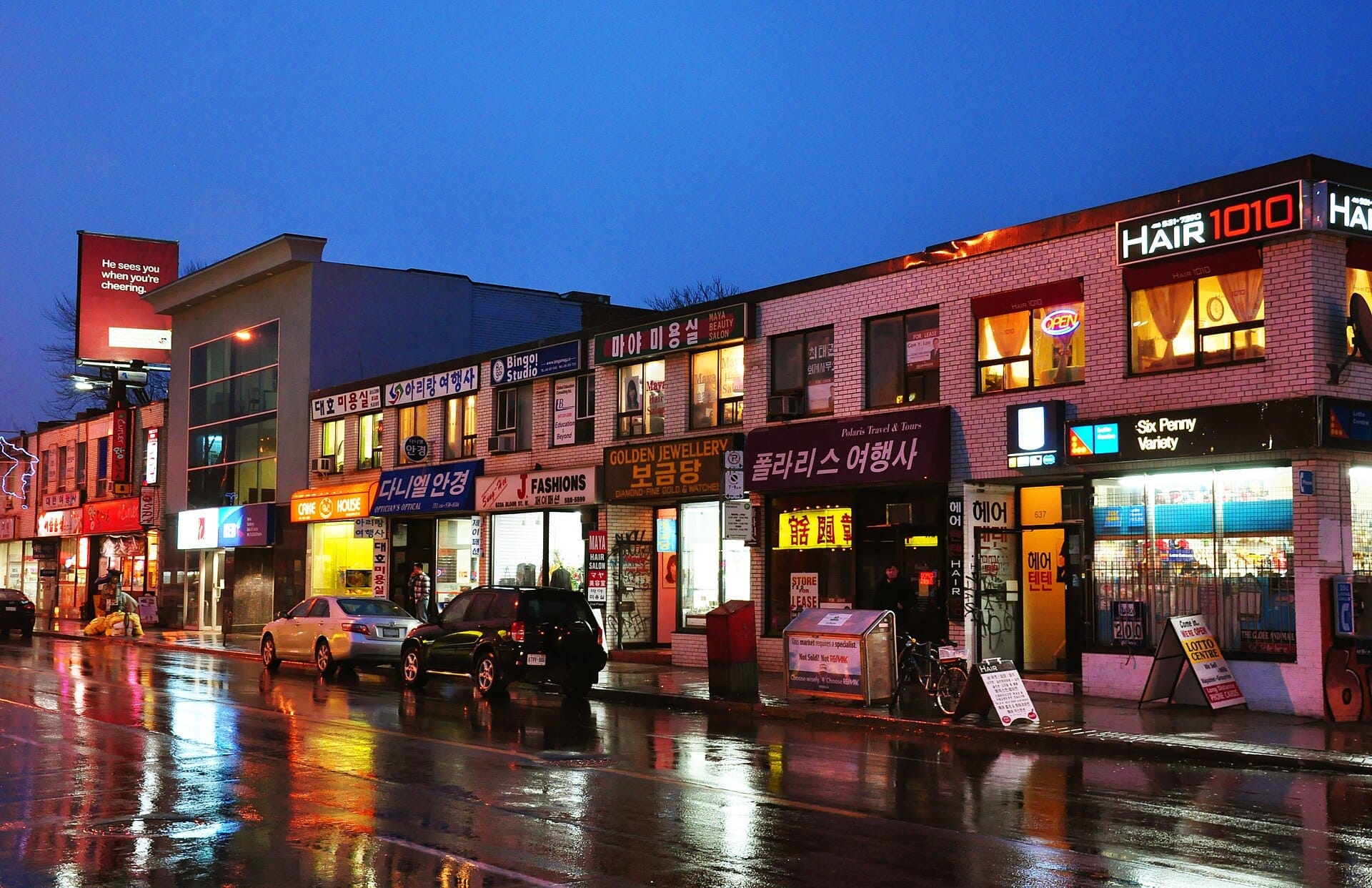
Directly to the south, the neighborhood transitions into the University of Toronto St. George campus, and beyond that to Harbord Village and eventually downtown. To the east, Avenue Road marks the border with Yorkville, Toronto's upscale retail district. To the west, Bathurst Street leads into the stretch of Bloor Street West sometimes called Koreatown, which begins just past the subway station of the same name. North of Dupont, the neighborhood becomes Seaton Village
For visitors building a mental map of Toronto, the Annex sits about 3 kilometers north of Union Station It is not downtown, but it is far from peripheral. The Bloor-Danforth subway line runs directly underneath Bloor Street, putting the neighborhood within minutes of everything from the Distillery District to High Park.
ℹ️ Good to know
The Annex is sometimes used loosely to refer to the broader area stretching west toward Christie Street. For practical purposes, the core commercial and residential activity sits between Spadina Avenue and Bathurst Street on the south side of Bloor
Character and Atmosphere
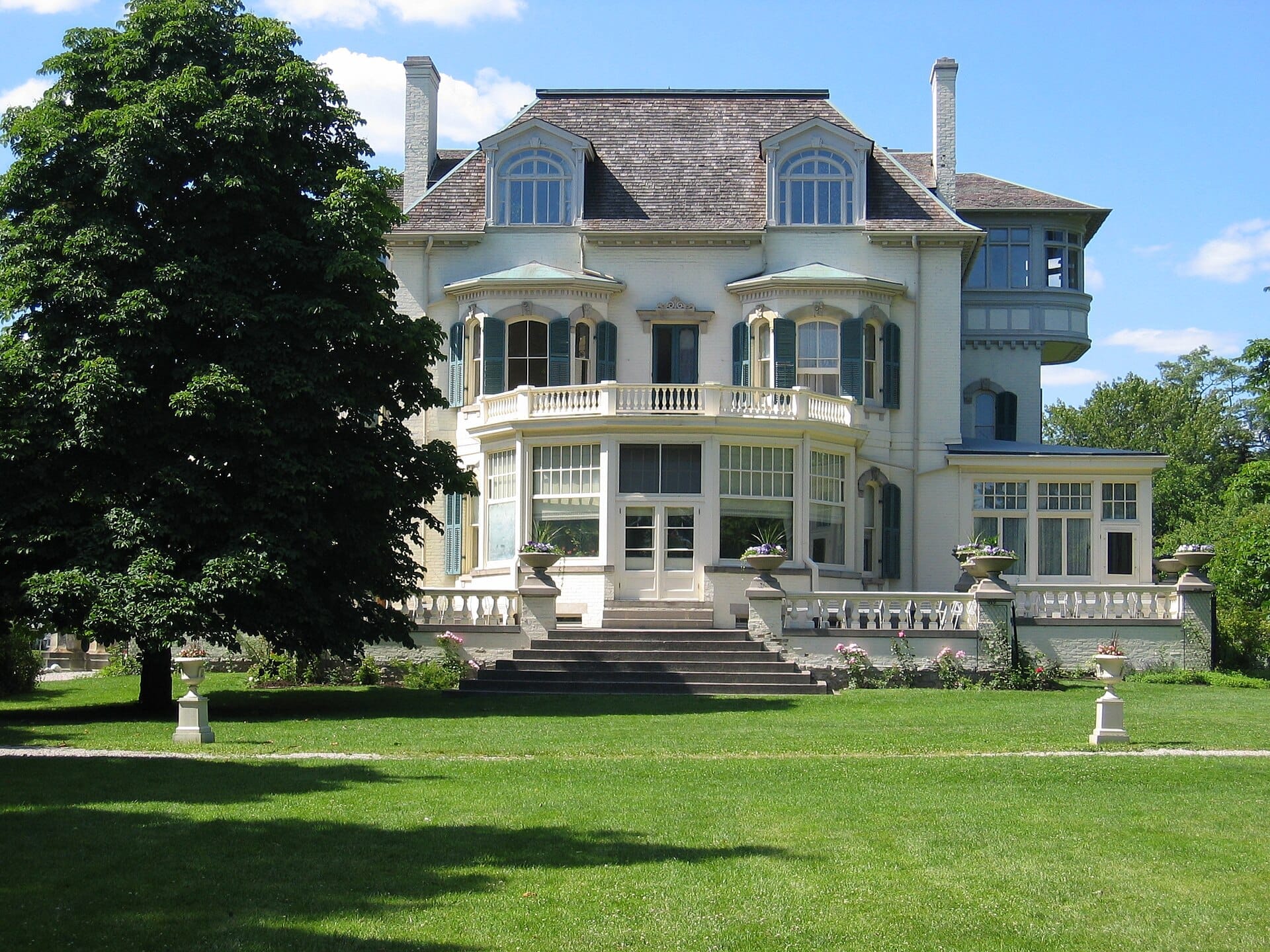
On a weekday morning, the Annex feels unmistakably residential. Side streets like Admiral Road, Lowther Avenue, and Huron Street are lined with the large Victorian and Edwardian brick homes that give the neighborhood its architectural identity. These are the so-called Annex-style houses: tall, narrow, built between roughly 1880 and 1910, with Romanesque arches, bay windows, and elaborate brickwork. Over 500 buildings in the area are protected under Toronto's heritage designation framework, and walking a single block in any direction from Bloor makes clear why.
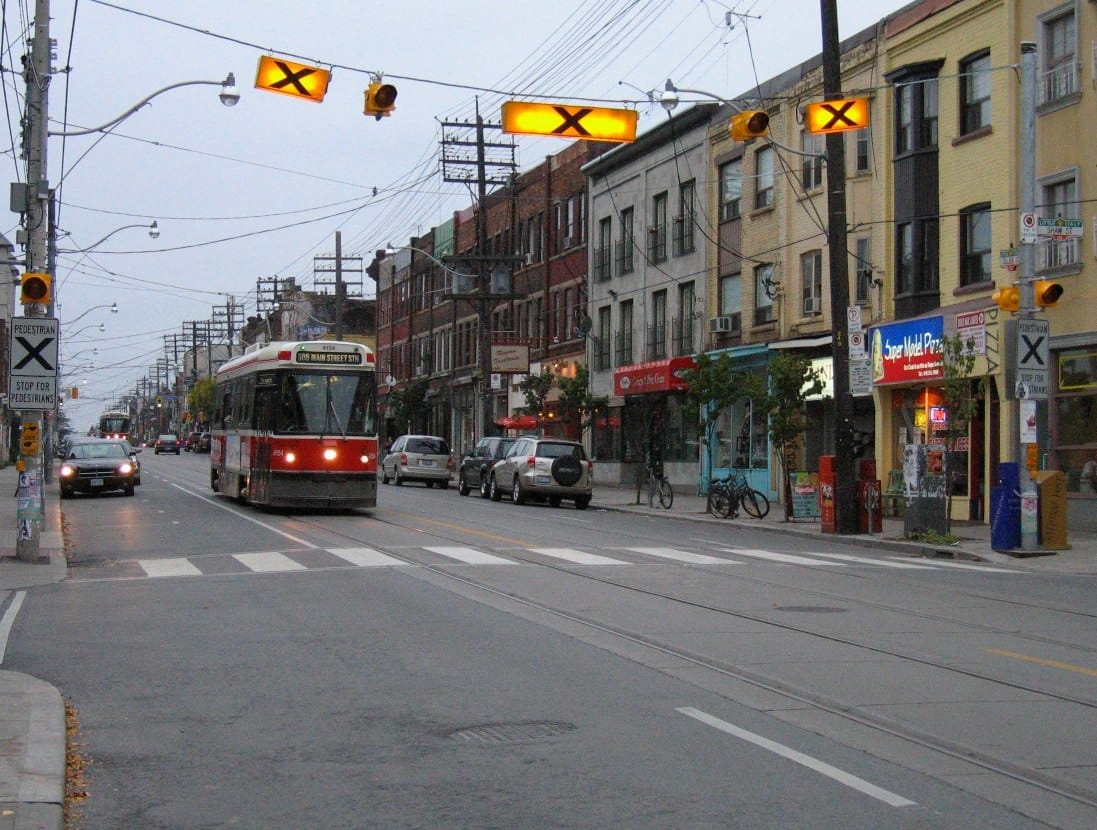
By late morning, Bloor Street itself comes alive. The strip between Spadina Avenue and Bathurst Street is dense with foot traffic, especially around the café clusters near Spadina station. Afternoon light comes in soft and low through the mature street trees that line both sides of the road, and the sidewalks fill with students, academics pushing bikes, and residents doing errands. It is a neighborhood that moves at a human pace: there are no major tourist attractions within the Annex itself, and the commercial activity is mostly oriented toward people who actually live here.
Evenings shift the balance. From Thursday through Saturday, Bloor Street between Bathurst and Spadina becomes noticeably louder. The bars and pubs fill up, patio seating spills onto sidewalks, and the mix of university students and younger professionals gives the strip an energetic, sometimes boisterous quality after 9 pm. This is not a neighborhood that goes to sleep early. If you are looking for something quieter, the residential streets even two blocks north of Bloor are a different world entirely.
⚠️ What to skip
The Annex is genuinely student-heavy, particularly in September and January when the university term begins. Street noise, crowded transit platforms at Spadina and Bathurst stations, and limited patio availability are all more pronounced during these periods.
What to See and Do
The Annex does not have a single anchor attraction, and that is arguably its appeal. It rewards wandering rather than ticking things off a list. Start with the architecture: a walk north from Bloor along Huron Street, or west along Lowther Avenue, shows off the neighborhood's best residential streetscapes. The scale is intimate, the tree cover is exceptional, and the variety of Victorian and Edwardian detail work on the houses is remarkable for how well preserved it is.
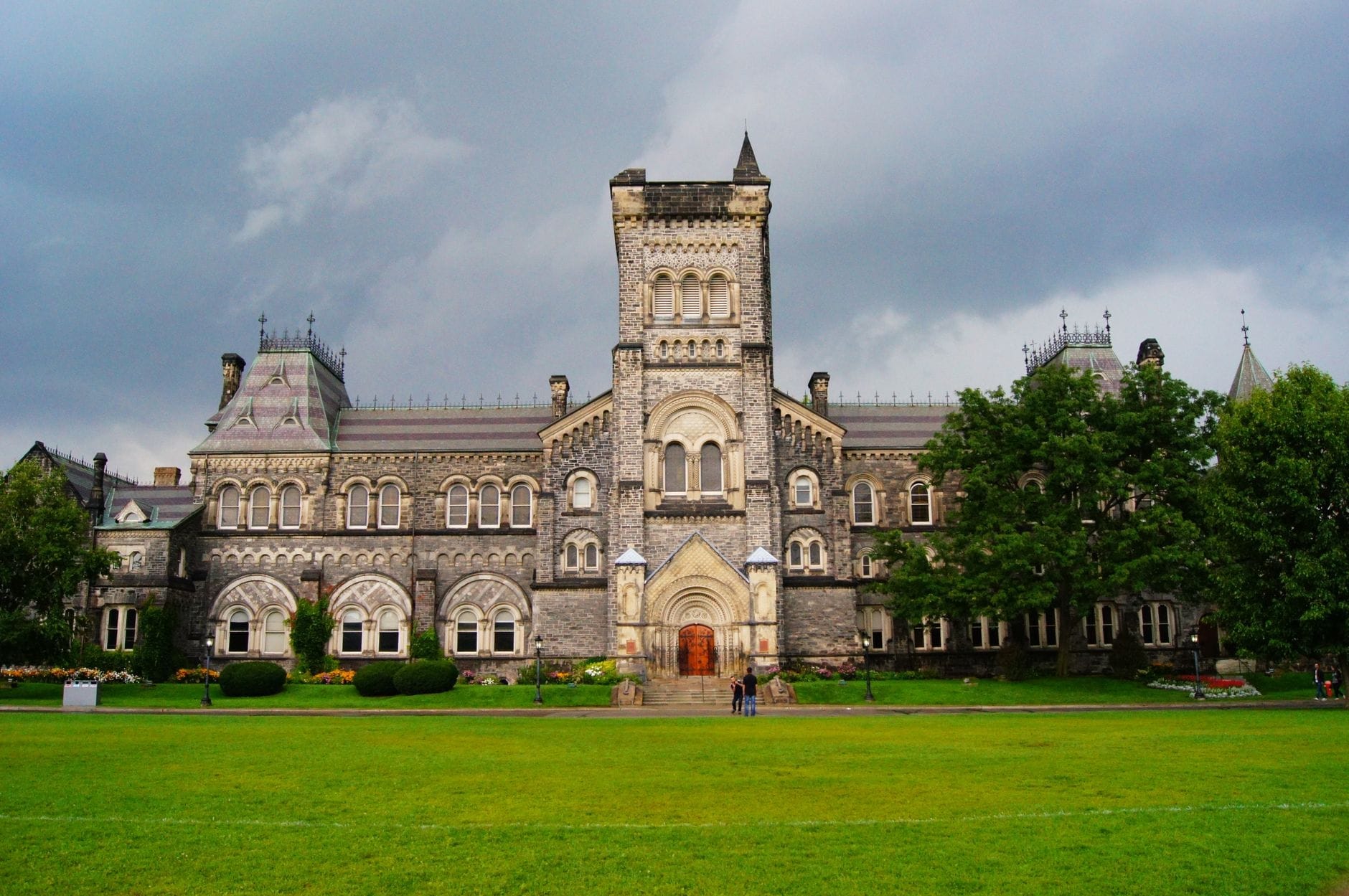
The southern edge of the neighborhood borders directly onto the University of Toronto's St. George campus, which is worth exploring in its own right. The campus blends Gothic Revival collegiate buildings with mid-century additions and feels, in places, distinctly removed from the city around it. Further south from the campus, the Royal Ontario Museum sits at the corner of Bloor and Avenue Road, right at the neighborhood's eastern boundary. It is one of the largest natural history and world cultures museums in North America, and its Daniel Libeskind crystal addition is architecturally significant regardless of whether you go inside.
Also at the Bloor and Avenue Road intersection, the Gardiner Museum focuses on ceramics and decorative arts and is smaller, less crowded, and underrated. A few blocks west along Bloor, the Bata Shoe Museum is genuinely unusual: a serious ethnographic and cultural collection built around footwear, housed in a striking Raymond Moriyama-designed building at the corner of Bloor and St. George Street.
Walk the residential streets north of Bloor for the Annex-style architecture, especially Lowther Avenue and Admiral Road
Explore the University of Toronto St. George campus on foot
Visit the Royal Ontario Museum at Bloor and Avenue Road
Stop into the Gardiner Museum or Bata Shoe Museum for shorter, less crowded museum experiences
Browse the independent bookshops and record stores along Bloor Street between Spadina and Bathurst
If you are in Toronto for several days, the Annex pairs naturally with a visit to nearby Yorkville to the east or a westward walk into Koreatown. For a longer cultural loop, the best museums in Toronto are disproportionately concentrated along or near the Bloor Street corridor through this area.
Eating and Drinking
The food scene in the Annex is less curated than Yorkville and less scene-driven than Queen West, but it is consistent and genuinely good at the middle tier. Bloor Street between Spadina and Bathurst concentrates most of the options: ramen shops, Korean barbecue spilling over from Koreatown to the west, Ethiopian and Eritrean restaurants, diners that have been in business for decades, and a number of mid-priced Indian and South Asian spots that reflect the neighborhood's longstanding multicultural residential base.
Cafés are abundant and genuinely used by the neighborhood rather than designed as Instagram destinations. Several independent roasters have outposts along Bloor and on the cross streets around Spadina. In the mornings, these fill quickly with students and people who work from laptops, and seating can be tight. Arriving before 9 am or after 2 pm gives you more room.
For drinks, the pub and bar culture along Bloor is well-established and mostly casual. There are dive bars, sports bars, and a few craft beer-focused spots, but the overall tone is relaxed rather than fashionable. Wine bars and cocktail-focused venues are thinner on the ground here than in neighborhoods to the south; the Annex drinks on a budget, broadly speaking. Late-night eating options include several 24-hour or late-closing diners that cater to the after-bar crowd on weekends.
💡 Local tip
Koreatown, which starts just west of Bathurst on Bloor Street West, is a five-minute walk from the heart of the Annex and significantly expands your dining options. It is one of the better eating streets in the city for Korean food, and many of its restaurants stay open late.
For a broader picture of what the city eats, the Toronto food guide covers the full range of neighborhoods and cuisines across the city.
Getting There and Around
The Annex is among the most transit-accessible neighborhoods in Toronto. The TTC's Line 2 Bloor-Danforth subway runs directly under Bloor Street, with three stations serving the neighborhood: Bathurst at the western boundary, Spadina roughly in the middle, and St. George at the eastern end near the Royal Ontario Museum. Bay Street connects St. George to the Line 1 interchange, putting the Annex one transfer away from Union Station and the downtown core.
Spadina Avenue runs north-south through the neighborhood and is served by a TTC bus that connects south to the streetcar network near King Street and north toward Dupont and beyond. The overall walk from Spadina station to any point within the Annex's residential core is under 15 minutes.
From Toronto Pearson International Airport, the most direct route is the UP Express to Union Station (approximately 25 minutes), then Line 1 north to either Bay or Museum and a transfer to Line 2. Total journey time from the airport is typically 45 to 55 minutes depending on connections. For a full breakdown of transit options across the city, the getting around Toronto guide covers fares, passes, and routing in detail.
The Annex is also highly walkable. From the Royal Ontario Museum at Bloor and Avenue Road, you can reach Yorkville in under five minutes heading east, the University of Toronto campus in ten minutes heading south, and Kensington Market in about 20 minutes heading southwest along Spadina. Cycling is practical here: protected bike lanes run along Bloor Street as part of the city's east-west cycling network.
Where to Stay
The Annex is primarily residential, and hotel inventory within its exact boundaries is limited. Most accommodation serving the area sits along or just south of Bloor Street, or in neighboring Yorkville, where boutique and luxury hotels are more concentrated. Staying in Yorkville and treating the Annex as a walkable extension is the most practical approach for most visitors.
Short-term rental apartments, however, are well-represented in the Annex. The neighborhood's large Victorian houses have been subdivided into flats over the decades, and apartment-style rentals here put you in a genuinely residential setting rather than a hotel corridor. This suits travelers who want to feel embedded in local life rather than in a tourist zone.
The Annex is a good base for visitors who are focused on the university, the ROM and nearby museums, or who want central access to both midtown and downtown without paying Yorkville prices. For a broader look at the city's accommodation landscape, the where to stay in Toronto guide compares neighborhoods by traveler type and budget.
💡 Local tip
If noise is a concern, book accommodation on a side street north of Bloor rather than on the main strip. Streets like Lowther Avenue and Walmer Road are quiet at night even when Bloor itself is busy.
History and Context
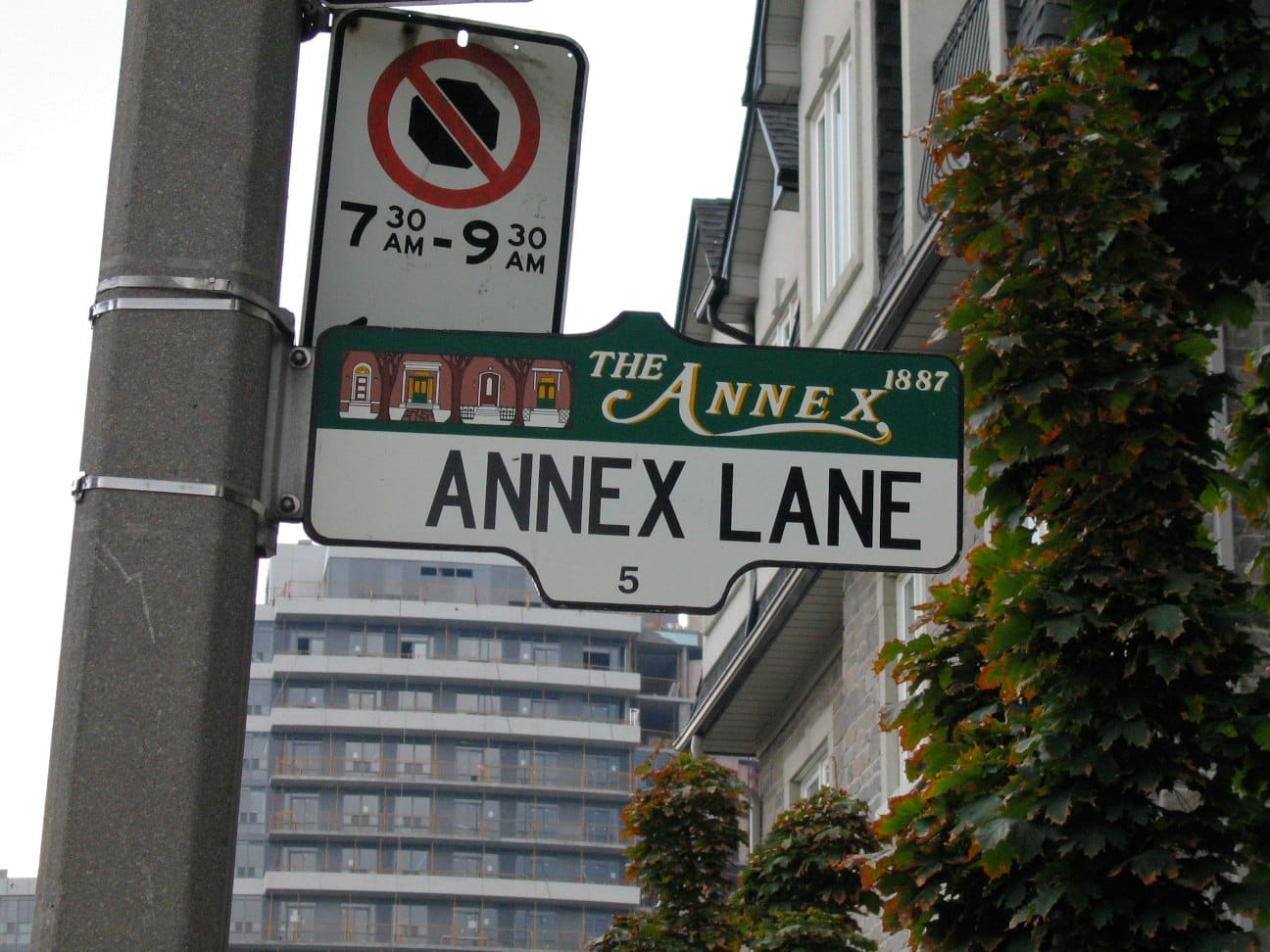
The Annex takes its name from the fact that it was annexed to the City of Toronto in 1887, absorbing what had been a separate residential suburb developed from the 1880s onward. The timing corresponds with the era of Toronto's first major expansion, fueled by economic growth, streetcar infrastructure, and a newly prosperous merchant and professional class looking for large homes north of the original town grid.
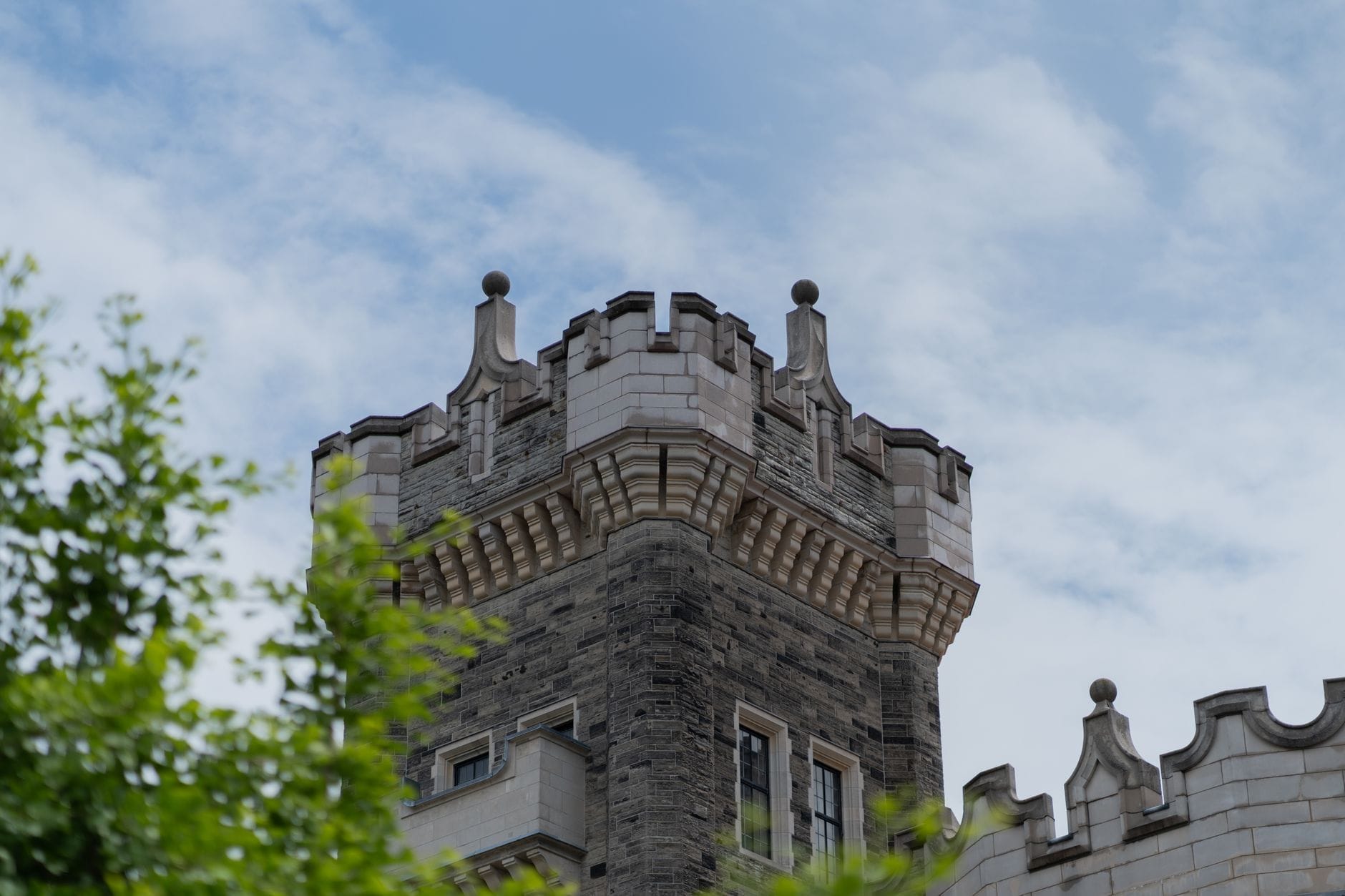
The architectural character that distinguishes the neighborhood today is a direct result of that construction period. The dominant Annex style combines Romanesque Revival arches, red and yellow brick, turrets, wide verandas, and substantial lot sizes that were built for families who employed domestic staff. As the 20th century progressed and the original owner-occupier families dispersed, many of these houses were subdivided into rooming houses and apartments, which contributed to the neighborhood's later identity as student housing and a home for artists, academics, and left-leaning intellectuals.
By the second half of the 20th century, the Annex had developed a clear civic character: politically engaged, culturally active, and resistant to the kind of redevelopment that erased older neighborhoods elsewhere in Toronto. It was the first streetcar suburb to develop west of Yonge Street, and the preservation of its built fabric reflects both formal heritage protection and the attitudes of the residents who have consistently advocated for it.
The neighborhood's location next to the University of Toronto reinforced this character across generations. The campus to the south and the residential streets to the north have been in a continuous relationship for over a century, and the commercial strip on Bloor Street reflects that overlap in its mix of bookshops, copy shops, late-night eateries, and coffee-heavy cafés. Toronto's multicultural neighborhoods developed partly through exactly this kind of institutional anchor, which drew successive waves of newcomers into proximity with established communities.
TL;DR
Best for: Architecture enthusiasts, museum visitors, university travelers, and anyone who wants a walkable residential neighborhood with good transit access to the whole city.
Key transit: Line 2 subway at Bathurst, Spadina, and St. George stations. All three are within the neighborhood's core area.
Food and drink: Solid mid-range dining along Bloor Street, with Koreatown immediately to the west adding significant variety. Bar scene is casual and student-oriented on weekends.
Worth knowing: The Annex has limited hotel stock. Most visitors stay in adjacent Yorkville and walk or take the subway one stop into the neighborhood.
Not ideal for: Travelers seeking nightlife beyond pub-level bars, luxury dining without walking east into Yorkville, or a quiet weekend if staying directly on Bloor Street.
Three days is enough time to cover the best of Toronto's downtown core, historic districts, waterfront, and cultural institutions — if you plan smartly. This itinerary is built around the TTC subway and streetcar network, so you never need a rental car. Expect a mix of landmark sights, neighbourhood wandering, and genuine local texture.
Toronto punches well above its weight for museum culture. Whether you're drawn to ancient civilisations, contemporary art, or the history of hockey, this guide covers the best museums in Toronto across every interest and budget.
Toronto has over 1,500 parks and more than 8,000 hectares of green space, from sweeping urban forests and lakefront trails to formal gardens and island beaches. This guide covers the best of them, organised by type and neighbourhood, so you can find exactly the kind of outdoor escape you're looking for.
Toronto has four genuinely distinct seasons, and the best time to visit depends entirely on what you want from the trip. This guide breaks down weather, crowds, pricing, and events month by month so you can make an informed decision.
Toronto's skyline is one of the most dramatic in North America, dominated by the CN Tower and framed by Lake Ontario. This guide covers the best vantage points in the city, from high-rise observation decks and waterfront parks to island ferry crossings and hilltop lookouts.
Toronto sits at the centre of one of Canada's richest regions for day-tripping. Within two hours in any direction you'll find roaring waterfalls, wine country, historic theatre towns, wilderness beaches, and mountain resorts. This guide covers the top day trips from Toronto, with practical details on how to get there and what to do once you arrive.
Toronto is a surprisingly generous city for budget travellers. From free museum evenings and sprawling parks to street art laneways and historic neighbourhoods, here are the best free things to do in Toronto across every season.
Toronto's transit network spans the TTC subway, streetcars, GO Transit regional rail, the UP Express airport link, ferries, and bike share. This guide breaks down every option with fares, routes, timings, and practical advice on what actually works for visitors.
Toronto is one of the safest major cities in North America, but that doesn't mean risk-free. This guide breaks down real crime patterns, which areas to be aware of, seasonal hazards, and the practical precautions that actually make a difference for visitors.
Toronto sits on the northwestern shore of Lake Ontario, the easternmost and smallest of the Great Lakes by surface area. From the Toronto Islands and the Martin Goodman Trail to the towering Scarborough Bluffs, this guide covers every major way to experience the lake — with seasonal advice, transit details, and honest assessments of what's worth your time.
Toronto is Canada's largest city and one of North America's most genuinely diverse destinations. This guide covers the best things to do in Toronto across every budget, season, and interest — with honest assessments, current prices, and practical logistics.
Five days in Toronto is enough time to cover the iconic landmarks, dig into the city's diverse neighbourhoods, and still squeeze in a day trip to Niagara Falls. This itinerary is structured for efficiency without sacrificing depth, whether you're arriving at Pearson Airport or Billy Bishop.
Everything you need to navigate Toronto Pearson International Airport (YYZ), from terminal layouts and airside connections to the fastest and cheapest ways into downtown Toronto. Covers the UP Express, taxis, ride-hailing, public transit, and key practical details for first-timers and connecting passengers.
Toronto's skyline tells a 200-year story in brick, glass, and concrete. This guide covers the city's most architecturally significant buildings across every era, from Victorian flatirons and Beaux-Arts civic halls to Gehry-designed galleries and record-breaking towers, with practical visiting tips for each.
Toronto Caribbean Carnival, still widely known as Caribana, draws over a million visitors to the city each summer for more than a week of soca music, steelpan competitions, costumed masquerade, and street food. This guide covers everything: dates, the Grand Parade route, ticket prices, what to skip, and how to plan your visit like someone who has been before.
Toronto's sakura season is spectacular but brutally short. This guide covers the exact bloom window, the best viewing locations beyond High Park, how to get there without a car, and what the City's official trackers actually tell you in real time.
Toronto's food scene is one of North America's most diverse, shaped by over 200 ethnic communities and anchored by legendary markets, neighbourhood food districts, and a Michelin Guide earned in 2022. This guide breaks down what to eat, where to eat it, and how to navigate the city's culinary landscape like a local.
Toronto's food market scene ranges from a historic 200-year-old market hall to shipping-container villages and neighbourhood farmers' markets. This guide covers the best places to browse, graze, and stock up across the city.
Toronto delivers a surprising range of romantic experiences, from skyline dining and waterfront ferry rides to candlelit heritage districts and world-class performing arts. This guide breaks down the best date ideas by season, budget, and vibe, with honest assessments of what's worth the effort.
Summer turns Toronto into one of North America's most active outdoor cities. From June jazz on Bloor Street to Caribbean Carnival floats and lakefront beaches with lifeguards on duty until Labour Day, this guide covers every major event, the best swimming spots, and the practical logistics to make the most of the season.
Toronto winters are cold, but the city leans into the season rather than shutting down. From free outdoor skating rinks under the Gardiner Expressway to the glittering Distillery District Christmas Market, this guide covers every practical detail you need to enjoy Toronto from late November through March.
The Toronto International Film Festival is one of the world's most accessible and influential film events, open to the public every September. This guide covers dates, ticket prices, venues, logistics, and how to get the most out of your visit.
The Toronto Islands are a chain of 15 car-free islands just a short ferry ride from downtown, offering beaches, cycling trails, skyline views, and a rare slice of calm in the middle of a major city. This guide covers ferry logistics, the best spots on each island, seasonal realities, and the common mistakes first-time visitors make.
Toronto's upscale travel scene goes well beyond five-star hotels. This guide covers the best luxury hotels in downtown Toronto and Yorkville, premium dining, exclusive experiences, and practical logistics for high-end visitors to Canada's largest city.
Toronto is one of the most diverse cities in the world, with roughly half its population born outside Canada. This guide covers the key ethnic districts, what makes each distinct, how to get there, and what to prioritize on a visit.
Niagara Falls sits about 136 km from downtown Toronto, making it the most popular day trip from the city. This guide covers every transport option, realistic costs, seasonal timing advice, and practical tips on what is worth your time once you arrive.
Toronto nightlife runs deeper than most visitors expect. From the dense bar corridor along King West to indie live music rooms on Queen West and all-night clubs in the Entertainment District, this guide breaks down where to go, what to spend, and how to plan your night like a local.
Nuit Blanche Toronto is a free, city-run all-night contemporary art festival that transforms public spaces across Toronto from dusk to dawn each October. This guide covers the event's history, logistics, what to expect on the night, and how to make the most of 12 hours of outdoor art.
Toronto is Canada's largest city and one of North America's most expensive destinations — but with the right approach, you can experience it without draining your wallet. This guide covers free attractions, affordable transit, budget eats, and the smartest times to visit to keep costs low.
Toronto's PATH is the world's largest underground pedestrian network, stretching more than 30 km through the heart of downtown. This guide covers how to navigate it without getting lost, which routes to use, when it's open, and what to realistically expect from the experience.
Toronto's ravine system is one of the largest urban greenspace networks in North America, threading through neighbourhoods most visitors never see. This guide covers the best trails, how to reach them by transit, what conditions to expect by season, and how to string routes together for a full day outdoors.
Toronto's shopping scene spans luxury boutiques in Yorkville, 230-plus retailers at the Eaton Centre, historic indoor markets, and independent street strips that reward slow browsing. This guide breaks down every major option by category, with transit directions, honest assessments, and seasonal tips.
Toronto is one of North America's most practical cities for solo travel, with an extensive transit network, walkable districts, and a concentration of world-class attractions in the downtown core. This guide covers everything from airport arrivals and neighbourhood logistics to safety realities and the best solo-friendly experiences across Canada's largest city.
Toronto rewards walkers. From the Victorian laneways of the Distillery District to the lakefront trail and Kensington Market's chaotic grid, the city's best stories are told on foot. This guide covers the top guided walking tours, free tip-based options, City-published self-guided routes, and the neighbourhoods worth exploring on your own schedule.
Toronto's waterfront runs approximately 37 kilometres along Lake Ontario, from Etobicoke in the west to the Rouge River in the east. This guide covers the best things to do, how to get around, seasonal conditions, and which parts of the lakeshore are actually worth your time.
From shark tunnels at Ripley's Aquarium to free ferry rides and dinosaur bones at the ROM, Toronto delivers serious options for families with children of all ages. This guide covers the top attractions, practical logistics, honest pricing, and seasonal advice to help you plan a trip that actually works.
Toronto has dozens of distinct neighbourhoods, and choosing the right one to stay in makes a real difference to your trip. This guide breaks down the best areas by location, price range, transit access, and atmosphere — so you can book with confidence.