Royal Ontario Museum: Canada's Largest Museum, Inside and Out
The Royal Ontario Museum holds roughly 18 million objects across natural history, world cultures, and art, all housed in a building that is itself worth studying. From the dinosaur galleries to Daniel Libeskind's angular Crystal addition, the ROM rewards a full half-day of attention.
Quick Facts
- Location
- 100 Queen's Park, Toronto, ON M5S 2C6 (Yorkville / University of Toronto area)
- Getting There
- Museum Station (TTC Line 1) — exit near the ROM’s Queen’s Park frontage. St. George Station is about a 6-minute walk.
- Time Needed
- 3 to 5 hours for a thorough visit; families with young children often stay a full day
- Cost
- General admission from approx. CAD $28; prices vary by age and exhibition. Book online via rom.on.ca for the best rates.
- Best for
- Families, history and culture enthusiasts, architecture observers, rainy-day visits
- Official website
- www.rom.on.ca
What Is the Royal Ontario Museum?
The Royal Ontario Museum, universally known as the ROM, opened in 1914 and has grown into Canada's largest museum by collection size, holding approximately 18 million artworks, cultural objects, and natural history specimens featured in 40 gallery and exhibition spaces. That figure is worth pausing on: 18 million objects means the permanent collection on display at any given time is a small fraction of what exists. The ROM is a natural history museum, a world cultures museum, and a fine and decorative arts institution all occupying the same building, which gives it a breadth that few institutions in North America can match.
The museum sits at the corner of Bloor Street West and Queen's Park, right at the edge of the Yorkville neighbourhood and a short walk from the University of Toronto's St. George campus. The physical address places it among some of the most intellectually and architecturally dense blocks in the city, with the Gardiner Museum directly across the street and the university's campus spreading south and west. This concentration of cultural institutions makes the surrounding few blocks genuinely walkable for a half-day of exploration.
💡 Local tip
Buy tickets online at rom.on.ca before you arrive. Walk-up pricing at the door is typically higher, and online booking can reduce time spent in the ticket queue, which matters on busy weekend mornings when the main entrance fills quickly.
The Crystal: Architecture Worth Arriving Early to Photograph
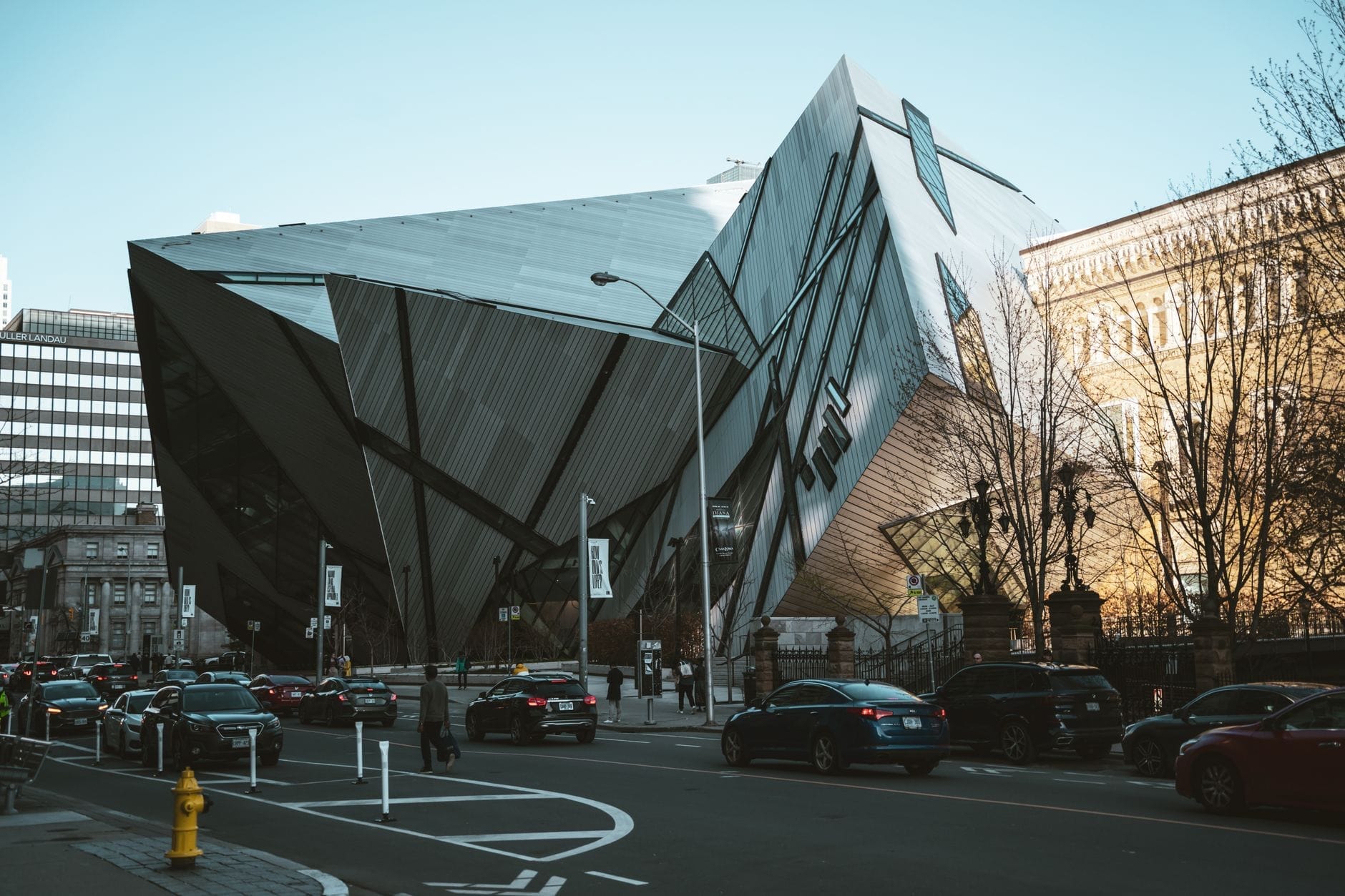
The Michael Lee-Chin Crystal, the jagged angular addition designed by architect Daniel Libeskind and completed in 2006, is the most photographed element of the museum from the outside. Five interlocking prismatic forms clad in aluminum and glass burst from the original 1914 Romanesque Revival building at the Bloor and Queen's Park corner, an intersection busy enough that the juxtaposition of Victorian masonry and deconstructivist steel reads as genuinely dramatic rather than awkward.
For photography, the Crystal reads best in morning light, when low sun catches the aluminum panels at an angle that sharpens the geometric shadows. By midday the flat light flattens the forms. The interior of the Crystal is deliberately disorienting: floors tilt slightly, walls lean, and the structural logic is exposed rather than hidden. Some visitors find it exhilarating; others find the absence of right angles disquieting. If you are interested in contemporary museum architecture, this is one of the more discussed examples on the continent, alongside the Denver Art Museum expansion Libeskind completed around the same period.
The original 1914 building is easy to overlook once the Crystal dominates your eye, but the Romanesque Revival stonework on the Queen's Park facade and the original rotunda interior are worth a few minutes. For context on how the ROM fits into Toronto's broader architectural story, the Toronto architecture guide covers the city's major buildings by era.
Tickets & tours
Live prices and dates from our booking partner. If you book, we may earn a commission at no extra cost to you.
Navigating the Collections: What to Prioritize
Forty galleries sounds manageable until you are standing at the entrance and realize the building spreads across multiple levels in non-obvious configurations. First-time visitors consistently underestimate how long the ROM takes. A focused visit of 90 minutes will scratch the surface. Three hours gives you a reasonable pass through the permanent highlights. Five hours, with a break, is enough to engage seriously with two or three subject areas.
The galleries that draw the longest dwell times, based on observable visitor behavior, are the dinosaur and fossil galleries, the Ancient Egypt collection, the East Asian collection spanning Chinese, Japanese, and Korean art and objects, and the Bat Cave, a recreated limestone cave environment that appeals particularly to children and to anyone with a tolerance for sensory theater. The bat cave simulation uses sound and low light to create an experience that is either memorable or mildly alarming, depending on the visitor.
The dinosaur gallery occupies dramatic multi-level spaces, including areas within the Lee-Chin Crystal, which means display cases and fossil mounts can sit at unexpected angles relative to each other. The collection includes mounted Barosaurus, Albertosaurus, and other specimens of genuine scientific significance. This is not a facsimile collection of casts: many of the bones are original fossil material, which changes the experience for visitors who know to look for the difference.
ℹ️ Good to know
The ROM runs special exhibitions in addition to its permanent galleries, often requiring a separate admission fee. If a major travelling exhibition is on during your visit, factor an extra hour and check pricing in advance, as blockbuster shows can be worth a dedicated trip on their own.
Crowds and Timing: When the ROM Works Best
The museum is generally open Tuesday through Sunday, 10:00 a.m. to 5:30 p.m., and is closed on Mondays. The hours confirmed on Destination Toronto and the ROM's own visitor information page are current as of this writing, but it is worth checking rom.on.ca before any visit, as holiday schedules and special events can alter daily hours.
Weekend mornings between 10:00 a.m. and noon are the most crowded period of the week, particularly on Saturdays during school term, when family groups with children arrive early and the main atrium fills with stroller traffic by 11:00 a.m. Tuesday and Wednesday mornings are noticeably quieter, with gallery spaces where you can stand in front of major objects without waiting. Thursday evenings occasionally feature events that change the atmosphere from a daytime cultural visit to something more social, though hours for these vary.
Rainy days bring a sharp increase in visitors across all of Toronto's major museums: the ROM, the Art Gallery of Ontario, and the Gardiner Museum all fill more quickly when outdoor options close. If your trip includes a rainy day and you were planning to visit, arrive at opening rather than mid-afternoon.
The ROM works particularly well in winter, when Toronto's outdoor attractions are less appealing and the museum's indoor scale justifies a full afternoon inside. For more on making the most of the city in cold months, the Toronto in winter guide is worth reading before your trip.
Getting There, Accessibility, and Practical Logistics
The most direct transit option is Museum Station on TTC Line 1, which has an exit that brings you up steps directly in front of the ROM along Queen's Park. There is no easier museum transit connection in the city. St. George Station, about a six-minute walk west along Bloor Street, is also convenient if you are coming from that direction.
The ROM states that the building is fully accessible for visitors with disabilities. Accessible entrances, elevators, and services are detailed on the visitor information section of the official site. The Crystal's angular interior does create some unusual navigation, but the museum has addressed accessibility comprehensively within the architectural constraints. Visitors with mobility devices should consult the accessibility page before arriving to identify the most direct routes through the building.
Coat check is available, which matters significantly in winter when heavy outerwear becomes physically cumbersome in gallery spaces. There is a café and restaurant on site for visits that extend through a meal. Photography is generally permitted throughout the permanent galleries without flash; tripods and professional equipment may require advance permission.
The ROM sits in Yorkville, one of Toronto's most walkable cultural corridors. The best museums in Toronto guide covers how to combine the ROM with the Gardiner Museum, the Bata Shoe Museum, and the Aga Khan Museum into a broader cultural itinerary across the city.
Who Gets the Most Out of the ROM (and Who Might Not)
Families with children between roughly six and fourteen years old tend to get exceptional value from the ROM. The combination of dinosaur skeletons, the Bat Cave simulation, Egyptian mummies, and hands-on discovery zones gives younger visitors multiple categories of engagement in a single building. The scale of the space also means children can move through the building without the clipping, contained feeling that smaller museums produce.
Travelers with a specific interest in one subject area, whether that is pre-Columbian artifacts, Chinese decorative arts, or vertebrate paleontology, will find collections that reward close attention beyond the highlight pieces. The depth of the permanent collection in East Asian art in particular is notable: the Bishop White Gallery of Chinese Temple Art contains large-scale Buddhist frescoes and temple sculptures that rarely appear outside major institutions.
Visitors expecting a focused, intimate experience similar to a smaller specialist museum may find the ROM's scale overwhelming rather than impressive. The building is large, the collection is encyclopedic, and the energy on a busy day is active and loud rather than contemplative. Solo travelers looking for a quiet afternoon of uninterrupted looking will have the best experience on a weekday morning, arriving within the first hour of opening. Anyone with only 45 minutes to spare should probably choose a smaller institution: the ROM rewards time, and a rushed circuit of the highlights leaves most people feeling they saw only the surface.
If you're planning a broader day in this part of the city, the Yorkville neighbourhood immediately north offers high-end retail and cafes for before or after your visit, and the University of Toronto campus to the south is worth a short walk for its own architectural interest.
Insider Tips
- The ROM's permanent collection galleries are included with general admission, but major travelling exhibitions require a separate ticket. Check rom.on.ca before you arrive to see what is on and whether the extra cost fits your budget and interests.
- Level B1, the lowest floor, tends to be less crowded than the main-level galleries even on busy days. The World Cultures and the Ancient Americas collections on lower floors often feel like a different museum in terms of crowd density.
- The Bloor Street entrance through the Crystal is the main tourist-facing entrance, but the Queen's Park side of the building reveals more of the original 1914 Romanesque stonework and provides a better architectural read of the full building before you go inside.
- If you are visiting with a child obsessed with dinosaurs, go directly to the upper-level fossil galleries when you arrive rather than drifting through the main floor first. The skeleton mounts are genuinely large and need time, and children who spend their energy on the ground floor often lose focus before reaching them.
- The museum shop near the main exit carries a selection of educational books and Canada-specific natural history titles that are harder to find elsewhere in the city. It is worth a few minutes even if you are not a gift-shop visitor by habit.
Who Is Royal Ontario Museum For?
- Families with school-age children looking for a full-day indoor destination
- Travelers interested in natural history, paleontology, or world cultures collections
- Architecture observers wanting to study Daniel Libeskind's Crystal addition in person
- Rainy-day or winter visitors seeking a genuinely large indoor space
- Anyone building a multi-museum day in the Yorkville and University of Toronto corridor
Nearby Attractions
Other things to see while in Yorkville:
- Bata Shoe Museum
The Bata Shoe Museum on Bloor Street West houses nearly 15,000 shoes and artifacts spanning 4,500 years of human history. Housed in a striking building designed by Raymond Moriyama, it is one of Toronto's most distinctive and underrated cultural institutions — compact, thoughtful, and genuinely engaging for visitors who come with curiosity.
- Bloor-Yorkville Mink Mile
The Mink Mile is Toronto's most prestigious shopping corridor, stretching along Bloor Street West between Yonge Street and Avenue Road in the Yorkville neighbourhood. Home to flagship luxury boutiques, high-end restaurants, and polished streetscapes, it offers a window into Toronto's wealthiest consumer culture — free to walk, endlessly interesting to observe.
- Gardiner Museum
The Gardiner Museum at 111 Queen's Park is Canada's dedicated national ceramics museum, housing around 4,000 objects spanning Ancient Americas pottery, Chinese blue and white porcelain, European earthenware, and contemporary Canadian ceramics. Compact, focused, and genuinely undervisited, it rewards curiosity about craft and material culture in a way that few larger institutions can.
Planning a trip? Discover personalized activities with the Nomado app.