Gardiner Museum: Canada's National Ceramics Museum in the Heart of Yorkville
The Gardiner Museum at 111 Queen's Park is Canada's dedicated national ceramics museum, housing around 4,000 objects spanning Ancient Americas pottery, Chinese blue and white porcelain, European earthenware, and contemporary Canadian ceramics. Compact, focused, and genuinely undervisited, it rewards curiosity about craft and material culture in a way that few larger institutions can.
Quick Facts
- Location
- 111 Queen's Park, Toronto, ON M5S 2C7 — across from the Royal Ontario Museum, near Bloor & Avenue Road
- Getting There
- Museum station (TTC Line 1) — a 2-minute walk
- Time Needed
- 1.5 to 2.5 hours for a thorough visit; under 1 hour if focused
- Cost
- Adults CAD $15, Seniors $11, under 18 free, students free; free admission Wednesdays from 4 pm to 9 pm
- Best for
- Design and craft enthusiasts, cultural travelers, budget visitors on Wednesday evenings, curious visitors looking for a quieter counterpoint to the ROM
- Official website
- www.gardinermuseum.on.ca
What the Gardiner Museum Actually Is
The Gardiner Museum, formally known as the George R. Gardiner Museum of Ceramic Art, opened in 1984 after collectors George and Helen Gardiner decided that their growing collection of ceramics deserved a permanent public home. What they built became Canada's national museum of ceramics, one of a relatively small number of institutions worldwide dedicated entirely to the art of fired clay.
The collection runs to approximately 4,000 objects. That sounds like a lot, but the galleries are focused and curated rather than exhaustive. You will not feel overwhelmed. Ancient Americas pottery sits alongside Japanese porcelain and 18th-century European earthenware in a sequence that makes the sheer geographic spread of ceramic traditions feel almost logical rather than arbitrary.
The building occupies a prime cultural block on Queen's Park, directly across from the Royal Ontario Museum. Many visitors treat the two as a pair on the same day, which works well. The Gardiner is far smaller and calmer than the ROM, and the contrast in atmosphere is noticeable the moment you walk through the door.
ℹ️ Good to know
Current status: The Gardiner is operating with its standard admission pricing while ground-floor gallery construction continues. Check the official site before visiting, as some permanent galleries may have limited access.
The Collection: What You Will See
The permanent collection is organized broadly by tradition and region. The Ancient Americas galleries contain pre-Columbian pottery from Mesoamerica and South America, including figurines and vessels that predate European contact by centuries. These pieces are often small and intricately formed. Up close, the surface textures and slip-painted patterns reward the kind of slow looking that a crowded natural history museum rarely allows.
The East Asian galleries hold Chinese blue and white porcelain and Japanese porcelain, with pieces spanning several centuries. The blue and white work is particularly strong. If you have any interest in how global trade in the 17th and 18th centuries was literally shaped by ceramic demand, this section gives you the objects to examine directly.
European tin-glazed earthenware from Italy, France, England, and the Low Countries fills another section. The colours on Italian maiolica, produced between the 15th and 18th centuries, tend to stop visitors who expected to skim past. The reds and ochres hold their intensity in person in a way that photographs do not capture well. European porcelain, including Meissen and other 18th-century workshop output, completes the historical European holdings.
Contemporary ceramics, including Canadian studio ceramics, appear in rotating exhibitions and some permanent spaces. This is where the museum signals that ceramics is not only historical subject matter. If you visit only for the contemporary work, you can orient your path accordingly.
Tickets & tours
Live prices and dates from our booking partner. If you book, we may earn a commission at no extra cost to you.
Toronto Old Town: Dark Side Exploration Game and Tour
From 12 €Instant confirmationFree cancellationLEGOLAND Discovery Centre Toronto tickets
From 16 €Instant confirmationFree cancellationToronto 'Little Canada' entrance tickets
From 27 €Instant confirmationFree cancellationNiagara Falls evening tour with boat, dinner and Illumination Tower
From 77 €Instant confirmationFree cancellation
Visiting by Time of Day: How the Experience Shifts
Morning visits, especially on weekdays, are quiet. The galleries are small enough that a dozen visitors spread through them creates no sense of crowding, and the light through the upper floor windows is good for seeing glaze surfaces clearly. Tuesday and Thursday mornings are typically the calmest.
Wednesday evenings after 4 pm are free, which draws a noticeably different crowd: university students from the nearby University of Toronto campus, young professionals, and people who timed a post-work visit specifically for the free admission window. The atmosphere is less museum-solemn and slightly more social without becoming loud. If you want the free admission but prefer quiet, arriving right at 4 pm rather than 5:30 pm makes a difference.
Weekend afternoons see the most foot traffic, particularly in summer and during the academic year when Yorkville and the Yorkville neighbourhood are busy with visitors. Even then, the Gardiner rarely feels crowded by Toronto museum standards. It is simply not as large as the ROM next door, so the volume gets diluted across the floors.
💡 Local tip
Best time to visit: Weekday mornings for quiet and clear gallery access. Wednesday evenings for free admission with a livelier crowd. Avoid weekend afternoons in summer if you prefer a contemplative pace.
Getting There and Practical Logistics
The easiest way to arrive is via TTC Line 1 to Museum station, which places you directly across Queen's Park from the building. The walk from the subway exit to the front door is roughly two minutes. For a broader look at getting around the city, the getting around Toronto guide covers TTC routes, fares, and transit tips in detail.
If you are driving, parking in this part of Toronto is expensive and street spots are timed. The ROM parking garage on Museum Lane is the most convenient paid option, but budget for city-centre parking rates. Cycling is practical here: the Queen's Park area has reasonable bike infrastructure and covered parking exists outside the building.
The building is accessible. The museum states a commitment to access for visitors with disabilities, and the structure includes elevator access between floors. If specific accessibility needs require confirmation, the official site provides detailed accessibility information. Ground-floor construction currently in progress means some routes inside the building may be altered from the usual layout, so checking ahead is worthwhile.
Bag check is available at the front desk. The museum has a cafe and a retail space focused on design and ceramic objects. The cafe is a reasonable place for a coffee break between galleries rather than a destination in itself.
Photography Inside the Museum
Personal photography without flash is permitted in select parts of the permanent collection. The lighting in the main galleries is set for display rather than photography, which means you will get better results on the upper floors where natural light supplements the artificial sources. Smartphone photography works reasonably well given the scale of most objects. The Italian maiolica and the blue and white porcelain sections produce the most visually striking shots due to the contrast between white ceramic and intense painted colour.
⚠️ What to skip
Flash photography is not permitted. Restrictions may differ for temporary exhibitions. Check signage at the entrance to each gallery section.
Cultural and Architectural Context
The Gardiner sits on a block that forms one of Toronto's densest concentrations of cultural institutions. The ROM is directly across Queen's Park. The Bata Shoe Museum is a short walk west on Bloor Street. The University of Toronto's St. George campus surrounds this entire area, lending it an academic character distinct from the rest of Yorkville's retail-driven identity.
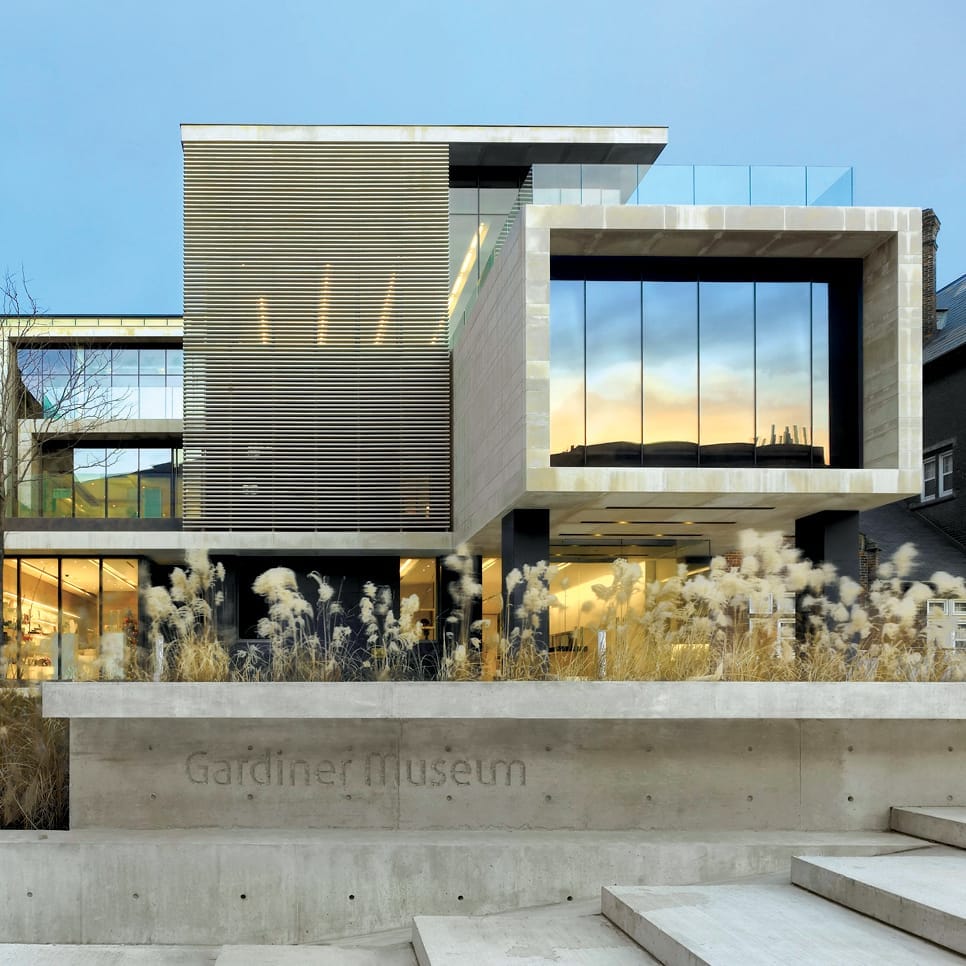
The Gardiner building itself was renovated and expanded in 2006 by architect Kuwabara Payne McKenna Blumberg Architects (KPMB), a Toronto firm with multiple cultural projects in the city. The renovation added a new entrance, improved gallery lighting, and created the Clay Studio teaching facility. The result is a building that is functional and clean rather than architecturally dramatic. It does not compete with the ROM's Crystal addition for visual spectacle, which suits the quieter nature of the institution.
If you are building a Yorkville cultural itinerary, this block pairs naturally with the ROM and the Bata Shoe Museum. See the best museums in Toronto guide for a ranked overview of how the Gardiner fits alongside the city's larger institutions.
Honest Assessment: Is It Worth Your Time?
For travelers with a genuine interest in ceramics, craft, or material culture, the Gardiner is one of the more satisfying museums in Toronto. The focus means there is no filler, and the scale means a thorough visit takes under three hours. You leave feeling like you have actually seen something rather than having walked past thousands of objects without retaining any of them.
For general tourists ticking off Toronto attractions, the Gardiner is a harder sell if time is short. If you have already done the ROM and the Art Gallery of Ontario and still have a museum appetite, this is worth the stop. If ceramics specifically do not interest you and you are choosing between this and something like the AGO, go to the AGO first.
The pay-what-you-wish model and the free Wednesday evenings remove the financial barrier entirely. There is no real reason to skip it based on cost. The question is purely whether the subject matter aligns with how you want to spend two hours in a city with many competing options.
Insider Tips
- Wednesday free admission runs from 4 pm to close. Arrive right at 4 pm to get a full hour in nearly empty galleries before the after-work crowd builds.
- The Clay Studio on site runs ceramic workshops for the public, including drop-in and pre-registered sessions. If you want to do more than look at ceramics, check the programming calendar before your visit.
- Combine the Gardiner with the Royal Ontario Museum across the street on the same day, but visit the Gardiner first while your energy is highest. The ROM is significantly larger and will absorb more time than expected.
- The museum shop stocks a curated range of functional and decorative ceramics from Canadian and international makers. It is one of the better design retail spaces attached to a Toronto cultural institution.
- If ground-floor galleries remain closed due to construction, ask staff at the front desk which permanent collection areas are fully accessible on the day of your visit. The upper floors are typically unaffected.
Who Is Gardiner Museum For?
- Ceramics, design, and craft enthusiasts who want an institution built around a single material tradition
- Budget travelers visiting on Wednesday evenings for free admission
- Visitors already planning a ROM trip who want to extend the cultural block into a half-day
- Travelers interested in pre-Columbian Americas, East Asian decorative arts, or European porcelain in a focused setting
- Anyone who finds large encyclopedic museums exhausting and prefers a compact, well-curated experience
Nearby Attractions
Other things to see while in Yorkville:
- Bata Shoe Museum
The Bata Shoe Museum on Bloor Street West houses nearly 15,000 shoes and artifacts spanning 4,500 years of human history. Housed in a striking building designed by Raymond Moriyama, it is one of Toronto's most distinctive and underrated cultural institutions — compact, thoughtful, and genuinely engaging for visitors who come with curiosity.
- Bloor-Yorkville Mink Mile
The Mink Mile is Toronto's most prestigious shopping corridor, stretching along Bloor Street West between Yonge Street and Avenue Road in the Yorkville neighbourhood. Home to flagship luxury boutiques, high-end restaurants, and polished streetscapes, it offers a window into Toronto's wealthiest consumer culture — free to walk, endlessly interesting to observe.
- Royal Ontario Museum
The Royal Ontario Museum holds roughly 18 million objects across natural history, world cultures, and art, all housed in a building that is itself worth studying. From the dinosaur galleries to Daniel Libeskind's angular Crystal addition, the ROM rewards a full half-day of attention.
Planning a trip? Discover personalized activities with the Nomado app.