University of Toronto St. George Campus: A Self-Guided Walk Through 200 Years of Architecture
The University of Toronto St. George campus is one of Canada's most architecturally compelling public spaces, free to explore on foot. From the Norman Romanesque University College to the striking modern Leslie L. Dan Pharmacy Building, the campus spans nearly two centuries of design in the heart of downtown Toronto.
Quick Facts
- Location
- 27 King's College Circle, Toronto, ON M5S 1A1 (The Annex / Queen's Park area)
- Getting There
- St. George Station (Line 1) and Queen's Park Station (Line 1) are both within a 5-minute walk of the campus core
- Time Needed
- 1 to 3 hours for a self-guided walk; longer if visiting the Art Museum at U of T or Hart House
- Cost
- Free to walk the outdoor grounds; individual campus venues may charge separate admission
- Best for
- Architecture lovers, history walkers, photography, quiet urban exploration
- Official website
- www.utoronto.ca/university-life/campuses/st-george
What Makes This Campus Worth Your Time
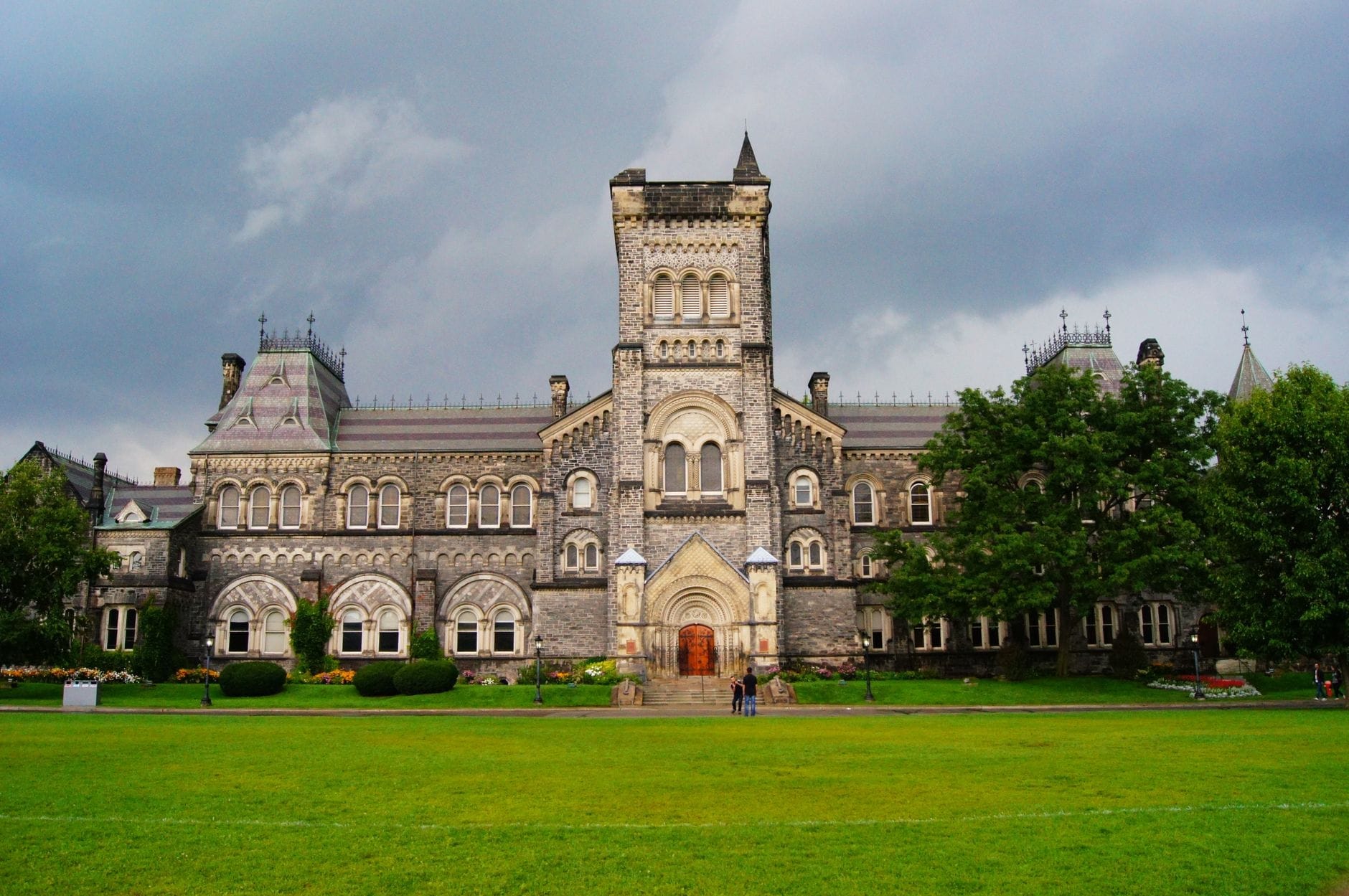
The University of Toronto St. George campus is not a typical tourist attraction. There are no ticket queues, no audio guides handed out at a desk, and no single headline exhibit. What you get instead is a dense, walkable urban campus where nearly every turn reveals a building from a different era: a Norman Romanesque stone hall built in 1859 standing a few hundred metres from a contemporary glass-and-steel pharmacy building completed in 2006. For anyone interested in architecture, urban history, or simply walking somewhere that feels genuinely different from the surrounding city grid, the St. George campus delivers.
Founded in 1827 as King's College, the University of Toronto is among the oldest universities in Canada. The St. George campus is its original, historic downtown location, and it shows. The campus occupies a substantial footprint between Bloor Street to the north, College Street to the south, Spadina Avenue to the west, and Queen's Park Crescent to the east. Within that area, more than a century of competing architectural philosophies coexist with surprising coherence.
💡 Local tip
There is no admission charge to walk the outdoor grounds, including Front Campus and King's College Circle. You can spend two hours here without spending a cent. Simply arrive, orient yourself at the King's College Circle roundabout, and start walking.
The Architecture: What You Are Actually Looking At
University College, completed in 1859, is the building most visitors photograph first, and for good reason. Its Norman Romanesque design, with thick stone walls, round arches, a crenellated tower, and intricate carved stonework, looks more like something from Oxford than from a North American city that was barely three decades old when it was built. The interior courtyard, which visitors can access during building hours, is particularly quiet and worth seeking out. The carvings around the main entrance include faces of the craftsmen who worked on the building, a detail that rewards close attention.
Hart House, completed in 1919, is the campus's other landmark. Its Gothic Revival limestone exterior anchors the northwest corner of Front Campus, and the building functions as a student and community centre. The Great Hall inside is exceptional: vaulted timber ceilings, leaded glass windows, and a scale that feels more collegiate English than downtown Canadian. Hart House is generally accessible to visitors during daytime hours, though specific spaces may be reserved for events.
The newer buildings provide architectural contrast that is genuinely interesting rather than jarring. The Leslie L. Dan Pharmacy Building, designed by Norman Foster and completed in 2006, wraps a glass curtain wall around a suspended pod structure that looks unlike anything else on the campus. The Goldring Centre for High Performance Sport, designed by KPMB Architects, sits further west and handles a difficult brief with restraint. For a broader look at how Toronto's architectural identity has evolved across centuries, the St. George campus functions as a compressed version of the story told more fully in Toronto's architecture guide.
Tickets & tours
Live prices and dates from our booking partner. If you book, we may earn a commission at no extra cost to you.
Toronto Old Town: Dark Side Exploration Game and Tour
From 12 €Instant confirmationFree cancellationLEGOLAND Discovery Centre Toronto tickets
From 16 €Instant confirmationFree cancellationToronto 'Little Canada' entrance tickets
From 27 €Instant confirmationFree cancellationNiagara Falls tour with local winery visit from Toronto
From 70 €Instant confirmationFree cancellation
How the Campus Changes Through the Day
Early morning, roughly 7:30 to 9:00, is the most atmospheric time to visit. Front Campus, the large open lawn that faces King's College Circle, is quiet, and the low light catches the limestone and sandstone of University College and Hart House at an angle that turns them amber. Cyclists and joggers cut through on their commutes, but the crowd is thin. The smell of cut grass in warmer months mixes with the faint exhaust from the street beyond, and there is a particular stillness to the inner quadrangles that disappears once lectures begin.
Between 10:00 and 14:00 on weekdays during the academic year, the campus transforms. Students move between buildings in waves that correspond to lecture schedules. The paths between Robarts Library, Sid Smith Hall, and the main quad fill up, and the outdoor seating around Hart House becomes occupied. For visitors, this period is actually useful: campus cafes and food services are open, the Justina M. Barnicke Gallery inside Hart House is accessible, and the overall sense of a working, inhabited institution is at its highest.
Summer weekends offer a different experience entirely. Without the academic-year crowds, the campus becomes a quieter urban park substitute. Families walk through, tourists photograph University College, and the lawns of Front Campus get used for picnics and casual sport. The surrounding neighbourhood of The Annex fills with people doing the same, and the transition from campus to street feels seamless.
⚠️ What to skip
Between late April and late May, campus paths can be congested with convocation ceremonies, and vehicle access around King's College Circle is sometimes restricted. If you are visiting purely for the walk, mid-June through August offers the most relaxed conditions.
The Practical Walkthrough: Where to Go First
The logical starting point is King's College Circle, the large roundabout at the centre of the campus. Coming from Queen's Park Station, walk north along Queen's Park Crescent and enter through the south gate. Coming from St. George Station, walk south on St. George Street and enter from the west. Both approaches take under ten minutes on foot.
From King's College Circle, the route almost writes itself. Walk toward University College to the west for the best Gothic stonework. Then loop north toward Hart House, noting the contrast between the two buildings' styles despite their proximity. Continue northwest toward Robarts Library, which is a deliberate architectural statement of a different kind: completed in 1972, its brutalist concrete form has divided opinion for decades but is undeniably striking. The building's triangular towers have been compared to a peacock fanning its tail, which is either an insult or a compliment depending on your position on concrete.
The campus also contains the Art Gallery of Ontario within easy walking distance to the south, and the Royal Ontario Museum directly to the north at Bloor and Avenue Road. If you are spending a full day in the area, the campus walk sits naturally between these two institutions and requires no additional ticket or planning.
Photography: What Works and What Doesn't
The photographic opportunities here are genuinely strong, but they require timing. University College's west-facing facade is best in the afternoon, when direct light picks out the carved stonework and the arched entrance. The internal courtyard, accessible from inside the building, photographs well at almost any time because the diffuse light from the open sky avoids harsh shadows.
Front Campus as an open lawn is difficult to photograph compellingly unless you have a clear sky and some human activity to anchor the frame. On grey days, which are common in Toronto between November and March, the lawn reads flat. The stone buildings actually look better in overcast light, which reduces glare and brings out the texture of the material, so do not write off a cloudy visit.
The Leslie L. Dan Pharmacy Building, on College Street at the campus's southern edge, photographs best from across the street in early morning when the glass facade reflects the low eastern sky. At midday, the reflection washes out. This is also a useful reminder that the campus extends further south than most visitors explore, and the transition from Victorian stone to contemporary glass along College Street is one of the more visually concentrated architectural sequences on the campus.
Seasonal Conditions and When to Visit
Toronto's climate means the campus experience shifts considerably across the year. Spring, from late April into June, brings the most photogenic conditions: the Front Campus elms and surrounding trees leaf out, the stone buildings glow in warmer light, and the academic-year energy is still present. This is also when the nearby neighbourhood rewards exploration. The Annex directly to the north and west of the campus is a dense, walkable residential district with independent bookshops, cafes, and Victorian housing stock that complements the campus's architectural character.
Winter visits are underrated. Snow on the stone buildings of Front Campus creates conditions that look unlike any other point in the calendar, and the campus is far less crowded. The cold is real, with Toronto's January temperatures averaging around -3.7°C and wind chill pushing the felt temperature lower, so dress in proper layers. Covered walkways connect several buildings, and the interior of Hart House offers warmth along with its architecture.
Autumn from September to November is the most comfortable season overall. Temperatures are mild, the trees around campus hold colour into late October, and the return of students makes the campus feel inhabited and purposeful. If you are combining the visit with broader Toronto sightseeing, the best time to visit Toronto guide covers seasonal trade-offs for the city as a whole.
Accessibility and Practical Notes
The outdoor paths of St. George campus are paved and generally accessible, though some areas include cobblestone or uneven historic surfaces near older buildings. The University of Toronto maintains accessible routes across the St. George campus and provides detailed campus accessibility maps; visitors with mobility requirements should consult the university's accessibility page before arrival for specific route information and building access details.
There is no dedicated visitor centre for the campus. The University of Toronto runs guided tours primarily aimed at prospective students, not general visitors. For independent walkers, downloadable campus maps are available from the university's website. Parking in the immediate campus area is limited and expensive; arriving by TTC is straightforwardly the best option. St. George Station places you at the western edge of the campus in about a 5-minute walk, and Queen's Park Station drops you at the eastern side of the campus.
ℹ️ Good to know
Washrooms for public visitors are available in Hart House and in some academic buildings during regular hours. During summer when fewer buildings are fully staffed, availability can be uneven. The Robarts Library common areas also provide facilities accessible to the public during library hours.
Insider Tips
- The internal courtyard of University College is one of the most atmospheric spaces on campus and is missed by most visitors who only photograph the exterior. Enter through the main arched doorway during building hours and spend five minutes in the cloister-like walkway surrounding it.
- Hart House runs a cafeteria and a more formal dining room open to the public during the academic year. Prices are reasonable and the Gothic interior makes it one of the more memorable lunch spots in downtown Toronto, a fact almost entirely unknown to non-students.
- Robarts Library allows public visitors to enter the main atrium and common areas without a library card. The view back toward Front Campus from the upper levels gives a perspective on the campus layout that is different from ground level.
- If you are visiting in late September or October, the ginkgo trees along Philosopher's Walk, the footpath running along the western edge of campus between Bloor and Hoskin Avenue, drop their leaves in a single concentrated burst that turns the path bright yellow. The window lasts roughly a week and the timing is unpredictable, but if you catch it the visual effect is worth the detour.
- The campus is a short walk from the Bata Shoe Museum on Bloor Street West. Combining both in a single morning is easy and adds a genuinely distinct cultural layer to the architecture walk.
Who Is University of Toronto St. George Campus For?
- Architecture and design enthusiasts wanting to compare Victorian, Gothic Revival, Brutalist, and contemporary buildings in a single walk
- Photographers seeking stone and glass textures, interior courtyards, and light conditions unavailable in the city's commercial districts
- Travellers pairing the campus with the Royal Ontario Museum or Art Gallery of Ontario as part of a full cultural day
- Budget-conscious visitors looking for a high-quality, free urban walk with genuine historical depth
- Solo travellers or couples who want a quieter, less commercial alternative to Toronto's main shopping and waterfront areas
Nearby Attractions
Other things to see while in The Annex:
- Casa Loma
Casa Loma is a 98-room Gothic Revival mansion perched 140 metres above Lake Ontario in Toronto's midtown area. Built between 1911 and 1914 for financier Sir Henry Pellatt, it remains one of Canada's most architecturally ambitious private residences and a landmark worth understanding before you walk through its gates.
- Koreatown
Stretching along Bloor Street West between Bathurst and Christie subway stations, Toronto's Koreatown is a compact but densely packed commercial corridor rooted in a Korean immigrant community that began settling here in the 1970s. Today it draws visitors for Korean BBQ, late-night karaoke, Korean bakeries, and grocery stores stocked with ingredients you won't find elsewhere in the city.
- Little Italy
Little Italy is a lively stretch of College Street between Bathurst and Shaw where Italian-Canadian history, independent cafés, and a strong restaurant culture come together. Access is free, the street is walkable at any hour, and the neighbourhood rewards those who slow down.
- Ontario Legislative Building
The Ontario Legislative Building is the seat of Ontario's provincial parliament, a Richardsonian Romanesque sandstone landmark officially opened on April 4, 1893 at the centre of Queen's Park. Admission and guided tours are free, making it one of Toronto's most accessible and architecturally significant public buildings.
Planning a trip? Discover personalized activities with the Nomado app.