Art Gallery of Ontario: What to Know Before You Visit
The Art Gallery of Ontario is one of North America's largest art museums, housing over 90,000 works inside a landmark Frank Gehry-renovated building in downtown Toronto. From Indigenous Canadian art to European masters and contemporary photography, the AGO rewards focused visitors and casual explorers alike.
Quick Facts
- Location
- 317 Dundas Street West, Toronto, ON M5T 1G4
- Getting There
- St. Patrick Station (Line 1, ~5 min walk) or Osgoode Station (~7 min walk)
- Time Needed
- 2 to 4 hours depending on pace and interests
- Cost
- $25 CAD general admission (18+); free for Ontario residents 25 and under
- Best for
- Art enthusiasts, architecture lovers, rainy-day plans, solo and couple visits
- Official website
- ago.ca
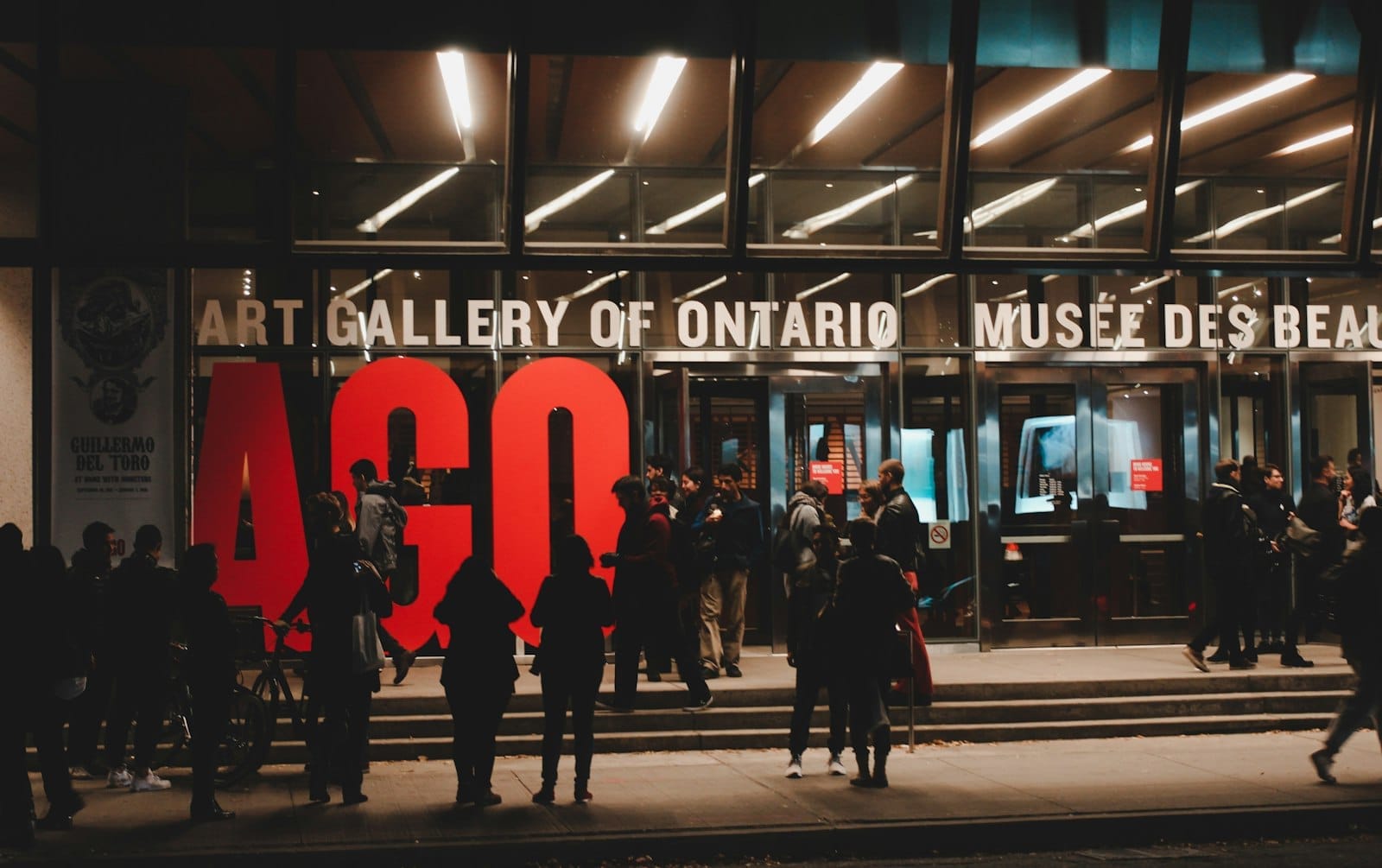
What the AGO Actually Is
The Art Gallery of Ontario, known almost universally as the AGO, is one of the largest art museums in North America by collection size and attendance. Its permanent collection spans more than 90,000 works, covering Indigenous Canadian art, European paintings from the 14th century onward, modern and contemporary pieces, African art, photography, and a dedicated wing for works on paper. The institution traces its origins to 1900, when it opened as the Art Museum of Toronto, later becoming the Art Gallery of Toronto in 1919 before adopting its current name in 1966.
The museum draws roughly one million visitors per year, which puts it firmly in the category of major civic institution rather than specialist gallery. That scale matters: the AGO is large enough to contain genuinely world-class works, but the building's layout and signage are clear enough that a first-time visitor can orient quickly without feeling overwhelmed.
The Building: Frank Gehry's Renovation
The most immediately striking thing about the AGO from the outside is the Dundas Street facade: a long, undulating wood-and-glass canopy that wraps the northern edge of the building at street level. This is the work of architect Frank Gehry, who was born in Toronto and undertook a major transformation of the AGO completed in 2008. The renovation added the Galleria Italia, a 180-metre interior promenade of Douglas fir and glass running along the building's north side, and considerably expanded the gallery's footprint.
The Galleria Italia is worth pausing in even if contemporary art holds no particular appeal for you. The warm grain of the Douglas fir ceiling meets natural light filtered through the glass facade, and on a winter afternoon the contrast between the cold street outside and the softly lit interior corridor is genuinely pleasant. The staircase inside the Walker Court atrium, a sculptural helix of free-floating blue titanium steps, is another element that rewards stopping rather than moving through.
For visitors interested in the broader architectural identity of the city, the AGO fits into a larger conversation about Toronto's built environment. The Sharp Centre for Design at OCAD University, visible just south on McCaul Street, and the Royal Ontario Museum's Daniel Libeskind crystal addition are nearby examples of how Toronto's cultural institutions have used internationally recognized architects to reshape their public presence.
💡 Local tip
Look up in the Galleria Italia rather than just walking through it. The curved Douglas fir ribs overhead read very differently from a seated position than they do in motion. There are benches along the promenade for this reason.
Tickets & tours
Live prices and dates from our booking partner. If you book, we may earn a commission at no extra cost to you.
The Collection: What to Prioritize
With over 120,000 works, no single visit covers more than a fraction of the collection. The AGO's strengths lie in several distinct areas, and knowing them in advance helps you use your time well.
The Canadian collection is broadly considered the AGO's most significant holding. The Group of Seven paintings occupy their own dedicated galleries, where large-format landscapes of the Canadian Shield, the Arctic, and the Ontario wilderness are displayed with enough space to stand back from each canvas. Tom Thomson's work, including the small oil sketches he produced in Algonquin Park before his death in 1917, sits nearby. These are not decorative pieces; they are the images that shaped how Canadians visualize their own geography, and seeing the originals rather than reproductions is a different experience.
The European collection includes works spanning several centuries, with holdings in Dutch Golden Age painting, French Impressionism, and British art. The AGO also has a substantial collection of works by Henry Moore, the British sculptor who maintained a close relationship with the gallery and donated a significant number of pieces. The Henry Moore Sculpture Centre houses one of the largest public collections of Moore's work outside the United Kingdom, displayed in a dedicated space with skylights.
Contemporary and modern works occupy the upper floors, and the photography collection, housed in dedicated gallery space, is frequently underestimated by first-time visitors. Temporary exhibitions rotate through several large halls and often represent the most publicly discussed programming, so it is worth checking what is on before your visit at ago.ca.
How the Visit Changes by Time of Day
Weekday mornings, when the gallery opens at 10:30, tend to be the quietest. School groups sometimes arrive mid-morning, but the building is large enough that they rarely affect the galleries significantly outside of the Canadian art wing. Weekend afternoons see the heaviest foot traffic, especially in the Galleria Italia and near any featured temporary exhibition.
Wednesday and Friday evenings, when the AGO stays open until 21:00, offer a noticeably different atmosphere. The crowds thin considerably after 17:00, the lighting in the galleries shifts toward artificial warmth rather than daylight, and the smaller cafe areas inside become genuinely comfortable places to sit. If you want the Group of Seven paintings largely to yourself, a Friday evening visit after 18:00 is one of the more reliable strategies.
ℹ️ Good to know
The AGO is closed on Mondays. Hours as of the time of writing: Tuesday and Thursday 10:30–17:00, Wednesday and Friday 10:30–21:00, Saturday and Sunday 10:30–17:30 (note that Sunday currently operates 10:30–17:30; always confirm at ago.ca). Confirm at ago.ca before visiting, as hours change for public holidays and special events.
Tickets, Admission, and the Free Under-25 Policy
General admission for visitors 18 and over is $25 CAD. The AGO introduced free admission for Ontario residents aged 25 and under in 2019, a policy that has noticeably changed the demographic mix inside the building, particularly on evenings and weekends. Visitors in this category will need to show valid Ontario ID at the admissions desk.
If you plan to return more than once in a 12-month period, the Adult Annual Pass, starting at $35 CAD, becomes cost-effective after a single return visit. The pass also typically includes discounts on special exhibitions and programming. Third-party ticketing platforms sometimes list lower prices, but purchasing directly through ago.ca is the most reliable method for accurate current pricing.
Budget-conscious visitors should note that the AGO is one of several Toronto cultural institutions with accessible pricing tiers. For a fuller picture of ways to experience the city's cultural institutions without high costs, see the guide to free and low-cost things to do in Toronto.
Getting There and the Surrounding Area
The AGO sits on Dundas Street West at McCaul Street, in a part of downtown Toronto where several distinct neighborhoods meet. St. Patrick Station on TTC Line 1 is approximately a five-minute walk east along Dundas. Osgoode Station is slightly further but also walkable. Streetcars on the Dundas route stop nearby. The walk from either subway station takes you along Dundas Street past a stretch of gallery storefronts and independent restaurants.
The immediate vicinity is rich with other places to spend time. Kensington Market is a 10-minute walk northwest, and Toronto's Chinatown runs along Spadina Avenue just to the west of the gallery. The combination of the AGO with a walk through Kensington and lunch in Chinatown is a natural half-day or full-day sequence in this part of the city.
The AGO also anchors what is sometimes called the "cultural corridor" of downtown Toronto, which includes the OCAD University and its Sharp Centre for Design directly adjacent, and the Gardiner Museum and Royal Ontario Museum further north on Queen's Park. If museums form the core of your visit to the city, the guide to Toronto's best museums covers how to sequence these efficiently.
💡 Local tip
The AGO's McCaul Street entrance (the side entrance) is less trafficked than the main Dundas entrance and often has a shorter queue at peak times. It also gives direct access to the lower-level coat check, useful in winter when carrying heavy outerwear through the galleries is cumbersome.
Practical Details: Accessibility, Photography, and Food
The building is fully accessible, with elevators connecting all gallery levels, ramps at key transition points, and accessible washrooms throughout. The AGO offers wheelchair loans and assistive listening devices; details are available at ago.ca under the accessibility section. The main entrance from Dundas Street has a level threshold.
Photography policies vary by gallery and exhibition. The permanent collection galleries generally permit non-flash photography for personal use, but temporary exhibitions sometimes restrict photography entirely, typically posted clearly at gallery entrances. Large camera bags may need to be checked.
The AGO has two food options on site: a casual cafe near the main entrance level and Frank, a more formal restaurant named after Frank Gehry, located on the upper floor with views over Grange Park to the south. Frank is a working restaurant rather than a museum cafe and requires a reservation on busy days. The cafe is walk-in and serves light meals and beverages throughout gallery hours.
Who Should Reconsider This Visit
The AGO is a strong choice for visitors with a genuine interest in art, Canadian cultural history, or architecture. It is less suited to travelers looking for a quick or primarily Instagram-oriented experience; the building photographs well in the Galleria Italia, but most of the value here comes from sustained engagement with the works. At $25 CAD for general admission, it is also not an impulse visit for budget travelers, though the under-25 free policy makes it far more accessible than most North American equivalents for younger visitors.
Families with very young children can visit, and the AGO has family programming and guided tours for children on weekends, but the permanent collection galleries are not designed primarily for interactive engagement. If entertaining young children across multiple hours is the priority, the Ontario Science Centre or the ROM's natural history galleries may be better fits.
Insider Tips
- The Henry Moore Sculpture Centre on the lower level is consistently undervisited. It receives natural light from above and is one of the quieter spaces in the building at most hours, making it genuinely good for extended looking rather than moving through.
- If you arrive on a Wednesday or Friday evening after 18:00, the admissions queue is usually short and many galleries are near-empty. This is the single most reliable way to see the Group of Seven paintings without other visitors in the frame.
- The AGO shop near the main entrance stocks a well-curated range of Canadian art publications and prints, including affordable reproductions of Group of Seven works. It is one of the better-stocked museum shops in the city and worth allocating time at the end of your visit.
- Grange Park, behind the gallery on John Street, is a small city park that connects the AGO to the surrounding residential streets. In warmer months, it is a quiet place to sit after your visit and digest the experience before heading onward.
- Check the AGO's website for programming on First Thursdays, the late-night social events the AGO has been known for on select first Thursdays, which combine gallery access with music, food, and a noticeably younger and less formal crowd than standard admission hours when offered.
Who Is Art Gallery of Ontario For?
- Art and culture travelers who want depth over breadth in a single institution
- Architecture enthusiasts interested in Frank Gehry's work in context
- Ontario residents under 26, for whom this is free and underutilized
- Rainy or cold-day itinerary anchors when outdoor plans fall through
- Couples or solo travelers who appreciate a few hours of quiet, unhurried looking
Nearby Attractions
Other things to see while in Downtown Toronto:
- Allan Gardens Conservatory
Allan Gardens Conservatory is a free, year-round botanical conservatory at 160 Gerrard Street East in downtown Toronto. Housed in six glass display houses anchored by a 1910 Edwardian Palm House, it holds about 1,500 m² of tropical palms, cacti, orchids, and seasonal blooms. One of the oldest parks in Toronto, it remains one of the city's most underrated green spaces.
- Brookfield Place (Allen Lambert Galleria)
The Allen Lambert Galleria inside Brookfield Place is a free, publicly accessible arcade designed by architect Santiago Calatrava between 1987 and 1992. Its arching steel-and-glass canopy, rising between two of downtown Toronto's tallest towers, is one of the most impressive interior spaces in Canada.
- Campbell House Museum
Built in 1822 for Upper Canada's Chief Justice, Campbell House Museum is the oldest surviving residence from the original Town of York. Moved to its current downtown corner in 1972 and opened as a museum in 1974, it offers an intimate, unhurried window into early colonial Toronto — a sharp contrast to the glass towers surrounding it.
- Church-Wellesley Village (Gay Village)
Church-Wellesley Village is Toronto's historic LGBTQ+ neighbourhood, anchored along Church Street between Gerrard and Charles streets. Equal parts social hub, cultural landmark, and community gathering point, it rewards visitors at every hour — from quiet afternoon coffee to the full-volume energy of Pride weekend.
Planning a trip? Discover personalized activities with the Nomado app.