Church-Wellesley Village: Toronto's LGBTQ+ Neighbourhood Guide
Church-Wellesley Village is Toronto's historic LGBTQ+ neighbourhood, anchored along Church Street between Gerrard and Charles streets. Equal parts social hub, cultural landmark, and community gathering point, it rewards visitors at every hour — from quiet afternoon coffee to the full-volume energy of Pride weekend.
Quick Facts
- Location
- Church St & Wellesley St E, Downtown Toronto (bounded by Gerrard St, Yonge St, Charles St, and Jarvis St)
- Getting There
- Wellesley Station (TTC Line 1 Yonge–University), a short walk east on Wellesley Street East
- Time Needed
- 1–3 hours for a daytime walk; a full evening out can run 4+ hours
- Cost
- Free to walk and explore; individual bars, restaurants, and event venues charge their own admission in CAD
- Best for
- LGBTQ+ travellers, nightlife seekers, history and culture walkers, Pride festival visitors
- Official website
- www.the519.org/programs/church-wellesley-village-bia
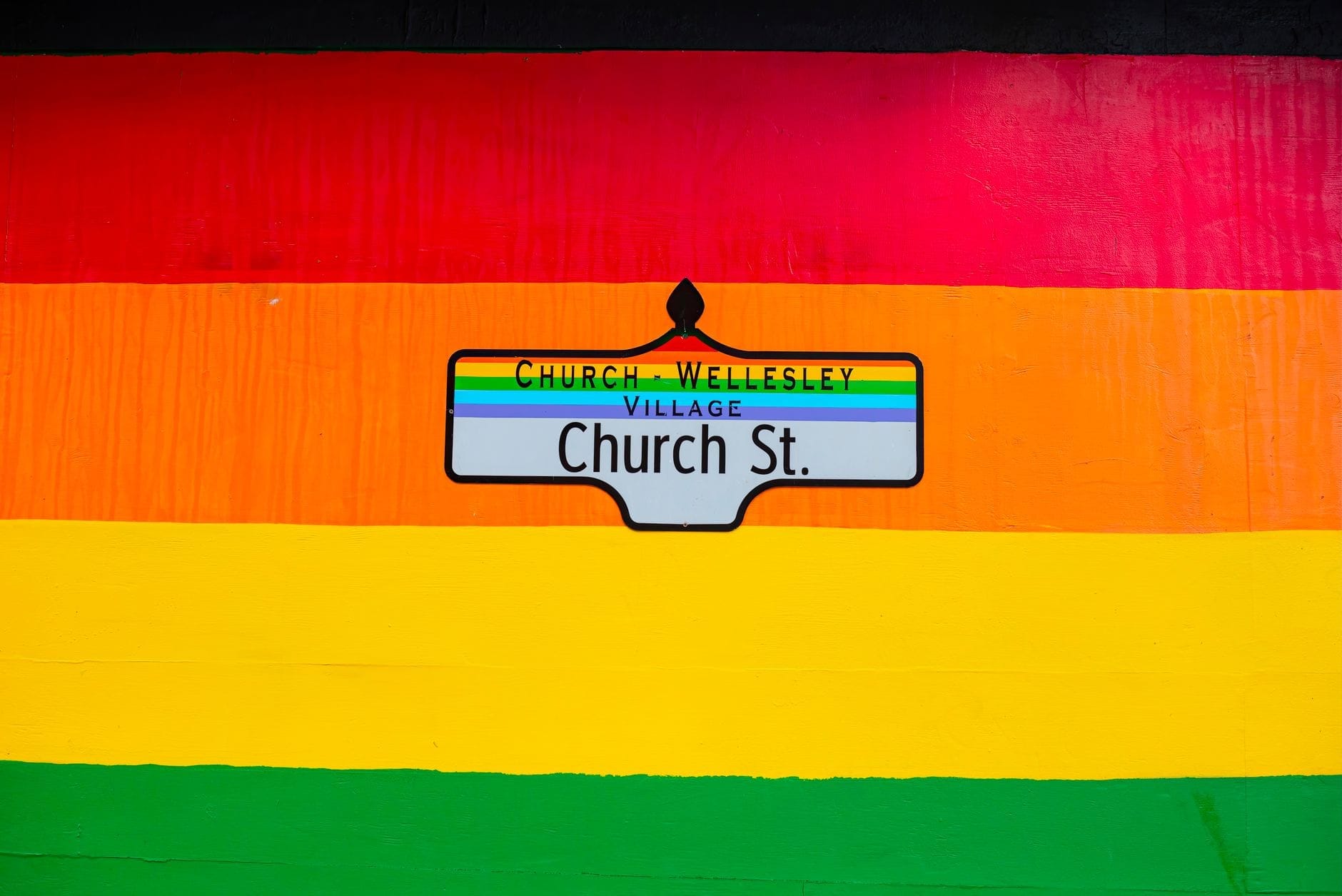
What Church-Wellesley Village Actually Is
Church-Wellesley Village is not a ticketed attraction or a managed precinct with opening hours. It is a living neighbourhood: a stretch of city blocks in downtown Toronto that has functioned as the core of LGBTQ+ life in Canada's most populous city for decades. The commercial heart runs along Church Street, roughly from Wellesley Street East south to Alexander Street, with the broader area extending north toward Charles Street. Rainbow crosswalks mark the intersections, and the streetscape gives way to a dense mix of bars, restaurants, cafes, community organizations, bookshops, and independent retailers — most with Pride flags year-round.
The neighbourhood's official name is Church and Wellesley, and it appears in civic and tourism literature under both that name and "the Village." It sits inside the broader Downtown Toronto area, close enough to Yonge and Bloor that first-time visitors sometimes drift into it without realizing — and then find themselves staying longer than planned.
ℹ️ Good to know
Getting here is straightforward: take TTC Line 1 to Wellesley Station, walk east along Wellesley Street East for about two minutes, and you are at the centre of the Village. Street parking exists but is limited; transit is the practical choice.
A Neighbourhood Shaped by Resistance
Understanding Church-Wellesley requires knowing February 5, 1981. On that night, Toronto police conducted coordinated raids on four bathhouses in the city, arresting close to 300 men. The raids — the largest mass arrest in Canada since the Second World War — provoked immediate protests in the streets of the Village and are widely credited with galvanizing Toronto's gay and lesbian community into organized political action. Within years, the neighbourhood had become not just a social space but a political one, with community organizations, legal advocates, and eventually elected officials reshaping city policy on LGBTQ+ issues.
That history is embedded in the physical fabric of the Village. The 519 Community Centre, located at 519 Church Street, was established as a formal city-funded resource for LGBTQ+ communities and continues to operate today as a drop-in centre, event space, and advocacy hub. Walking past it, even on a quiet Tuesday, you see a steady flow of people using it as exactly that: a community resource, not a tourist stop.
Toronto's LGBTQ+ history did not begin in 1981, but the bathhouse raids mark the most visible turning point in how the community organized itself in this city. For deeper context on how this neighbourhood fits into the broader story of Toronto's multicultural identity, the guide to Toronto's multicultural neighbourhoods provides useful background.
Tickets & tours
Live prices and dates from our booking partner. If you book, we may earn a commission at no extra cost to you.
Toronto Old Town: Dark Side Exploration Game and Tour
From 12 €Instant confirmationFree cancellationLEGOLAND Discovery Centre Toronto tickets
From 16 €Instant confirmationFree cancellationToronto 'Little Canada' entrance tickets
From 27 €Instant confirmationFree cancellationNiagara Falls evening tour with boat, dinner and Illumination Tower
From 77 €Instant confirmationFree cancellation
The Village at Different Times of Day
Church Street reads differently depending on when you arrive. On a weekday morning, it is quiet in the way that most urban commercial streets are: coffee shops opening shutters, delivery trucks idling, regulars walking dogs along sidewalks lined with planters. The rainbow crosswalks at Church and Wellesley are at their most visible in low morning light, the paint catching the sun cleanly before foot traffic dulls it.
By afternoon, the patios fill. Several bars along Church Street operate open terraces that become social spaces from early afternoon onward on warm days. This is when the neighbourhood feels most like a neighbourhood: conversation-heavy, unhurried, locals rather than crowds. The side streets, particularly around Alexander Street, have a residential calm that contrasts with the main strip.
After dark, the character shifts again. The Village has a compact but well-established bar and club scene, with venues ranging from low-key cocktail bars to high-energy dance floors. Thursday through Saturday evenings draw the largest crowds, with the strip getting noticeably loud after 10 p.m. If noise, crowds, and late-night energy are not your preference, a daytime or early-evening visit shows you a different, equally authentic side of the neighbourhood.
💡 Local tip
For the most relaxed experience of the Village's character, visit on a weekday afternoon in late spring or early September. The patios are occupied but not packed, the light is good for photography, and you can walk the entire main strip without navigating crowds.
Pride Toronto and the Festival Season
Pride Toronto is the annual event that transforms Church-Wellesley Village from a neighbourhood into something closer to a festival ground. Held in June each year, it is one of the largest Pride events in North America, drawing participants from across Canada and internationally. The final weekend features a parade route along Bloor and Yonge streets, but the Village itself hosts programming, performances, and street parties throughout the multi-week festival period.
During Pride, Church Street is closed to vehicles and filled with stages, vendors, and people. The neighbourhood's usual capacity is tested significantly — local bars report their busiest days of the year, and accommodation in the surrounding area books out months in advance. If your goal is the full Pride experience, plan ahead and accept that the Village during festival week is a fundamentally different place than it is on an ordinary July Tuesday.
Outside of Pride month, the Village still hosts smaller events throughout the year. Community film screenings, fundraising nights, and neighbourhood markets appear on The 519's event calendar. The Christmas season brings modest lighting installations along Church Street, and the village retains social energy year-round — it does not go dormant in winter the way some tourist-facing areas do.
⚠️ What to skip
Pride weekend accommodation in the Village and surrounding downtown Toronto fills early. If you are planning to attend Pride Toronto, book your accommodation at least three to four months ahead. Exact Pride dates vary each year; check the official Pride Toronto website for current scheduling.
Walking the Village: What to Look For
A walk through Church-Wellesley takes less than twenty minutes end-to-end if you move at pace, but the neighbourhood rewards slower movement. The ground-level storefronts along Church Street are dense and varied: sex-positive bookshops sitting beside brunch spots, community health clinics beside drag merchandise stores. The visual texture of the Village is deliberately expressive — murals, flag displays, community notice boards layered with event posters.
The intersection of Church and Wellesley is the functional centre. The rainbow crosswalks here have become one of the most photographed spots in this part of the city. Directly around the intersection you find several of the neighbourhood's most established bars, along with the benches and planters that make it a natural gathering point at most hours.
Heading north along Church Street toward Charles Street takes you past a quieter stretch with more residential character. From here, you are a short walk from the Yonge and Bloor intersection and the broader shopping and dining options of the Yorkville area, if you want to extend your afternoon.
If you are building a longer itinerary around the Village, it pairs naturally with a visit to the Royal Ontario Museum, about a 15-minute walk north, or with an evening that continues south toward the Entertainment District.
Practical Information for Visitors
The Village is a public urban neighbourhood and free to walk at any hour. There are no gates, no admission, and no formal visitor infrastructure. The footprint is compact enough that you do not need a map after a few minutes of orientation — Church Street is the spine and everything branches from it.
Most bars and clubs along Church Street operate according to Ontario's standard licensed hours, with last call in the early morning. Restaurants along the strip tend to keep daytime and evening service, with many opening for brunch on weekends. Accessibility varies significantly by venue: the sidewalks on Church Street are generally manageable, but individual bars and restaurants range from fully step-free to having entry stairs. Verify with specific venues if step-free access is a requirement.
Toronto's currency is the Canadian dollar (CAD). Prices in bars and restaurants in the Village are broadly comparable to downtown Toronto averages, which are on the higher side relative to other Canadian cities. For a general sense of how to manage costs in Toronto, the Toronto on a budget guide covers practical cost-saving approaches across the city.
Photography in the public streetscape is unregulated, and the rainbow crosswalks and murals are popular subjects. Be conscious of photographing individuals, particularly in or around bar entrances at night — the neighbourhood values its reputation as a safe, judgment-free space, and that extends to how visitors behave with cameras.
Who Will Get the Most Out of This Neighbourhood
Church-Wellesley Village is particularly meaningful for LGBTQ+ travellers, for whom visiting a place with this kind of established community history carries weight that goes beyond sightseeing. It is also rewarding for anyone interested in urban social history, Canadian civil rights history, or the relationship between community organizing and urban space. Visitors who enjoy neighbourhood exploration rather than single-attraction tourism will find it suits the same rhythm as other walkable Toronto neighbourhoods.
Travellers who are primarily looking for a nightlife destination will find a legitimate and active bar scene. It is not the largest nightlife strip in Toronto — the Entertainment District has more volume — but it has a character and consistency that makes it worth a dedicated evening.
Visitors who find loud, crowded nightlife unappealing and have no particular interest in the neighbourhood's cultural or historical context may find the daytime version pleasant but not distinctive enough to merit a special trip. In that case, it is best treated as a stop within a broader downtown walk rather than a standalone destination.
Insider Tips
- The 519 Community Centre at 519 Church Street hosts free community events open to visitors, including film nights, drop-in programs, and seasonal gatherings. Check their calendar before your visit — it is a genuine window into community life rather than a curated tourist experience.
- The side streets off Church, particularly around Alexander and Maitland streets, have quieter patios and smaller bars that are far less crowded than the main strip on weekend nights. If the main drag feels overwhelming, duck one block east or west.
- Rainbow crosswalk photography is best early on weekend mornings before foot traffic and before direct midday sun flattens the colours. The intersection of Church and Wellesley is where the most complete crosswalk installations are.
- If you are visiting during Pride month but not on the main parade weekend, the weekday programming at local venues tends to be more intimate and easier to navigate than the weekend crowd events.
- The Village is well-connected to downtown but not directly on the tourist trail between the CN Tower and the waterfront. Take TTC Line 1 to Wellesley rather than walking north from Union Station — the walk is longer than it looks on a map.
Who Is Church-Wellesley Village (Gay Village) For?
- LGBTQ+ travellers looking for a neighbourhood with genuine community history and active social life
- Nightlife-seekers who want something with personality rather than a generic bar strip
- Urban history and civil rights enthusiasts interested in how Toronto's LGBTQ+ community organized itself
- Pride Toronto festival attendees who want to understand the neighbourhood beyond the main parade route
- Curious walkers building a broader downtown Toronto itinerary that includes culturally significant neighbourhoods
Nearby Attractions
Other things to see while in Downtown Toronto:
- Allan Gardens Conservatory
Allan Gardens Conservatory is a free, year-round botanical conservatory at 160 Gerrard Street East in downtown Toronto. Housed in six glass display houses anchored by a 1910 Edwardian Palm House, it holds about 1,500 m² of tropical palms, cacti, orchids, and seasonal blooms. One of the oldest parks in Toronto, it remains one of the city's most underrated green spaces.
- Art Gallery of Ontario
The Art Gallery of Ontario is one of North America's largest art museums, housing over 90,000 works inside a landmark Frank Gehry-renovated building in downtown Toronto. From Indigenous Canadian art to European masters and contemporary photography, the AGO rewards focused visitors and casual explorers alike.
- Brookfield Place (Allen Lambert Galleria)
The Allen Lambert Galleria inside Brookfield Place is a free, publicly accessible arcade designed by architect Santiago Calatrava between 1987 and 1992. Its arching steel-and-glass canopy, rising between two of downtown Toronto's tallest towers, is one of the most impressive interior spaces in Canada.
- Campbell House Museum
Built in 1822 for Upper Canada's Chief Justice, Campbell House Museum is the oldest surviving residence from the original Town of York. Moved to its current downtown corner in 1972 and opened as a museum in 1974, it offers an intimate, unhurried window into early colonial Toronto — a sharp contrast to the glass towers surrounding it.
Planning a trip? Discover personalized activities with the Nomado app.