Bloor-Yorkville Mink Mile: Toronto's Answer to Fifth Avenue
The Mink Mile is Toronto's most prestigious shopping corridor, stretching along Bloor Street West between Yonge Street and Avenue Road in the Yorkville neighbourhood. Home to flagship luxury boutiques, high-end restaurants, and polished streetscapes, it offers a window into Toronto's wealthiest consumer culture — free to walk, endlessly interesting to observe.
Quick Facts
- Location
- Bloor Street West between Yonge St and Avenue Rd, Yorkville, Toronto
- Getting There
- Yonge-Bloor Station (TTC Line 1 & Line 2); Bay Station (Line 2)
- Time Needed
- 1–3 hours for a walk-through; half a day if shopping or dining
- Cost
- Free to walk; spending is entirely purchase-based (CAD)
- Best for
- Luxury shoppers, window browsers, architecture admirers, fashion watchers
- Official website
- www.bloor-yorkville.com
What Is the Mink Mile?
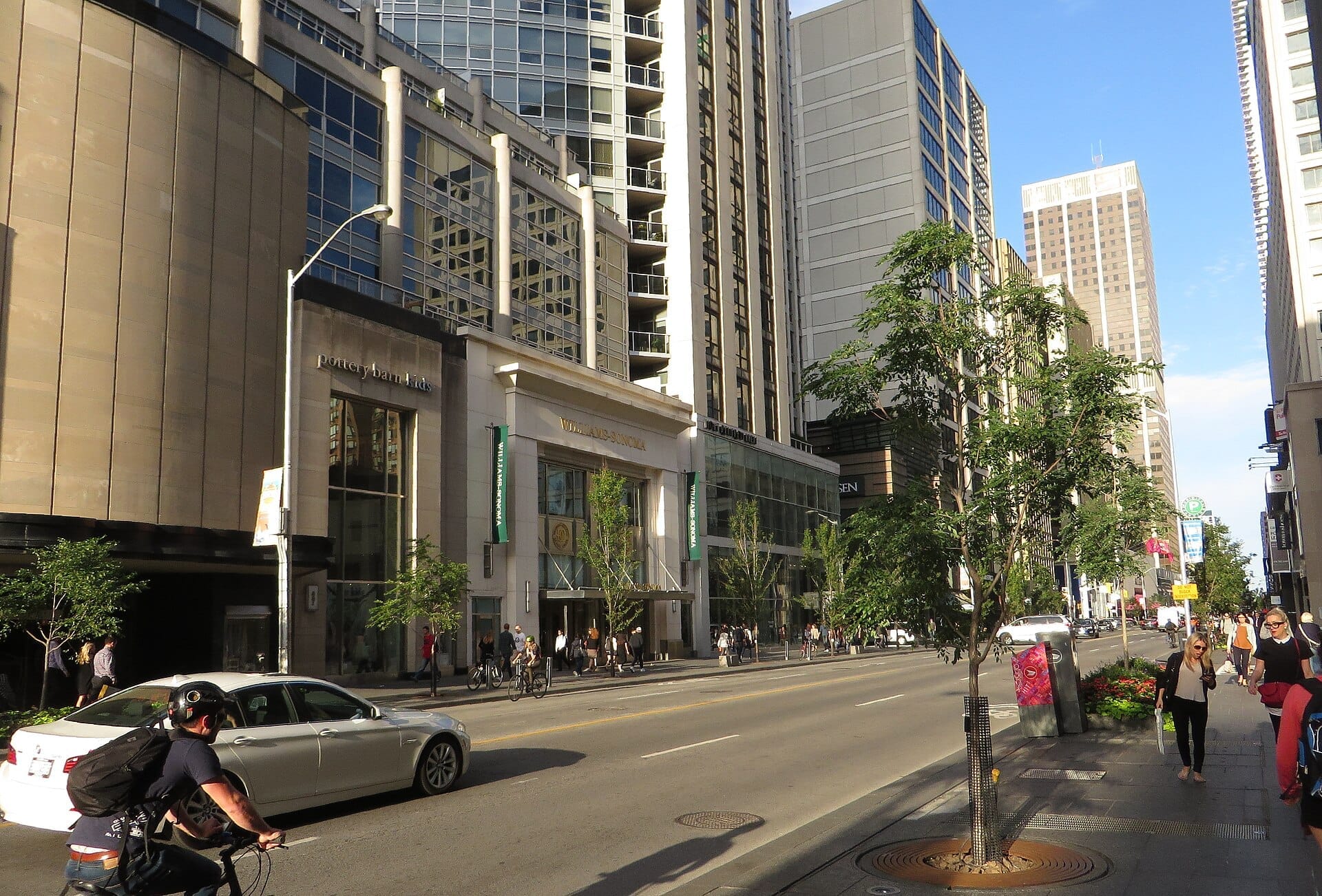
The Mink Mile is the informal name for the stretch of Bloor Street West running between Yonge Street and Avenue Road in Toronto's Yorkville neighbourhood. It is one of the most concentrated strips of luxury retail in North America, regularly compared to New York's Fifth Avenue, Chicago's Magnificent Mile, and Beverly Hills' Rodeo Drive. The name itself carries a certain self-aware grandiosity: it signals fur coats, designer labels, and serious money — and the street largely delivers on that promise.
Flagship stores from Hermès, Louis Vuitton, Chanel, Burberry, Tiffany, Holt Renfrew, and dozens of other international luxury brands line both sides of the street. The storefronts are polished and deliberate, each one designed to project calm exclusivity. Unlike some luxury districts that feel hermetically sealed, the Mink Mile operates on a regular city sidewalk, which means anyone can walk it, observe it, and absorb its particular atmosphere without spending a cent.
ℹ️ Good to know
The Mink Mile is a public street — there is no admission fee, no gate, and no dress code to simply walk through. All costs are optional and purchase-based.
The Neighbourhood Context: Yorkville Then and Now
Yorkville's transformation from a countercultural bohemian village to one of Toronto's most expensive postal codes is one of the city's defining stories. In the 1960s, the neighbourhood was a focal point of Toronto's folk and protest music scene — Joni Mitchell, Neil Young, and Gordon Lightfoot all played small clubs here in their early careers. The area's cheap rents attracted artists, students, and idealists.
By the 1980s and 1990s, rising real estate values had displaced most of that creative energy, replaced by galleries, luxury hotels, and eventually the branded retail corridor that exists today. The area's Victorian-era laneways and low-rise heritage buildings still survive in pockets just north of Bloor — particularly along Yorkville Avenue and Hazelton Avenue — giving the district a more layered character than a purely modern luxury mall. That contrast between the polished Bloor Street frontage and the quieter, older streets one block north is part of what makes the area worth exploring on foot.
Yorkville sits directly adjacent to the Royal Ontario Museum at the western edge and is a short walk from The Annex, Toronto's historic university neighbourhood. This proximity makes the Mink Mile a natural stop within a broader midtown itinerary.
Tickets & tours
Live prices and dates from our booking partner. If you book, we may earn a commission at no extra cost to you.
Toronto Old Town: Dark Side Exploration Game and Tour
From 12 €Instant confirmationFree cancellationLEGOLAND Discovery Centre Toronto tickets
From 16 €Instant confirmationFree cancellationToronto 'Little Canada' entrance tickets
From 27 €Instant confirmationFree cancellationNiagara Falls evening tour with boat, dinner and Illumination Tower
From 77 €Instant confirmationFree cancellation
What a Walk Along the Mink Mile Actually Feels Like
Start at the eastern end, stepping out of Yonge-Bloor Station onto Bloor Street. The shift in register is immediate. The sidewalk is wider and better maintained than most of Toronto's commercial streets. The storefronts are taller and quieter. There is less signage competing for attention, and the ambient noise from street traffic is absorbed by the architecture and materials around you.
Moving west, you pass the Holt Renfrew flagship — a multi-floor anchor store that anchors the strip in much the way a department store would anchor a mall, except that the surrounding streets are themselves the connective tissue. The scent of perfume drifts from open doorways. Security staff stand at entrances with calm, unhurried posture. Window displays change seasonally and are consistently among the most elaborate in the city, with lighting and staging that rivals theatrical productions.
The middle section of the strip, between Bay Street and Bellair Street, is where retail density peaks. Narrow boutiques and double-height flagship stores sit side by side. The sidewalks here tend to be busier, particularly on weekend afternoons. Shoppers move slowly and deliberately; there is a particular unhurried quality to the crowd that distinguishes the Mink Mile from, say, the frantic pace of Yonge-Dundas Square a few blocks south.
Reaching Avenue Road at the western end, the commercial pressure relaxes slightly. The intersection marks a natural stopping point before Bloor continues west into a different, more residential character. From here, it is a five-minute walk east to the Royal Ontario Museum's dramatic crystal extension or south into Bloor Street's mid-range commercial zone.
💡 Local tip
For a quieter version of the Yorkville experience, turn off Bloor at Bellair Street and walk north one block to Yorkville Avenue. The scale changes completely: tree-lined, narrower, with independent cafés and gallery spaces tucked into heritage buildings.
How the Strip Changes by Time of Day
Early mornings on the Mink Mile belong to commuters and dog walkers. Most shops don't open before 10 or 11 a.m., and the street has a different quality in those hours: clean, emptied out, the window displays lit but unobserved. The architecture reads better in morning light, particularly the glass and stone facades that pick up the eastern sun cleanly.
Midday on a weekday is arguably the best time for browsing without crowds. Retail staff are attentive but not overwhelmed. Café patios along the parallel side streets fill with a mix of local professionals and visitors. On weekend afternoons, particularly Saturdays between noon and 4 p.m., the street is at its most crowded and its most theatrical — this is when the people-watching is richest, and when the contrast between window browsers and actual customers becomes most visible.
Evenings shift the energy toward dining. Several of Toronto's most expensive and well-regarded restaurants operate in Yorkville and on the streets directly adjacent to Bloor, and by 7 p.m. on a Friday or Saturday the foot traffic transforms. The storefronts go dark, but the restaurant patios and hotel bars remain active well into the night.
Practical Walkthrough: Getting There and Moving Around
The eastern anchor of the Mink Mile is Yonge-Bloor Station, Toronto's busiest subway interchange, where TTC Line 1 (Yonge-University) and Line 2 (Bloor-Danforth) intersect. From Union Station in the downtown core, it is three stops north on Line 1, taking roughly five to seven minutes. From the station exit, you emerge directly onto Bloor Street at Yonge, the start of the luxury strip.
Bay Station (Line 2) sits near the midpoint of the strip, making it a useful entry point if you're approaching from the west. Bloor Street in this section has bike lanes, and the TTC and cycling infrastructure make the area straightforward to reach without a car. Street parking exists but is limited and expensive; driving is not recommended for a casual visit.
The strip itself is approximately 800 metres from end to end. A purposeful walk from Yonge to Avenue Road takes about 15 minutes. With stops — pausing at windows, entering stores, sitting at a café — allow at least 90 minutes to do it justice. For a full half-day that includes the side streets of Yorkville and a museum stop, three hours is more realistic.
⚠️ What to skip
Toronto winters are serious. From December through February, temperatures regularly drop below -10°C, and wind off the open intersections feels sharper here than in the protected underground PATH network. Dress in proper layers if visiting in winter — the strip is entirely outdoors.
The sidewalks along Bloor Street in this section are wide and generally well-maintained, with curb cuts at all major intersections and signalized crossings. Most of the flagship stores are step-free or have accessible entrances. Specific accessibility features within individual boutiques vary, so anyone with mobility requirements should confirm with individual stores in advance.
Beyond the Storefronts: What Else Is Worth Your Time
The Mink Mile is at its most interesting when you treat it as a gateway to the surrounding area rather than a destination in itself. The Royal Ontario Museum is a four-minute walk west along Bloor, its Daniel Libeskind-designed crystal addition impossible to miss. The Gardiner Museum, dedicated entirely to ceramic art, sits directly across from the ROM and is one of Toronto's most underappreciated cultural spaces.
For a considered afternoon, pair the strip with a visit to the Bata Shoe Museum one block west, which offers a surprising depth of social and fashion history. If the Mink Mile leaves you wanting more of Toronto's cultural institutions, the best museums in Toronto are heavily concentrated in this midtown corridor.
The Manulife Centre, a mixed-use complex just south of Bloor, contains a movie theatre and a range of mid-scale dining options that offer relief from the relentlessly high-end pricing of the immediate area. Yorkville Village (formerly Hazelton Lanes) is a small interior mall just north of Bloor with upscale fashion and a grocery store that is unusually pleasant for a city-centre shop.
Honest Assessment: Who This Is For and Who Should Look Elsewhere
The Mink Mile is genuinely impressive as a streetscape and as a window into a specific tier of consumer culture. If luxury retail is part of your travel interest — whether as a buyer, a browser, or simply someone curious about how cities perform wealth — this strip delivers clearly and without pretension about what it is.
Travelers looking for local character, affordable food, multicultural energy, or spontaneous discovery will find the Mink Mile thin. It is corporate, curated, and international in the way all luxury retail districts are. The brands here are the same brands you'd find in London, Paris, or Dubai. What is distinctly Torontonian is the context: the subway access, the proximity to great museums, the relative ease of mixing high and low on the same afternoon.
If you want a neighbourhood with more texture, Kensington Market is 20 minutes southwest by subway and operates in a completely different register. For shopping that feels rooted in Toronto's particular character rather than global luxury, Queen Street West offers a better alternative.
Insider Tips
- The best people-watching happens on Saturday afternoons between noon and 3 p.m. Sit at any café patio with a sightline to Bloor Street and the crowd becomes its own entertainment.
- Walk one block north of Bloor to Yorkville Avenue for a completely different pace: quieter streets, heritage architecture, independent galleries, and coffee shops where you can actually get a seat.
- The Toronto International Film Festival uses several Yorkville hotels and venues as its headquarters in September — celebrity sightings around the Mink Mile during TIFF week are genuinely common, and the area has an unusual energy during that period.
- Holt Renfrew's café on the lower level is accessible without going through the main retail floors and serves as a reasonable (if pricy) mid-walk coffee stop that most visitors walking past the flagship never discover.
- If visiting in winter, note that the Mink Mile has no covered walkway or indoor connection between stores — the PATH underground network does not extend this far north. Plan your route to move between stores efficiently rather than lingering outside.
Who Is Bloor-Yorkville Mink Mile For?
- Luxury shoppers seeking flagship stores and personal shopping services
- Architecture and urban design enthusiasts interested in high-end retail streetscapes
- Fashion-focused travelers who want to compare Toronto's luxury market to other North American cities
- Visitors pairing a museum afternoon at the ROM or Gardiner with a neighbourhood walk
- Couples on a higher-budget city break looking for a polished dinner-and-stroll evening
Nearby Attractions
Other things to see while in Yorkville:
- Bata Shoe Museum
The Bata Shoe Museum on Bloor Street West houses nearly 15,000 shoes and artifacts spanning 4,500 years of human history. Housed in a striking building designed by Raymond Moriyama, it is one of Toronto's most distinctive and underrated cultural institutions — compact, thoughtful, and genuinely engaging for visitors who come with curiosity.
- Gardiner Museum
The Gardiner Museum at 111 Queen's Park is Canada's dedicated national ceramics museum, housing around 4,000 objects spanning Ancient Americas pottery, Chinese blue and white porcelain, European earthenware, and contemporary Canadian ceramics. Compact, focused, and genuinely undervisited, it rewards curiosity about craft and material culture in a way that few larger institutions can.
- Royal Ontario Museum
The Royal Ontario Museum holds roughly 18 million objects across natural history, world cultures, and art, all housed in a building that is itself worth studying. From the dinosaur galleries to Daniel Libeskind's angular Crystal addition, the ROM rewards a full half-day of attention.
Planning a trip? Discover personalized activities with the Nomado app.