Where to Stay in Toronto: Best Neighbourhoods & Hotels for Every Traveller
Toronto has dozens of distinct neighbourhoods, and choosing the right one to stay in makes a real difference to your trip. This guide breaks down the best areas by location, price range, transit access, and atmosphere — so you can book with confidence.
Tickets & tours
Live prices and dates from our booking partner. If you book, we may earn a commission at no extra cost to you.
TL;DR
- Downtown and the Union Station area offer the best transit access and proximity to major sights like the CN Tower and St. Lawrence Market.
- Yorkville is Toronto's main luxury hotel district, concentrated north of Bloor Street with upscale shopping and restaurant access.
- The Entertainment District suits night-out-focused trips; Harbourfront suits waterfront walks and island ferry access.
- You do not need a car to stay central — Toronto's TTC subway and streetcar network covers all the main visitor areas. See getting around Toronto for route details.
- Hotel prices peak in summer (June–August) and during major events — book at least 6–8 weeks ahead for central properties in those periods.
How Toronto's Neighbourhoods Are Organised
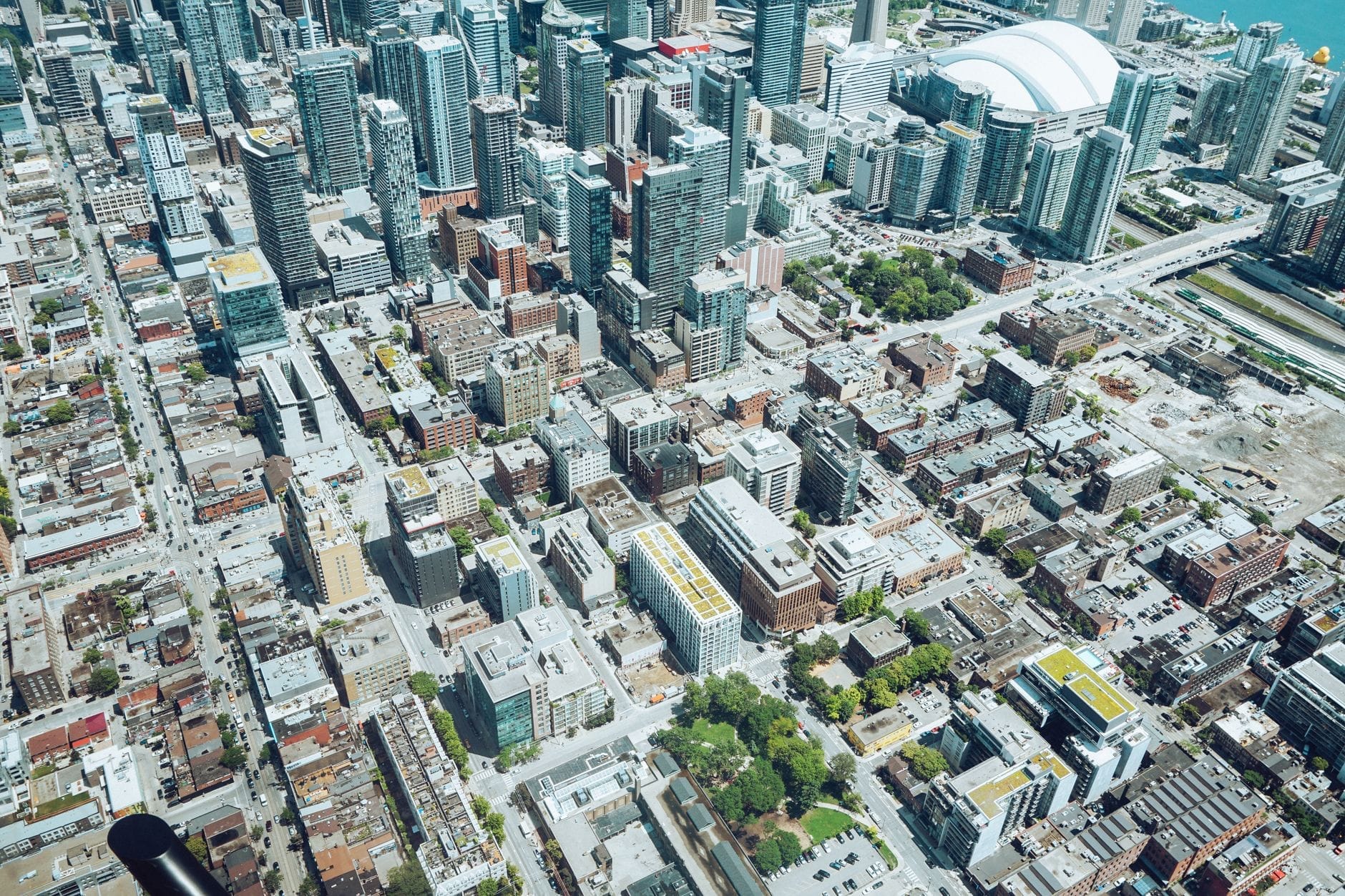
Toronto is a large city — about 630 km² with a city proper population of around 2.95 million — but for most visitors, the action concentrates in a relatively compact zone stretching from the waterfront north to Bloor Street, and from Spadina Avenue east to the Don River. Beyond that core, neighbourhoods like Leslieville, Greektown, and Scarborough reward longer stays but make less sense as a base for first-timers.
The city's transit backbone — TTC Lines 1 and 2 — run roughly north-south and east-west, intersecting at Bloor–Yonge station and St. George station. If your hotel sits within a few blocks of a subway stop, getting around Toronto without a car is genuinely easy. Neighbourhoods like Yorkville, the Entertainment District, and Downtown all qualify. Areas further east or west can feel more isolated unless you are comfortable with streetcars and buses.
ℹ️ Good to know
Toronto operates on Eastern Time (UTC-5 in winter, UTC-4 in summer). The currency is the Canadian dollar (CAD). Tipping 15–20% is standard practice in restaurants and taxis. Tap water is safe to drink throughout the city.
Downtown Toronto and the Union Station Area
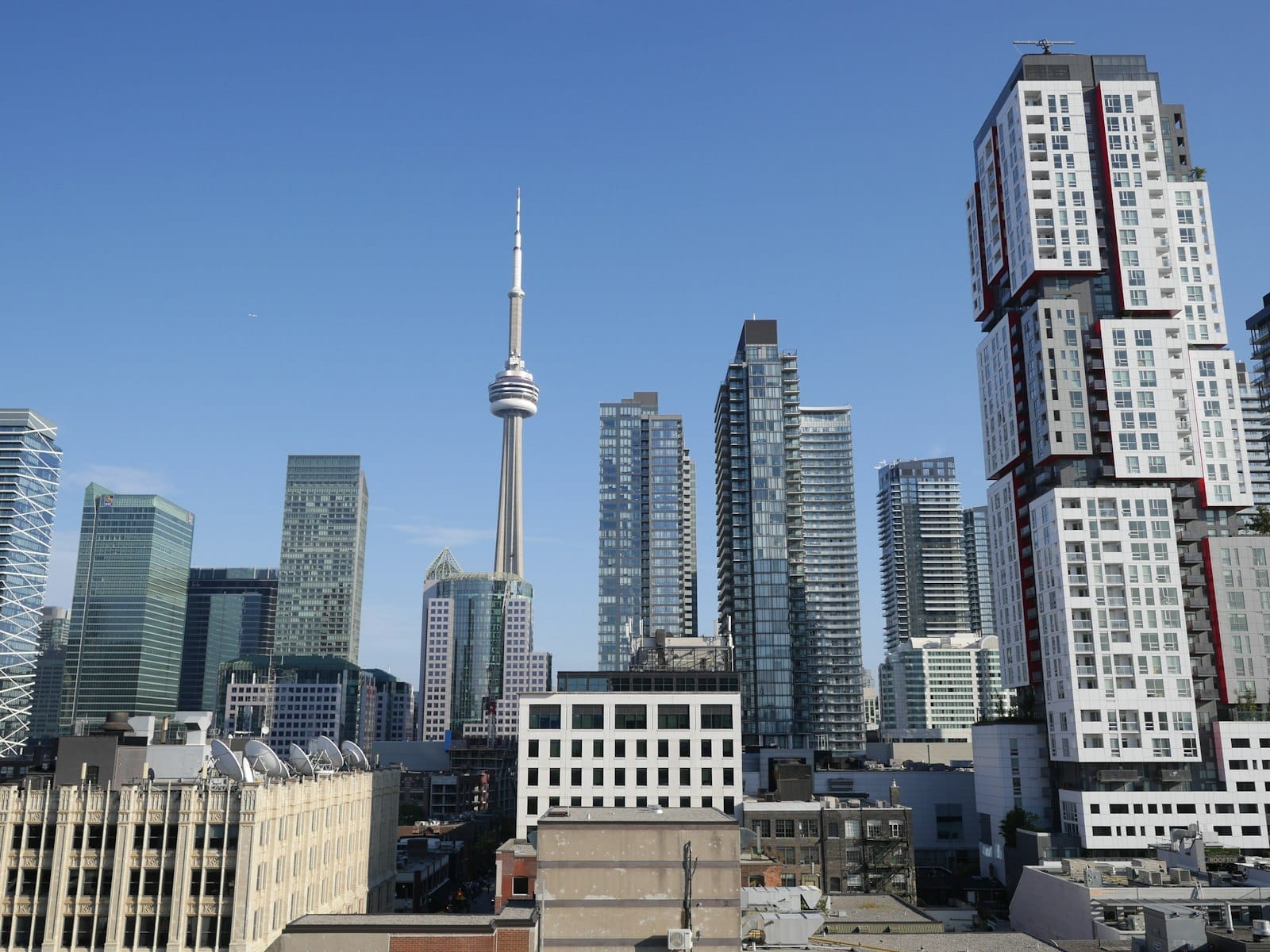
For most first-time visitors, Downtown Toronto is the default sensible choice. Union Station sits at the southern edge and connects GO Transit, the UP Express airport train (about 25 minutes to Pearson, with departures every 15 minutes in peak periods and every 30 minutes at some off-peak times), and TTC Lines 1 and 2. From here, you can walk to the CN Tower in under 10 minutes, reach the Distillery District in 15 minutes by streetcar, and access the waterfront ferry terminals on foot.
The hotel stock here ranges from large convention-oriented properties to independent boutiques. Expect mid-range prices of roughly CAD $180–280 per night for a decent double room outside of peak periods, rising to CAD $300+ during summer weekends and major events. The Financial District bleeds into this area, which means the atmosphere on weekday evenings can feel quieter than the Entertainment District a few blocks west — not a problem if you are here for sightseeing rather than nightlife.
One honest caveat: some streets immediately around Union Station feel very corporate and are not particularly atmospheric at night. If character matters to you, look at properties slightly east toward St. Lawrence or slightly west toward King Street, where there are more restaurants and independent businesses within a few minutes' walk.
Yorkville: Toronto's Luxury Hotel District
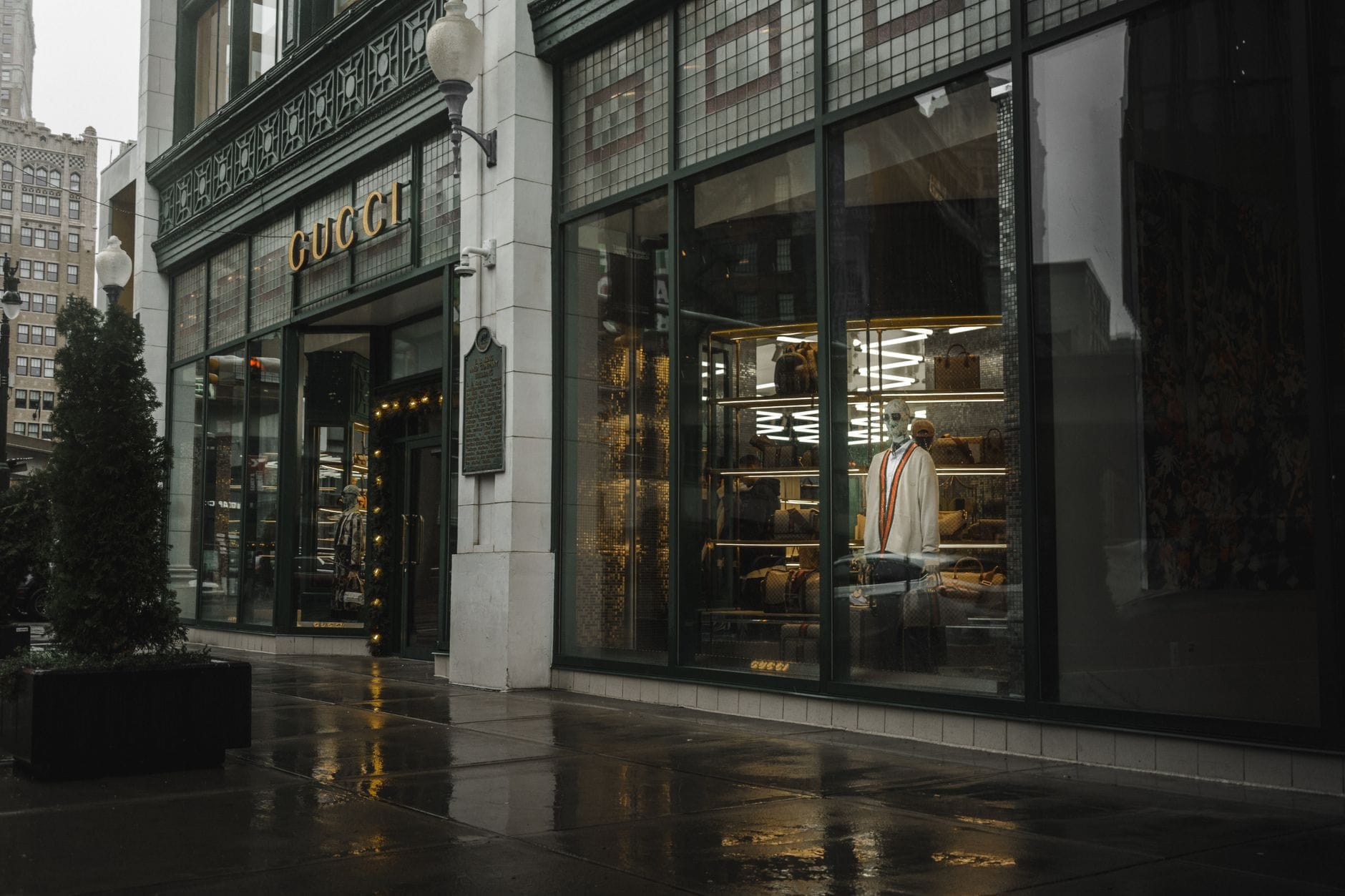
Yorkville, anchored around Bloor Street West between Bay and Avenue Road, is where most of Toronto's genuine luxury hotels concentrate. The neighbourhood sits directly above Bay station on Line 2 and near Museum and Bloor–Yonge stations on Line 1, giving fast subway access to the rest of the city. It is also the closest central neighbourhood to the Royal Ontario Museum, the Gardiner Museum, and the Art Gallery of Ontario (a short streetcar ride away on Dundas).
Expect nightly rates starting around CAD $300–400 at the upper mid-range properties, climbing to CAD $500–800+ at the flagship luxury hotels. The trade-off for paying these prices is quality: rooms tend to be larger, service standards are higher, and the neighbourhood itself is walkable, safe, and well-supplied with serious restaurants. Yorkville is a reasonable choice for couples, business travellers, and anyone attending galas or cultural events at the major museums nearby.
✨ Pro tip
During the Toronto International Film Festival (TIFF) in September, Yorkville and the Entertainment District are extremely congested and hotel prices spike significantly. If you are visiting for TIFF specifically, book 3–4 months ahead. If TIFF overlaps with your dates and you have no interest in it, consider delaying your trip by a week — or budget for higher rates.
Entertainment District and King West: Best for Nightlife
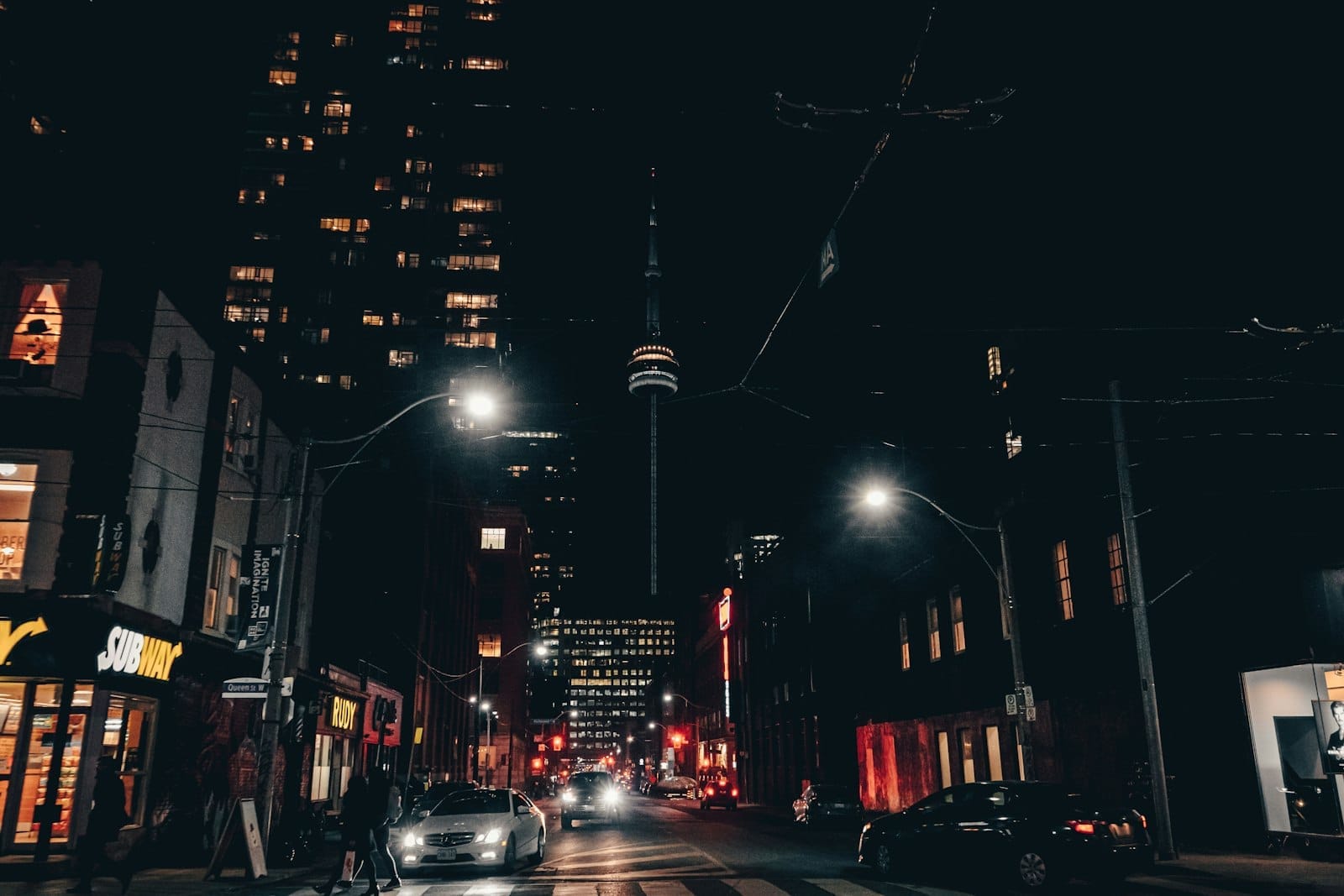
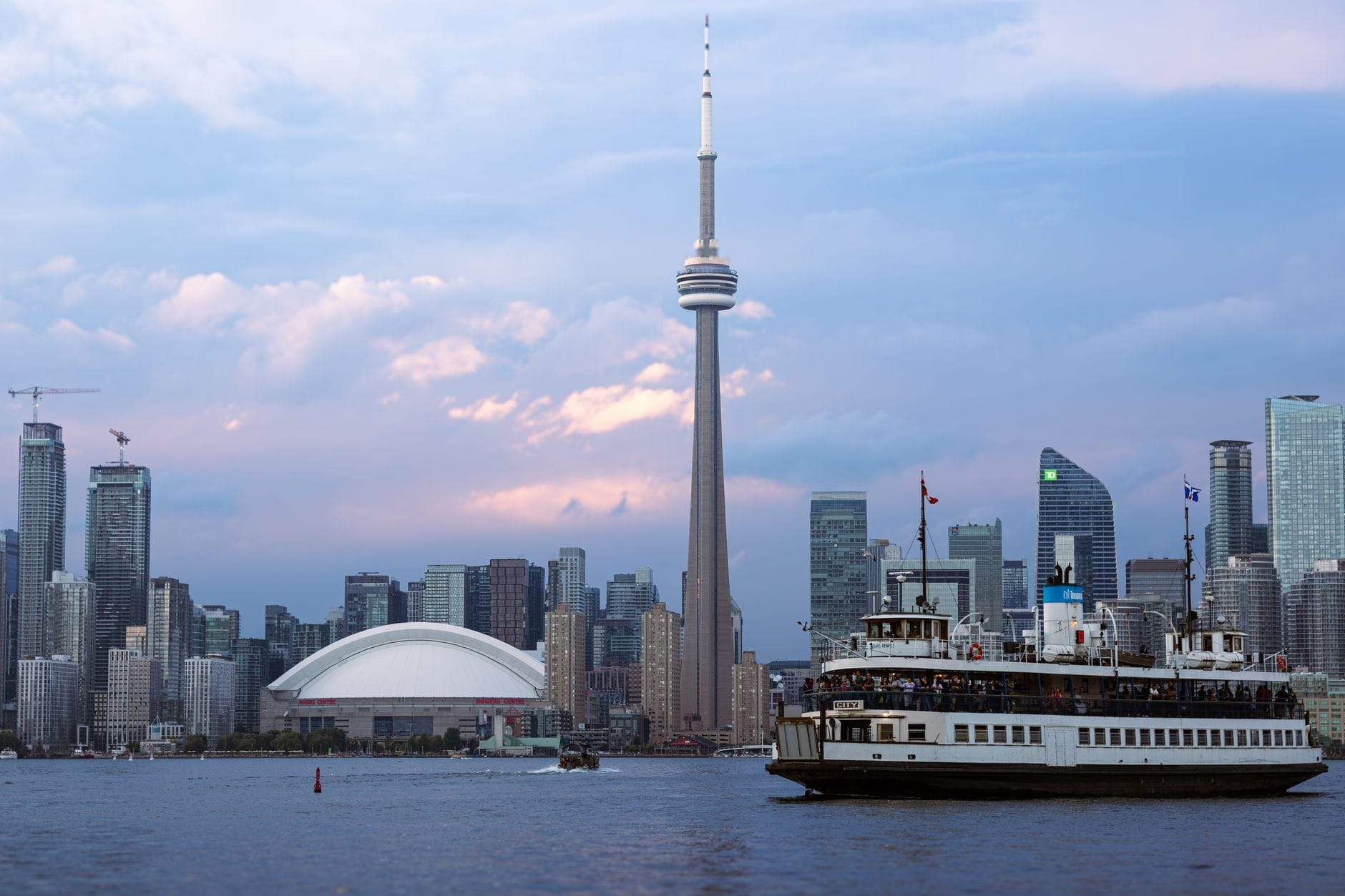
The Entertainment District runs along King Street West from Simcoe to Bathurst, containing the Rogers Centre, Scotiabank Arena, TIFF Bell Lightbox, the Royal Alexandra Theatre, and a dense concentration of restaurants and bars. This is the right base if you are attending a Raptors or Maple Leafs game, a major concert, or a theatre run — and if you want to walk back to your hotel afterward.
Hotels here skew toward contemporary mid-range and upper-mid-range. On non-event nights, the area can feel lively until late; on major event nights, the streets between Scotiabank Arena and the CN Tower are extremely crowded. If you are a light sleeper or travelling with young children, look at properties a block or two off King Street proper rather than directly on the main strip. Pricing is broadly similar to Downtown — CAD $180–300 mid-range, with premium spikes on event nights.
Harbourfront and the Waterfront: Lakeside Access
Staying near the waterfront puts you steps from the ferry terminals for the Toronto Islands, the Harbourfront Centre (which runs free and low-cost cultural programming year-round), and the Martin Goodman Trail for cycling and walking along the lake. The area has a genuinely different atmosphere from the Financial District — more open, quieter in the evenings, and better oriented toward outdoor activity.
The honest limitation here is that Harbourfront has fewer hotel options than Downtown or Yorkville, and the transit options are mostly streetcar or walk rather than subway. For summer visits focused on the waterfront and islands, it is an excellent pick. For winter visits where you plan to spend most of your time indoors at museums and restaurants, the lack of subway access becomes more noticeable.
Queen West and Kensington Market: Best for Independent Travellers
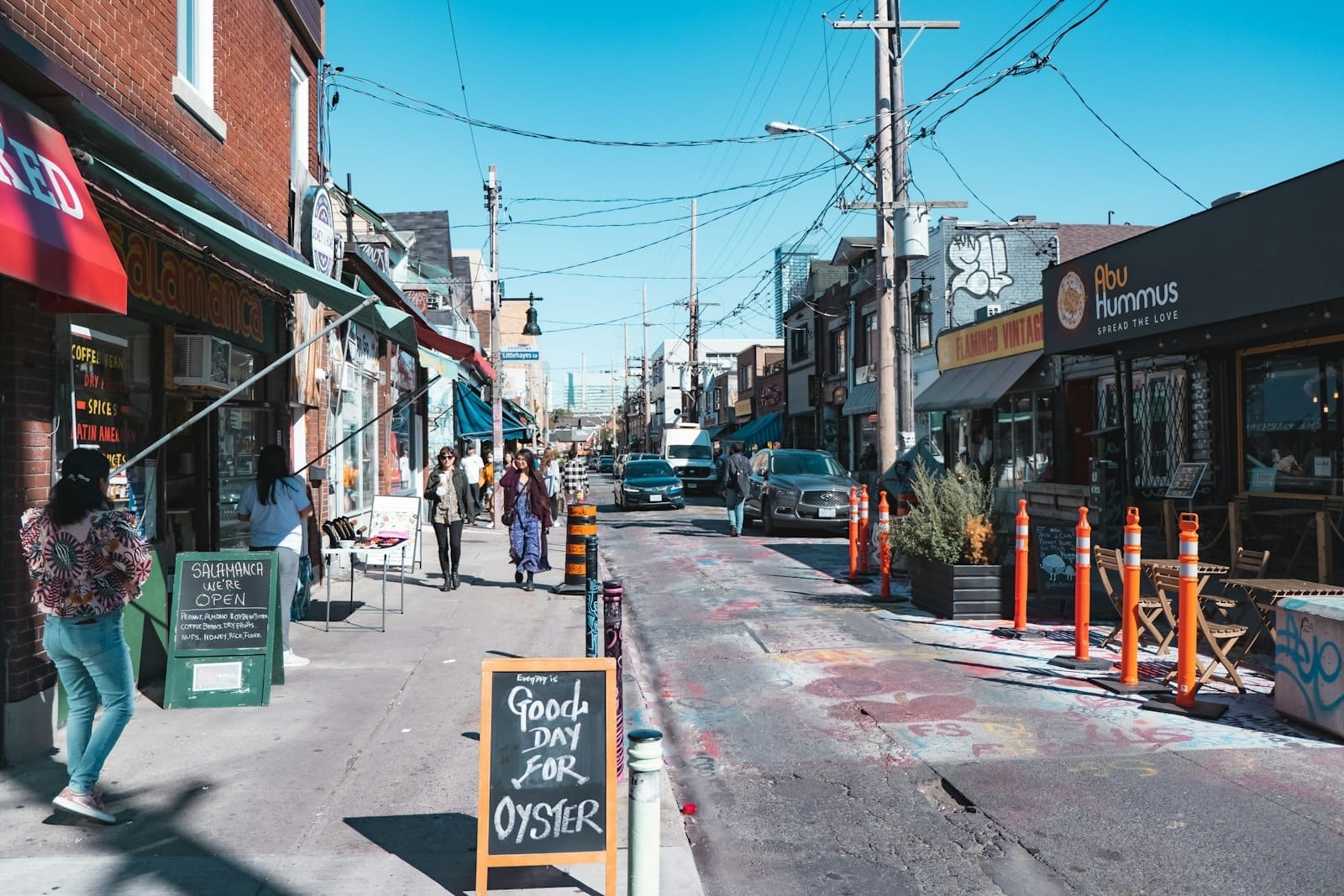
If you want to stay somewhere with a genuine neighbourhood feel rather than a hotel-district feel, Queen Street West and the stretch toward Kensington Market offer that. Independent restaurants, gallery spaces, vintage shops, and a population that is not predominantly tourists characterise this corridor. The 501 Queen streetcar runs the full length and connects to the subway at Osgoode station in about 10 minutes heading east.
Hotel options are sparser here — this area skews toward boutique properties, guesthouses, and short-term rentals. Rates can be competitive with Downtown (sometimes CAD $140–220 mid-range) but the quality range is wider. If you are specifically interested in Toronto's food and arts culture, proximity to Trinity Bellwoods Park and the Ossington strip adds real value to this location that is hard to replicate from Downtown.
⚠️ What to skip
Be careful about booking accommodation on the western end of Dundas Street West or certain blocks of Spadina Avenue south of College based solely on low prices. A few blocks in either direction can mean a noticeably different neighbourhood character. Read recent reviews carefully and cross-check the address on a map before confirming.
Practical Factors: Seasons, Prices, and Transport
Toronto's hotel demand follows a clear seasonal pattern. Summer (June to August) is the busiest and most expensive period, with July and August seeing the highest occupancy rates across central properties. Shoulder season in May–June and September–October offers better pricing and generally good weather — average highs around 18–24°C in those months. For more detail on when to come, see the best time to visit Toronto guide.
- Getting from Pearson Airport (YYZ) The UP Express train runs from Pearson to Union Station in about 25 minutes, every 15 minutes. Taxis and Uber are available from designated zones; trip times vary significantly with traffic. Budget around 45–75 minutes by taxi or rideshare during morning and evening rush hours.
- Getting from Billy Bishop Airport (YTZ) A short pedestrian tunnel connects to the mainland, where a complimentary shuttle runs to the Union Station area. Taxis and rideshare services are available at the mainland exit. Most downtown hotels are 10–20 minutes away.
- Getting around on the TTC A single TTC fare covers subway, streetcar, and bus with transfers. Presto card loads (reloadable smart card) give the best per-trip rate. Day passes and weekly passes are also available and worth considering for multi-day stays.
- Neighbourhood transit scores Downtown (Union area), Yorkville, and the Entertainment District all have excellent subway access. Harbourfront and Queen West depend more on streetcars. The Distillery District is best reached by streetcar (504 King) or a 20-minute walk from Union.
Toronto winters are genuinely cold — January highs average around -1 to -2°C with wind chill regularly pushing the perceived temperature lower. If you are visiting between December and February, proximity to the PATH underground network (connecting roughly 30 km of underground walkways through Downtown) is a practical asset worth factoring into your hotel choice. Properties above or immediately connected to PATH include several options in the Financial District and near Union Station. The PATH underground guide explains which sections cover which buildings.
- Book 6–8 weeks ahead for summer weekends and event-heavy periods (TIFF, Caribana, major concert runs at Budweiser Stage or Scotiabank Arena).
- Yorkville luxury rates are significantly higher Monday–Thursday than on weekends, since many guests are business travellers — weekend visitors can sometimes find better value.
- The Distillery District has very limited hotel stock directly in the district itself; most visitors staying nearby book on King Street East or in Old Town.
- If your trip includes a day on the Toronto Islands, a Harbourfront or Downtown hotel saves 30–40 minutes of transit per day versus staying in Yorkville or North York.
- For families, properties near the waterfront or Midtown (close to the ROM and Ontario Science Centre) often make more practical sense than staying deep in the Entertainment District, which is loud on Friday and Saturday nights.
FAQ
What is the best area to stay in Toronto for first-time visitors?
Downtown Toronto, roughly between Union Station and Dundas Street, is the most practical base for first-timers. It puts you within walking distance of the CN Tower, Ripley's Aquarium, the Distillery District by streetcar, and direct subway access to Yorkville and the museums. It also has the widest range of hotel prices and the best transit connections from both Toronto Pearson and Billy Bishop airports.
Are Toronto downtown hotels worth the price compared to staying further out?
For stays of 3 nights or fewer, yes — the time saved on transit adds up quickly, and you gain flexibility to cover more ground. For longer stays (5+ nights), splitting time between a central hotel and a neighbourhood guesthouse in Queen West or Leslieville can be a more interesting and better-value approach.
Which Toronto neighbourhood has the best luxury hotels?
Yorkville, concentrated around Bloor Street West between Bay and Avenue Road, is the clear centre of Toronto's luxury hotel market. It has the highest concentration of five-star and boutique luxury properties, and direct subway access on Line 2. The Entertainment District has some upscale options too, but the luxury tier is thinner there.
Is it safe to stay in Downtown Toronto?
The main visitor neighbourhoods — Downtown, Yorkville, Harbourfront, Entertainment District, and Queen West — are all considered safe for travellers by both local standards and common sense metrics. Like any major city, certain blocks warrant more attention at certain hours. Use the same awareness you would in any urban North American setting. The Distillery District, St. Lawrence Market area, and Harbourfront are particularly low-stress environments.
How far in advance should I book a Toronto hotel?
For travel in June, July, and August, book at least 6–8 weeks out for central properties at reasonable prices. For the Toronto International Film Festival (early-to-mid September) and major long weekends (Canada Day, Victoria Day, Labour Day), 3–4 months is not excessive for prime properties in Yorkville or the Entertainment District. Outside peak periods, 2–3 weeks is usually sufficient for Downtown and mid-range options.
Tickets & tours
Live prices and dates from our booking partner. If you book, we may earn a commission at no extra cost to you.
Planning a trip? Discover personalized activities with the Nomado app.