Roncesvalles Village: Toronto's Most Liveable Main Street
Roncesvalles Village, known locally as Roncy, is a roughly 1.7-kilometre stretch of independent businesses, cafés, Polish bakeries, and community life in west Toronto. It charges no admission, rewards slow exploration, and offers one of the city's most authentic neighbourhood experiences.
Quick Facts
- Location
- Roncesvalles Avenue, Toronto, ON (High Park neighbourhood, west Toronto)
- Getting There
- Dundas West Station (TTC Line 2 Bloor-Danforth); several TTC bus routes also serve the street
- Time Needed
- 1.5 to 3 hours for a thorough walk; longer if you stop for meals
- Cost
- Free to explore; costs depend on what you eat, drink, or buy
- Best for
- Slow walkers, food lovers, families, independent retail fans, and anyone wanting everyday Toronto rather than tourist-circuit Toronto
- Official website
- roncesvallesvillage.ca
What Roncesvalles Village Actually Is
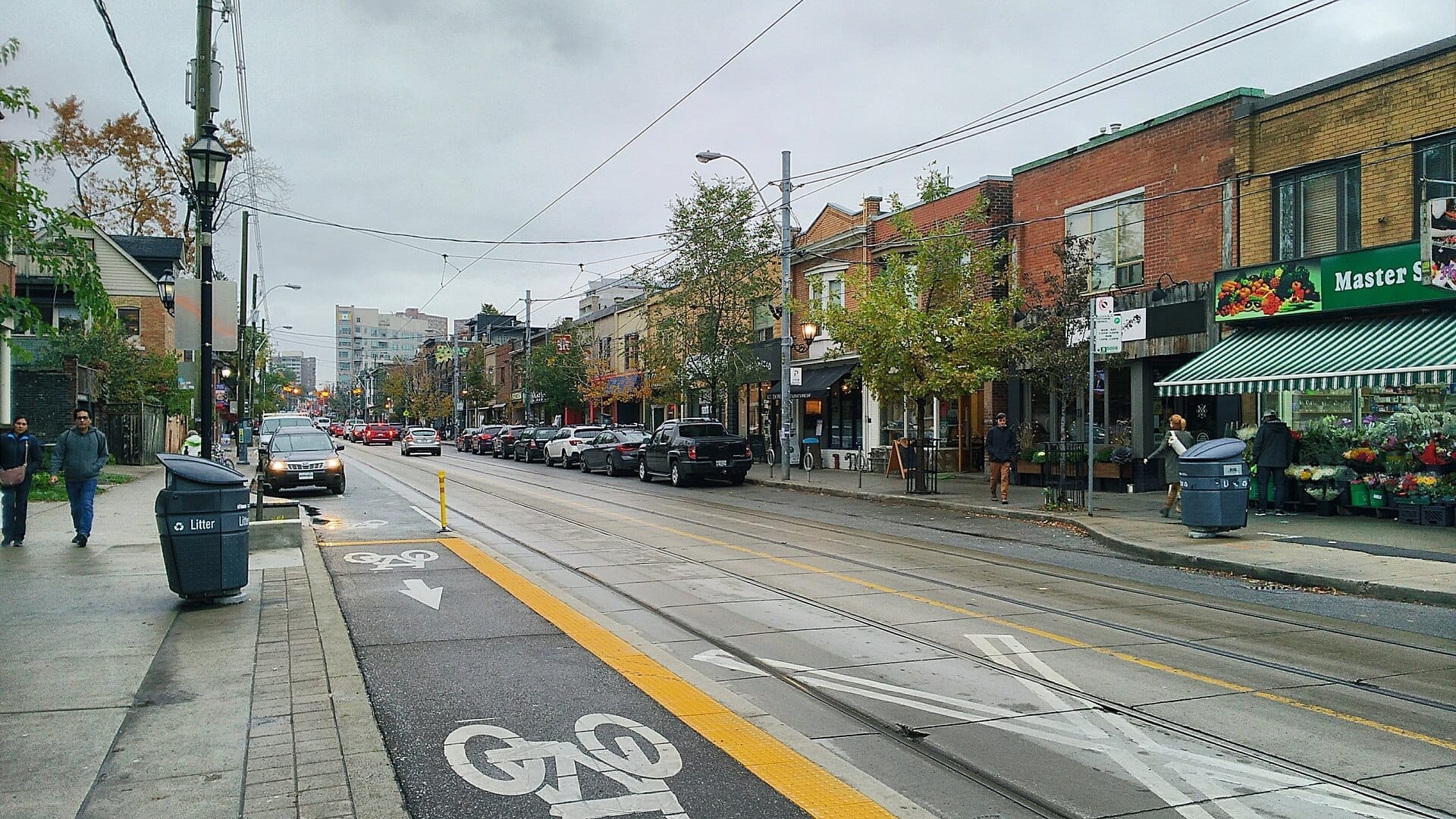
Roncesvalles Village is a neighbourhood commercial strip running roughly 1.7 kilometres along Roncesvalles Avenue in west Toronto, from the intersection of Queen Street West, King Street West and The Queensway up to Dundas Street West. It is not a park, a ticketed attraction, or a curated market: it is a functioning main street where people live, work, shop, and raise children. The official name comes from the Roncesvalles BIA (Business Improvement Area), and locals abbreviate it affectionately to Roncy or Roncy Village.
What sets the street apart from other Toronto neighbourhoods is its density of independent operators and the cohesion of its community. You will find almost no chain retail. Instead, the 1.7-kilometre corridor packs in Polish delis and bakeries, specialty bookshops, espresso bars, wine shops, yoga studios, children's clothing boutiques, and sit-down restaurants ranging from casual brunch spots to serious dinner destinations. The storefronts are mostly two- and three-storey brick buildings from the early twentieth century, giving the street a human scale that feels genuinely walkable rather than designed for it.
ℹ️ Good to know
Roncesvalles Avenue is free to visit at any hour. Individual businesses set their own hours; expect most cafés to open by 8am, restaurants by 11am or noon, and retail from roughly 10am. Hours vary by season, so check ahead for specific shops.
The Polish Heritage Layer
Toronto's west end received a large wave of Polish immigration after World War II, and Roncesvalles became the centre of that community. The Polish presence remains tangible today, not as a heritage performance but as functioning everyday life. Bakeries such as Benna’s Bakery & Deli and Granowska’s Bakery have long sold fresh rye bread and poppy-seed rolls. The Polish Combatants' Association hall stands on the street. The Parish of St. Casimir, a Roman Catholic church serving the Polish community, anchors the southern section of the avenue and holds services in Polish.
The street has diversified considerably since the 1990s, with South Asian, East Asian, Latin American, and Middle Eastern businesses now sharing space alongside the Polish institutions. That layering is visible in a single block: a pierogi restaurant next to a Peruvian café next to a Japanese grocery. The BIA name references a battle site in northern Spain, a reminder that the avenue's name itself predates the Polish settlement by decades, drawn from early nineteenth-century British military history.
The neighbourhood fits naturally into a broader exploration of Toronto's multicultural west end. If you want to understand how the city's immigrant communities have shaped individual streets, pairing Roncy with a visit to Kensington Market or Little Italy makes a coherent half-day.
Tickets & tours
Live prices and dates from our booking partner. If you book, we may earn a commission at no extra cost to you.
Toronto Old Town: Dark Side Exploration Game and Tour
From 12 €Instant confirmationFree cancellationLEGOLAND Discovery Centre Toronto tickets
From 16 €Instant confirmationFree cancellationToronto 'Little Canada' entrance tickets
From 27 €Instant confirmationFree cancellationNiagara Falls evening tour with boat, dinner and Illumination Tower
From 77 €Instant confirmationFree cancellation
How the Street Changes Through the Day
Early mornings on Roncesvalles have a particular quality. Before 9am the sidewalks belong to dog walkers, parents pushing strollers, and locals picking up bread and coffee before work. Café windows steam up. The smell of fresh baking drifts out of the Polish bakeries. The pace is unhurried in a way that disappears by mid-morning.
Weekend mornings between 9am and noon are the most active period. Brunch lineups form outside popular spots. The Sorauren Farmers’ Market, which operates seasonally on Mondays in nearby Sorauren Park, draws a dense crowd of regulars a short walk east of the strip. This is when the street feels most like a village in the literal sense: people running into neighbours, kids on cargo bikes, long conversations on the sidewalk.
Weekday afternoons are the quietest and arguably the best time to browse shops or sit in a café without competition for a seat. By early evening the street fills again as people arrive for dinner, and the restaurant patios (in warm months) stay active until around 10pm. The nightlife here is low-key compared to King West or Queen West: wine bars and neighbourhood restaurants rather than clubs.
💡 Local tip
If you want the nearby Sorauren Farmers’ Market, check its official information channels for current seasonal dates before visiting. It typically runs on Monday afternoons from late spring through autumn, but hours and dates shift year to year.
Getting There and Moving Around
The most convenient TTC access is Dundas West Station on Line 2 (Bloor-Danforth), which puts you at the northern end of the strip. From there, the walk south covers the full length of the avenue in about 20 minutes at an easy pace. Streetcars on Roncesvalles Avenue and connecting routes on Queen Street also serve the area if you are coming from elsewhere in the city.
If you are combining Roncesvalles with High Park, the two are directly connected: Roncesvalles Avenue feeds into the park's eastern edge, and the walk between the two is short. Many visitors do both in a single morning, particularly in late April when High Park's cherry blossoms are in bloom.
Street parking exists but fills quickly on weekend mornings. Cycling is practical: there are shared-lane markings, nearby bike routes such as the Fermanagh bike lane, and ample bike parking along the strip. The neighbourhood is entirely flat, making it accessible for strollers, wheelchairs, and anyone who prefers level ground. Dundas West Station itself has an elevator, and the street-level businesses are mostly step-free or have minimal thresholds, though individual accessibility varies by establishment.
What to Eat and Drink
Food is the primary draw for most first-time visitors, and the range is wide without feeling forced. For breakfast, the Polish bakeries are the most distinctive option: rye bread, paczki (Polish doughnuts), and poppy-seed pastries are available most mornings at a handful of shops near the southern end of the strip. Independent cafés serving specialty espresso are distributed the length of the avenue.
Lunch and dinner options span pierogies, ramen, natural wine bars, wood-fired pizza, and several sit-down restaurants with seasonal menus. The street rewards walking the full length before committing to a table: you will pass a dozen options in 20 minutes and get a sense of where the crowds are before deciding.
Roncesvalles is part of a city with a deeply varied food culture. For a broader picture of what Toronto's neighbourhoods offer on the plate, the Toronto food guide covers the major dining corridors across the city.
Seasonal Considerations and Honest Caveats
Roncesvalles is a rewarding street in most seasons, but the experience varies significantly. Summer and early autumn are the peak: patios open, the farmers market runs, and the evenings are long enough to walk the strip after dinner. Late April through late May is particularly good if you combine it with High Park, when the cherry and magnolia trees bloom in the park a short walk away.
Winter is not a reason to avoid the neighbourhood, but it changes the character. Toronto winters can drop well below freezing, and the open-air patios close. The bakeries and cafés become cozy stops rather than incidental ones. The indoor experience is warm and genuinely local, but visitors who come primarily for street atmosphere will find it muted from November through March.
Roncesvalles is not for visitors looking for landmark architecture, world-class museums, or headline tourist attractions. Nothing here will appear on a postcard. The value is in texture and pace, not spectacle. Travellers with a single day in Toronto who want to cover the major sights should prioritize differently. But travellers who want to understand what a real Toronto neighbourhood looks like, and who have a few extra hours, will find it worth the TTC ride from the downtown core.
⚠️ What to skip
Some visitors come expecting a concentrated food market or a designed pedestrian zone. Roncesvalles is neither: it is a live streetcar and bus corridor with moving traffic. The sidewalks are generous but shared with cyclists and residents going about their day.
Photography Notes
The street's brick storefronts, painted signage, and eclectic mix of shop windows photograph well in soft morning or late afternoon light. The south end near Queen Street has older buildings with more architectural character. The farmers market provides colour and activity shots if you visit on a Saturday morning. Avoid the middle of the day in summer when the light is harsh and flat.
The residential side streets off Roncesvalles, lined with semi-detached brick houses and mature trees, offer a different kind of image: the kind of quiet urban domesticity that defines much of Toronto's inner city. Wabash Avenue and Fermanagh Avenue, running parallel to the main strip, are worth a short detour.
Insider Tips
- Walk the strip south to north, starting at the Queen Street end. The southern blocks are older and quieter, and you build toward the livelier café and restaurant section near the middle before arriving at Dundas West Station ready to take the subway onward.
- The farmers market operates on Saturdays, seasonally. Arrive before 10am if you want the best selection from the produce and baked goods vendors; by noon the most popular stalls are often sold out.
- The residential streets directly east of Roncesvalles Avenue, particularly around Wabash Avenue, are among the best examples of intact early twentieth-century Toronto row housing. Worth five minutes on foot if you are interested in the city's built fabric.
- Several of the Polish bakeries sell whole loaves of rye bread that travel well. If you are continuing your trip, picking up a loaf is far more practical a souvenir than anything sold in a tourist shop downtown.
- Roncesvalles connects directly to the eastern entrance of High Park. Combining both in a single outing, starting with the park in the morning and ending with brunch or lunch on the strip, is a natural and satisfying loop, particularly in spring or autumn.
Who Is Roncesvalles Village For?
- Travellers who want neighbourhood Toronto rather than landmark Toronto
- Food-focused visitors interested in Eastern European bakeries and independent restaurants
- Families: the street is stroller-friendly, has children's shops, and connects to High Park
- Photographers interested in everyday urban streetscapes and brick architecture
- Repeat visitors to Toronto who have already covered the major downtown sights
Nearby Attractions
Other things to see while in High Park & Roncesvalles:
- Colborne Lodge
Built in 1837 and set deep inside High Park, Colborne Lodge is Toronto's most quietly compelling historic house museum. Once home to surveyor John Howard and his artist wife Jemima, it tells the story of the couple who shaped one of North America's great urban parks — and admission is by paid ticket, with modest fees set by the City of Toronto.
- High Park
High Park is a 161-hectare public park in west Toronto offering free admission year-round. From cherry blossoms in spring to cross-country skiing in winter, it rewards visitors in every season with forests, ponds, gardens, sports facilities, and one of the city's best stretches of natural trail.
Planning a trip? Discover personalized activities with the Nomado app.