Rogers Centre: Toronto's Stadium Icon, Inside and Out
Rogers Centre, formerly SkyDome, is one of North America's most recognizable multi-purpose stadiums. Home to the Toronto Blue Jays, it sits at the foot of the CN Tower in downtown Toronto and draws millions of visitors each year for baseball, concerts, and stadium tours.
Quick Facts
- Location
- 1 Blue Jays Way, Toronto, ON M5V 1J1 (Entertainment District, Downtown)
- Getting There
- Union Station (Line 1 and regional rail) is approximately a 10-minute walk; St. Andrew Station (Line 1) is also within walking distance
- Time Needed
- 2–4 hours for a game; 1–1.5 hours for a guided tour
- Cost
- Event tickets vary widely by date and seat; stadium tours listed from $29 CAD (verify current pricing)
- Best for
- Baseball fans, architecture enthusiasts, families, first-time Toronto visitors
- Official website
- www.mlb.com/bluejays/ballpark
What Rogers Centre Actually Is
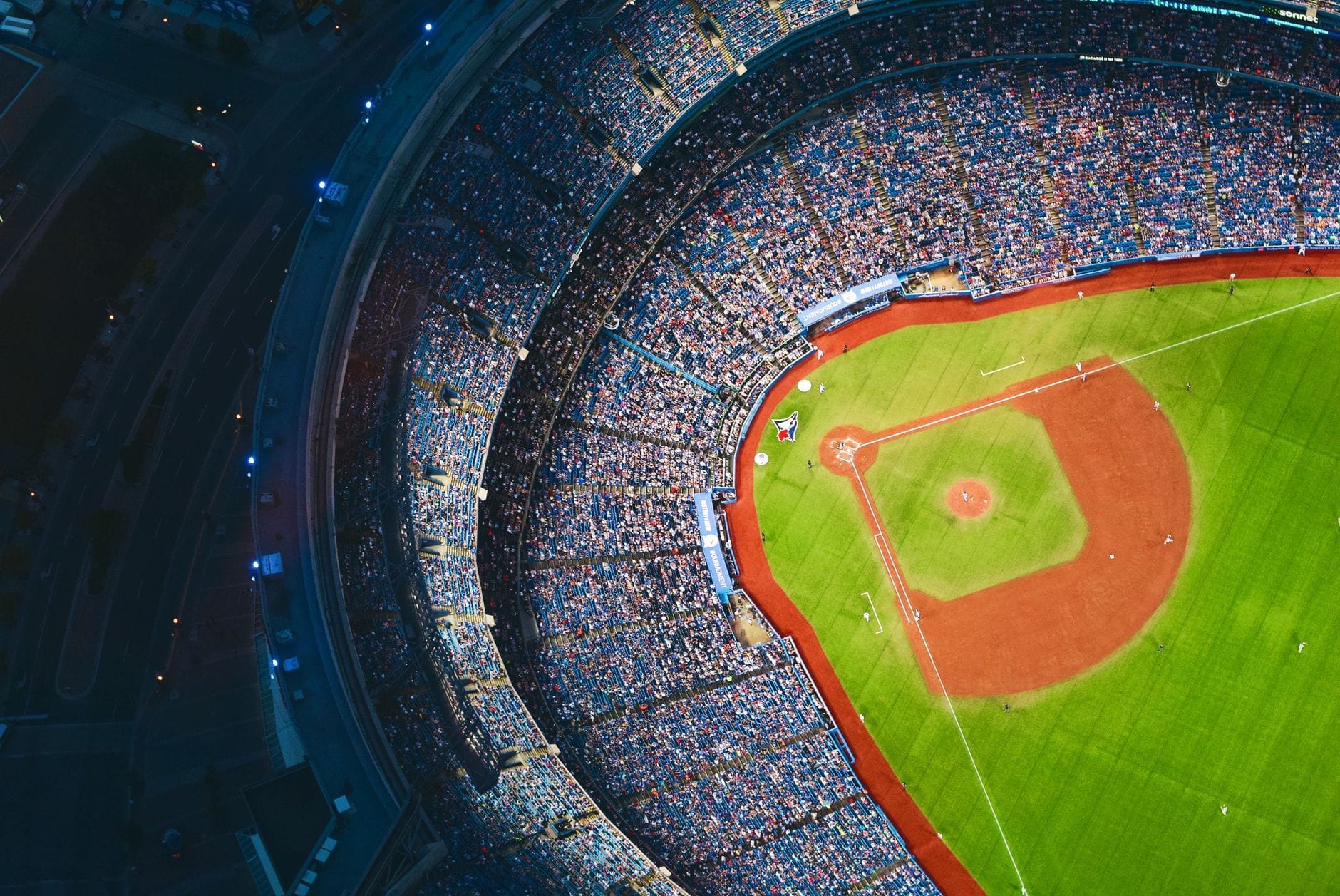
Rogers Centre, officially located at 1 Blue Jays Way in downtown Toronto, is the home stadium of the Toronto Blue Jays and one of the most structurally distinctive sports venues on the continent. Originally named SkyDome when it officially opened on June 3, 1989, it was renamed Rogers Centre on February 2, 2005. The complex spans 12.7 acres (5.14 hectares), with the building itself covering 11.5 acres (4.66 hectares). It was the first stadium in the world to feature a fully retractable roof, which remains its defining engineering achievement.
The venue sits directly at the base of the CN Tower, creating one of the most photographed urban skyline compositions in Canada. From across the harbour or from the Toronto Islands, the two structures read as a single architectural statement about the ambition of late-20th-century Toronto.
ℹ️ Good to know
Rogers Centre is event-driven: there is no fixed daily public access. Check the Blue Jays MLB schedule or the venue's official event calendar before planning your visit. On non-event days, stadium tours are the main option for entry.
The Retractable Roof: Engineering Worth Understanding
When Rogers Centre opened, the retractable roof was considered an engineering marvel. The roof consists of four panels, three of which move on a track system to open or close over the field in approximately 20 minutes. It covers a space with an interior volume of approximately 1.6 million cubic meters, making it one of the largest enclosed spaces in the world when fully closed.
On clear summer days when the roof is open, the upper deck offers unobstructed views of the Toronto skyline, including direct sightlines to the CN Tower looming above the left-field stands. The open-roof experience transforms the atmosphere entirely: the smell of the grass (Rogers Centre uses artificial turf, so this is more accurately described as the open air replacing the recycled indoor air), the ambient noise of the city, and the natural light all shift the sensory experience compared to a fully enclosed visit.
Not every game features an open roof. The decision is based on weather, temperature, and wind conditions. On wet or cold spring evenings, the roof stays closed and the stadium takes on a more concert-like acoustic quality. If seeing the roof open matters to you, target a warm July or August afternoon game.
Tickets & tours
Live prices and dates from our booking partner. If you book, we may earn a commission at no extra cost to you.
LEGOLAND Discovery Centre Toronto tickets
From 16 €Instant confirmationFree cancellationToronto Blue Jays Baseball Game Tickets at Rogers Center
From 37 €Instant confirmationToronto Old Town: Dark Side Exploration Game and Tour
From 12 €Instant confirmationFree cancellationToronto 'Little Canada' entrance tickets
From 27 €Instant confirmationFree cancellation
Visiting for a Blue Jays Game: What the Experience Is Like
A Toronto Blue Jays game at Rogers Centre is the most common reason visitors come to the stadium. The MLB regular season typically runs from late March or early April through late September or early October, with playoffs extending further into October. Weekday afternoon games tend to have lighter crowds and shorter lines at concessions; weekend evening games draw larger, louder audiences with a more festive atmosphere around the surrounding streets.
Inside, the stadium has several levels of seating, with the 100 and 200 levels offering the most intimate views of the field. The upper 500 level is considerably high and can feel disconnected from the action but provides a broad panorama of the entire playing surface, which some visitors prefer for a general sense of the game. Concession options have expanded in recent years and now include local beer brands and food beyond the standard ballpark fare.
💡 Local tip
If you are attending your first Blue Jays game, aim to arrive 30 to 45 minutes early. The gate plazas fill quickly before popular matchups, and early entry lets you walk the concourse, explore the field-level views, and find your seats without the peak-crowd pressure.
The stadium's artificial turf plays an audible role: the sound of the ball coming off the bat carries differently on turf than on natural grass, and the surface gives the interior a particular visual brightness under the stadium lights that becomes immediately noticeable. Rogers Centre is one of a minority of MLB stadiums still using artificial turf rather than natural grass.
Stadium Tours: Accessing the Venue Without an Event
For visitors who want to experience the architecture and history of Rogers Centre outside of a game, guided stadium tours are available on select days. Tours generally take between 60 and 90 minutes and cover areas of the stadium not accessible to regular ticket holders, including the field level and various behind-the-scenes areas. Tour pricing has been listed at from $29 CAD for adults, though this figure is subject to change and should be verified directly through the official Blue Jays website before booking.
Tours are an appealing option for architectural and sports history enthusiasts, families with children, and visitors who want context about the stadium's design and the Blue Jays' history without the expense and time commitment of a full game. The tour provides a noticeably different perspective on the roof mechanism, which is best appreciated at field level where the scale becomes physically comprehensible.
⚠️ What to skip
Tour availability is not guaranteed year-round. Tours may be suspended around game days, concerts, or other large events. Check the official schedule at mlb.com/bluejays/ballpark before making travel plans around a tour.
Getting There and Navigating the Area
Rogers Centre occupies a prime location in downtown Toronto's Entertainment District, steps from the waterfront. The most practical transit approach is the TTC subway: Union Station, which connects the TTC Line 1 subway, GO Transit regional rail, and UP Express airport rail, is roughly a 10-minute walk, while St. Andrew Station on Line 1 is also within comfortable walking distance along King Street West, making the stadium accessible from almost any point in the city or region.
The surrounding streets, particularly Front Street West and Bremner Boulevard, become pedestrian-heavy on event nights. If you are arriving from the waterfront side, the approach past Harbourfront Centre and along the lakeshore provides a more scenic entry route, and on warm evenings the walk from the waterfront is genuinely pleasant.
Parking is available in the vicinity but fills rapidly before major events. Given the venue's direct access to multiple transit lines, driving is generally the least efficient option for most visitors. If you are coming from outside the city on GO Transit, the walk from Union Station's main hall to the stadium takes under 15 minutes on a clear day.
Visitors planning a fuller day in the area should note that the CN Tower is literally adjacent, and Ripley's Aquarium of Canada is a short walk away, making the block one of the densest clusters of major tourist attractions in the city.
Concerts and Non-Baseball Events
Rogers Centre functions as one of Toronto's primary large-scale concert venues. Its closed-roof capacity makes it suitable for international touring acts that require an indoor arena of stadium proportions. The acoustics vary significantly depending on the configuration: floor standing shows with the full space open have a different sonic character than reserved seating events where sections are curtained off. For concerts, checking the specific stage configuration and seating map before purchasing tickets is worthwhile, as the experience at a floor-level standing concert differs substantially from an upper-level seat at the far end of the field.
Toronto's broader live music infrastructure extends well beyond Rogers Centre. The city's Budweiser Stage at Ontario Place offers outdoor amphitheatre shows from late spring through early fall, while Massey Hall remains the preferred mid-size venue for many artists. Rogers Centre suits those requiring maximum capacity.
Practical Considerations: Weather, Accessibility, and Logistics
Because Rogers Centre has a retractable roof, weather is less of a concern here than at open-air stadiums. However, the walk from transit to the gates is exposed, so on cold spring evenings or rainy days, a jacket and weather-appropriate footwear are advisable. Summer afternoon games can be warm, particularly in the lower bowl where direct sun hits before the roof closes or when it remains open.
The venue carries an AccessNow accessibility badge through Destination Toronto, indicating that accessibility information is available for planning. The stadium has accessible seating across multiple levels, elevators to all main concourse areas, and accessible washroom facilities. Visitors with specific accessibility needs should review the official Blue Jays website or contact the venue directly to confirm current accommodation arrangements.
Photography with personal cameras and phones is generally permitted throughout the venue. The view from the upper levels on a clear day with the roof open, with the CN Tower framed against the sky, is the shot most visitors attempt. For sharper images of the field action, a lens with some zoom capacity improves results from the upper levels.
💡 Local tip
For an honest assessment: Rogers Centre is not considered one of the most beloved ballparks in North America in terms of atmosphere or intimacy. Its value is in scale, history, and convenience. Fans who prioritize the baseball experience above the venue itself tend to enjoy it fully; those expecting the charm of a classic or boutique ballpark may find it workmanlike.
Insider Tips
- Roof-open games happen most reliably during afternoon games in July and August. If you specifically want the open-air experience, check the weather forecast the day before and look at the game start time: afternoon starts with clear skies are your best bet.
- The 100-level seats behind home plate offer the most immersive view of the field's scale, but 200-level seats along the first and third base lines often provide better sightlines for the price. Compare the seating maps carefully before buying.
- The Front Street West side of the stadium has less pedestrian congestion than the Blue Jays Way entrance before games. If you want to move quickly, use the western gates.
- For stadium tours, booking online in advance is strongly recommended during the summer months, as tour slots sell out on popular days and walk-in availability cannot be guaranteed.
- The hotel rooms inside Rogers Centre (formerly part of the Renaissance Toronto Downtown Hotel, now operating as the Toronto Marriott City Centre Hotel) face the playing field. From the street level or public areas, the windows are visible from the field during games. This is a distinctive, if unusual, architectural feature worth knowing.
Who Is Rogers Centre For?
- Baseball fans visiting Toronto during the MLB season (late March to September)
- Families with children looking for a full-day sports and entertainment experience
- Architecture and engineering enthusiasts interested in the history of retractable roof design
- Visitors attending a major touring concert or large-scale event
- First-time Toronto visitors who want to experience the downtown Entertainment District
Nearby Attractions
Other things to see while in Downtown Toronto:
- Allan Gardens Conservatory
Allan Gardens Conservatory is a free, year-round botanical conservatory at 160 Gerrard Street East in downtown Toronto. Housed in six glass display houses anchored by a 1910 Edwardian Palm House, it holds about 1,500 m² of tropical palms, cacti, orchids, and seasonal blooms. One of the oldest parks in Toronto, it remains one of the city's most underrated green spaces.
- Art Gallery of Ontario
The Art Gallery of Ontario is one of North America's largest art museums, housing over 90,000 works inside a landmark Frank Gehry-renovated building in downtown Toronto. From Indigenous Canadian art to European masters and contemporary photography, the AGO rewards focused visitors and casual explorers alike.
- Brookfield Place (Allen Lambert Galleria)
The Allen Lambert Galleria inside Brookfield Place is a free, publicly accessible arcade designed by architect Santiago Calatrava between 1987 and 1992. Its arching steel-and-glass canopy, rising between two of downtown Toronto's tallest towers, is one of the most impressive interior spaces in Canada.
- Campbell House Museum
Built in 1822 for Upper Canada's Chief Justice, Campbell House Museum is the oldest surviving residence from the original Town of York. Moved to its current downtown corner in 1972 and opened as a museum in 1974, it offers an intimate, unhurried window into early colonial Toronto — a sharp contrast to the glass towers surrounding it.
Planning a trip? Discover personalized activities with the Nomado app.