Ossington Avenue: Toronto's Best Strip for Food, Drinks, and Independent Culture
Ossington Avenue, specifically the stretch between Dundas Street West and Queen Street West, is one of Toronto's most concentrated dining and nightlife corridors. Converted from an industrial warehouse district, it now draws a mix of locals and visitors looking for serious cocktails, independent restaurants, and the kind of street energy that only comes from a neighbourhood that hasn't been fully smoothed over.
Quick Facts
- Location
- Ossington Avenue, between Queen Street West and Dundas Street West, Toronto (Queen Street West neighbourhood)
- Getting There
- TTC 501 Queen streetcar or 505 Dundas streetcar to Ossington Avenue
- Time Needed
- 1–3 hours for a walk and drinks; longer for a full evening out
- Cost
- Free to walk; individual venues vary. Budget $15–25 per cocktail or small plate at most spots
- Best for
- Food lovers, nightlife seekers, independent retail browsers, couples
- Official website
- www.destinationtoronto.com/neighbourhoods/westside/ossington
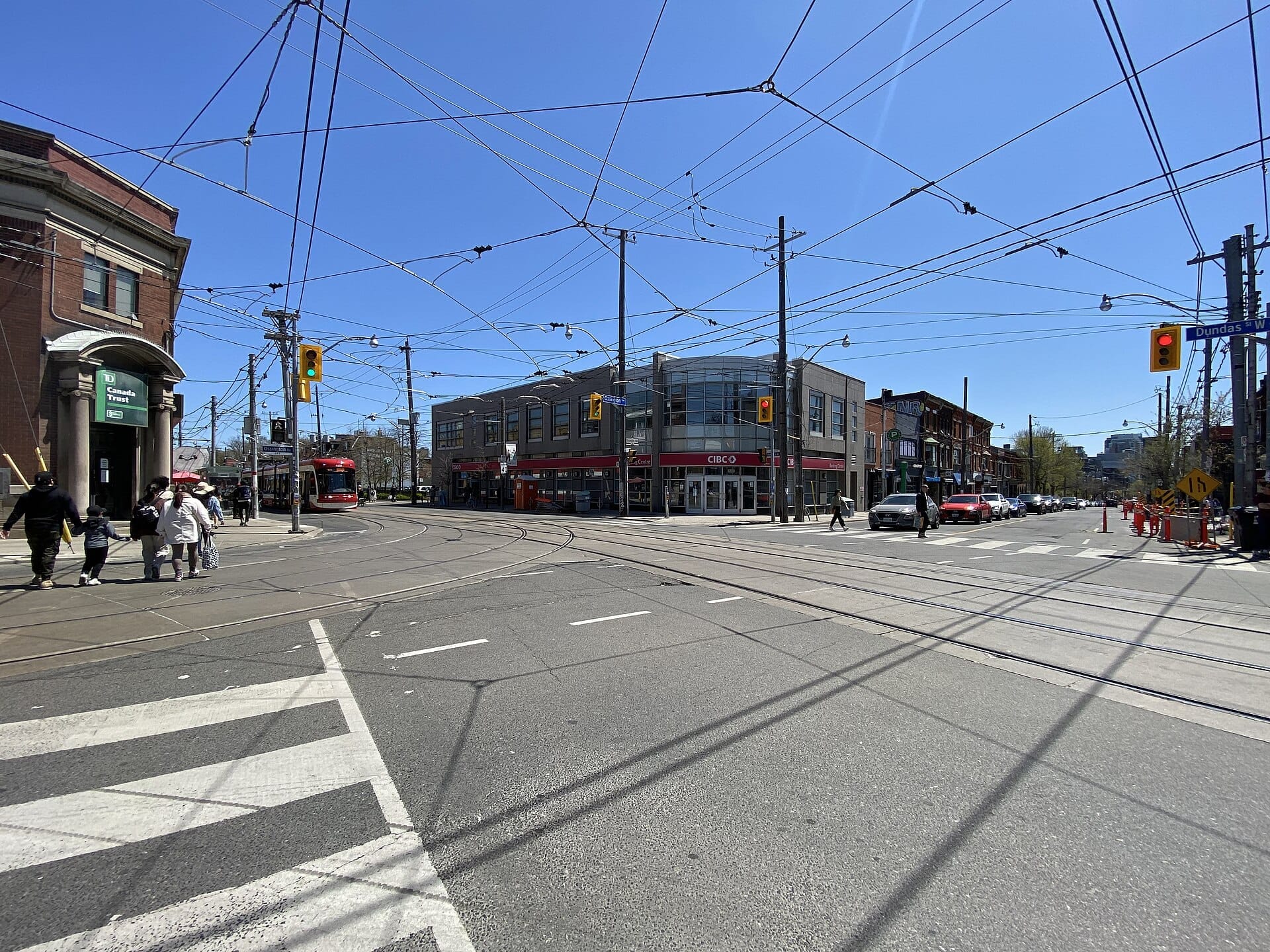
What Is the Ossington Strip, Exactly?
Ossington Avenue is a north-south arterial street that runs from Queen Street West up to Davenport Road. The full street is about 3.2 kilometres long, and much of the northern portion is quiet residential. But the short stretch between Queen Street West and Dundas Street West, roughly 500 metres, is a different story. This section, locally called the Ossington Strip, is one of the densest concentrations of independent bars, restaurants, and shops in the city.
Not long ago, this was a working industrial corridor. The low-rise brick buildings that now house cocktail bars and Japanese restaurants were warehouses and auto repair shops. Some of that original bones still shows: exposed brick walls, garage-door fronts that fold open in summer, and storefronts with loading dock proportions. The neighbourhood has changed significantly, but it hasn't been rebuilt from scratch. You can still read its history in the architecture.
💡 Local tip
The strip is short enough to walk end-to-end in under ten minutes, which makes it easy to scope out options before committing. Walk it once, then double back to wherever caught your attention.
The Feel of the Street at Different Times of Day
Ossington Avenue is primarily an evening destination. During the day, especially on weekdays, the strip is fairly quiet. A few cafes open early, some restaurants begin lunch service around noon, and the independent shops along the block tend to open mid-morning. Foot traffic is light, and the street has an unhurried neighbourhood quality that can actually be pleasant for a slow coffee and a look around.
By early evening on weekends, the energy shifts noticeably. Restaurant patios fill up, and the narrow sidewalks get crowded enough that walking requires some patience. The smell of wood smoke from kitchen grills mixes with cold air on autumn nights, and the sound profile changes: kitchen exhaust, conversation spilling out of open windows, the occasional taxi pulling up. Peak hours on Friday and Saturday run roughly 7 pm to midnight.
Late night on the strip, after 11 pm, skews younger and louder. Some of the more casual bars see significant lineups after midnight. If you want a quieter version of Ossington, a Thursday evening before 8 pm is close to ideal: enough life that it feels properly open, but tables are available without a long wait and the street has room to breathe.
Tickets & tours
Live prices and dates from our booking partner. If you book, we may earn a commission at no extra cost to you.
Toronto Old Town: Dark Side Exploration Game and Tour
From 12 €Instant confirmationFree cancellationLEGOLAND Discovery Centre Toronto tickets
From 16 €Instant confirmationFree cancellationToronto 'Little Canada' entrance tickets
From 27 €Instant confirmationFree cancellationNiagara Falls evening tour with boat, dinner and Illumination Tower
From 77 €Instant confirmationFree cancellation
Food and Drink: What to Expect
The Ossington Strip is serious about food and drinks. Independent operators dominate, with no major chain presence on the core block. The range spans small cocktail bars with tight, rotating menus, Japanese izakayas, Portuguese-influenced spots, and a handful of wine-focused restaurants where the list gets more attention than the decor. It is the kind of street where the owners are often present during service.
For those building an evening around this part of town, it pairs well with a dinner start in Queen Street West before moving north to the strip, or a reverse route depending on where you are coming from.
Reservations are strongly recommended for sit-down restaurants on Friday and Saturday nights. Walk-ins are more possible earlier in the week or for bar seating, which most places keep open. The bars themselves generally do not take reservations and operate on a first-come basis, which means arriving before 9 pm significantly improves your chances of getting in without a wait.
ℹ️ Good to know
Most restaurants along the strip are independently owned and update their menus seasonally. Checking a venue's current menu online before arriving saves disappointment if a specific dish is what you came for.
Independent Shops and the Daytime Side of Ossington
Beyond the evening restaurant and bar scene, Ossington Avenue has a cluster of independent retail that rewards a daytime visit. Clothing shops with considered Canadian and international labels, a few furniture and home goods stores with strong design sensibilities, and vinyl record shops occupy the storefronts that are not restaurants. This retail layer tends to be targeted at a specific buyer, not general tourist shopping, which is precisely what makes it interesting.
The surrounding area connects naturally to other browsable streets. The nearby Kensington Market and the broader Graffiti Alley make it easy to build a half-day walking route across west-central Toronto without doubling back.
Getting There and Practical Logistics
The TTC 501 Queen streetcar and the 505 Dundas streetcar both stop at Ossington Avenue, making transit access straightforward from downtown. The closest subway station is Ossington on Line 2, roughly a 10-minute walk north. Parking along Queen Street West and Dundas Street West is metered and can be difficult to find on weekend evenings. Arriving by streetcar or rideshare is considerably less stressful than driving.
The strip itself is entirely on paved city sidewalks. TTC streetcars on both intersecting routes use accessible low-floor vehicles, though individual venues vary considerably in interior accessibility. Narrow storefronts and bar-style seating at many restaurants can be limiting for people with mobility considerations; it is worth calling ahead if this matters.
⚠️ What to skip
Weekend evenings between 9 pm and midnight are the busiest period by a significant margin. If crowds, lineups, and raised noise levels are not your preference, a weeknight visit gives you the same street with noticeably less friction.
Weather and Seasonal Notes
Ossington Avenue is at its most enjoyable in warmer months. From May through October, most restaurants open their patios or fold back their garage-door fronts, which dramatically changes the feel of the street. Eating outside on the strip on a warm evening, with the street active and the kitchens visible, is one of the more characteristically Toronto urban experiences available in the city.
Winter visits are entirely possible, and the street stays active year-round, but the experience shifts indoors entirely. Toronto winters can be genuinely cold, with January temperatures regularly dropping below -5 °C and wind making it feel colder. If you are planning a winter trip, the guide to Toronto in winter has useful context on what to expect across the city.
Summer evenings can bring humidity, which some find uncomfortable in the more packed indoor bars. Outdoor patio seating is preferable in July and August. Spring and early autumn, when temperatures are in the high teens to low twenties Celsius, offer the most comfortable combination of outdoor dining and active street life.
Is Ossington Worth Your Time? An Honest Assessment
For visitors specifically interested in Toronto's independent food and bar culture, the Ossington Strip is genuinely worth an evening. The concentration of quality in a very short distance is unusual, and the neighbourhood has not been fully hollowed out by tourism or chain retail in the way some other corridors have.
That said, if you are looking for landmark sights, historical architecture, or daytime family activities, Ossington is not the right choice. It is a street that performs best as an evening destination for adults. Visitors with limited time in Toronto who have already covered the waterfront, St. Lawrence Market, and the major cultural institutions will find Ossington a satisfying addition. If this is a short trip and you haven't done those yet, prioritize accordingly.
For a broader sense of how Ossington fits into the city's food landscape, the Toronto food guide covers the city's eating culture across neighbourhoods and price points.
Insider Tips
- The west side of Ossington Avenue tends to have slightly more low-key bars with less foot traffic than the east side on busy nights. If you are looking for a quieter spot, cross the street.
- Many of the best spots on the strip have no exterior signage worth noticing from a distance. Walk the full block slowly before deciding, rather than taking the first open door you find.
- Parking enforcement on Queen Street West and Dundas Street West is active on weekend nights. If you drive, note posted time restrictions carefully; ticketing is common.
- Kitchen closing times at many restaurants are earlier than the bar closing time. If you want to eat, aim to arrive by 9:30 pm at the latest, even at places that stay open for drinks past midnight.
- A Thursday evening visit around 7 pm gives you the full character of the strip without weekend crowds. Most restaurants have availability without reservations and service is unhurried.
Who Is Ossington Avenue For?
- Food-focused travellers who want to eat at independent Toronto restaurants without tourist-zone pricing
- Couples looking for an evening out in a walkable, neighbourhood setting
- Solo travellers comfortable with bar seating and open to conversations with strangers
- Design-interested visitors who want to browse considered independent retail during the day
- Anyone who has already done the major Toronto landmarks and wants to see how locals actually spend a Friday night
Nearby Attractions
Other things to see while in Queen Street West:
- Graffiti Alley
Officially known as Rush Lane, Graffiti Alley is a nearly one-kilometre public laneway in Toronto's Fashion District, running parallel to Queen Street West from Spadina Avenue to Portland Street. What began as an unsanctioned graffiti hotspot was designated an area of municipal significance in 2011, and today its walls are covered in layered, ever-changing murals supported by the city's StreetARToronto program. Entry is free, and the alley is accessible around the clock.
- Museum of Contemporary Art Toronto (MOCA)
Housed in a converted 10-storey industrial tower on Sterling Road, the Museum of Contemporary Art Toronto Canada (MOCA) presents rotating exhibitions of Canadian and international contemporary art. The building is as much an attraction as the work inside, and admission is genuinely affordable by Toronto standards.
- Trinity Bellwoods Park
Sprawling across 15.4 hectares in the heart of Queen Street West, Trinity Bellwoods Park is where Toronto comes to be itself. Free to enter and open around the clock, it draws dog walkers at dawn, picnic crowds at noon, and quiet readers at dusk, all on grounds that once held one of Ontario's earliest university buildings.
Planning a trip? Discover personalized activities with the Nomado app.