Museum of Contemporary Art Toronto (MOCA): What to Expect Before You Go
Housed in a converted 10-storey industrial tower on Sterling Road, the Museum of Contemporary Art Toronto Canada (MOCA) presents rotating exhibitions of Canadian and international contemporary art. The building is as much an attraction as the work inside, and admission is genuinely affordable by Toronto standards.
Quick Facts
- Location
- 158 Sterling Road, Junction Triangle, Toronto, ON M6R 2B7
- Getting There
- Lansdowne Station (Line 2, ~10 min walk) or Dundas West Station (Line 2, ~10 min walk)
- Time Needed
- 1.5 to 2.5 hours depending on exhibitions
- Cost
- General $14 CAD | Students & Seniors $10 | Under 18 & Indigenous visitors free | Free on the Friday of each month’s first full weekend, 5–9 pm
- Best for
- Contemporary art enthusiasts, architecture lovers, budget-conscious culture seekers
- Official website
- moca.ca
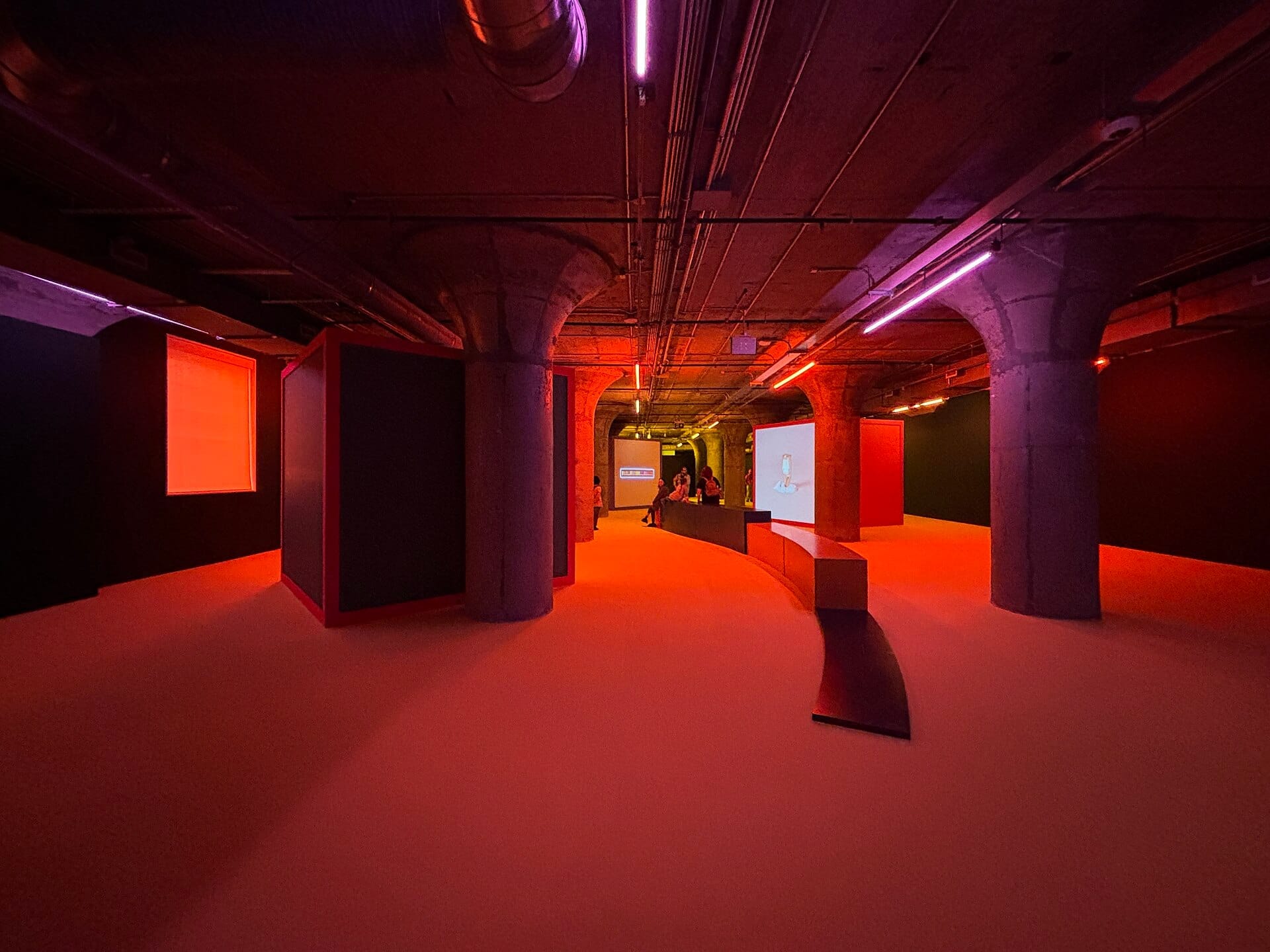
What MOCA Toronto Actually Is
The Museum of Contemporary Art Toronto Canada, universally known as MOCA, occupies the lower floors of a 10-storey concrete industrial tower at 158 Sterling Road, in a pocket of the city called the Junction Triangle. The building was originally constructed in the early 20th century as the Tower Automotive Building, and the raw character of that history has been deliberately preserved throughout the renovation: exposed concrete columns, freight elevator aesthetics, uneven floor textures, and sightlines through industrial windows that look out over the surrounding low-rise neighbourhood.
MOCA traces its institutional origins to the Museum of Contemporary Canadian Art (MOCCA), founded in 1999 and itself a successor to the Art Gallery of North York. The rebranding and relocation to Sterling Road in 2018 marked a significant shift in ambition: a standalone building in an emerging creative district, rather than a tenant arrangement in a shopping mall. That context matters when you visit, because the museum occupies a neighbourhood still mid-transformation, with artist studios, architecture offices, and scattered light industry all sharing the same block.
💡 Local tip
MOCA offers free admission on the Friday of each month’s first full weekend, from 5 to 9 pm. This is the busiest session of the month, popular with students and young professionals, but it remains one of the better deals in Toronto for an evening out.
The Building: Why the Architecture Matters Here
Unlike most contemporary art institutions, which occupy purpose-built white cubes or palatial civic buildings, MOCA uses its industrial shell as an active part of the viewing experience. The galleries are not neutral. Concrete support columns interrupt sightlines. Ceiling heights vary between floors. Natural light enters at angles that shift noticeably over the course of a day, which means works that read one way at noon can look quite different by late afternoon when the western light flattens out.
The exterior of the tower is worth a moment before you enter. The building's upper storeys are occupied by residential units developed as part of the broader Sterling Road redevelopment, which funds part of the museum's space. From the street, the contrast between the heavy brutalist base and the residential additions above gives the whole structure an unusual verticality for this part of Toronto. If you are interested in how the city is managing post-industrial land, this block is a compact case study.
For a broader look at Toronto's architectural evolution, the Toronto architecture guide covers everything from Union Station's Beaux-Arts hall to the OCAD University Sharp Centre's tabletop design just a few kilometres east.
Tickets & tours
Live prices and dates from our booking partner. If you book, we may earn a commission at no extra cost to you.
Private kickstart Toronto walking tour with local guide
From 159 €Instant confirmationFree cancellationToronto Old Town: Dark Side Exploration Game and Tour
From 12 €Instant confirmationFree cancellationLEGOLAND Discovery Centre Toronto tickets
From 16 €Instant confirmationFree cancellationToronto 'Little Canada' entrance tickets
From 27 €Instant confirmationFree cancellation
What the Exhibitions Are Like
MOCA does not maintain a permanent collection in the traditional sense. The museum operates on a rotating exhibition model, which means every visit is substantively different from the last, but also means you cannot plan around specific works. Exhibitions have historically foregrounded Canadian artists, particularly those whose work engages with identity, technology, landscape, and political history, though the programming also includes major international names.
The scale of the exhibitions tends toward the immersive and installation-heavy rather than wall-hung painting alone. Expect large-format video work, sound installations that bleed between galleries, sculpture that requires you to navigate around it, and occasional works that occupy entire floors. This is not a museum where you can skim. Some exhibitions demand time to sit with, and the acoustics of the industrial space amplify that effect: sound travels strangely between the concrete surfaces.
That said, the programming is not uniformly accessible to casual visitors. If you arrive without any context for contemporary art practice, some exhibitions can feel opaque or deliberately uncomfortable. That is often by design. MOCA does not curate for passive appreciation. Visitors who engage best here are those willing to read wall text, tolerate ambiguity, and occasionally be unsettled.
ℹ️ Good to know
Before visiting, check moca.ca for current exhibitions. Because the museum operates on a rotating program, the experience can vary dramatically between seasons. Some shows run for three months; others are shorter.
Visiting by Time of Day
Weekday mornings between opening at 11 am on Wednesdays and Thursdays and around 1 pm are reliably quiet. The neighbourhood draws fewer casual pedestrians than Queen Street West's main commercial strip, so MOCA does not benefit from the foot traffic that pushes visitors into places like the Art Gallery of Ontario. You are here because you chose to be here, and most people who arrive on a weekday morning have done exactly that. Expect a calm, unhurried pace through the galleries with little competition for sightlines to larger installations.
Friday evenings during the free late-night sessions feel entirely different. The lobby fills with a younger crowd, the bar area activates, and the galleries take on something closer to an opening-night atmosphere. It is genuinely pleasant if you want energy and conversation around the work, less so if you want contemplative space. The extended hours to 9 pm on free Fridays give you the option of arriving after 7 pm, when some of the early rush has passed through.
On weekends, particularly Saturday afternoons in autumn, attendance picks up noticeably as visitors combine MOCA with the surrounding Sterling Road corridor and nearby Queen West. If you are visiting on a weekend and want some breathing room, aim for opening time at 10 am on weekends or arrive after 4 pm.
Getting There: Transit and Walking
MOCA sits in the Junction Triangle, a neighbourhood bounded by railway lines and not directly on any major arterial street. This gives it an intentionally off-the-beaten-path quality, but it is genuinely easy to reach by TTC. The closest subway stops are Lansdowne Station and Dundas West Station on Line 2 (Bloor–Danforth), each about a 10-minute walk away, and connects to GO Transit and the UP Express at Bloor-Dundas West, making it useful if you are arriving from Pearson Airport or the outer suburbs.
The walk from either station takes you through a working neighbourhood: light industrial units, a few cafes, the odd studio building. There are no obvious tourist markers until you see the tower itself. Streetcar routes along Dundas Street West also pass within reasonable walking distance. If you are cycling, the area has bike lanes and the museum has outdoor rack space. Driving is possible and paid parking is available in the Hines Parking Garage at 152 Sterling Road near the museum, with surrounding street parking on Sterling Road limited and mixed permit/time restrictions.
For a full breakdown of how to move around the city by subway, streetcar, and bus, the guide to getting around Toronto covers routes, fares, and transit apps.
Accessibility and Practical Logistics
MOCA is fully wheelchair accessible. Elevators serve all floors, accessible washrooms are on site, and the museum lends a limited number of wheelchairs to visitors on a first-come basis. Service animals are welcome throughout. The industrial building's floor surfaces are generally level within galleries, though the entrance area has some transition points worth noting for mobility aid users.
Bag check is available near the entrance for larger items. Photography policies vary by exhibition, as some works are under licensing restrictions, so check signage in each gallery rather than assuming a blanket rule applies. For photography tips generally, the large windows on upper-level galleries that face west catch strong afternoon light, which can create interesting ambient conditions for documenting the space itself rather than individual works.
⚠️ What to skip
MOCA is closed on Mondays and Tuesdays. It is also worth confirming hours around public holidays, as the museum occasionally adjusts its schedule. Check moca.ca before your visit if you are planning around a specific date.
Honest Assessment: Who Will Love This, and Who Might Not
MOCA is not a generalist museum. It does not have the encyclopaedic scope of the Royal Ontario Museum a few kilometres east, nor the canonical art-history breadth of the Art Gallery of Ontario. What it offers is a focused, sometimes challenging, and frequently surprising window into contemporary practice, delivered in a space that itself has character.
Visitors looking for well-known masterworks, interactive family programming, or a straightforward survey of art history will find more of what they want at the Art Gallery of Ontario or the Royal Ontario Museum. MOCA rewards visitors who arrive with curiosity rather than a checklist.
Children under 18 enter free, and the museum is not unwelcoming to younger visitors, but the exhibition content is rarely designed with children as the primary audience. If you are visiting with kids, check the current show in advance. Some exhibitions are visually engaging regardless of context; others are dense with text and concept.
If your trip to Toronto prioritises culture and contemporary art, MOCA pairs naturally with a walk through Queen Street West, where commercial galleries and independent spaces extend the conversation. The neighbourhood to the east of MOCA also connects to Graffiti Alley, a very different but equally intentional approach to public art in the city.
Insider Tips
- Free Friday nights (on the first full weekend of each month) are the busiest session, but arriving after 7:30 pm gives you calmer galleries as the first wave of visitors moves through and thins out before closing at 9 pm.
- The building's upper residential levels are not open to the public, but the rooftop view over the Junction Triangle is visible from certain stairwell windows on the upper museum floors. Ask at the front desk which floor currently has the best vantage point during your visit.
- The museum shop near the entrance stocks a thoughtfully curated selection of art books and Canadian design objects. It is worth a browse even if you are not buying, as the selection reflects the programming rather than generic gift-shop fare.
- If you want context before walking in, the wall text at MOCA tends to be longer and more theoretical than at many institutions. Taking five minutes to read the introductory panel for each exhibition pays dividends when you reach works that might otherwise seem opaque.
- Combine the visit with a look at the wider Sterling Road corridor, which has become a quiet hub for architecture and design studios. The walk from Lansdowne Station to MOCA itself passes some of the most interesting adaptive reuse buildings in this part of the city.
Who Is Museum of Contemporary Art Toronto (MOCA) For?
- Contemporary art enthusiasts who follow Canadian and international art scenes
- Architecture and adaptive reuse fans interested in post-industrial building conversions
- Budget-conscious visitors, especially on free Friday evenings (first full weekend of each month, 5–9 pm)
- Solo travellers looking for a thoughtful, unhurried cultural stop away from the main tourist corridor
- Creative professionals, designers, and anyone who uses art institutions as working research rather than passive leisure
Nearby Attractions
Other things to see while in Queen Street West:
- Graffiti Alley
Officially known as Rush Lane, Graffiti Alley is a nearly one-kilometre public laneway in Toronto's Fashion District, running parallel to Queen Street West from Spadina Avenue to Portland Street. What began as an unsanctioned graffiti hotspot was designated an area of municipal significance in 2011, and today its walls are covered in layered, ever-changing murals supported by the city's StreetARToronto program. Entry is free, and the alley is accessible around the clock.
- Ossington Avenue
Ossington Avenue, specifically the stretch between Dundas Street West and Queen Street West, is one of Toronto's most concentrated dining and nightlife corridors. Converted from an industrial warehouse district, it now draws a mix of locals and visitors looking for serious cocktails, independent restaurants, and the kind of street energy that only comes from a neighbourhood that hasn't been fully smoothed over.
- Trinity Bellwoods Park
Sprawling across 15.4 hectares in the heart of Queen Street West, Trinity Bellwoods Park is where Toronto comes to be itself. Free to enter and open around the clock, it draws dog walkers at dawn, picnic crowds at noon, and quiet readers at dusk, all on grounds that once held one of Ontario's earliest university buildings.
Planning a trip? Discover personalized activities with the Nomado app.