Trinity Bellwoods Park: Toronto's Most Lived-In Green Space
Sprawling across 15.4 hectares in the heart of Queen Street West, Trinity Bellwoods Park is where Toronto comes to be itself. Free to enter and open around the clock, it draws dog walkers at dawn, picnic crowds at noon, and quiet readers at dusk, all on grounds that once held one of Ontario's earliest university buildings.
Quick Facts
- Location
- 790 Queen St W, Toronto, ON M6J 1E1 — between Queen St W (south) and Dundas St W (north), near Crawford St and Strachan Ave
- Getting There
- TTC streetcar along Queen St W stops directly at the park's south edge; TTC bus routes also serve Dundas St W to the north
- Time Needed
- 45 minutes to 2 hours, depending on season and how long you linger
- Cost
- Free. Park entry has no admission fee. Some bookable facility programs carry separate City of Toronto fees (CAD)
- Best for
- Picnics, people-watching, dog culture, casual tennis, winter skating, neighbourhood atmosphere
What Trinity Bellwoods Park Actually Is
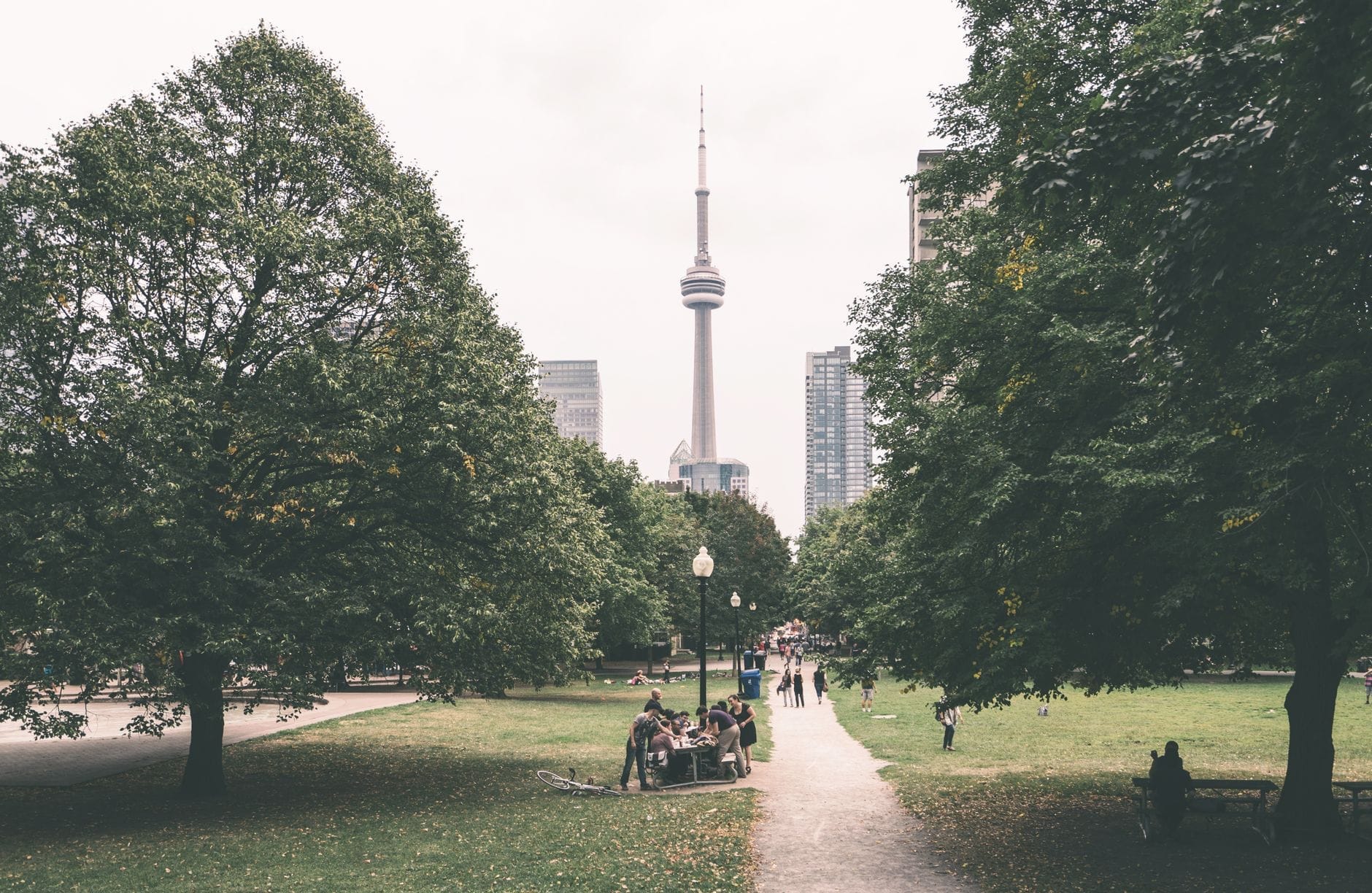
Trinity Bellwoods Park is a 15.4-hectare municipal park operated by the City of Toronto, running from Queen Street West on its south boundary up to Dundas Street West on the north. It is not a manicured botanical garden or a ticketed attraction. There are no gift shops, no entrance gates, and no guided tours. What it offers is something harder to package: a flat, open expanse of green in a dense, walkable neighbourhood, free to enter at any hour, where the city's social life plays out with unusual transparency.
The park sits within Queen Street West, one of Toronto's most recognizable commercial and residential corridors, and that context shapes the crowd. Visitors here are not tourists on a checklist. They are local residents, students, off-shift restaurant workers, and dog owners who have folded the park into their daily routines. For a traveller, that makes Trinity Bellwoods one of the more honest windows into how Toronto's west end actually lives.
ℹ️ Good to know
The park is generally open at all hours, year-round, with no general admission fee. Specific facilities such as the recreation centre, outdoor ice rink, and tennis courts operate on seasonal City of Toronto schedules posted at the site and online.
A Site With Layers: The History Under Your Feet
The land now covered in grass and dog paths has a layered past. Trinity College, one of Ontario's earliest university institutions, built its first building on this Queen Street West site in 1851. The college eventually relocated to the University of Toronto's St. George campus, and the original grounds were converted into public parkland. What remains of the institutional footprint is mostly architectural ghost: the main gates at the Queen Street entrance are preserved from the college era, giving the southern approach a formality that the rest of the park does not maintain.
Below the surface, the park also sits over a filled-in section of Garrison Creek, a now-buried waterway that once carved a ravine through this part of the city. The alignment of the old Crawford Street Bridge is still embedded in the park's topography if you look carefully at grade changes near the central path. That relationship between Toronto's buried natural geography and its urban development is a recurring theme across the city — you can explore more of it through the Toronto ravines hiking guide.
None of this history is interpreted on signage in any meaningful way. There are no plaques explaining the Garrison Creek corridor or the college's original buildings. The park wears its past lightly, which either suits the atmosphere or frustrates visitors who prefer context. If history matters to you, read up before arriving.
Tickets & tours
Live prices and dates from our booking partner. If you book, we may earn a commission at no extra cost to you.
Toronto Old Town: Dark Side Exploration Game and Tour
From 12 €Instant confirmationFree cancellationLEGOLAND Discovery Centre Toronto tickets
From 16 €Instant confirmationFree cancellationToronto 'Little Canada' entrance tickets
From 27 €Instant confirmationFree cancellationNiagara Falls evening tour with boat, dinner and Illumination Tower
From 77 €Instant confirmationFree cancellation
How the Park Changes Through the Day
Early mornings at Trinity Bellwoods have a quieter texture than the park's reputation suggests. Before 9 a.m., the main lawn is largely claimed by dog walkers, some of whom treat the off-leash dog pit on the east side of the park as a daily social ritual as much as an exercise stop. The smell of damp grass is noticeable, particularly after overnight rain. The path that runs north-south through the centre of the park is already active with cyclists cutting through from the Queen Street corridor to Dundas.
Midday in warmer months transforms the feel entirely. From late spring through early fall, the main lawn fills with picnic blankets, portable speakers, and groups that arrived carrying coolers and canvas bags from the shops along Queen Street West. This is when the park's social density peaks. On a Saturday afternoon in July, the main lawn can feel genuinely crowded, with blankets placed close enough that privacy is not really available. The crowd skews young and local, and the energy is unhurried.
Late afternoons in summer bring a second wave: people finishing work, cyclists stopping for a rest, and the dog crowd returning for a second run. By 7 p.m. on a long summer evening, with the light cutting low across the open field, Trinity Bellwoods is at its most photogenic. The quality of light from the west is soft and consistent, and the east-facing slope of the park catches it well. This is the best window for photography of both the landscape and the informal street-style scene on the lawn's edges.
💡 Local tip
For the most atmospheric visit in summer, arrive between 6 and 8 p.m. on a weekday. The main lawn retains good energy but is less crowded than weekend afternoons, and the evening light is significantly better for photography.
Winter at Trinity Bellwoods: A Different Park Entirely
Toronto's winters are cold enough to change the character of outdoor spaces completely, and Trinity Bellwoods is no exception. When temperatures drop below freezing, the park's outdoor ice rink opens, operated by the City of Toronto (skate rentals are available nearby at the recreation centre for a fee, though checking current hours and rental availability with the City before visiting is advisable). The rink is lit in the evenings and draws a mixed crowd of children learning to skate and adults who treat a weeknight loop as routine.
Snow cover changes the park's geometry, softening the paths and emptying the main lawn to a degree that feels almost surprising given its summer density. The gates and bare trees take on a different weight in winter. Fewer tourists visit the park in January or February, which is either a drawback or an advantage depending on what you are looking for. The surrounding strip of Queen Street West is still fully operational year-round, with coffee shops and restaurants providing warmth between time outside.
If you are planning a winter trip to Toronto more broadly, the Toronto in winter guide covers what to expect from the city's cold season, including how parks and outdoor spaces function when the temperature drops.
Facilities and Practical Walkthrough
Trinity Bellwoods has a recreation centre building on the park's east side that houses indoor facilities and serves as the hub for City-operated programs. The tennis courts, located within the park, are available through City of Toronto booking. The off-leash dog area on the eastern portion of the park is clearly marked and almost always occupied; it is one of the more active dog pits in the inner city.
Public washrooms are available within the park. Benches are distributed throughout but can fill quickly on busy summer weekends, so arriving with a blanket is practical if you plan to stay for any length of time. There are no food vendors operating inside the park itself, but the Queen Street West streetfront immediately south of the park's main entrance offers a high density of cafes, bakeries, and independent restaurants within a two-minute walk.
The City of Toronto is currently undertaking an Access and Circulation Study for Trinity Bellwoods, specifically aimed at improving pathway connectivity and accessibility. Some internal paths involve grades, and older sections of paving may present obstacles for wheelchair users or those with strollers. Checking current status via the City's park page before visiting is worthwhile if accessibility is a priority.
⚠️ What to skip
On warm summer weekends, the park's main lawn can become genuinely crowded by early afternoon. If you want space to spread out, arrive before 11 a.m. or visit on a weekday. The north end of the park near Dundas Street tends to stay quieter than the central lawn.
Getting There and the Surrounding Neighbourhood
The most direct approach is by TTC streetcar along Queen Street West, which stops near the park's south entrance on Queen Street West. The streetcar route runs east-west through downtown and connects to the subway network. From downtown, the ride to Trinity Bellwoods takes roughly 10 to 15 minutes depending on traffic. TTC bus routes along Dundas Street West also provide access to the park's north side.
The park sits at the centre of the Queen Street West neighbourhood, flanked on either side by the kind of independent retail, gallery space, and food options that made this corridor notable. To the east, the street connects toward the Kensington Market area and Chinatown. To the west, it continues into Roncesvalles and Parkdale. Combining a visit to Trinity Bellwoods with a walk along Queen Street West is the natural approach, and it adds significant context to both.
If you are exploring on foot or by bike, the park also connects loosely to Toronto's broader west-end walking geography. The Toronto walking tours guide includes routes through this part of the city that can be adapted for self-guided exploration.
Is Trinity Bellwoods Worth Your Time?
The honest answer depends entirely on what you are looking for. Trinity Bellwoods is not a spectacle. There is no single thing to see, no landmark moment, and no obvious reason to visit it over other Toronto green spaces if your goal is scenery or programmed activity. High Park is larger and has more formal features. The Toronto Islands offer waterfront and distance from the city. The Evergreen Brick Works sits within a more dramatic natural setting.
What Trinity Bellwoods offers is atmosphere: the specific atmosphere of a west-end Toronto neighbourhood on an ordinary day. For travellers who are genuinely curious about how the city lives outside its tourist infrastructure, it delivers that with no artifice. If your trip is oriented toward food, independent retail, and neighbourhood texture rather than landmarks, building the park into a Queen Street West afternoon is a natural and low-effort choice. You can review the broader options for how parks fit into a Toronto visit in the best parks in Toronto guide.
Visitors who need clear itinerary anchors, prefer curated experiences, or find unstructured green space less engaging should recalibrate expectations before arriving. This park will not manage your visit for you. It simply exists, fully and reliably, for however long you choose to stay.
Insider Tips
- The main gates at the Queen Street entrance are original remnants from the Trinity College era. They are easy to walk past without noticing, but pausing there gives the park's history a physical point of reference that the interior does not provide.
- The north end of the park near Dundas Street West is consistently quieter than the central lawn, even on peak summer weekends. If you want to read, think, or simply sit without being surrounded, that section is the right choice.
- Queen Street West between Trinity Bellwoods and Bathurst Street has a particularly high density of independent cafes. Picking up coffee before entering from the south gate and sitting on the slope facing the main lawn is the standard local approach to an afternoon here.
- The dog pit on the east side of the park operates as an informal community gathering point. The dogs are incidental; the regular owners often know each other by name and the conversations can be surprisingly candid about neighbourhood life.
- For winter skating, the outdoor rink is free to use but skate rental availability and hours are managed by the City of Toronto recreation centre. Confirm current hours via the City's website or by calling 311 before making the trip specifically for skating.
Who Is Trinity Bellwoods Park For?
- Travellers who want to observe Toronto neighbourhood life at ground level without a scripted experience
- Visitors building a Queen Street West afternoon combining the park with independent cafes and shops
- Families looking for free, open outdoor space in the inner city with room for children to move
- Dog owners visiting Toronto who want a park with a serious off-leash culture
- Winter visitors interested in free outdoor skating in a residential park setting
Nearby Attractions
Other things to see while in Queen Street West:
- Graffiti Alley
Officially known as Rush Lane, Graffiti Alley is a nearly one-kilometre public laneway in Toronto's Fashion District, running parallel to Queen Street West from Spadina Avenue to Portland Street. What began as an unsanctioned graffiti hotspot was designated an area of municipal significance in 2011, and today its walls are covered in layered, ever-changing murals supported by the city's StreetARToronto program. Entry is free, and the alley is accessible around the clock.
- Museum of Contemporary Art Toronto (MOCA)
Housed in a converted 10-storey industrial tower on Sterling Road, the Museum of Contemporary Art Toronto Canada (MOCA) presents rotating exhibitions of Canadian and international contemporary art. The building is as much an attraction as the work inside, and admission is genuinely affordable by Toronto standards.
- Ossington Avenue
Ossington Avenue, specifically the stretch between Dundas Street West and Queen Street West, is one of Toronto's most concentrated dining and nightlife corridors. Converted from an industrial warehouse district, it now draws a mix of locals and visitors looking for serious cocktails, independent restaurants, and the kind of street energy that only comes from a neighbourhood that hasn't been fully smoothed over.
Planning a trip? Discover personalized activities with the Nomado app.