TIFF Lightbox: Toronto's Home of Film, Art, and Cinematic Culture
TIFF Lightbox is the permanent headquarters of the Toronto International Film Festival, housing five cinemas, gallery spaces, and a film reference library in the heart of the Entertainment District. Open year-round, it draws serious film lovers and casual visitors alike with a program that stretches far beyond festival season.
Quick Facts
- Location
- 350 King Street West, Entertainment District, Toronto, Ontario
- Getting There
- King Street West streetcar (TTC Line 504/514); St. Andrew subway station (Line 1) is a short walk north
- Time Needed
- 2–4 hours for a film and a browse; half a day if combining a screening with a gallery visit or the film reference library
- Cost
- Ticket prices vary by film and event type; check tiff.net for current pricing in CAD. Gallery access may be free or ticketed depending on the exhibition.
- Best for
- Film enthusiasts, architecture admirers, culture seekers, rainy-day visitors, festival-goers
- Official website
- www.tiff.net
What Is TIFF Lightbox?
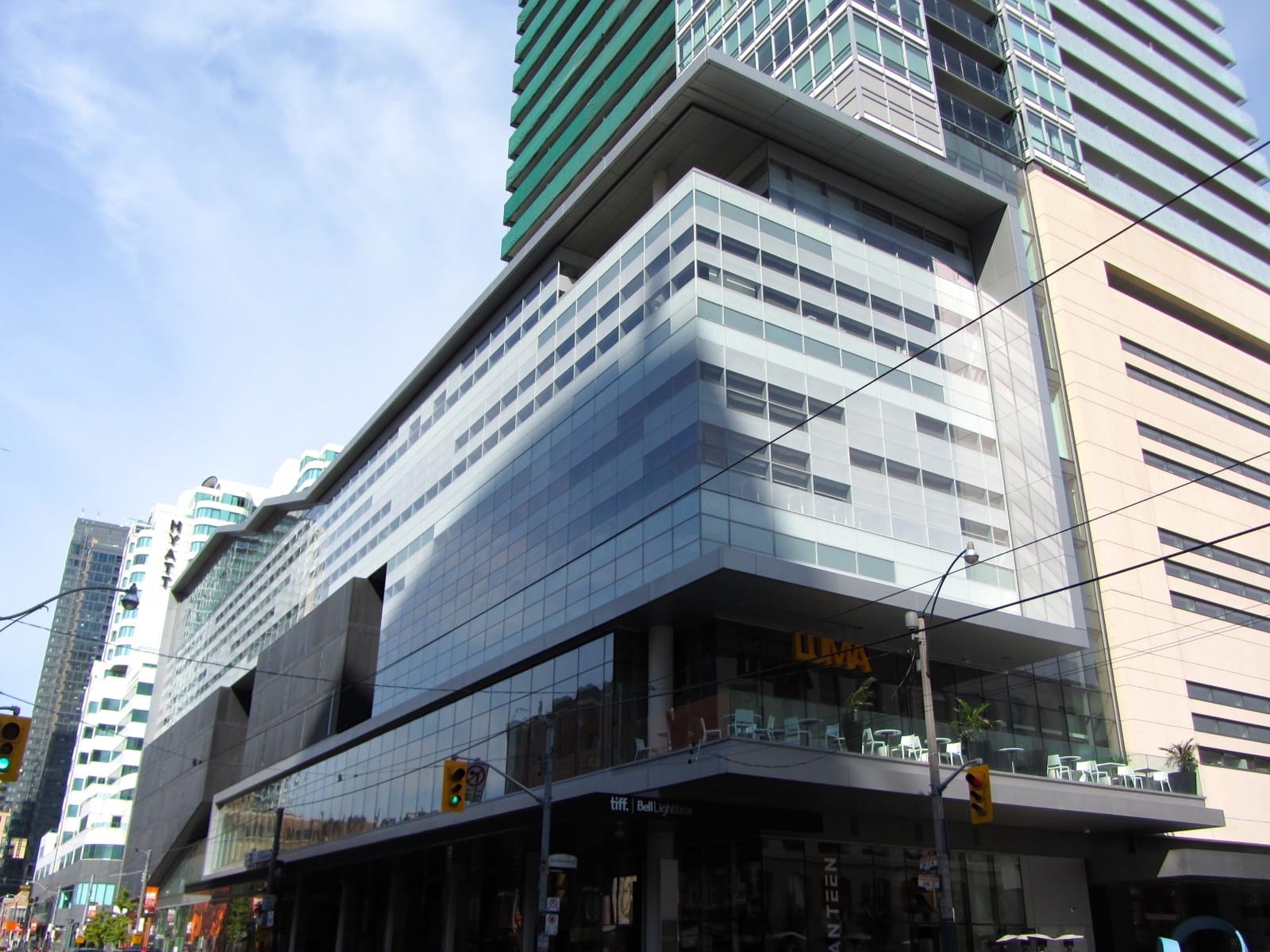
TIFF Lightbox (formerly TIFF Bell Lightbox) is the year-round cultural headquarters of the Toronto International Film Festival, located at 350 King Street West in Toronto's Entertainment District. It opened in 2010 as the first permanent, purpose-built home for one of the world's most respected film festivals, and it fundamentally changed what the festival could offer Toronto beyond its annual September run.
The building occupies the five-storey podium of the 46-storey Festival Tower, a mixed-use skyscraper that also contains private condominiums. The Lightbox and Festival Tower complex covers approximately 550,000 square feet and holds five cinemas of varying sizes, dedicated gallery and exhibition spaces, TIFF's offices, a film reference library, a rooftop terrace, a gift shop, and food and drink outlets. It is not a multiplex showing blockbusters. It is a cultural institution that treats film as an art form worth studying, archiving, and debating.
ℹ️ Good to know
Hours vary by day and programming. Before you visit, check the 'What's On' calendar at tiff.net to confirm screening times and any gallery admission requirements — the building schedule is not fixed like a standard cinema.
The Architecture and the Building Itself
The facade facing King Street West makes an immediate impression. Floor-to-ceiling glazing wraps around the lower floors, so you can see into the lobbies and gathering spaces from the street. At night, the interior light spills outward, creating a warmly lit presence on a block otherwise dominated by bars and entertainment venues. The architectural language is deliberate: transparency signals openness to the public, and the materiality of the building, concrete, glass, and dark steel, references industrial cinema heritage without being nostalgic about it.
The lobby on the ground floor has the proportions of a proper public hall. Ceiling heights are generous, the ticketing area is well-organized, and there is usually a steady low hum of conversation even on quiet weekday afternoons. It does not feel like a corporate arts space. The Art Gallery of Ontario is a few minutes west on Dundas Street if you want to make a day of it across art forms.
The five cinemas range in scale from intimate screening rooms suited to Q&As and archive presentations, to larger auditoriums with the kind of seating geometry and sound design that serious film presentation demands. Seats are properly raked, screens are sized appropriately, and sightlines are generally strong. This is not an afterthought of a cinema inside an office building.
Tickets & tours
Live prices and dates from our booking partner. If you book, we may earn a commission at no extra cost to you.
Toronto Old Town: Dark Side Exploration Game and Tour
From 12 €Instant confirmationFree cancellationLEGOLAND Discovery Centre Toronto tickets
From 16 €Instant confirmationFree cancellationToronto 'Little Canada' entrance tickets
From 27 €Instant confirmationFree cancellationNiagara Falls evening tour with boat, dinner and Illumination Tower
From 77 €Instant confirmationFree cancellation
Year-Round Programming: More Than a Film Festival Venue
Many first-time visitors assume TIFF Lightbox exists primarily to host the Toronto International Film Festival each September. That is a reasonable assumption and worth correcting early. The Lightbox operates a full calendar throughout the year, with curated repertory screenings, retrospectives, themed series, international cinema programs, documentaries, and Canadian works that would never surface in a standard multiplex. There are also special events, filmmaker talks, and educational programming for students and professionals.
The gallery spaces host rotating film-adjacent exhibitions covering directors, movements, or specific cinematic histories. Exhibition content tends to be research-backed and contextual, not just promotional. If you have an interest in film history beyond what streaming platforms offer, this is where Toronto concentrates that conversation. For a broader picture of Toronto's cultural scene, the best museums in Toronto guide covers more of the city's major institutions.
The film reference library is a less-publicized part of the building that deserves attention. It holds an extensive collection of books, periodicals, and materials related to cinema history, criticism, and production. Access details and hours vary, so check the TIFF website for current terms. For anyone doing serious film research or simply wanting to spend time in a well-stocked cinema library, it is one of the more unusual resources available to the public in the city.
During the Toronto International Film Festival (September)
The Toronto International Film Festival runs for roughly eleven days each September and uses the Lightbox as its main hub. During this period the building operates at an entirely different register. Lineups form before the box office opens. Publicists and journalists move quickly through the lobby with lanyards and shoulder bags. The rooftop terrace and lower-level food outlets fill between screenings. The King Street block outside becomes part of the festival geography, with people moving between the Lightbox and other nearby venues.
Tickets for premiere screenings at TIFF are often sold out before the festival begins, particularly for high-profile films with star attendance. Rush lines form for same-day tickets and are part of the established ritual for regular attendees. If you are planning a September visit to Toronto with the intention of attending the festival, start with the Toronto International Film Festival guide for a full breakdown of ticketing strategy, venue logistics, and what to realistically expect.
⚠️ What to skip
During TIFF in September, the King Street West area around the Lightbox is significantly more crowded, particularly in evenings. Public transit on the King streetcar can be slow. Plan extra travel time and book tickets well in advance.
What It Feels Like at Different Times of Day
On a weekday morning, the Lightbox is calm. The lobby sees foot traffic from people heading to the gift shop or library, and the occasional early screening draws a smaller, more deliberate audience. The light inside is soft and even, filtered through the glazed facade. The smell is what you associate with a properly air-conditioned public building: faintly of coffee from the cafe, paper, and the particular neutrality of climate-controlled exhibition space.
By late afternoon, things shift. People arrive for after-work screenings, students with backpacks settle into the lobby seating, and the bar area picks up volume. Evenings are the building's primary rhythm: screenings run back to back, the lobby fills between shows, and the conversations you overhear are genuinely about the films. This is not a venue where people are scrolling through their phones while waiting. There is a palpable sense that the audience is engaged.
Weekends bring a mixed crowd: families at more accessible programming, couples, film students, and the kind of older regular audience that sustains repertory cinema. Weekend afternoons are a comfortable time to visit if you want to explore the building without the compressed energy of a weeknight double-bill audience.
Getting There and Practical Navigation
TIFF Lightbox sits at the northwest corner of King Street West and John Street. The most direct TTC option is the King streetcar (routes 504A/B and 504C), which stops directly on King Street West. From Union Station, the walk west along King Street takes approximately ten minutes and passes through the core of the Entertainment District. If you prefer the subway, St. Andrew station on Line 1 is a few blocks north on University Avenue, making for a straightforward walk south and west.
The building is fully accessible. TIFF provides detailed accessibility information on its website, covering wheelchair access, assistive listening devices, audio description, captioning availability, and seating accommodations. Specific program accessibility features vary by screening, so it is worth checking the event listing directly if you have particular requirements.
Parking in the Entertainment District is possible but expensive and constrained. Arriving by TTC or on foot from nearby hotels is the practical choice for most visitors. The area around King and John has a high concentration of restaurants and bars, so combining a TIFF Lightbox evening with dinner in the neighborhood is straightforward.
💡 Local tip
TIFF membership offers priority booking, discounts on tickets, and other benefits if you plan to attend multiple screenings. Even a single-level membership pays for itself quickly during high-volume programming periods. Check tiff.net for current membership tiers and pricing.
Honest Assessment: Who Gets the Most from TIFF Lightbox
TIFF Lightbox rewards visitors who come with a specific film or event in mind. If you pick a screening from the calendar, show up, and give the space time to unfold, it is genuinely one of the better cinema experiences available in Canada. The programming is consistently above what any commercial cinema in the city offers, and the institutional knowledge embedded in the curation is evident.
Visitors who arrive without a plan, hoping to walk in and find something worth watching, may find the experience less intuitive. The building is not designed to seduce casual walk-ins the way a shopping mall cinema might. It rewards preparation. If you are exploring Toronto more broadly, the things to do in Toronto guide can help you situate TIFF Lightbox within a broader itinerary.
Visitors who are not particularly interested in film but want an architectural experience or a rainy-day destination will still find value in the lobby, the gift shop, and any open gallery exhibition. But the building's full weight is cinematic. If film is not your interest, there are other cultural draws nearby that may be a better fit for your afternoon.
Insider Tips
- The TIFF gift shop carries a well-edited selection of film books, photography titles, and festival merchandise that is harder to find elsewhere in the city. It is worth browsing even if you are not attending a screening.
- Rush tickets for non-premiere screenings during TIFF in September are often available same-day at the box office if you arrive early enough and have flexibility. The earlier you queue, the better your chances for popular titles.
- Weekday matinee screenings throughout the year are significantly less crowded than evening shows and often cheaper. If your schedule allows a Tuesday or Wednesday afternoon, you may have an entire cinema almost to yourself for a repertory screening.
- The rooftop terrace is accessible during warmer months and offers a different perspective on the Entertainment District skyline. It is not always fully open to the public outside of events, so check current access before planning around it.
- If you are visiting during TIFF's September festival, the Industry Screening program (for credentialed film professionals) runs in parallel with public programming. The public-facing box office typically opens well before most visitors arrive, so early morning visits to the box office avoid the longest lines.
Who Is TIFF Lightbox For?
- Film enthusiasts and cinephiles seeking curated repertory and international cinema beyond commercial releases
- Festival attendees during September's Toronto International Film Festival
- Architecture and design admirers interested in purpose-built cultural institutions
- Rainy-day or cold-weather visitors wanting a full indoor cultural experience
- Researchers and students with an interest in cinema history and the film reference library
Nearby Attractions
Other things to see while in Entertainment District:
- Royal Alexandra Theatre
The Royal Alexandra Theatre has anchored Toronto's Entertainment District for over a century, staging everything from Broadway transfers to world premieres inside one of North America's most beautifully preserved Beaux-Arts theatre buildings. Here is what to expect before you book your seats.
- Scotiabank Arena
Scotiabank Arena is Canada's premier sports and entertainment venue, home to the NHL's Toronto Maple Leafs and the NBA's Toronto Raptors. Located at 40 Bay Street in the South Core district, it sits directly connected to Union Station, making it one of the most accessible arenas in North America.
Planning a trip? Discover personalized activities with the Nomado app.