Scotiabank Arena: Toronto's Premier Sports and Entertainment Venue
Scotiabank Arena is Canada's premier sports and entertainment venue, home to the NHL's Toronto Maple Leafs and the NBA's Toronto Raptors. Located at 40 Bay Street in the South Core district, it sits directly connected to Union Station, making it one of the most accessible arenas in North America.
Quick Facts
- Location
- 40 Bay Street, Toronto, ON M5J 2X2 (South Core / Railway Lands East)
- Getting There
- Union Station (TTC Line 1, GO Transit, VIA Rail) — signed indoor walkways lead directly to the arena
- Time Needed
- 3–4 hours for a game or concert; allow extra time for pre-event dining and post-event crowds
- Cost
- Ticket prices vary by event and seat; purchase via the Scotiabank Arena Ticket Office or Ticketmaster (CAD)
- Best for
- Sports fans, concert-goers, first-time Toronto visitors wanting a quintessential city night out
- Official website
- www.scotiabankarena.com
What Is Scotiabank Arena?
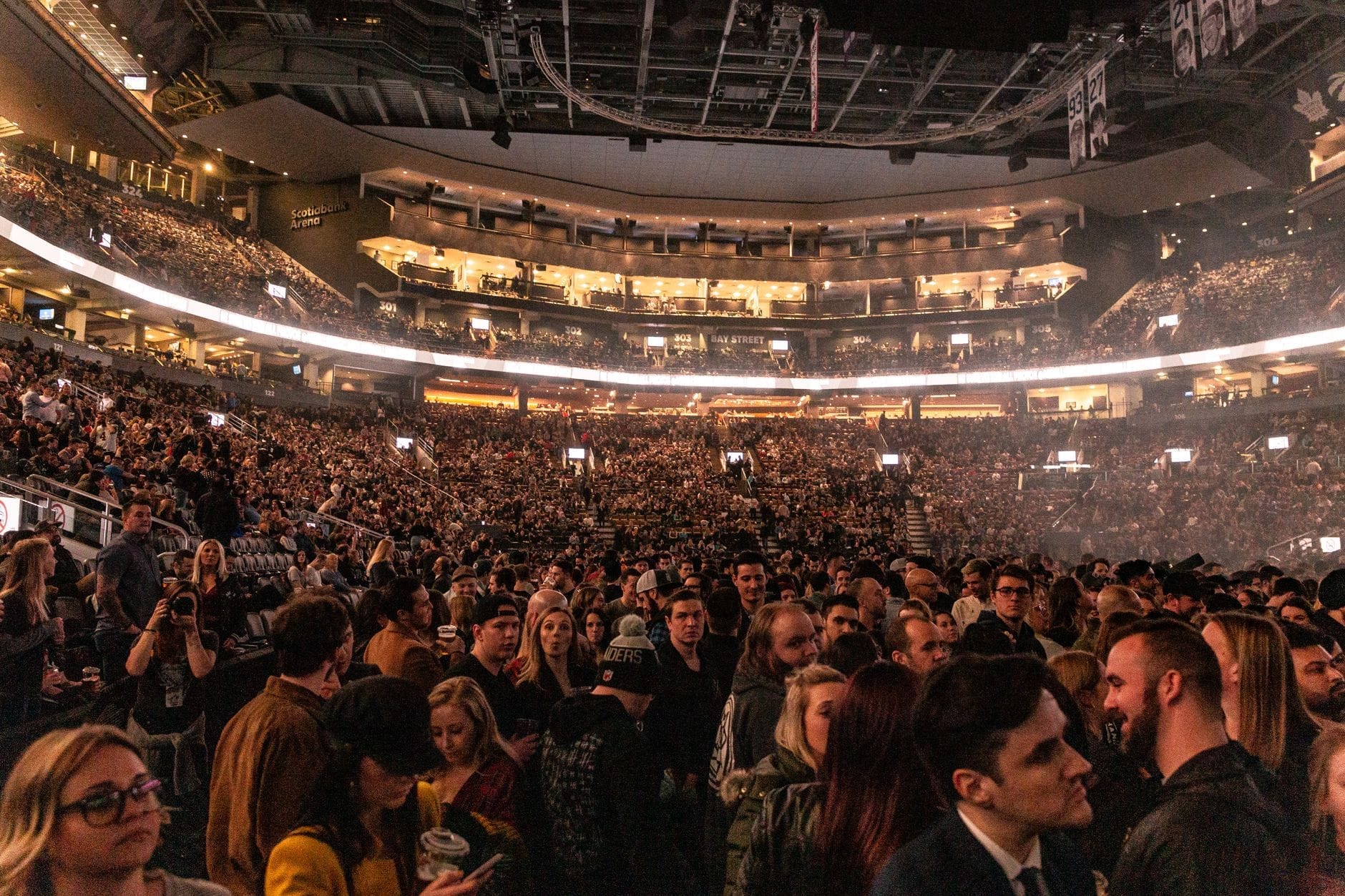
Scotiabank Arena is a 665,000-square-foot multi-purpose indoor arena at the heart of Toronto's South Core, steps from the waterfront and directly connected to Union Station by signed interior walkways. Opened on February 19, 1999 as Air Canada Centre, the building was renamed Scotiabank Arena on July 1, 2018, following a 2017 naming-rights agreement with Scotiabank. It is the full-time home of two major professional sports franchises: the Toronto Maple Leafs of the NHL and the Toronto Raptors of the NBA.
The arena's capacity adjusts by configuration: 18,800 for hockey, 19,800 for basketball, and up to 19,800 for full in-the-round concert setups. Those numbers make it one of the larger arenas in Canada and place it comfortably in the upper tier of NBA and NHL venues by size. On top of regular-season games, the building hosts major touring concerts, award shows, and special sporting events throughout the year.
One architectural detail worth knowing: the arena was constructed on the former site of the Canada Post Delivery Building, and the original east and south heritage walls of that structure were preserved and incorporated into the new building's exterior. Look for the older masonry as you approach from Bay Street — it's a quiet reminder that this stretch of downtown has layers that predate the glass towers surrounding it.
💡 Local tip
Getting here is straightforward: Union Station serves TTC subway Line 1, all GO Transit regional rail lines, and VIA Rail intercity trains. Once inside the station, follow the overhead signs for Scotiabank Arena — the indoor path takes roughly three to five minutes on foot, meaning you can arrive without stepping outside, which matters considerably in a Toronto January.
The Experience: Before, During, and After an Event
Arriving on Event Day
The transformation of the area around Bay Street and Bremner Boulevard on a Leafs or Raptors game night is worth experiencing in its own right. Two to three hours before puck drop or tip-off, the streets around the arena fill steadily with fans in jerseys, groups moving between the bars on lower King Street, and GO Train passengers streaming north from Union Station. The energy is identifiably different from a regular downtown evening, and on playoff nights it tips into something loud and collective that radiates for several blocks.
The arena doors typically open 90 minutes before game time, though this varies by event. Arriving in that first window gives you unhurried access to your seat, time to explore the concourses, and a chance to watch warm-ups on the ice or court, which diehard fans consider a non-negotiable part of the experience. Concession lines and merchandise queues grow sharply in the 45 minutes before the event starts.
Inside the Bowl
The seating bowl is steep enough that upper-level seats still feel reasonably close to the action, particularly for hockey, where the sight lines are clean from almost anywhere. The arena is loud in a way that enclosed single-roof venues tend to be — crowd noise reflects off the roof rather than escaping upward, so a full building in the third period of a tight game produces genuine noise levels that you feel physically. For concerts, the same acoustic quality means the sound is dense and full throughout the bowl.
Food and beverage options across the concourses include standard arena fare (hot dogs, nachos, draft beer) alongside more substantial options that reflect Toronto's restaurant culture: local vendors and upgraded menu items have gradually replaced generic concession-stand staples over the years. Prices are at the elevated end typical of major North American arenas, so factor that into your budget.
Post-Event and Crowds
Leaving Scotiabank Arena after a sold-out event requires patience. The multiple exit corridors funnel thousands of people toward the same transit nodes simultaneously. The smartest move is to stay in your seat for five to ten minutes after the final buzzer or last encore — that brief pause meaningfully reduces the crush at Union Station's turnstiles and the taxi queue on Bremner. If you're catching GO Transit back to the suburbs, check your train time in advance: some services run on modified schedules after major events.
⚠️ What to skip
Driving to Scotiabank Arena on event nights is not recommended unless you have pre-purchased parking and are comfortable with a 30-60 minute wait to exit the garage. The surrounding streets, particularly Bay, Front, and Bremner, become slow-moving corridors after large events. Transit is genuinely faster door-to-door for most visitors.
Tickets & tours
Live prices and dates from our booking partner. If you book, we may earn a commission at no extra cost to you.
History and Architectural Context
Before Scotiabank Arena opened in 1999, the Maple Leafs played at Maple Leaf Gardens on Carlton Street, a building that had served as their home since 1931. The move to the new downtown arena was part of a broader transformation of Toronto's South Core waterfront district, which shifted from industrial and rail-adjacent land uses toward mixed commercial and entertainment development through the late 1990s and 2000s.
The arena sits within the broader Entertainment District, a stretch of downtown that contains theatres, sports venues, restaurants, and nightlife concentrated west and south of the financial core. The Raptors, who had briefly played at SkyDome (now Rogers Centre) after their 1995 expansion entry into the NBA, also moved into the new building in 1999. The venue became the first in North American professional sports to host both an NHL and NBA franchise as permanent co-tenants.
The Raptors’ first NBA Finals appearance in 2019, in which they won the title that year, marked a period when Scotiabank Arena became a focal point for the city in a way that extended well beyond sports fans. The 2019 championship parade, which drew crowds estimated in the millions along the streets of downtown Toronto, is still referenced as one of the largest public gatherings in Canadian history.
Practical Information for Visitors
Getting There
The most reliable way to reach Scotiabank Arena is via Union Station, which serves TTC subway Line 1 (Yonge-University), all GO Transit regional rail and bus routes, and VIA Rail intercity trains. From the station's main concourse, follow the Scotiabank Arena signs through the indoor PATH connection — the walk is flat, covered, and well-marked. This matters especially in winter or during rain.
If you're navigating Toronto more broadly, the getting around Toronto guide covers TTC fares, Presto card setup, and transit options across the city in detail. For event nights, TTC Line 1 runs additional service after large events — trains are frequent, but platforms at Union and King stations will be packed immediately post-event.
Tickets and Entry
Tickets for all events at Scotiabank Arena are sold through the venue's box office or Ticketmaster. Prices are listed in Canadian dollars and vary considerably by event type, team performance, and seat location. For Maple Leafs games in particular, demand is high enough that last-minute single-game tickets through primary channels can be scarce and expensive; secondary market platforms typically have availability but at a premium. NBA Raptors games have historically offered somewhat better single-game ticket availability outside of playoff matchups.
The Ticket Office accepts walk-up purchases on event days, subject to availability. For concerts and special events, check the official events page at scotiabankarena.com for the most current listings and prices, as the calendar changes throughout the year.
Accessibility
Scotiabank Arena has received industry recognition for accessibility services. The building is fully wheelchair accessible, with designated seating areas on multiple levels, accessible restrooms throughout, and elevator access to all concourses. Guests requiring assistance can contact Fan Services by phone at +1 416-815-5982 or visit designated Fan Services locations inside the arena on event days. The indoor connection from Union Station is also step-free, which makes the transit arrival option practical for visitors with mobility considerations.
Is Scotiabank Arena Worth Your Time?
If you're in Toronto during hockey or basketball season and have even a passing interest in either sport, attending a game here is a legitimate way to spend an evening. The atmosphere at a sold-out Leafs game is genuinely electric in the way that few other entertainment experiences in the city can match. The Raptors, benefiting from the championship-era momentum, still draw consistent crowds with a devoted fan base that creates a different but comparably energetic atmosphere.
For visitors without a strong sports interest, major touring concerts at Scotiabank Arena are well-produced events in a venue with good sight lines and serviceable acoustics for large-format shows. Whether a specific concert is worth attending is obviously a function of the artist, but the venue itself is a competent and well-run space for that scale of production.
Visitors who prefer smaller, more intimate cultural experiences may find the scale and commercial energy of a major arena event less appealing. Toronto has excellent mid-sized venues and cultural institutions — from Massey Hall for live music to the Four Seasons Centre for the Performing Arts for opera and ballet — that offer a fundamentally different kind of evening.
The Surrounding Neighborhood
Scotiabank Arena occupies a position within walking distance of several other significant Toronto landmarks. The CN Tower is a ten-minute walk southwest, and Rogers Centre — home of the MLB's Toronto Blue Jays — sits immediately adjacent, sharing a plaza that becomes a concentrated sports district on days when both venues have events.
The waterfront is equally close: the Martin Goodman Trail and the Harbourfront area are accessible on foot heading south. For pre-game dining, the bars and restaurants concentrated along lower King Street West, within the Entertainment District, are the most convenient options and tend to fill predictably on game nights. Book in advance or arrive early if you want a table before a major event.
Insider Tips
- Download the Scotiabank Arena mobile app before you arrive — digital tickets, arena maps, and concession pre-ordering (where available) are all accessible there, and it reduces friction at entry, especially in crowds.
- For Leafs games, the warmup period on ice begins roughly 30 minutes before puck drop. If you care about seeing players up close, being in your seat for this window is worth the early arrival — players pass within feet of the glass during warmups.
- The 100-level concourse (lower bowl) and 300-level concourse (upper bowl) have noticeably different crowd atmospheres. Lower bowl is more corporate and subdued on a per-seat basis; upper bowl, particularly in the corners, is louder and more fan-driven. Budget-conscious visitors often find the upper bowl a better experience per dollar.
- If you're connecting via GO Transit after the event, identify your train platform in Union Station before the event ends — the station's lower level can be disorienting in post-event crowds, and knowing where you're going saves time.
- The arena's Fan Services desk can assist with lost items, accessibility needs, and general venue questions. It's located inside the arena near the main entrances — useful to note before you need it.
Who Is Scotiabank Arena For?
- NHL and NBA fans visiting Toronto during the regular season or playoffs
- First-time Toronto visitors wanting a high-energy, quintessentially local evening out
- Groups and families looking for a structured shared experience in the city centre
- Concert-goers attending large-format touring productions
- Visitors combining a game night with exploration of the nearby waterfront and Entertainment District
Nearby Attractions
Other things to see while in Entertainment District:
- Royal Alexandra Theatre
The Royal Alexandra Theatre has anchored Toronto's Entertainment District for over a century, staging everything from Broadway transfers to world premieres inside one of North America's most beautifully preserved Beaux-Arts theatre buildings. Here is what to expect before you book your seats.
- TIFF Lightbox
TIFF Lightbox is the permanent headquarters of the Toronto International Film Festival, housing five cinemas, gallery spaces, and a film reference library in the heart of the Entertainment District. Open year-round, it draws serious film lovers and casual visitors alike with a program that stretches far beyond festival season.
Planning a trip? Discover personalized activities with the Nomado app.