Four Seasons Centre for the Performing Arts: Toronto's Home of Opera and Ballet
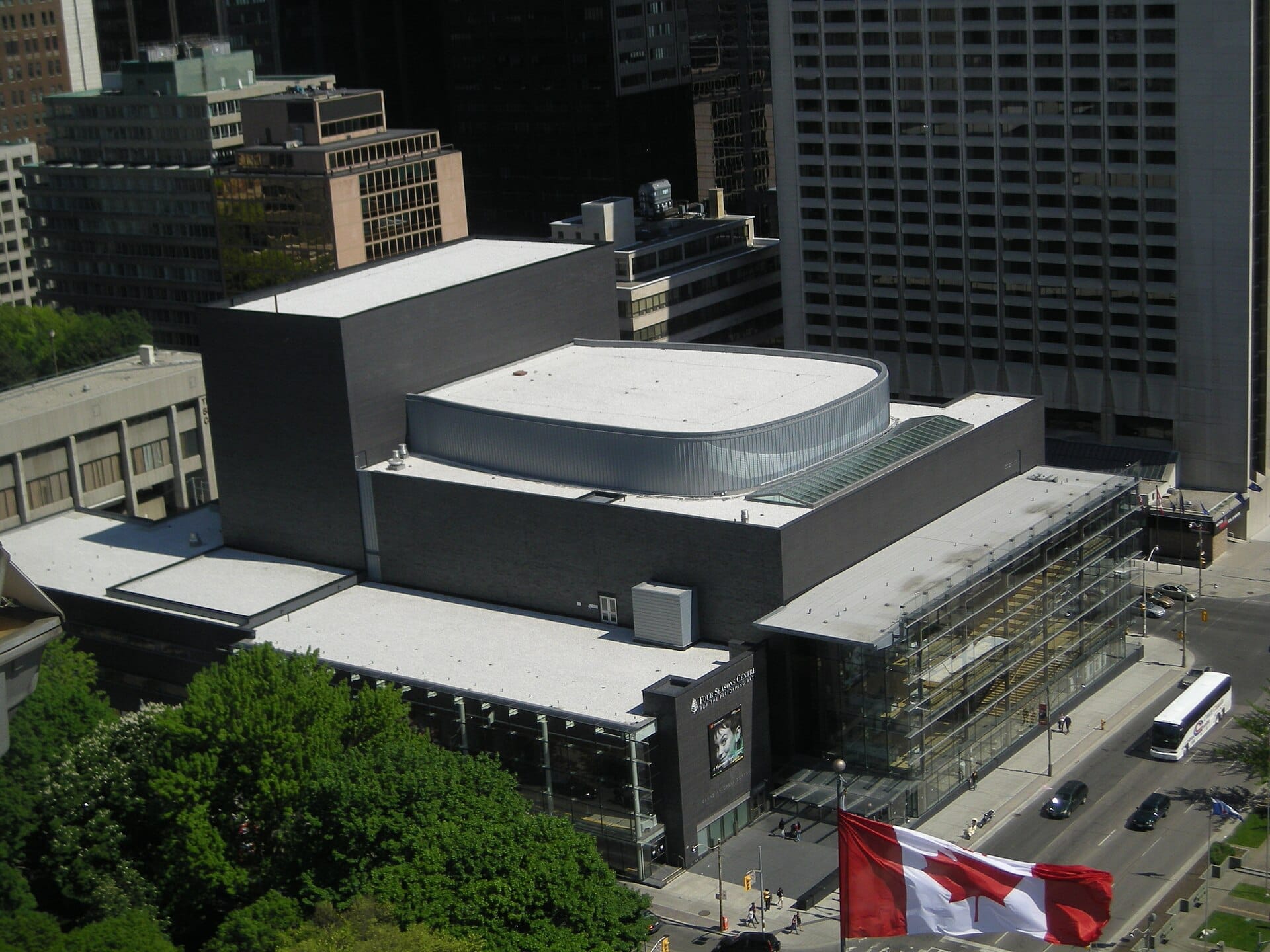
The Four Seasons Centre for the Performing Arts is Canada's first purpose-built opera and ballet house, seating 2,071 in a classic horseshoe auditorium at the corner of Queen Street West and University Avenue. Designed by Diamond Schmitt Architects and opened in 2006, it is the permanent home of the Canadian Opera Company and the National Ballet of Canada.
Quick Facts
- Location
- 145 Queen Street West, Toronto, ON M5H 4G1 (corner of University Avenue)
- Getting There
- Osgoode Station, TTC Line 1 (Yonge–University) — direct indoor access
- Time Needed
- 2.5–3 hours for a full opera or ballet performance; allow extra time for pre-show lobby exploration
- Cost
- Event tickets only (no general admission); prices vary by production and seat — from approximately CAD $45–$50 upward for some performances
- Best for
- Opera and ballet fans, architecture enthusiasts, first-time classical performance-goers, date nights
What the Four Seasons Centre Actually Is
The Four Seasons Centre for the Performing Arts is not a general events hall that occasionally hosts opera. It was designed from the ground up for one purpose: to give Canada world-class acoustic conditions for live opera and ballet. When it opened in 2006, it became the first building in the country purpose-built to those standards, filling a gap that had left two of Toronto's most prestigious performing arts companies working in adapted spaces for decades.
The two primary resident companies are the Canadian Opera Company (COC), which is Canada's largest opera company, and the National Ballet of Canada. Both organizations schedule full seasons here, typically running from fall through spring. Outside those seasons, guest presenters bring in other productions, so the venue sees activity across most of the calendar year.
Ticket prices depend entirely on the production and seat category. Some productions from guest presenters list starting prices around CAD $100; COC and National Ballet tickets vary widely by date, tier, and availability. There is no fixed entrance fee and general public access is typically limited to performance times or pre-arranged tours. Check the relevant company's website directly before purchasing.
💡 Local tip
Book early for the Canadian Opera Company's and National Ballet's main-season productions — popular titles sell out months in advance. Rush tickets and student standby programs are available through the COC for budget-conscious attendees.
The Architecture: Glass, Stone, and Deliberate Restraint
Diamond Schmitt Architects, the Toronto firm led by Jack Diamond, gave the building a deceptively quiet exterior. From Queen Street West, the facade presents a large curtain-wall of glass that reveals the lobby's interior volumes to passersby — staircases, the sweep of the upper galleries, and the warm timber finishes inside are all visible from the sidewalk at night, when the building glows against the surrounding streetscape. It reads as transparent and civic rather than monumental, which is deliberate: Diamond Schmitt wanted the building to feel accessible from the street.
The total footprint covers roughly 35,716 square metres, distributed across a site squeezed into downtown Toronto's dense urban core. What makes this impressive is not just the scale but the precision required: the auditorium sits inside the building like a box within a box, structurally isolated to control sound transmission from street traffic and the subway below. The building is directly above the Osgoode Station platform, which makes that isolation engineering a genuine technical achievement.
The exterior sits across University Avenue from Osgoode Hall, one of Toronto's most significant 19th-century civic buildings. The contrast between the classical stone of Osgoode Hall and the contemporary glass of the Four Seasons Centre is one of the more interesting architectural conversations in downtown Toronto. If you are arriving early, take a few minutes to look at both buildings from the middle of the intersection.
Tickets & tours
Live prices and dates from our booking partner. If you book, we may earn a commission at no extra cost to you.
LEGOLAND Discovery Centre Toronto tickets
From 16 €Instant confirmationFree cancellationToronto Old Town: Dark Side Exploration Game and Tour
From 12 €Instant confirmationFree cancellationToronto 'Little Canada' entrance tickets
From 27 €Instant confirmationFree cancellationNiagara Falls evening tour with boat, dinner and Illumination Tower
From 77 €Instant confirmationFree cancellation
Inside the Auditorium: The Horseshoe and What It Means for Your Seat
The auditorium holds 2,071 seats in a traditional horseshoe configuration. This shape was chosen for acoustic reasons: it wraps sound around the audience rather than projecting it from a single direction, and it keeps most seats at a relatively close distance from the stage. The hall has a warmth and intimacy that larger venues sacrifice for capacity.
For first-time visitors, seat selection matters more than the ticket price alone suggests. The lower orchestra stalls offer clear sightlines to the full stage picture, but the lateral boxes and front-of-tier gallery seats often provide the best acoustic experience, with voices and orchestral sound arriving with less obstruction. Rear gallery seats are the most affordable and acoustically still creditable, though you will be watching from a significant height. Opera glasses are worth bringing for rear positions.
The hall's wooden surfaces, including the stage floor and some reflective panels, contribute to a warm mid-frequency resonance that suits both operatic voices and orchestral strings. During a full operatic performance, the difference between this venue and a converted concert hall is perceptible even to ears not trained in acoustics.
ℹ️ Good to know
The venue has 103 washrooms across its floors — an unusually high number, designed specifically to handle the demand during short intermissions. Queues during breaks are generally manageable compared to older performing arts venues.
Arriving and Navigating the Building
The most straightforward way to arrive is via the TTC. Osgoode Station on Line 1 (Yonge–University) connects directly to the building through indoor entrances, meaning you can travel from much of the city and arrive without stepping outside. On winter evenings when temperatures drop well below freezing, this is not a trivial convenience. The station is also accessible for wheelchair users, as is the connection to the venue.
If you are combining this with other downtown stops, the venue sits within walking distance of Nathan Phillips Square and Toronto City Hall to the north, and connects loosely to the broader PATH underground city network. Underground parking with direct entry to the venue is available for those driving.
The lobby opens well before curtain time, typically an hour or more in advance for main-season productions. The ground-floor bar and upper-level lounge areas are active during this pre-show window, and the glass walls looking onto Queen Street give the space an open, unclaustrophobic feel. Pre-show drinks are priced at standard Toronto bar rates — not cheap, but not an outlier for the city's downtown.
Latecomers are generally held at the back until a suitable break in the performance. For opera, this can mean waiting until the end of a scene or act, which may be 20–40 minutes into the performance. Arrive with buffer time.
Performances and What to Expect From the Season
The Canadian Opera Company typically runs five to six full productions per season, mixing canonical repertoire (Verdi, Puccini, Mozart, Wagner) with less frequently staged works. The National Ballet of Canada programs a similar number of productions across the season, including full-length classical ballets and shorter contemporary works. Season schedules are published months in advance on the respective organizations' websites.
If you are new to opera or ballet, this is one of the stronger introductions available in North America. The acoustic quality and sightlines are significantly better than comparable venues of the same size. For a broader look at Toronto's cultural calendar, the best museums in Toronto guide and the things to do in Toronto overview can help you plan a fuller itinerary around a performance evening.
Guest productions outside the two resident companies' seasons vary in quality and genre. Some bring internationally recognized touring productions; others are more local in scope. Read reviews from Toronto-based arts press before purchasing tickets for unfamiliar guest presentations.
Practical Considerations and Who Should Reconsider
Dress at the Four Seasons Centre is smart casual to formal, depending on the production. Main-season opera and ballet evenings see a range from business casual to black tie, with the majority of the audience in smart-casual attire. There is no enforced dress code, but the atmosphere of the venue — and the ticket prices — tend to self-select for a relatively dressed-up crowd. Trainers and casual sportswear will draw glances in the orchestra stalls on a Saturday night.
Accessibility is well considered throughout. Designated wheelchair seating is available, there are multiple elevators across all tiers, and the direct subway connection removes barriers for those who rely on public transit. The 103 washrooms include accessible facilities. Contact the box office in advance to confirm specific seating requirements.
Travelers who should reconsider: if you have no interest in opera, ballet, or classical performance, there is no walk-in experience here on a non-performance day. The building is not a museum, and its interiors are not accessible simply by purchasing a lobby ticket. It is a working performance venue, full stop. Similarly, families with young children should think carefully — most productions run between 2.5 and 4 hours with one or two intermissions, and the expectation of silence is taken seriously. Some COC and National Ballet productions do offer family-friendly or youth-oriented programming; check their respective event listings.
⚠️ What to skip
Photography inside the auditorium during performances is strictly prohibited. Phone use is expected to stop entirely once the performance begins. Ushers enforce this, particularly during COC and National Ballet productions.
The Neighbourhood Context
The Four Seasons Centre sits in the transition zone between Toronto's Financial District and its Entertainment District. Queen Street West here has a different character from its western stretches — it is more corporate, with fewer independent shops and more office towers. Pre-show dining options within a few blocks include everything from quick casual spots to more formal restaurants, but the immediate blocks around the venue are not the city's most interesting dining strip. If dinner before a performance matters to you, the Toronto food guide suggests heading slightly further afield — King Street West, a 10-minute walk, has significantly more variety and energy.
After a performance, the area empties quickly. Taxis and ride-hailing pickups are straightforward from Queen Street West, and Osgoode Station provides rapid transit access across the network. If you are staying in the downtown core, you can realistically be back at your hotel within 15 minutes of curtain down.
Insider Tips
- The COC offers 'Rush' tickets for same-day and day-before performances at significantly reduced prices — typically available online from around 11am on the day of the show. This is the best way to experience a main-season production without the full ticket cost.
- Upper gallery seats in the fourth tier deliver surprisingly strong acoustics for the price. The visual angle is steep, but voices carry well and you lose nothing in sound quality compared to the orchestra stalls.
- The glass lobby is one of the best vantage points to photograph the Queen Street West and University Avenue intersection at night — the building essentially frames the street outside as a composition. This is available during any performance evening while you are in the lobby.
- Arrive at least 45 minutes before curtain if you want to explore the upper lobby levels, have a drink without rushing, and read the program. The building's interiors are worth time on their own terms before the performance begins.
- Parking in the underground garage fills quickly on Saturday evenings during popular productions. The TTC connection from Osgoode Station is both faster and less stressful than driving into the downtown core on a weekend night.
Who Is Four Seasons Centre for the Performing Arts For?
- Opera and ballet fans who want to see Canadian and international productions in an acoustically elite hall
- Architecture and design enthusiasts interested in contemporary civic buildings and the Diamond Schmitt portfolio
- Couples looking for a high-quality, distinctly Toronto cultural evening
- Travelers building a full arts itinerary who want to include a live performance alongside Toronto's major museums and galleries
- First-time opera or ballet attendees who want the most accessible and well-designed introduction to the art form in Canada
Nearby Attractions
Other things to see while in Downtown Toronto:
- Allan Gardens Conservatory
Allan Gardens Conservatory is a free, year-round botanical conservatory at 160 Gerrard Street East in downtown Toronto. Housed in six glass display houses anchored by a 1910 Edwardian Palm House, it holds about 1,500 m² of tropical palms, cacti, orchids, and seasonal blooms. One of the oldest parks in Toronto, it remains one of the city's most underrated green spaces.
- Art Gallery of Ontario
The Art Gallery of Ontario is one of North America's largest art museums, housing over 90,000 works inside a landmark Frank Gehry-renovated building in downtown Toronto. From Indigenous Canadian art to European masters and contemporary photography, the AGO rewards focused visitors and casual explorers alike.
- Brookfield Place (Allen Lambert Galleria)
The Allen Lambert Galleria inside Brookfield Place is a free, publicly accessible arcade designed by architect Santiago Calatrava between 1987 and 1992. Its arching steel-and-glass canopy, rising between two of downtown Toronto's tallest towers, is one of the most impressive interior spaces in Canada.
- Campbell House Museum
Built in 1822 for Upper Canada's Chief Justice, Campbell House Museum is the oldest surviving residence from the original Town of York. Moved to its current downtown corner in 1972 and opened as a museum in 1974, it offers an intimate, unhurried window into early colonial Toronto — a sharp contrast to the glass towers surrounding it.
Planning a trip? Discover personalized activities with the Nomado app.