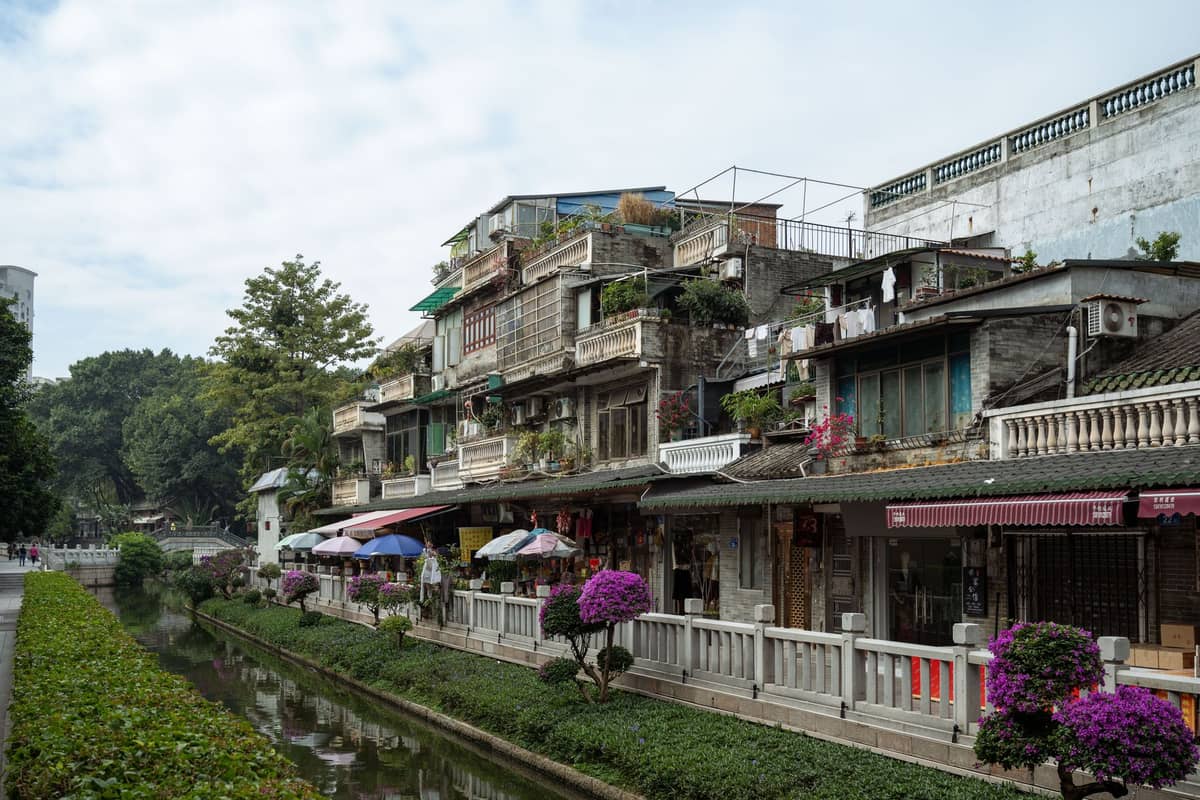
Yuexiu is Guangzhou's oldest and most historically layered district, where imperial-era monuments stand alongside Republican-period architecture and busy commercial streets. At 33.8 km², it holds the city's administrative heart, its most visited park, and some of its most rewarding street-level wandering.
Yuexiu is where Guangzhou's past is most legible. The Five Rams Statue, the Zhenhai Tower, Sun Yat-sen Memorial Hall, and a chain of temples and ancestral halls spread across a district that has been the city's political and cultural center for more than two thousand years. It is dense, walkable, and rewards attention at any pace.
Orientation
Yuexiu District occupies roughly 33.8 km² at the geographical and historical core of Guangzhou, in Guangdong Province, China. Its broad boundaries run from Guangzhou Avenue on the east to Renmin Road on the west, with the Pearl River forming a loose southern edge and the slopes of Baiyun Mountain defining the northern approach. In practical terms, the district is compact enough that its main sightseeing corridor, from Yuexiu Park down through Beijing Road, can be walked end to end in under an hour.
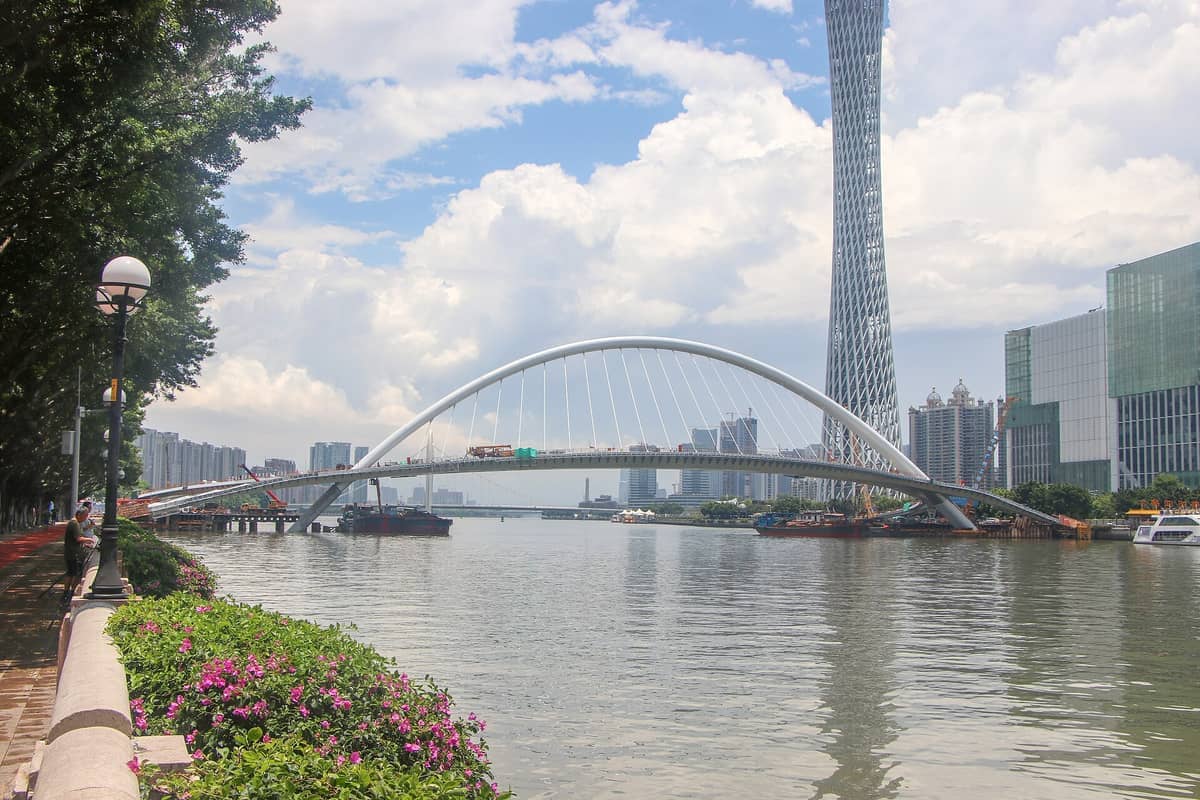
To the west, Yuexiu merges into Liwan District, Guangzhou's old commercial quarter of shophouses and jade markets. To the east, it hands off to Tianhe District, the modern CBD of glass towers and Zhujiang New Town. To the south, across the Pearl River, lies Haizhu District. Understanding this position helps a traveler calibrate their base: Yuexiu puts you between the historical city and the contemporary one, which is either a strength or a compromise depending on what you are after.
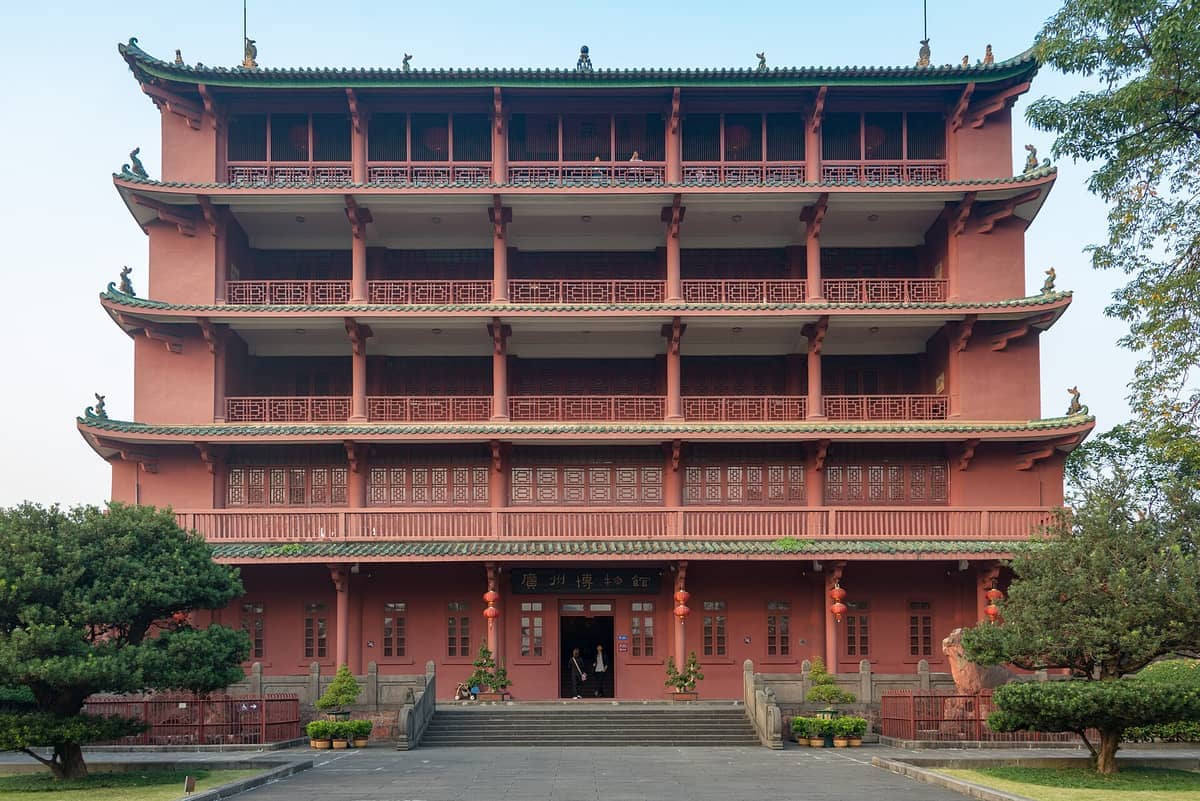
The district is also where several of Guangzhou's major civic and cultural institutions cluster: provincial government offices, large banks, the main municipal library, and the Guangzhou Museum at Zhenhai Tower. If you are trying to understand how Guangzhou thinks of itself, Yuexiu is the place to start.
Character & Atmosphere
Early mornings in Yuexiu have a particular quality that distinguishes the district from Guangzhou's newer neighborhoods. By 6:30 AM, the covered market lanes near Beijing Road and the older residential blocks north of Dongfeng Road are already fully alive. Elderly residents occupy the benches and exercise equipment in small pocket parks. Street vendors set up congee stalls and fried dough carts before the office crowds arrive. The air carries the smell of fermented tofu and frying oil, undercut by the exhaust of delivery scooters navigating narrow lanes.
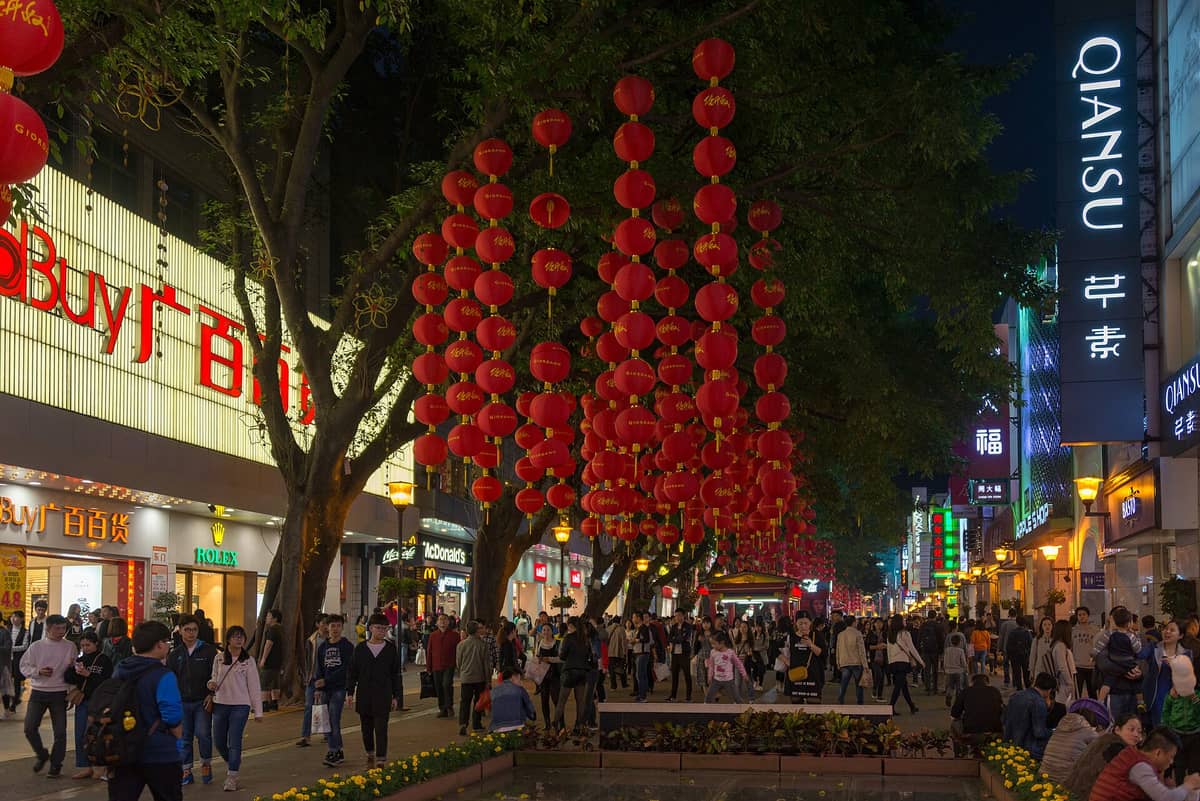
By mid-morning the district shifts register. Yuexiu Park fills with tourists and school groups. The streets around Sun Yat-sen Memorial Hall move at a more deliberate pace, with coaches pulling up and visitors posing outside the blue-domed auditorium. Beijing Road Pedestrian Street becomes a continuous procession of shoppers and browsers. The commercial energy here is real and local, not staged for tourism: Guangzhou residents genuinely use these streets for everyday errands, which keeps the area from feeling like a heritage theme park.
Afternoons in summer are best spent inside or under cover. The district's subtropical humidity, which peaks between June and September, makes extended outdoor walking uncomfortable without shade or air conditioning. Autumn and early winter are when Yuexiu is at its most pleasant: temperatures drop to the high teens and low twenties Celsius, light comes in at a lower angle that flatters the older architecture, and the crowds at the main attractions thin noticeably after October. By evening, the temple streets and pedestrian zones take on a different character: the food vendors return in greater numbers, strings of lanterns light the older lanes, and the pace slows to something more conversational.
💡 Local tip
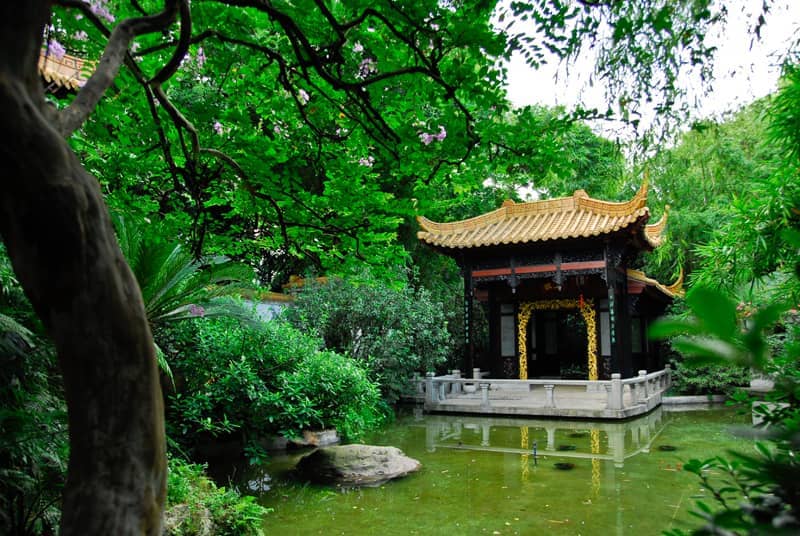
Yuexiu Park is at its quietest and most atmospheric on weekday mornings before 9 AM. The lake reflections are cleaner, the paths less crowded, and the park's pavilions and hilltop towers easier to appreciate without distraction.
What to See & Do
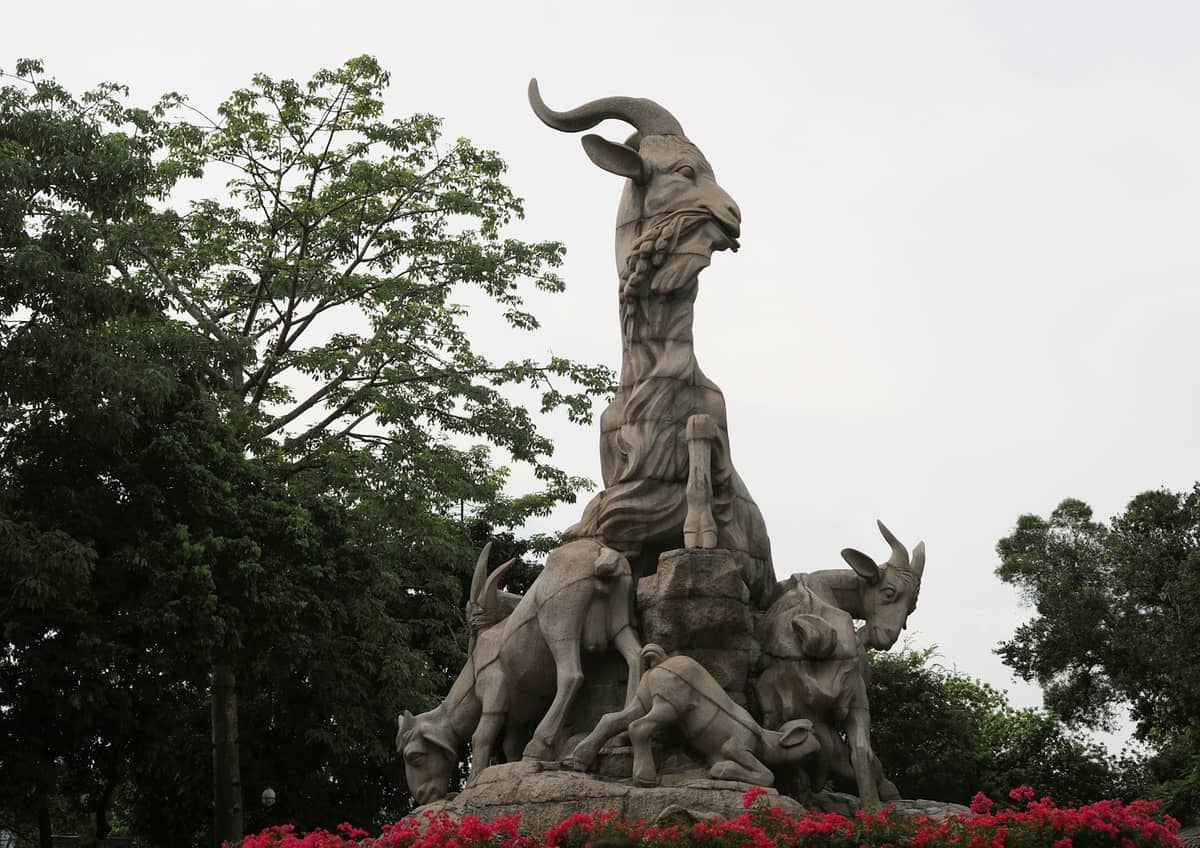
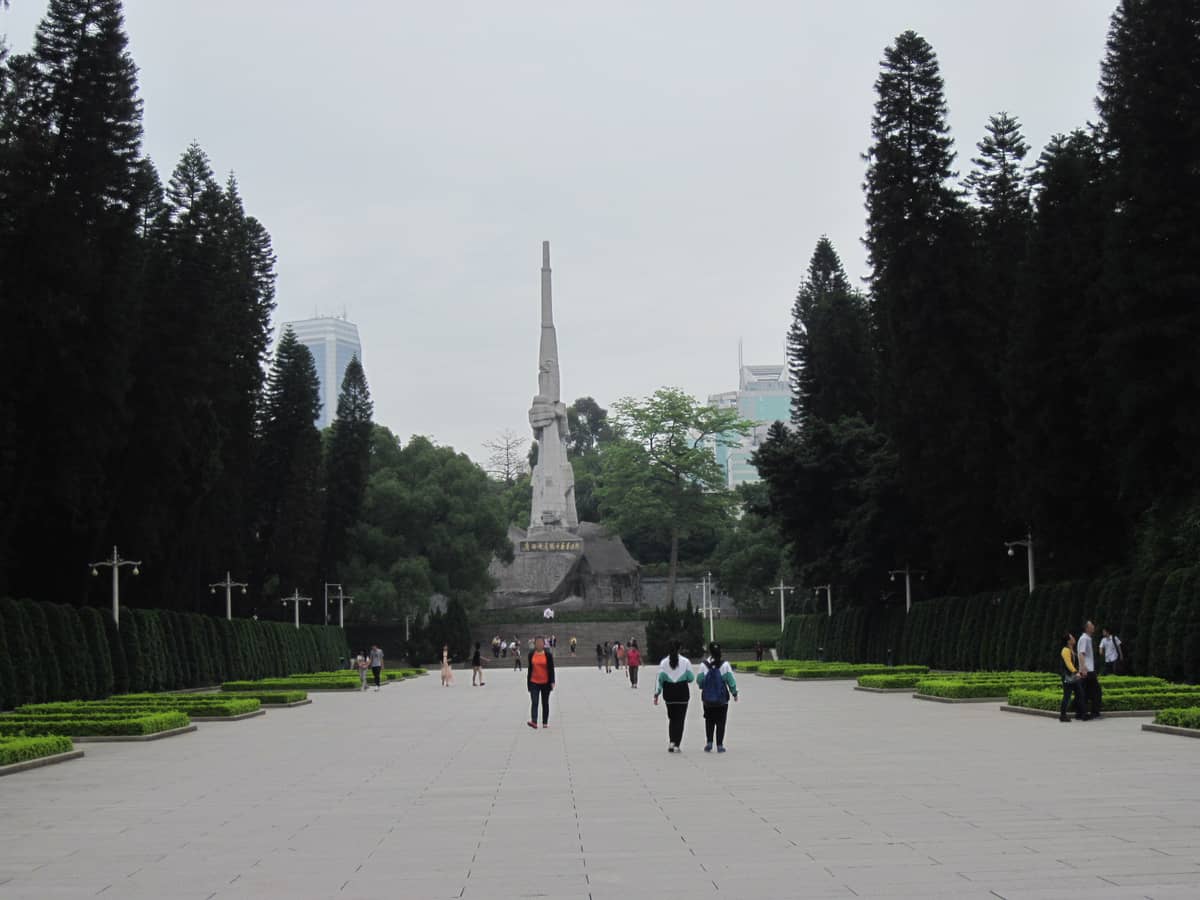
Yuexiu Park is the district's anchor, covering 860,000 square meters across three artificial lakes and several low hills. It contains the Five Rams Statue, Guangzhou's most recognized civic symbol, as well as the Ming-dynasty Zhenhai Tower, which houses the Guangzhou Museum. The park is free to enter and worth at least half a day if you plan to explore the hilltop views and the quieter paths along the northern lake.
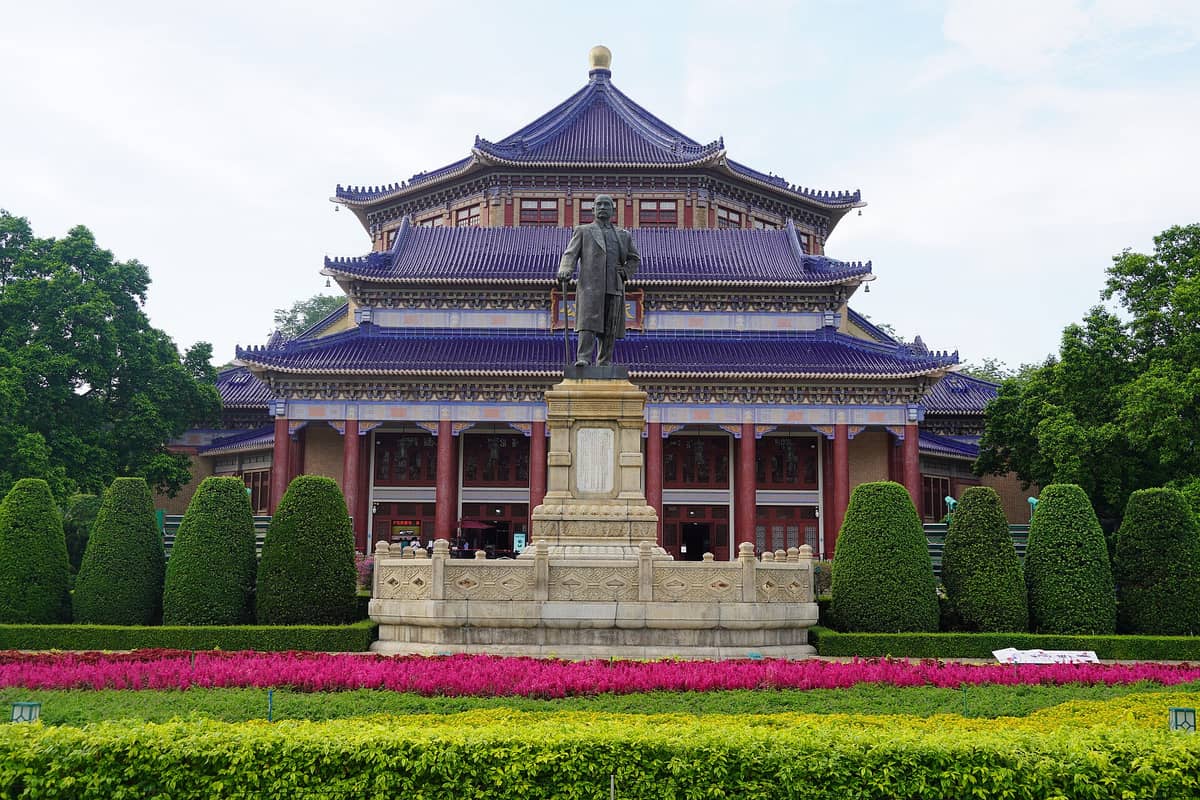
A short walk south from the park, the Sun Yat-sen Memorial Hall is one of Guangzhou's most recognizable pieces of Republican-era architecture: an octagonal auditorium topped with a deep blue dome, set in formal gardens that are pleasant to walk through even if you do not go inside. The building was completed in 1931 and remains in active use as a performance venue, which gives it a purpose that purely ceremonial monuments lack.
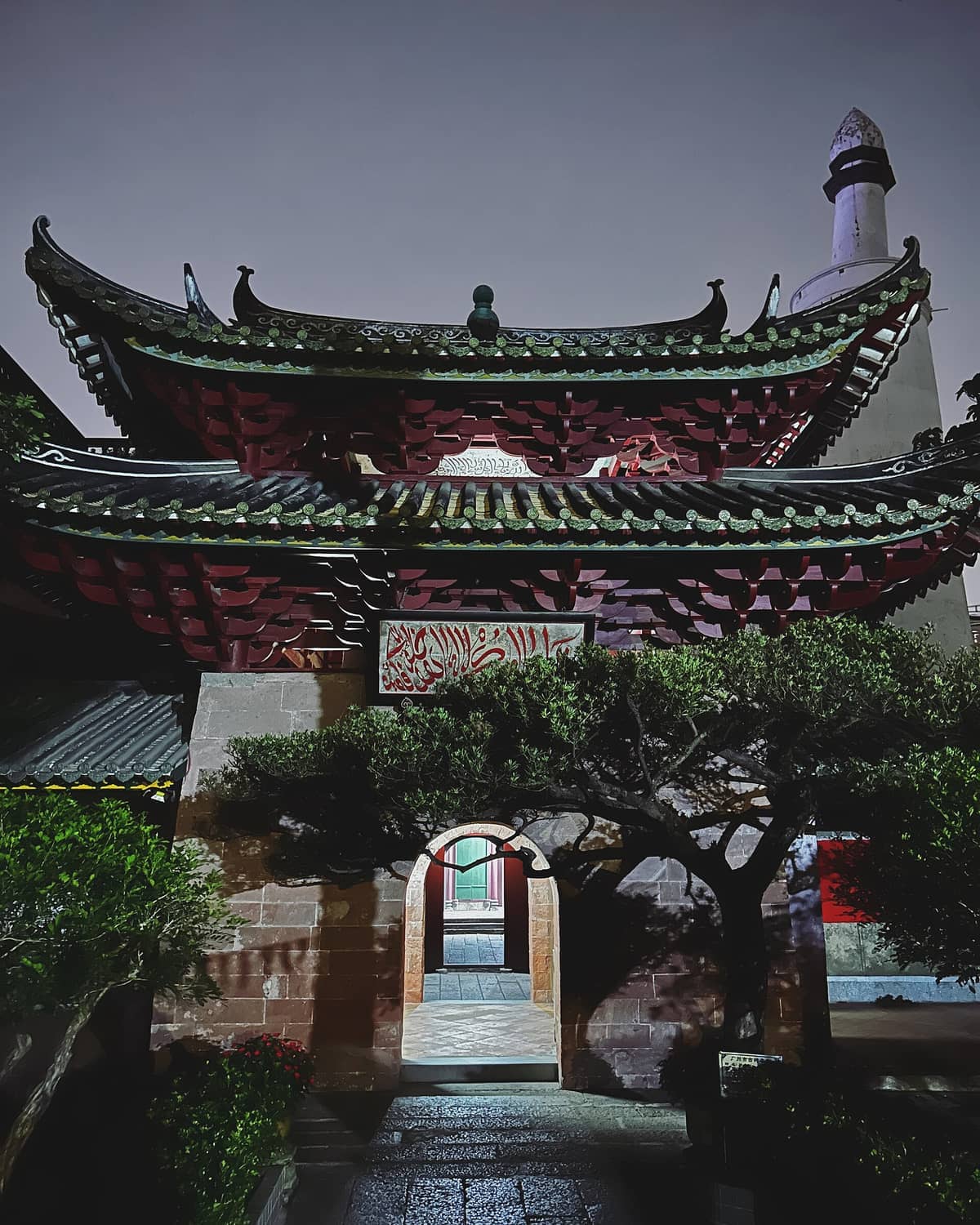
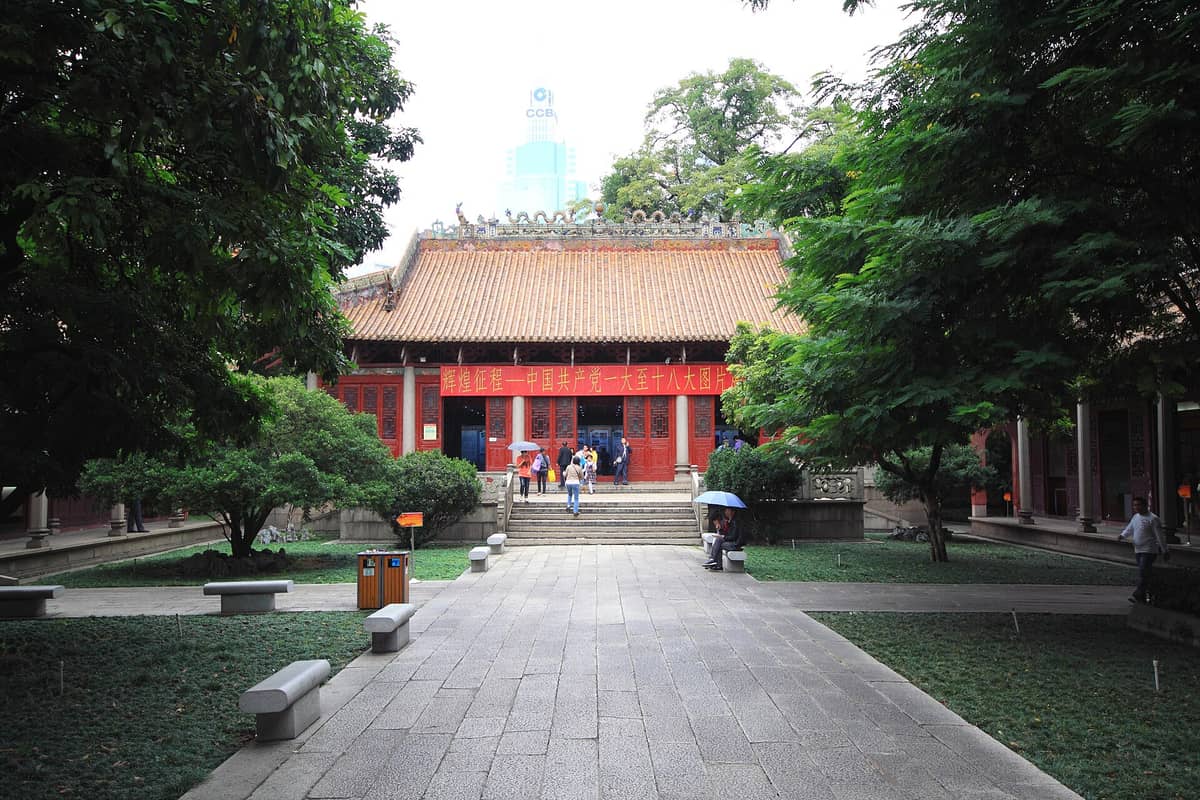
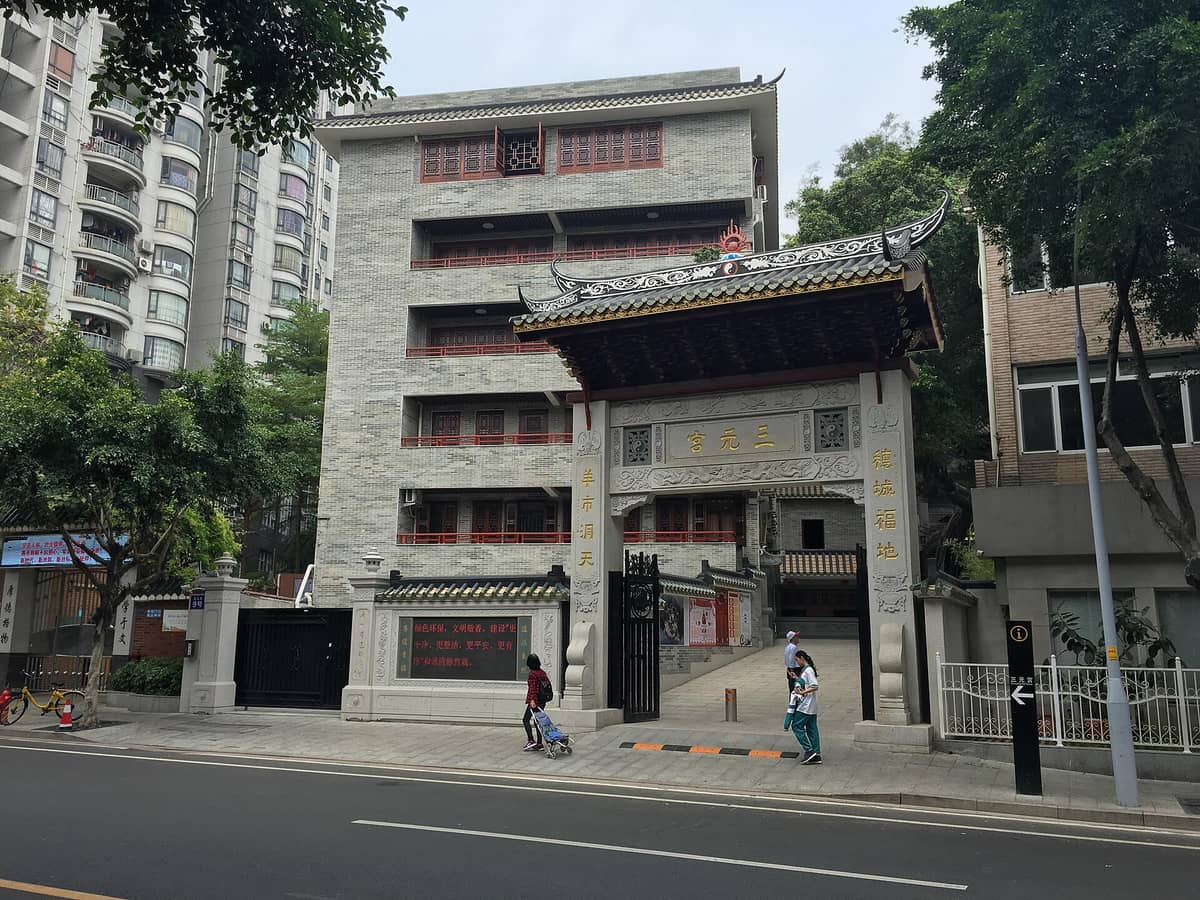
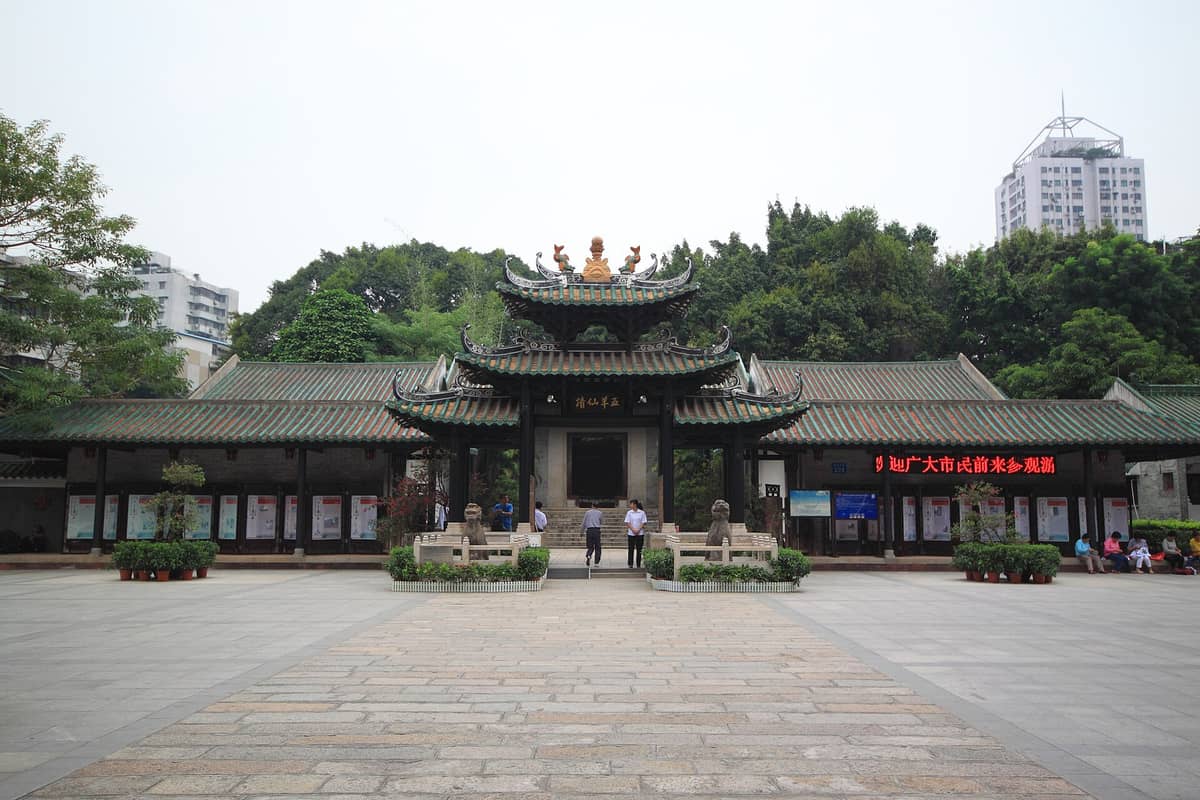
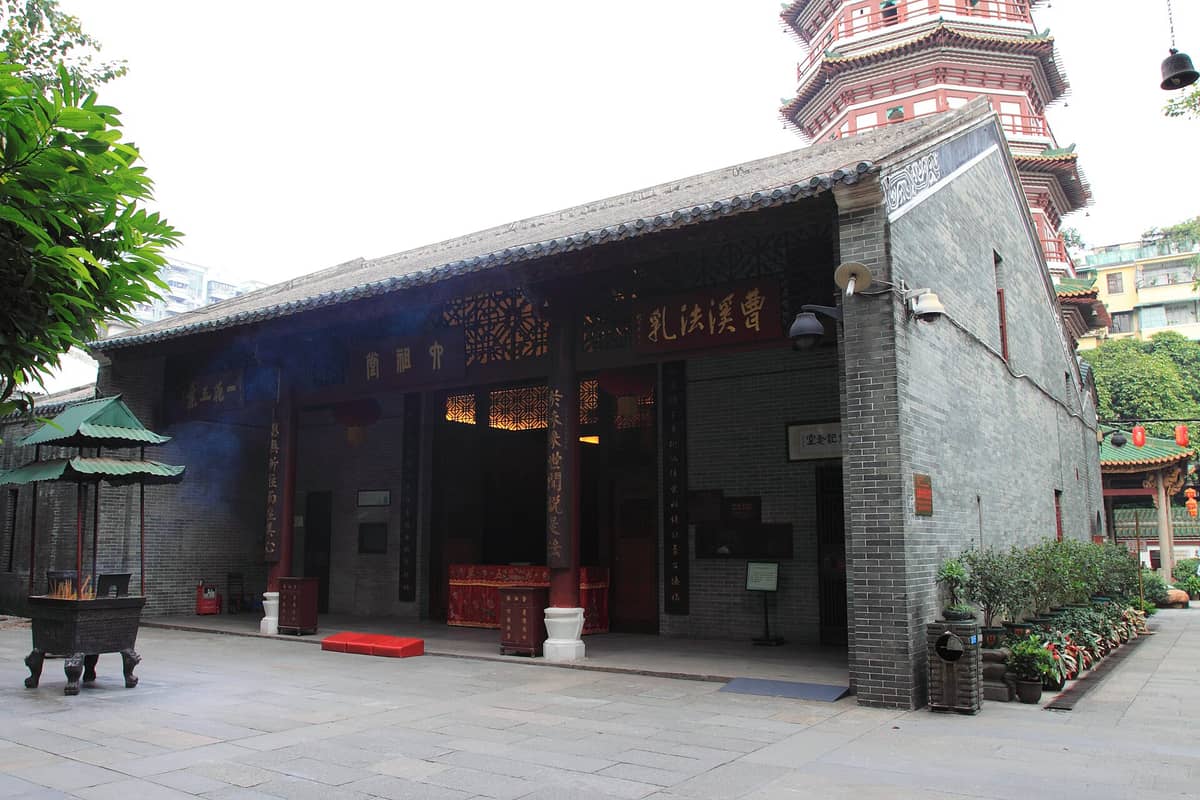
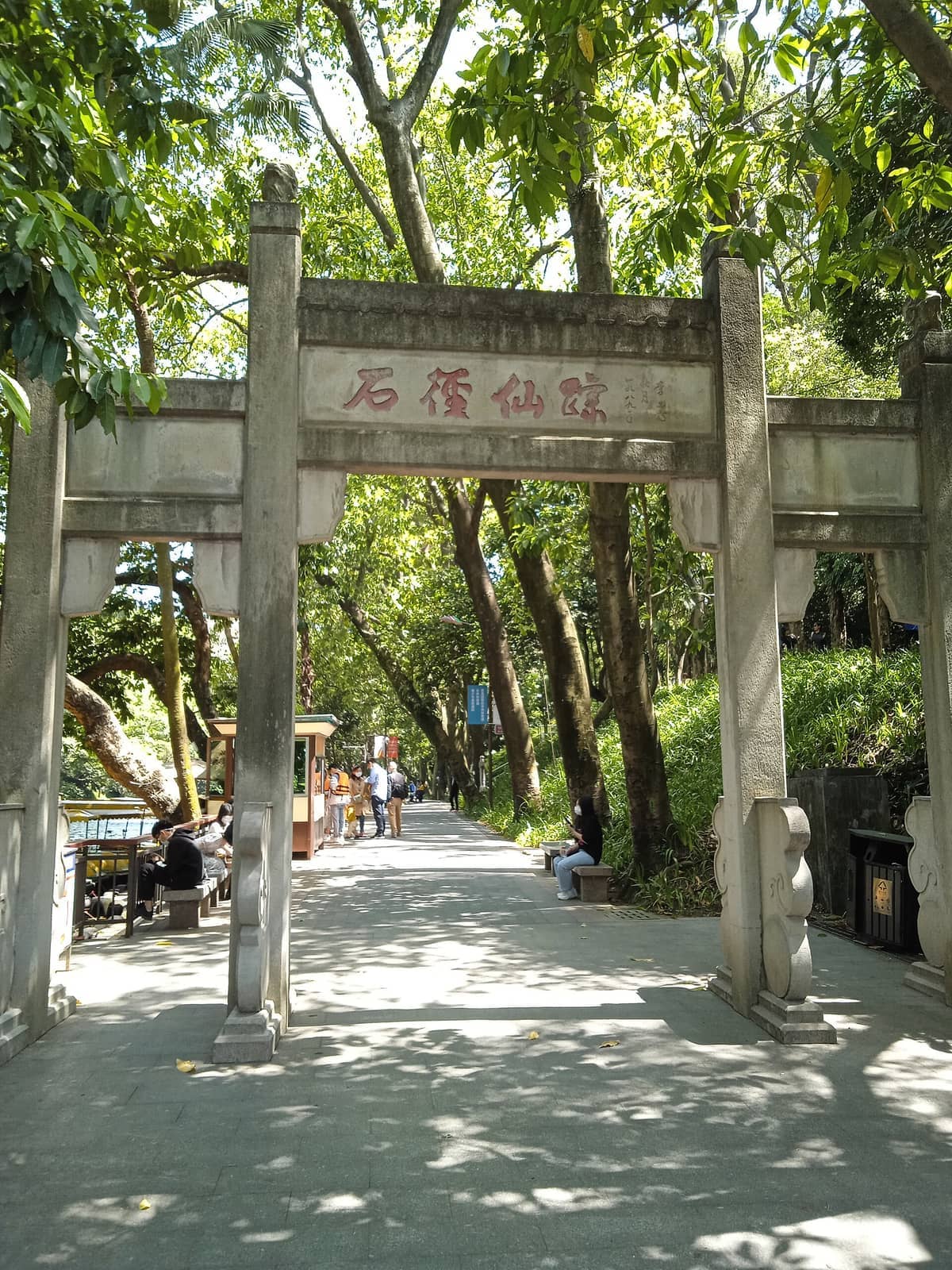
Further north in the district, the Temple of the Six Banyan Trees and the Huaisheng Mosque represent Guangzhou's longer religious history. The mosque, sometimes called the Lighthouse Mosque, is among the oldest in China and still an active place of worship. The temple complex is dominated by the Flower Pagoda, a 57-meter structure that has marked this part of the city for well over a millennium. Both sites are within reasonable walking distance of each other and make a logical half-day pairing with the Temple of the Five Immortals nearby.
The Beijing Road Pedestrian Street is worth a visit not just for shopping but for what lies underfoot: excavated archaeological layers exposed under glass panels in the pavement reveal road surfaces from multiple dynasties, a quietly extraordinary detail that most visitors walk straight over without noticing. Look down before you look at the shop fronts.
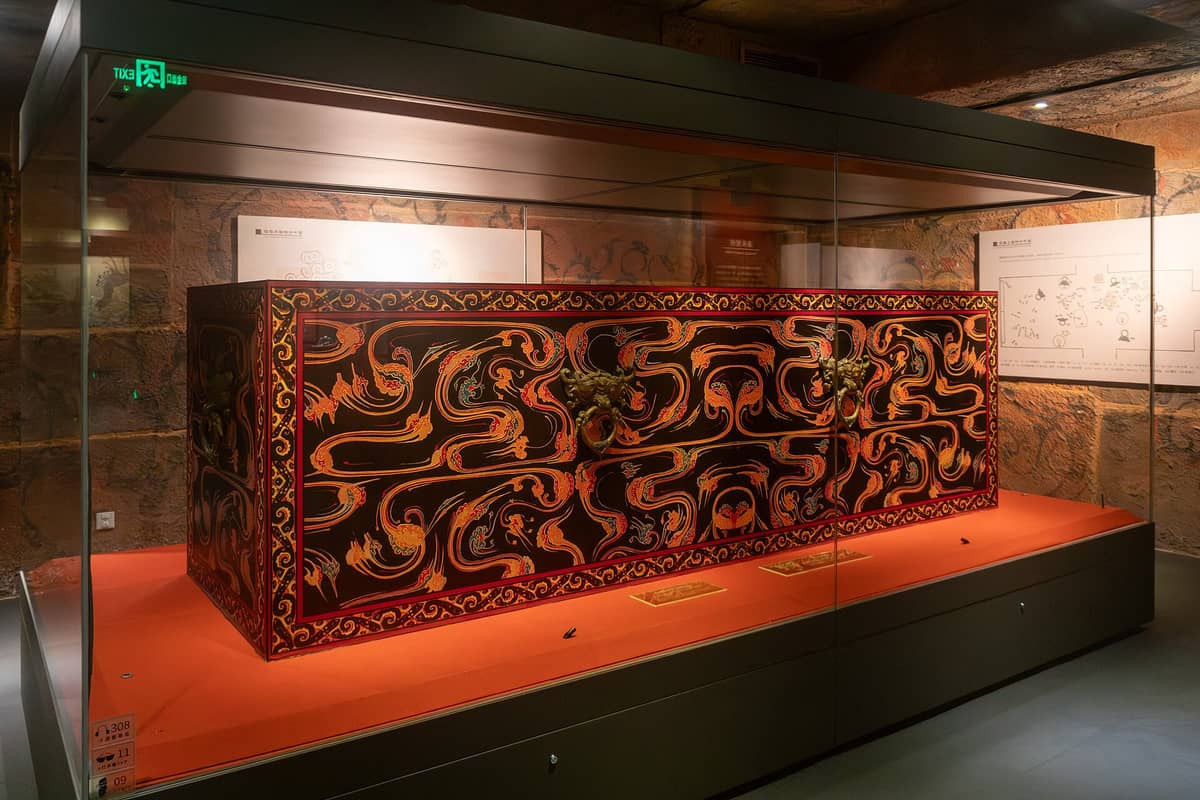
Yuexiu also contains the Peasant Movement Training Institute and the Nanyue King Mausoleum Museum, two very different but equally compelling sites. The mausoleum, discovered in 1983, contains the undisturbed burial of the second king of the Nanyue Kingdom from the second century BC, with thousands of artifacts still in situ. It is one of the most significant archaeological museums in southern China and tends to be less crowded than it deserves.
Yuexiu Park and the Five Rams Statue: free entry, best on weekday mornings
Zhenhai Tower and Guangzhou Museum: inside the park, separate admission, overview of city history
Sun Yat-sen Memorial Hall: Republican-era architecture and formal gardens, check for evening performances
Temple of the Six Banyan Trees: active Buddhist temple with the 57-meter Flower Pagoda
Huaisheng Mosque: one of China's oldest mosques, still in regular use
Nanyue King Mausoleum Museum: Han-dynasty royal burial with original artifacts, genuinely world-class
Peasant Movement Training Institute: significant site for understanding early 20th-century Chinese political history
ℹ️ Good to know
The Nanyue King Mausoleum Museum is consistently underestimated by first-time visitors to Guangzhou. The burial chamber itself, preserved largely intact, is one of the most complete Han-dynasty royal tombs accessible anywhere. Budget at least 90 minutes and read the wall panels carefully.
Eating & Drinking
Yuexiu does not have Guangzhou's most famous restaurant concentration, but it has honest, everyday Cantonese food in quantity and at prices that reflect a local clientele rather than a tourist one. The streets around Beijing Road, Zhongshan Road, and the lanes north of Dongfeng Road all have clusters of roast meat shops, noodle houses, and dim sum teahouses that open early and stay busy through lunch.
Cantonese dim sum in this part of the city follows the traditional format: a morning-only or morning-to-lunch service, noisy communal dining rooms, trolleys or order slips, and a bill that rarely exceeds 80 to 120 CNY per person for a full spread. For a broader introduction to the style and etiquette, the dim sum guide for Guangzhou covers the essentials in detail.
Around Yuexiu Park's south gate and along the streets leading toward the Memorial Hall, there are casual lunch spots serving clay pot rice, wonton noodles, and roast goose rice. Prices here are firmly in the budget range: a full plate of roast meat over rice with soup typically costs 25 to 45 CNY. These are not destination restaurants, but the quality is consistent and the experience is entirely local.
For evening eating, the area around Beijing Road has a longer stretch of options including hotpot, Sichuan restaurants, and chain-style Cantonese dinner spots. The pedestrian street itself is lined with branded milk tea and dessert shops that cater to a younger crowd. There is no particular bar district within Yuexiu itself: serious nightlife in Guangzhou has migrated to Tianhe and Zhujiang New Town. Yuexiu by 10 PM is quiet, well-lit, and largely wound down.
💡 Local tip
For street food in the evening, walk the narrower lanes east of Beijing Road rather than the pedestrian strip itself. The side streets have more independently run stalls and fewer branded chains, and the food is generally cheaper and more varied.
Getting There & Around
Yuexiu is one of the best-served districts on the Guangzhou Metro network. Multiple lines converge here, giving visitors direct connections to virtually every other part of the city. Key stations within or adjacent to the district include Gongyuanqian (Lines 1 and 2), which sits at the intersection of the two oldest metro lines and is the most useful transfer point for the district center; Yuexiu Park (Line 2), directly serving the park's south entrance; Sun Yat-sen Memorial Hall (Line 2); and Peasant Movement Institute (Line 1). Beijing Road station (Line 6) puts you at the northern end of the pedestrian shopping street.
From Guangzhou South Railway Station, which handles high-speed rail from Hong Kong and other cities, Yuexiu is roughly 30 minutes by metro on Line 2. From Guangzhou Baiyun International Airport, take the Airport Express or metro connection into the city center, changing at Jiahewanggang or following Line 3 to the central interchange. A full practical breakdown of metro routes and airport connections is in the getting around Guangzhou guide.
Within Yuexiu, walking is the most practical option between most of the main attractions. The distance from Yuexiu Park's south gate to the Temple of the Six Banyan Trees is under 2 km. Beijing Road to the Nanyue King Mausoleum Museum is walkable in 15 to 20 minutes depending on the route. The terrain is flat throughout, with the exception of the paths inside Yuexiu Park itself, which involve gentle inclines up to the Zhenhai Tower hilltop. For longer crossings or in summer heat, taxis and the ride-hailing app DiDi are widely available, though traffic on the major east-west corridors like Dongfeng Road can be slow during peak hours.
City buses serve the district extensively and are useful for connections to Liwan to the west or Haizhu across the river, though the metro is faster for most journeys. Cycling via the public bike-share scheme is feasible on the quieter parallel streets but not recommended on Zhongshan Road or Beijing Road during the day, when pedestrian and vehicle density is high.
Where to Stay
Yuexiu has a practical, mixed accommodation stock. The area around Gongyuanqian and the streets south of Yuexiu Park carry several three and four-star business hotels that cater primarily to domestic travelers visiting government offices or attending events at the convention venues scattered through the district. Prices in this tier are generally lower than equivalent options in Tianhe, and the metro access is excellent.
Budget travelers will find cheaper guesthouses and hostels in the denser residential streets north of Beijing Road and around the Peasant Movement Institute area. These neighborhoods have a genuine local character and are useful bases for extended sightseeing within the district. For those who want luxury options or the polished hotel experience, Tianhe District or Zhujiang New Town offer more international five-star stock, though both are 15 to 20 minutes by metro from Yuexiu's core attractions.
Yuexiu is a good base for travelers whose primary interest is historical Guangzhou, covering the district's own sites as well as easy day trips to Liwan to the west and Shamian Island further along the river. It is less ideal for those whose main interest is modern Guangzhou's food, nightlife, and shopping, where a Tianhe base makes more sense. For a broader comparison of all options, the where to stay in Guangzhou guide covers the full city by traveler type.
⚠️ What to skip
The streets immediately surrounding major government office clusters in Yuexiu can be notably quiet at night and on weekends. If you want evening eating and walking options within short distance of your hotel, check the specific location rather than booking based on district alone. Blocks near Yuexiu Park's south entrance and the Beijing Road corridor are better positioned for evening activity.
Practical Assessment: Who Yuexiu Is For
Yuexiu rewards travelers who engage with history at street level. The district is not particularly photogenic in the Instagram sense: it does not have the colonial European streets of Shamian Island or the gleaming skyline of Tianhe. What it has is density and depth. Almost every block has something that points back two or five or twenty centuries: a temple gate set behind a row of shops, a stretch of old city wall incorporated into a park boundary, a market occupying a lane that has probably traded in the same goods since the Tang dynasty.
It is also an honest slice of how a large Chinese city actually functions. The administrative offices, the mid-range shops, the school groups at the memorial halls, the retirees practicing calligraphy by the lake: this is not curated for tourism. That lack of curation is the point. Travelers who find that kind of everyday urban texture interesting will get more from a day in Yuexiu than from many nominally more spectacular destinations.
The district is not a strong fit for travelers primarily interested in nightlife, international dining, or luxury retail. It is also not the most relaxing neighborhood for young children, given the density and traffic on main roads, though Yuexiu Park itself is well suited for families. Safety is not a notable concern by any standard metric: this is a central, heavily trafficked district with consistent police presence around government and tourism areas. Normal urban awareness regarding crowded areas and valuables is sufficient.
TL;DR
Yuexiu is Guangzhou's historic and administrative center, containing more significant monuments per square kilometer than any other district in the city.
Key sites include Yuexiu Park, the Five Rams Statue, Zhenhai Tower, Sun Yat-sen Memorial Hall, the Temple of the Six Banyan Trees, Huaisheng Mosque, and the Nanyue King Mausoleum Museum.
Metro access is excellent: Lines 1, 2, and 6 serve the district, with Gongyuanqian as the main interchange station.
Best suited to travelers interested in history, Chinese Republican-era architecture, Buddhist and Islamic heritage, and authentic urban Cantonese daily life.
Less suited to those whose priorities are modern luxury, nightlife, or international dining, for which Tianhe and Zhujiang New Town are better positioned.
Three days is the ideal amount of time to experience Guangzhou's full range: ancient temples and colonial backstreets, futuristic skylines and river cruises, and one of the world's great food cities. This day-by-day itinerary covers the essential attractions without turning the trip into a rushed checklist.
Guangzhou's humid subtropical climate means the difference between a comfortable trip and a sweaty, storm-interrupted one often comes down to timing. This guide breaks down every season, flags the Canton Fair impact on prices, and tells you which months are genuinely worth prioritizing.
Guangzhou rewards those who look up, climb high, and linger by the river after dark. This guide covers the city's best viewpoints, from the 488-meter observation deck of Canton Tower to the forested summit of Moxing Ridge, plus hilltop temples, riverside promenades, and terraced gardens with sweeping city panoramas.
The Canton Fair is the world's largest trade fair, held twice a year in Guangzhou, China. This guide covers registration, badge requirements, phase schedules, venue logistics, and practical tips for first-time foreign buyers.
Guangzhou sits at the center of one of the most destination-rich regions in China. Whether you want ancient watchtowers, serious Cantonese food, or a Hong Kong skyline, the best day trips from Guangzhou are faster and cheaper to reach than most travelers expect. This guide ranks your options by practicality, not just scenery.
Guangzhou is the undisputed home of dim sum, where yum cha is less a meal and more a daily ritual. This guide covers the best restaurants across the city, the dishes worth ordering, the timing tricks locals rely on, and the common mistakes first-timers make.
Guangzhou rewards budget travelers generously. From ancient temples and colonial island walks to world-class museums and urban wetlands, these 20 free attractions cover the city's history, culture, and nature without spending a yuan on entry.
Guangzhou is a sprawling city of nearly 19 million people across 7,434 km², but its transport network is one of the most efficient in China. This guide covers the metro system, taxis, ride-hailing, airport connections, and everything else you need to move around the city confidently.
Guangzhou's built environment spans two thousand years of history, from climate-adapted Lingnan courtyards to some of the boldest contemporary structures in Asia. This guide walks you through the key styles, the best places to see them, and how to plan a serious architectural itinerary across the city.
Baiyun Mountain is Guangzhou's best-known hiking destination, with marked trails, a cable car to the summit area, and panoramic views over the Pearl River Delta. This guide covers every trail option, gate access, transport logistics, and the best times to go.
Cantonese opera is one of southern China's most distinctive art forms, and Guangzhou is the best city in the world to experience it. This guide covers the top venues, the essential museum visit, seasonal advice, and practical tips for first-timers and returning visitors alike.
Chimelong Tourist Resort in Guangzhou's Panyu District is one of China's largest theme park complexes, but each park inside it runs on its own schedule, pricing, and vibe. This guide breaks down every option so you can pick the right park and plan your day without wasted time.
Chinese New Year in Guangzhou is not a single night of fireworks. It is a rolling season of flower fairs, lantern exhibitions, temple activities, and district-level events that stretches from late January through early March. This guide covers what happens, when, where, and how to navigate it without getting caught out.
Guangzhou is southern China's Cantonese capital: a city of 18.7 million people, 2,200 years of history, and some of the best food in the country. This guide covers everything a first-time visitor needs, from arrival logistics and district breakdowns to the best time to visit and frank guidance on what the city actually delivers.
Guangzhou Baiyun International Airport (CAN) is southern China's primary aviation hub, serving a city of nearly 19 million people. This guide covers everything from booking flights and understanding the airport layout to getting into the city quickly and affordably.
Autumn is the most comfortable season to visit Guangzhou, with cooler temperatures, low rainfall, and clear skies from October through December. This guide breaks down the weather month by month, what to do, what to watch out for, and how to get the most from a fall visit to Guangdong's capital.
Guangzhou punches well above its weight as a luxury destination. This guide breaks down the best 5-star hotels by district, the fine dining worth your money, and the high-end cultural experiences that separate a premium Guangzhou trip from a basic one.
Guangzhou has one of the richest museum scenes in southern China, spanning 2,000 years of trade, art, and revolutionary history. This guide covers the best museums across every category, from ancient archaeology to Cantonese opera, with practical tips on booking, admission, and where to go first.
Guangzhou nightlife spans rooftop lounges with skyline views, a dedicated riverside bar strip, speakeasy cocktail bars, live music venues, and Pearl River night cruises. This guide breaks down where to go, what to spend, and when to go out across the city's main after-dark districts.
Guangzhou is one of China's most rewarding cities for budget travelers. From 2 CNY metro rides to free museums and 10 CNY street food, this guide breaks down exactly where your money goes and how to stretch it further across every category of spend.
The Pearl River (Zhujiang) is Guangzhou's geographic and cultural backbone, stretching through the city's historic core and modern skyline. This guide covers night cruises, waterfront walks, pier logistics, and the best spots along the riverbank for first-timers and returning visitors alike.
Guangzhou has been a trading city for over 2,000 years, and that commercial DNA runs through everything from its flagship luxury malls in Tianhe to its chaotic wholesale garment markets near the train station. This guide breaks down every major shopping zone by what you actually buy there, how much to budget, and when to go.
Guangzhou has been a city of traders, pilgrims, and believers for over two thousand years, and its temples reflect every strand of that history. This guide covers the finest Buddhist, Taoist, Islamic, and colonial Christian sites in the city, from ancient pagodas in Yuexiu to a spectacular Mazu complex on the Pearl River Delta.
The journey from Guangzhou to Hong Kong takes as little as 47 minutes by high-speed train or up to 4 hours by road.. This guide breaks down every realistic option, including which ferry routes actually exist, what each costs, and when to book in advance.
Guangzhou's best neighborhoods are surprisingly walkable once you know which districts to target. This guide breaks down the top self-guided walking routes, what each area offers, how to connect them by metro, and the practical details that make a walking day actually work.
Guangzhou is the wholesale capital of southern China, with over 1,000 specialized markets covering everything from clothing and electronics to toys and fabrics. This guide cuts through the noise with district-by-district breakdowns, real pricing expectations, payment logistics, and the timing intel that separates experienced buyers from first-timers.
Guangzhou is a genuinely underrated family destination, with world-class theme parks, interactive museums, free parks, and riverfront evenings that work for all ages. This guide covers the best activities for kids, honest pricing, seasonal advice, and how to structure your visit without burning out.
Guangzhou rarely tops bucket lists, but that's exactly what makes it interesting. This guide cuts through the business-city stereotype to show what the city actually offers travelers: world-class Cantonese food, genuine history, serious shopping, and a pace of life that Beijing and Shanghai simply don't have.
Guangzhou rewards visitors with one of China's richest mixes of history, food culture, river life, and modern architecture. This guide covers the top things to do in Guangzhou across every district, with practical assessments, practical logistics, and seasonal advice.
Guangzhou is the birthplace of Cantonese cuisine, a cooking tradition built on freshness, precision, and restraint. This guide covers the essential dishes, where to eat them, what to pay, and how to eat like a local from sunrise to sunset.
Guangzhou has several distinct hotel zones, and choosing the wrong one can cost you hours of commuting per day. This guide breaks down the five main areas by trip type, with practical assessments of who each zone actually suits.