Self-Guided Walking Tours in Guangzhou: Routes, Tips & What to Know
Guangzhou's best neighborhoods are surprisingly walkable once you know which districts to target. This guide breaks down the top self-guided walking routes, what each area offers, how to connect them by metro, and the practical details that make a walking day actually work.
Plan and book this trip
Tools from our partner Travelpayouts help you compare flights and hotels. If you book through them, we may earn a commission at no extra cost to you.
Flights
Hotels map
TL;DR
- The best walking districts are Yuexiu, Shamian Island, Liwan (Xiguan), and the Pearl River waterfront — each is compact enough for a 2-4 km loop on foot.
- The classic old-city route linking Chen Clan Ancestral Hall, Shamian, and Shangxiajiu can cost as little as ¥24 all-in using the metro between segments.
- Walk before 9:00 AM or after 5:00 PM in summer to avoid peak heat and humidity — Guangzhou has a humid subtropical climate and June to August is genuinely hot.
- Guangzhou is large: metro transfers between walking districts are normal and expected, not a failure of planning.
- Check the best time to visit Guangzhou before finalizing your itinerary — October to November offers the most comfortable walking conditions.
Why Guangzhou Works Well for Walking (and Where It Doesn't)
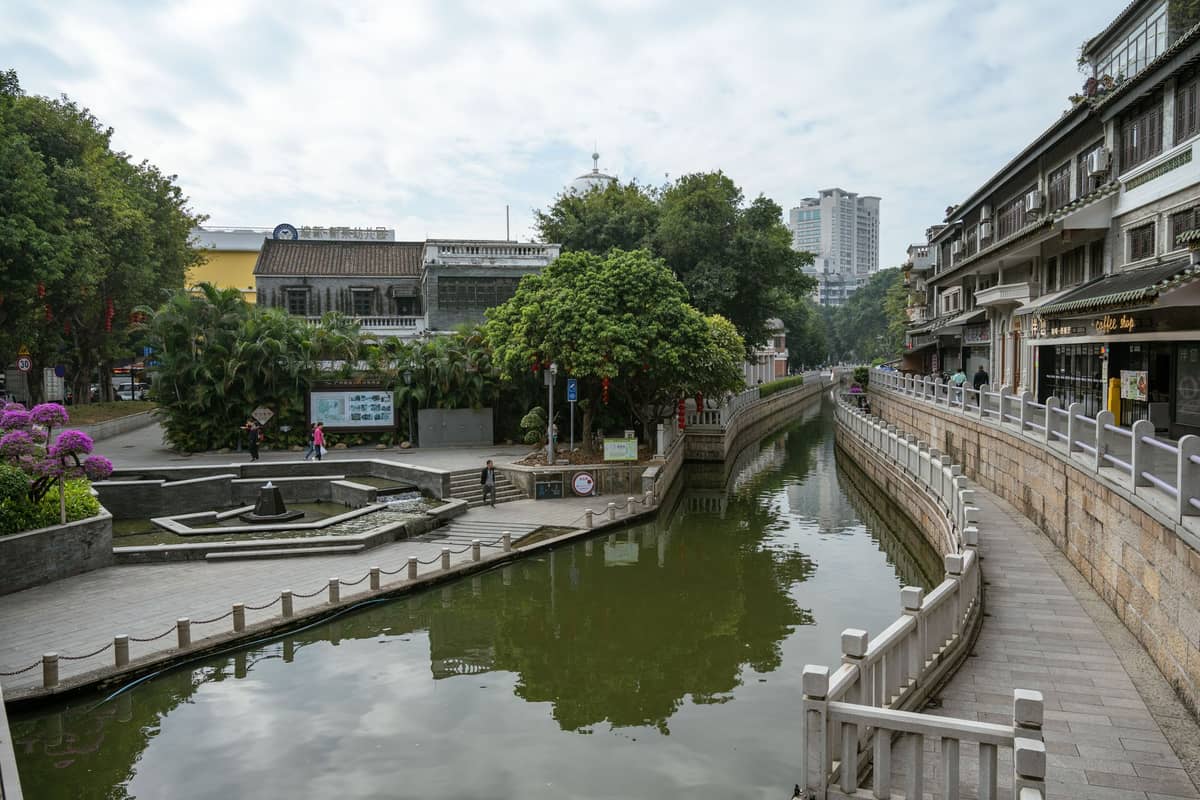
Guangzhou is a major city spread across 7,434 km² of Guangdong Province. That scale matters before you plan a walking day: you cannot walk from Shamian Island to Zhujiang New Town in a single stretch without covering serious ground. What makes walking practical here is that several historic and cultural districts are internally compact. Yuexiu, Liwan, and the Shamian area each contain multiple major attractions within 1-3 km of each other. The Guangzhou Metro then connects these pockets efficiently, keeping total costs low and transit times short.
The biggest misconception about walking in Guangzhou is that the city is uniformly walkable. It is not. Modern districts like Tianhe and Zhujiang New Town are wide-boulevard territory designed for vehicles, with long blocks and limited shade. Stick to the older urban core for walking and use the metro as a connector between zones, and the whole city becomes manageable.
⚠️ What to skip
Traffic in Guangzhou is dense and pedestrian crossings at major intersections can feel aggressive. Obey lights, cross with the crowd, and never assume a turning vehicle will yield. Petty theft is low-risk but real in crowded markets — keep bags zipped and phones pocketed in tight areas like Shangxiajiu.
Route 1: Yuexiu and the Historic City Core
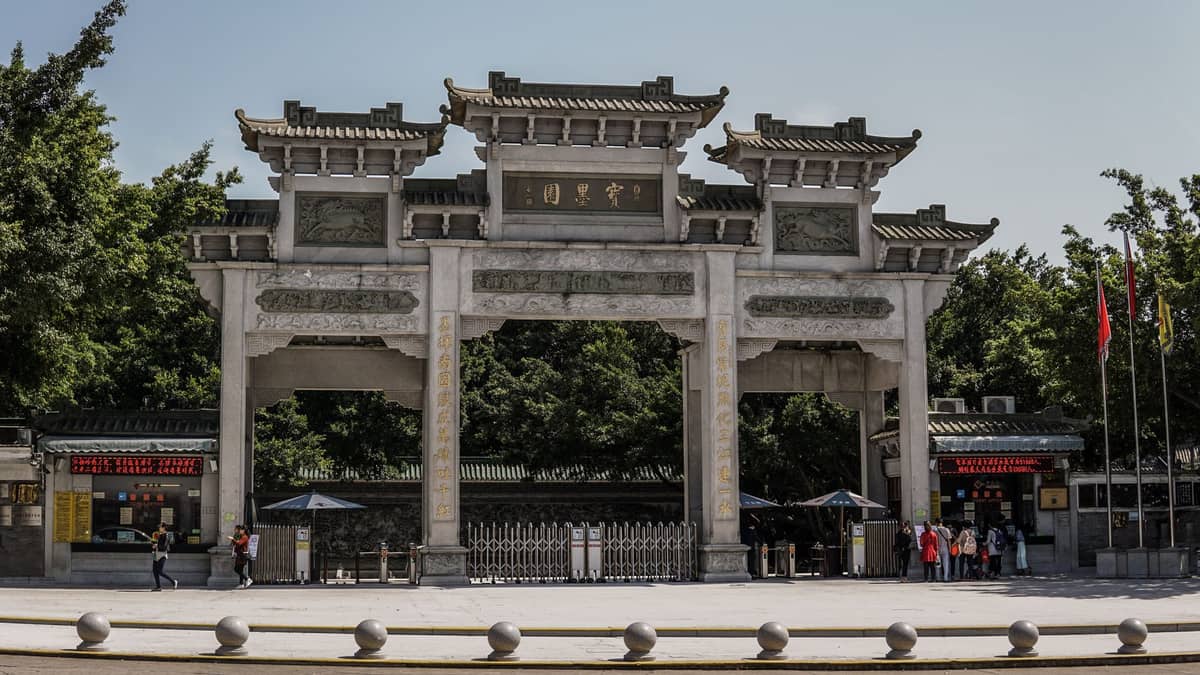
This is the most historically dense walking route in Guangzhou, centered on Yuexiu District, the city's long-standing administrative and cultural heart. A logical start point is Yuexiu Park, which contains the Five Rams Statue, Zhenhai Tower (now the Guangzhou Museum), and Ming Dynasty city walls — all within one park entrance. From there, walk south toward Beijing Road, one of the oldest commercial streets in the city, where Song Dynasty road layers are preserved under glass panels in the pavement. The total walking distance from Yuexiu Park south to Beijing Road is around 2 km.
Along the way, short detours take you to the Temple of the Six Banyan Trees and the Huaisheng Mosque, one of the oldest mosques in China, reportedly dating to the Tang Dynasty. Neither requires extensive time — 20-30 minutes each is enough — but both add significant historical texture to the route. The Yuexiu loop works best as a morning walk. Start at 8:00 AM, and you will have the park largely to yourself before tour groups arrive around 9:30 AM.
💡 Local tip
Yuexiu Park charges a small entry fee (verify current pricing on arrival, typically under ¥10). Most of the walking between sites on this route is free. Budget 3-4 hours for the full Yuexiu loop including temple visits.
Route 2: Shamian Island and the Liwan Waterfront
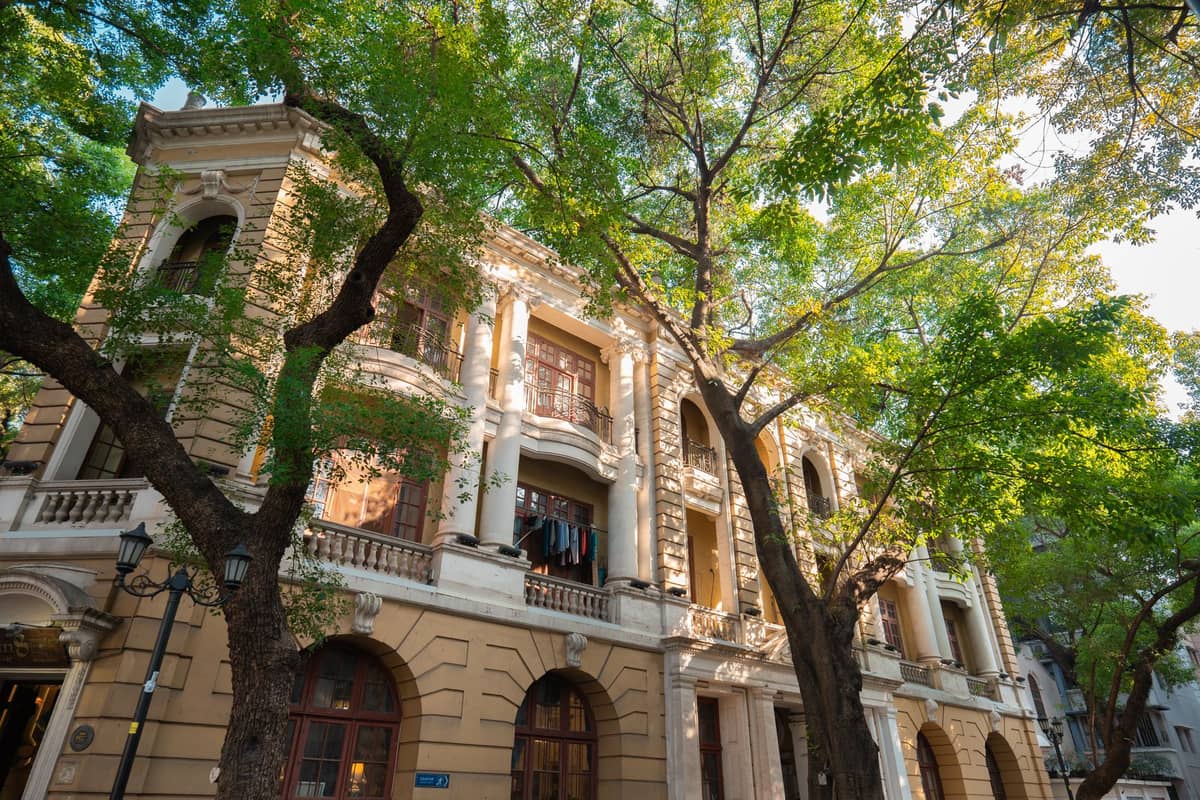
Shamian Island is the most atmospheric 30-minute walk in Guangzhou. The island served as a foreign concession in the 19th and early 20th centuries, and its colonial-era European architecture is unusually well-preserved for a Chinese city of this size. The main boulevard, lined with banyan trees and pale stone buildings, is genuinely quiet compared to the surrounding city. The Shamian riverfront offers Pearl River views, and several small churches and consular buildings are open for exterior viewing. The entire island is walkable in under an hour at a relaxed pace.
After Shamian, cross into Liwan and walk north toward Shangxiajiu Pedestrian Street and the Xiguan old quarter. This is traditional Cantonese urban Guangzhou: arcaded shophouses, century-old pastry shops, wet markets, and the kind of street food density that makes navigation by smell entirely feasible. Shangxiajiu can get extremely crowded on weekends from around 11:00 AM onward. If crowds bother you, visit on a weekday morning. The Shamian-to-Shangxiajiu walk is approximately 1.5 km and takes you through a meaningful architectural and cultural transition in a very short distance.
The classic old-city loop adds one more stop: the Chen Clan Ancestral Hall (Chen Jia Ci), accessible by metro from the Shangxiajiu area. This Qing Dynasty complex, built in the 1890s as a combined clan hall and education center, is one of the finest examples of Lingnan decorative architecture in Guangdong. The triple-hall, nine-courtyard complex features intricate wood carvings, ceramic roof ridges, and stone reliefs. Entry is around ¥10. From Chen Clan Ancestral Hall, it is straightforward to return to the city center by metro, completing a loop that costs roughly ¥24 total including metro fares and this single admission.
Route 3: Pearl River Waterfront and Zhujiang New Town
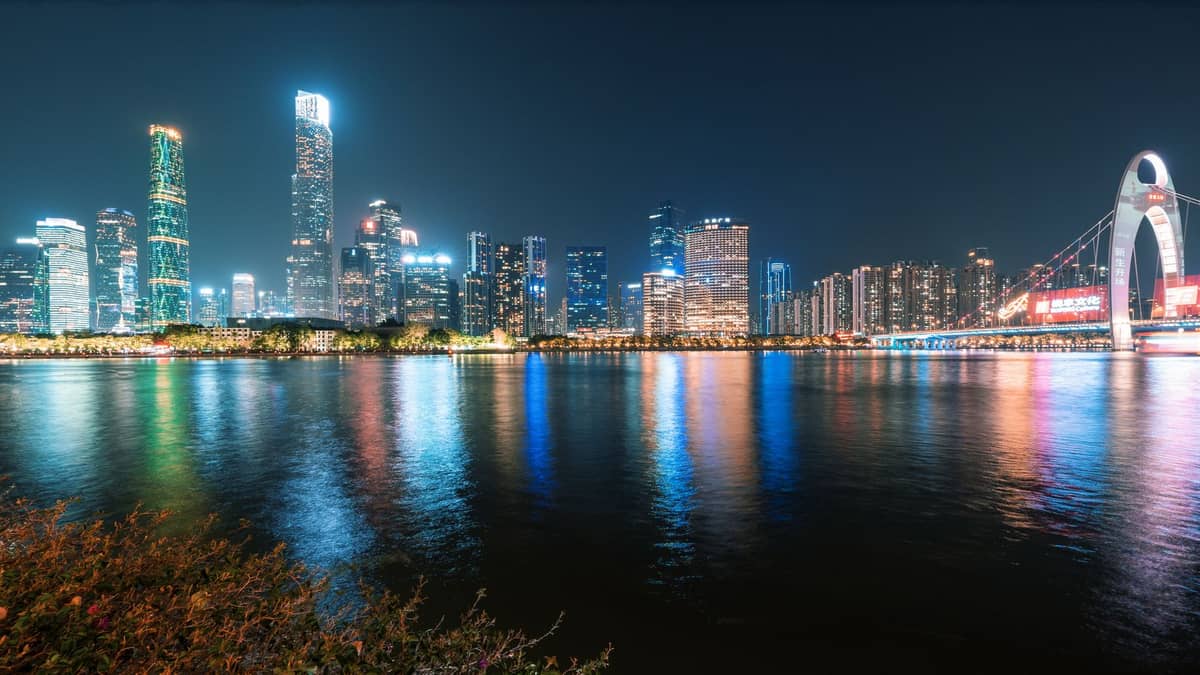
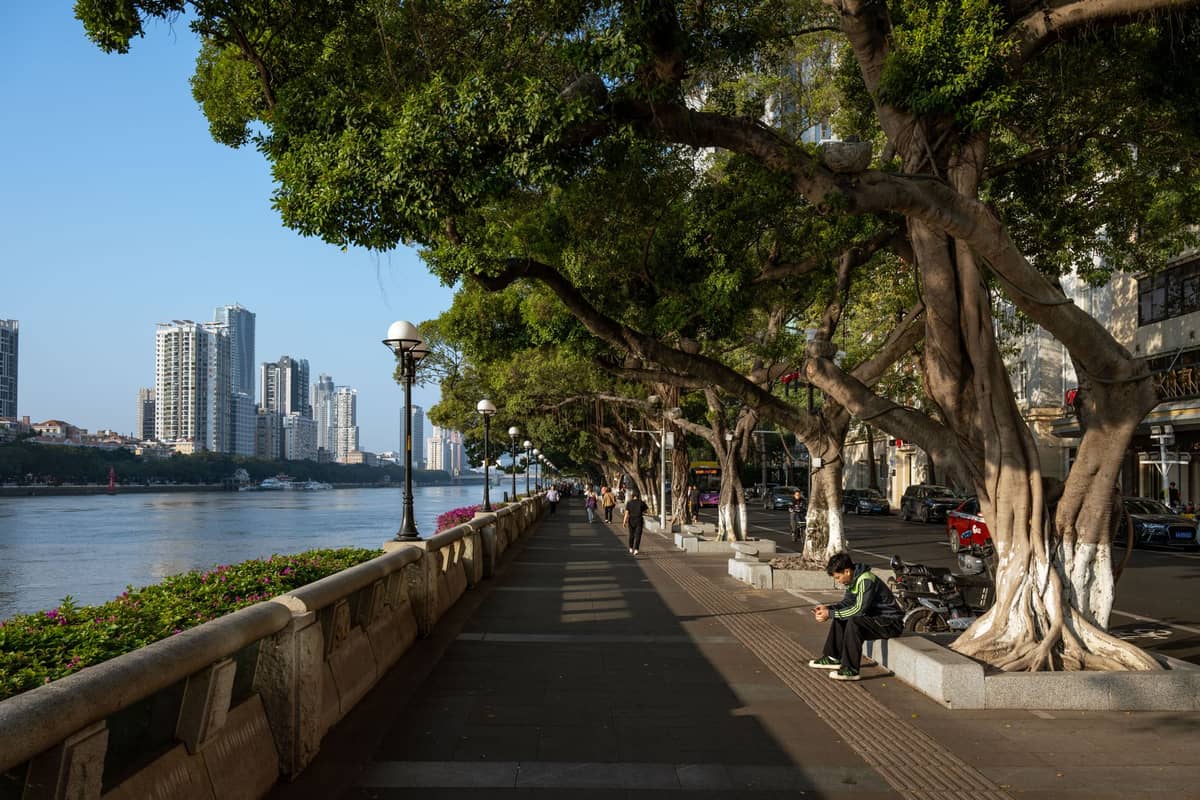
For a modern Guangzhou contrast, the Pearl River promenade between Haizhu Square and Canton Tower offers a flat, traffic-free riverside walk of around 4-5 km. This route works especially well at dusk when the city lights up and Canton Tower begins its evening light display. The Pearl River waterfront is lined with parks, benches, and food stalls in the evening, and the pace shifts noticeably from the frantic energy of Liwan or Beijing Road.
On the north bank in Zhujiang New Town, the cultural buildings designed by international architects are worth a walking circuit: the Guangdong Museum, Guangzhou Opera House, and the axis leading to Canton Tower create one of the more visually dramatic modern urban sequences in southern China. This is not a historical walk, but it shows a very different dimension of the city. Allow 2-3 hours for the waterfront route at a comfortable pace, or pair it with an evening dim sum stop in the area.
✨ Pro tip
The Pearl River waterfront walk is one of the few routes where evening timing is actually better than morning. The 6:00 PM to 9:00 PM window gives you comfortable temperatures, good light for photography, and the full evening atmosphere. Avoid midday on this route in summer — there is limited shade along the riverside.
Practical Tips for Walking Guangzhou
Guangzhou has a humid subtropical climate. March to May and September to November are the most comfortable months for walking, with milder temperatures and lower humidity than the June to August summer peak. In summer, 6:00 AM to 9:00 AM and 5:00 PM to 8:00 PM are the practical walking windows. Midday heat between late May and early September is serious enough to cause fatigue quickly, especially on exposed routes.
- Footwear Wear breathable, broken-in shoes. Several historic sites involve uneven paving, stone steps, and narrow lanes that are not suitable for sandals or formal footwear.
- Hydration Carry water. Tap water in Guangzhou is not recommended for direct drinking — buy bottled water at convenience stores (7-Eleven and FamilyMart are common throughout the city). Budget around ¥3-5 per 500ml bottle.
- Sun protection A compact umbrella doubles as both sun shade and rain protection. Sudden afternoon downpours are common from April through September.
- Navigation Baidu Maps works well in China and handles Cantonese-named streets better than Google Maps (which is blocked without a VPN). Download offline maps before you go.
- Payment Most metro stations and small vendors now accept Alipay and WeChat Pay. Keep some cash (CNY) for older market stalls. Card acceptance remains inconsistent in traditional districts.
- Language Cantonese is the dominant spoken language in everyday Guangzhou life. Mandarin is widely understood. Very little English is spoken outside hotels and tourist attractions, so a translation app is genuinely useful.
Connecting Walking Routes by Metro
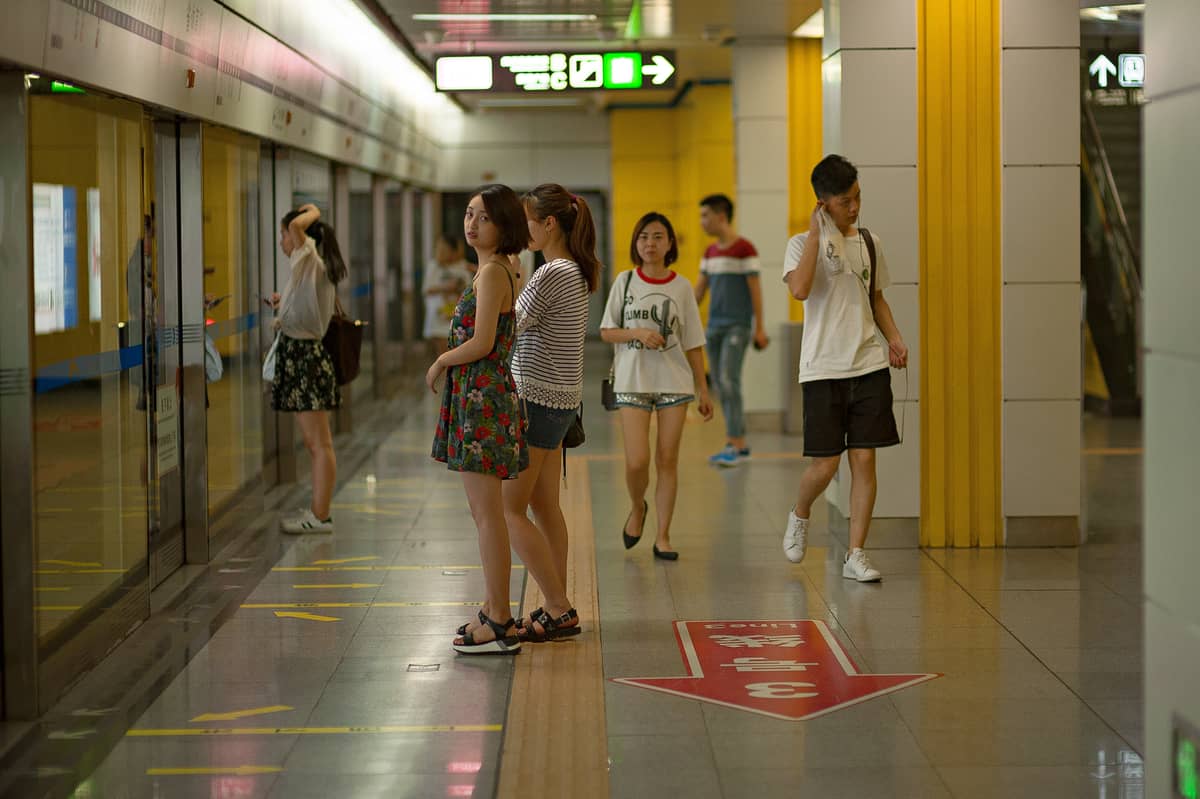
The Guangzhou Metro is the backbone that makes multi-district walking days possible. Line 1 connects the Chen Clan Ancestral Hall area (Changshou Lu / Chen Jia Ci station) to Gongyuanqian near Beijing Road and Yuexiu Park. Line 2 runs past Shamian (Huangsha station is the closest stop) and connects to the southern riverside districts. For the Pearl River waterfront route, Zhujiang New Town station on Line 5 puts you directly in the modern CBD zone near Canton Tower. Metro fares are low — typically ¥2-8 per journey depending on distance, paid via stored-value card or QR code. See the guide to getting around Guangzhou for full metro logistics.
A practical single-day itinerary combining Routes 1 and 2 looks like this: start at Yuexiu Park by 8:30 AM, walk south through the temple district to Beijing Road by 10:30 AM, take the metro one stop to Shamian, walk the island and Shangxiajiu through the early afternoon, then metro to Chen Clan Ancestral Hall for the late afternoon. This covers the historical and cultural core of old Guangzhou and fits comfortably in one day without rushing.
- Yuexiu Park to Beijing Road: a short walk on foot, no metro needed
- Beijing Road to Huangsha (Shamian): metro via central transfer, around ¥2-4 by metro
- Shangxiajiu to Chen Clan Academy (Chen Clan Ancestral Hall): metro Line 1, approximately ¥2
- Chen Clan Academy back to Tianhe or central Guangzhou: metro Line 1, approximately ¥3-5
- Total transport cost for the full old-city loop: typically under ¥25 including the Chen Clan Ancestral Hall entry fee
ℹ️ Good to know
Guangzhou is generally considered safe for walking, including in the evening. The main risks are traffic at busy intersections and opportunistic petty theft in crowded commercial areas — the same precautions you would apply in any large city. Night walks along the Pearl River promenade are popular with locals and well-lit.
If you want to extend your walking days beyond the central districts, day trips from Guangzhou can add walking-focused excursions to places like Shawan Ancient Town or Kaiping — both offer historical streetscapes with far fewer crowds than the city center. For a more ambitious urban itinerary, the 3-day Guangzhou itinerary organizes these walking routes into a logical multi-day sequence.
FAQ
Can you do a free self-guided walking tour in Guangzhou?
Yes. Several routes cost nothing beyond metro fares. Shamian Island is entirely free to walk. Yuexiu Park is free to enter; Zhenhai Tower and museum tickets are separate), and the Beijing Road pedestrian street has no admission. The main paid attraction on most walking itineraries is Chen Clan Ancestral Hall, currently around ¥10. A full old-city walking day can realistically cost under ¥25 per person including all transport.
How many days do you need to cover the main walking routes?
Two full days covers the core routes well. Day one: Yuexiu and Beijing Road. Day two: Shamian, Liwan, and Chen Clan Ancestral Hall. The Pearl River waterfront and Zhujiang New Town work as an evening add-on to either day, or as a third morning. If you are short on time, the Shamian-to-Shangxiajiu loop is the single most concentrated 3-hour walking experience in the city.
What is the best time of day to walk in Guangzhou?
Early morning (6:00-9:00 AM) and late afternoon into evening (5:00-8:00 PM) are the most comfortable windows, particularly from May through September when midday temperatures and humidity are high. Morning has the added advantage of lighter crowds at major sites like Yuexiu Park and Beijing Road.
Is Guangzhou safe to walk around at night?
Generally yes. The Pearl River waterfront, Shamian Island, and most central pedestrian streets are well-lit and populated in the evening. Standard urban precautions apply: keep valuables secured in crowded markets, be cautious at traffic crossings, and avoid poorly lit back alleys in unfamiliar areas. Overall, Guangzhou has a reputation as a relatively safe city for nighttime pedestrians.
Do I need a guided tour or can I manage alone?
The core walking routes are entirely manageable without a guide. The main challenge is navigation and reading Chinese signage, which a translation app handles adequately. A guided tour adds historical context and local commentary, which is worth it for visitors with a specific interest in Cantonese history or architecture, but is not necessary to enjoy the routes. Self-guided walking costs significantly less than most booked walking tours.