Huaisheng Mosque: Guangzhou's 1,300+ Year-Old Islamic Landmark
Standing at the heart of Yuexiu District, Huaisheng Mosque is widely recognized as the oldest surviving mosque in China, founded in 627 AD during the early Tang Dynasty. Its iconic circular minaret, known as the Guangta or 'Lighthouse Mosque', predates almost every other freestanding minaret in the country and serves as a quiet testament to Guangzhou's centuries-long role as a global trading port.
Quick Facts
- Location
- No. 56 Guangta Lu, Yuexiu District, Guangzhou
- Getting There
- Metro Line 1, Ximenkou Station, Exit B; buses on Guangta Lu and Zhongshan Liulu
- Time Needed
- 45–90 minutes
- Cost
- Free admission
- Best for
- History lovers, Islamic heritage, architecture, quiet reflection
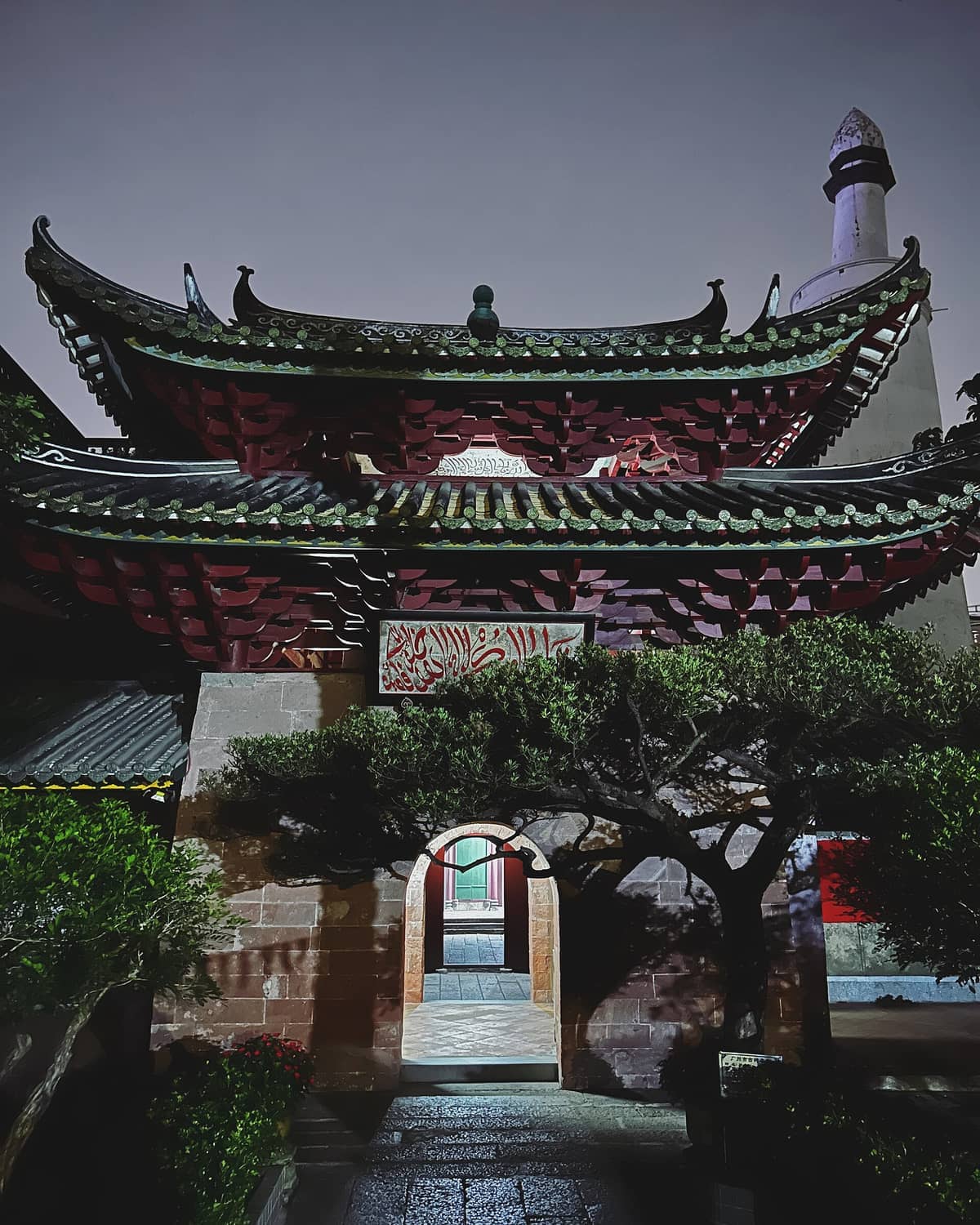
What Is Huaisheng Mosque?
Huaisheng Mosque, known in Chinese as 怀圣寺 (Huáishèng Sì), is one of the most historically significant religious sites in all of East Asia. Founded in 627 AD during the early Tang Dynasty, it is widely recognized as the earliest surviving mosque in China, making it over 1,300 years old. According to local tradition, the mosque was established by Sa'd ibn Abi Waqqas, a companion of the Prophet Muhammad, who arrived in Guangzhou via the ancient maritime Silk Road. The name 'Huaisheng' translates roughly to 'In Memory of the Sage', a direct reference to the Prophet.
The mosque sits at No. 56 Guangta Road in Yuexiu District, just a short walk from Metro Line 1's Ximenkou Station. It occupies a walled compound that shields the interior from the surrounding city streets, creating an atmosphere of measured calm that contrasts sharply with the commercial energy of the neighborhood just outside its gates.
⚠️ What to skip
Access note: As of the most recent official guidance from Guangzhou International, the mosque 'now opens only to Muslims.' Non-Muslim visitors should verify current access policies before making a special trip.
The Guangta Minaret: China's Oldest Surviving Tower of Its Kind
The architectural centerpiece of the complex is the Guangta, or 'Light Tower', a cylindrical minaret that rises approximately 36 meters above the compound. Unlike the square minarets common in many East Asian mosque adaptations, the Guangta is round in form, smooth in surface, and stripped of ornamental excess. Archnet identifies it as the earliest freestanding minaret in China, a distinction that makes it remarkable not just as a religious structure but as an architectural artifact.
The tower's plain whitewashed exterior absorbs light differently throughout the day. In the early morning, when low-angle sunlight hits the curved surface, subtle shadows reveal the slight texture of aged plaster. By midday the tower appears almost luminous. Historical records indicate it once functioned as a navigation landmark for sailors entering the Pearl River, which explains why it was also called the 'Lighthouse Mosque' in older Western accounts. The tower still stands as a fixed vertical point in an otherwise horizontal neighborhood.
Inside the Compound: Courtyards, Prayer Halls, and Layers of History
The mosque compound follows a traditional Chinese courtyard layout adapted for Islamic worship, a hybrid form that reflects Guangzhou's long history as a meeting point between Chinese architectural convention and foreign religious practice. Visitors who gain access typically pass through a gate house into a forecourt before reaching the main prayer hall. The prayer hall itself is oriented toward Mecca, a subtle realignment within what otherwise reads as a classically Chinese compound with tiled roofs and colonnaded walkways.
The grounds include mature trees that provide shade across the paving stones. On Fridays, the mosque draws a sizeable congregation for Jumu'ah prayer, and the compound fills with the sounds of water from ablution facilities and the low murmur of worshippers gathering. The atmosphere is markedly different from a tourist site: this is a functioning place of worship with a continuous community that has prayed here, in some form, for over a thousand years.
The broader Yuexiu District surrounds the mosque with layers of Guangzhou's older urban fabric. The Temple of the Six Banyan Trees is within walking distance, and the area's density of historic religious sites makes it one of the most rewarding neighborhoods for architecture and heritage in the city. If you are building a day around Yuexiu's older monuments, the Five Rams Statue and Yuexiu Park sit nearby and require no admission fee.
Historical Context: Guangzhou as the Gateway of the Maritime Silk Road
To understand why a mosque this old exists in southern China, you need to understand Guangzhou's role in pre-modern global trade. For more than a millennium, Guangzhou was one of the busiest ports in Asia. Arab, Persian, and South Asian merchants arrived by sea, traded for silk, ceramics, and spices, and many settled permanently. By the Tang Dynasty (618–907 AD), a sizable Muslim community existed in the city, and Huaisheng Mosque was the physical and spiritual center of that community.
The mosque was damaged and rebuilt multiple times over its history, most significantly during the Ming Dynasty. The current structures reflect later reconstruction, while the Guangta minaret is considered the most historically continuous element of the site. This makes the tower not just historically significant but a rare surviving feature of a very old Chinese urban religious complex.
Guangzhou's deep trading history is explored in more detail at the Huangpu Ancient Port, which served as a key customs point during the Qing Dynasty. Together, these two sites illustrate different chapters of the same story: the city as a continuous node in global exchange.
When to Visit and What to Expect at Different Times of Day
The mosque observes five daily prayer times, and visiting just before or after prayer periods tends to offer a quieter exterior experience if you are not entering the compound for worship. Friday midday is the busiest time of the week, as the Jumu'ah congregation draws worshippers from across the city. The streets immediately around Guangta Road see increased foot traffic on Friday afternoons, and small food stalls near the mosque area often serve halal options.
Weekday mornings between prayer times offer the calmest conditions for those permitted to visit the compound. The light is cooler and more flattering for photography of the minaret, and the stone surfaces of the courtyard have not yet been warmed by the afternoon sun. Autumn months, roughly October through November, are particularly pleasant for outdoor exploration in Guangzhou given the lower humidity and moderate temperatures.
💡 Local tip
Photography tip: The best angle for the Guangta minaret is from Guangta Road itself, looking south into the compound entrance. The tower rises clearly above the gate walls and can be framed with the surrounding tree canopy in late morning light. You do not need to enter the compound to photograph the exterior.
Getting There and Practical Information
Huaisheng Mosque is straightforward to reach by public transit. Take Metro Line 1 to Ximenkou Station and exit via Exit B. The mosque is a short walk from the station along Guangta Road. Several bus lines also serve stops on Guangta Lu and Zhongshan Liulu, making it accessible from most central Guangzhou neighborhoods without a transfer.
For first-time visitors to Guangzhou navigating the metro system, the getting around Guangzhou guide covers fare structures, line maps, and practical tips for using the metro efficiently. Ximenkou Station on Line 1 is a central node with straightforward connections to major destinations across the city.
Dress code: Conservative clothing is required for entry to the compound. This means covered shoulders, covered legs below the knee, and for women, a headscarf when inside the prayer areas. Modest dress is non-negotiable as this is an active place of worship, not a museum. Remove shoes before entering any interior prayer space.
- Address: No. 56 Guangta Road, Yuexiu District, Guangzhou
- Metro: Line 1, Ximenkou Station, Exit B
- Reported opening hours: not publicly listed; access may be restricted to Muslim worshippers
- Admission: Free
- Prayer times: Five daily prayers; Friday Jumu'ah is the busiest period
- Dress code: Modest, conservative clothing required; shoes removed for interior
Who Should Skip This Attraction
Given the current access restrictions reported by the official Guangzhou International city guide, non-Muslim visitors may find they cannot enter the compound at all. If your interest is purely visual tourism and you are not Muslim, the exterior and minaret are visible from the street but the interior experience is not guaranteed. Travelers seeking a comprehensive religious heritage experience may find the Chen Clan Ancestral Hall or the Temple of the Six Banyan Trees more reliably accessible as cultural sites.
For those primarily interested in Guangzhou's full religious and temple landscape, the Guangzhou temples guide covers the most significant sites across the city with practical access information for each.
Insider Tips
- Verify access before visiting: contact the mosque directly or check the Guangzhou International city guide for the most current policy on non-Muslim visitors. Policies have shifted over the years and the situation on arrival may differ from what you read online.
- Friday afternoons bring the largest congregation of the week. If you want to observe the community atmosphere from outside the walls, this is the time to come. If you want quiet, choose a Tuesday or Wednesday morning.
- The stretch of Guangta Road near the mosque entrance has small halal food stalls and restaurants that are worth exploring before or after your visit. The area has a genuine neighborhood character distinct from Guangzhou's more tourist-facing dining streets.
- Combine this visit with the Temple of the Six Banyan Trees and Yuexiu Park into a single half-day walking loop through central Yuexiu. All three sites are within reasonable walking distance and represent different facets of the district's layered history.
- The Guangta minaret photographs best in the morning when the sun is behind you as you face the entrance from Guangta Road. By midday the light becomes flat and the tower loses depth in photographs.
Who Is Huaisheng Mosque For?
- Muslim travelers seeking an active place of worship with profound historical depth
- History and archaeology enthusiasts interested in Tang Dynasty-era structures and the Maritime Silk Road
- Architecture researchers studying the intersection of Chinese courtyard design and Islamic spatial organization
- Travelers building a heritage walking route through Yuexiu District's older religious sites
- Photographers interested in pre-modern Chinese religious structures with strong vertical form
Nearby Attractions
Other things to see while in Yuexiu:
- Beijing Road Pedestrian Street
Beijing Road Pedestrian Street runs through the historic heart of Yuexiu District, layering modern retail over more than a thousand years of commercial history. Entry is free, the metro drops you right at the door, and the glass-covered archaeological ruins embedded in the pavement are an unexpected highlight worth stopping for.
- Canton Orchid Garden
Tucked inside Yuexiu District, the Canton Orchid Garden is a compact but carefully curated public garden dedicated entirely to orchid cultivation. At RMB 8 entry, it offers a rare pocket of calm in central Guangzhou, best appreciated in the cooler months when the flowers are at their peak.
- Ersha Island
Ersha Island sits in the Pearl River between Guangzhou Bridge and Haiyin Bridge, covering 1.26 square kilometers of parks, cultural venues, and tree-lined promenades. Free to enter and open around the clock, it offers a rare change of pace from the city's commercial core.
- Five Rams Statue
Carved from over 130 pieces of granite and completed in the late 1950s, the Five Rams Statue stands as one of Guangzhou's most recognizable landmarks. Located inside Yuexiu Park, it is free to visit and open daily, and is often best experienced in the early morning when the park is quiet and the light is soft.