Ersha Island: Guangzhou's Peaceful Pearl River Retreat
Ersha Island sits in the Pearl River between Guangzhou Bridge and Haiyin Bridge, covering 1.26 square kilometers of parks, cultural venues, and tree-lined promenades. Free to enter and open around the clock, it offers a rare change of pace from the city's commercial core.
Quick Facts
- Location
- Yuexiu District, Guangzhou — in the Pearl River between Guangzhou Bridge and Haiyin Bridge
- Getting There
- Ersha Island Station, Guangzhou Metro Line 12 (north side of the island, near Yanyu Road)
- Time Needed
- 2–4 hours for a relaxed walk; half a day if you visit a museum and the concert hall
- Cost
- Island access is free; individual venue admission varies
- Best for
- Slow walks, Pearl River views, classical music, contemporary art, and family cycling
What Is Ersha Island?
Ersha Island, known in Chinese as 二沙岛 (Èrshā Dǎo), occupies 1.26 square kilometers of the Pearl River in central Guangzhou. The island was formerly called Napier Island in English, a name from the colonial-era foreign community that once had a footprint in this part of the city. Today it functions as a low-traffic residential and cultural enclave: most of its surface area is given over to parks, promenades, sports grounds, luxury apartment compounds, and a cluster of serious cultural institutions.
What makes the island worth a dedicated trip is how different it feels from the surrounding city. Guangzhou's commercial districts operate at a high tempo; Ersha Island does not. The streets are shaded by mature trees, the pace is slow, and the Pearl River is visible from multiple points along the banks. On weekday mornings, you will mostly encounter local residents: joggers, retirees doing tai chi on the grass, parents with young children. Weekend afternoons draw more visitors, but the island is large enough to absorb them without feeling overrun.
💡 Local tip
Metro Line 12 now has an Ersha Island station on the island's north side near Yanyu Road, making arrival straightforward. Taxis and buses to nearby Pearl River landmarks also serve the area for those connecting from other parts of the city.
The Cultural Core: Museums and Concert Hall
The island's cultural weight rests on two institutions. The Guangzhou Museum of Art occupies a substantial building near the island's center and holds one of South China's most important collections of classical and contemporary Chinese painting, calligraphy, and sculpture. The galleries are spacious, the lighting calibrated for serious viewing, and temporary exhibitions regularly bring works in from elsewhere in the country. It is not a tourist attraction designed around a quick visit; it rewards people who are willing to slow down.
Xinghai Concert Hall stands near the island's southern waterfront and is the home venue of the Guangzhou Symphony Orchestra. The building's design, with its curved forms set against the river backdrop, makes it one of the more considered pieces of cultural architecture in the city. Even if you are not attending a performance, the plaza around the concert hall provides one of the island's best open-air vantage points over the Pearl River. For anyone interested in a performance, checking the schedule in advance is essential: seats sell out, and the hall draws a genuinely local audience rather than a tourist crowd.
Walking the Island: What You Actually See
The island's street grid is relatively simple. The main east-west avenue runs the length of the island and connects the two bridge approach points. Branching off it are quieter residential lanes shaded by banyan trees, their aerial roots forming dense curtains over some sections of pavement. The texture of the island shifts noticeably between its more manicured parkland sections and the older residential blocks, which have the slightly faded character of a neighborhood that was upscale decades ago and has since settled into comfortable middle age.
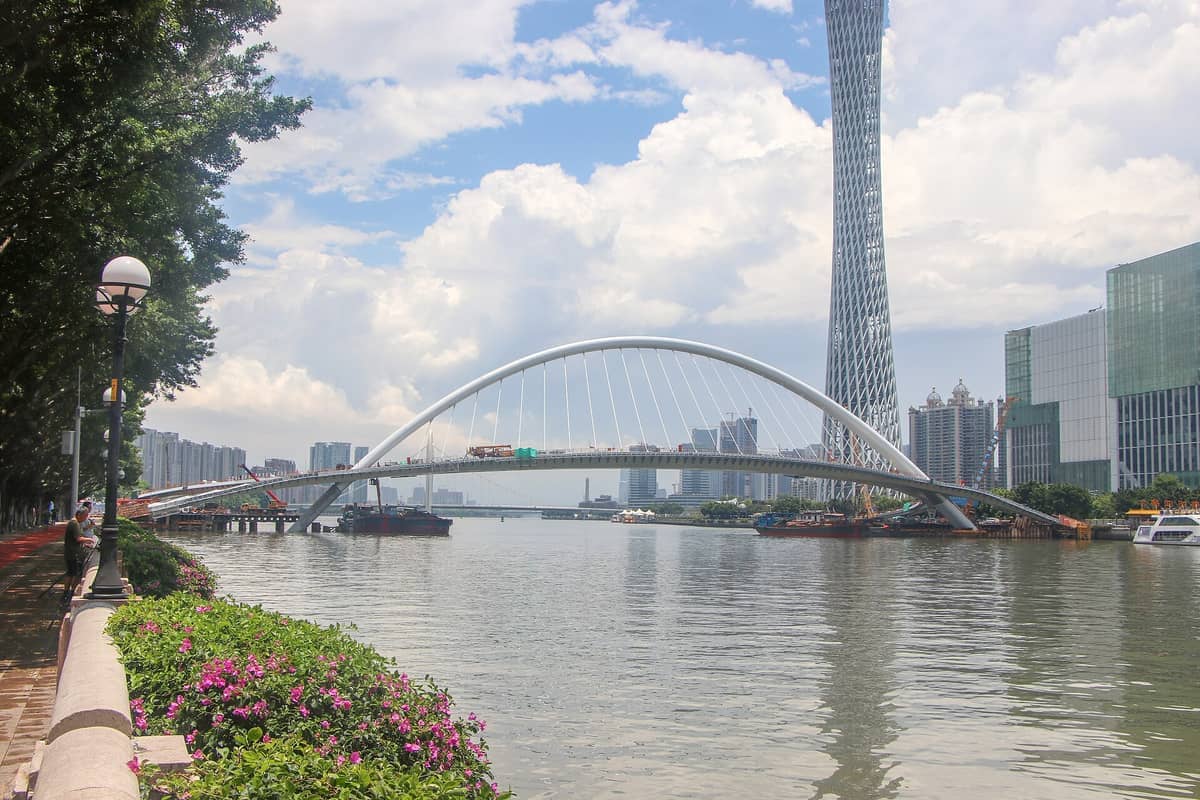
The riverfront on the island's south side is the most rewarding stretch for walkers. Looking south across the Pearl River, you see the Haizhu shoreline; looking north and west from the island's tips, the skyline includes Canton Tower in the distance. At river level, the light changes significantly depending on the time of day. Early morning brings soft, diffuse brightness and the smell of the river, which has the mineral, slightly green quality common to large slow-moving waterways. By midday in summer, the glare off the water is intense and the heat is oppressive. Late afternoon, especially in autumn, is when the Pearl River at this stretch looks best: the light comes in low and warm, the water takes on a bronze tint, and the bridge silhouettes are sharp.
For context on the river as a whole, the Pearl River guide covers the full waterfront experience across Guangzhou, including evening cruises that pass Ersha Island from the water.
Best Times to Visit and How Weather Changes the Experience
Guangzhou has a humid subtropical climate. Ersha Island's outdoor character means weather matters more here than at a purely indoor attraction. The most comfortable visiting window is October through December, when temperatures are mild, humidity drops, and the trees hold their color. March through May is also good, though spring rains can make the riverside paths muddy and the air thick. Summer, from June through August, is hot, humid, and frequently disrupted by afternoon thunderstorms. The island is not unpleasant in summer if you go early in the morning, but midday visits in July or August are uncomfortable for most people.
The best time to visit Guangzhou is broadly autumn, and this applies specifically to Ersha Island. The combination of comfortable temperatures, lower rainfall, and the quality of light over the Pearl River in October and November makes that period the clear recommendation.
⚠️ What to skip
Summer afternoons bring sudden heavy rainfall. The island has limited shelter options outside the museum and concert hall. If you visit between June and September, check the weather forecast before going and bring an umbrella.
Practical Walkthrough: Getting There and Getting Around
Guangzhou Metro Line 12 stops at Ersha Island Station on the island's north side, near Yanyu Road, making this the most direct public transport connection. From the station, the island's interior is accessible on foot within a few minutes. Taxis and ride-hailing via DiDi are straightforward options from most central Guangzhou locations, though the island sits between two bridges and address-level routing can occasionally confuse navigation apps; entering 'Xinghai Concert Hall' or 'Guangzhou Museum of Art' as your destination is more reliable than entering the island's name alone.
Once on the island, walking is the natural mode of movement. The distances are not large: from one end to the other takes roughly 20 to 25 minutes at a relaxed pace. Cycling is common among residents and is a practical way to cover the island if you have access to one of Guangzhou's shared bicycle services, several of which operate here. There are no large car parks and no significant commercial strips, so the island functions as a genuinely pedestrian-friendly zone by default.
For food, options on the island itself are limited mostly to small cafes and residential-scale restaurants. Visitors planning a half-day trip would do well to eat before arriving or to cross back to the nearby mainland for a proper meal. The Tianhe and Haizhu shorelines adjacent to the island both have more extensive dining options.
Who This Island Is For, and Who Should Reconsider
Ersha Island works well for travelers who want a lower-key half-day rather than another major sight on a packed itinerary. It is particularly good if you are combining it with a walk along the Pearl River or a visit to the nearby Canton Tower, which is visible from the island's waterfront and accessible across the river. Families with children who can handle a couple of hours of walking will find the parks manageable, and the open spaces along the riverbank are genuinely child-friendly.
Travelers with very limited time in Guangzhou and a checklist orientation may find Ersha Island unsatisfying. It is not a sight in the conventional sense; it does not have a single focal monument or spectacle. If your priorities are historical depth, go to Chen Clan Ancestral Hall or the Nanyue King Mausoleum Museum. If you want maximum visual impact quickly, Canton Tower delivers more per hour. Ersha Island rewards a slower pace and a degree of curiosity about how the city's residential and cultural life actually operates.
Visitors with significant mobility limitations should note that while much of the island's terrain is flat and paved, the sources available do not confirm step-free access to all facilities. It is worth checking with specific venues, particularly Xinghai Concert Hall and the Guangzhou Museum of Art, before planning a visit if this is a concern.
Photography Notes
The strongest photography on Ersha Island happens at the water's edge in the hour before sunset. The Pearl River reflects the sky at low angles, the bridges frame the compositions, and the Haizhu district across the water adds a layered background. For architectural shots, Xinghai Concert Hall's curved facade photographs well in the late afternoon when the light catches the building from the southwest. The tree-lined interior streets are best in the morning, when the filtered light through the banyan canopy creates a distinctive quality that is harder to replicate under midday or overcast conditions.
If aerial or panoramic Pearl River photography is a priority, the best viewpoints in Guangzhou guide includes the most complete overview of elevated and waterfront vantage points across the city.
Insider Tips
- Ersha Island Station on Metro Line 12 puts you at the north side of the island. Walk south toward the riverfront first — that's where the best views, the concert hall plaza, and the calmer atmosphere are concentrated.
- If you want to visit Xinghai Concert Hall for a performance, book tickets well in advance through official channels. The Guangzhou Symphony Orchestra's schedule fills up, and there is no walk-up ticket culture here.
- Early weekday mornings, before 9 a.m., the island belongs almost entirely to local residents doing their morning routines. This is the most authentic and photogenic time to walk the promenade.
- DiDi navigation to 'Ersha Island' can drop you in the wrong spot. Use 'Xinghai Concert Hall' or '二沙岛星海音乐厅' as your destination for a reliable drop-off point near the cultural cluster.
- Autumn evenings on the south riverbank occasionally feature amateur musicians and small informal gatherings. Nothing is scheduled or advertised; it simply happens, and it's worth lingering for.
Who Is Ersha Island For?
- Travelers wanting a quiet counterpoint to Guangzhou's commercial energy
- Art and classical music enthusiasts looking for venues used by locals, not tourists
- Photographers targeting Pearl River light and bridge compositions
- Families with children who need open green space and a manageable walking circuit
- Anyone spending multiple days in Guangzhou who wants to understand how the city's residential life actually feels
Nearby Attractions
Other things to see while in Yuexiu:
- Beijing Road Pedestrian Street
Beijing Road Pedestrian Street runs through the historic heart of Yuexiu District, layering modern retail over more than a thousand years of commercial history. Entry is free, the metro drops you right at the door, and the glass-covered archaeological ruins embedded in the pavement are an unexpected highlight worth stopping for.
- Canton Orchid Garden
Tucked inside Yuexiu District, the Canton Orchid Garden is a compact but carefully curated public garden dedicated entirely to orchid cultivation. At RMB 8 entry, it offers a rare pocket of calm in central Guangzhou, best appreciated in the cooler months when the flowers are at their peak.
- Five Rams Statue
Carved from over 130 pieces of granite and completed in the late 1950s, the Five Rams Statue stands as one of Guangzhou's most recognizable landmarks. Located inside Yuexiu Park, it is free to visit and open daily, and is often best experienced in the early morning when the park is quiet and the light is soft.
- Guangzhou Martyrs' Memorial Garden
Guangzhou Martyrs' Memorial Garden is a free public park and memorial cemetery in Yuexiu District, built to honor those killed in the Guangzhou Uprising of December 1927. It combines significant revolutionary history with shaded walkways, lotus ponds, and calm open spaces that feel worlds away from the surrounding city traffic.