Guangzhou Martyrs' Memorial Garden: History, Greenery, and Quiet in the Heart of Yuexiu
Guangzhou Martyrs' Memorial Garden is a free public park and memorial cemetery in Yuexiu District, built to honor those killed in the Guangzhou Uprising of December 1927. It combines significant revolutionary history with shaded walkways, lotus ponds, and calm open spaces that feel worlds away from the surrounding city traffic.
Quick Facts
- Location
- No. 92, Zhongshan 2nd Road, Yuexiu District, Guangzhou
- Getting There
- Martyrs' Park Station, Metro Line 1
- Time Needed
- 1 to 2 hours
- Cost
- Free admission
- Best for
- History seekers, morning walkers, photographers, families
What Is the Guangzhou Martyrs' Memorial Garden?
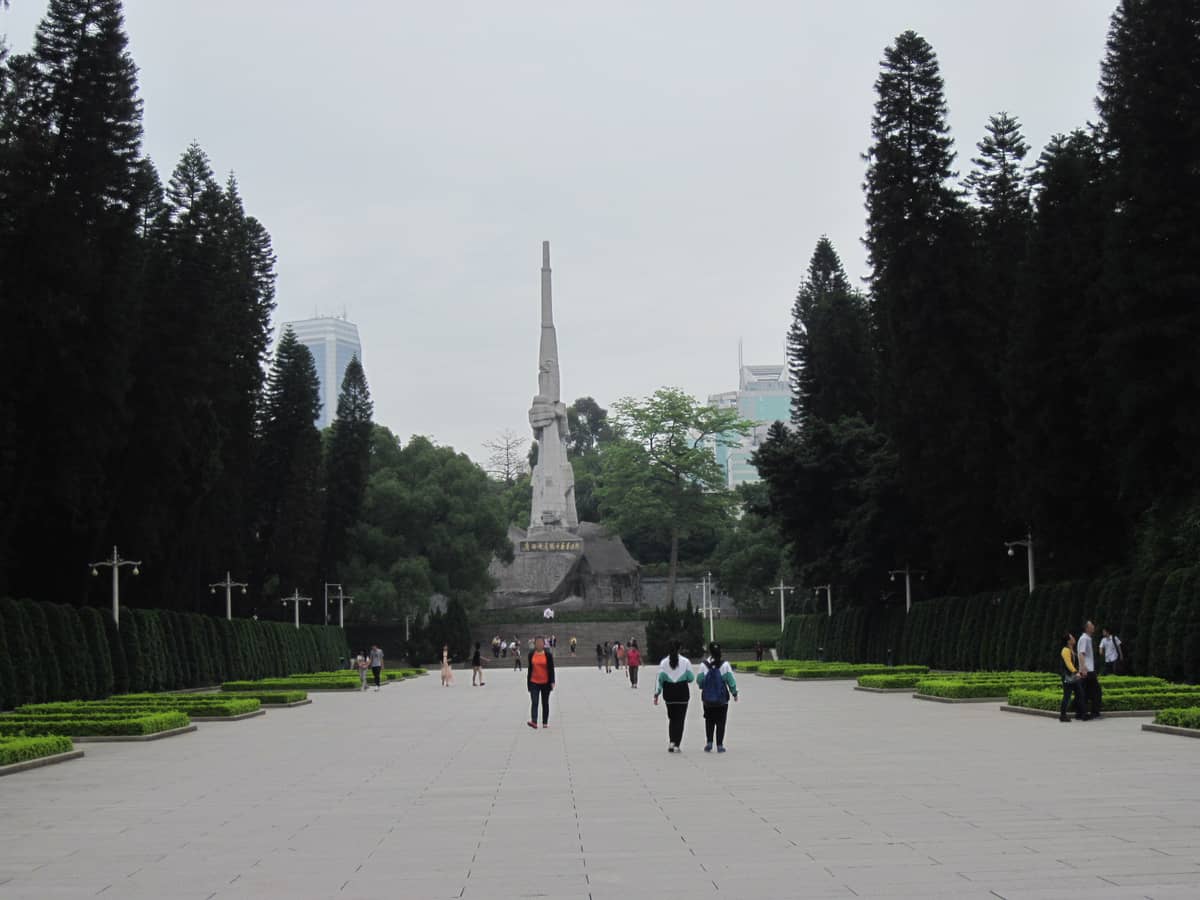
The Guangzhou Martyrs' Memorial Garden (广州起义烈士陵园) is a large memorial park and cemetery in the Yuexiu District, established to commemorate the fighters who died during the Guangzhou Uprising of December 11, 1927. That short-lived revolt, organized by the Chinese Communist Party against the Nationalist government, was suppressed within days and cost thousands of lives. The park was built from 1954 and opened to the public in May 1958, and has served ever since as both a place of official remembrance and an everyday green space for residents.
On the surface, it functions like many city parks: retirees do morning tai chi near the entrance, families walk the paved paths under old camphor trees, and children feed fish at the lotus pond. Beneath that routine calm, the granite monuments, revolutionary statues, and carefully maintained graves carry real weight. If you arrive not knowing the history, a short walk through the memorial zones will quickly bring it into focus.
ℹ️ Good to know
Opening hours are reported as 6:00 to 22:00 daily, though some sources list closing time as 21:00. Confirm locally before a late visit. Admission is free.
The History Behind the Site
The Guangzhou Uprising was one of a series of communist-led insurrections that followed the breakdown of the First United Front between the Chinese Communist Party and the Kuomintang in 1927. The Guangzhou attempt lasted barely three days before Nationalist forces crushed it. The death toll among participants and suspected sympathizers was high, and many victims were buried in mass graves in the area that would later become this park.
When the People's Republic of China was established, the site gained formal recognition as a place of revolutionary memory. The garden was constructed and landscaped with memorials, a central burial mound, and various commemorative structures. Soviet contributions are also acknowledged here: a monument marks the deaths of Soviet advisors who were killed during the uprising, reflecting the international dimension of communist organizing in China during the 1920s.
For visitors already interested in Guangzhou's revolutionary heritage, the garden works well in combination with the Peasant Movement Training Institute, another free site in Yuexiu that trained rural organizers during the same era. Together they give a grounded picture of how Guangzhou became a center of early revolutionary activity in China.
What You See on the Ground
The park is larger than most visitors expect from the outside. From the main entrance on Zhongshan 2nd Road, a central axis leads toward the primary memorial structures: a large burial mound topped by a revolutionary figure, inscription walls carved with the names of the fallen, and a Soviet-Chinese friendship monument that stands as a reminder of the internationalist politics of the period.
Away from the central axis, the grounds open into quieter sections. There are covered walkways hung with wisteria, a lotus pond where older residents sit on stone benches, and rows of mature trees that create a canopy thick enough to offer genuine shade even in summer. The stone paths are well-maintained and mostly flat, which makes the park walkable for older visitors and those traveling with strollers.
Signage at the main memorials is in Chinese, with limited or no English translation at most markers. Travelers who want context should do some reading in advance, or use a translation app on-site. The lack of English interpretation does reduce the experience for non-readers, but the physical scale and atmosphere of the memorial spaces communicate something even without language.
Morning vs. Afternoon: How the Atmosphere Shifts
Early mornings, from around 6:30 to 8:30, belong entirely to local residents. The park fills with older Guangzhou residents doing group exercise, ballroom dancing on the paved plazas, or simply walking laps on the shaded paths. The sounds at this hour are specific: the tap of mahjong tiles somewhere in the distance, slow traditional music from a portable speaker, birdsong from the dense canopy overhead. It is one of the more authentic slices of daily Guangzhou life you can encounter without going anywhere special.
By mid-morning, the exercise groups thin out and school groups or tourist clusters sometimes take their place near the main monuments. Weekends bring more families and occasional organized memorial ceremonies. By early afternoon, the park quiets significantly, especially on weekdays. The heat between noon and 3 PM from May through September can be genuinely uncomfortable, and the direct sun on the memorial plaza reflects off stone surfaces in a way that makes prolonged exposure unpleasant.
💡 Local tip
The best time to visit is between late October and early April, when temperatures are mild and the light is soft. If you visit in summer, aim for the first hour after opening or the hour before closing, when the heat is less punishing.
Getting There and Getting Around
Access could not be simpler. Martyrs' Park Station on Metro Line 1 delivers you almost directly to the park entrance. Line 1 is one of the oldest and most central metro lines in the city, connecting directly to major transport hubs and commercial areas. The walk from the station exit to the park gate takes under two minutes.
If you are planning a longer day in Yuexiu, the garden fits naturally into a route that includes Yuexiu Park to the northwest and the nearby historic streets of the district. The area around Zhongshan 2nd Road is busy with surface traffic, but the metro removes any need to navigate it on foot.
Internal paths within the park are paved and mostly flat, making them accessible for most visitors. However, verified accessibility details including step-free routes throughout, wheelchair-accessible restrooms, and tactile paths have not been confirmed from available sources. Visitors with specific mobility needs should check locally before planning a visit around accessibility requirements.
Photography and Practical Details
The park offers several worthwhile photographic subjects: the Soviet-Chinese memorial framed by pine trees, the lotus pond in summer bloom (typically July and August), and the morning exercise groups who create lively, candid street photography opportunities. The canopy of old camphor and banyan trees also creates atmospheric dappled light from around 8 to 10 AM.
Be respectful when photographing memorial areas, particularly the burial sections. There are no posted photography restrictions, but visitors are expected to behave with appropriate decorum near the graves and monuments. Loud behavior or disrespectful conduct near the memorial structures draws disapproving attention from both staff and locals.
For a broader look at Guangzhou's parks and green spaces, the free things to do in Guangzhou guide covers several no-cost options across the city that pair well with a visit here.
Is It Worth Your Time?
The Guangzhou Martyrs' Memorial Garden rewards visitors who come with some preparation. Without background knowledge of the 1927 uprising and its place in Chinese communist history, the monuments can feel generic. The limited English signage at most memorials means that casual visitors may spend an hour in a pleasant park without fully grasping what they are walking through. That is not a condemnation, but it is an practical assessment.
For visitors with an interest in modern Chinese history, the memorial sections are genuinely affecting, particularly the inscribed walls and the Soviet monument. For anyone looking for a calm, free, and authentically local green space in central Guangzhou, the park delivers that too, especially in the morning hours.
Travelers working through Guangzhou's broader temple and monument circuit will find this a logical stop. The Guangzhou temples and heritage guide and the Nanyue King Mausoleum Museum offer complementary perspectives on different chapters of the city's long history.
⚠️ What to skip
This is a place of genuine memorial significance. Visit dates around December 11 (the anniversary of the uprising) may see official ceremonies, increased visitor numbers, and temporary restrictions on access to certain zones.
Insider Tips
- Arrive before 7:30 AM on a weekday if you want to observe the morning exercise culture at its most active. The ballroom dancing near the central plaza typically wraps up by 8:30 AM as the day heats up.
- Download a Chinese-language translation app before you visit. Most of the key memorial inscriptions and name walls are in Chinese only, and reading them transforms the experience from a pleasant walk into something much more historically engaging.
- The lotus pond is at its best in July and August when the flowers are in full bloom. It is one of the more photogenic spots in the park and easy to overlook if you follow only the main memorial axis.
- If you visit on a national holiday such as Qingming Festival in early April, expect larger crowds and organized wreath-laying ceremonies at the main monuments. These can be interesting to observe but they also make quiet reflection harder.
- The park is surrounded by busy roads, so street noise carries in from the Zhongshan 2nd Road side. The quieter interior sections near the rear of the park offer noticeably more calm.
Who Is Guangzhou Martyrs' Memorial Garden For?
- History and modern China enthusiasts who want to understand Guangzhou beyond its commercial identity
- Morning walkers and joggers looking for a shaded, flat green circuit in central Yuexiu
- Photographers interested in candid daily life scenes and atmospheric memorial architecture
- Families with children who want free outdoor space in a central, easily accessible location
- Travelers building a walking itinerary through Yuexiu's historic sites
Nearby Attractions
Other things to see while in Yuexiu:
- Beijing Road Pedestrian Street
Beijing Road Pedestrian Street runs through the historic heart of Yuexiu District, layering modern retail over more than a thousand years of commercial history. Entry is free, the metro drops you right at the door, and the glass-covered archaeological ruins embedded in the pavement are an unexpected highlight worth stopping for.
- Canton Orchid Garden
Tucked inside Yuexiu District, the Canton Orchid Garden is a compact but carefully curated public garden dedicated entirely to orchid cultivation. At RMB 8 entry, it offers a rare pocket of calm in central Guangzhou, best appreciated in the cooler months when the flowers are at their peak.
- Ersha Island
Ersha Island sits in the Pearl River between Guangzhou Bridge and Haiyin Bridge, covering 1.26 square kilometers of parks, cultural venues, and tree-lined promenades. Free to enter and open around the clock, it offers a rare change of pace from the city's commercial core.
- Five Rams Statue
Carved from over 130 pieces of granite and completed in the late 1950s, the Five Rams Statue stands as one of Guangzhou's most recognizable landmarks. Located inside Yuexiu Park, it is free to visit and open daily, and is often best experienced in the early morning when the park is quiet and the light is soft.