Yuexiu Park: Guangzhou's Historic Heart in Green
Yuexiu Park is Guangzhou's largest urban park, covering roughly 69 hectares of hills, lakes, and tree-lined paths in the historic Yuexiu District. Free to enter and open daily from 6 am to 10 pm, it holds the city's founding myth, its most iconic statue, and a museum built inside a Ming-dynasty watchtower.
Quick Facts
- Location
- No. 988 Jiefang North Road, Yuexiu District, Guangzhou
- Getting There
- Yuexiu Park Station, Metro Line 2 (Exit B1, approx. 300 m to main entrance)
- Time Needed
- 2 to 4 hours for a relaxed circuit; half a day if visiting the Zhenhai Tower Museum
- Cost
- Free park entry; separate admission fees apply for the museum inside Zhenhai Tower and some indoor exhibits
- Best for
- Morning walkers, history seekers, families, photographers, and anyone wanting to understand Guangzhou before seeing the rest of it
What Yuexiu Park Actually Is
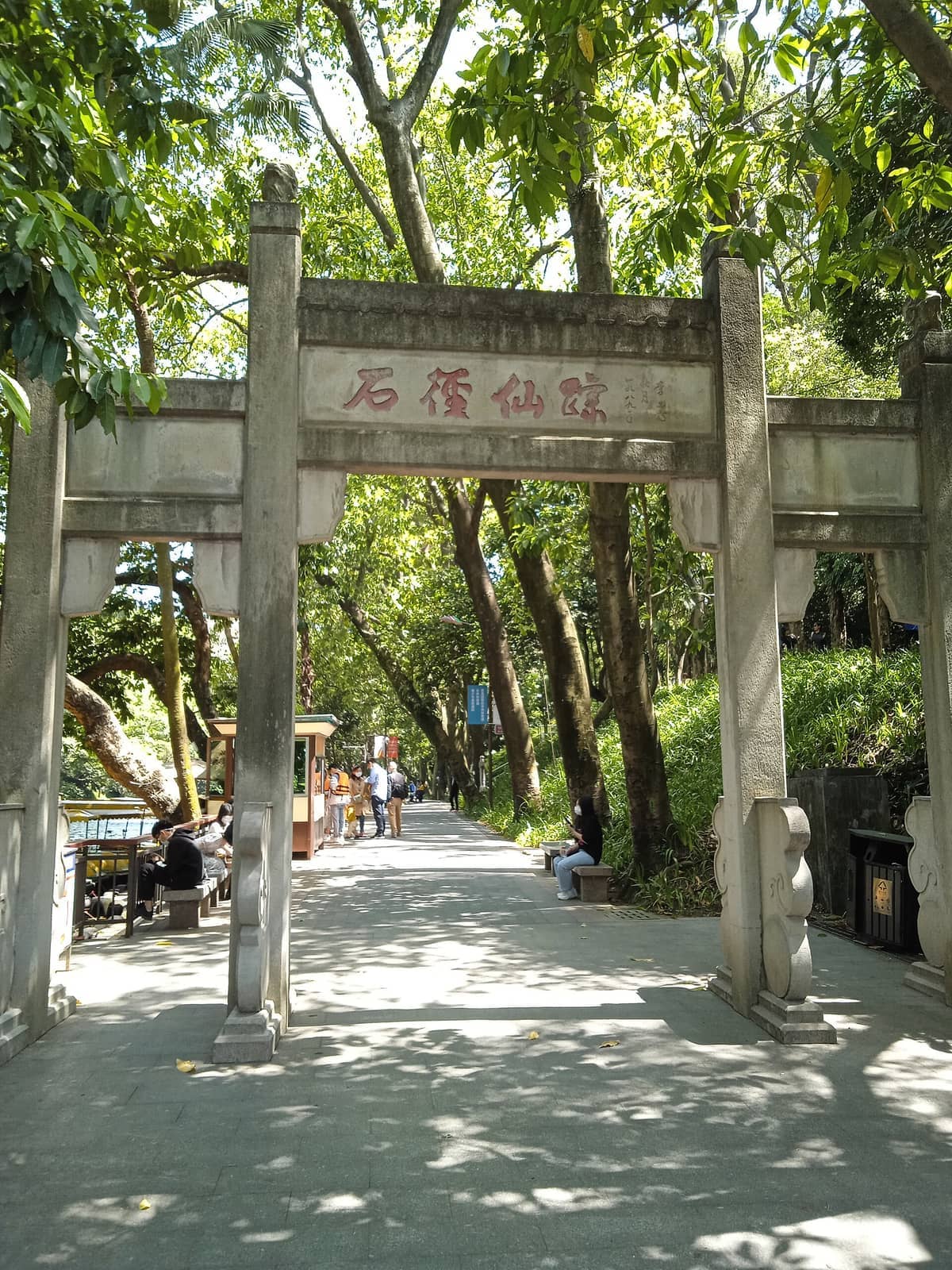
Yuexiu Park sits at the geographic and symbolic center of old Guangzhou. At roughly 690,000 to 860,000 square meters, it is the city's largest comprehensive urban park, shaped around three artificial lakes and seven low hills that together form a surprisingly varied landscape inside a metropolis of nearly 19 million people. The park is free to enter and open daily from 6:00 am to 10:00 pm, which means it functions less like a tourist attraction and more like a public commons: morning tai chi groups, retirees playing Chinese chess on stone tables, parents with strollers circling the lakefront, and, after dusk, couples and joggers making use of the lit paths.
That everyday quality is actually its strongest selling point. Yuexiu Park is where Guangzhou residents live alongside their city's history, often without paying it much attention. You can walk past a Ming-dynasty defensive tower, turn a corner onto a lakeside promenade lined with banyan trees, and arrive at a plaza where elderly residents perform Cantonese opera for no audience but each other. The park does not stage its history; it just contains it.
💡 Local tip
The main entrance off Jiefang North Road, about 300 meters from Yuexiu Park Station Exit B1, is the most convenient starting point and is a practical route toward the Five Rams Statue and Zhenhai Tower.
The Five Rams Statue: Guangzhou's Founding Symbol
The most photographed object in the park, and arguably the most recognizable image in Guangzhou, is the Five Rams Statue (五羊雕像). Completed in 1959, it depicts five rams carrying stalks of rice in their mouths, a scene drawn from the founding legend of the city: five celestial beings riding rams descended from the sky and gave the people of the Pearl River Delta a gift of grain, promising they would never know famine. The largest ram stands about 3 meters high; the sculpture as a group occupies a prominent hilltop position, giving it a clean skyline backdrop for photographs and making it visible from several paths below.
In the morning, the area around the statue fills with visitors lining up for photos, which can mean a brief wait on weekends and public holidays. By mid-afternoon on a weekday, the crowd thins considerably. Photographers will find the statue at its best in the early morning, when the low light hits the stone surface from the east and the surrounding trees are still catching mist. On hazy summer days, the background goes flat; overcast autumn light tends to produce cleaner, more even results.
The statue connects directly to Guangzhou's older identity as the city called Canton, the trading port that gave its name to Cantonese cuisine, culture, and language. If you want broader context for that identity before or after visiting the park, the Guangzhou first-timer guide covers how the city's history shaped its present-day character.
Zhenhai Tower and the Guangzhou Museum
At the highest point of Yuexiu Park stands the Zhenhai Tower (镇海楼), a five-story structure first built in 1380 during the Ming dynasty. It has been rebuilt several times following fires and conflict, but the current structure retains the proportions and red-walled, green-tiled form of the original. From the upper floors, the tower once commanded a full view of the Pearl River; today, the city has grown up around it, and the view is more of mid-rise rooftops and tree canopy than water, though it remains genuinely panoramic.
The tower now houses the Guangzhou Museum, one of the city's oldest municipal museums, with collections tracing Guangzhou's history from its early development through maritime trade, the Opium Wars, and into the 20th century. The museum charges a separate admission fee from the park. Allow at least 45 to 60 minutes inside if you plan to read the exhibits rather than just walk through.
For visitors who want to go deeper into Guangzhou's museum landscape beyond Yuexiu Park, the Guangzhou museums guide covers the full range of the city's collections across multiple districts.
ℹ️ Good to know
The museum inside Zhenhai Tower has its own admission fee, separate from the free park entry. Verify current hours and pricing at the entrance before visiting, as museum operating hours may differ from the park's 06:00–22:00 schedule.
The Lakes, Hills, and How the Park Feels at Different Hours
The three artificial lakes — Dongxiu, Nanxiu, and Beixiu — give the park its horizontal character. The paths along the lake edges are wide, flat, and shaded by banyan and camphor trees, and the seven hills are modest enough that the elevation changes feel like gentle transitions rather than effort.
Early morning, roughly 6:00 to 8:30 am, is when the park belongs most fully to local residents. The density of tai chi practitioners, badminton players, and group exercise sessions is highest in this window. Radios play softly from several spots. The sound of birdsong from the tree canopy competes with recorded music from aerobics groups near the lake. This is the best time to observe the park as a living piece of Guangzhou's daily life rather than as a tourist destination.
Between roughly 10:00 am and 3:00 pm, visitor numbers increase and the character shifts toward families and tour groups. The paths around the Five Rams Statue and Zhenhai Tower see their highest foot traffic. In summer, the combination of heat and humidity makes this midday window the least comfortable for walking; the park offers shade, but the air remains heavy. Autumn and early spring mornings are the most pleasant time of year to visit, with temperatures that invite slower, longer circuits.
After sunset, the park stays open until 10:00 pm, and the lakeside paths are lit well enough for an evening walk. The atmosphere is calm rather than dramatic: locals walking dogs, couples sitting by the water, vendors selling snacks near the southern entrance. If you are staying nearby in Yuexiu District, an evening loop around the lake is a genuinely pleasant way to decompress after a day of more intensive sightseeing.
Historical and Cultural Weight
The land occupied by Yuexiu Park has been significant in Guangzhou's civic history for over two millennia. The hills were part of the city's early defensive geography, and the site of the old city walls was associated with this area. The Zhenhai Tower was built as a garrison watchtower at the northern boundary of the city during the early Ming period, and the walls it once anchored are long gone, but the tower's position on the high ground still makes spatial sense when you stand there.
The park as a formal public space was established in 1950, consolidating several previously separate gardens and historic sites into a single managed park. It has been expanded and improved since, but the hills and lake basins are longstanding natural features.
Yuexiu District as a whole contains a concentration of historic sites that rewards a full day of exploration. The Yuexiu neighborhood guide maps out what else is within walking distance, including the Nanyue King Mausoleum Museum and the Sun Yat-sen Memorial Hall.
Practical Walkthrough and What to Bring
The main entrance from Jiefang North Road is the most logical starting point if you are arriving from the metro. From there, a counterclockwise loop taking in Beixiu Lake, climbing to the Five Rams Statue, continuing up to Zhenhai Tower, and descending along the southern ridge back toward the lake covers the park's major points of interest in about 90 minutes at a comfortable pace. Allow more time if you plan to sit, photograph, or visit the museum.
Wear comfortable walking shoes with reasonable grip; the hill paths are paved but some sections are steep and can be slippery when wet. In summer, bring water, sunscreen, and a portable fan or umbrella for sun protection. The park has restrooms near the main entrance and at several points along the main circuit, and there are small vendors and a cafe inside the park grounds, though prices are modest rather than tourist-inflated.
Photography is unrestricted throughout the park. For the Five Rams Statue, a wide-angle lens or a smartphone with a wide mode is useful given how close the paths come to the base of the sculpture. For Zhenhai Tower, stepping back along the ridge road gives you the full five-story elevation in frame without distortion.
⚠️ What to skip
On weekends and during Golden Week holidays, the area around the Five Rams Statue becomes genuinely crowded. If large crowds reduce your enjoyment, a weekday morning visit will give you a substantially different, quieter experience of the same space.
Who Might Want to Skip It
Yuexiu Park is not the right choice for travelers with very limited time in Guangzhou who are choosing between this and more architecturally or culinarily distinct experiences. The park is large but not wild; the lakes are pleasant but not scenic in a dramatic sense. If your interest in Guangzhou centers on contemporary architecture, the Pearl River waterfront, or Cantonese food culture, other parts of the city will deliver more per hour spent.
Similarly, travelers who want a more concentrated dose of historic Guangzhou might prefer leading with the Nanyue King Mausoleum Museum or the Sun Yat-sen Memorial Hall, both of which are within walking distance and deliver more focused historical narratives in less time.
Insider Tips
- The park's secondary northern entrance, closer to the Guangzhou Museum area, is less used than the main Jiefang North Road gate and puts you closer to Zhenhai Tower from the start if the museum is your primary goal.
- On weekend mornings, find the informal Cantonese opera performances near the lakeside pavilions in the western section of the park. These are local retirees performing for pleasure, not for tourists, and watching for 10 minutes costs nothing and reveals more about Guangzhou's cultural life than most paid experiences.
- The osmanthus trees along the northern lake path bloom in October and give the air a distinctive fragrance that is one of the more specific sensory memories visitors take away from an autumn visit.
- If you are carrying a large backpack or rolling luggage, the hill sections between the lake and Zhenhai Tower involve a real climb. Drop your luggage at your hotel before visiting rather than attempting the hills with heavy bags.
- The park's free Wi-Fi is inconsistent. Download offline maps and any museum audio guides before you arrive.
Who Is Yuexiu Park For?
- First-time visitors to Guangzhou who want geographic and historical orientation before exploring the rest of the city
- Travelers interested in watching how a major Chinese city uses its public spaces in daily life
- Families with children who need open space, shade, and lake views after intensive sightseeing
- Photographers looking for the Five Rams Statue and Zhenhai Tower in early-morning light
- Anyone visiting in autumn (October to November) when the weather, the osmanthus, and the crowds align most favorably
Nearby Attractions
Other things to see while in Yuexiu:
- Beijing Road Pedestrian Street
Beijing Road Pedestrian Street runs through the historic heart of Yuexiu District, layering modern retail over more than a thousand years of commercial history. Entry is free, the metro drops you right at the door, and the glass-covered archaeological ruins embedded in the pavement are an unexpected highlight worth stopping for.
- Canton Orchid Garden
Tucked inside Yuexiu District, the Canton Orchid Garden is a compact but carefully curated public garden dedicated entirely to orchid cultivation. At RMB 8 entry, it offers a rare pocket of calm in central Guangzhou, best appreciated in the cooler months when the flowers are at their peak.
- Ersha Island
Ersha Island sits in the Pearl River between Guangzhou Bridge and Haiyin Bridge, covering 1.26 square kilometers of parks, cultural venues, and tree-lined promenades. Free to enter and open around the clock, it offers a rare change of pace from the city's commercial core.
- Five Rams Statue
Carved from over 130 pieces of granite and completed in the late 1950s, the Five Rams Statue stands as one of Guangzhou's most recognizable landmarks. Located inside Yuexiu Park, it is free to visit and open daily, and is often best experienced in the early morning when the park is quiet and the light is soft.