First Time in Guangzhou: Everything You Need to Know
Guangzhou is southern China's Cantonese capital: a city of 18.7 million people, 2,200 years of history, and some of the best food in the country. This guide covers everything a first-time visitor needs, from arrival logistics and district breakdowns to the best time to visit and frank guidance on what the city actually delivers.
Plan and book this trip
Tools from our partner Travelpayouts help you compare flights and hotels. If you book through them, we may earn a commission at no extra cost to you.
Flights
Hotels map
TL;DR
- The best time to visit Guangzhou is October to November or March to May — mild temperatures, lower humidity, and fewer weather disruptions. Read the full best time to visit Guangzhou guide for a month-by-month breakdown.
- Guangzhou rewards food-focused travelers above all else. Cantonese cuisine here is the real thing, not an export version.
- The city works well as a base for Pearl River Delta travel — Hong Kong is roughly an hour away by high-speed rail, Shenzhen even closer.
- Guangzhou Baiyun International Airport (CAN) connects to the city center by metro. Taxis and ride-hailing via DiDi are also widely available.
- English signage on the metro is reliable. Outside of tourist areas and hotels, English communication is limited — download a translation app before you arrive.
What Kind of City Is Guangzhou, Really?
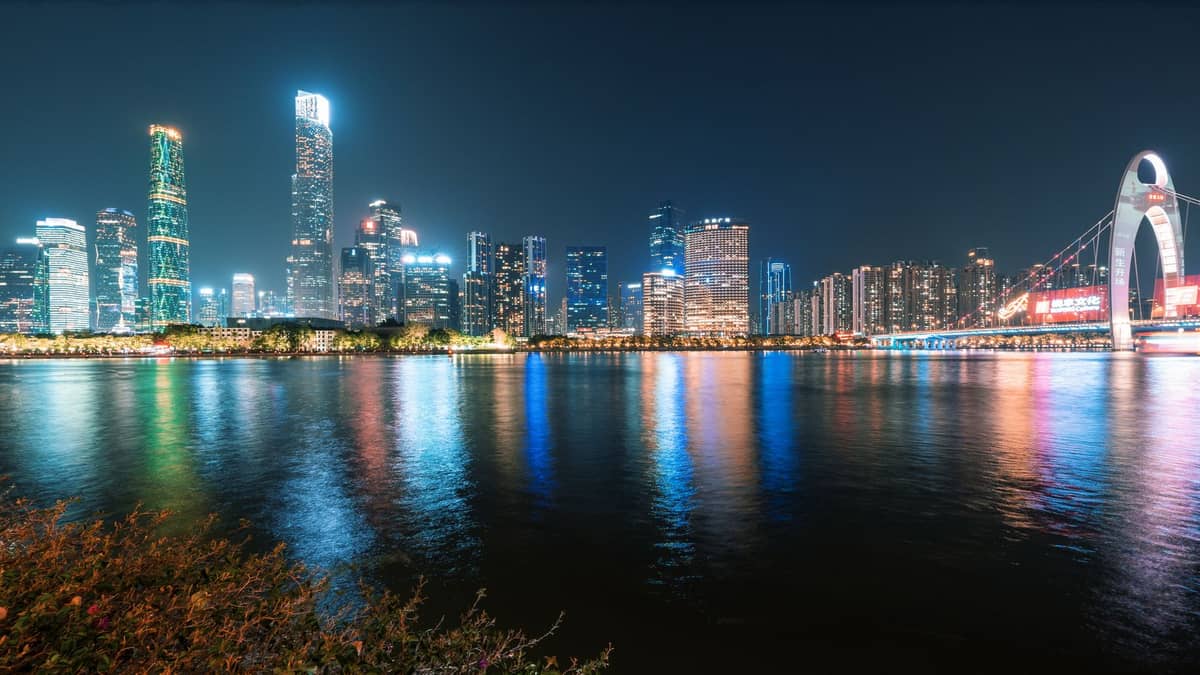
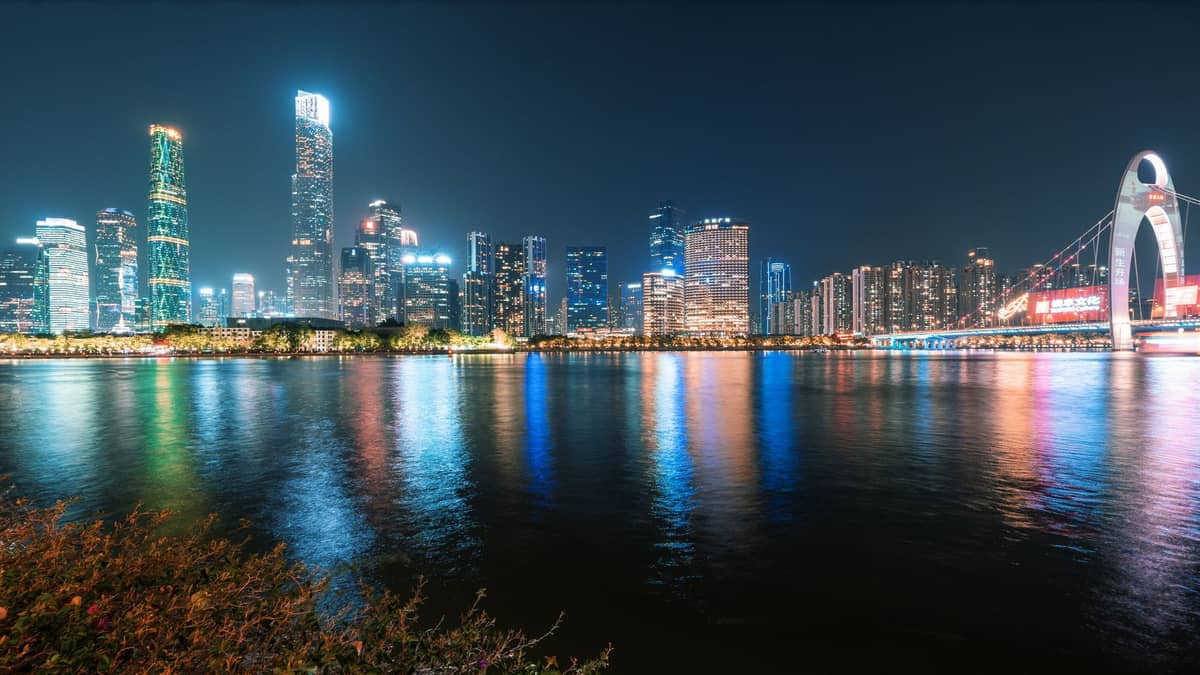
Guangzhou is the capital of Guangdong Province and one of China's largest cities, with a permanent resident population recorded at 18,676,605 in the 2020 census. It sits at the lower reaches of the Pearl River delta, roughly 120 kilometers northeast of Hong Kong.. Historically known in English as Canton, the city has been a center of trade for over 2,200 years, which is why you still encounter that name in context — the Canton Fair, Canton Tower, Cantonese cuisine. Canton is not a separate place; it is simply the older romanization of Guangzhou.
For first-time visitors, the most important thing to understand is what Guangzhou is not. It is not a city built around iconic skyline landmarks or heritage showpieces in the way Xi'an or Beijing are. What it delivers instead is dense, lived-in urban culture, extraordinary food, and a pace of daily life that feels distinctly Cantonese rather than generic Chinese-metropolis. If you come expecting a postcard, you will be underwhelmed. If you come hungry and curious, it tends to exceed expectations. The question of whether Guangzhou is worth visiting depends almost entirely on what you are looking for.
ℹ️ Good to know
Guangzhou vs. Guangdong: a common source of confusion. Guangdong is the province. Guangzhou is the capital city within that province. They are not interchangeable terms.
Best Time to Visit Guangzhou
Guangzhou has a humid subtropical climate (Köppen Cfa), which means hot and wet summers, mild winters, and two genuinely pleasant shoulder seasons. Choosing the right window makes a significant difference to how enjoyable the trip is.
- October to November (peak recommendation) Temperatures drop to a comfortable 18–26°C range, humidity eases, and rainfall is relatively low. This is the clearest, most walkable period of the year. Book accommodation earlier if traveling during China's Golden Week (first week of October), when domestic tourism surges.
- March to May (spring, second-best window) Mild temperatures, but rain begins building through April and May. The city is green and active. Cherry blossoms and flowering trees appear in parks from late February onward.
- June to September (summer, not ideal for most visitors) Temperatures regularly exceed 33°C with high humidity. Typhoon season runs from June to October, with August and September being the most active months. Outdoor sightseeing becomes genuinely draining.
- December to February (winter, underrated option) Cool by local standards (10–18°C) but mild compared to most of China. Light jacket weather rather than heavy coat territory. Crowds are manageable except around Chinese New Year, when the city either empties as residents return to home towns or fills with domestic visitors, depending on the year.
⚠️ What to skip
The Canton Fair runs twice a year, in late April to May and late October to November. During fair weeks, hotels in central Guangzhou and near the Pazhou complex can increase rates significantly and sell out well in advance. If your travel dates overlap, book early or consider staying in Foshan or a nearby city.
Getting to Guangzhou and Around the City

Guangzhou Baiyun International Airport (IATA: CAN) is located in the northern part of the city in the Baiyun and Huadu area. It handles a large volume of international and domestic routes and is consistently ranked among the busiest airports in China. The metro is the most practical way into the city center: Line 3 connects the airport directly to the core metro network, and fares are low — around RMB 7–9 depending on your destination. Journey time to major central stations is roughly 40–60 minutes. Taxis are available at designated ranks outside arrivals; Guangzhou Baiyun International Airport (IATA: CAN) is located in the northern part of the city in the Baiyun and Huadu area. It handles a large volume of international and domestic routes and is consistently ranked among the busiest airports in China. The metro is a practical way into the city center: Line 3 connects the airport directly to the core metro network, and fares are low. Journey time to major central stations is roughly 40–60 minutes. Taxis are available at designated ranks outside arrivals; the fare to the city center varies by traffic and destination. DiDi (China's dominant ride-hailing app) is another option and often cheaper than taxis, though you will need a working Chinese phone number to set up an account.
Within Guangzhou, the metro is fast, affordable, and the default choice for most city navigation. Signage is in both Chinese and English, making it accessible for first-time visitors. The network covers all major districts including Tianhe, Yuexiu, Liwan, and Haizhu. Buses are extensive but harder to navigate without reading Chinese characters. For longer distances within the city, DiDi is the most practical backup.
Guangzhou is also a major high-speed rail hub. From Guangzhou South Station, trains to Hong Kong (West Kowloon) take roughly 50–60 minutes; Shenzhen is even closer at roughly 30–40 minutes. This makes the city an efficient anchor for a broader Pearl River Delta itinerary. See the guide to for ticketing and border logistics. This makes the city an efficient anchor for a broader Pearl River Delta itinerary. See the guide to getting from Guangzhou to Hong Kong for ticketing and border logistics.
💡 Local tip
Get a Yangcheng Tong transit card (available at metro station service desks) or use a compatible mobile payment app to tap in and out of the metro. Single-journey tickets from machines work fine but slow you down at rush hour. Mobile payment with WeChat Pay or Alipay is now accepted on most transit systems, but both require setup before arrival.
Districts: Where to Base Yourself
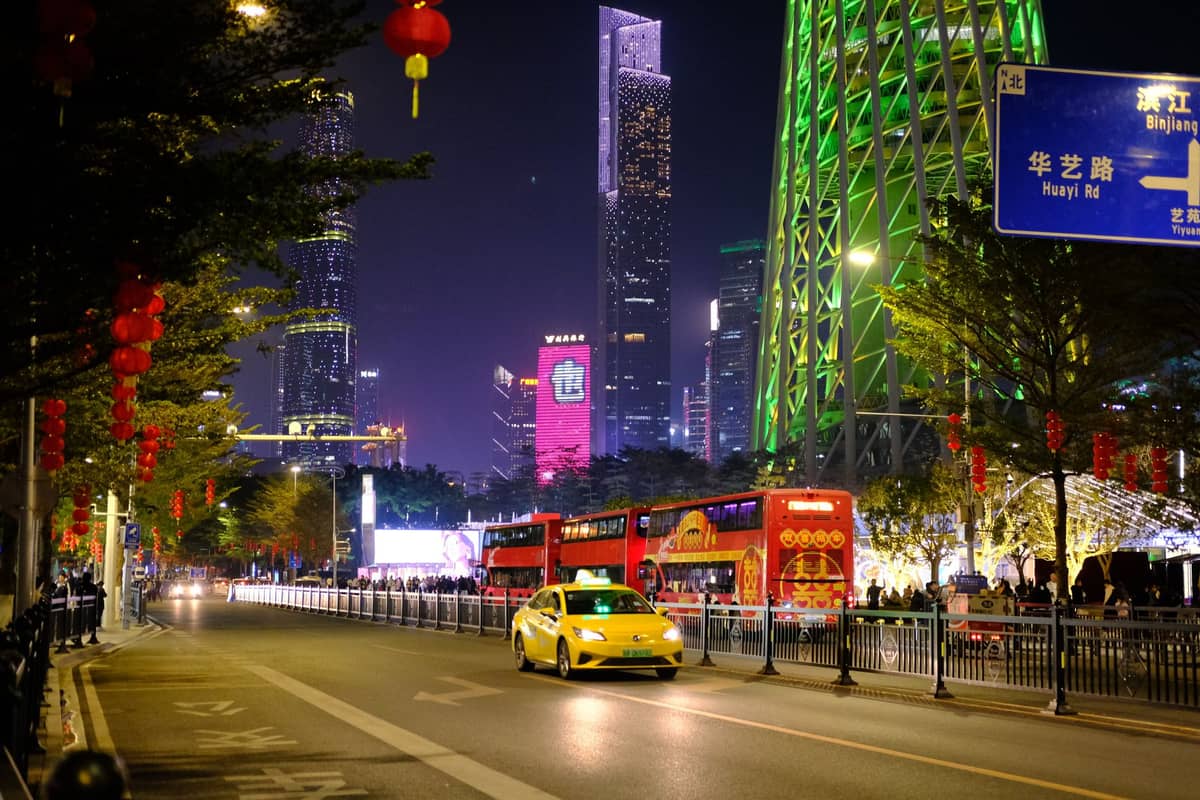
Guangzhou covers 7,434 square kilometers across 11 districts. For a first visit, you only need to orient yourself around four or five of them. Choosing the right base saves time and money on transport.
- Yuexiu District The historic core of the city. Closest to major heritage sites including Yuexiu Park, the Nanyue King Mausoleum Museum, and Beijing Road. Good mid-range and budget hotel options. Best for visitors prioritizing history and walking access to the old city.
- Tianhe District The modern central business district. Home to major shopping malls, upscale hotels, and the Zhujiang New Town skyline. Practical for business travelers and those who want contemporary city convenience. Less atmospheric for cultural exploration.
- Liwan District The most traditionally Cantonese district in terms of streetscape and daily life. Shamian Island, Shangxiajiu pedestrian street, and the Chen Clan Ancestral Hall are all here. Good for food-focused visitors. Fewer international hotel chains, more character.
- Haizhu District South of the Pearl River. More residential feel, good transport links to the Canton Tower and Pazhou exhibition complex. Useful if attending the Canton Fair. Slightly removed from the main heritage cluster.
For most first-time visitors, Yuexiu or Liwan offers the best combination of location and character. Shamian IslandShamian Island in Liwan is a particularly useful neighborhood reference point: a quiet island of colonial-era buildings that sits just off the main city pace and provides a clear sense of geographic orientation without being touristy in a hollow way.
Food: The Main Reason to Visit
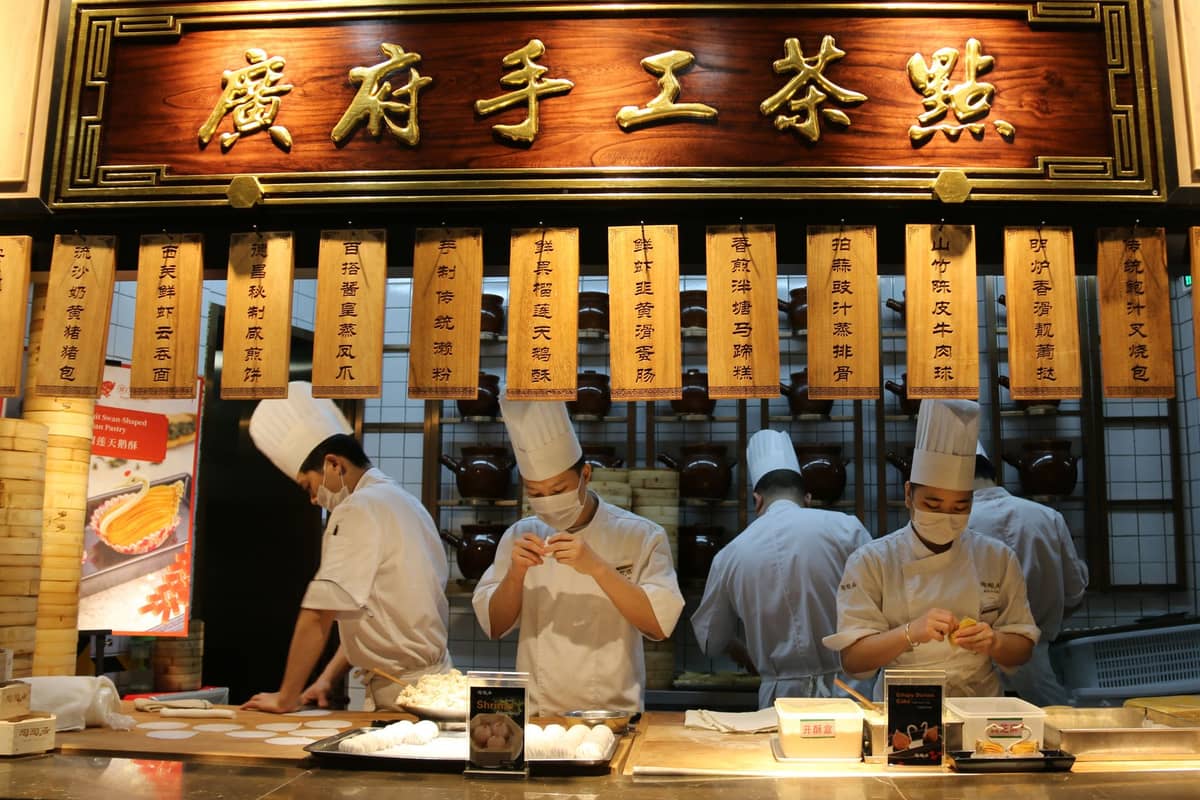
Cantonese cuisine as it exists in Guangzhou is not the same thing as Chinese food served overseas under the same label. The city has a culinary culture that is both specific and deeply ingrained in daily life. Dim sum (yum cha) is not a weekend brunch novelty here: it is a routine that families and colleagues participate in on weekday mornings, often from 7am onward. The quality baseline at ordinary neighborhood teahouses is higher than at most specialist Cantonese restaurants outside China.
Beyond dim sum, priorities include roast goose (particularly the version associated with the Zengcheng and traditional roasting houses), wonton noodle soup, clay pot rice in winter months, and the broader category of Guangdong-style roasted meats. The full guide to what to eat in Guangzhou covers specific dishes, neighborhoods, and price expectations in detail. For dim sum specifically, the dim sum guide is worth reading before you arrive.
Practical Basics Before You Arrive
A few logistics require setup before departure, not on arrival. China blocks major Western internet platforms including Google, Instagram, WhatsApp, and most Western news sites. A VPN installed on your devices before you enter the country is the standard workaround, though access can vary. WeChat is the dominant messaging and payment platform in China; if you are meeting locals or making any kind of payment at smaller vendors, having a working WeChat account is close to essential. Alipay is the alternative. Both require a bank card to function fully.
- Visa: Most foreign nationals require a Chinese visa. Guangzhou also offers a 144-hour visa-free transit policy for eligible nationalities traveling between third countries with a confirmed onward ticket. Check with the nearest Chinese consulate for current eligibility rules, as these change.
- Currency: The official currency is the Chinese yuan (renminbi), abbreviated CNY or RMB. Cash is accepted everywhere but mobile payment via WeChat Pay or Alipay is dominant in everyday transactions. ATMs that accept foreign cards are available at airports, major bank branches, and large hotels.
- Language: Cantonese is the local spoken language, though Mandarin is understood in most service contexts. English is available in international hotels and some tourist sites, but limited in everyday settings. A translation app (Google Translate offline pack, or Baidu Translate) saves significant friction.
- Water: Tap water in Guangzhou is not recommended for drinking without boiling or filtration. Bottled water is cheap and widely available.
- Electricity: 220V, with Type A, C, and I plug types used. Most international travelers will need an adapter.
- Emergency numbers: Police 110, Fire 119, Medical 120.
- Tipping: Not a standard practice in mainland China. Service charges are sometimes added at international hotels. Do not tip in ordinary restaurants or taxis.
✨ Pro tip
Download an offline map of Guangzhou (Maps.me or Google Maps offline if you have VPN access) before arrival. Mobile data roaming can be unreliable on arrival until a local SIM is active, and having offline navigation keeps you from being stranded at the airport.
For a structured introduction to the city across two or three days, a pre-planned itinerary helps considerably. The 3 days in Guangzhou itinerary is a useful starting point. If budget is a consideration, the Guangzhou on a budget guide covers how to keep daily costs low without missing the city's strongest offerings. For where to sleep, see the comprehensive where to stay in Guangzhou guide which breaks down neighborhoods and price tiers honestly.
FAQ
Is Guangzhou worth visiting for tourists?
Yes, with the right expectations. Guangzhou is not a city of grand monuments or easy Instagram landmarks. It rewards visitors who are interested in Cantonese food, urban neighborhoods, and daily life in one of China's largest cities. It is also an efficient transport hub for reaching Hong Kong, Shenzhen, or other Pearl River Delta destinations.
What is the best time to visit Guangzhou?
October to November is the most comfortable period: mild temperatures around 18–26°C, lower humidity, and minimal rain. March to May is a strong second choice. Avoid June to September if heat and humidity bother you, and check Canton Fair dates in April to May and October to November as these cause hotel prices to spike.
Do I need a visa to visit Guangzhou?
Most foreign nationals need a standard Chinese tourist visa (L visa) to enter. Guangdong Province offers a 144-hour visa-free transit policy for eligible nationalities who are transiting between two different third countries and hold a confirmed onward ticket. Eligibility rules change, so verify with an official Chinese consulate or the China National Immigration Administration before booking.
How do I get from Guangzhou Baiyun Airport to the city center?
The metro is the most practical option. Line 3 connects the airport directly into the central metro network, with low fares and journey times of roughly 40–60 minutes depending on your destination. Taxis and DiDi ride-hailing are also available at arrivals but cost more, typically varying by traffic and destination.
Is English widely spoken in Guangzhou?
Not in everyday settings. Metro signage is bilingual (Chinese and English), and international hotels have English-speaking staff. Outside these contexts, English proficiency is limited. A translation app with an offline language pack installed before arrival makes navigation significantly easier, especially for ordering food and asking directions.