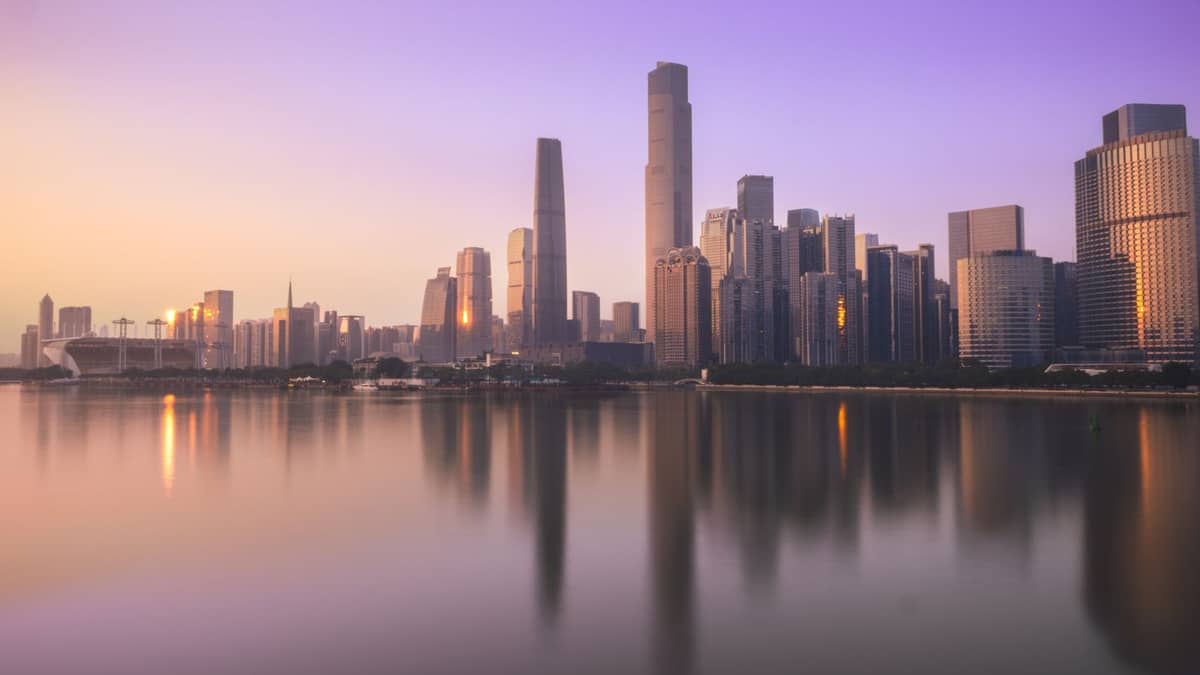
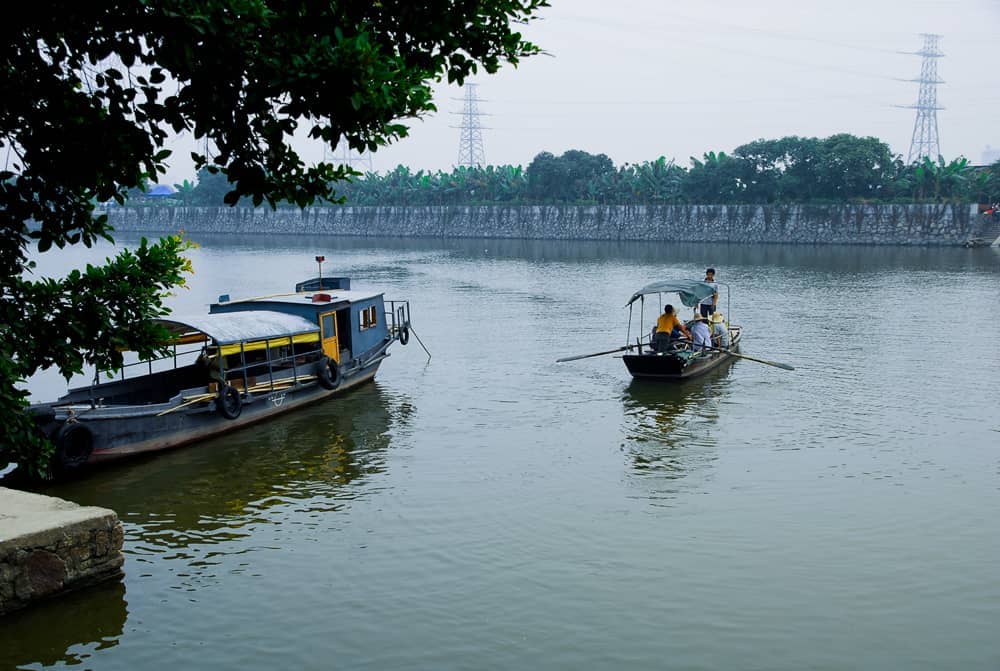
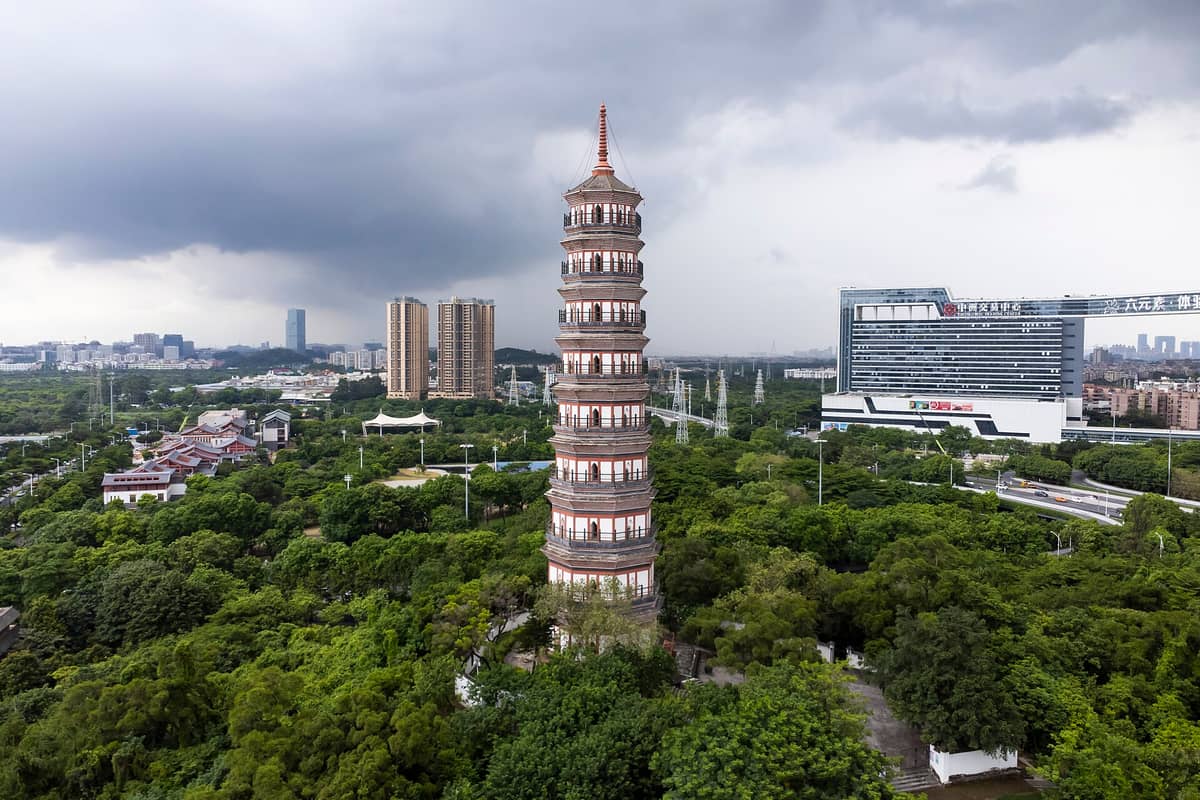
Haizhu is Guangzhou's only island district, sitting south of the Pearl River with water boundaries on nearly every side. It balances urban density with genuine green space, anchored by the iconic Canton Tower nearby and the surprisingly expansive Haizhu Wetland to the southeast. The district rewards travelers who push past the waterfront and explore its quieter residential streets and canal-side paths.
Haizhu sits on its own island south of the Pearl River, making it the only district in Guangzhou surrounded by the river and its tributary waterways. It is home to the Canton Tower, one of the city's most recognizable landmarks, but also contains one of the largest urban wetlands in China. The contrast between its high-rise northern edge and its canal-threaded southern neighborhoods is what makes Haizhu worth spending real time in.
Orientation
Haizhu District occupies a large river island on the south side of Guangzhou, bounded to the north by the Pearl River's main channel, which separates it from the older districts of Yuexiu and Liwan. Its official boundaries are defined by the district's river waterways and island geography. The result is a district shaped entirely by water: rivers, canals, and the wetland network that covers a large portion of its southeastern section.
Across the river to the north, Yuexiu District holds the city's historic core and government center, while Liwan District sits to the northwest with its old Cantonese commercial streets. To the east, across the Zhujiang New Town axis, is Tianhe District, Guangzhou's modern financial spine. Haizhu is thus positioned at the geographic center of the older city, yet it has its own distinct island identity that keeps it from feeling like a mere extension of any neighboring district.
Within Haizhu, the northern waterfront strip along the Pearl River is the most active and tourist-facing zone, dominated by the Canton Tower area. Moving south, the district transitions through dense mid-rise residential blocks into the quieter, greener zones near the wetland. Haizhu comprises 18 subdistricts and 265 communities, so it is genuinely large: expect the character of streets to shift considerably depending on how far south you walk from the riverfront.
Character and Atmosphere
Early mornings in Haizhu belong to locals. By 7am the street-level activity near residential areas includes older residents doing slow exercises along canal-side paths, wet markets filling with shoppers buying fresh produce and live seafood, and tea houses accepting their first customers for morning yum cha. The pace is distinctly Cantonese: unhurried, routine, and oriented around food. The light at this hour is soft and low, catching the surface of the Pearl River and turning the water from grey to pale gold.
By midday the northern waterfront near Canton Tower becomes noticeably more active, with tour groups and visitors clustering around the base of the tower and along the riverside promenade. This strip operates on a different rhythm from the rest of Haizhu: it is polished, selfie-optimized, and designed for visitors rather than residents. The summer heat in Guangzhou is genuine, with temperatures regularly reaching 33 to 36 degrees Celsius from June through August, and the lack of shade on the exposed riverfront makes midday visits genuinely uncomfortable during those months.
Evenings transform the waterfront entirely. The Canton Tower lights up after dark in cycling color patterns, the Pearl River fills with illuminated cruise boats, and the promenade draws a crowd that is mostly local: couples walking, families out late, food vendors doing steady business. This is when Haizhu's northern edge shows its most photogenic face. Away from the waterfront, the residential streets quiet down considerably after 9pm, with the exception of areas near larger metro stations.
💡 Local tip
If you want to photograph Canton Tower with clear skies and fewer crowds, aim for weekday mornings or arrive at the waterfront promenade shortly after sunrise. The tower's lighting show is best appreciated from the north bank across the Pearl River, so consider walking across one of the pedestrian-accessible bridges to get a wider perspective.
What to See and Do
The single most visited structure in the district is Canton Tower, a 600-meter telecommunications and observation tower that defines Guangzhou's skyline. Its twisted lattice exterior is distinctive at any time of day, but the observation decks near the top offer views that place the entire Pearl River delta in perspective. Tickets are required for entry, and the experience is worth doing at least once.
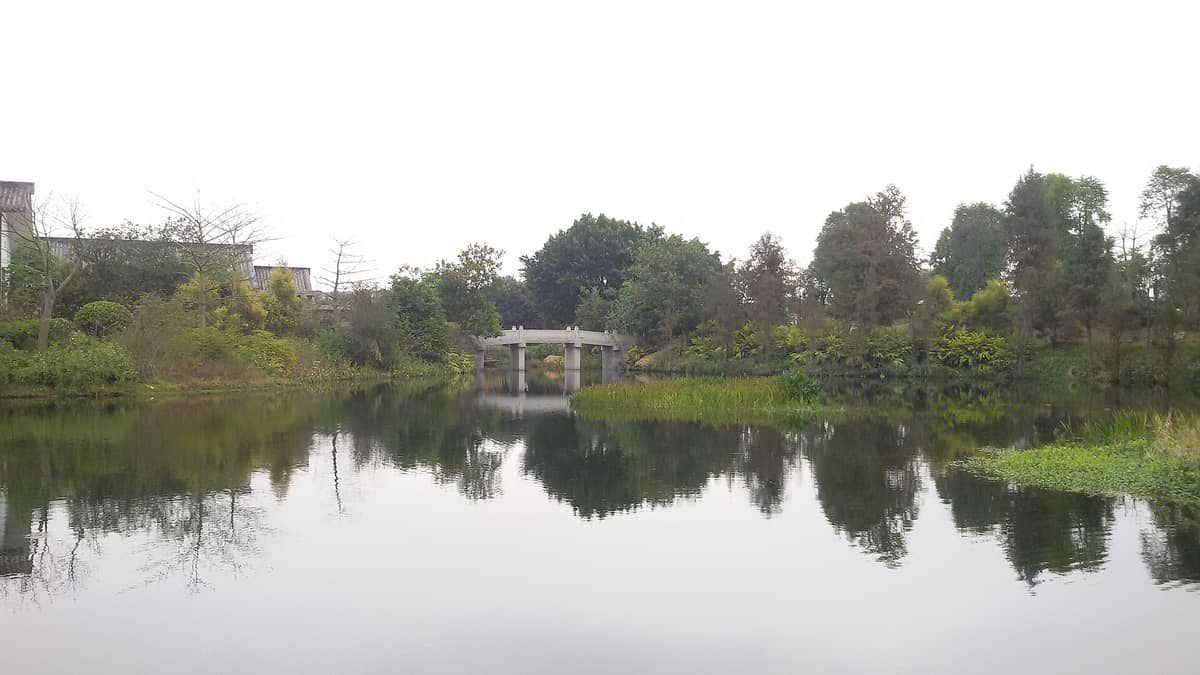
The Haizhu Wetland is the district's other major natural asset and receives far fewer visitors than it deserves. Covering several square kilometers in the southeastern part of the district, it is a large urban wetland and has been recognized under the Ramsar Convention for its ecological significance. Canal-side walking paths wind through fruit orchards, reed beds, and mangrove-adjacent vegetation. Herons and egrets are common. The contrast with the high-rise density of the northern riverfront, just a few kilometers away, is striking.
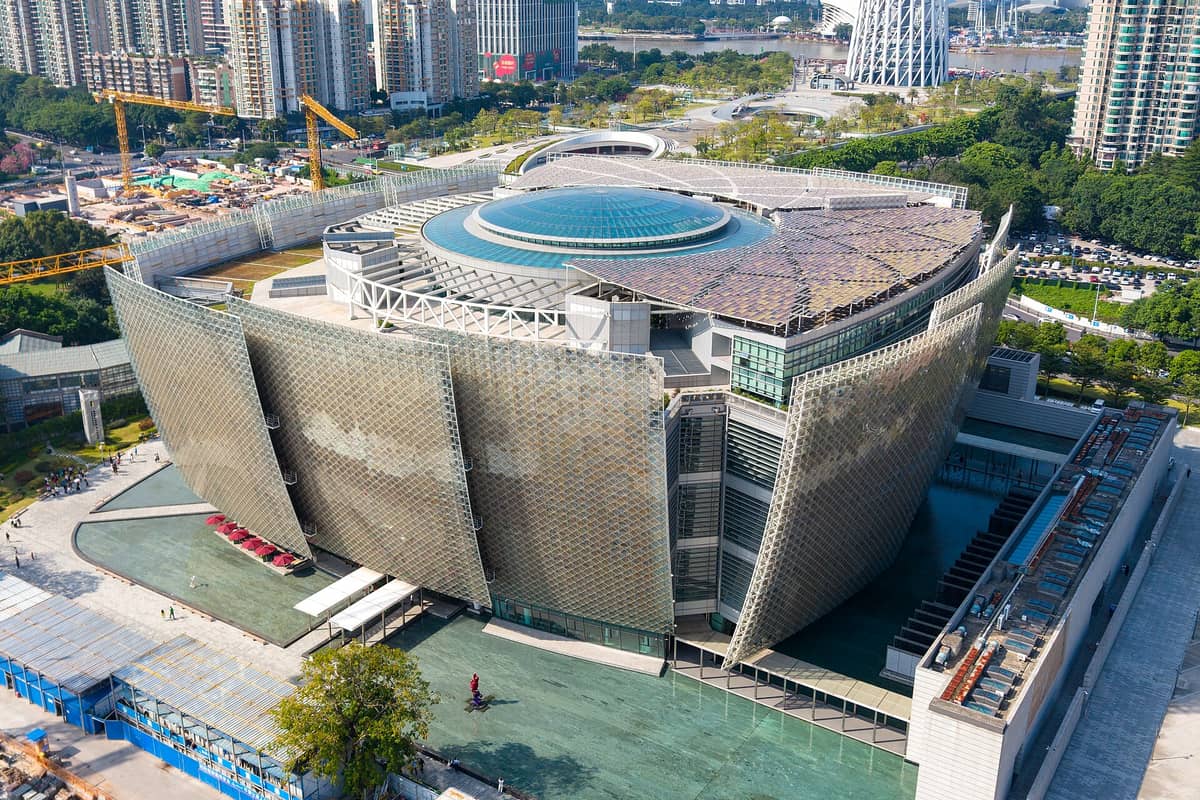
The Ersha Island sits just off Haizhu's northern shore, connected by short bridges. It is home to the Guangzhou Museum of Art, one of the better fine art institutions in southern China, along with several upscale residential blocks and riverside parks. The island has a noticeably quieter character than the Canton Tower strip and is a good place to spend an afternoon away from crowds.
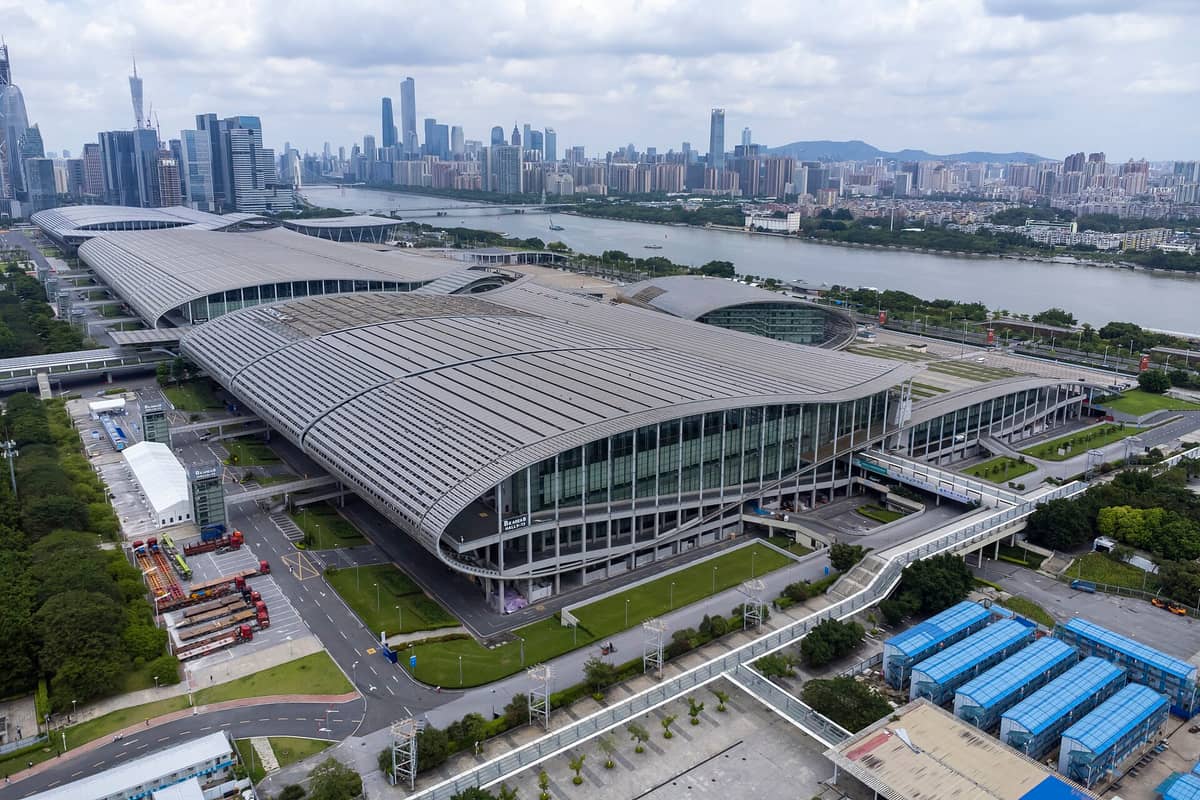
The Pazhou area in the eastern part of Haizhu is home to the Canton Fair Complex, which hosts the China Import and Export Fair twice annually. Outside fair periods the complex is largely dormant for casual visitors, but the surrounding streets are worth a walk for the sheer scale of the exhibition infrastructure. The area has its own metro stations and a hotel cluster that serves business travelers throughout the year.
Canton Tower observation decks and sky walk: allow 1.5 to 2 hours
Haizhu Wetland walking paths: half-day minimum to cover the main routes
Ersha Island: Guangzhou Museum of Art plus riverside park walk
Pearl River evening cruise: departs from piers near Canton Tower area
Pazhou exhibition complex: worth viewing from outside even outside fair season
ℹ️ Good to know
The Canton Fair (China Import and Export Fair) takes place twice a year, typically in April and October, and draws enormous numbers of trade visitors to Haizhu's Pazhou area. Hotel prices in the district spike significantly during fair periods, and the metro stations near Pazhou become extremely congested. If you are not attending the fair, these are the weeks to avoid staying in Haizhu.
Eating and Drinking
Haizhu's food scene is primarily Cantonese and oriented toward daily life rather than tourism. The wet markets and residential streets in the mid-district support a dense network of small canteens, congee shops, wonton noodle restaurants, and roast meat counters that open early and serve through to mid-afternoon. Prices in these places are genuinely low by any standard: a bowl of congee with accompaniments or a plate of roast pork over rice will typically cost between 15 and 30 CNY.
Dim sum culture is strong here, as it is across Guangzhou. Tea houses in Haizhu tend to be local neighborhood institutions rather than tourist-facing operations, which means better value and more authentic preparation. For broader context on what to order and how the dim sum tradition works in Guangzhou, the Guangzhou dim sum guide covers the essentials. Look for tea houses near residential areas rather than on major commercial streets for the most local experience.
The northern waterfront near Canton Tower has a strip of restaurants and cafés positioned for the visitor crowd: prices are higher, views are better, and the menus often include English translations. These are not the places locals eat daily, but they work well for a meal with a river view. Seafood is the dominant protein in this part of Guangzhou, and the cooking style is generally light: steamed, stir-fried with minimal sauce, or served with clear broth.
Late-night eating options are clustered near metro exits and along the main commercial arteries. Night market-style food stalls typically operate from around 9pm in the warmer months, selling skewered meats, oyster omelets, and cold sesame noodles. The overall bar scene in Haizhu is modest compared with Tianhe's more developed nightlife corridor, but small bars and tea-cocktail places have appeared in the neighborhoods just south of the Canton Tower area in recent years.
Getting There and Around
Haizhu is well-served by the Guangzhou Metro. Canton Tower Station on Line 3 and Line APM (Automated People Mover) is the primary entry point for most visitors and sits directly beneath the tower. Kecun Station on Lines 3 and 8 serves the central district. Changgang Station on Lines 2 and 8 provides access to residential mid-Haizhu. For the Pazhou area and Canton Fair Complex, Pazhou and Xingangdong stations on Line 8 are the most relevant stops.
From Yuexiu and the old city to the north, Line 2 crosses the Pearl River, and several bridges carry both road traffic and pedestrians. From Tianhe District and Zhujiang New Town to the east, the APM line connects the Zhujiang New Town development to Canton Tower, making the journey from the eastern CBD to the tower a matter of a few minutes. Getting around Guangzhou covers the full metro network and transport options in more detail.
Within Haizhu, walking is practical for the northern riverfront zone and the area around Canton Tower. However, the district is large: the wetland area to the southeast is several kilometers from the tower, and walking between them in summer heat is not recommended. City buses cover most internal routes, and ride-hailing via DiDi (confirm current availability before travel) is an efficient option for getting between distinct zones within the district.
⚠️ What to skip
Metro stations near Canton Tower and Pazhou can become extremely crowded on weekend evenings and during the Canton Fair periods. If you are traveling with luggage or are mobility-sensitive, plan your journeys outside peak hours when possible. Platforms on Line 3 at Canton Tower Station can back up considerably on fair-adjacent days.
Where to Stay
Haizhu offers two distinct accommodation zones with different travel logics. The Pazhou and Canton Tower cluster in the northern and eastern parts of the district is dominated by business hotels, many of which cater primarily to Canton Fair attendees and trade visitors. These hotels are generally well-maintained, internationally branded, and competitively priced outside fair periods, but they charge a premium during the April and October fairs.
For leisure travelers, the northern waterfront strip near Canton Tower puts you within walking distance of the Pearl River promenade and the tower itself, while keeping you on a metro line with fast access to both the old city in Yuexiu and the shopping centers of Tianhe. If you prioritize being central to Guangzhou's historic sights, consider whether Yuexiu might actually suit you better: it sits closer to Shamian Island and the old commercial streets, while Haizhu requires crossing the river to reach those areas. For a full comparison of where to base yourself, the Guangzhou accommodation guide breaks down the options across all major districts.
Budget guesthouses and mid-range hotels are available in the residential mid-district, particularly near Changgang and Jiangnan West metro stations. These areas feel genuinely local: you will be surrounded by daily life rather than tourist infrastructure, which some travelers find ideal and others find disorienting. The trade-off is that you will rely on the metro more heavily to reach the city's main visitor attractions.
Practical Notes
Haizhu fits naturally into a broader Guangzhou itinerary. A first-time visitor can see the Canton Tower and the Pearl River waterfront in a morning or afternoon, then cross north to explore Shamian Island or the old streets of Liwan. For a longer stay, the wetland and Ersha Island add genuine depth. If you are building an itinerary from scratch, the 3-day Guangzhou itinerary offers a structured route that moves between districts including Haizhu.
Cantonese is the primary spoken language in daily life here, as across most of Guangzhou. Mandarin is understood universally, and English signage is present at major tourist sites and metro stations. Away from the tourist corridor, expect very little English: translation apps are genuinely useful in local restaurants and markets.
Autumn is the most comfortable time to be in Haizhu. From October through November, temperatures settle into the mid-20s Celsius, humidity drops, and the light is sharper than in summer. This coincides with Canton Fair in October, which creates accommodation pressure, so book ahead. For a full overview of seasonal timing, the best time to visit Guangzhou guide covers all the variables.
TL;DR
Haizhu is Guangzhou's only island district, bounded on all sides by the Pearl River and its tributary channels, and sits at the geographic center of the city.
Canton Tower is the district's marquee attraction, best visited at night for the light show or early morning to avoid peak crowds.
Haizhu Wetland in the southeastern district is one of the largest urban wetlands in China and offers a genuine contrast to the high-rise riverfront.
The Pazhou area hosts the biannual Canton Fair: avoid the district for leisure travel during April and October fair weeks unless you plan to attend.
Best suited to travelers who want a central Guangzhou location with access to green space and a local residential character, rather than those seeking the city's most concentrated nightlife or historic sightseeing.
Three days is the ideal amount of time to experience Guangzhou's full range: ancient temples and colonial backstreets, futuristic skylines and river cruises, and one of the world's great food cities. This day-by-day itinerary covers the essential attractions without turning the trip into a rushed checklist.
Guangzhou's humid subtropical climate means the difference between a comfortable trip and a sweaty, storm-interrupted one often comes down to timing. This guide breaks down every season, flags the Canton Fair impact on prices, and tells you which months are genuinely worth prioritizing.
Guangzhou rewards those who look up, climb high, and linger by the river after dark. This guide covers the city's best viewpoints, from the 488-meter observation deck of Canton Tower to the forested summit of Moxing Ridge, plus hilltop temples, riverside promenades, and terraced gardens with sweeping city panoramas.
The Canton Fair is the world's largest trade fair, held twice a year in Guangzhou, China. This guide covers registration, badge requirements, phase schedules, venue logistics, and practical tips for first-time foreign buyers.
Guangzhou sits at the center of one of the most destination-rich regions in China. Whether you want ancient watchtowers, serious Cantonese food, or a Hong Kong skyline, the best day trips from Guangzhou are faster and cheaper to reach than most travelers expect. This guide ranks your options by practicality, not just scenery.
Guangzhou is the undisputed home of dim sum, where yum cha is less a meal and more a daily ritual. This guide covers the best restaurants across the city, the dishes worth ordering, the timing tricks locals rely on, and the common mistakes first-timers make.
Guangzhou rewards budget travelers generously. From ancient temples and colonial island walks to world-class museums and urban wetlands, these 20 free attractions cover the city's history, culture, and nature without spending a yuan on entry.
Guangzhou is a sprawling city of nearly 19 million people across 7,434 km², but its transport network is one of the most efficient in China. This guide covers the metro system, taxis, ride-hailing, airport connections, and everything else you need to move around the city confidently.
Guangzhou's built environment spans two thousand years of history, from climate-adapted Lingnan courtyards to some of the boldest contemporary structures in Asia. This guide walks you through the key styles, the best places to see them, and how to plan a serious architectural itinerary across the city.
Baiyun Mountain is Guangzhou's best-known hiking destination, with marked trails, a cable car to the summit area, and panoramic views over the Pearl River Delta. This guide covers every trail option, gate access, transport logistics, and the best times to go.
Cantonese opera is one of southern China's most distinctive art forms, and Guangzhou is the best city in the world to experience it. This guide covers the top venues, the essential museum visit, seasonal advice, and practical tips for first-timers and returning visitors alike.
Chimelong Tourist Resort in Guangzhou's Panyu District is one of China's largest theme park complexes, but each park inside it runs on its own schedule, pricing, and vibe. This guide breaks down every option so you can pick the right park and plan your day without wasted time.
Chinese New Year in Guangzhou is not a single night of fireworks. It is a rolling season of flower fairs, lantern exhibitions, temple activities, and district-level events that stretches from late January through early March. This guide covers what happens, when, where, and how to navigate it without getting caught out.
Guangzhou is southern China's Cantonese capital: a city of 18.7 million people, 2,200 years of history, and some of the best food in the country. This guide covers everything a first-time visitor needs, from arrival logistics and district breakdowns to the best time to visit and frank guidance on what the city actually delivers.
Guangzhou Baiyun International Airport (CAN) is southern China's primary aviation hub, serving a city of nearly 19 million people. This guide covers everything from booking flights and understanding the airport layout to getting into the city quickly and affordably.
Autumn is the most comfortable season to visit Guangzhou, with cooler temperatures, low rainfall, and clear skies from October through December. This guide breaks down the weather month by month, what to do, what to watch out for, and how to get the most from a fall visit to Guangdong's capital.
Guangzhou punches well above its weight as a luxury destination. This guide breaks down the best 5-star hotels by district, the fine dining worth your money, and the high-end cultural experiences that separate a premium Guangzhou trip from a basic one.
Guangzhou has one of the richest museum scenes in southern China, spanning 2,000 years of trade, art, and revolutionary history. This guide covers the best museums across every category, from ancient archaeology to Cantonese opera, with practical tips on booking, admission, and where to go first.
Guangzhou nightlife spans rooftop lounges with skyline views, a dedicated riverside bar strip, speakeasy cocktail bars, live music venues, and Pearl River night cruises. This guide breaks down where to go, what to spend, and when to go out across the city's main after-dark districts.
Guangzhou is one of China's most rewarding cities for budget travelers. From 2 CNY metro rides to free museums and 10 CNY street food, this guide breaks down exactly where your money goes and how to stretch it further across every category of spend.
The Pearl River (Zhujiang) is Guangzhou's geographic and cultural backbone, stretching through the city's historic core and modern skyline. This guide covers night cruises, waterfront walks, pier logistics, and the best spots along the riverbank for first-timers and returning visitors alike.
Guangzhou has been a trading city for over 2,000 years, and that commercial DNA runs through everything from its flagship luxury malls in Tianhe to its chaotic wholesale garment markets near the train station. This guide breaks down every major shopping zone by what you actually buy there, how much to budget, and when to go.
Guangzhou has been a city of traders, pilgrims, and believers for over two thousand years, and its temples reflect every strand of that history. This guide covers the finest Buddhist, Taoist, Islamic, and colonial Christian sites in the city, from ancient pagodas in Yuexiu to a spectacular Mazu complex on the Pearl River Delta.
The journey from Guangzhou to Hong Kong takes as little as 47 minutes by high-speed train or up to 4 hours by road.. This guide breaks down every realistic option, including which ferry routes actually exist, what each costs, and when to book in advance.
Guangzhou's best neighborhoods are surprisingly walkable once you know which districts to target. This guide breaks down the top self-guided walking routes, what each area offers, how to connect them by metro, and the practical details that make a walking day actually work.
Guangzhou is the wholesale capital of southern China, with over 1,000 specialized markets covering everything from clothing and electronics to toys and fabrics. This guide cuts through the noise with district-by-district breakdowns, real pricing expectations, payment logistics, and the timing intel that separates experienced buyers from first-timers.
Guangzhou is a genuinely underrated family destination, with world-class theme parks, interactive museums, free parks, and riverfront evenings that work for all ages. This guide covers the best activities for kids, honest pricing, seasonal advice, and how to structure your visit without burning out.
Guangzhou rarely tops bucket lists, but that's exactly what makes it interesting. This guide cuts through the business-city stereotype to show what the city actually offers travelers: world-class Cantonese food, genuine history, serious shopping, and a pace of life that Beijing and Shanghai simply don't have.
Guangzhou rewards visitors with one of China's richest mixes of history, food culture, river life, and modern architecture. This guide covers the top things to do in Guangzhou across every district, with practical assessments, practical logistics, and seasonal advice.
Guangzhou is the birthplace of Cantonese cuisine, a cooking tradition built on freshness, precision, and restraint. This guide covers the essential dishes, where to eat them, what to pay, and how to eat like a local from sunrise to sunset.
Guangzhou has several distinct hotel zones, and choosing the wrong one can cost you hours of commuting per day. This guide breaks down the five main areas by trip type, with practical assessments of who each zone actually suits.