Flying to Guangzhou: Baiyun International Airport Guide and Arrival Tips
Guangzhou Baiyun International Airport (CAN) is southern China's primary aviation hub, serving a city of nearly 19 million people. This guide covers everything from booking flights and understanding the airport layout to getting into the city quickly and affordably.
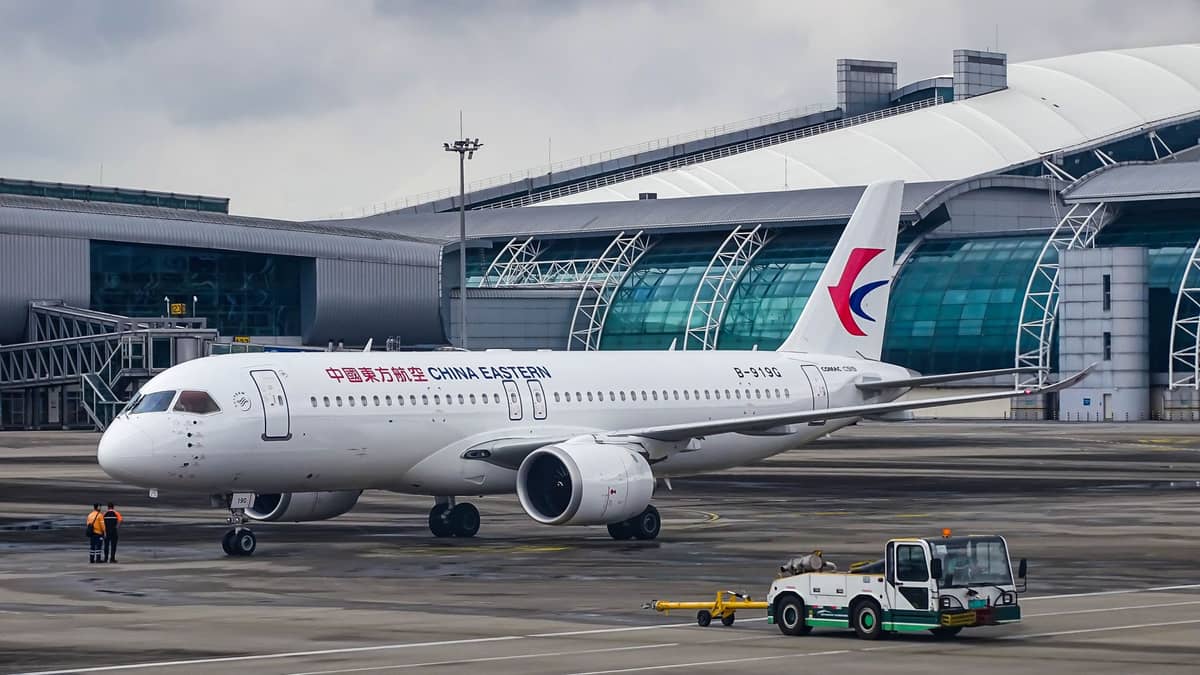
Plan and book this trip
Tools from our partner Travelpayouts help you compare flights and hotels. If you book through them, we may earn a commission at no extra cost to you.
Flights
Hotels map
TL;DR
- Guangzhou Baiyun International Airport (IATA: CAN, ICAO: ZGGG) sits roughly 28 km north of downtown and operates 24 hours a day.
- The airport opened on 5 August 2004, replacing the old Baiyun Airport that had served the city since 1933.
- Metro Line 3 (Airport North/South extensions) connects the airport directly to central Guangzhou — the fastest and cheapest transfer option. See our full getting around Guangzhou guide for all transport options.
- Terminal operations have been subject to changes in 2025-2026 — always confirm your terminal assignment on your booking or with your airline before travel.
- October through December is generally the best period to fly in: pleasant weather, lower humidity, and fewer domestic travel crowds outside Golden Week. Read more in our best time to visit Guangzhou guide.
Guangzhou Baiyun International Airport: The Basics
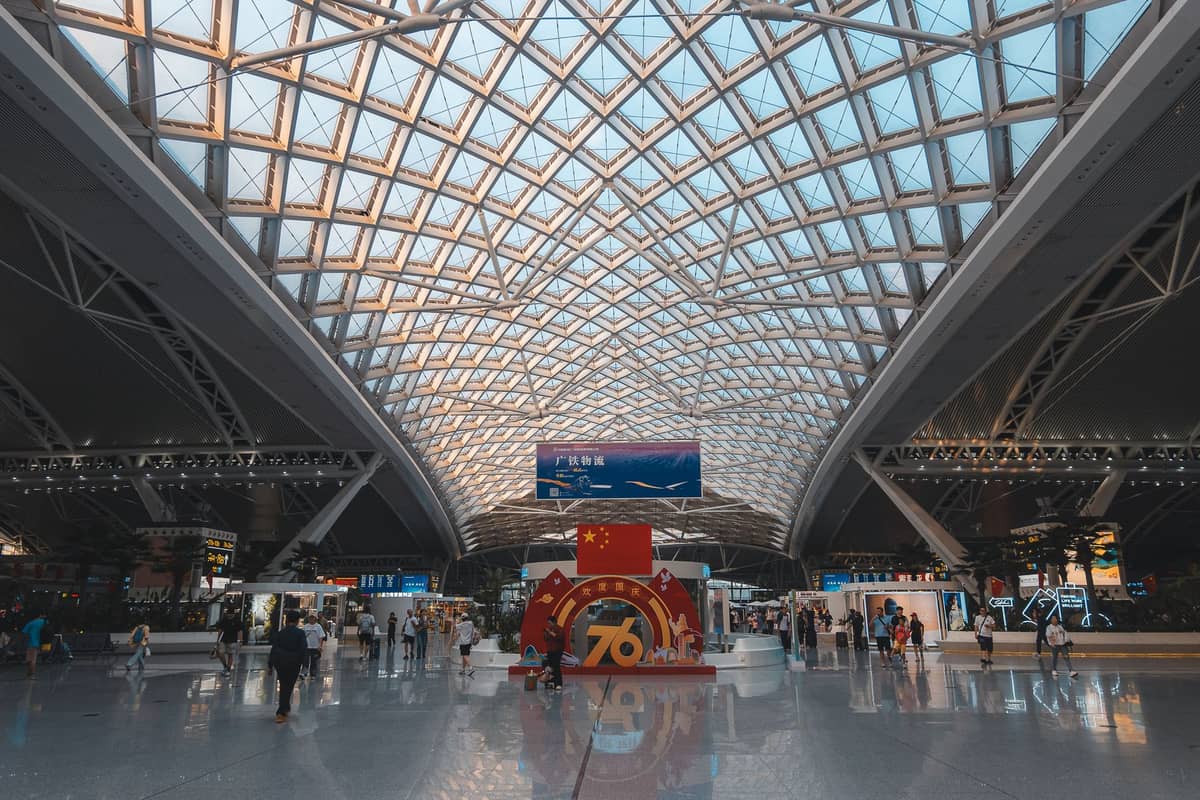
Guangzhou Baiyun International Airport (CAN) is the main gateway into Guangzhou Municipality, the capital of Guangdong Province and one of China's largest cities with a permanent population of nearly 19 million. The airport sits in the Baiyun and Huadu area north of the urban core, approximately 28 km from the central districts, and runs around the clock every day of the year. Customer service can be reached on the airport hotline +86 20 3606 6999, and the official airport website is gbiac.net.
One thing worth clarifying: the current Baiyun Airport is not the old 1930s facility that many older travel references describe. The original Baiyun Airport opened in 1933 and was decommissioned on 5 August 2004, the same day the new international airport opened on a completely different site north of the city. Some third-party guides still conflate the two, so treat any pre-2004 references to Baiyun Airport as historically separate.
⚠️ What to skip
Terminal assignments at Baiyun Airport have been subject to operational changes in 2025-2026 due to ongoing infrastructure work. Do not rely on older guides for terminal information. Check your airline's booking confirmation or the airport's official website (gbiac.net) within 48 hours of departure to confirm which terminal you need.
Flights to Guangzhou: What to Know Before You Book
Baiyun Airport is one of the busiest airports in mainland China, alongside major hubs such as Beijing Capital and Shanghai Pudong, and serves a wide network of domestic and international routes. Major international carriers operating into CAN include China Southern Airlines (which is headquartered in Guangzhou and uses Baiyun as its primary hub), Cathay Pacific, Singapore Airlines, Malaysia Airlines, Thai Airways, and a growing list of Middle Eastern and European carriers. Domestic connections cover virtually every major Chinese city multiple times daily. alongside Beijing Capital and Shanghai Pudong, and serves a wide network of domestic and international routes. Major international carriers operating into CAN include China Southern Airlines (which is headquartered in Guangzhou and uses Baiyun as its primary hub), Cathay Pacific, Singapore Airlines, Malaysia Airlines, Thai Airways, and a growing list of Middle Eastern and European carriers. Domestic connections cover virtually every major Chinese city multiple times daily.
For international travelers, the most competitively priced flights to Guangzhou typically originate from other Asian hubs: Hong Kong, Singapore, Kuala Lumpur, Bangkok, and Tokyo frequently offer short-haul connections that open up affordable multi-stop itineraries. Direct long-haul routes from Europe and North America exist but are fewer; most Western travelers connect through a hub like Dubai (Emirates), Singapore (Singapore Airlines), or Hong Kong.
- Book directly through airline websites For the most accurate real-time fares and seat availability on flights into CAN, airline websites and major booking platforms (Ctrip/Trip.com is the dominant Chinese platform) give live pricing. Static guides cannot provide current fares.
- Check China Southern's domestic network If you are entering China via another city first (Shanghai, Beijing), China Southern's extensive domestic network out of Guangzhou offers frequent onward connections at competitive prices.
- Factor in Chinese holidays Domestic air travel during Golden Week (early October), Chinese New Year (late January to February), and National Day gets extremely congested. Fares spike, and Baiyun Airport's terminals fill quickly. Book early or adjust your arrival dates by even a few days.
- Consider Hong Kong as an alternative entry Hong Kong International Airport (HKG) has a wider range of international airlines and sometimes lower long-haul fares. High-speed rail between Hong Kong West Kowloon and Guangzhou South takes around 50 minutes, making it a practical alternative entry point.
ℹ️ Good to know
China's visa entry rules are nationality-specific and change frequently. As of 2024, China has expanded its visa-free access for several countries under specific conditions. Always verify the latest requirements through official Chinese consular sources or your country's foreign ministry before booking.
Getting from Baiyun Airport to the City Centre
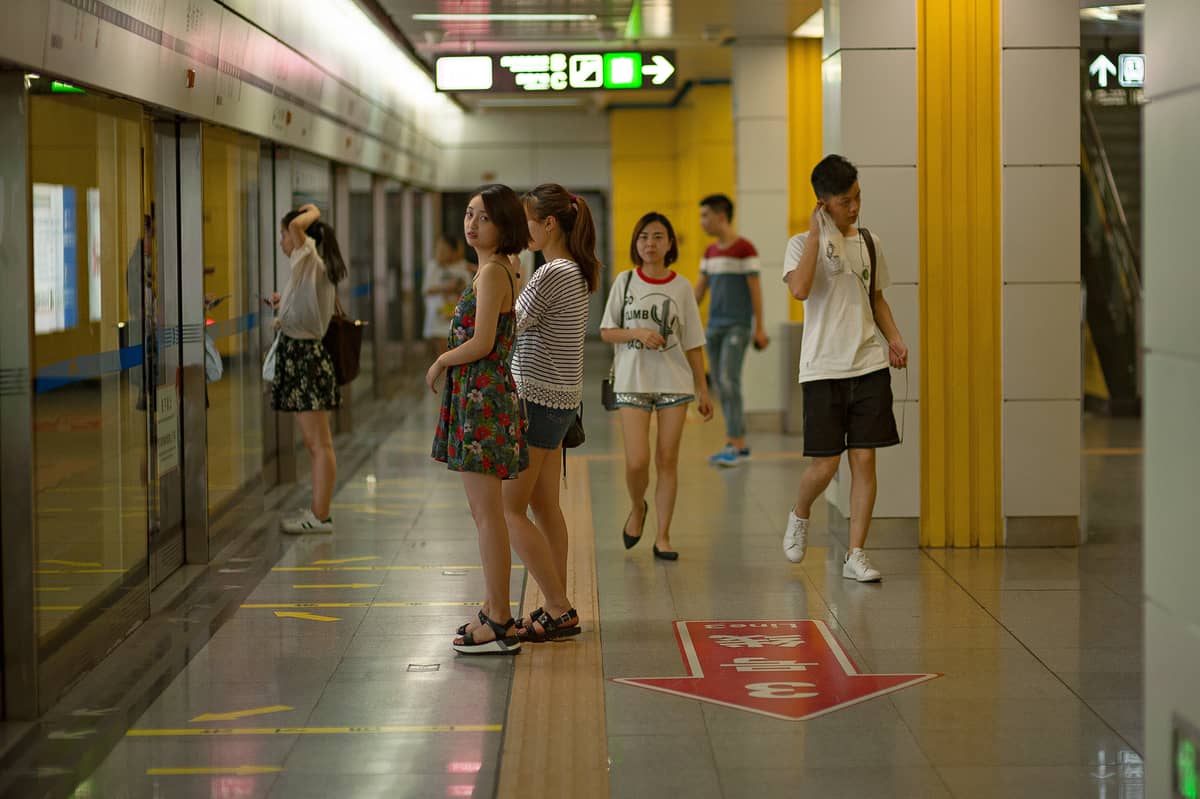
The airport is connected to central Guangzhou by Metro Line 3, which has two airport stations: Airport North (机场北) and Airport South (机场南). Terminal 1 uses Airport South and Terminal 2 uses Airport North. From Airport South, Line 3 runs south through the city, stopping at key interchange stations including Tianhe Sports Centre (for the Tianhe CBD) and eventually connecting to the broader metro network. The journey to central Guangzhou typically takes between 40 and 60 minutes depending on your destination, and the metro fare is a fraction of what a taxi costs.
Taxis are plentiful at arrivals and are metered, but journey costs vary significantly depending on traffic, time of day, and destination. Rush-hour queues can be long. Ride-hailing via DiDi (the dominant app in mainland China) is another option that avoids the taxi queue and allows you to set your destination in advance. For a detailed breakdown of all transport modes, costs, and metro maps, see the complete guide to getting around Guangzhou.
- Metro Line 3 (recommended) Fastest and cheapest for most destinations. Runs frequently, air-conditioned, and connects to all major districts. Buy a stored-value Yangcheng Tong card at the airport for reusable metro access across multiple trips.
- Taxi Convenient for families with large luggage or destinations not well-served by metro. Use only metered taxis from official ranks; avoid unlicensed drivers who approach you in the arrivals hall.
- DiDi ride-hailing Comparable to taxis but often slightly cheaper, with the added benefit of in-app destination setting (useful if you don't speak Mandarin or Cantonese). Download and set up the app before arrival as the registration process requires a Chinese phone number or international option — check DiDi's current international user settings before your trip.
- Airport shuttle buses Multiple coach routes connect the airport to various city zones and districts, as well as to neighboring cities like Foshan and Zhuhai. Cheaper than a taxi, useful if your accommodation is near a bus terminus.
- Inter-city high-speed rail The airport is not directly connected to Guangzhou's main HSR stations. For onward travel to Hong Kong or other cities, you will need to reach Guangzhou South Station or Guangzhou East Station by metro first.
💡 Local tip
Pick up a Yangcheng Tong transit card at the airport's metro station ticket machines or service counters. It works on Guangzhou's entire metro network, most city buses, Pick up a Yangcheng Tong transit card at the airport's metro station ticket machines or service counters. It works on Guangzhou's entire metro network and most city buses. You avoid per-journey ticketing queues and get consistent metro fares throughout your stay.
Arrival Practicalities: What to Expect on the Ground
Guangzhou operates on China Standard Time (CST), UTC+8, so adjust your devices on arrival. The currency is the Chinese yuan (renminbi, CNY). Currency exchange counters are available in the arrivals hall, but rates at airport counters are typically less favorable than at city branches of the Bank of China or via ATMs from major Chinese banks. International credit cards are accepted at some hotels and larger restaurants, but cash or WeChat Pay and Alipay (China's dominant mobile payment platforms) are the practical standard for most daily transactions including taxis, street food, and smaller shops.
English is spoken at hotel desks and major tourist sites, but less so in taxis and local restaurants. Having your accommodation address written in Chinese characters is strongly advised. Google Maps, Gmail, and most Western social media platforms are blocked in mainland China. Download a reliable VPN before you arrive if you need access, and install offline maps (Maps.me or HERE) and a translation app (DeepL or Google Translate with offline Chinese language pack downloaded) before landing.
Guangzhou's climate is humid subtropical. Depending on when you land, expect meaningful differences: summer arrivals (June to August) will step into heat and humidity, with temperatures often reaching the low 30s Celsius and frequent afternoon downpours during the rainy season (April to September). Autumn arrivals (October to November) find the most comfortable conditions, with lower humidity and temperatures in the low-to-mid 20s Celsius. Pack accordingly rather than relying on the airport's air conditioning as a baseline for what the city feels like outside.
Where to Stay: Choosing the Right District After You Land

Where you stay in Guangzhou significantly affects how useful the airport metro connection is. Travelers based in Tianhe or Yuexiu are well-positioned for the Line 3 corridor from the airport. Those staying near Zhujiang New Town — Guangzhou's financial and luxury hotel district — are also within reasonable metro reach. For a full overview of accommodation zones, neighborhoods, and price tiers, the accommodation guide covers every major option.Where you stay in Guangzhou significantly affects how useful the airport metro connection is. Travelers based in Tianhe or Yuexiu are well-positioned for the Line 3 corridor from the airport. Those staying near Zhujiang New Town — Guangzhou's financial and luxury hotel district — are also within reasonable metro reach. For a full overview of accommodation zones, neighborhoods, and price tiers, the where to stay in Guangzhou guide covers every major option.
If you are visiting for the Canton Fair (held twice yearly at the Pazhou complex in Haizhu), note that hotel prices across the city surge significantly during fair periods. The Canton Fair visitor guide has specific advice on accommodation and logistics during those windows.
Planning Your First Days: From Airport to City Highlights
Once you are checked in, Guangzhou rewards exploration across multiple districts. The historic core around Yuexiu holds the city's oldest monuments, including the Zhenhai Tower and Yuexiu Park with its iconic Five Rams Statue. To the west, Shamian Island offers traditional Cantonese streetscapes and some of the city's best dim sum restaurants.Once you are checked in, Guangzhou rewards exploration across multiple districts. The historic core around Yuexiu District holds the city's oldest monuments, including the Nanyue King Mausoleum Museum and Yuexiu Park with its iconic Five Rams Statue. To the west, Liwan District offers traditional Cantonese streetscapes and some of the city's best dim sum restaurants.
For first-time visitors, a structured introduction to the city is worth having before you land. The city guide sets out the essential context, and the itinerary guide gives a practical framework for a short stay. If you have time for a half-day excursion, Shamian Island is easily accessible from the airport-side of the city and offers a genuine contrast to the urban core.For first-time visitors, a structured introduction to the city is worth having before you land. The Guangzhou first-timer guide sets out the essential context, and the 3 days in Guangzhou itinerary gives a practical framework for a short stay. If you have time for a half-day excursion, Baiyun Mountain is easily accessible from the airport-side of the city and offers a genuine contrast to the urban core.
✨ Pro tip
If you land in the evening after a long-haul flight, avoid trying to reach distant districts like Nansha or Panyu on your first night. Stay near the Line 3 corridor (Tianhe or Yuexiu), recover, and plan excursions for the following days when you are rested and have daylight on your side.
FAQ
Which terminal should I use at Guangzhou Baiyun Airport?
Baiyun Airport has two terminals, and your terminal depends on your airline and flight. Always check your booking confirmation or the airport's official website (gbiac.net) before you travel, as terminal information in older guides may be outdated. Terminal assignments depend on your airline. Always check your booking confirmation or the airport's official website (gbiac.net) within 48 hours of your flight, as terminal information in older guides may be outdated.
How long does it take to get from Baiyun Airport to the city centre?
By metro (Line 3), expect 40 to 60 minutes to central Guangzhou districts like Tianhe or Yuexiu, depending on your specific destination and interchange connections. By taxi or DiDi, journey times vary considerably with traffic — around 45 minutes in light traffic and much longer during peak-hour congestion are both realistic.
What is the best way to get from Guangzhou airport to the city?
Metro Line 3 is the best option for most travelers: it is fast, inexpensive, air-conditioned, and connects to all major metro lines. Taxis and DiDi are better for late nights, heavy luggage, or destinations away from the metro network. Airport shuttle coaches are the cheapest option for those heading to specific outer districts or neighboring cities.
Do I need a visa to fly into Guangzhou?
China's visa requirements are nationality-specific and have changed significantly in 2023-2024, with expanded visa-free provisions for several countries. You must verify the current entry rules for your nationality through official Chinese consular sources or your country's foreign ministry before booking flights.
What is the IATA code for Guangzhou's airport?
Guangzhou Baiyun International Airport uses the IATA code CAN and the ICAO code ZGGG. When searching for flights, use CAN to identify the airport. Note that 'Canton' is the historical English name for Guangzhou — they refer to the same city.