Canton Fair Visitor Guide: How to Attend and What to Expect
The Canton Fair is the world's largest trade fair, held twice a year in Guangzhou, China. This guide covers registration, badge requirements, phase schedules, venue logistics, and practical tips for first-time foreign buyers.
Plan and book this trip
Tools from our partner Travelpayouts help you compare flights and hotels. If you book through them, we may earn a commission at no extra cost to you.
Flights
Hotels map
TL;DR
- The Canton Fair (China Import and Export Fair) runs twice a year in Guangzhou, split into three phases each session — you do not need to attend all three.
- A buyer badge is mandatory for entry — there is no walk-in access. Register in advance at cantonfair.org.cn and obtain an invitation letter if you need it for a Chinese visa application.
- The venue is the China Import and Export Fair Complex at No. 382, Yuejiang Zhong Road, Haizhu District, Guangzhou — one of the largest exhibition spaces in the world.
- The Spring 2026 edition (139th Canton Fair) runs April 15 to May 5, 2026, with break days between phases. Plan hotel and flights around your specific phase, not the full date range.
- Late April in Guangzhou is warm and increasingly humid — check our best time to visit Guangzhou guide for seasonal context before booking.
What Is the Canton Fair?
The Canton Fair is the common name for the China Import and Export Fair, officially held at the China Import and Export Fair Complex in Guangzhou's Haizhu District. It is one of the longest-running and largest trade fairs in the world, attracting hundreds of thousands of buyers and exhibitors across industries ranging from electronics and textiles to construction materials and consumer goods. The name comes from Canton, the older English name for Guangzhou, and both terms are still widely used in international trade contexts.
The fair runs twice per year: a Spring session (April to May) and an Autumn session (October to November). Each session is divided into three phases, with different product categories featured in each phase. This structure means the fair is not one continuous event but a series of focused exhibitions spread over roughly three weeks, with setup and transition days between each phase.
Guangzhou itself is the capital of Guangdong Province in southern China, with a population of over 18.6 million. It is a major manufacturing and logistics hub, which is exactly why the fair has operated here since 1957. If you are attending for the first time and want a broader picture of the city, the Guangzhou first-timer guide is a useful starting point before diving into fair logistics.
Phase Schedule and What Each Phase Covers
Understanding the phase structure is the single most important planning step for first-time attendees. Booking flights and hotels for the wrong dates is a common and expensive mistake.
For the 139th Canton Fair (Spring 2026), the official dates are: Phase 1 from April 15 to 19, Phase 2 from April 23 to 27, and Phase 3 from May 1 to 5. There are gap days between each phase — April 20 to 22 and April 28 to 30 — during which the venue is closed to buyers for exhibitor transitions. If you arrive on April 21 expecting to enter, you will not get in regardless of your badge status.
- Phase 1 (Apr 15–19, 2026) Typically covers electronics, lighting, vehicles, machinery, and building materials. Heaviest international buyer traffic, especially from Europe and North America.
- Phase 2 (Apr 23–27, 2026) Typically covers consumer goods, gifts, home decor, and hardware. Strong attendance from Middle Eastern and Southeast Asian buyers.
- Phase 3 (May 1–5, 2026) Typically covers textiles, clothing, footwear, and office supplies. Overlaps with China's Labor Day holiday (May 1), which can affect accommodation availability and local transport.
⚠️ What to skip
Phase 3 overlaps with China's Labor Day Golden Week holiday (May 1–5). Hotels near the venue and across central Guangzhou fill up faster than usual, and prices spike significantly. Book accommodation as early as possible if you are attending Phase 3.
Opening hours during fair days are 9:30 to 18:00. The venue is large enough that arriving early and planning your hall visits in advance is genuinely useful — the complex spans multiple buildings across several hundred thousand square meters of exhibition space.
How to Register and Get Your Buyer Badge
Entry to the Canton Fair requires a valid buyer badge. There is no general public access. This is a trade event, not a consumer expo, and badge verification is enforced at all entrances. The official registration process is managed through the Canton Fair's official website at cantonfair.org.cn — use only this site, as third-party registration services sometimes charge fees for a process that is free through official channels.
Foreign buyers need to create an account on the official site, submit business credentials, and complete registration for their specific phases. Once approved, you collect your badge on-site at the registration counters in the venue — bring your passport and the confirmation documents from your registration.
- Register only through cantonfair.org.cn — the official platform.
- Bring your passport to badge collection; a photocopy is not sufficient.
- If you need a Chinese visa, request an official invitation letter through the registration system — this is commonly required by Chinese consulates for trade fair visas.
- Register well in advance of your travel dates, especially for Phase 1, which has the highest overseas buyer demand.
- Check visa requirements for your specific nationality well before applying — China's entry rules vary by country and change periodically.
💡 Local tip
If your home country requires a Chinese visa, start the process at least 4 to 6 weeks before your planned travel date. The invitation letter from the Canton Fair registration system is the key document most consulates require to issue a business visa for the fair.
Getting to the Venue and Navigating Guangzhou
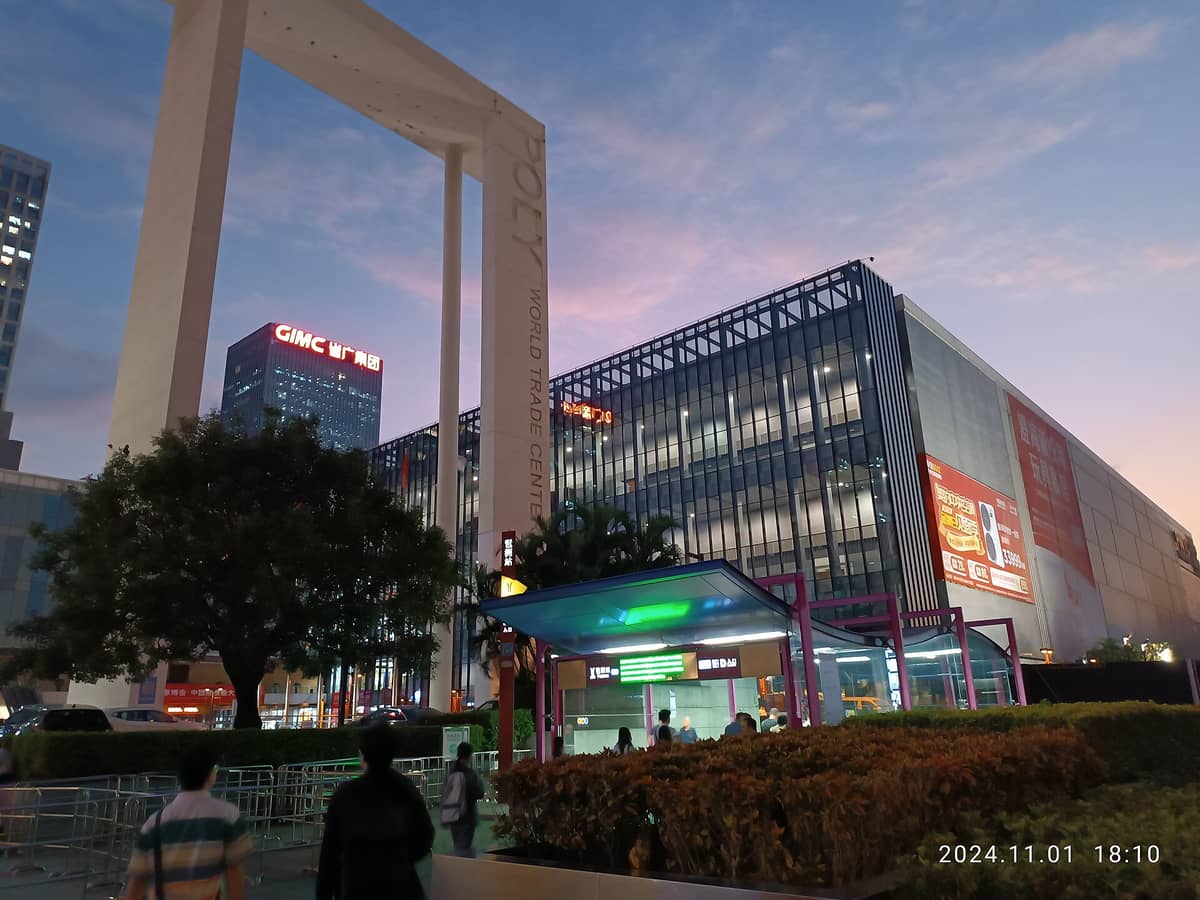
The China Import and Export Fair Complex is located at No. 382, Yuejiang Zhong Road, Haizhu District, Guangzhou. The nearest metro stations are on Line 8 (Xingang East Station) and Line 3 (Canton Fair Complex Station), making it accessible from most parts of the city without needing a taxi. For a full overview of getting around Guangzhou by metro and other transport options, see the getting around Guangzhou guide.
Guangzhou Baiyun International Airport (IATA: CAN) is the main entry point for international travelers. The airport is in the Baiyun/Huadu area north of the city center, and the metro connects it to central Guangzhou and onward to the fair venue, though the total journey takes over an hour. Taxis and ride-hailing via DiDi are also available from the airport, but factor in potential traffic, especially during fair days when demand peaks.
Guangzhou is also a major rail hub with direct high-speed connections to Hong Kong (approximately one hour), Shenzhen, and other major Chinese cities. If you are combining the fair with travel elsewhere in the region, the Guangzhou to Hong Kong guide covers cross-border transport options in detail.
✨ Pro tip
During Phase 1 especially, taxis and ride-hailing around the venue become unreliable at opening and closing times due to the sheer volume of attendees leaving simultaneously. Plan to use the metro for arrivals and departures whenever possible, and avoid scheduling meetings right at 9:30 or 18:00 if you need to be on time.
Accommodation: Where to Stay During the Fair
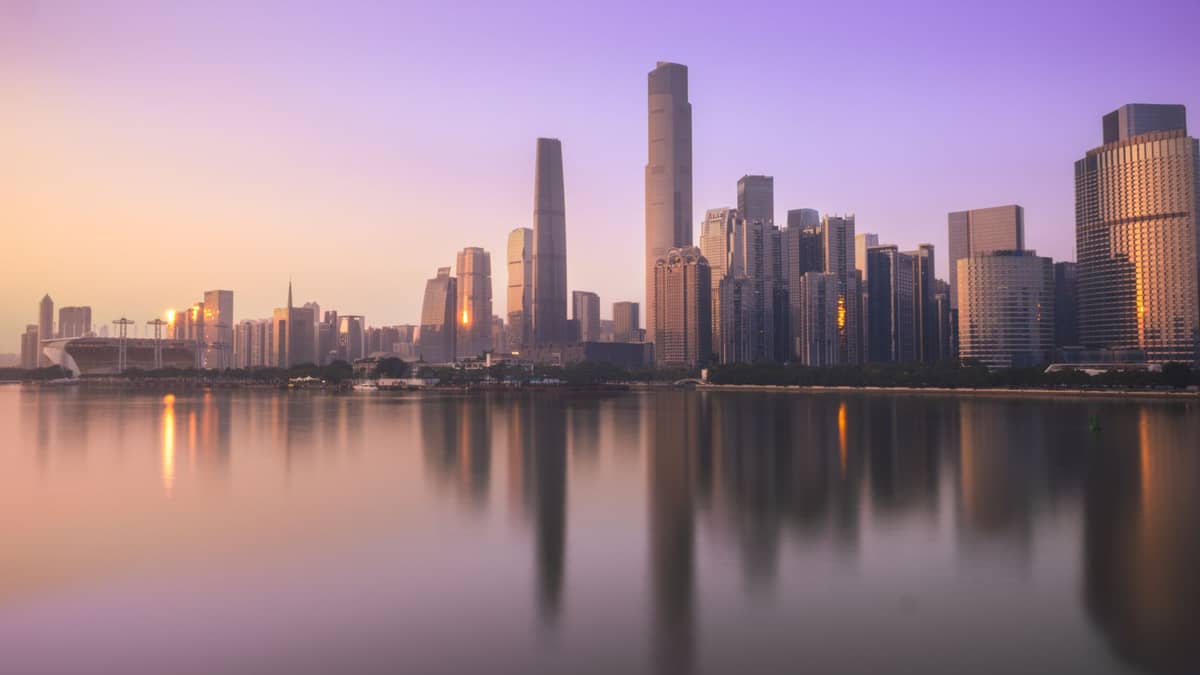
Hotels near the Canton Fair complex in Haizhu District are the most convenient option, but they fill up fast and prices increase significantly during fair periods. A more cost-effective strategy is to stay in Tianhe or Haizhu and use the metro. Both districts offer a wide range of hotel categories from international chains to well-reviewed business hotels.
Avoid booking accommodation in outlying districts without confirming metro access to the venue — some deals that look attractive are far from any line that connects to Xingang East or the Canton Fair Complex stations. For a full breakdown of Guangzhou's hotel options by location and budget, the where to stay in Guangzhou guide covers the tradeoffs honestly.
Practical Logistics: What First-Timers Get Wrong
The fair complex is enormous. Walking between halls without a plan wastes time, and the scale is genuinely disorienting on your first visit. Download the official Canton Fair app or review the hall maps on the website before arrival. Identify the specific product halls relevant to your business and plan your route before entering.
Currency is CNY (Chinese yuan, also called renminbi). Credit cards are not widely accepted for street food, small restaurants, or many transport options. China's two dominant mobile payment systems, Alipay and WeChat Pay, now support foreign bank card linkage, which is worth setting up before you travel. Withdraw cash from airport ATMs as backup, but do not rely solely on cash for larger transactions.
Tap water in Guangzhou is not recommended for drinking without boiling or filtration. Bottled water is inexpensive and widely available. On the communication side, most foreign social media and Google services are blocked in mainland China, so install a VPN on your devices before you arrive if you need access to those platforms for work.
- Wear comfortable shoes — the venue is huge and a full day means significant walking.
- Bring business cards in quantity; exchanging cards remains standard practice at the fair.
- Translation apps (downloaded offline) are useful for meetings where English is limited.
- Carry your passport or a copy at all times — some venue checkpoints may require ID.
- Tipping is not standard practice in mainland China, including at hotels and restaurants.
If you have time outside the fair, Guangzhou has genuine depth beyond the trade complex. The Canton Tower in Zhujiang New Town is roughly 3 km from the fair venue and offers a worthwhile evening. The historic Chen Clan Ancestral Hall in Liwan is one of the finest examples of Qing-dynasty Cantonese architecture in the city. For a fast overview of what fits around fair attendance, see 3 days in Guangzhou for ideas structured around limited time.
FAQ
Is the Canton Fair open to the public?
No. The Canton Fair is a business-to-business trade event. Entry requires a registered buyer badge. Walk-in access is not available, and badge verification is enforced at all entrances. You must register in advance on the official website at cantonfair.org.cn.
Do I need a visa to attend the Canton Fair in Guangzhou?
Visa requirements depend on your nationality. Many countries require a Chinese business visa to enter mainland China. If you need a visa, use the Canton Fair registration system to request an official invitation letter, which most consulates require as part of the business visa application. Check the current requirements with the Chinese consulate in your country well before your planned travel dates.
How many phases are there and which one should I attend?
Each Canton Fair session has three phases covering different product categories. Phase 1 focuses on electronics and machinery, Phase 2 on consumer goods and home products, and Phase 3 on textiles and apparel. Attend the phase that matches your sourcing category — there is no requirement to attend all three, and each phase has its own badge and entry period.
What is the difference between the Canton Fair and the Guangzhou Fair?
They are the same event. 'Guangzhou Fair' is an informal shorthand, 'Canton Fair' is the standard international trade name, and the full official name is the China Import and Export Fair. Canton is the historical English name for Guangzhou, not a separate city.
Where exactly is the Canton Fair held, and how do I get there?
The fair is held at the China Import and Export Fair Complex, No. 382, Yuejiang Zhong Road, Haizhu District, Guangzhou 510335. The nearest metro stations are Canton Fair Complex Station (Line 3) and Xingang East Station (Line 8). Both lines connect to central Guangzhou and to interchange stations with other lines.