Museum of the Nanyue King Mausoleum: Inside Guangzhou's Ancient Royal Tomb
Discovered in 1983 and opened to the public in 1988, the Museum of the Western Han Dynasty Mausoleum of the Nanyue King preserves the intact tomb of Zhao Mo, a king who ruled southern China over 2,000 years ago. The burial chamber sits directly beneath the museum, making this one of the rare places in China where you descend into an actual royal tomb, not a reconstruction.
Quick Facts
- Location
- No. 867 Jiefang North Road, Yuexiu District, Guangzhou
- Getting There
- Yuexiu Park Station (Metro Line 2), then a short walk south along Jiefang North Road
- Time Needed
- 1.5 to 2.5 hours
- Cost
- CNY 10 for the tomb exhibition; verify current pricing at the official museum website before visiting
- Best for
- History enthusiasts, archaeology fans, travelers seeking genuine ancient sites over replicas
- Official website
- www.nywmuseum.org.cn
What Makes This Museum Different
Most museum visitors in China encounter artifacts behind glass in purpose-built exhibition halls. The Museum of the Western Han Dynasty Mausoleum of the Nanyue King offers something genuinely rare: you walk into the original, undisturbed burial chamber of King Zhao Mo, the second king of the Nanyue Kingdom, who died around 122 BCE. The tomb was discovered in 1983 during construction work on Jiefang North Road, and it has never been relocated. The museum was built around and above it.
That distinction matters. The stone walls you stand beside inside the burial chamber are the actual walls. The carved passages and side chambers are exactly where Zhao Mo's court placed them more than two millennia ago. This is not a reproduction, and that fact registers physically when you are standing in the dim light of the tomb corridor with the smell of cool stone around you.
💡 Local tip
Opening hours for the Site of the King's Tomb are 09:00–17:30. Some sources note that ticket sales close before closing time. Confirm current hours and any Monday or maintenance closures directly on the official museum website at nywmuseum.org.cn before your visit.
The Nanyue Kingdom: Historical Context
The Nanyue Kingdom (Nam Viet in Vietnamese) existed from around 204 BCE to 111 BCE, roughly the same era as the early Han dynasty in northern China. It was founded by Zhao Tuo, a former Qin general who established an independent state across what is now Guangdong, Guangxi, and northern Vietnam. The kingdom was not a peripheral backwater. It maintained diplomatic relations with the Han court, conducted substantial maritime trade, and developed a court culture that blended Han Chinese, Yue indigenous, and Southeast Asian influences.
Zhao Mo, the king buried here, was Zhao Tuo's grandson and the second ruler of the kingdom. His tomb reflects a court that was both connected to Han Chinese burial customs and distinctly regional in its material culture. The artifacts recovered include jade suits, silk garments, bronze vessels, iron tools, and objects clearly imported from Southeast Asia and beyond, which positions the Nanyue tomb as an important early data point in understanding pre-Silk Road southern maritime trade.
For those interested in how Guangzhou's deep history intersects with its present-day urban identity, the Zhenhai Tower inside Yuexiu Park holds the Guangzhou Museum and offers a broader timeline of the city's development from ancient times to the modern era.
Inside the Tomb: What You Actually See
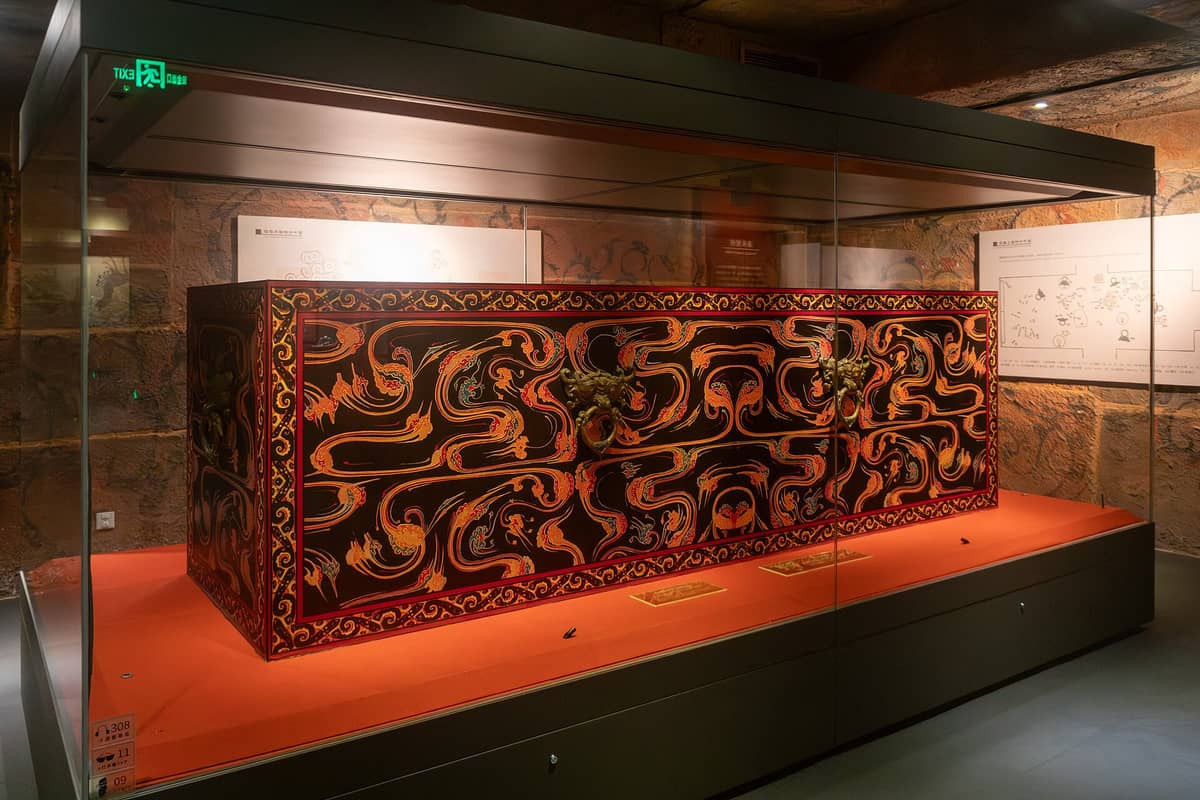
The burial complex consists of seven chambers arranged in a cross-shaped plan, constructed from large granite blocks. The main chamber held Zhao Mo's lacquered coffin, his jade burial suit made of over 2,000 pieces sewn with silk thread, and a significant quantity of bronze ritual vessels. Side chambers held sacrificial objects and the remains of 15 people buried alongside the king, including concubines, servants, and an official.
The tomb interior is cool year-round, which comes as a relief in Guangzhou's humid summers. Lighting is subdued, which is appropriate for the setting but means your eyes need a moment to adjust. The passage is narrow in sections, so visitors with mobility concerns should note that navigating the tomb requires steps and potentially low clearance in certain areas. Accessibility information was not confirmed from official museum sources at the time of writing, so contact the museum directly if this is a consideration.
The upper galleries hold the artifact collection, which is extensive. The jade burial suit is the visual centerpiece, but look carefully at the ceramic pillows, the bronze seal that confirms Zhao Mo's identity, and the remarkably preserved silk fabric fragments. The glazed pottery figures are unusual for this period and suggest cultural exchange with regions further west. Allow at least an hour for the galleries alone if you want to read the exhibit panels properly.
ℹ️ Good to know
The museum is officially part of the larger Nanyue King Museum institution (南越王博物院), which now encompasses both this site and the Nanyue Palace Ruins nearby. The tomb site at Jiefang North Road is the primary draw for most visitors.
How the Experience Changes by Time of Day
Morning visits, particularly on weekdays, tend to be quieter. The museum draws a steady stream of school groups, and large groups can make the tomb corridor feel crowded, so arriving when it opens at 09:00 is a reliable way to spend time in the burial chamber with room to look carefully. The upper gallery lighting is consistent throughout the day since the exhibition spaces are climate-controlled and artificially lit.
Midday on weekends brings the largest crowds. The tomb passage narrows considerably, and moving through at a thoughtful pace becomes difficult when groups stack up. If you visit on a weekend, arriving close to opening time or in the late afternoon gives a noticeably different experience. The courtyard and outdoor areas around the museum building catch direct afternoon light, which makes the exterior architecture easier to photograph after around 14:00.
Getting There and Practical Navigation
The museum sits on Jiefang North Road in Yuexiu District, one of Guangzhou's most historically dense central areas. Yuexiu Park Metro Station, served by Line 2, is the closest stop. From the station, the museum is a short walk south along Jiefang North Road. The entrance is set back slightly from the main road, marked by the distinctive reddish-brown museum building.
Yuexiu District rewards a full-day exploration. The museum pairs naturally with a walk through Yuexiu Park immediately to the north, which contains the Five Rams Statue and the Zhenhai Tower. The area also puts you within reasonable walking or transit distance of the Temple of the Six Banyan Trees and the Chen Clan Ancestral Hall in the adjacent Liwan District.
Guangzhou's metro system is the most reliable way to navigate the central districts. Tickets are inexpensive and the network is clearly signed in both Chinese and English. For a broader orientation to moving around the city, particularly if you are combining this museum with other sites across different districts, it is worth reviewing transport options before you plan your day.
The guide to getting around Guangzhou covers metro lines, buses, and ride-hailing options in practical detail.
Photography and Practical Details
Photography policies in Chinese museums vary and can change. At the time of writing, photography without flash is commonly permitted in the gallery spaces, but rules inside the tomb chamber itself should be confirmed on arrival. Even if allowed, the low light inside the burial chamber means handheld shots without a phone stabilizer will often be blurred. A steady hand pressed against a wall or a compact tripod, if permitted, helps considerably.
The museum building itself is architecturally considered, designed to reference Han dynasty aesthetic elements while functioning as a modern institution. The exterior terracotta-toned facade and the courtyard space are worth a few minutes before entering. Bring layers if you visit in summer: the contrast between Guangzhou's outdoor heat and the cool, climate-controlled interior is sharp enough that a light jacket is useful.
⚠️ What to skip
Ticket pricing and hours listed in some third-party travel sites are not always current. The admission fee listed in travel references is approximately CNY 10, but some sources describe free admission periods. Confirm pricing directly at nywmuseum.org.cn or on arrival to avoid confusion.
Who Gets the Most From This Museum, and Who Might Not
Travelers with a genuine interest in pre-imperial Chinese history, Southeast Asian archaeology, or the material culture of the Han period will find this museum absorbing for a full two hours or more. The exhibit panels are informative, and the collection is deep enough to reward careful attention rather than a quick walk-through.
Visitors looking for a sweeping overview of Guangzhou's history across multiple dynasties might find the focus here narrow. The museum concentrates specifically on the Nanyue Kingdom and the contents of this single tomb, which is its strength but also its scope. If you want broader historical coverage, combining this visit with the Guangzhou Museum at Zhenhai Tower gives a more complete picture.
Families with children will find the tomb itself genuinely engaging for older kids, though the narrowness of the burial chamber and the density of the exhibits may be less suited to young children. For a broader set of options across Guangzhou's museums and cultural sites, the Guangzhou museums guide provides a useful comparative overview.
Insider Tips
- Arrive at 09:00 on a weekday to have the burial chamber nearly to yourself. School groups typically arrive mid-morning and can fill the narrow tomb corridor quickly.
- The bronze seal recovered from the tomb is a small object but carries significant historical weight as it directly confirms the occupant's identity. It is easy to walk past. Look for it in the main artifact gallery and read the accompanying panel.
- Wear shoes with non-slip soles. The floor inside the tomb chamber can be slightly slick, particularly in humid weather.
- The museum building's rooftop terrace (access varies) offers an unusual view down into the tomb site from above. Ask staff whether it is accessible on the day you visit.
- If you read Chinese, the Chinese-language exhibit panels contain considerably more detail than the English translations. Visitors using a translation app on their phone will get more from the collection.
Who Is Museum of the Nanyue King Mausoleum For?
- History and archaeology enthusiasts who want genuine ancient sites, not reconstructions
- Travelers interested in pre-imperial southern China and early Southeast Asian trade networks
- Anyone doing a focused cultural day through Yuexiu District's historical sites
- Visitors who find large-scale modern museums overwhelming and prefer a focused, mid-sized institution
- Photographers interested in architectural and artifact subjects in controlled lighting conditions
Nearby Attractions
Other things to see while in Yuexiu:
- Beijing Road Pedestrian Street
Beijing Road Pedestrian Street runs through the historic heart of Yuexiu District, layering modern retail over more than a thousand years of commercial history. Entry is free, the metro drops you right at the door, and the glass-covered archaeological ruins embedded in the pavement are an unexpected highlight worth stopping for.
- Canton Orchid Garden
Tucked inside Yuexiu District, the Canton Orchid Garden is a compact but carefully curated public garden dedicated entirely to orchid cultivation. At RMB 8 entry, it offers a rare pocket of calm in central Guangzhou, best appreciated in the cooler months when the flowers are at their peak.
- Ersha Island
Ersha Island sits in the Pearl River between Guangzhou Bridge and Haiyin Bridge, covering 1.26 square kilometers of parks, cultural venues, and tree-lined promenades. Free to enter and open around the clock, it offers a rare change of pace from the city's commercial core.
- Five Rams Statue
Carved from over 130 pieces of granite and completed in the late 1950s, the Five Rams Statue stands as one of Guangzhou's most recognizable landmarks. Located inside Yuexiu Park, it is free to visit and open daily, and is often best experienced in the early morning when the park is quiet and the light is soft.