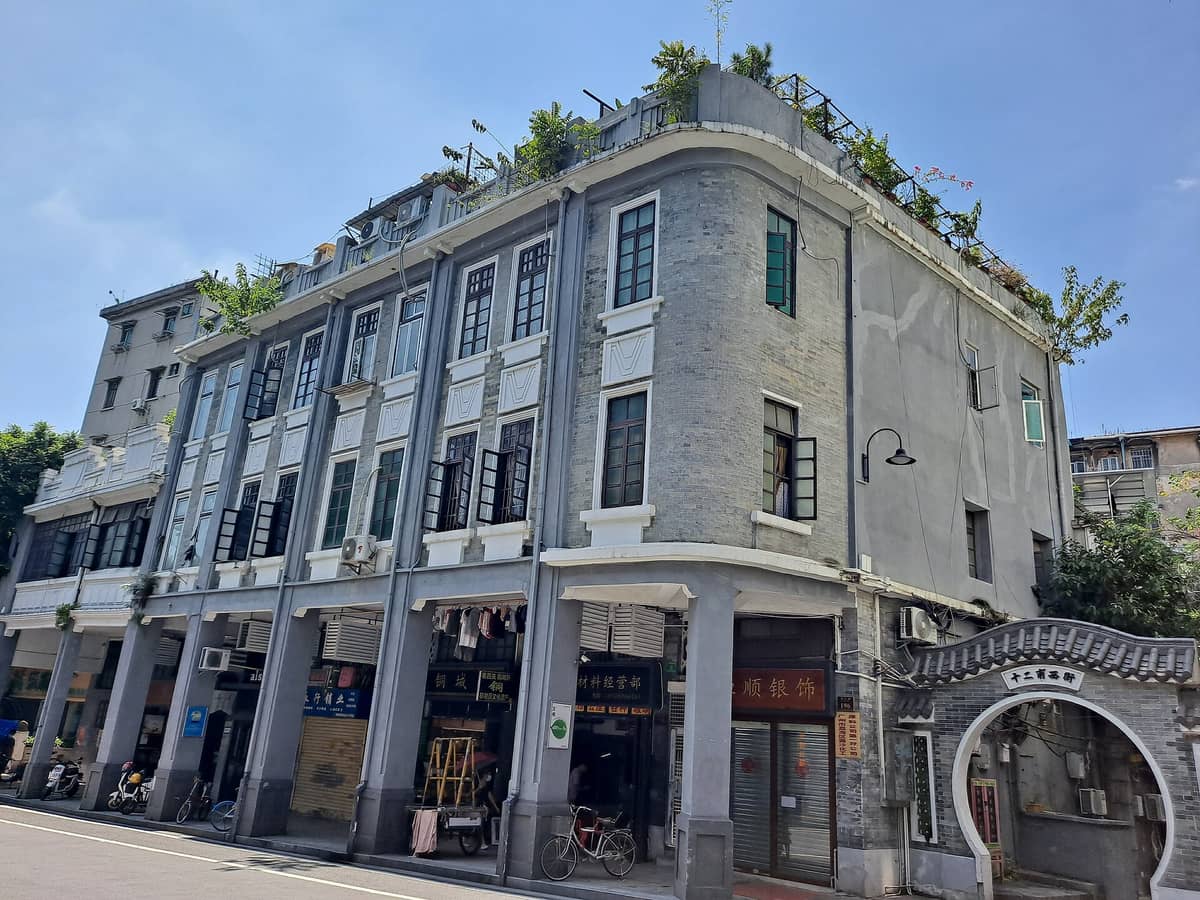
Liwan District, centered on the historic Xiguan quarter, is Guangzhou's most authentically Cantonese neighborhood. From the ornate Chen Clan Ancestral Hall to the colonial quietude of Shamian Island, the area preserves an urban texture that the city's eastern districts have largely replaced with glass towers. It rewards slow walking and early mornings.
Liwan is the old west side of Guangzhou, the part of the city where Cantonese culture was shaped before the skyscrapers arrived. Bounded by major roads to the north and east and the Pearl River to the south, the Xiguan quarter holds ancestral halls, century-old shophouse streets, and one of the city's most distinctive riverside islands. It is the neighborhood that answers the question of what Guangzhou actually looked like before it became a megacity.
Orientation
Liwan District occupies the western portion of Guangzhou's historic urban core, sitting directly west of Yuexiu District and north of the Pearl River. The Xiguan preservation zone, which is the cultural and historical heart of Liwan, is roughly bounded by Zhongshan 7th Road and Zhongshan 8th Road to the north, Renmin Middle Road and Renmin South Road to the east, and the Pearl River to the south and west. These are not abstract boundaries: Renmin Road is a wide arterial that marks a real shift in urban character, with the older, lower-rise streetscapes of Xiguan on the west side and the denser commercial fabric of Yuexiu on the east.
Within that zone, the neighborhood divides informally into several sub-areas. The northern edge, centered near the Chen Clan Ancestral Hall and Shangxiajiu pedestrian street, is the most visited. Moving south, the streets become quieter and more residential, the shophouse proportions more intimate, and the foot traffic drops off noticeably. At the southwestern edge, separated from the main district by a narrow channel, sits Shamian Island, a self-contained enclave of European colonial architecture that feels like a detour into a different century.
Liwan borders Yuexiu District to the east and Haizhu District across the Pearl River to the south. Understanding this position matters for planning: Liwan is not a detour from central Guangzhou, it is contiguous with it, and many visitors combine a morning in Xiguan with an afternoon on the Beijing Road side of Yuexiu in a single day.
Character & Atmosphere
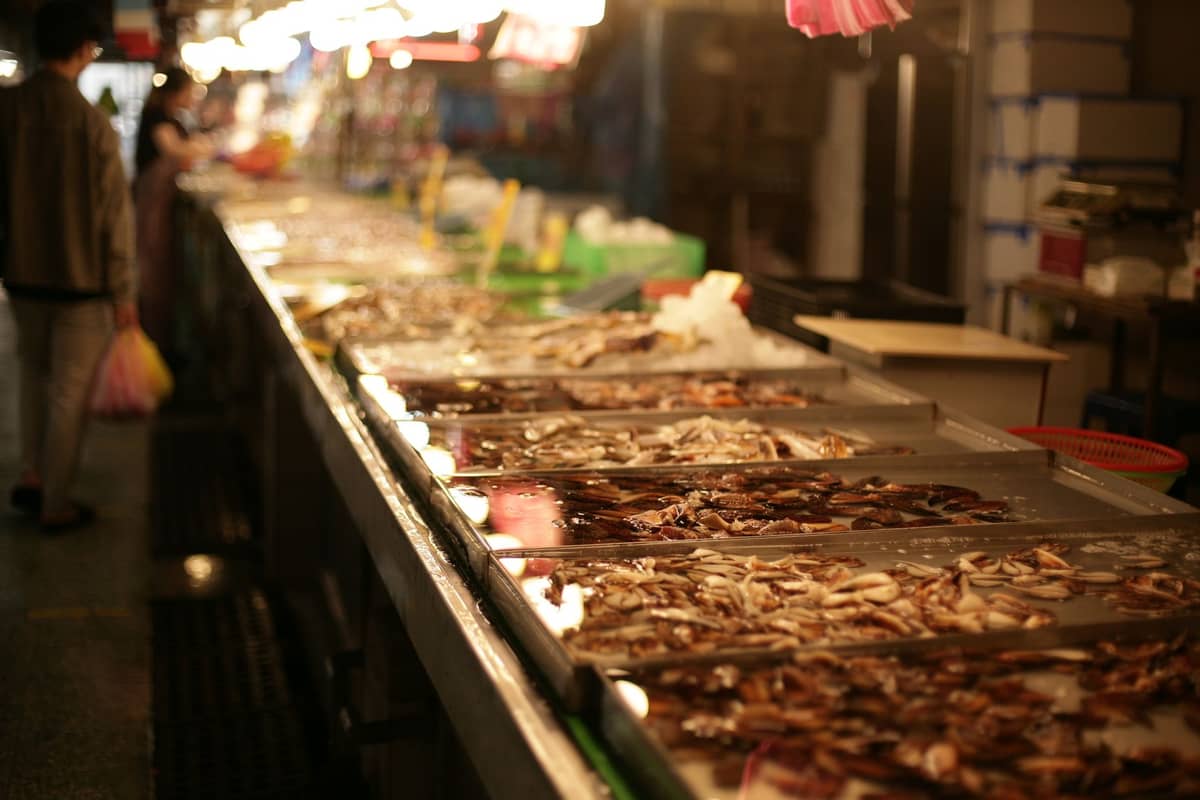
Liwan moves at a different pace from the rest of Guangzhou. Come at seven in the morning and the wet markets along the back lanes off Shangxiajiu are already in full swing: live fish in shallow trays, bundles of water spinach, elderly residents carrying mesh bags and arguing prices in rapid Cantonese. The light at this hour comes through the shophouse corridors at a low angle, hitting the ceramic tile facades and the red paper decorations that seem to stay up all year. The smell is a mix of char siu from the roast meat shops opening their shutters and the faint damp of old stone lanes.
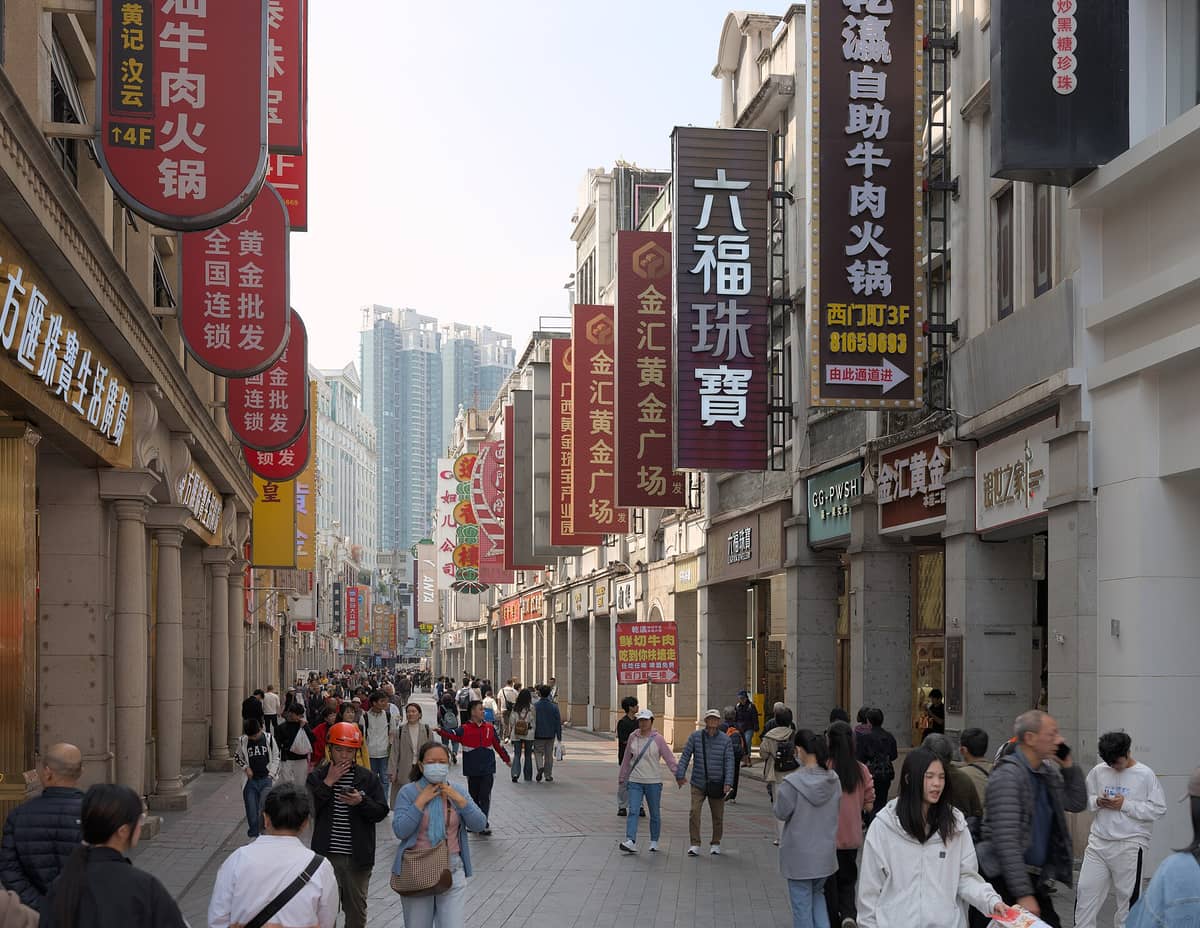
By mid-morning, Shangxiajiu pedestrian street fills with a mix of local shoppers and tourists from other parts of Guangdong Province. This is one of the city's designated commercial heritage streets, lined with two-storey arcade buildings called qilou, a Cantonese architectural form where the upper floor overhangs the pavement to create a shaded walkway. The street gets genuinely crowded by late morning on weekends, which changes its character considerably. If Shangxiajiu feels too commercial, the parallel lanes one or two blocks north and south are calmer and more representative of how the area actually functions on a daily basis.
Afternoon in the deeper residential lanes of Xiguan has its own rhythm. Older residents pull chairs into the shade outside their doors. Mahjong sounds drift from open windows. The streets narrow to the point where two people passing each other need to angle slightly, and the buildings on either side rise close enough that direct sunlight hits the ground for only a short window each day. It is this combination of compressed urban scale and genuine daily life that distinguishes Xiguan from Guangzhou's preserved-but-sanitized heritage zones.
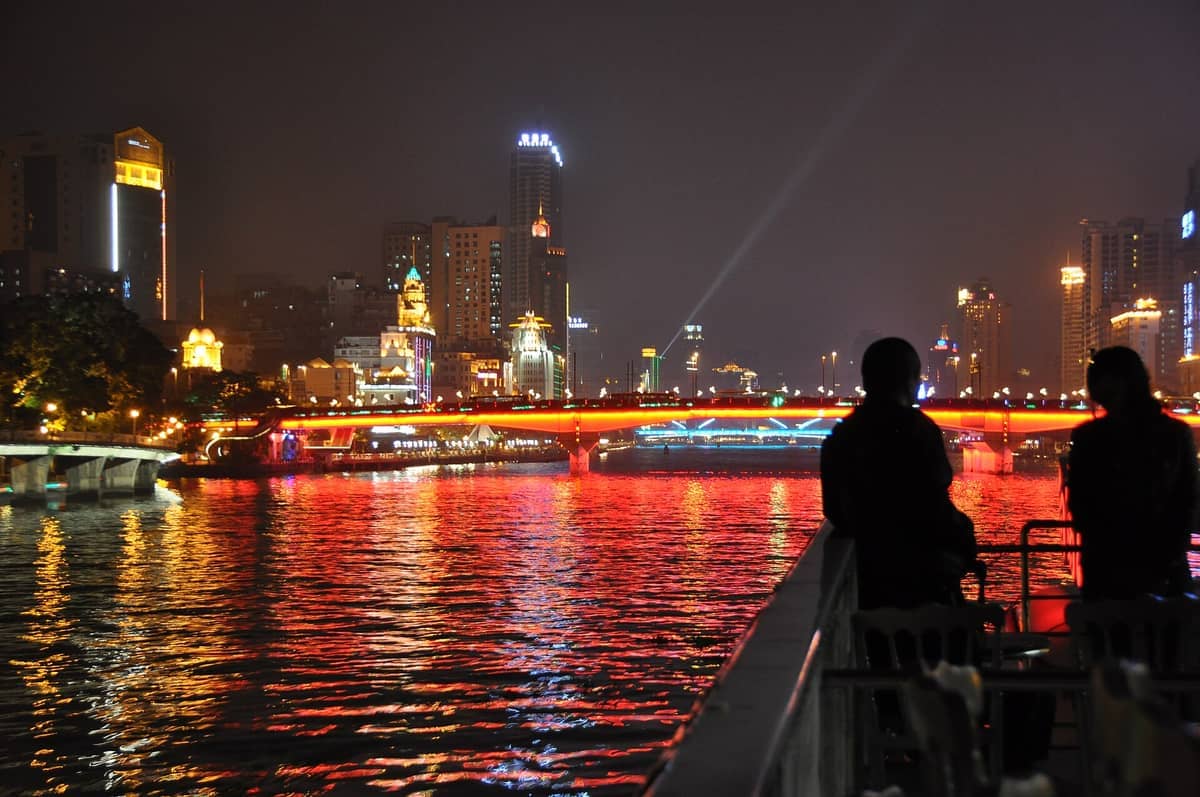
After dark, Liwan is quieter than Tianhe or the Pearl River New City area. The main commercial streets retain activity, but the residential lanes are genuinely calm by nine in the evening. Shamian Island in particular becomes very still after nightfall, the riverside walkway lit softly, the colonial buildings dark. This is not a neighborhood for late-night entertainment, and that is part of its appeal for travelers who find Guangzhou's newer districts overstimulating.
💡 Local tip
Visit Shangxiajiu on a weekday morning if you want to experience it as a functioning neighborhood street rather than a tourist corridor. The difference between a Tuesday at 9am and a Saturday at noon is substantial.
What to See & Do
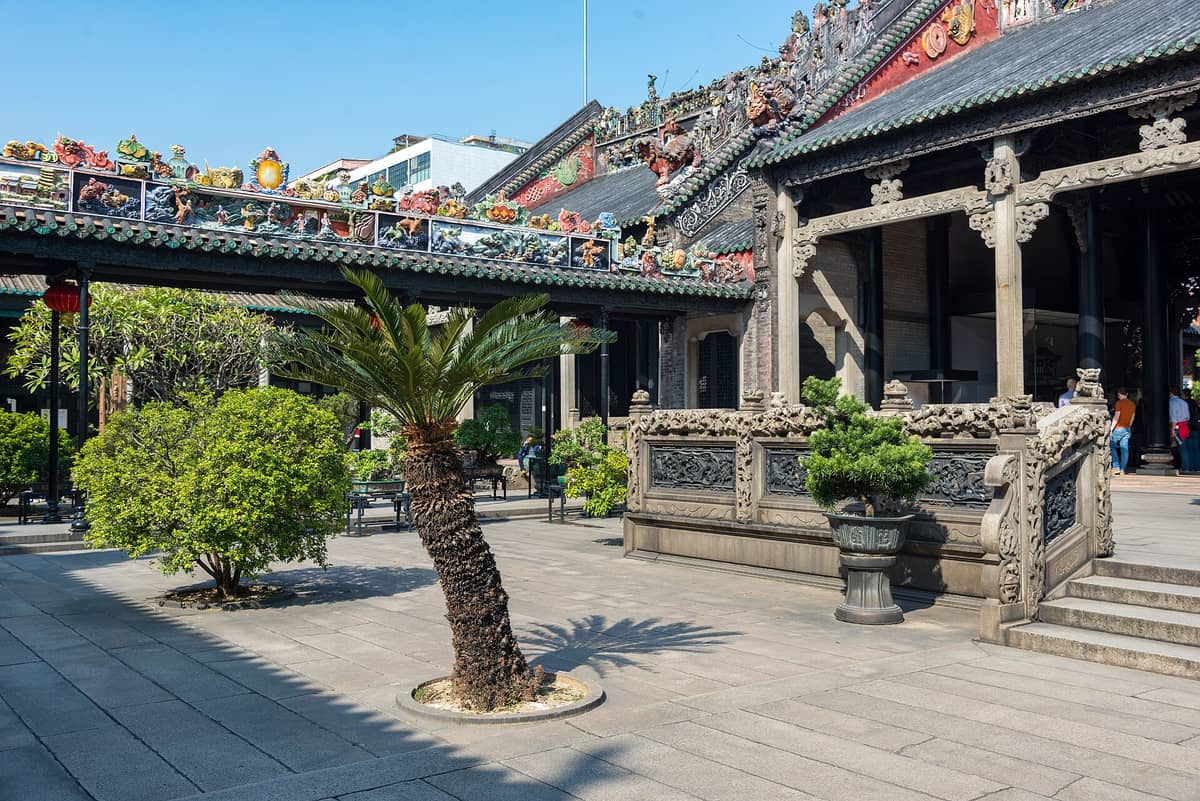
The single most important cultural site in Liwan is the Chen Clan Ancestral Hall, one of the most elaborately decorated buildings in Guangdong Province. Built in the 1890s as a combined ancestral hall, school, and guesthouse for members of the Chen surname clan from across the Pearl River Delta, the complex covers more than 13,000 square meters and contains some of the finest examples of Cantonese decorative craftsmanship anywhere: roof ridges packed with figures in colored ceramic, wooden screens carved through multiple layers, iron castings, stone reliefs, and embroideries. It functions today as the Guangdong Folk Arts Museum. Budget at least 90 minutes and look up frequently, because the detail is concentrated at roof and frieze level.
A short walk south and west from the ancestral hall, Shangxiajiu Pedestrian Street is the neighborhood's main commercial artery and one of the older retail streets in Guangzhou. The qilou architecture gives it a consistency that newer shopping streets lack. Alongside chain stores and souvenir shops, genuine old-school Cantonese businesses persist: herbal medicine halls, dried goods stores, and dim sum houses that have been in operation for decades.
At the southwestern corner of Xiguan, reached on foot from Huangsha metro station by crossing a small bridge over the narrow Liwan channel, Shamian Island is a 0.3-square-kilometer sandbar that served as the foreign concession area for British and French traders from the 1860s onward. The architecture is entirely European in character: consulate buildings, churches, and trading company premises line the shaded main boulevard, all built in the 19th and early 20th centuries. The island is now a quiet residential area with cafes, restaurants, and a popular riverside promenade. It pairs naturally with a morning in Xiguan.
Also worth visiting on or near the island are the Our Lady of Lourdes Chapel and the Shamian Christian Church, both dating from the concession era and still in use. The contrast between these European ecclesiastical buildings and the Cantonese religious architecture found just a few blocks away in Xiguan proper is one of the more striking juxtapositions in Guangzhou.
The Yongqingfang area, a renovated cluster of Xiguan-style residential lanes near Enning Road, has been developed into a creative and food and drink district. It attracts a younger local crowd in the evenings and represents an attempt to repurpose the neighborhood's architectural heritage for contemporary use. Opinions vary on how successfully it balances preservation with commercialization, but it is worth seeing as an example of how Guangzhou is approaching its older neighborhoods.
Chen Clan Ancestral Hall (Guangdong Folk Arts Museum): allow 90 minutes minimum
Shangxiajiu pedestrian street: best on weekday mornings for atmosphere
Shamian Island riverfront promenade: especially pleasant in the late afternoon
Yongqingfang creative district on Enning Road: evenings for food and drinks
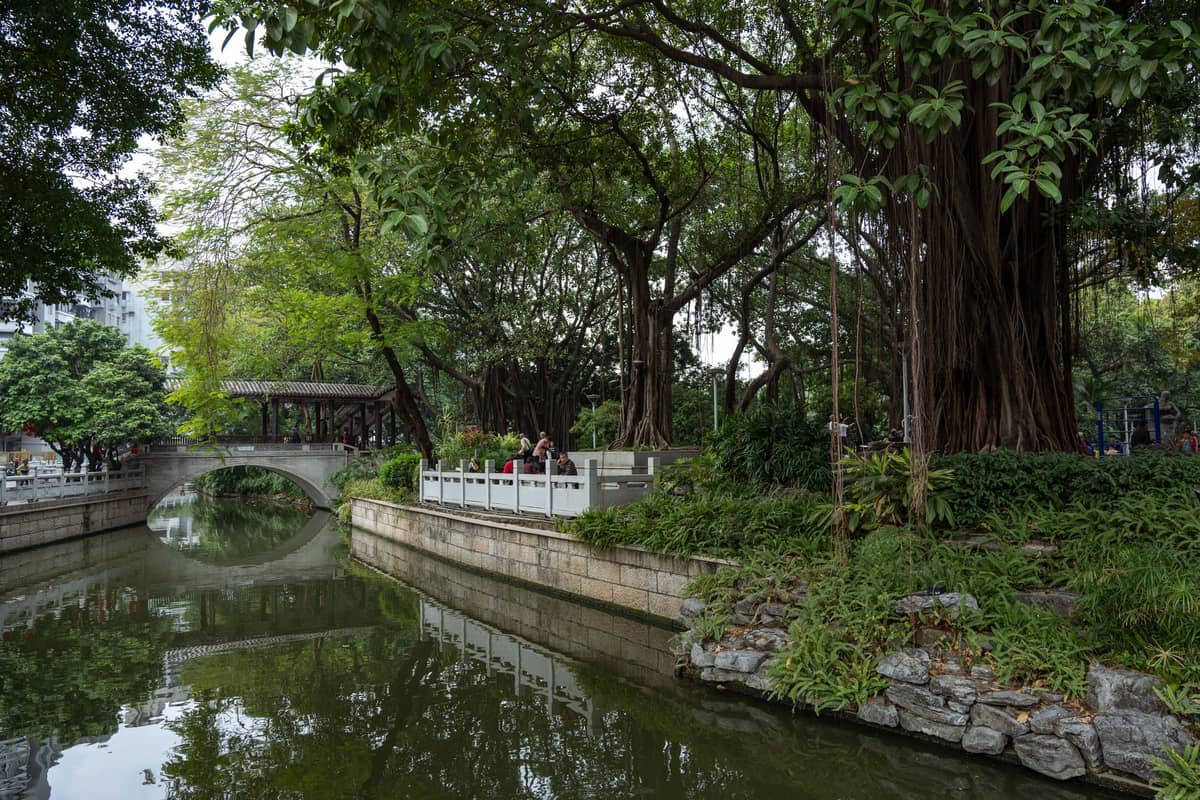
Liwan Lake Park: a local park in the northern part of the district suited to quiet morning walks
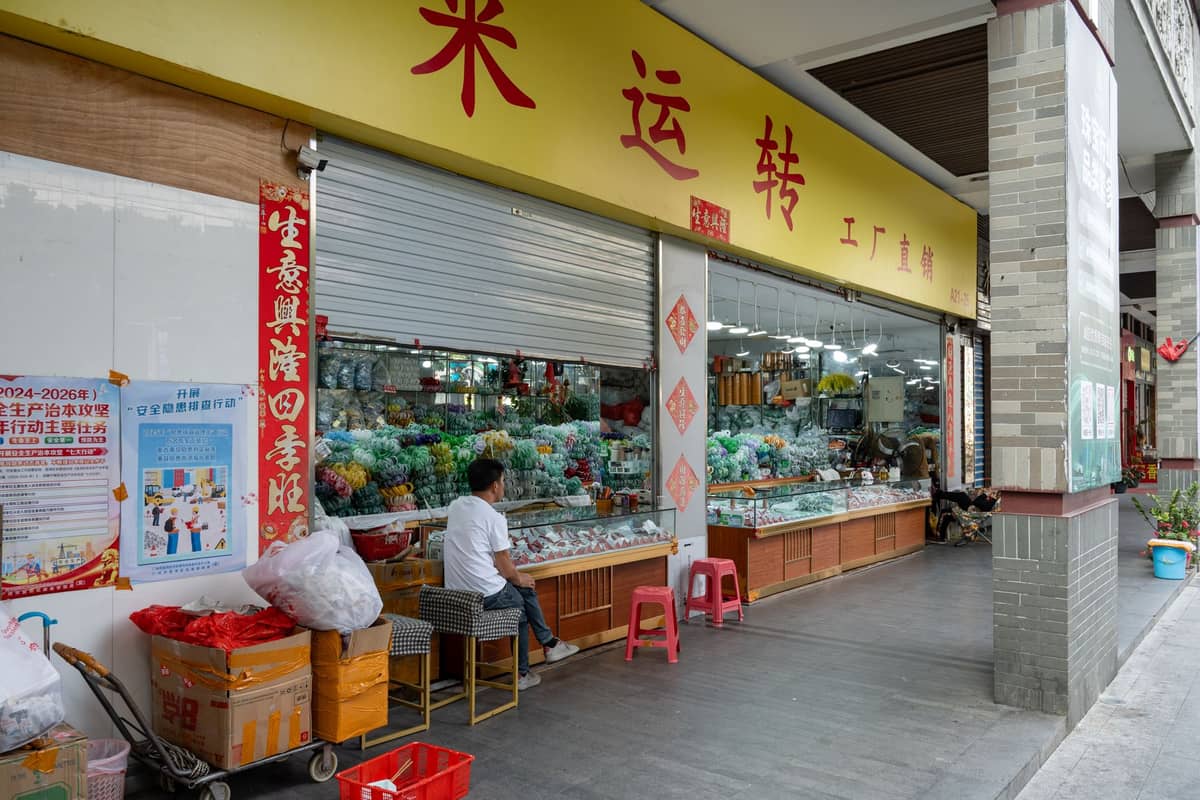
Hualin Jade Street and surrounding wholesale markets on the eastern edge of the district
For context on how Liwan fits into Guangzhou's broader temple and heritage circuit, the Guangzhou walking tours guide covers recommended routes that combine Liwan with adjacent neighborhoods.
Eating & Drinking
Liwan is, by a reasonable argument, the best neighborhood in Guangzhou for traditional Cantonese food. The area's association with old Guangzhou means that long-established teahouses and roast meat specialists are concentrated here in a way they are not in Tianhe or Zhujiang New Town. Dim sum in Xiguan is a serious meal, not a tourist experience: the older teahouses operate on the traditional yum cha model, with trolleys circulating through large dining rooms full of Cantonese families. Prices are low to moderate by any standard.
Shangxiajiu itself has several venerable food institutions whose names appear in any serious discussion of Guangzhou food history. The street is also where you find Cantonese-style pastries and preserved snacks sold from storefronts with handwritten price boards. For a broader orientation to what the food scene looks like across the city, the guide to what to eat in Guangzhou covers the full range of local specialties, many of which originated in the Xiguan area.
Dim sum is the anchor meal in this neighborhood. The Guangzhou dim sum guide gives detailed guidance on how to order, what to expect, and where to find the best versions of classic dishes. In Liwan, dim sum is particularly accessible to first-time visitors because the neighborhood's teahouses are accustomed to walk-in customers and most display items visually.
Yongqingfang and the streets around Enning Road have accumulated a concentration of bars, specialty coffee shops, and small-batch craft food producers since the area's redevelopment. This is where Liwan's food scene is most photogenic and most oriented toward younger visitors. Prices here run slightly higher than in the surrounding lanes but remain moderate compared to Tianhe.
Street food operates from carts and small storefronts throughout the residential lanes: beef offal noodles, rice rolls filled with shrimp or char siu, grass jelly drinks, and tofu pudding with ginger syrup are all common. The best street food in Liwan tends to be found not on the main pedestrian street but in the lanes that connect it to the parallel residential blocks.
ℹ️ Good to know
Most traditional teahouses and dim sum restaurants in Liwan operate peak morning service between 7am and 11am. If you arrive after noon, expect shorter menus and longer waits on weekends. Bringing cash is advisable for smaller establishments, though major payment apps (Alipay, WeChat Pay) are widely accepted.
Getting There & Around
Liwan is well connected by Guangzhou Metro. The most useful stations for the Xiguan area are Chen Clan Academy station on Line 1, which deposits you within walking distance of the ancestral hall and Shangxiajiu, and Huangsha station, also on Line 1, which is the closest stop to Shamian Island. The journey from Tianhe district's central stations to Chen Clan Academy takes roughly 20 to 25 minutes on Line 1 with no transfers required, making Liwan an easy half-day trip from any central accommodation.
Line 1 is Guangzhou Metro's original east-west spine, and it runs directly through the heart of Xiguan. For visitors staying in Yuexiu, Guangzhou South Station area, or Tianhe, a single Line 1 ride connects all of central Guangzhou to Liwan without transfers. The metro system is the recommended way to arrive; surface traffic in this part of the city can be slow during peak hours.
Once inside Xiguan, the neighborhood is best explored on foot. The lanes between Shangxiajiu and the river are compact enough that the key sights from Chen Clan Ancestral Hall down to Shamian Island span roughly two kilometers in a straight line, covering most of what matters in a comfortable walking circuit of two to three hours. Distances between individual attractions are short, and the street-level detail that defines the neighborhood is best absorbed at walking pace rather than from a taxi or bus window.
Ride-hailing via DiDi is available and practical for arriving or departing with luggage, but navigation within the narrow inner lanes is not always possible by car. For logistics around the wider city, including connections to Guangzhou South railway station or Baiyun Airport, the guide to getting around Guangzhou covers all transit modes in detail.
⚠️ What to skip
Some of the narrower residential lanes in Xiguan are not accessible to standard navigation apps, which may route you onto roads that dead-end or turn into pedestrian paths. Download an offline map of the area before you go and be prepared to navigate by landmark rather than by turn-by-turn directions.
Where to Stay
Liwan is not Guangzhou's primary hotel district, and accommodation options here are fewer and more varied in quality than in Tianhe or Yuexiu. That said, staying in or near Xiguan places you within walking distance of the neighborhood's best morning activities, which is a genuine advantage: the wet markets, the early dim sum houses, and the quiet lanes before the day-trippers arrive are all best experienced at a pace that requires proximity.
The Shamian Island area has a small selection of hotels and guesthouses, many occupying refurbished colonial-era buildings. These tend toward boutique scale and quieter surroundings, which suits independent travelers who want atmosphere over amenity depth. The trade-off is that Shamian's transport connections are slightly less direct than the main Xiguan area: it is a short walk or ride from Huangsha station, but the island's calm is partly a function of its slight remove from the metro corridor.
For a broader accommodation decision across the whole city, the guide to where to stay in Guangzhou compares all major neighborhoods by traveler type and budget, which helps put Liwan's accommodation offer into perspective against alternatives in Yuexiu or Tianhe.
Practical Assessment: Who This Neighborhood Is For
Liwan rewards travelers who are interested in Guangzhou as a city with a distinct culture and history, not simply as a transit hub or trade fair destination. If your primary goal is modern Guangzhou, the luxury malls, the Canton Tower skyline, and the sleek hotel corridors of Zhujiang New Town, Liwan will feel like a detour. The streets are older, the infrastructure is patchier, and the neighborhood is not optimized for international tourism.
But if you want to understand why Guangzhou is different from every other large Chinese city, this is the neighborhood that holds the answer. The Chen Clan Ancestral Hall alone justifies the trip from any other part of the city. The combination of that, Shamian Island, the teahouse culture, and the unrestored residential lanes adds up to a coherent portrait of Cantonese urban life across several centuries. That is rare, and it is worth protecting time in your itinerary to experience it at the right pace.
First-time visitors to Guangzhou should treat Liwan as a half-day priority, not an optional add-on. The Guangzhou first-timer guide recommends building the Liwan-Shamian circuit into any itinerary of two days or more.
TL;DR
Liwan's Xiguan quarter is Guangzhou's most coherent historic neighborhood, anchored by the Chen Clan Ancestral Hall and the colonial enclave of Shamian Island.
Best visited on weekday mornings: the wet markets, dim sum teahouses, and narrow residential lanes are at their most authentic before the midday crowds arrive.
Easy to reach on Guangzhou Metro Line 1 (Chen Clan Academy and Huangsha stations), and compact enough to cover the key sights on foot in two to three hours.
Not suited to travelers seeking nightlife or luxury hotel infrastructure; accommodation is limited and the neighborhood goes quiet after dark.
Essential for anyone wanting to understand Cantonese culture and history: the combination of decorated architecture, traditional food, and unrestored street life is not replicated anywhere else in the city.
Three days is the ideal amount of time to experience Guangzhou's full range: ancient temples and colonial backstreets, futuristic skylines and river cruises, and one of the world's great food cities. This day-by-day itinerary covers the essential attractions without turning the trip into a rushed checklist.
Guangzhou's humid subtropical climate means the difference between a comfortable trip and a sweaty, storm-interrupted one often comes down to timing. This guide breaks down every season, flags the Canton Fair impact on prices, and tells you which months are genuinely worth prioritizing.
Guangzhou rewards those who look up, climb high, and linger by the river after dark. This guide covers the city's best viewpoints, from the 488-meter observation deck of Canton Tower to the forested summit of Moxing Ridge, plus hilltop temples, riverside promenades, and terraced gardens with sweeping city panoramas.
The Canton Fair is the world's largest trade fair, held twice a year in Guangzhou, China. This guide covers registration, badge requirements, phase schedules, venue logistics, and practical tips for first-time foreign buyers.
Guangzhou sits at the center of one of the most destination-rich regions in China. Whether you want ancient watchtowers, serious Cantonese food, or a Hong Kong skyline, the best day trips from Guangzhou are faster and cheaper to reach than most travelers expect. This guide ranks your options by practicality, not just scenery.
Guangzhou is the undisputed home of dim sum, where yum cha is less a meal and more a daily ritual. This guide covers the best restaurants across the city, the dishes worth ordering, the timing tricks locals rely on, and the common mistakes first-timers make.
Guangzhou rewards budget travelers generously. From ancient temples and colonial island walks to world-class museums and urban wetlands, these 20 free attractions cover the city's history, culture, and nature without spending a yuan on entry.
Guangzhou is a sprawling city of nearly 19 million people across 7,434 km², but its transport network is one of the most efficient in China. This guide covers the metro system, taxis, ride-hailing, airport connections, and everything else you need to move around the city confidently.
Guangzhou's built environment spans two thousand years of history, from climate-adapted Lingnan courtyards to some of the boldest contemporary structures in Asia. This guide walks you through the key styles, the best places to see them, and how to plan a serious architectural itinerary across the city.
Baiyun Mountain is Guangzhou's best-known hiking destination, with marked trails, a cable car to the summit area, and panoramic views over the Pearl River Delta. This guide covers every trail option, gate access, transport logistics, and the best times to go.
Cantonese opera is one of southern China's most distinctive art forms, and Guangzhou is the best city in the world to experience it. This guide covers the top venues, the essential museum visit, seasonal advice, and practical tips for first-timers and returning visitors alike.
Chimelong Tourist Resort in Guangzhou's Panyu District is one of China's largest theme park complexes, but each park inside it runs on its own schedule, pricing, and vibe. This guide breaks down every option so you can pick the right park and plan your day without wasted time.
Chinese New Year in Guangzhou is not a single night of fireworks. It is a rolling season of flower fairs, lantern exhibitions, temple activities, and district-level events that stretches from late January through early March. This guide covers what happens, when, where, and how to navigate it without getting caught out.
Guangzhou is southern China's Cantonese capital: a city of 18.7 million people, 2,200 years of history, and some of the best food in the country. This guide covers everything a first-time visitor needs, from arrival logistics and district breakdowns to the best time to visit and frank guidance on what the city actually delivers.
Guangzhou Baiyun International Airport (CAN) is southern China's primary aviation hub, serving a city of nearly 19 million people. This guide covers everything from booking flights and understanding the airport layout to getting into the city quickly and affordably.
Autumn is the most comfortable season to visit Guangzhou, with cooler temperatures, low rainfall, and clear skies from October through December. This guide breaks down the weather month by month, what to do, what to watch out for, and how to get the most from a fall visit to Guangdong's capital.
Guangzhou punches well above its weight as a luxury destination. This guide breaks down the best 5-star hotels by district, the fine dining worth your money, and the high-end cultural experiences that separate a premium Guangzhou trip from a basic one.
Guangzhou has one of the richest museum scenes in southern China, spanning 2,000 years of trade, art, and revolutionary history. This guide covers the best museums across every category, from ancient archaeology to Cantonese opera, with practical tips on booking, admission, and where to go first.
Guangzhou nightlife spans rooftop lounges with skyline views, a dedicated riverside bar strip, speakeasy cocktail bars, live music venues, and Pearl River night cruises. This guide breaks down where to go, what to spend, and when to go out across the city's main after-dark districts.
Guangzhou is one of China's most rewarding cities for budget travelers. From 2 CNY metro rides to free museums and 10 CNY street food, this guide breaks down exactly where your money goes and how to stretch it further across every category of spend.
The Pearl River (Zhujiang) is Guangzhou's geographic and cultural backbone, stretching through the city's historic core and modern skyline. This guide covers night cruises, waterfront walks, pier logistics, and the best spots along the riverbank for first-timers and returning visitors alike.
Guangzhou has been a trading city for over 2,000 years, and that commercial DNA runs through everything from its flagship luxury malls in Tianhe to its chaotic wholesale garment markets near the train station. This guide breaks down every major shopping zone by what you actually buy there, how much to budget, and when to go.
Guangzhou has been a city of traders, pilgrims, and believers for over two thousand years, and its temples reflect every strand of that history. This guide covers the finest Buddhist, Taoist, Islamic, and colonial Christian sites in the city, from ancient pagodas in Yuexiu to a spectacular Mazu complex on the Pearl River Delta.
The journey from Guangzhou to Hong Kong takes as little as 47 minutes by high-speed train or up to 4 hours by road.. This guide breaks down every realistic option, including which ferry routes actually exist, what each costs, and when to book in advance.
Guangzhou's best neighborhoods are surprisingly walkable once you know which districts to target. This guide breaks down the top self-guided walking routes, what each area offers, how to connect them by metro, and the practical details that make a walking day actually work.
Guangzhou is the wholesale capital of southern China, with over 1,000 specialized markets covering everything from clothing and electronics to toys and fabrics. This guide cuts through the noise with district-by-district breakdowns, real pricing expectations, payment logistics, and the timing intel that separates experienced buyers from first-timers.
Guangzhou is a genuinely underrated family destination, with world-class theme parks, interactive museums, free parks, and riverfront evenings that work for all ages. This guide covers the best activities for kids, honest pricing, seasonal advice, and how to structure your visit without burning out.
Guangzhou rarely tops bucket lists, but that's exactly what makes it interesting. This guide cuts through the business-city stereotype to show what the city actually offers travelers: world-class Cantonese food, genuine history, serious shopping, and a pace of life that Beijing and Shanghai simply don't have.
Guangzhou rewards visitors with one of China's richest mixes of history, food culture, river life, and modern architecture. This guide covers the top things to do in Guangzhou across every district, with practical assessments, practical logistics, and seasonal advice.
Guangzhou is the birthplace of Cantonese cuisine, a cooking tradition built on freshness, precision, and restraint. This guide covers the essential dishes, where to eat them, what to pay, and how to eat like a local from sunrise to sunset.
Guangzhou has several distinct hotel zones, and choosing the wrong one can cost you hours of commuting per day. This guide breaks down the five main areas by trip type, with practical assessments of who each zone actually suits.