Shopping in Guangzhou: Best Malls, Markets & Streets
Guangzhou has been a trading city for over 2,000 years, and that commercial DNA runs through everything from its flagship luxury malls in Tianhe to its chaotic wholesale garment markets near the train station. This guide breaks down every major shopping zone by what you actually buy there, how much to budget, and when to go.
Plan and book this trip
Tools from our partner Travelpayouts help you compare flights and hotels. If you book through them, we may earn a commission at no extra cost to you.
Flights
Hotels map
TL;DR
- Tianhe CBD is Guangzhou's main mall district, anchored by Taikoo Hui, Grandview Mall, and Teemall — best for international brands and air-conditioned comfort.
- For pedestrian street shopping and street food combined, Shangxiajiu and Beijing Road are the two classic options, each with a different character.
- Wholesale markets (Baima, Shisanhang, Yide Road) are oriented toward trade buyers — useful for visitors only if you're buying in quantity or hunting bargains with patience.
- Weekday mornings are quietest in malls; pedestrian streets peak on weekend evenings. The best time to visit for shopping overall is October to November when the weather is mild and the Canton Fair crowds have thinned.
- Jade buyers should head to Hualin Jade Street near Liwan; dried seafood is concentrated on Yide Road in Yuexiu.
Understanding Guangzhou's Shopping Geography
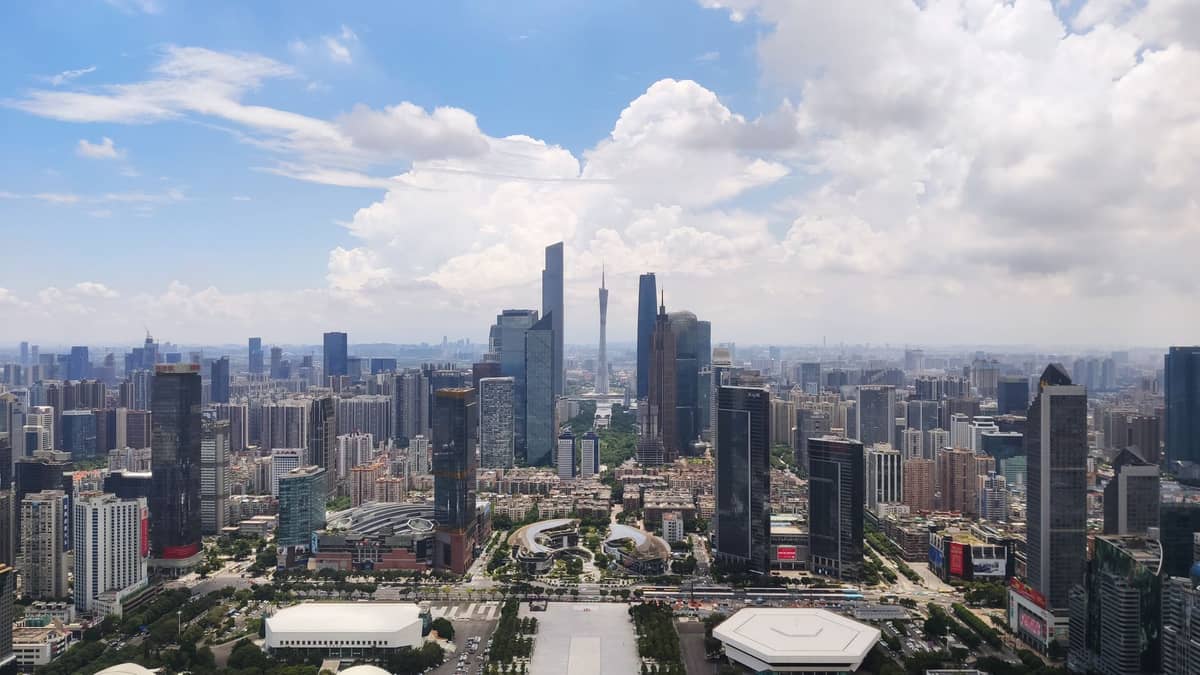
Shopping in Guangzhou does not follow a single district the way it does in some Chinese cities. The city of over 18 million people spreads across 7,434.4 km², and its retail zones are clustered across multiple districts, each with a distinct character. Getting this geography right before you arrive will save a lot of time on the ground.
The modern mall experience is concentrated in Tianhe District, Guangzhou's CBD. Pedestrian street shopping sits mainly in Yuexiu and Liwan, the older central districts. Wholesale garment markets cluster near Guangzhou Railway Station and the Haizhu Square area. Specialty street markets — jade, dried seafood, electronics — are scattered across different neighborhoods that require deliberate planning to reach.
ℹ️ Good to know
Canton is the older English name for Guangzhou — not a separate city. When older guidebooks or vendors refer to 'Canton goods,' they usually mean Guangzhou products. Guangdong is the surrounding province; Guangzhou is its capital.
Tianhe: Guangzhou's Flagship Mall District
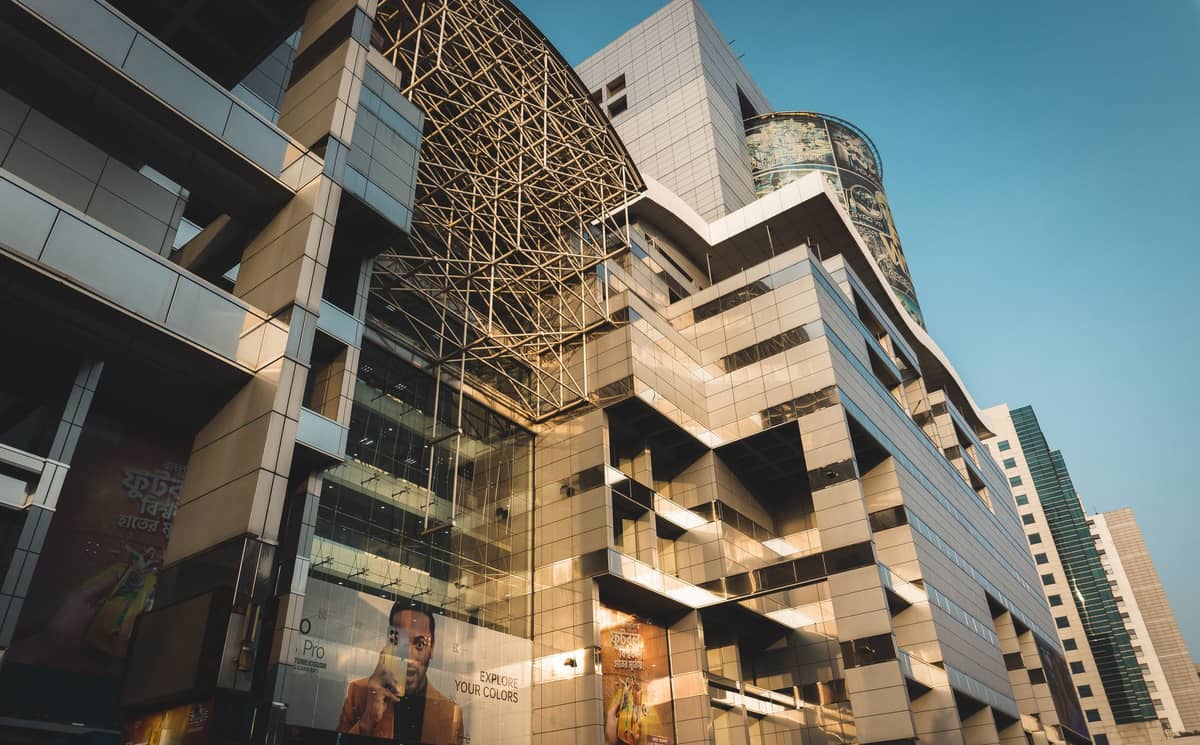
If you have limited time and want reliable international retail under one roof, Tianhe is the answer. The district has transformed over the past 20 years into a concentrated strip of major shopping centers along and around Tianhe Road, most of them within walking distance of Tianhe Metro Station (Lines 1 and 3).
- Taikoo Hui The most upscale option in Guangzhou, with luxury brands including Louis Vuitton, Gucci, Chanel, and a strong F&B floor. Architecture is notably polished; weekday afternoons are the calmest time to browse. Linked directly to Tianhe Metro Station.
- Grandview Mall (天河城) One of the oldest and largest malls in Tianhe, with a broader mid-range mix of brands, a large food court, and a cinema. More practical for everyday shopping than Taikoo Hui. Gets very crowded on weekend evenings.
- Teemall (天汇广场) Adjacent to Grandview, with a focus on younger fashion brands, cosmetics, and electronics accessories. Good for Chinese domestic brands that are hard to find elsewhere.
- K11 / Tianhui Square Blends retail with art installations in the K11 tradition. Appeals to a design-conscious, younger demographic. The basement food market is genuinely worth a visit even if you skip the shopping floors.
Most Tianhe malls open around 10 a.m. and close at 9:30 to 10 p.m. On Canton Fair weeks (held in spring and autumn sessions at the nearby Pazhou complex), Tianhe malls get noticeably busier with international trade visitors, and hotels in the area spike in price. If you are visiting purely for leisure shopping, those weeks are worth avoiding.
💡 Local tip
Use the Guangzhou Metro to move between Tianhe malls without stepping outside. In summer, when humidity regularly exceeds 85% and temperatures hit 33–35°C, this matters more than it sounds. Lines 1 and 3 cover the core Tianhe shopping strip efficiently.
Pedestrian Streets: Beijing Road and Shangxiajiu
These two streets are Guangzhou's most visited pedestrian shopping zones, and they serve different purposes. Choosing the wrong one for your goals wastes half a day.
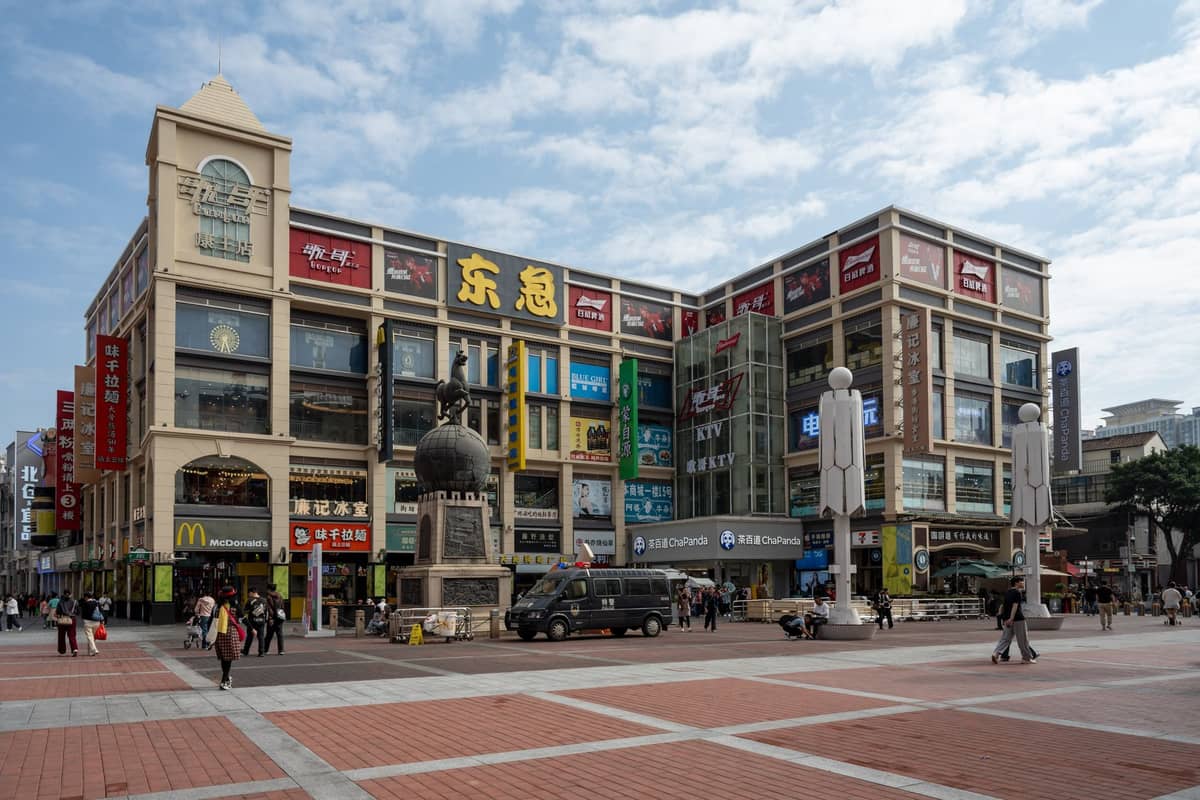
Beijing Road sits in Yuexiu District and combines retail with genuine historical depth. The street was an ancient commercial artery, and sections of layered road surfaces from successive dynasties are visible under glass panels set into the pavement. Shopping here leans toward mid-range Chinese fashion chains, sportswear, cosmetics, and souvenir shops. It is busiest after 6 p.m. on weekends, when the food stalls set up and the crowd density makes it genuinely difficult to walk quickly. For souvenirs and snacks, it is more rewarding than Tianhe.
Shangxiajiu in Liwan District has a more distinct character: the covered arcaded shophouses (qilou architecture) give it a different visual identity from Beijing Road. The stores here lean older and more traditional, with Cantonese snack shops, herbal medicine stores, and local clothing brands. It connects naturally to the Yongqingfang area and the broader Liwan antique and specialty market zone. It is slightly less crowded than Beijing Road on weekends but more atmospheric in terms of street character.
⚠️ What to skip
Both streets are heavily tourist-facing, and souvenir pricing reflects that. For genuine local shopping at local prices, head one block off either pedestrian street into the surrounding side streets, where the same goods often sell for 20–40% less.
Specialty Streets and Markets Worth a Dedicated Trip
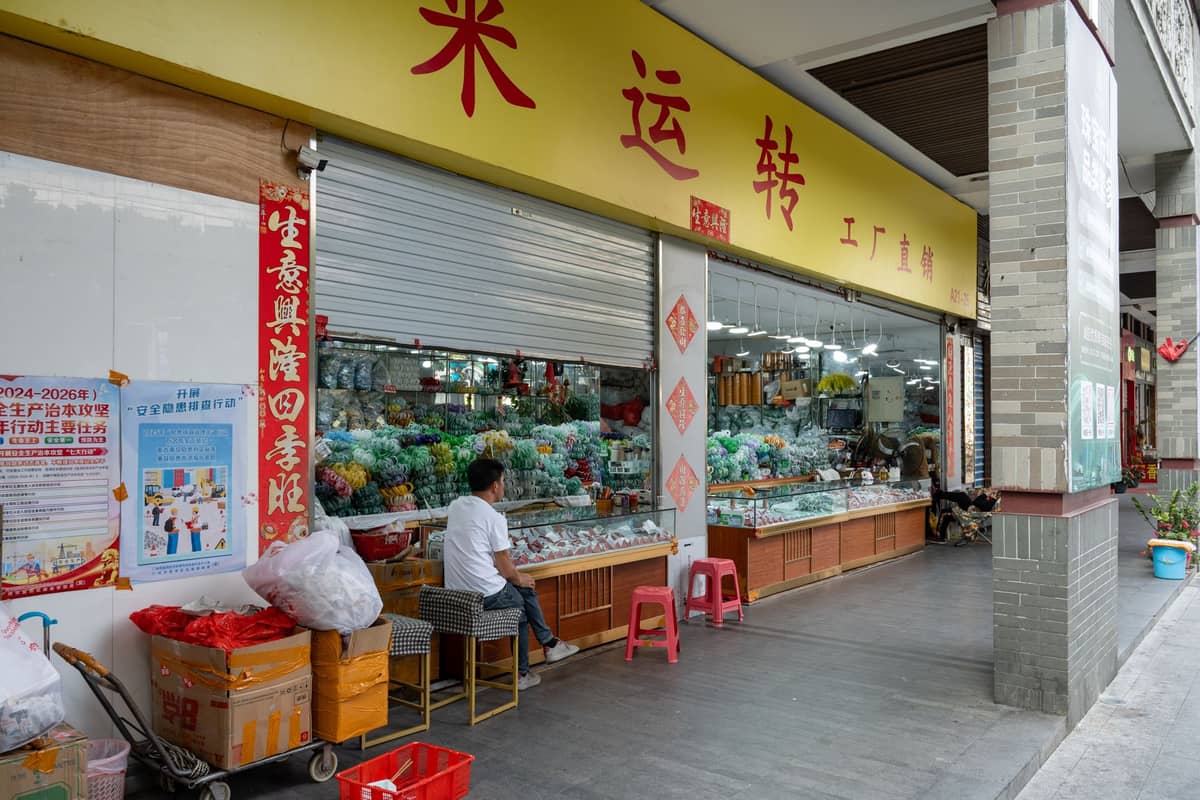
Guangzhou's specialty market streets are where the city's trading heritage shows most clearly. Hualin Jade Street near Liwan is China's largest jade wholesale and retail market, stretching several hundred meters with hundreds of vendors selling raw stone, finished jewelry, and antique pieces. Prices vary enormously with quality. If you do not know how to evaluate jade, bring someone who does, or stick to lower-price decorative pieces where the financial risk is limited.
Yide Road in Yuexiu is Guangzhou's wholesale hub for dried seafood, preserved goods, and packaged Cantonese food products. It is interesting as much for the sensory experience as for shopping: the street smells intensely of dried fish, scallops, abalone, and shrimp from roughly 8 a.m. to early afternoon. Prices are lower than in supermarkets for bulk dried goods. It is an excellent source for quality Cantonese pantry staples to bring home, including dried tangerine peel (chen pi), preserved plums, and premium dried seafood.
- Baima Garment Market A multi-story wholesale clothing complex near Guangzhou Railway Station, primarily oriented toward trade buyers purchasing in bulk. Individual shoppers can browse and buy single items, but vendors are focused on wholesale transactions. Prices are low, but negotiation is expected and English is limited.
- Gangding Electronics Area Tianhe's Gangding neighborhood has concentrations of electronics and mobile accessory shops. Useful for cables, phone cases, and tech accessories at competitive prices. Less relevant since Taobao and JD.com have taken over most of the consumer electronics trade.
- Huangsha Seafood Market Primarily a fresh seafood trading market rather than a tourist shopping destination. Worth visiting if you are staying in self-catering accommodation or want to see the scale of Guangzhou's seafood trade. Located near Huangsha Metro Station on Line 1.
For visitors interested in Guangzhou's wholesale culture in a broader sense, the wholesale markets guide covers the trade district structure in much more depth, including the Shisanhang garment area, the Pazhou fabric markets, and how to navigate Canton Fair sourcing trips.
Best Time to Shop in Guangzhou
The best time to visit Guangzhou for shopping depends on what you are trying to buy and how you feel about crowds. The city's humid subtropical climate creates a real practical constraint: shopping in July and August, when temperatures regularly exceed 33°C with high humidity, means you will spend most of your time moving between air-conditioned malls rather than exploring street markets. Outdoor market shopping is genuinely uncomfortable in summer.
October to November is the sweet spot for combining street market exploration with mall shopping. Temperatures drop to a comfortable 20–26°C, humidity falls, and the outdoor experience becomes much more pleasant. The autumn season in Guangzhou is widely considered the best overall time to visit, and the shopping experience reflects that. One caveat: the Canton Fair runs in late October, which brings tens of thousands of international trade visitors to the city and pushes hotel prices up significantly in Haizhu and Tianhe.
Chinese New Year (late January or February) is the worst time for shopping in Guangzhou. Most shops, markets, and restaurants close for several days around the holiday, and those that stay open have reduced hours. The city empties as residents return to their home provinces. If you are visiting during this period, check the Chinese New Year guide for what remains open and what to expect.
- October to November: best conditions for outdoor market shopping; post-Canton Fair period is quieter
- March to May: mild temperatures, spring sales periods in malls, good for a combined shopping and sightseeing trip
- June to September: hot and humid; stick to mall-based shopping with metro connections between venues
- Late January to February: avoid if shopping is a priority — holiday closures and reduced hours across the city
- Canton Fair weeks (April and October): trade visitors peak, hotels are expensive, Tianhe and Pazhou are crowded
✨ Pro tip
Weekday mornings (10 a.m. to noon) are consistently the calmest time in Tianhe malls. Wholesale markets on Yide Road and near the station are most active early in the morning from around 7–9 a.m. when trade buyers are moving product. If you want to browse without crowds, that early window is also when you will see the most activity on the wholesale floor.
Practical Tips for Shopping in Guangzhou
Payment in Guangzhou is overwhelmingly cashless. WeChat Pay and Alipay dominate — even street vendors and small market stalls typically prefer QR code payment over cash. As a foreign visitor, setting up Alipay's international card-linked version or WeChat Pay before arrival will make transactions significantly easier. Most major malls accept international credit cards at fixed-price stores, but smaller vendors and market stalls often do not. Carry some Chinese yuan (CNY) as a backup, particularly for wholesale markets and street food.
Bargaining is expected in most open markets, jade streets, and wholesale areas. It is not appropriate in chain stores, malls, or anywhere with clearly marked fixed prices. In the wholesale garment markets, vendors often quote prices assuming bulk quantities; for single-item purchases, expect to negotiate more firmly. A reasonable opening counter-offer in a market context is typically 40–60% of the initial asking price, working toward a middle ground.
English proficiency varies significantly by shopping zone. Staff in Taikoo Hui and other luxury Tianhe malls often have workable English. At wholesale markets, Beijing Road souvenir stalls, and specialty streets like Yide Road, English is limited. A translation app (Google Translate's camera function works reasonably well for reading labels and signs) is a practical tool. For transport context, the guide to getting around Guangzhou covers metro navigation, DiDi ride-hailing setup, and how to manage language barriers on public transport.
Budget-conscious shoppers will find that Guangzhou rewards patience and local knowledge over impulse buying. For a structured look at how to keep costs down across all activities including shopping, the Guangzhou on a budget guide has specific spending benchmarks and money-saving strategies.
FAQ
What is the best area for shopping in Guangzhou?
It depends on what you are buying. For international brands and luxury retail, Tianhe CBD (Taikoo Hui, Grandview Mall, Teemall) is the best area. For souvenirs, street food, and local clothing, Beijing Road and Shangxiajiu pedestrian streets are the standard choices. For wholesale goods, jade, or specialty products, the dedicated market streets in Yuexiu and Liwan are more relevant. No single district does everything well.
Is Guangzhou good for shopping compared to Hong Kong or Shanghai?
Guangzhou is stronger for wholesale sourcing, specialty goods (jade, dried seafood, fabrics), and Chinese domestic brands than either city. Hong Kong still has an edge for imported luxury goods due to lower import tariffs. Shanghai has a more developed high-end retail scene overall. Guangzhou's advantage is depth in trade-oriented markets and authentic Cantonese specialty products that are hard to find elsewhere.
Can tourists buy from wholesale markets in Guangzhou?
Yes, tourists can enter and buy from wholesale markets like Baima Garment Market and the Yide Road seafood street without any trade credentials. However, vendors are optimized for bulk buyers, so single-item purchases require more negotiation effort. Some stalls have minimum order quantities for certain goods. You will get the best experience if you go early, have a rough sense of pricing, and are comfortable communicating through translation apps.
What should I buy in Guangzhou as a souvenir?
Dried tangerine peel (chen pi) from Liwan is a genuinely Cantonese specialty with culinary and medicinal uses. Jade pieces from Hualin Jade Street range from affordable decorative items to serious collector pieces. Cantonese preserved and dried seafood from Yide Road travels well. Canton-style embroidery and silk products can be found in Liwan. Cantonese pastries and wife cakes (lou po bing) from established bakeries on Shangxiajiu make excellent gifts.
Do Guangzhou malls accept international credit cards?
Major malls and chain stores in Tianhe (Taikoo Hui, Grandview, Teemall) generally accept international Visa and Mastercard at individual brand stores. Food courts, smaller vendors, and market stalls predominantly use WeChat Pay or Alipay. Setting up Alipay's international tourist version (which links to a foreign card) before your trip is the most practical solution. Carry some CNY cash for markets, street food, and smaller vendors.