Liwan Lake Park: Guangzhou's Quiet Lakeside Retreat in Historic Liwan
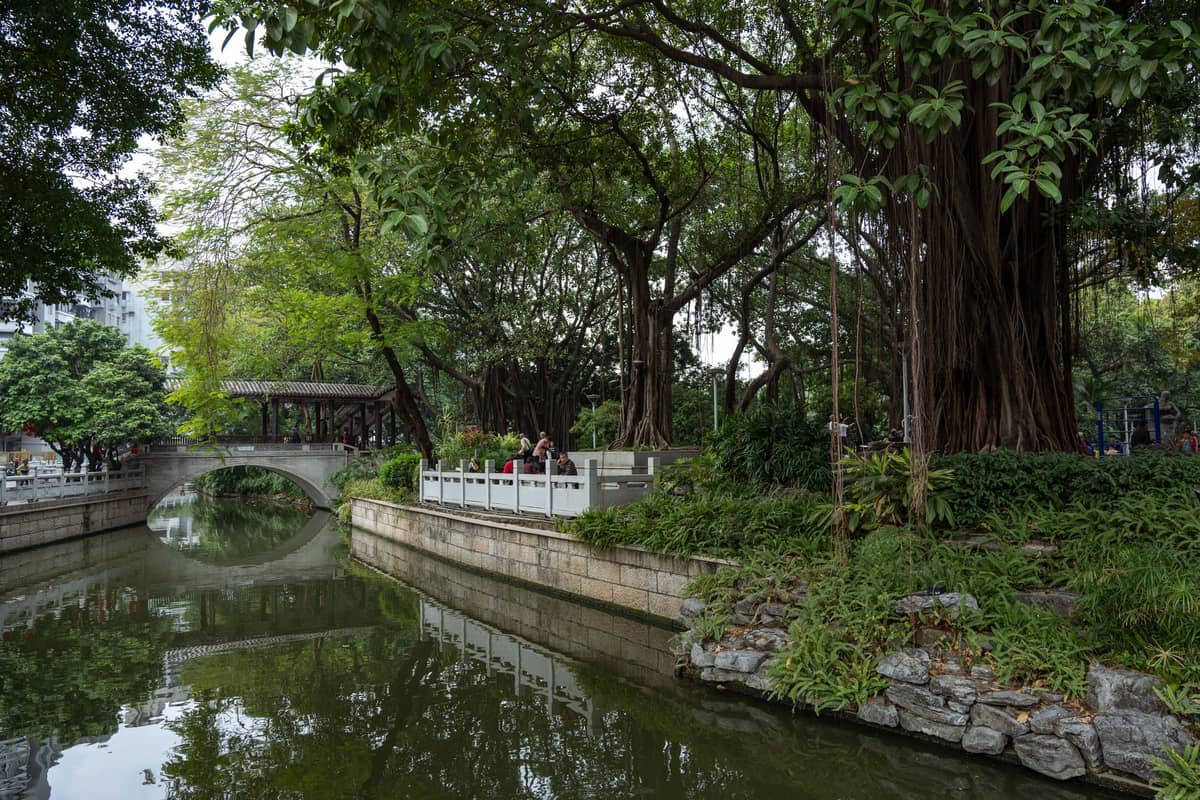
Liwan Lake Park is a free, sprawling urban park in Guangzhou's oldest commercial district, built around four interconnected artificial lakes. With over half its 27 hectares covered by water, traditional pavilions, and shaded walkways, it draws a cross-section of local life — from tai chi practitioners at dawn to families feeding fish on weekend afternoons.
Quick Facts
- Location
- No. 155 Longjin West Road, Liwan District, Guangzhou
- Getting There
- Metro Line 5 to Zhongshanba Station (approx. 8–10 min walk); also Line 6 to Ruyifang Station
- Time Needed
- 1 to 2 hours
- Cost
- Free admission
- Best for
- Morning strollers, slow-travel days, photography, local culture-watching
- Official website
- http://www.lw.gov.cn/ywb/fw/ly/yzlw/content/post_9104481.html
What Liwan Lake Park Actually Is
Liwan Lake Park (荔湾湖公园) sits at the heart of Guangzhou's Liwan District, a neighborhood that has served as one of the city's commercial and cultural anchors for centuries. The park spans roughly 27 hectares, and more than half of that area is water: four interconnected artificial lakes named Xiaocui, Yucui, Ruyi, and Wuxiu. The result is a landscape that feels more like a series of floating gardens than a conventional city park, with covered walkways, arched stone bridges, and open-sided pavilions threading across the water at almost every turn.
This is not a theme park or a tourist showpiece. It is a working neighborhood park, used daily by residents of the surrounding Liwan streets. That distinction matters. What you experience here is unscripted: elderly men playing chess under banyan trees, retirees moving through slow tai chi forms near the water's edge, children chasing pigeons along the stone promenades. Admission is free, the atmosphere is genuinely relaxed, and the pace is set by the people who live nearby, not by any organized attraction schedule.
💡 Local tip
Opening hours vary across sources: most list 06:30–22:00, though some show 06:00–22:30. Arrive before 08:00 for the clearest water reflections and the most active morning routines. Confirm current hours locally before planning an early or late visit.
How the Park Changes Through the Day
Early mornings at Liwan Lake Park are its most distinctive hour. From around 06:30, the lakeside paths fill with locals in a way that feels entirely organic: groups practicing tai chi in open clearings, individuals doing slow stretches on the pavilion steps, and older residents walking laps along the lake perimeter with a deliberateness that suggests years of daily habit. The air at this hour carries a mix of damp stone, green algae from the lake surface, and occasionally the faint sweetness of flowering shrubs along the banks. The light is soft and diffused, and the water reflects the pavilion rooflines with unusual clarity before the morning foot traffic disturbs the surface.
By late morning the park transitions into a different rhythm. Grandparents arrive with small children. Vendors set up near the main entrances. The sound of erhu being practiced by a solitary musician under a covered walkway is a common enough occurrence to feel like part of the park's identity. Midday in summer is genuinely uncomfortable: Guangzhou's humid subtropical climate means that July and August heat can be oppressive by 11:00, and the park offers limited deep shade in some open sections. If you visit in summer, a morning arrival and departure by 10:00 is a practical rule.
Late afternoon brings a second surge of visitors after the heat of the day relents slightly. Weekend evenings in cooler months attract larger family groups and couples walking the lit pathways. The park is illuminated after dark, and the water reflects the lighting in a way that gives the landscape a different character entirely from its daytime appearance, quieter and more atmospheric, though significantly less photogenic for natural-light photography.
The Landscape: Bridges, Pavilions, and the Lakes Themselves
The four lakes are not simply ornamental. They create the park's spatial logic: because the water divides the land into peninsulas and islands connected by bridges and causeways, no single path through the park is the obvious one. Visitors naturally spread out, which means even on busy weekend afternoons, many parts of the park feel uncrowded. The arched stone bridges are low and wide, designed for leisurely crossing rather than efficient transit, and the view from the center of each bridge across the lake surface is the park's signature visual.
The pavilions distributed along the lakeshores are built in a traditional southern Chinese garden style: upturned eaves, dark timber columns, and lattice screens. They are functional structures, used for shade, rest, and informal gatherings, not just decorative elements. The covered walkways that run along some of the waterfront sections provide genuine shelter from both rain and direct sun, which makes this park noticeably more comfortable during Guangzhou's unpredictable spring weather than open-field parks.
For visitors interested in Guangzhou's broader tradition of classical garden and park design, Liwan Lake Park sits comfortably alongside the city's other major green spaces. It shares design language with the botanical sensibility on display at the Canton Orchid Garden and the more formal historical context of Yuexiu Park, though its character is more casual and residential than either of those.
Cultural and Historical Context
Liwan District has a distinct identity within Guangzhou. Known historically as Xiguan, the western commercial quarter, it was the part of the city where Cantonese merchant culture concentrated before the twentieth century: old shophouse lanes, tea culture, and a densely layered urban fabric. Liwan Lake Park was developed as an artificial urban park within this setting, making it one of Guangzhou's four major constructed lake parks rather than a preserved natural landscape.
That context gives the park a particular role in the neighborhood. It is the green space serving one of Guangzhou's most historically significant residential areas, used by people who live in the same streets where traditional Cantonese architecture still survives in significant quantities. Visitors interested in the broader cultural landscape of this area will find natural connections to nearby attractions: the celebrated Chen Clan Ancestral Hall lies within the Liwan area, as does the shopping and street-food corridor of Shangxiajiu Pedestrian Street.
Understanding Liwan as a whole before you visit will significantly improve how much you get from the park. The Liwan District page covers the neighborhood's broader geography and character, which helps in planning a half-day or full-day circuit that combines the park with the area's other attractions.
Getting There and Practical Navigation
The most commonly used transit approach is Guangzhou Metro Line 5 to Zhongshanba Station, followed by an 8 to 10 minute walk to the park's main entrance on Longjin West Road. Metro Line 6 via Ruyifang Station is also cited as an option, though route and walking time vary depending on which park entrance you target. Bus routes serve the surrounding streets as well, though specific route numbers shift over time and are worth confirming on arrival.
The park has multiple entry points, and the Longjin West Road entrance at No. 155 is the official main address. If you arrive from a different direction, signage in English and Chinese is reported to be present within the park, which helps with orientation once you are inside. The terrain is flat throughout, and the paved paths and wide causeways are navigable for visitors with mobility constraints, though official accessibility documentation was not available at time of writing.
ℹ️ Good to know
The park does not charge admission. No ticket booth or entry requirement has been reported. Bring water if visiting in summer: the lakeside setting is pleasant but shade coverage varies significantly by section, and Guangzhou's summer humidity makes hydration a real concern by mid-morning.
Photography Notes and Practical Considerations
For photography, the morning window before 09:00 offers the best combination of soft light, calm water surfaces, and uncluttered compositions. The arched bridges over the lakes are the most photographed elements, and they are most effective when framed to include the pavilion structures reflected in the water below. Overcast days in spring actually produce some of the most even light for this kind of scene, provided it is not raining heavily.
Visitors who are after dramatic or scenic photography in a more conventional sense may find the park underwhelming compared to Guangzhou's more photogenic destinations. This is a quiet, horizontal landscape of water and low structures, not a place of dramatic elevation changes or striking architectural contrasts. Its visual appeal is subtle and cumulative rather than immediately striking. If that style of landscape does not interest you, this may not be a priority stop.
⚠️ What to skip
During heavy rain or typhoon-adjacent weather — common between June and September — paths near the lake edges can become slippery and some lower sections may experience standing water. Check weather forecasts before visiting in the rainy season. Guangzhou's spring and autumn months are far more reliable for a comfortable outdoor experience.
Who This Park Is and Is Not For
Liwan Lake Park earns its place on a Guangzhou itinerary for travelers who are interested in seeing how the city actually functions day to day, not just its headline attractions. It works particularly well as part of a half-day walk through Liwan: start with the park in the morning, then move into the surrounding streets toward Shangxiajiu or the Chen Clan Ancestral Hall. The Guangzhou walking tours guide covers several routes through Liwan that can be adapted to incorporate the park naturally.
Travelers with limited time in Guangzhou and a focus on major historical or architectural sights may find the park less rewarding by comparison. There are no museum-level interpretive displays, no significant single monument to orient around, and the attraction is experiential rather than informational. First-time visitors to the city with only two or three days might reasonably deprioritize this in favor of sites with more concentrated historical content, unless slow walks and local atmosphere are specifically what they are seeking.
The park is well suited to families with young children: the flat terrain, open spaces, fish visible in the shallower lake sections, and absence of any admission pressure make it an easy, low-stakes morning stop. Older visitors and those who find Guangzhou's faster-paced commercial areas tiring will also appreciate the genuine quiet here, particularly on weekday mornings.
Insider Tips
- Weekday mornings between 07:00 and 09:00 offer the most authentic local experience: tai chi groups, erhu players, and elderly chess matches are all in full swing before the casual visitor crowd arrives.
- The covered walkways along the waterfront sections are the best spots to shelter during a sudden spring shower, and they also provide the most comfortable photography angles across the lake surface.
- If you are combining this with Shangxiajiu or the Chen Clan Ancestral Hall, plan the park for the start of the morning before those sites get crowded, then walk east as the day progresses.
- The lake water is shallow in several sections near the southern banks, and fish are clearly visible from the stone-edged paths. Bringing bread crumbs is a common local practice with children — vendors near the entrance occasionally sell small bags of fish food.
- Autumn (October to November) is the most comfortable season for an extended visit: temperatures drop, humidity decreases, and the park's trees take on warmer color tones that improve the visual quality of the landscape considerably.
Who Is Liwan Lake Park For?
- Slow travelers who want to observe Guangzhou's residential culture at close range
- Families with young children looking for a free, low-pressure outdoor morning
- Photographers interested in traditional Chinese garden architecture and water reflections
- Visitors building a half-day walking circuit through historic Liwan District
- Anyone needing a quiet, shaded break between the busier commercial sites nearby
Nearby Attractions
Other things to see while in Liwan (Xiguan):
- Bruce Lee Ancestral Home
Tucked inside the restored Yongqing Fang heritage block in Liwan District, the Bruce Lee Ancestral Home is a small but quietly affecting tribute to one of the most influential figures in 20th-century popular culture. Free to enter and open most days, it rewards visitors who come with context and curiosity rather than expecting a grand museum experience.
- Cantonese Opera Art Museum
Housed in a sprawling classical Lingnan garden complex on Enning Road in Liwan District, the Cantonese Opera Art Museum is the most authoritative dedicated space for understanding yueju, the opera tradition that defines Guangdong's cultural identity. Free to enter and open most evenings on Fridays and Saturdays, it rewards visitors with theatrical costumes, intricate stage props, historic instruments, and architecture that is itself a performance.
- Chen Clan Ancestral Hall
Built between 1888 and 1893 as a center for education and ancestor worship, Chen Clan Ancestral Hall is the most elaborately decorated traditional compound in Guangzhou. Its nineteen linked halls are covered in stone carvings, wood reliefs, iron castings, ceramic friezes, and stucco moldings that represent the full range of Cantonese folk craft at its peak.
- Hualin Jade Street
Hualin Jade Street (华林玉器街) in Liwan District is where Guangzhou's jade trade has concentrated for centuries. Stretching roughly 500 metres through the old city, it packs in more than 80% of the city's jade merchants — from rough stone dealers to finished jewellery boutiques — all free to browse.