What to Eat in Guangzhou: A Cantonese Food Guide
Guangzhou is the birthplace of Cantonese cuisine, a cooking tradition built on freshness, precision, and restraint. This guide covers the essential dishes, where to eat them, what to pay, and how to eat like a local from sunrise to sunset.
Plan and book this trip
Tools from our partner Travelpayouts help you compare flights and hotels. If you book through them, we may earn a commission at no extra cost to you.
Flights
Hotels map
TL;DR
- Guangzhou is the undisputed capital of Cantonese (Yue) cuisine, emphasizing fresh ingredients, light seasoning, and techniques like steaming and roasting rather than heavy spice.
- Start every morning with yum cha (dim sum) — the most iconic Guangzhou food ritual. See our Guangzhou dim sum guide for the best teahouses.
- Core dishes to try: roast goose, white-cut chicken, rice noodle rolls (cheung fun), wonton noodles, claypot rice, and Cantonese sweet soups.
- Dim sum runs roughly ¥40–100 per person; a full morning tea for two at a historic teahouse costs around ¥120–180. Street snacks start from ¥8.
- Cantonese food is not spicy. The philosophy is about preserving the natural flavor of the ingredient, not masking it.
Why Guangzhou Is China's Food Capital
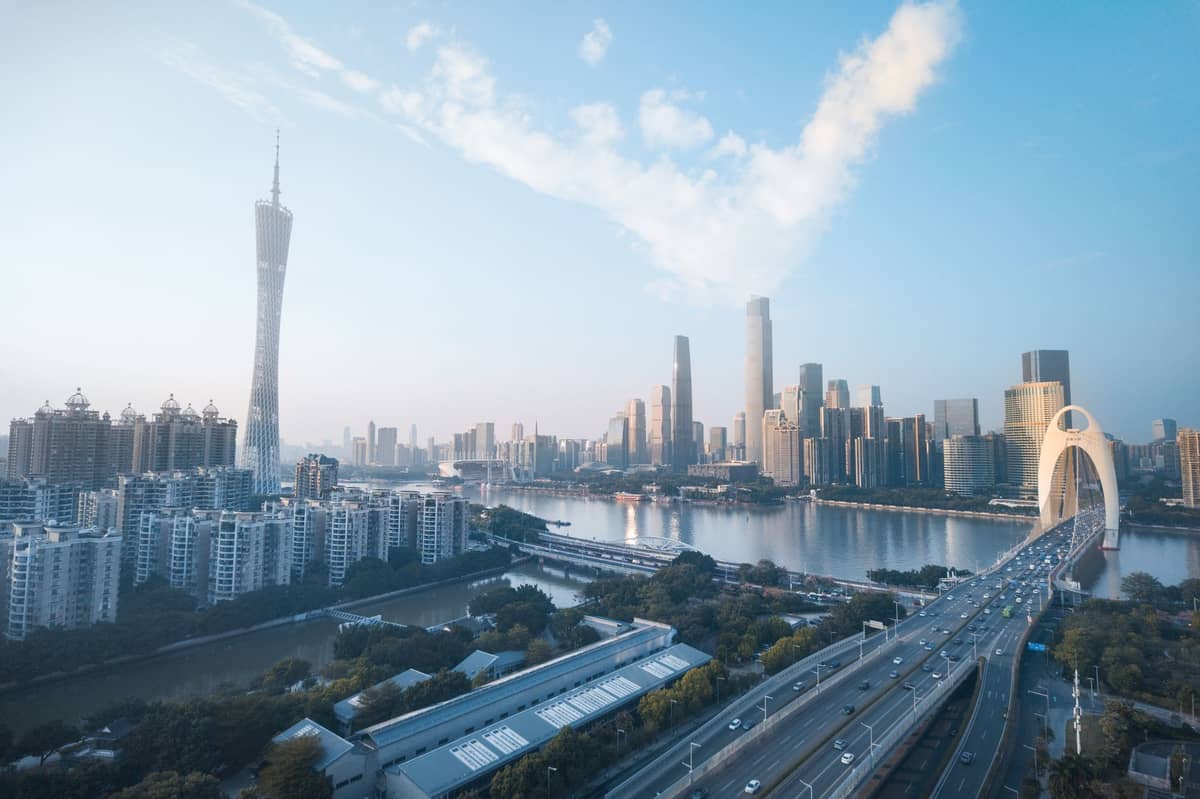
Cantonese cuisine is one of the eight great culinary traditions of China, and Guangzhou is where it developed its most refined form. The city sits at the heart of Guangdong Province, close to the Pearl River Delta and the South China Sea, which historically gave chefs access to extraordinary fresh seafood, subtropical produce, and livestock. The result is a cuisine defined not by bold spice but by ingredient quality and technical precision.
The Cantonese cooking philosophy — freshness above all, seasoning that supports rather than overpowers, and methods that preserve texture and color — is why Guangzhou food can seem subtle to first-timers. Do not mistake restraint for blandness. A perfectly steamed fish with ginger and soy, or a plate of white-cut chicken with ginger-scallion dipping sauce, is a precise exercise in balance. The ingredient has to be exceptional because there is nowhere to hide.
Guangzhou is also the historical origin of the Cantonese diaspora restaurants found worldwide, which means many dishes people recognize from overseas Chinatown menus trace their roots directly here. But the Guangzhou version is almost always cleaner, more delicate, and less adapted to foreign palates. If you are planning your first trip and want to build a full food itinerary, the 3-day Guangzhou itinerary integrates food stops into a practical daily route.
ℹ️ Good to know
Canton is the older English name for Guangzhou — not a separate city. 'Cantonese cuisine' refers to the cuisine associated with Guangzhou (Canton) and the broader Guangdong/Yue culinary tradition. Guangdong is the province; Guangzhou is the provincial capital and the city you are visiting.
The Essential Dishes: What to Order and When
Cantonese food has a strong time-of-day culture. Certain dishes belong to breakfast, others to lunch, and others to dinner. Eating at the wrong time is not a crime, but you will get fresher food and a more authentic experience if you follow the local rhythm.
- Yum Cha / Dim Sum (早茶, zǎochá) The morning ritual of Guangzhou. Dim sum refers to the small dishes; yum cha ('drink tea') is the broader practice of eating those dishes over tea with family or colleagues. Service typically runs 07:00–14:30, with the authentic local window closer to 07:00–10:00. Expect har gow (shrimp dumplings), siu mai (pork and shrimp), cheung fun (rice noodle rolls), char siu bao (BBQ pork buns), and egg tarts. Cost: around ¥40–100 per person; a full spread for two at a historic teahouse runs ¥120–180 including tea.
- Roast Goose (烧鹅, shāo é) The flagship roast meat of Guangzhou. The skin should shatter when you bite it, the fat beneath still rendered and juicy. Served chopped with plum sauce. A quality serving costs ¥35–80. Do not confuse with Peking duck — roast goose is a distinctly Cantonese preparation with different seasoning and texture.
- White-Cut Chicken (白切鸡, bái qiē jī) Poached whole in gently simmering water or broth, then sliced and served at room temperature with ginger-scallion sauce. The technique demands a high-quality chicken; the result is silk-smooth flesh with concentrated flavor. A plate costs ¥40–100 depending on size and venue.
- Rice Noodle Rolls (肠粉, cháng fěn) Thin sheets of steamed rice flour wrapped around prawn, beef, or char siu, then dressed with soy sauce and sesame oil. One of the great Cantonese breakfasts, found at street stalls and teahouses alike. Street price: ¥8–20 per serving.
- Wonton Noodles (云吞面, yúntūn miàn) Thin egg noodles served in clear pork and shrimp broth with plump wontons. The noodles must have a slight spring to them — locals call this the 'bite.' Good bowls start from ¥15–30 and are a mid-morning staple at noodle shops throughout the city.
- Claypot Rice (煲仔饭, bāo zǎi fàn) Rice cooked in a small clay pot until the bottom layer forms a crispy crust, topped with preserved sausage, chicken, or salted fish. A dinner dish, and one of the best cold-weather meals in Guangzhou. Typically served at standalone claypot restaurants from late afternoon onward.
- Cantonese Sweet Soups and Milk Desserts (糖水, táng shuǐ) Dessert in Guangzhou usually means a warm sweet soup (red bean, taro, papaya with milk) or a cold steamed milk pudding. These are found at dedicated dessert shops throughout the city at ¥10–30 per bowl.
⚠️ What to skip
Cantonese food is not spicy. If you are expecting the heat of Sichuan or Hunan cuisine, you will not find it here. The flavor profile is mild, fresh, and savory. Chili oil is available at many restaurants but it is condiment, not foundation.
How a Local Eats Through the Day
There is a recognizable food sequence that locals follow, and it is worth understanding if you want to eat well without guesswork. It is not a rigid schedule, but most Guangzhou residents broadly follow this pattern.
Early morning (07:00–10:00): yum cha at a teahouse, or rice noodle rolls and wonton noodles at a street-level shop. This is the most social meal of the day. Tables fill up fast on weekends, especially at well-known venues like Guangzhou Restaurant in Liwan or Tao Tao Ju on Dishifu Road. Arrive early to avoid a wait.
Lunch (12:00–14:00): roast meats are the centerpiece. A plate of roast goose or char siu (BBQ pork) with rice is the standard working lunch across the city. Bingsheng Pin is frequently cited as a well-known upmarket Cantonese restaurant, though the city has dozens of credible options across different districts.
Afternoon (14:00–18:00): street snacks and desserts. Jianbing (savory crepes), fish balls, stinky tofu, and mango pudding appear at stalls around pedestrian streets and markets. The area around Shangxiajiu Pedestrian Street in Liwan is a reliable spot for casual afternoon eating.
Dinner (18:00–21:00): claypot rice, beef chow fun (干炒牛河, gān chǎo niú hé — flat rice noodles stir-fried with beef and bean sprouts), or a full seafood dinner if budget allows. The Huangsha Seafood Market in Liwan is worth knowing about: you buy fresh seafood from vendors on the lower floors and take it upstairs to have it cooked at a restaurant for a small cooking fee. It is one of the more hands-on food experiences in the city.
💡 Local tip
Beef chow fun is considered a benchmark dish for any Cantonese kitchen. A skilled wok cook achieves 'wok hei' (鑊氣) — that slightly smoky, caramelized breath from a screaming-hot wok. If the noodles arrive pale and oily instead of slightly charred and separated, the kitchen did not get the heat right. Order it anyway and compare; you will notice the difference the next time you find a good version.
Where to Eat: Neighborhoods and Venues
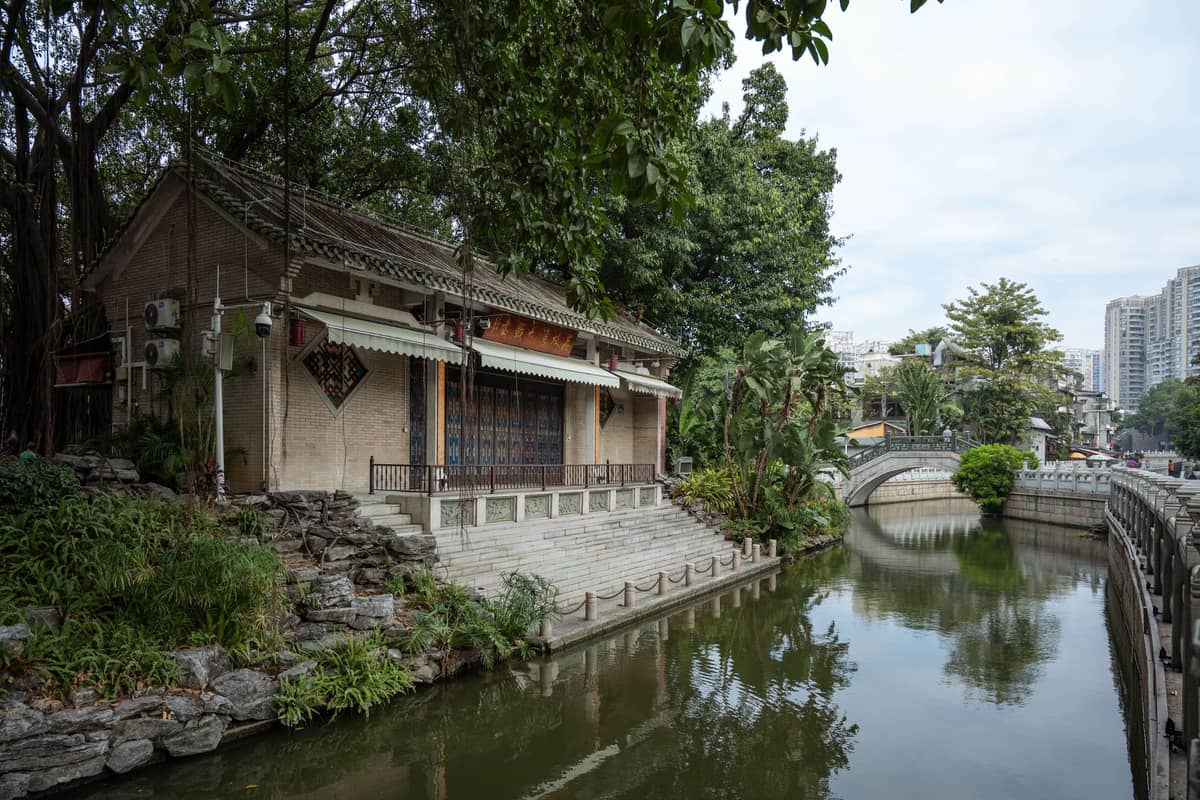
Guangzhou's best eating is distributed across the city rather than concentrated in one district. That said, certain areas have stronger reputations. Liwan DistrictLiwan holds many of the city's oldest teahouses and traditional Cantonese restaurants, including both Guangzhou Restaurant and Tao Tao Ju. These are not tourist traps — locals eat here regularly, which is the clearest possible endorsement.
Tianhe District offers a wider range of modern Cantonese restaurants alongside international options, generally in cleaner, more polished settings. If you want contemporary Cantonese cooking with better English-language menus and staff, Tianhe is easier to navigate. For those staying in or near the Zhujiang New Town area, there is a good spread of upmarket Cantonese restaurants catering to business travelers and the local professional class.
For street-level eating and market-style food, Shangxiajiu Pedestrian Street in Liwan is a reliable starting point. The pedestrian zone near Beijing Road in Yuexiu also has food vendors, though it skews younger and more commercial. Neither is a secret, but both are genuinely used by local shoppers and workers, which keeps the food quality reasonably honest.
- Guangzhou Restaurant (广州酒家): One of the city's oldest and most recognized Cantonese dining institutions, known for dim sum and classic Cantonese banquet dishes. Located in Liwan. Expect queues on weekend mornings.
- Tao Ju (陶陶居): A historic teahouse on Dishifu Road, Liwan, with roots going back over a century. The dim sum quality is solid and the atmosphere gives a genuine sense of old Guangzhou.
- Bingsheng Pin (炳胜品味): Well-known for roast goose and upmarket Cantonese cooking. Multiple locations across the city. Better for lunch or dinner than breakfast.
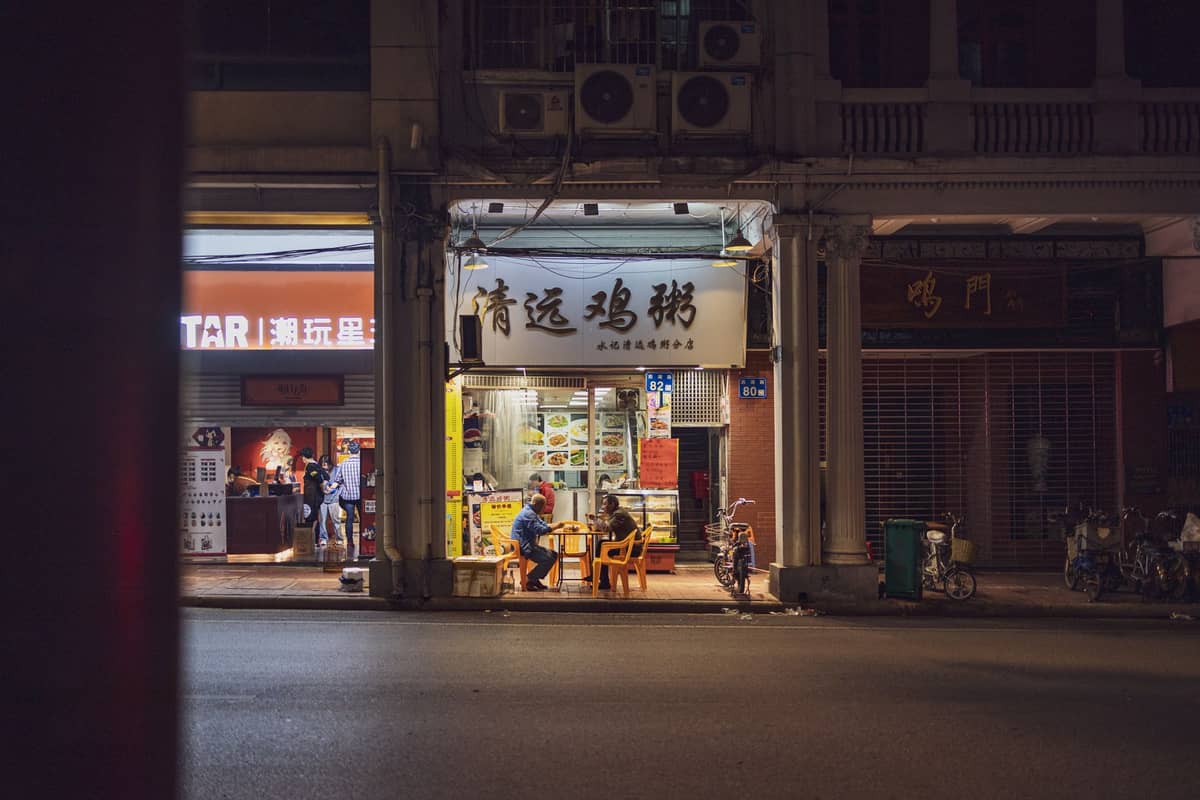
- Neighborhood congee shops: Guangzhou has hundreds of small congee-and-noodle shops serving breakfast. These are not famous by name, but a shop with locals queuing outside at 08:00 is almost always serving good food at ¥15–30 per bowl.
Practical Eating Tips for First-Timers
Ordering dim sum at a traditional teahouse is done differently from a standard restaurant. In older-style venues, servers push trolleys and you point at what you want. In more modern places, you tick items on a paper order form. At either type, tea is poured immediately and you will be charged a small per-person tea fee (茶位费, chá wèi fèi) as a standard cover charge, typically ¥5–15 per person.
Payment across Guangzhou's food scene is almost entirely cashless, via WeChat Pay or Alipay. Some tourist-oriented restaurants accept credit cards, but smaller shops, street stalls, and teahouses often do not. Visitors from outside mainland China should set up a payment method before arriving if possible — having Chinese yuan (CNY) in cash as backup is a practical safety net.
Language is less of a barrier at food vendors than at hotels, but menus at smaller shops are often Chinese-only with no pictures. A translation app with camera function (Google Translate or similar) is genuinely useful. For broader orientation on getting around the city to reach food districts, see the guide on getting around Guangzhou.
Tipping is not standard in mainland China. It is not expected at any type of food establishment in Guangzhou, from street stalls to formal restaurants. Leaving cash on a table may cause confusion. Simply pay the bill as presented.
✨ Pro tip
For a condensed Cantonese food experience, the Yongqingfang area in Liwan combines a renovated historic neighborhood with food stalls and small restaurants operating across different price points. It is not purely a food destination — it is a cultural zone — but the density of eating options in a walkable area makes it a useful stop. Avoid peak weekend afternoons when it gets crowded and vendor quality becomes inconsistent.
Cantonese Opera and Food: A Cultural Pairing
Food and performance have a long shared history in Guangzhou. Teahouses historically hosted Cantonese opera performances while patrons ate dim sum, and some venues still maintain this tradition. The Cantonese Opera Art Museum in Liwan occasionally holds performances and is worth checking for scheduling. It is a cultural dimension to eating in Guangzhou that most visitors miss entirely.
The connection between teahouse culture and opera reflects something deeper about how Cantonese people relate to food: it is social infrastructure, not just sustenance. A dim sum breakfast is not a quick meal. It can last two to three hours, with orders coming in waves as the group talks and the tea pot is refilled repeatedly. First-timers should resist the urge to rush through it.
FAQ
What is Guangzhou most famous for eating?
Guangzhou is most famous for dim sum (yum cha), roast goose, white-cut chicken, and rice noodle rolls (cheung fun). These represent the core of Cantonese cuisine, which emphasizes fresh ingredients, light seasoning, and steaming or roasting rather than heavy spice or bold heat.
Is Cantonese food spicy?
No. Cantonese cuisine is generally mild. The cooking philosophy prioritizes the natural flavor of the ingredient, and most dishes use seasoning sparingly. Sichuan and Hunan cuisines are the spicy traditions in China; Guangzhou food is a different register entirely.
How much does food cost in Guangzhou?
Street snacks and noodle bowls start from ¥8–30. A dim sum breakfast per person at a mid-range teahouse costs ¥40–100, or around ¥120–180 for two with 6–8 dishes and tea. Roast goose servings run ¥35–80. Dinner at a decent Cantonese restaurant runs ¥80–200 per person depending on seafood and dishes ordered.
What time is dim sum served in Guangzhou?
Most teahouses serve dim sum from around 07:00 to 14:30. The peak local window is 07:00–10:00, when regulars fill the tables. Some older or smaller shops stop taking orders after 11:00. If you want to eat at a well-known venue on a weekend morning, arrive before 09:00 or expect to wait.
Where should I eat in Guangzhou for the first time?
For a first visit, head to Liwan District. Start with yum cha at Guangzhou Restaurant or Tao Tao Ju, walk Shangxiajiu Pedestrian Street for street snacks in the afternoon, and return in the evening for roast meats or claypot rice at a neighborhood restaurant. It covers traditional teahouse culture, street-level snacking, and classic dinner dishes in one area.